


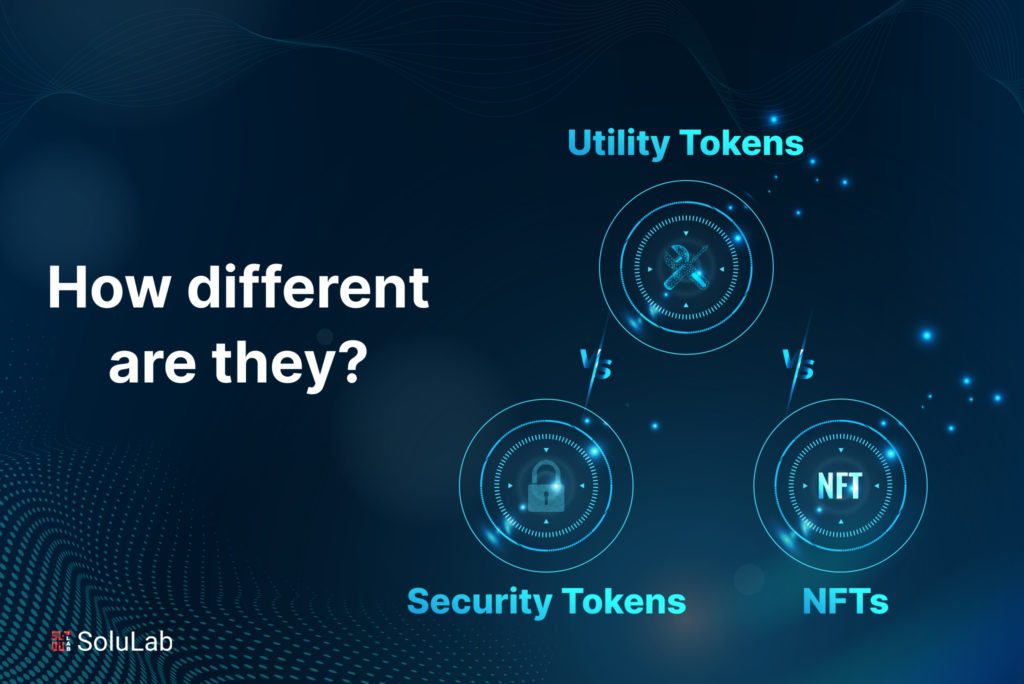
In the dynamic realm of blockchain and cryptocurrencies, the advent of digital tokens has revolutionized traditional concepts of value, ownership, and interaction. The evolution has ignited a necessity for a profound understanding of the triad of digital tokens: security tokens, utility tokens, and NFTs (Non-Fungible Tokens).
This article embarks on a comprehensive journey, unraveling the intricacies that define each token category. By delving into their attributes, use cases, and distinguishing features, we gain a holistic perspective of their impact on the digital landscape.
Blockchain technology’s meteoric rise has ushered in the era of digital tokens, reshaping financial systems and digital transactions. Tokens, and cryptographic entities safeguarded by decentralized ledgers, introduce transparency, security, and peer-to-peer trust to digital transactions. These digital representations of value have given rise to an array of tokens, each tailored to distinct purposes and applications.
Within the labyrinth of digital tokens, distinct categories emerge, each bearing unique functionalities and implications. Proficiency in discerning these categories is imperative, enabling stakeholders to make informed decisions and partake in the evolving digital economy. As the technology matures, the ability to differentiate between security tokens, utility tokens, and NFTs becomes pivotal.
So, what is a security token? Security token symbolizes ownership in tangible or intangible assets, akin to traditional securities. These tokens offer fractional ownership, affording holders a share in the underlying asset’s value and potential returns. Notably, security tokens undergo regulatory scrutiny, aligning them with established securities regulations.
Security tokens stand out by adhering to regulatory frameworks. Compliance ensures transparency, investor protection, and safeguards against illicit activities, thereby bolstering the credibility of the tokenized ecosystem. The alignment with regulations presents security tokens as a bridge between the worlds of traditional finance and the innovative blockchain landscape.
The practicality of security tokens finds resonance across domains, including real estate, venture capital, and private equity. Tokenization imbues these markets with enhanced liquidity and accessibility, empowering diverse investors to partake in traditionally exclusive spheres. For instance, a historically illiquid asset like real estate becomes more accessible and divisible through security token offerings (STO) and STO development services.
Utility tokens serve as digital keys granting access to decentralized platforms or services. Their primary function centers on enabling interaction within a specific ecosystem, rather than conferring ownership rights. These tokens act as the lifeblood of blockchain networks, stimulating engagement and utilization.
Top Utility tokens assume the mantle of powering decentralized applications, incentivizing user engagement and ecosystem participation. This symbiotic relationship fuels the platform’s evolution, nurturing its growth. For instance, the Ethereum network employs Ether (ETH) as a utility token to facilitate smart contract execution and transactions within the platform.
Challenges associated with utility tokens stem from balancing their intrinsic utility with potential investment aspirations. Their value is intrinsically linked to the network’s vitality, posing the challenge of sustaining demand. Critics also raise concerns about the potential for regulatory crackdowns on utility tokens that might be deemed securities.
NFTs stand as unparalleled digital assets representing ownership of specific items, ranging from digital art to collectibles. Each NFT is indivisible, bearing a distinct identity that sets it apart from its fungible counterparts. This uniqueness is a core feature enabled by the underlying blockchain technology.
The artistic landscape experiences a seismic shift with NFTs, empowering artists to tokenize their creations and directly connect with collectors. NFTs’ influence stretches beyond art into collectibles, gaming artifacts, and even tokenized real-world assets. For instance, the NFT for a virtual land parcel in a metaverse holds inherent scarcity and value.
NFTs instigate the inception of novel digital economies, facilitating direct interactions between creators and collectors. Their emergence bridges the chasm between physical and virtual ownership, paving the way for innovative economic models. NFT development services enable creators to monetize their digital works directly, bypassing intermediaries and opening avenues for new revenue streams.
Instances of Hybrid Tokens: As the boundaries between different token types blur, hybrid tokens emerge as captivating entities. These tokens combine the features of security, utility, and NFTs, embodying a fusion of functions. Imagine an investment token that grants access to exclusive features in a platform while also representing ownership in a digital art piece. These instances of hybrid tokens underscore the creative prowess of blockchain technology in accommodating diverse needs.
Adaptation to Changing Trends: Blockchain trends are as dynamic as the digital era itself. Utility tokens have undergone a metamorphosis, adapting from simple transactional tools to integral components of decentralized platforms. Security tokens, initially associated with regulatory hurdles, have embraced evolving compliance standards. NFTs once limited to art and collectibles, now embrace domains like gaming and virtual real estate. The evolution of token types mirrors the pulse of technological progress, highlighting their ability to remain relevant in a swiftly changing landscape.
Potential Future Developments: The crystal ball of blockchain’s future holds intriguing prospects. Some speculate the convergence of token types into holistic digital asset classes, while others envision platforms offering seamless token swaps to cater to diverse needs. As the technology matures, regulations become clearer, and user demands evolve, the lines between security tokens, utility tokens, and NFTs may blur further, fostering a harmonious ecosystem.
Each token type brings its unique advantages and challenges, and making informed decisions involves understanding the specific goals, risk tolerance, and preferences of stakeholders.
Pros:
Cons

Pros
Cons:
Pros:
Cons:
As the digital token landscape diversifies, making choices becomes a blend of art and science.
1. Consider your investment goals, risk appetite, and familiarity with blockchain technology.
2. Evaluate the project’s purpose, team, technology, and roadmap.
3. Dive into the regulatory landscape, understanding how it impacts each token type.
4. Stay informed, for in the realm of digital tokens, each choice shapes the unfolding narrative of blockchain’s journey.

As the worlds of regulation and technology continue to evolve, the realm of security tokens stands as a bastion of legitimacy and protection. The embrace of regulatory compliance not only elevates investor confidence but also paves the way for institutional adoption, gradually bridging the gap between traditional finance and the decentralized future. Yet, the path of security tokens may seem arduous, with compliance demands and accessibility constraints urging us to tread thoughtfully.
As we conclude our exploration of security tokens, utility tokens, and NFTs, let us remember that the choices we make in this intricate ecosystem sculpt the future narrative of blockchain technology. With each choice, we contribute to an ever-expanding canvas, painting strokes of innovation, challenges, and discoveries. The journey is intricate, the potential boundless, and the promise of the blockchain era resonates with the echoes of these digital tokens that illuminate the path ahead.
Just as these tokens converge at an intersection of innovation, SoluLab stands at the crossroads of technological expertise, creative vision, and client-centric solutions. With a commitment to embracing novel trends and adapting to changing landscapes, SoluLab mirrors the dynamism of the digital token realm – a versatile entity that navigates intricacies with finesse.
SoluLab, a renowned leader in NFT development services, offers comprehensive solutions tailored to businesses and individuals venturing into the world of non-fungible tokens. Their team of expert developers and blockchain enthusiasts is committed to delivering high-quality, customizable services, whether for artists, brands, or platforms seeking asset tokenization, NFT collectibles creation, or bespoke marketplace development. Security, scalability, and innovation are their core focus, making SoluLab the ideal partner for harnessing the full potential of NFT solutions. With SoluLab, you can unlock the power of STO development services, tokenize physical assets, attract investors, and establish your presence as a global market leader. To become a frontrunner in the NFT realm, leverage SoluLab’s premium NFT token development services, creating unique tokens that stand out and drive the success of your NFT project. Contact SoluLab today to explore the limitless possibilities of blockchain technology.
Security tokens are a subset of digital tokens that represent ownership in a real-world asset, such as company shares or real estate. Unlike utility tokens that grant access to a platform’s features, security tokens are subject to regulatory compliance, providing investors with legal protection. While utility tokens emphasize functionality, security tokens emphasize ownership rights and adhere to established regulations.
Yes, there are instances of hybrid tokens that combine elements of security, utility, and NFTs. These tokens offer investors ownership rights while granting access to platform features or unique digital content. The fusion of functions underscores the versatility of blockchain technology, catering to diverse user needs within a single token.
While NFTs gained prominence through digital art and collectibles, their potential extends far beyond these realms. NFTs can represent ownership in virtual real estate, in-game items, event tickets, music royalties, and more. The unique scarcity and verifiable ownership provided by NFTs open doors to innovative applications in various industries, reshaping how we perceive and trade digital assets.
Choosing the right token type involves assessing your goals, risk tolerance, and the nature of your project. If seeking legitimacy and compliance, security tokens might be suitable. For platform participation, utility tokens provide functionality, while NFTs cater to unique ownership and authenticity. Careful evaluation of regulatory considerations, market trends, and user preferences will guide your decision-making process.


