Talk to an Expert

Unveiling the iPhone 12 Pro That Helps You Detect People Around You

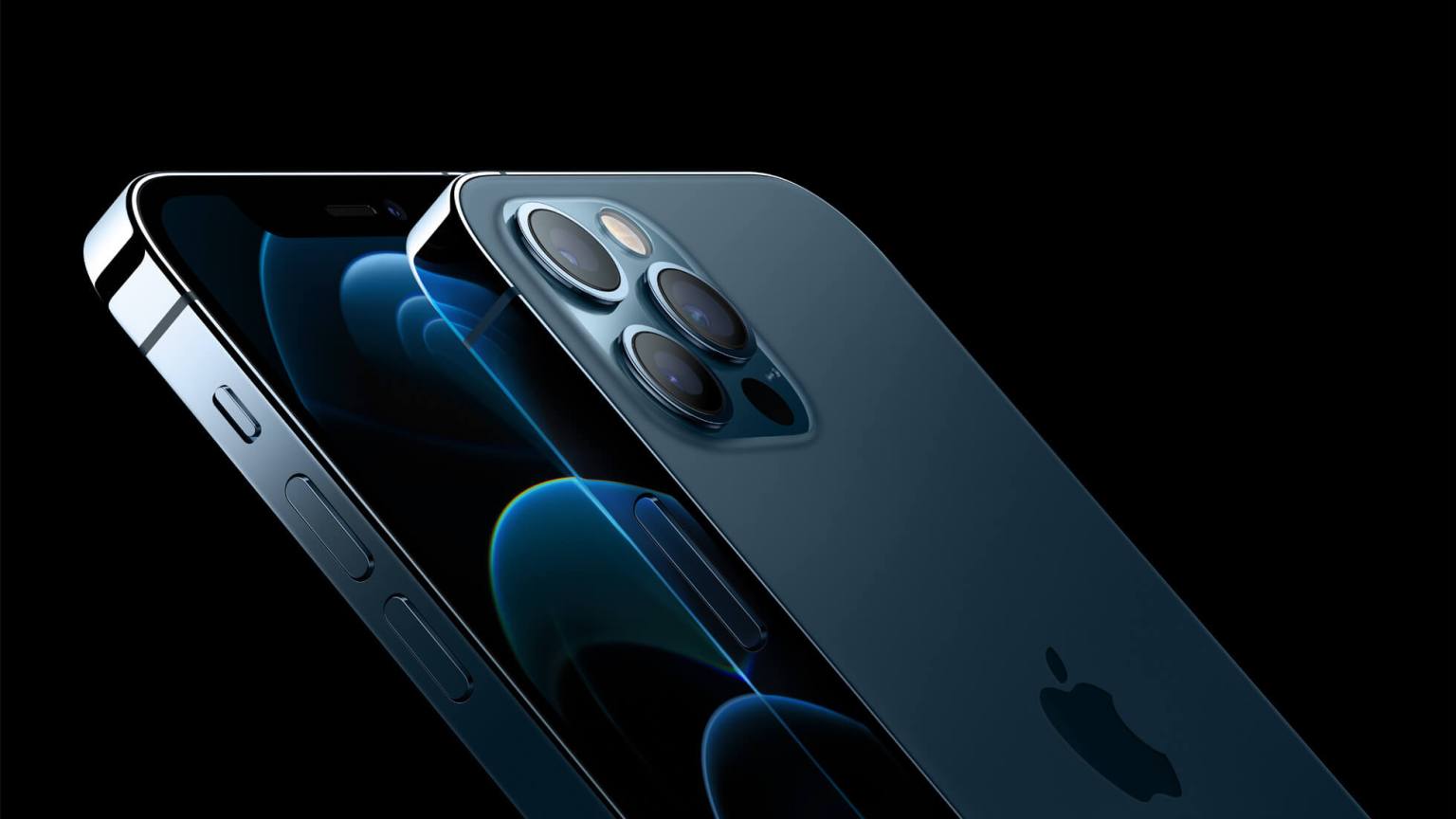
Image Source – Apple

Inclusivity  

We have long lived in a world with ableism. 

Ableism, as you might guess by the name, is when being “able-bodied” is considered the “natural”, the only “normal” state of existence. People are assumed to be without disabilities until they show otherwise. The consequences of such a mentality that assumes ability are vast, and have been affecting differently abled people since ages. One of them is how, for a long period of time, everything – from public spaces to textbooks – was made by default for people who didn’t have special needs. Not only was such an implementation of projects inaccessible by differently abled people, but also led them to believe that experiencing what others experience is off the table for them. 

Slowly and gradually, efforts were made to understand what differently abled people need – some of them by people with disabilities themselves. For instance, Louis Braille, who accidentally blinded himself at age three, grew up to create braille, a language for the blind, in 1829. Organised protests and widespread understanding also led to the creation of more inclusivity in public spaces. Many governments passed legislations that mandate ramps, wheelchairs, special handles, etc. in hospitals, schools, restrooms, etc. Similarly, technological methods were also adopted by makers of phones, laptops, televisions, etc. to make technology more accessible. 

In this blog, I will talk about some of the measures Apple has taken to make their iPhones more accessible to people across ability levels, including their latest and much talked about 12 Pro LiDAR. 

Apple’s History With Accessibility 

In a world where mostly everybody relies on smartphones, a much needed move was made by Apple in the year 2009, when they took the first step towards making the iPhone more accessible. The Voiceover Programme they created that year – that I will talk more about in the following paragraphs – made them the first smartphone company to launch such a feature, and was received with open arms by the differently abled community. They went on to launch numerous other features for the community. Here’s a list of options they have for different categories of needs: 

Hearing needs

-Apple created hearing aids based on bluetooth technology. Through these aids, people with hearing disabilities can stream whatever they’d like with good sound quality. They can also manage audio levels through their phone, adjusting sound volume for each ear differently depending on the hearing range. This option is available for regular earphones/AirPods as well.

-Subtitles or captions have also been made very easily available and can be turned on any time. 

-There are vibration alerts and alarms. 

-Further, when the setting is turned on, the iPhone can recognise common alarms like the fire alarm, the tsunami/flood warning alarm, a doorbell, etc. and give emergency alerts or notifications on the screen.

Motor Needs

-There’s an option of assistive touch for people who find the home button less manageable.

-In most iPhones, one can shake to undo. 

-The screen sensitivity and home button sensitivity is changeable. 

-A latest feature allows users to tap the back of their iPhone and choose from over 24 different actions. This list can be edited and users can create their own shortcuts.

Visual Needs 

In 2009 the iPhone 3GS was launched making an iPhone usable by blind people for the very first time in history. The addition was a voiceover programme, as mentioned above. 

-Voiceover developed into a built-in feature, pre installed in every iPhone. It provides screen-reading, or an option to read aloud everything that’s written on the screen. Its functions progressed to eventually allow sending out texts, typing and even opening apps by tapping on it twice. 

-There are prompts that respond to gestures for changing settings like the speaking rate of voiceover. 

-iPhones were made compatible with braille devices. 

-For low vision users, text enlargement was introduced. Now, the iPhone’s screen can be magnified upto 1500%

-The dark mode was introduced for users with light sensitivity problems.

Here’s an extract from a statement by Sandy Murillo – a journalist and blogger with visual impairment:  

‘Today, the iPhone not only helps me stay in touch with the world, it also gives me more independence. Apps like LookTell Money Reader and TapTapSee allow me to identify things without needing someone’s assistance. With the Bard Mobile and NFB NewsLine apps I can download books, newspapers and magazines in a matter of seconds to listen on my iPhone. The kNFBReader app quickly scans printed documents and reads them out loud to me. Thanks to Voiceover and the built-in accessibility of the camera, I can even take pictures! Finding last minute transportation has become easier thanks to apps like Lyft and Uber, and I can easily find my way to unfamiliar locations with the phone’s GPS.’ 

Here’s Sandy’s complete blog –  She writes content straight from the heart, has the lived experience of being specially abled and deserves to be heard!  

The new iPhone 12 Pro takes these visual aids to the next level with the introduction of LiDAR technology and people detection.

An Overview of the iPhone 12 Pro and its LiDAR Feature

The unexpected new feature the new iPhone Pro and 12 Pro Max have is the ability for blind users and users with low vision to – for all practical purposes – see other people coming. The feature went live on Thursday with the launch of iOS 14.2. 

Apple has christened this new feature ‘People Detection’. It happens with the use of a LiDAR sensor on the back of the iPhone. It’s the same type of depth sensor that is used in augmented reality apps and games, and as the eyes of self-driving cars. Apple has applied it to iPhones to simplify navigating the world around them for people with vision problems. 

Examples of this include helping people know when to move up in the checkout line at grocery stores, alerting them when people are walking close by on sidewalks in public spaces and letting them know when a seat is available on public transport. This feature will come especially handy in the current times. With the coronavirus pandemic requiring people to maintain social distance, they can safely keep a distance of upto 15 feet/5 meters with people, just like everybody else.

About the LiDAR Sensor  

LiDAR stands for Light Detection and Ranging. 

The LiDAR scanner is built into the camera array of the new iPhone. It is a minuscule dot at the back and uses Apple’s ARKit Occlusion feature to detect if someone is in the camera’s field of view. How far away they are is also something the sensor can estimate. 

The science behind this is – the sensor sends out a short burst of infrared (IR) or ultraviolet (UV) light that momentarily illuminates its target. It is then bounced back to the sensor in a certain amount of time. This time is used to calculate the distance – the speed of light is a known constant in air. 

In more advanced setups, radiations of different wavelengths are used. The resultant difference in return times are then used to make digital 3-D representations of targets. This has terrestrial and airborne applications and is usually the technology used in jets and even satellites. 

Settings and Prompting People Detection 

This real time sensing can happen in four possible methods and, as per convenience, users can employ them in any combination. 

  1. Users can know how close somebody is to them through an audible readout. There are numbers – 1, 2, 3 and so on – in terms of feet. In meters, the lowest unit is half a meter. These numbers are called out indicating the literal distance.
  2. Users can set up a threshold distance – for example, 2 meters/6 feet (the default setting) – beyond which a certain sound is emitted and within which, a distinctly different one is.
  3. A haptic alert can be set up. This works by varying the intensity and speed  of physical pulses with respect to the distance between the user and the person detected. The farther a person is, the softer and lower the generated pulse is. As the person comes closer to the user, vibrations get louder and more frequent. The buzz can be heard, or, in the case of users with hearing impairments, be felt through touch. 
  4. A visual readout of the screen is possible that indicated in text how far the closest person to the user is. For people with low vision, a dotted line even indicates position and direction.

This setting is contained in Apple’s magnifier app. The app can be launched either through the latest back tap option or by triple clicking the side button. Siri can also be used to launch it. 

The Future 

Even though the technology has only yet come to iPhone 12 Pro and 12 Pro Max, it is all set to launch for iPads and Apple Watches as well. Attempts are being made to extend this ‘People’ Detection to Object Detection as well. 

We hope Apple continues on its journey to make technology more inclusive for people across ability levels and that others also take inspiration from them!

What It Takes to Be A Successful On-Demand Handyman App

Currently we are living in a world where people want different services at their doorstep at an instant touch. We are living in an era, where services are made available and accessible at our fingertips. This instant touch idea has increased more since the day of launch of Uber, it has paved the path for developers to reach customers and users faster. It has also paved the path for users and customers to meet their service requirements easily. Most of them may find it hard, trying to balance their professional life and personal life. For example, take a situation where an individual is working at office but there has been a requirement of electrician at home by the individual’s mother. In such situations, ondemand handyman mobile app will be extremely helpful. 

Ondemand Handyman App like Uber 

Developing on-demand apps for handyman business allows customers to hire electricians, carpenters or any such home maintenance services on the go. Also, hiring home maintenance service providers through mobile applications help in accomplishing your repair works quickly and easily.  Hence, ondemand handyman apps have potential to be one of the next big trending life-style ondemand mobile applications that help users. 

Factors That Your ondemand Handyman App Should Satisfy And Pave The Path To Success 

Handyman services

Users Should Be Able To Save Their Time 

Customers and users can focus on their chores with undivided attention on both their daily activities and repairs required without letting repair works affect their planned schedule. No matter the time and situation, your on demand handyman software app should provide users with the ability to easily, quickly and instantly hire a home repair or maintenance person. In addition, the user must be able to save time in searching and looking for a quality home repair or maintenance person. The below feature will allow users to save time in large while hiring any home service provider. 

Save time by making appointments online 

Users and home service providers should be provided with the ability to connect with each other through video and voice calls. Further, these features allow meeting the users requirements quickly and efficiently. Once an appointment has been made through voice and video call, your ondemand handyman app should send a notification of appointment confirmation. And, this notification must allow the user to see necessary information of time, address and contact info of the home service provider. 

Effortless accessibility to home services 

Ensure to tie-up with a third-party home service provider and also local home service people such as electricians, plumbers, home repair service people, etc. Ensure that users have sufficient information about the home service provider in your ondemand handyman app. This information should include phone numbers, visiting address or website, etc. Through such information, users should be able to get easy accessibility without delay in order to meet their requirements. To make necessary information available to users and home service providers, make sure to develop the following features. 

Sign-in and Sign-up provision for users and home service providers 

New users must be able to use the sign-up provision and create a portfolio of themselves with necessary information. This information allows home service providers to contact the user. Existing users must be able to use the sign-in provision and use any feature in-app feature hassle-free. 

New home service providers must be able to sign-up and provide necessary information on maintenance services provided in their portfolio. This information should include name, contact number, company name in case of a third-party service provider, e-mail id, address and the fee charge. This information should be visible to users to validate the home service provider. Existing home service providers must be able to sign-in and accept appointments, use in-app features and update their information if required. 

Ensure the ondemand handyman app is flexible and reliable 

You can provide users with 24/7-hour service and accessibility to home service providers. However, still sometimes due to unforeseen circumstances, it might not be possible to accept an appointment as scheduled. These unforeseen circumstances include network failure, system maintenance, natural calamities, personal problems of the home service provider, etc. 

In such circumstances, the administration or the home service provider themselves must be able to change and update the scheduled appointment. This change and updated appointment time must also be notified to the user by your ondemand handyman app notifications. This provides a sense of reliability in the minds and hearts of the user. This in turn would create brand loyalty too. 

The below two features are some of those features if developed correctly will enhance reliability. 

Provide hassle-free payment methods 

User should be provided with multiple alternate payment mode of choices. These multiple alternate payment modes include:

  • debit card,
  • credit card,
  • e-wallets,
  • digital wallets and
  • cash.

All this makes the payment process faster without any wait time or delay. 

Efficiently manage schedules and appointments made 

Once home services providers make any edits in the scheduled appointment or portfolio, the user must be notified of those updates in real-time. This will enhance the user experience and also eliminate any miscommunication or confusion. 

Effortlessly locate nearby home service providers 

Make sure that all registered home service providers in your ondemand handyman app is visible by special markets in real-time. Further, the location and map should be accessible through your ondemand handyman app. It must allow users to locate home service providers near to them and get instant access as fast as possible. 

Live tracking feature enhance user and home service provider relationship 

Ensure that the map you provide operates in real-time. Also, users must be able to track their home service providers. This tracking should be available in terms, time remaining to reach the user, days remaining to accomplish the scheduled home service or maintenance, etc. This allows users to be informed that there is no change or update in the scheduled appointment and everything is according to plan. This eases the user to have peace of mind too. 

Over to you!

Ondemand Handyman App

When you are able to satisfy users with their home requirements, it by itself enhances customer loyalty. This in turn, will provide your ondemand handyman app a competitive edge in the market. Hence, ondemand handyman app has the potential to revolutionize and disrupt the service industry.   

SoluLab Featured Among India’s Best by Clutch

This blog post is a guest content contribution by Clutch.Co. 

Turning dreams into reality: Through our development and design services, SoluLab helps clients convert their ideas and thoughts into real, premium products. Whether businesses want help strengthening their mobile apps and web presence or are in search of another software solution, SoluLab has the requisite experience, knowledge, and passion.

We add heart to technology, which has made our team one of the premier mobile app developers in India!

Thanks Clutch for acknowledging our Tech presence!

This highlighting of our app, software, and website design and development skills is thanks to the data collection and analysis of Clutch and The Manifest, sister business insight firms. By combing through analytics of market presence, experience, client satisfaction, and other scores, The Manifest and Clutch produce rankings that compare companies’ performance and quality across industries or countries.

clutch widget

We very much appreciate the acclaim of us as an industry leader within India and the testaments to our excellent service and skills, but beyond what the professionals have to say, SoluLab also wants to showcase some of the feedback that our previous clients have shared about their experiences with our company and their satisfaction with our final products.

Clients’ reviews of SoluLab – listed on Clutch

“I’m very happy with the work they’ve done for my company. We’ve received good customer feedback, and they’ve always been there in terms of support. They proved that they had the right people and the right amount of experience to get the product off the ground,” praised one client. “The transparency, quality of work, and support we’ve gotten from SoluLab—for the amount of money we spent—were excellent. They made sure we got the best value for money.”

clutch reviews

“They’re very easy to work with, which is a huge factor when dealing with contractors. Their communication is fantastic, and the quality of work is great. The reliability and stability of the solutions they provide is as good as I would produce myself, which is rare to find among contract workers. Their project management is off the chart,” raved a second client. “You don’t normally find developers of this high-quality at that cost. Their thoroughness on tasks is probably the second most impressive. They architect everything out really well, they’re easy to work with, and they’re technical, so they get it. They’re obviously smart guys technically. They also communicate really well.”

We greatly appreciate the trust that our clients have placed in our team as their technology partner and provider, and full-length reviews can be read on our Clutch profile if you’d like to read more details about what our customers have to say. SoluLab looks forward to continuing our collaborations and to cultivating quality software solutions for our clients and their businesses.

Please reach out if you have questions about our experience, want to hear more about our approach, or are interested in opportunities to partner in the future!
