Talk to an Expert

What Makes Germany a Natural Fit for Carbon Credit Tokenization?

Germany Carbon Credit Tokenization

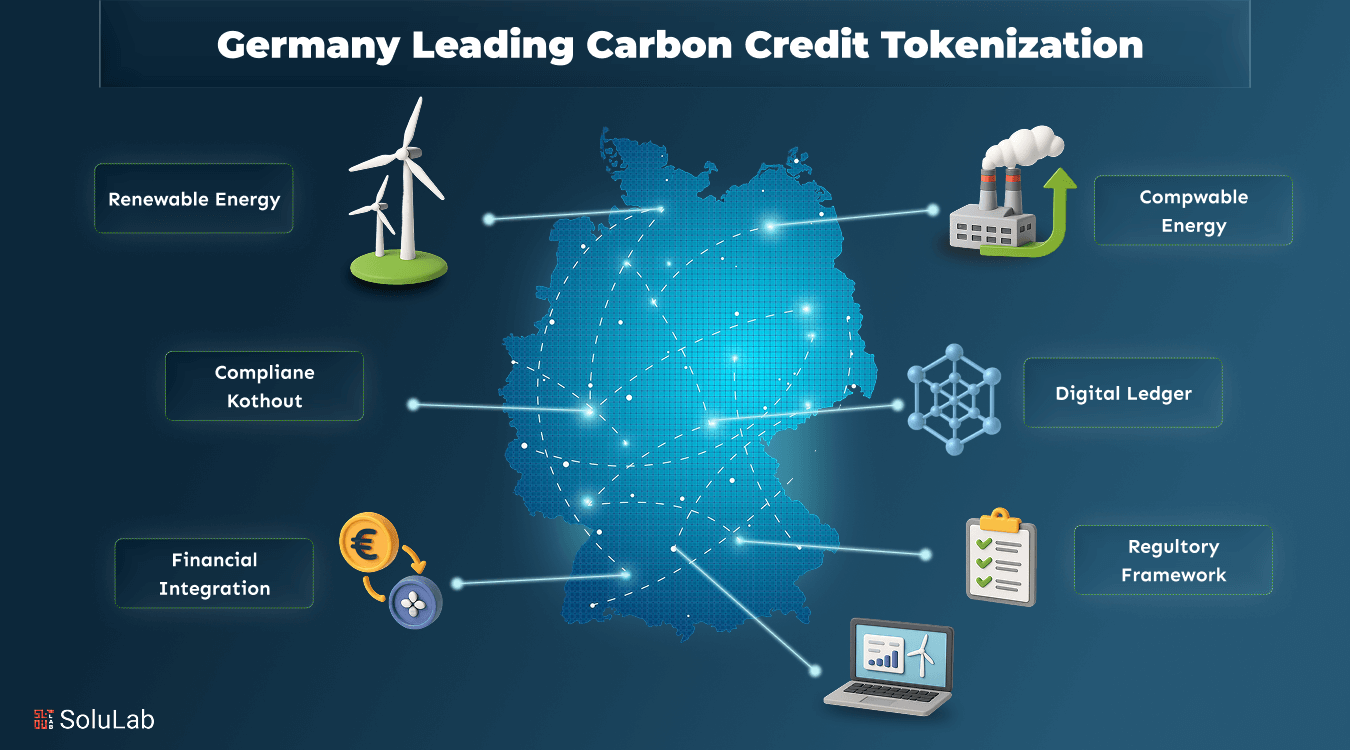
Can digital tokens make carbon credits more trustworthy and easier to trade? Germany seems to do so. As one of the world’s leading industrial economies, Germany is taking bold steps to merge technology with sustainability. A new blockchain-based carbon credit trading platform is making headlines, but that’s not all. Behind the scenes, a serious clean-up effort is underway to fix past carbon fraud and build a market that actually works.

Let’s explore how Germany is leading the Carbon credits tokenization transformation, from launch to clear regulations. It is chasing down carbon credit fraud, and why this matters for businesses, traders, and the planet.

Germany Backs Blockchain Technology for Climate Innovation

Germany has committed to achieving climate neutrality by 2045. This bold goal needs more than just policy; it demands innovation. That’s why tech firm Neutral and regulated brokerage DLT Finance teamed up to build a new kind of carbon credit tokenization trading platform. This isn’t just another crypto experiment. It’s a regulated, buttoned-up exchange designed for serious commodity traders. The goal? Bring real liquidity, trust, and compliance into a market that’s been missing all three.

Neutral provides the technology while DLT Finance offers the regulatory setup. Traders don’t need crypto wallets, blockchain knowledge, or token jargon. They just get a professional platform that lets them trade verified carbon credits smoothly.

Inside the First Regulated Tokenized Carbon Exchange

The new platform aims to solve the biggest problem in carbon markets access and trust. Traditional traders often avoid decentralized exchanges due to a lack of oversight and poor liquidity. This exchange changes that.

Key Features of the Platform

  • The platform uses blockchain infrastructure, but it stays hidden from the user to offer a smooth, easy-to-use interface.
  • Built under full regulatory compliance with German financial laws, ensuring legal clarity and trust for institutional traders and participants.
  • Specifically designed to handle large-scale trades with deep liquidity, making it more reliable than most decentralized exchanges in operation.
  • Ten major commodity trading houses are currently being onboarded, reflecting strong early adoption and institutional interest in regulated tokenized assets.

Ghandour, the CEO of Neutral, made it clear that they designed the platform to feel like any other high-end commodities exchange. The only difference? It’s backed by real-world tokenized assets, making it efficient and verifiable.
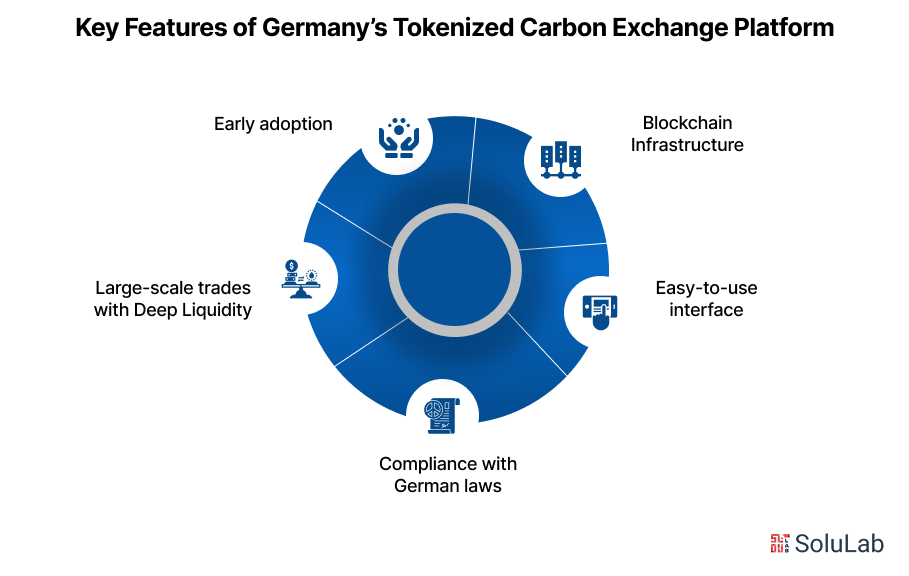
Key Features of Germany’s Tokenized Carbon Exchange Platform

Germany’s Political Push for Market Legitimacy in Tokenization of Carbon Credits

The tech is only part of the story. Germany’s upcoming coalition government is aligning regulation with innovation. A new treaty presented by party leaders pledges to support carbon credits tokenization, even foreign-based ones, as a legitimate way to meet climate targets.

Key Political Commitments

  • Germany will meet its legally set 88% carbon reduction target for 2040 without burdening industries with unrealistic expectations.
  • Companies can use up to 3% high-quality, certified foreign carbon credits to offset residual emissions under strict verification guidelines.
  • The government supports expanding EU-wide carbon pricing systems and aligning laws with broader climate neutrality goals for all members.
  • New policies will enable carbon capture, transport, and offshore storage to manage unavoidable emissions from critical industrial sectors efficiently.

This political backing shows Germany isn’t just testing new tech, it’s building policy guardrails to make tokenized carbon credits work for real.

Germany’s Investigation Revealed the Carbon Credit Fraud

While this new exchange offers hope, Germany also had to deal with a harsh truth: carbon credit fraud has been real and widespread. The Federal Environmental Agency (UBA) found several German companies using fake or inflated carbon credits. These credits were supposed to represent real CO2 reductions through environmental projects. Many didn’t exist or didn’t deliver the impact they promised.
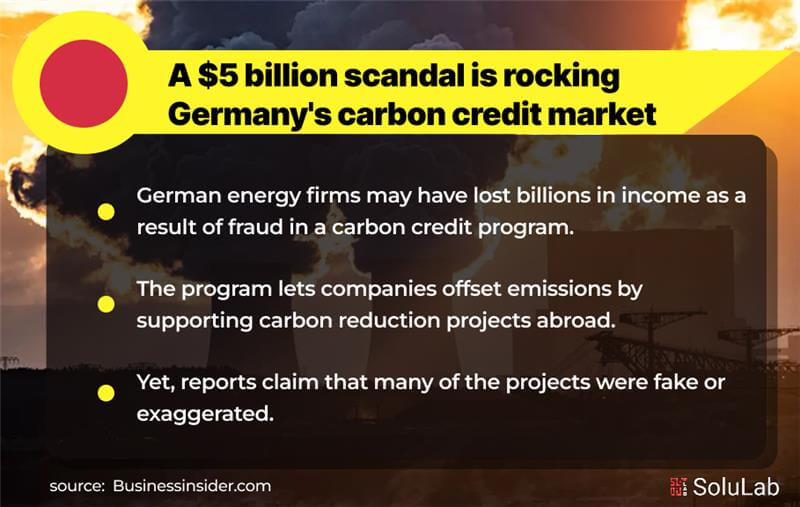
Germany Leading Carbon Credit Tokenization Market News

How the Investigation Unfolded

In multiple cases, companies claimed credits for projects that were either non-existent or misreported. The result?

  • German authorities rejected 215,000 tonnes worth of carbon credits after discovering false claims about emission reductions in certified projects.
  • Eight more projects were flagged for serious violations, including missed deadlines and failure to follow operational and reporting requirements properly.
  • Berlin prosecutors conducted raids on environmental auditing firms suspected of approving fake carbon credits and colluding with project developers.

Germany’s response was swift and aggressive. UBA suspended credits and flagged 40 out of 69 projects for further review.

The Cost of False Credits

The companies under investigation may have avoided up to €4.5 billion in penalties by padding their climate records with fake credits. That’s not just fraud, it’s a serious blow to public trust in climate action.

A closer look at how Germany assessed the carbon fraud cases and the scale of ongoing investigations.

Project Category Total Reviewed Flagged for Irregularities Estimated Avoided Fines (€)
Renewable Projects 25 12 1.2 billion
Forestry Offsets 18 10 950 million
International Projects 26 18 2.35 billion
Total 69 40 4.5 billion

Germany’s Response to Carbon Credit Fraud

Germany took real steps to prevent this from happening again. Here’s how they’re fixing the cracks and rebuilding market integrity:

  • New verification rules now require full project audits by independent international bodies, reviewed locally before approval.
  • Environmental auditing firms must meet strict compliance standards and pass annual oversight by government climate watchdogs.
  • Only certified projects with geolocation and timestamp verification will qualify for credits on regulated exchanges.

Restoring Trust Among Carbon Credit Investors

Regulators didn’t stop with corporate offenders. They also targeted the auditing firms involved in certifying these fake credits. In July, German prosecutors raided their offices, alleging collusion and negligence.

Germany rolled out urgent reforms to ensure carbon credits are valid, trackable, and impactful.

Reform Area Description
Certification Process Independent audits, project geo-verification, and timestamped tracking
Legal Action Raids and investigations into auditing firms and corporate offenders
Regulatory Oversight Annual compliance checks by the Federal Environmental Agency (UBA)
Public Transparency Open data access for all certified credits on government-backed portals

These actions show that Germany wants to build a model system, one that other countries can learn from.

Why Germany Leads the Way in Carbon Credit Reform

Germany combines strong tech and law, building a carbon credit market that balances innovation with strict regulation. Regulators act quickly, punishing fraud and reforming broken systems with clear public messaging and new enforcement rules. Germany promotes blockchain-backed projects while keeping user experience clean, simple, and familiar for traditional traders.

What This Means for the Global Market

Germany’s moves go far beyond its borders. Other countries struggling with carbon fraud now have a clear roadmap. Start with strict and transparent verification reform to ensure every carbon credit represents real, measurable, and scientifically backed emission reductions. Enforce clear climate regulations with strong legal power to hold companies and verification partners accountable for fraud or misreporting practices. Introduce blockchain-based tools that improve credit traceability and data transparency without confusing users or requiring deep technical knowledge or crypto tools.

By enforcing these steps, Germany proves that tokenizing carbon credits can be both effective and ethical.

Tokenization Development Services

The Path Ahead: Merging Tokenization and Trust

The launch of Neutral’s regulated platform shows how blockchain can support, not replace, climate systems. When backed by law, transparency, and simple access, tokenized carbon credits become far more than a niche tech solution. They become a core financial tool in the fight against climate change. And Germany, with its tech-driven approach and regulatory courage, may just lead the way.

SoluLab, a tokenization platform development company, builds end-to-end blockchain solutions for climate impact, from credit design to DeFi integration. With expertise across Ethereum and Polygon, their team ensures secure, transparent, and scalable carbon credit tokenization. SoluLab helps organizations create smart contracts and integrate with DeFi for better liquidity and trust. Unlock the full potential of blockchain for sustainability with a trusted partner. Contact SoluLab today to get started.

FAQs

1. What is carbon credit tokenization, and why is Germany focusing on it? 

Carbon credit tokenization turns emission reductions into secure digital tokens. Germany is focusing on it to improve transparency, stop fraud, and make carbon markets more efficient for both companies and climate-focused investors.

2. How is Germany making tokenized carbon credits more trustworthy? 

Germany enforces strong regulations, requires independent project audits, and uses blockchain technology to track and verify each credit. This approach builds real trust and accountability in a market that previously lacked clear oversight.

3. Why are traditional traders choosing this new platform over decentralized exchanges? 

This regulated platform feels familiar, works without crypto wallets, and offers better liquidity. It’s simple for traders to use, without needing to understand blockchain, just the benefits of verified, tradable, and secure carbon credits.

4. What steps has Germany taken against carbon credit fraud?

Germany suspended fraudulent credits, raided auditing firms, and introduced stricter verification rules. These steps ensure only genuine, impactful carbon projects get tokenized and traded, protecting the environment and restoring market confidence.

5. How does blockchain make carbon credit trading better?

Blockchain helps by tracking every credit transparently from origin to trade. It prevents double-counting, fraud, or lost data, giving both businesses and regulators a clear view of the carbon impact and ownership trail.

6. What other countries are backing carbon credit tokenization like Germany

Singapore, Switzerland, and the UAE are also exploring or supporting tokenized carbon credit projects. Like Germany, they aim to combine blockchain’s efficiency with strong oversight to build global trust in climate-focused finance.

Green Energy Tokenization: Turning Renewable Power into Profitable Assets

Green Energy TokenizationThe clean energy market is growing fast, with over $2 trillion expected to be invested by 2030 (IEA). But many renewable projects still face funding challenges. That’s where green energy tokenization and tokenizing clean energy come in.

Tokenization of renewable energy means turning energy assets like solar and wind farms into digital tokens on the blockchain. These energy tokens make it easy for investors worldwide to fund and trade clean energy projects, especially in forward-thinking markets like the UAE where RWA tokenization is on the rise.

For companies ready to grow in the green economy, renewable energy tokenization is a smart way to fund projects and meet ESG goals. Partnering with a tokenization platform development company or a blockchain development company can make this easier.

What is Tokenization of Renewable Energy Assets?

Green energy tokenization means turning real renewable energy assets, such as solar panels, wind farms, or bioenergy plants, into digital tokens using blockchain technology. These tokens act like shares, giving investors partial ownership and clear, secure records of the assets.

As companies push to meet environmental goals and net-zero targets, tokenized renewable energy is becoming a powerful way to open up green investments. It allows businesses and investors worldwide to easily buy, sell, and trade parts of renewable energy projects transparently and efficiently.

For example, a big solar project in Arizona or an offshore wind farm in the UK & UAE can be divided into many tokens. These tokens represent a share of the project and can be bought or sold on digital platforms. This is already being implemented in Real World Asset Tokenization in the UAE, where innovation in blockchain in the energy market is accelerating.

This tokenization of renewable energy supports a fairer, more accessible market for clean energy investments, helping industries grow sustainably while meeting ESG standards.

How Blockchain Powers Renewable Energy Markets?

Blockchain-powered solar asset tokenization creates a secure and transparent way to manage energy assets. Using smart contracts, ownership and energy trading happen automatically without middlemen.

For businesses, working with a blockchain development company or a smart contract development company is key. These experts build the trusted systems that handle these transactions smoothly and safely.

Also, blockchain solutions to tokenize renewable energy assets improve traceability and ensure compliance, two major challenges in traditional energy financing. This makes green energy tokenization investments in the USA and other regions more reliable and attractive.

Benefits of Green Energy Tokenization

Benefit of Green Energy Tokenization

For Energy Developers & Project Owners

  • Access to a larger global pool of investors
  • Easier project financing through tokenizing clean energy
  • Faster liquidity by offering tradable energy tokens on trusted platforms
  • Reduced delays and costs through blockchain-powered solar asset tokenization

For Institutional & Retail Investors

  • Low minimum investment in tokenized clean energy
  • Transparent, real-time project data via smart contracts
  • Ability to diversify into tokenized renewable energy in the UAE and ESG-aligned assets
  • Improved exit options due to secondary market liquidity

For the Environment & Ecosystem

  • More clean energy projects get funded faster, and emerging regions like the Middle East
  • Enhanced emission tracking and tokenized carbon credits
  • Supports climate goals through traceable renewable energy tokenization

In short, tokenization of renewable energy solves the funding gap, invites broader participation, and creates a smarter, scalable path to clean energy deployment. Businesses using blockchain solutions to tokenize renewable energy assets also benefit from faster time-to-market and reduced operational risks.

This approach also fits well with emerging decentralized Web3 ecosystem models, opening doors to cross-sector collaboration and digital transformation across the energy landscape.

Use Cases and Real-World Examples

Green energy tokenization is not just a future concept; it’s happening now, with measurable impact.

  • In California, a solar energy project raised $5 million by tokenizing 10% of its infrastructure, enabling over 2,000 micro-investors to participate. This shows how tokenized renewable energy allows access to capital that was previously out of reach for smaller projects. This success shows the power of green energy tokenization investments in USA.
  • In Germany, local energy cooperatives are using green energy tokens to fund wind power projects. By offering fractional ownership, they allow communities to invest directly in their own clean energy sources.
  • In the Middle East, especially the UAE and Singapore, governments are launching regulatory sandboxes to explore how the tokenization of renewable energy can safely grow within legal frameworks. These regions are becoming hubs for innovation in blockchain in the energy market to tokenize renewable energy assets.

Leading real-world asset tokenization companies in the UAE are already delivering results. They’re helping businesses transform physical renewable energy assets into investable digital tokens, backed by trusted blockchain development companies.

These examples prove that renewable energy tokenization is more than hype; it’s a practical tool for companies to raise capital, build faster, and involve more stakeholders.

CTA- 1

Key Technologies behind Green Energy Tokenization

Smart contracts govern how tokenized clean energy assets are managed on the blockchain. In green energy tokenization, they manage how energy tokens are created, transferred, and settled. These contracts:

  • Automatically handle payments and revenue distribution
  • Track real-time energy production or usage
  • Ensure compliance with local and global energy regulations

An energy token represents a unit of renewable energy, like 1 kWh of solar or wind power. These tokens are issued on the blockchain and are tied directly to renewable energy assets. Businesses use them to sell or trade energy output digitally.

Advanced projects also connect these tokens with AI agents for energy and utilities to manage energy supply, forecast demand, or optimize grid load automatically.

This is critical in markets like the UAE, where Real World Asset Tokenization is supporting solar and hydrogen projects aligned with ESG mandates.

For example, a wind farm can tokenize its energy production, use smart contracts to send earnings to investors, and use AI to forecast demand in high-consumption areas.

Read More: Why Is Real-World Asset Tokenization Gaining Global Popularity?

How Is Green Energy Tokenization Used Globally?

Many countries are now using green energy tokenization to make clean energy investments more accessible, transparent, and scalable. Governments and companies around the world are testing and adopting the tokenization of renewable energy to meet climate goals and attract investors.

Here are some of the top countries leading the way:

USA 

Launching community solar and wind projects using energy tokenization platforms. These allow small investors to fund local renewable energy assets, supporting green energy tokenization investments in USA.

UAE 

Backed by strong government support, the country is pushing blockchain technology in tokenizing renewable energy to attract foreign investors in solar farms and green hydrogen projects, helping RWA tokenization UAE.

UK 

Cooperatives and energy companies are issuing green energy tokens to fund wind and hydropower installations.

Germany 

Known for energy innovation, Germany is enabling local communities to invest through tokenized renewable energy shares, creating tokenized carbon credits.

Singapore 

A regulatory sandbox is testing tokenization platform development company offerings for green energy credits.

India 

Several pilot programs are working on solar energy token sales and smart meter tokenization.

Australia 

Energy marketplaces are using blockchain development to tokenize and trade clean energy.

Canada 

Asset managers are developing tokenized clean energy ETFs, bringing more traditional investors into renewable energy tokenization.

Netherlands 

Blockchain is being used to manage energy tokenization and peer-to-peer energy trading.

Japan 

Exploring blockchain solutions to tokenize renewable energy assets as part of its decarbonization strategy.

These global trends show that the tokenization of renewable energy is no longer a future concept. It’s already being used to finance renewable energy assets in real time. Countries are tapping into asset tokenization to improve liquidity, traceability, and stakeholder participation in energy infrastructure. Even crypto assets are becoming part of these projects as new ways to fund and trade energy.

Read Also: Key Green Finance Trends

Top Green Energy Tokenization Platforms

Green Energy Tokenization Platforms

If your business is planning to enter the green energy token space, here are three leading platforms that are shaping the market:

1. DAMREV

DAMREV is a global leader in tokenized clean energy built specifically for renewable energy assets. It allows businesses to tokenize solar, wind, and hydro projects with benefits like fractional ownership, improved liquidity, and wider investor reach. By using blockchain technology in tokenizing renewable energy, DAMREV makes these assets easy to trade and invest in globally. It’s a great example of how green energy tokenization is transforming traditional finance into digital investment channels.

2. Powerledger

Powerledger is a well-known player in peer-to-peer energy tokenization. It enables real-time trading of green energy tokens between producers and consumers. Businesses can benefit from its decentralized energy market model that reduces costs and increases transparency. Powerledger’s platform is already used in countries like Australia, India, and the USA, proving that tokenized renewable energy is not just a concept but a working reality supporting green energy tokenization investments in USA.

3. Stobox

Stobox offers a secure, regulation-compliant system for the tokenization of renewable energy projects. Their STV3 framework supports legal enforceability, KYC/AML compliance, and governance automation, crucial for any B2B entity looking to issue energy tokens. For companies wanting a structured entry into asset tokenization, Stobox bridges the gap between traditional finance and modern Web3 tools. It’s Legal-compliant systems supporting blockchain-powered solar asset tokenization in regulated markets like the Middle East.

If you’re considering launching your own tokenization platform, it’s smart to collaborate with a trusted company or hire blockchain developers to ensure your architecture is enterprise-ready and compliant from day one or Reach out to us, and we can build it for you in less than 45 days.

How Your Business Can Get Started?

Getting into green energy tokenization is easier than you might think. Here’s a simple step-by-step guide to help your business begin:

  • Identify your renewable energy assets – This could be a solar farm, wind turbine, or hydro plant.
  • Partner with a reliable blockchain development company – They will help you digitize your renewable energy assets.
  • Build smart contracts – Choose a smart contract development company to create digital rules that govern how your tokenized carbon credits behave.
  • Issue your tokens securely – Work with a tokenization platform development company to launch your tokenized renewable energy assets.
  • Enable investments and trading – Use regulated platforms to let others invest in your project. You can also explore a DeFi lending platform for financial flexibility.

By combining the expertise of a top blockchain development company, your green project can scale efficiently with features like automated investor dashboards, real-time analytics, and compliance reporting.

CTA-2

Conclusion

Green energy tokenization is more than a tech trend; it’s a new model for building, funding, and scaling clean energy. It empowers businesses to unlock capital, reach global investors, and meet ESG goals faster.

With growing interest in RWA tokenization UAE, Blockchain in the energy market, and tokenized carbon credits, your business has a real chance to lead this shift.

As a leading real-world asset tokenization company in the USA, we help businesses like yours turn complex renewable projects into investable digital assets. From fractional ownership to automated smart contracts, we offer full support to navigate this transition.

The future of energy is clean, digital, and borderless. The question is: Are you ready to lead this change?

FAQs

1. What is the main benefit of tokenizing renewable energy assets? 

It allows businesses to raise capital more easily, while giving investors flexible access to sustainable projects.

2. Is green energy tokenization legal?

Yes, in most countries. But it’s important to follow local financial regulations. A trusted blockchain development company can guide you.

3. How much does it cost to tokenize a solar project?

Costs vary by project size. Working with a tokenization platform development company can offer custom, scalable options.

4. Can small businesses tokenize their renewable energy projects?

Absolutely. Energy tokenization allows even small solar or wind projects to raise funds from a global pool of investors.

5. What are the best countries to launch a green energy tokenization project?

Today’s leaders include the USA, UK, UAE, Germany, Singapore, and Australia, thanks to clear regulations and strong demand.

6. What’s needed to manage investors after launching tokens?

You’ll need a platform for dashboards, reporting, and payouts. This can be automated with the help of an AI development company.


Guide to Tokenization of Carbon Credits in 2026

Understanding The Carbon Credit Tokenization

By 2030, tokenized assets are predicted to have a $16 trillion worldwide market capitalization. Real-world asset tokenization has the potential to transform several sectors, including carbon credits, real estate, equities, and the arts. With the invention, the potential applications of blockchain technology in several industries have advanced significantly.   

Creative ways to support environmental sustainability are emerging as the globe struggles with the pressing issues of climate change. One of the most promising of these is the tokenization of carbon credits, which uses blockchain technology to make the carbon market more open, effective, and accessible. This blog explores everything you need to know about carbon credit tokenization including how it works, its advantages, fundamentals, and use cases.

What are Carbon Credits?

Before we talk about tokenizing, let’s have a better knowledge of what are carbon credits. Permits known as carbon offsets or carbon credits allow companies to release a specific quantity of greenhouse gases, or carbon dioxide. One ton of carbon dioxide (CO2) is equal to one carbon credit. As per the report provided by Ecosystem’s marketplace annual report, the voluntary carbon credit market reached a valuation of over $2 billion by 2022.

By giving businesses financial incentives to decrease their carbon footprint, the carbon credit system seeks to lower greenhouse gas (GHG) emissions. Businesses are given a fixed quantity of credits under this system, which gradually diminishes, and they are free to sell any extra credits to third parties. The cap-and-trade concept which was effectively employed to reduce sulfur pollution in the 1990s, is the foundation of this system. The framework’s worldwide applicability was further strengthened in November 2021 when negotiations decided to create an offset trading market for global credit carbons at the Glasgow COP26 climate summit. 

What is the Role of Banks in Carbon Credit Tokenization?

Banks have a big part to play in the new market for tokenizing carbon credits, and moving quickly, they can become disruptive forces when it comes to virtual asset markets. Here are the major features of banks in carbon credit tokenization:

  • Technology and Market Leadership 

Leading this modern technology businesses set an example for others to look up to and depict a dedicated environment leading towards enhanced responsibilities 

  • Increasing Consumer Demand 

Early adoption of carbon credit tokenization by banks would enable them to meet this demand and draw in a new market of customers who are economically aware. 

  • Dedication to Addressing Climate Change

By actively participating in the creation of carbon credit tokenization methods, banks may show their dedication to addressing climate change in line with international imperatives. 

  • Tokenized Securities for New Income Source

Banks can develop new tokenized securities, such as green bonds or structured products linked to the tokenized carbon credits, and gain from improved branding and reputation, particularly if concerns about climate change gain traction.

Read Blog: What Makes Germany a Natural Fit for Carbon Credit Tokenization?

Top 5 Use Cases of Carbon Credit Tokenization

The potential of tokenized credit carbons in practical applications is being demonstrated by these top 5 real-world use cases of carbon credit tokenization:

  • Verra

Leading worldwide carbon standard organization Verra has been at the forefront of the tokenization of carbon credits. Verra is streamlining its Verified Carbon Standard (VCS) credits by collaborating with blockchain platforms. To make it simpler for companies and individuals to trade carbon credits and offer their emissions, this effort seeks to improve the carbon market’s transparency, accessibility, and liquidity. 

  • Flow Carbon 

A platform for buying and retiring carbon credits is provided by Flow Carbon to both individuals and organizations. Additionally, its platform offers tools for monitoring and validating the effects of such credits, and initiatives. Through easily accessible and traceable carbon credit exchanges, Flow Carbon is dedicated to advancing climate action. 

  • Moss

Moss works to protect Brazilian rainforests, especially the Amazon. Moss has made it possible for people and organizations to contribute to the conservation of the rainforest by tokenizing carbon credits that are produced from the maintenance of this important environment. They immediately support the preservation of the most important environmental resources in the world by using Moss tokens. 

  • Klima DAO

The decentralized autonomous organization (DAO) dedicated to climate action is Klima DAO. By minting Klima tokens and buying carbon credits, Klima DAO establishes a direct connection between the cryptocurrency community and the carbon market. This strategy combines the realms of blockchain technology and environmental sustainability by encouraging people and businesses to invest in carbon credits along with promoting climate-positive initiatives. 

  • Celo

Celo’s mobile-first blockchain infrastructure is being used to investigate the possibility of tokenizing carbon credits. Celo hopes to increase accessibility and inclusivity of climate action by including carbon credit tokenization within its platforms, particularly for people and communities in countries that are developing who might not otherwise have access to carbon trading. 

Tokenized Carbon Credits: A New Asset Class for Climate Action

Tokenized carbon credits represent verified greenhouse gas reductions on the blockchain. Each token denotes one metric ton of carbon dioxide avoided or removed from the atmosphere.

These credits are created by bridging existing credits from carbon registries into crypto tokens. Rigorous verification ensures the environmental integrity of each tokenized credit.

For organizations, tokenized credits offer a blockchain-based tool to offset residual emissions and meet sustainability goals. They also allow individuals to compensate for their personal carbon footprints.

Trading these tokens unlocks liquidity, transparency and standardization in carbon markets plagued by fragmented trading and data inconsistencies.

On blockchain platforms, tokenized credits become a fluid digital asset class enabling seamless transactions. This gives corporations, governments and individuals equal access to carbon as an investable commodity.

CTA1

Tokenizing Carbon Credit: The Process 

Carbon credit tokenization converts real-world carbon credits into digital tokens using blockchain technology. This unlocks new potential for carbon markets. The tokenization process involves:

  • Verifying the carbon reductions of projects like renewable energy or reforestation. Audits rigorously quantify the emissions avoided.
  • Recording the verified impacts on a blockchain. This immutable ledger in blockchain provides permanent transparency.
  • Issuing tokens representing carbon credits via smart contracts. These automate minting and transferring the tokens.

Once tokenized, the credits become digital assets that can be freely bought, sold, and traded. Participants across the carbon markets can purchase the tokens to offset emissions or trade them on decentralized exchanges.

In this way, tokenization provides open access to carbon markets for a wider range of stakeholders. It allows more individuals and organizations to engage in sustainable practices and contribute to reducing global greenhouse gas emissions.

The automation and transparency of blockchain technology also streamlines carbon credit transactions. This democratizes participation and enhances efficiency in mitigating climate change.

Benefits of Tokenized Carbon Credits

Benefits of Tokenized Carbon Credits

Tokenization unlocks several key benefits:

  • Increased Accessibility

Carbon markets become more accessible as tokenization removes geographical restrictions. Anyone across the world can purchase, trade, and retire tokenized carbon credits through digital platforms.

  • Fractional Ownership

Each credit can be split into smaller tokenized units, allowing individuals with limited budgets to offset their footprint.

  • Enhanced Liquidity

Tokens can be seamlessly traded on decentralized exchanges, eliminating intermediaries and reducing costs.

Read Also: Top 10 Asset Tokenization Development Companies

  • Transparency

The blockchain provides an immutable record of a credit’s origins and ownership history, preventing double-counting or other fraud.

  • Automation

Smart contracts automate credit issuance, payments, transfers, and retirement, streamlining the process.

  • Price Discovery

Tokenization provides transparent pricing data, increasing market efficiency and competition.

The Future of Tokenized Carbon Markets

By harnessing blockchain technology, tokenized carbon markets have the potential to engage a broader range of stakeholders in emissions reduction. Individuals can measure and offset their personal footprints, while companies large and small can more efficiently manage their climate impact.

Standardization and mainstream adoption of tokenized credits could significantly scale voluntary carbon markets. This would catalyze progress on global emissions goals, ultimately accelerating the worldwide transition to a low-carbon economy.

Check Our Blog Post: The Ultimate Guide To Creating a Carbon Credit Marketplace

Launching an Impactful Carbon Credit Tokenization Project

Launching an Impactful Carbon Credit Tokenization Project

Tokenizing carbon credits can drive transparency and efficiency in carbon markets. But executing an effective project requires strategic planning across many fronts. Here is a step-by-step guide:

1. Source Credible Carbon Credits

First, determine where your carbon credits will originate. If you run a company with internal offsets, tokenize those. If operating a market platform, carefully select reputable partner projects. Start small and local before expanding globally.

2. Map the Credit Lifecycle

Plan how credits will be generated, verified, listed, purchased, tokenized, and retired. Select standard-setters to ensure credibility. Outline how data flows through each stage.

3. Develop a Sustainable Business Model

Consider transaction fees, subscriptions, commissions, and consulting services. Combine approaches to generate revenues sustainably. Provide ongoing value to users.

4. Design the Tokenization Framework

Choose the optimal blockchain, token standard, minting approach, and accepted currencies. Prioritize security and energy efficiency.

Read Our Blog Post: A Guide to Asset Tokenization

5. Create an Informative Platform

Develop a user-friendly site and compelling content that educates audiences on your vision. Integrate marketing to attract early adopters.

6. Implement Robust Smart Contracts

Work with experienced developers to program airtight smart contracts. Conduct meticulous auditing to identify vulnerabilities.

7. Build a Functional Marketplace

Allow seamless credit listings, purchases, payments, and transfers. Make registering and transacting intuitive for users.

8. Launch and Continuously Improve

Deploy after rigorous testing. Get user feedback. Regularly add features and upgrades to increase value. With proper planning, carbon credit tokenization can enable transparent and democratized climate action. By following best practices, your project can empower markets to drive impact.

CTA2

Conclusion

In conclusion, the concept of carbon credit tokenization presents a promising pathway toward a more sustainable and environmentally conscious future. As we grapple with the pressing issues of climate change and the urgent need to reduce greenhouse gas emissions, this innovative approach allows us to harness the power of blockchain technology to efficiently trade and track carbon credits. By tokenizing these credits, we unlock the potential for a more transparent and accessible carbon market, making it easier for businesses and individuals to contribute to global efforts in reducing carbon footprints. It is a significant step forward in the fight against climate change, offering a scalable solution that can help us achieve our collective environmental goals.

With blockchain emerging as a game-changer for carbon markets, SoluLab brings unmatched experience in tokenizing climate solutions. Having delivered sustainability applications on major protocols like Ethereum and Polygon, SoluLab provides comprehensive services from designing high-impact programs to developing robust smart contracts for transparent credit issuance. Their full-stack developers help seamlessly integrate tokenized credits into DeFi ecosystems for enhanced liquidity. For any organization pursuing tokenized carbon markets, SoluLab is the partner of choice to architect end-to-end technical solutions that unlock the vast potential of blockchain for planetary impact. Contact SoluLab today to explore how we can help your organization leverage blockchain for sustainable success.

FAQs

1. What is carbon credit tokenization, and how does it work?

Carbon credit tokenization is a process of representing and trading carbon credits using blockchain technology. It involves converting carbon credits, which are essentially certificates representing a reduction in greenhouse gas emissions, into digital tokens. These tokens are then recorded on a blockchain, creating a transparent and immutable ledger of carbon credit transactions. This technology allows for the efficient and secure trading of carbon credits, making it easier for businesses and individuals to buy, sell, and transfer these credits.

2. What are the benefits of using carbon credit tokens?

Carbon credit tokenization offers several key benefits. It enhances transparency by providing a tamper-proof record of carbon credit transactions, making it easier to verify the legitimacy of credits. It also increases accessibility, allowing a wider range of participants to engage in carbon credit trading. Additionally, it improves efficiency by reducing administrative costs associated with traditional carbon credit markets. Ultimately, this technology encourages greater participation in the fight against climate change by simplifying the process of offsetting emissions.

3. Are carbon credit tokens a viable solution for combating climate change?

Carbon credit tokenization is a promising tool in the fight against climate change. By streamlining the carbon credit market and making it more accessible, it can encourage businesses and individuals to offset their carbon emissions more effectively. While it’s not a standalone solution, it is a valuable component of broader efforts to reduce greenhouse gas emissions and transition to a more sustainable future.

4. How can I get involved in carbon credit tokenization as an individual or a business?

Individuals and businesses interested in carbon credit tokenization can start by researching blockchain platforms and organizations that facilitate carbon credit token trading. You can also reach out to accredited carbon credit project developers to purchase or invest in carbon credits. Engaging with carbon offset initiatives and seeking out platforms that support carbon credit tokenization is a great way to get started and contribute to environmental sustainability.

5. What challenges and regulatory concerns exist in the world of carbon credit tokenization?

Carbon credit tokenization faces challenges related to the credibility of carbon credit projects, potential issues with double counting of emissions reductions, and the need for comprehensive regulatory frameworks. To address these concerns, it’s essential for governments, organizations, and the blockchain community to work collaboratively in setting industry standards and ensuring that carbon credit tokenization adheres to best practices in the field. This ongoing effort is crucial to maintain the integrity of carbon credit markets and achieve meaningful environmental impact.
