Talk to an Expert

ICO vs. STO: What’s the Difference?


ICO vs. STO: What’s the Difference?

Initial Coin Offerings (ICOs) and Security Token Offerings (STOs) have made significant waves in the world of fundraising and investment within the blockchain and cryptocurrency industry. However, these two fundraising methods differ significantly in their nature, regulatory aspects, and potential benefits. 

In this blog post, we’ll delve into the distinctions between ICOs and STOs, exploring their characteristics, advantages, and drawbacks. Understanding these differences is crucial for entrepreneurs, investors, and blockchain enthusiasts to make informed decisions in the evolving crypto landscape.

What is ICO (Initial Coin Offering)?

ICOs are fundraising events where cryptocurrency tokens are issued to investors in exchange for capital. The primary purpose of ICOs is to raise funds for new blockchain projects or decentralized applications (DApps). These tokens typically represent future access to the project’s products or services.

ICOs gained immense popularity around 2017, with projects like Ethereum, EOS, and Tezos raising substantial amounts through token sales. These events often attracted global attention and investment due to the potential for high returns.

ICOs offer several advantages, including accessibility for a wide range of investors, quick fundraising, and potential for exponential growth. However, they are also associated with significant drawbacks, such as a lack of regulatory oversight, potential scams, and volatility in token prices.

ICOs have faced increasing regulatory scrutiny in various countries, leading to legal challenges and restrictions. Governments have been concerned about fraudulent projects and the need to protect investors.

What is STO (Security Token Offering)?

STOs, on the other hand, are a more regulated and secure method of fundraising. They involve issuing tokens that are backed by real-world assets, such as equity in a company, real estate, or commodities. STOs are designed to comply with existing securities regulations.

Several successful STOs have demonstrated the viability of this fundraising method. Projects in real estate, art, and venture capital have used STOs to tokenize assets and offer fractional ownership.

STOs offer advantages such as improved investor protection, transparency, and compliance with legal frameworks. However, they also require more regulatory compliance, which can be costly and time-consuming for issuers.
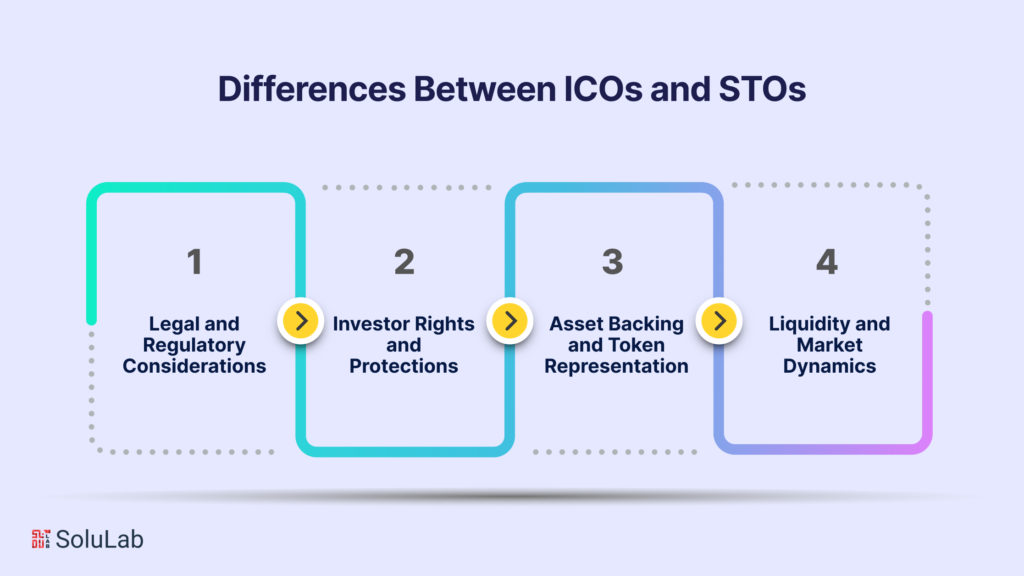
Difference between ICO and STO

Difference between ICO and STO

STOs differ from ICOs in several crucial ways. Firstly, STOs are security offerings, subject to securities regulations, while ICOs are often utility token sales. Secondly, STOs are typically backed by tangible assets, providing investors with more security and potential for dividends or profit-sharing.

Key Differences Between ICOs and STOs

Initial Coin Offerings (ICOs) and Security Token Offerings (STOs) are both methods of raising capital in the cryptocurrency and blockchain space. However, they have distinct differences in terms of their nature, regulation, and purpose. Here are the key differences between ICOs and STOs:

Read Blog Post: 10 Best Defi Exchanges 2024

1. Legal and Regulatory Considerations

  • ICOs often operate in a legal grey area, while STOs are subject to securities regulations.
  • ICOs may face legal consequences for non-compliance with securities laws.

2. Investor Rights and Protections

  • STO investors typically have more rights and protections, such as ownership shares and potential dividends.
  • ICO investors often have limited rights and rely on the project’s success for returns.

CTA1

3. Asset Backing and Token Representation

  • ICO tokens may not necessarily be backed by tangible assets or represent ownership.
  • STO tokens are backed by real assets, offering a clear value proposition to investors.

4. Liquidity and Market Dynamics

  • ICO tokens often trade on cryptocurrency exchanges, which can lead to extreme price volatility.
  • STO tokens may have a more stable price due to their asset-backed nature, but liquidity can be lower.

What to Choose: ICO or STO?

What to Choose: ICO or STO?

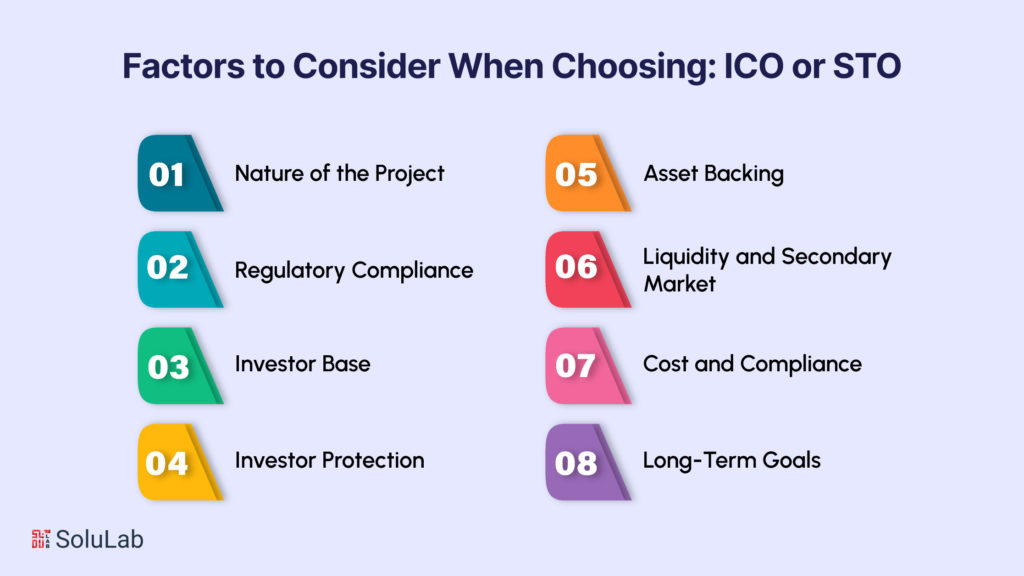
Choosing between an Initial Coin Offering (ICO) and a Security Token Offering (STO) depends on several factors, including the nature of your project, regulatory considerations, and your target audience. Here are some key factors to consider when deciding which fundraising method to choose:

1. Nature of the Project

  • If your project involves a utility token that provides access to a specific product or service within your platform (e.g., a decentralized application or ecosystem), an ICO development may be suitable.
  • If your project involves asset-backed tokens, such as company equity, real estate, or revenue-sharing, and you want to comply with securities regulations, an STO is more appropriate.

Read Also: 7 Most Successful ICOs of All Time

2. Regulatory Compliance

  • Consider the regulatory environment in your jurisdiction and the jurisdictions of your potential investors. STOs are typically subject to securities regulations, which can be complex and vary from country to country. Ensure you have legal counsel to navigate these regulations.
  • ICOs may have fewer regulatory requirements but could still face legal scrutiny in some jurisdictions.

3. Investor Base

  • Determine your target investor base. If you want to attract a broad and global audience of retail investors, an ICO may be more suitable.
  • If you are targeting accredited or institutional investors who are comfortable with regulatory compliance, an STO may be the better choice.

4. Investor Protection

  • If you prioritize strong investor protection and transparency, an STO is more likely to provide these features due to securities regulations.
  • ICOs have historically been associated with a higher risk of fraud and less legal protection for investors.

5. Asset Backing

  • Consider whether your project involves tangible assets or revenue streams that can back your tokens. If so, an STO can provide a direct link between the tokens and the underlying assets.
  • If your tokens are primarily utility-based and don’t represent ownership or assets, an ICO may be more appropriate.

6. Liquidity and Secondary Market

  • Evaluate how you plan to provide liquidity to your investors. Security tokens are typically designed to be more liquid, potentially allowing trading on traditional securities exchanges.
  • ICO tokens may face liquidity challenges and may not be listed on major exchanges.

Read Also: How To Write A Compelling ICO Whitepaper That Actually Sells?

7. Cost and Compliance

  • Be aware that conducting an STO can be more expensive and time-consuming due to regulatory compliance requirements, legal fees, and the need for thorough due diligence.
  • ICOs may have lower upfront costs, but they may require significant marketing efforts to attract investors.

8. Long-Term Goals

  • Consider your long-term goals for the project. STOs may offer a more structured path to traditional financial markets and long-term sustainability.
  • ICOs may provide more flexibility but can also be riskier and less predictable in terms of future outcomes.

Check Out Our Blog: Top 25 Smart Contract Companies To Look For in 2024

Future Trends and Developments

The crypto fundraising landscape continues to evolve, and several trends are shaping the future of ICOs and STOs:

1. Hybrid Models: Some projects are exploring hybrid models that combine elements of ICOs and STOs to strike a balance between fundraising and regulatory compliance.

2. Secondary Markets: The development of secondary trading platforms for security tokens could improve liquidity and provide investors with more options for buying and selling tokens.

3. Regulatory Clarity: As regulatory frameworks become more defined, the crypto industry may see increased participation from traditional financial institutions and mainstream investors.
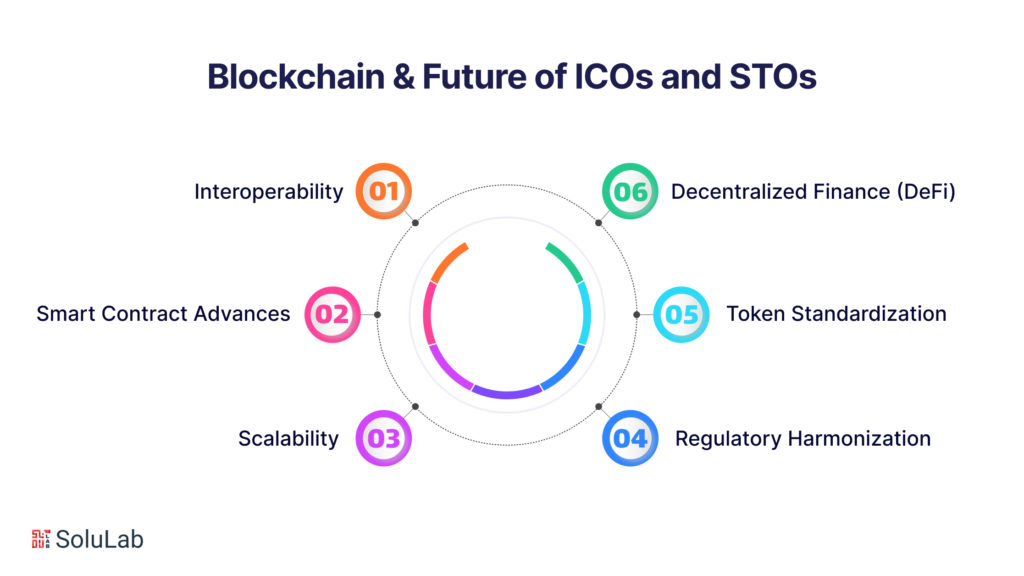
Blockchain and the Future of ICOs and STOs

Blockchain and the Future of ICOs and STOs

Understanding these blockchain trends and their potential impact on ICOs and STOs is essential for stakeholders in the crypto fundraising space. As the technology matures, we can anticipate exciting developments that will shape the future of token offerings and the broader blockchain industry.

Blockchain technology continues to evolve, presenting opportunities and challenges for ICOs and STOs. As the underlying technology for both fundraising methods, the future of blockchain plays a pivotal role in shaping their trajectories.

1. Interoperability: Interoperability between different blockchain networks is becoming a key focus. This will allow assets from one blockchain to be traded on another, potentially increasing liquidity for tokens from both ICOs and STOs.

Read Blog Post: Top 10 STO Development Companies in 2024

2. Smart Contract Advances: Smart contracts are at the heart of ICOs and STOs. As blockchain technology matures, we can expect more advanced and secure smart contract platforms, reducing the risk of contract vulnerabilities.

3. Scalability: Scalability issues have plagued blockchain networks, affecting transaction speeds and costs. Solving these issues will enhance the efficiency of token offerings, making them more accessible and cost-effective.

4. Regulatory Harmonization: The crypto industry seeks harmonization of regulatory frameworks globally. A cohesive approach to regulation could reduce uncertainty and promote a more favorable environment for both ICOs and STOs.

5. Token Standardization: Standardisation of token types can simplify the token creation process and enhance interoperability. Ethereum’s ERC-20 and ERC-1400 standards are examples of how standardization can facilitate token issuance.

6. Decentralized Finance (DeFi): DeFi platforms have gained traction, offering new opportunities for fundraising and investment. DeFi projects are increasingly exploring ICO and STO models within their ecosystems.

CTA2

Concluding Remarks

In conclusion, comprehending the distinctions between Initial Coin Offerings (ICOs) and Security Token Offerings (STOs) is crucial within the blockchain and cryptocurrency arena. ICOs once celebrated for their rapid fundraising potential, faced regulatory uncertainties and concerns about investor safeguarding. Conversely, STOs have emerged as a more regulated and secure fundraising approach, offering investors tangible asset-backed ownership and compliance with securities laws, which has garnered institutional interest and bolstered trust in the crypto fundraising landscape.

Looking forward, expect to witness the emergence of hybrid fundraising models blending ICO and STO elements, the growth of secondary markets to enhance token liquidity, and increasing regulatory clarity. As blockchain technology matures, the crypto fundraising landscape will continually adapt, providing innovative opportunities. For entrepreneurs and investors, a deep understanding of these distinctions will serve as a compass in navigating the dynamic world of ICOs and STOs successfully. Whether you’re seeking capital or investment opportunities, staying informed and compliant will be paramount in this evolving blockchain ecosystem protocol.

SoluLab is a prominent company in the blockchain technology and software development sector, offering expertise in various industries, including decentralized finance, supply chain management, and healthcare. SoluLab has earned a reputation for delivering innovative blockchain solutions. In the context of ICOs and STOs, SoluLab provides crucial technical support and development services. They assist startups and enterprises in launching ICOs and STOs by offering secure smart contract development and wallet creation while ensuring compliance with regulatory frameworks, which is particularly vital for STOs. SoluLab serves as a valuable partner for those navigating the complex landscape of blockchain-based fundraising, offering ICO development services and STO development services, all while adhering to regulatory standards. Contact SoluLab today to explore their comprehensive blockchain solutions.

FAQs

1. What is the primary difference between an ICO and an STO?

An ICO (Initial Coin Offering) is a fundraising method where cryptocurrency tokens are issued, often as utility tokens, without direct ownership rights. In contrast, an STO (Security Token Offering) involves the issuance of tokens backed by real-world assets, such as equity or property, offering investors ownership rights and potential dividends.

2. Why are ICOs often associated with regulatory challenges?

ICOs have faced regulatory challenges due to their lack of compliance with securities laws in many jurisdictions. This lack of oversight has raised concerns about investor protection, leading to increased regulatory scrutiny.

3. What are the benefits of participating in an STO for investors?

Investors in STOs typically gain ownership rights in the underlying asset, such as shares in a company or real estate. This can provide more security and the potential for dividends or profit-sharing, making STOs appealing to those seeking traditional investment features.

4. Are ICOs still a viable fundraising method in today’s regulatory landscape?

ICOs have evolved in response to regulatory challenges. Some projects conduct compliant ICOs, while others opt for alternative fundraising methods like STOs. The viability of an ICO development company depends on the project’s nature and its ability to navigate regulatory requirements.

5. How do secondary markets impact the liquidity of security tokens from STOs?

Secondary markets, such as security token exchanges, can significantly impact the liquidity of tokens from STOs. They provide a platform for investors to buy and sell security tokens, potentially increasing liquidity and tradability compared to traditional assets.

6. What trends can we expect in the ICO and STO space shortly?

The future of ICOs and STOs will likely see increased regulatory clarity, hybrid fundraising models, and the integration of blockchain technology into traditional financial systems. Institutional involvement and a focus on compliance are also expected to shape the industry’s direction.

Security Tokens vs Utility Tokens vs NFTs – How different are they?

Security Tokens vs Utility Tokens vs NFTs - How different are they?

In the dynamic realm of blockchain and cryptocurrencies, the advent of digital tokens has revolutionized traditional concepts of value, ownership, and interaction. The evolution has ignited a necessity for a profound understanding of the triad of digital tokens: security tokens, utility tokens, and NFTs (Non-Fungible Tokens).

This article embarks on a comprehensive journey, unraveling the intricacies that define each token category. By delving into their attributes, use cases, and distinguishing features, we gain a holistic perspective of their impact on the digital landscape.

The Rise of Digital Tokens

Blockchain technology’s meteoric rise has ushered in the era of digital tokens, reshaping financial systems and digital transactions. Tokens, and cryptographic entities safeguarded by decentralized ledgers, introduce transparency, security, and peer-to-peer trust to digital transactions. These digital representations of value have given rise to an array of tokens, each tailored to distinct purposes and applications.

Within the labyrinth of digital tokens, distinct categories emerge, each bearing unique functionalities and implications. Proficiency in discerning these categories is imperative, enabling stakeholders to make informed decisions and partake in the evolving digital economy. As the technology matures, the ability to differentiate between security tokens, utility tokens, and NFTs becomes pivotal.

Understanding Security Tokens

So, what is a security token? Security token symbolizes ownership in tangible or intangible assets, akin to traditional securities. These tokens offer fractional ownership, affording holders a share in the underlying asset’s value and potential returns. Notably, security tokens undergo regulatory scrutiny, aligning them with established securities regulations.

Security tokens stand out by adhering to regulatory frameworks. Compliance ensures transparency, investor protection, and safeguards against illicit activities, thereby bolstering the credibility of the tokenized ecosystem. The alignment with regulations presents security tokens as a bridge between the worlds of traditional finance and the innovative blockchain landscape.

The practicality of security tokens finds resonance across domains, including real estate, venture capital, and private equity. Tokenization imbues these markets with enhanced liquidity and accessibility, empowering diverse investors to partake in traditionally exclusive spheres. For instance, a historically illiquid asset like real estate becomes more accessible and divisible through security token offerings (STO) and STO development services.

What Is A Utility Token?

Utility tokens serve as digital keys granting access to decentralized platforms or services. Their primary function centers on enabling interaction within a specific ecosystem, rather than conferring ownership rights. These tokens act as the lifeblood of blockchain networks, stimulating engagement and utilization.

Top Utility tokens assume the mantle of powering decentralized applications, incentivizing user engagement and ecosystem participation. This symbiotic relationship fuels the platform’s evolution, nurturing its growth. For instance, the Ethereum network employs Ether (ETH) as a utility token to facilitate smart contract execution and transactions within the platform.

Challenges associated with utility tokens stem from balancing their intrinsic utility with potential investment aspirations. Their value is intrinsically linked to the network’s vitality, posing the challenge of sustaining demand. Critics also raise concerns about the potential for regulatory crackdowns on utility tokens that might be deemed securities.

CTA1

Delving into NFTs (Non-Fungible Tokens)

NFTs stand as unparalleled digital assets representing ownership of specific items, ranging from digital art to collectibles. Each NFT is indivisible, bearing a distinct identity that sets it apart from its fungible counterparts. This uniqueness is a core feature enabled by the underlying blockchain technology.

The artistic landscape experiences a seismic shift with NFTs, empowering artists to tokenize their creations and directly connect with collectors. NFTs’ influence stretches beyond art into collectibles, gaming artifacts, and even tokenized real-world assets. For instance, the NFT for a virtual land parcel in a metaverse holds inherent scarcity and value.

NFTs instigate the inception of novel digital economies, facilitating direct interactions between creators and collectors. Their emergence bridges the chasm between physical and virtual ownership, paving the way for innovative economic models. NFT development services enable creators to monetize their digital works directly, bypassing intermediaries and opening avenues for new revenue streams.

Intersection and Evolution

Instances of Hybrid Tokens: As the boundaries between different token types blur, hybrid tokens emerge as captivating entities. These tokens combine the features of security, utility, and NFTs, embodying a fusion of functions. Imagine an investment token that grants access to exclusive features in a platform while also representing ownership in a digital art piece. These instances of hybrid tokens underscore the creative prowess of blockchain technology in accommodating diverse needs.

Adaptation to Changing Trends: Blockchain trends are as dynamic as the digital era itself. Utility tokens have undergone a metamorphosis, adapting from simple transactional tools to integral components of decentralized platforms. Security tokens, initially associated with regulatory hurdles, have embraced evolving compliance standards. NFTs once limited to art and collectibles, now embrace domains like gaming and virtual real estate. The evolution of token types mirrors the pulse of technological progress, highlighting their ability to remain relevant in a swiftly changing landscape.

Potential Future Developments: The crystal ball of blockchain’s future holds intriguing prospects. Some speculate the convergence of token types into holistic digital asset classes, while others envision platforms offering seamless token swaps to cater to diverse needs. As the technology matures, regulations become clearer, and user demands evolve, the lines between security tokens, utility tokens, and NFTs may blur further, fostering a harmonious ecosystem.

Pros and Cons of Each Token Type: Security Tokens vs Utility Tokens vs NFTs

Each token type brings its unique advantages and challenges, and making informed decisions involves understanding the specific goals, risk tolerance, and preferences of stakeholders.

Security Tokens:

Pros:

  • Regulatory Compliance: Security tokens are subject to regulations that provide investor protection. This regulatory oversight can enhance trust and credibility, making them more appealing to traditional investors.
  • Institutional Acceptance: The regulated nature of security tokens often attracts institutional investors who are more comfortable with established legal frameworks and compliance measures.
  • Fractional Ownership: Security tokens allow fractional ownership of assets, enabling broader participation in high-value investments that might otherwise be inaccessible.

Cons

  • Accessibility Constraints: The stringent regulations and compliance requirements can create entry barriers for smaller investors or projects, limiting the democratization of investment opportunities.
  • Time and Cost: The process of regulatory compliance and issuance of security tokens can be time-consuming and expensive, deterring startups with limited resources.
  • Liquidity Challenges: Despite regulatory clarity, the liquidity of security tokens in secondary markets might be limited due to complex regulations and the nature of the assets.

CTA2

Utility Tokens: 

Pros

  • Ecosystem Engagement: Utility tokens serve as the lifeblood of decentralized platforms, incentivizing users to engage, interact, and contribute to the ecosystem’s growth.
  • Flexible Use Cases: The versatility of utility tokens allows them to be integrated into a wide range of applications, from gaming and social media to governance and access to services.
  • Community Ownership: Utility tokens enable a sense of community ownership, aligning the interests of users and creators toward the platform’s success.

Cons:

  • Value Volatility: The value of utility tokens can be highly volatile, driven by market sentiment and speculative trading, which might overshadow their primary functional purpose.
  • Regulatory Uncertainty: The evolving regulatory landscape could lead to debates about whether certain utility tokens should be classified as securities, potentially exposing projects to legal risks.
  • Functionality Necessity: The success of utility tokens hinges on their utility within the platform; if the functionality doesn’t resonate with users, the token’s value might decline.

NFTs: 

Pros:

  • Digital Ownership: NFTs revolutionize digital ownership, providing a secure and verifiable way for creators to monetize their digital content, fostering a new digital art and collectibles market.
  • Interoperability: NFTs can be used across multiple platforms and applications, enabling cross-ecosystem utilization and creating new opportunities for creators.
  • Unique Scarcity: The concept of unique scarcity adds value to NFTs, as each token represents a distinct piece of content, making them highly attractive to collectors and enthusiasts.

Cons:

  • Sustainability Concerns: The carbon footprint of some NFTs, especially those minted on certain blockchains, has raised environmental concerns, prompting discussions about more eco-friendly solutions.
  • Speculative Nature: Similar to utility tokens, the value of NFTs can be speculative, with significant price fluctuations that might not always align with the artistic or intrinsic value of the content.
  • Long-Term Value: While NFTs have seen remarkable success, questions about the long-term value of digital assets remain, especially as the market matures and the novelty wears off.

Read Also: Top NFT Development Companies To Look At In 2025

Factors to Consider When Choosing Tokens

As the digital token landscape diversifies, making choices becomes a blend of art and science. 

1. Consider your investment goals, risk appetite, and familiarity with blockchain technology. 

2. Evaluate the project’s purpose, team, technology, and roadmap.

3. Dive into the regulatory landscape, understanding how it impacts each token type.

4. Stay informed, for in the realm of digital tokens, each choice shapes the unfolding narrative of blockchain’s journey.

CTA3

Concluding Remarks

As the worlds of regulation and technology continue to evolve, the realm of security tokens stands as a bastion of legitimacy and protection. The embrace of regulatory compliance not only elevates investor confidence but also paves the way for institutional adoption, gradually bridging the gap between traditional finance and the decentralized future. Yet, the path of security tokens may seem arduous, with compliance demands and accessibility constraints urging us to tread thoughtfully.

As we conclude our exploration of security tokens, utility tokens, and NFTs, let us remember that the choices we make in this intricate ecosystem sculpt the future narrative of blockchain technology. With each choice, we contribute to an ever-expanding canvas, painting strokes of innovation, challenges, and discoveries. The journey is intricate, the potential boundless, and the promise of the blockchain era resonates with the echoes of these digital tokens that illuminate the path ahead.

Just as these tokens converge at an intersection of innovation, SoluLab stands at the crossroads of technological expertise, creative vision, and client-centric solutions. With a commitment to embracing novel trends and adapting to changing landscapes, SoluLab mirrors the dynamism of the digital token realm – a versatile entity that navigates intricacies with finesse.

SoluLab, a renowned leader in NFT development services, offers comprehensive solutions tailored to businesses and individuals venturing into the world of non-fungible tokens. Their team of expert developers and blockchain enthusiasts is committed to delivering high-quality, customizable services, whether for artists, brands, or platforms seeking asset tokenization, NFT collectibles creation, or bespoke marketplace development. Security, scalability, and innovation are their core focus, making SoluLab the ideal partner for harnessing the full potential of NFT solutions. With SoluLab, you can unlock the power of STO development services, tokenize physical assets, attract investors, and establish your presence as a global market leader. To become a frontrunner in the NFT realm, leverage SoluLab’s premium NFT token development services, creating unique tokens that stand out and drive the success of your NFT project. Contact SoluLab today to explore the limitless possibilities of blockchain technology.

FAQs

1. What distinguishes security tokens from other types of digital tokens?

Security tokens are a subset of digital tokens that represent ownership in a real-world asset, such as company shares or real estate. Unlike utility tokens that grant access to a platform’s features, security tokens are subject to regulatory compliance, providing investors with legal protection. While utility tokens emphasize functionality, security tokens emphasize ownership rights and adhere to established regulations.

2. Can a token serve both utility and investment purposes?

Yes, there are instances of hybrid tokens that combine elements of security, utility, and NFTs. These tokens offer investors ownership rights while granting access to platform features or unique digital content. The fusion of functions underscores the versatility of blockchain technology, catering to diverse user needs within a single token.

3. How do NFTs go beyond digital art and collectibles?

While NFTs gained prominence through digital art and collectibles, their potential extends far beyond these realms. NFTs can represent ownership in virtual real estate, in-game items, event tickets, music royalties, and more. The unique scarcity and verifiable ownership provided by NFTs open doors to innovative applications in various industries, reshaping how we perceive and trade digital assets.

4. How do I choose the right type of token for my project or investment?

Choosing the right token type involves assessing your goals, risk tolerance, and the nature of your project. If seeking legitimacy and compliance, security tokens might be suitable. For platform participation, utility tokens provide functionality, while NFTs cater to unique ownership and authenticity. Careful evaluation of regulatory considerations, market trends, and user preferences will guide your decision-making process.

Top 10 STO Development Companies in 2026

Top 10 STO Development Companies

In the fast-paced world of blockchain technology and cryptocurrency, what is STO Security Token Offerings (STOs) have emerged as a revolutionary fundraising method, offering investors a more secure and regulated alternative to Initial Coin Offerings (ICOs). STOs represent tokenized digital assets backed by real-world assets, providing a new level of trust and transparency to the blockchain space. As the demand for STOs continues to rise in 2026, a reliable and experienced STO development company has become crucial for businesses and startups looking to launch their security token offerings successfully. In this blog, we will explore the top 10 STO development companies with exceptional expertise and innovation in the field, helping their clients navigate the complex world of security token offerings and blockchain-based fundraising.

The Rise of STOs and the Need for Expert Development Services

Why it is necessary to understand what is STO Since the inception of blockchain technology, the cryptocurrency landscape has experienced rapid growth and evolution. Among the various fundraising methods, Security Token Offerings have gained substantial popularity due to their compliance with regulatory frameworks and ability to offer fractional ownership in tangible assets. In 2026, the demand for STOs has reached new heights, attracting investors seeking more stability and transparency in the crypto market. As businesses and startups increasingly recognize the potential of STOs, the role of proficient STO development services has become paramount. The companies providing these services not only possess the technical know-how to create and deploy security tokens but also understand the intricate legal and regulatory requirements governing such tokens’ issuance. In this blog, we shine a spotlight on the top 10 STO development companies that have demonstrated excellence in delivering cutting-edge solutions and empowering their clients to raise funds securely and efficiently in the digital era.

Read Our Blog Post: STO Blockchain in Real Estate

How Did We Compile The List of Top 10 STO Development Companies?

Compiling the list of the top 10 STO development companies involved a rigorous and comprehensive research process. Here are the key points that contributed to the compilation:

  • Thorough research of market reputation and credibility.
  • Expertise in blockchain technology and security tokens.
  • Compliance with regulatory knowledge and adherence to securities laws.
  • Emphasis on innovation and technological advancements.
  • A broad technology stack.
  • Positive client reviews and testimonials for client satisfaction.
  • A comprehensive range of STO development services is offered.
  • Global presence and ability to cater to diverse markets.
  • Consideration of affordability and cost-effectiveness in services.

CTA 1

Top 10 STO Development Companies

Interested to know more about it? Here are the top 10 picks to join the amazing Security Token Offering Platform for your business!

1. SoluLab

At #1, we have SoluLab.

Established in 2014, SoluLab is a leading technology firm that has established itself as the top STO development company in the blockchain space. With a strong focus on innovation and a commitment to delivering cutting-edge solutions, SoluLab has earned its reputation as a trusted partner for businesses seeking to venture into the world of Security Token Offerings (STOs).

SoluLab is renowned for its vast expertise in blockchain technology and its ability to harness the potential of decentralized networks. The company’s core mission is empowering businesses to leverage blockchain for seamless and secure transactions. By offering an extensive range of services, including custom token creation, security token offering script development, smart contract implementation, and white-label token platforms.

As a top STO development company, SoluLab plays a pivotal role in revolutionizing the fundraising landscape with Security Token Offerings. SoluLab provides end-to-end support in developing security tokens, enabling businesses to tokenize real-world assets securely. Additionally, the company offers robust solutions for building security token exchanges, creating a seamless platform for investors to trade security tokens efficiently.

SoluLab’s dedication to research and innovation is evident through its continuous exploration of blockchain’s potential applications. With a customer-centric approach and a commitment to excellence, SoluLab remains at the forefront of the industry, driving the adoption of STOs and blockchain technology in diverse sectors, and solidifying its position as the #1 STO development company.


$25-$49


50-249


2014


Los Angeles, CA, USA


Disney, Microsoft, Georgia Tech

2. Blockchain App Factory

Coming up next is Blockchain App Factory – a prominent name in the blockchain industry, widely recognized for its expertise in Security Token Offerings (STOs). With years of experience and a team of skilled professionals, they have positioned themselves as a second-leading Security Token Offering Development company.

Blockchain App Factory offers end-to-end security token offering services, covering every aspect of the tokenization process. From conceptualization to token issuance and investor management, their team guides clients through the entire journey. Their legal experts ensure adherence to regulatory standards, providing clients with confidence in the compliance of their STO projects.

With a team of blockchain developers, legal advisors, and fintech experts, Blockchain App Factory possesses the expertise required to deliver top-notch STO development services. Their experience in handling diverse STO projects across industries has earned them a reputation for reliability and excellence.

Blockchain App Factory’s commitment to innovation and continuous improvement reflects its STO development approach. They stay updated with the latest technological advancements and regulatory changes to provide cutting-edge solutions. As a result, they have made a significant impact on the blockchain industry, contributing to the growth and adoption of STOs as a reliable fundraising method for businesses worldwide.


$25-$49


251-500


2010


Chennai, India


PayFbit, Sasai Global, BitcoinBlink

3. Antier Solutions

Antier Solutions is a reputable and innovative blockchain development company that has earned the #3 position in our list of top 10 STO development companies. Antier Solutions’ team comprises experienced blockchain developers, legal experts, and financial analysts, enabling them to deliver comprehensive and compliant STO solutions.

Antier Solutions offers a wide range of STO development services, catering to businesses of all sizes and industries. Their expertise extends to token creation, smart contract development, security audits, and investor management systems. With a focus on regulatory compliance, they ensure that each STO project adheres to the necessary legal frameworks, providing clients with a secure and legally sound fundraising platform.

Antier Solutions stays at the forefront of technological advancements, allowing them to offer innovative STO solutions that align with the evolving needs of the industry. Their commitment to research and development ensures that clients receive cutting-edge blockchain solutions that drive efficiency and transparency in their STO processes. By fostering open communication and collaboration, they create tailor-made STO solutions that address specific business needs. Their dedication to providing excellent customer service and support has garnered them a loyal clientele and positive reviews in the permissionless blockchain community.

Antier Solutions’ strong focus on comprehensive STO services, technological leadership, client-centric approach, and commitment to innovation has earned them the #3 spot in our list of top 10 STO development companies. With a track record of successful STO projects and a reputation for excellence, Antier Solutions remains a preferred choice for businesses seeking secure, compliant, and cutting-edge STO solutions.


$55-$90


501-1000


2011


Nottingham, United Kingdom


Keyper, AnCrypto, Bitzuri

4. Crypton Studio LLC

On spot #4, we have Crypton Studio LLC – a reputable and forward-thinking security token offering development company. With a focus on innovation and technological excellence, Crypton Studio LLC has established itself as a leading player in the blockchain industry.

This company offers comprehensive solutions for security token offerings, including end-to-end token creation, smart contract development, and regulatory compliance services. From token issuance to investor management systems, Crypton Studio LLC ensures a seamless and secure STO process.

Crypton Studio LLC is dedicated to staying ahead of the curve in the blockchain and STO industry. Their commitment to innovation is reflected in their solutions, which leverage the latest advancements in blockchain technology. As a result, they deliver cutting-edge security token offering services that are both efficient and future-proof.

Crypton Studio LLC takes a client-centric approach, putting the needs and objectives of its clients at the forefront of every project. Their team collaborates closely with clients to understand their vision and requirements, ensuring that the final STO solution aligns perfectly with their business goals. With their security token offering scripts and expertise, they empower businesses to tap into the potential of security token offerings and explore new avenues for fundraising on the blockchain.


$25-$50


101-250


2016


Semey, Kazakhstan


Polylastic, Chains, Magnum Meta

5. Vegavid Technology

Coming up next is Vegavid Technology, specializing in creating security token offering scripts. It empowers businesses to embark on successful tokenization journeys. With a team of skilled blockchain developers and legal experts, the company ensures that clients can navigate the complex world of STOs with confidence and compliance.

Vegavid Technology offers comprehensive end-to-end solutions for security token offerings. From conceptualization to token issuance and secondary trading platforms, they cover every aspect of the STO process. Their expertise in smart contract development and regulatory frameworks ensures that each security token offering is secure, transparent, and legally compliant.

Vegavid Technology’s security token offering platform provides an efficient and user-friendly interface for both issuers and investors. The platform is designed to handle the complexities of STOs while offering a seamless experience for participants. Through their advanced platform, Vegavid Technology facilitates the tokenization of real-world assets, enabling fractional ownership and liquidity for traditionally illiquid assets.

Vegavid Technology’s expertise in providing comprehensive STO solutions, cutting-edge security token offering platform, and commitment to client success have earned them a well-deserved place among the top STO development companies. As they continue to empower businesses with secure and compliant tokenization solutions, Vegavid Technology remains at the forefront of the blockchain industry, driving innovation in the world of digital token.


$55-$90


101-250


2018


New York, United States


Scoby Social, Neebytes

6. Optimus Fox

Optimus Fox stands strong among the top STO development companies, known for its exceptional blockchain solutions and expertise in security token offerings (STOs). With a focus on driving innovation and delivering top-notch services, Optimus Fox has gained recognition at #6 on our list as a reliable partner for businesses seeking to tokenize assets and launch successful STOs.

Optimus Fox offers an end-to-end STO platform, covering every step of the tokenization process. From token creation to smart contract development and investor management systems, they provide comprehensive services to meet diverse STO requirements. Their solutions are designed to ensure regulatory compliance, security, and seamless execution of STO projects.

Optimus Fox is at the forefront of innovation in the STO industry. They leverage cutting-edge blockchain technology to create innovative security token offerings that unlock new opportunities for fundraising and asset tokenization. Their expertise extends to diverse industries, empowering businesses to tokenize a wide range of assets, including real estate, private equity, and more.

Optimus Fox’s track record of successful secure token offering projects and positive client testimonials speaks volumes about its capabilities and dedication to excellence. Their commitment to delivering secure, compliant, and innovative STO solutions has earned them a reputation as a trusted and dependable STO development company.


$55-$90


51-100


2018


Illinois, United States


Fedex, KraftFoods

7. Infinite Block Tech

As the 7th company in our list of top STO companies, Infinite Block Tech has made a mark in the blockchain industry with its reliable and innovative solutions. Specializing in security token offering services and development, Infinite Block Tech offers a comprehensive range of services to businesses seeking to tokenize their assets and raise funds through security token offerings. Their team of skilled blockchain developers and legal experts ensures that clients receive a seamless and compliant STO experience.

Infinite Block Tech provides end-to-end STO development services, covering all aspects of the tokenization process. From initial token creation to smart contract implementation and investor management systems, they offer a comprehensive suite of solutions to meet diverse STO requirements. Their services are designed to ensure regulatory compliance, security, and transparency throughout the STO journey.

Infinite Block Tech’s proven track record of successful STO projects and positive client feedback speaks to their expertise and dedication to excellence. With a strong commitment to delivering high-quality and secure STO solutions, they have earned the trust of their clients and cemented their position as a reliable and trustworthy STO development company.

Infinite Block Tech’s comprehensive STO development services, innovation in security token offerings, client-centric approach, and proven track record make them a worthy contender in the list of top STO development companies. As they continue to drive blockchain innovation and empower businesses with secure and compliant tokenization solutions, Infinite Block Tech remains a significant player in the world of security token offerings.


$55-$99


51-200


2005


Tamilnadu, India


Amazon, Mitsubishi

8. Priority Token

On #8 we have Priority Token, standing as a reputable player in the blockchain industry. Specializing in security token offerings (STOs) and blockchain solutions, Priority Token has built a solid reputation for delivering comprehensive and compliant STO services to businesses worldwide. With a team of seasoned blockchain developers, legal advisors, and fintech experts, Priority Token ensures that clients receive the highest level of expertise and support throughout their STO journey.

Priority Token offers expert STO development services, covering every aspect of the tokenization process. From conceptualization to token issuance, smart contract development, and regulatory compliance, they provide end-to-end solutions to meet diverse STO requirements. Their services cater to startups, established enterprises, and investment funds looking to explore the potential of blockchain-based fundraising.

Priority Token stays ahead of the curve with its innovative approach to STO solutions. They leverage cutting-edge blockchain technology to create tokenized assets and investment opportunities that unlock new possibilities for fundraising and asset liquidity. Their proficiency in navigating the complexities of STOs has positioned them as a preferred choice for businesses seeking secure and future-proof tokenization solutions.

Priority Token’s expert STO development services, compliance and regulatory excellence, innovative solutions, and client-centric approach make them a standout choice in our list of top STO companies. As they continue to drive innovation in the blockchain industry and empower businesses with secure and compliant tokenization solutions, Priority Token remains at the forefront of the world of security token offerings.


$25-$50


11-50


2017


Singapore


Airbnb, Sony, Nintendo

9. CapexMove

On #9 is CapeXMove one of the top STO development companies on the list. With a strong focus on driving innovation and delivering comprehensive STO services, CapexMove has earned a reputation as a trusted partner for businesses seeking to tokenize assets and raise capital through secure and compliant digital token

CapexMove offers end-to-end STO solutions, covering all aspects of the tokenization process. From conceptualization to token creation, smart contract development, and investor management, they provide a comprehensive suite of services to meet diverse STO requirements. Their solutions are designed to ensure regulatory compliance, security, and transparency throughout the STO project.

CapexMove’s proven track record of successful STO projects and positive client feedback speaks to its expertise and commitment to excellence. With a strong focus on delivering secure, compliant, and innovative STO solutions, they have earned the trust and respect of their clients, solidifying their position as a reliable and proficient STO development company.

CapexMove’s comprehensive STO solutions, innovation in security token offerings, client-centric approach, and proven track record make them a deserving contender in our list of top STO development companies. As they continue to drive blockchain innovation and empower businesses with secure and compliant tokenization solutions, CapexMove remains a key player in the realm of security token offerings.


$50-$90


11-50


2017


London, United Kingdom


Blockchain, Debt Capital Markets

10. Kryptobees

Standing #10 on our list is Kryptobees, renowned for its expertise in security token offerings (STOs) and blockchain solutions. With a commitment to innovation and a strong focus on delivering comprehensive STO services, Kryptobees has established itself as a trusted partner for businesses seeking to tokenize assets and raise capital through secure and compliant security token offerings. Their team of skilled blockchain developers, legal experts, and financial analysts ensures a seamless and successful STO journey for their clients.

Kryptobees offers comprehensive end-to-end STO solutions, covering all aspects of the tokenization process. From token creation and smart contract development to regulatory compliance and investor management, they provide a wide range of services to meet diverse STO requirements. Their solutions are designed to ensure compliance with regulatory standards, security, and transparency throughout the STO project.

Kryptobees remains at the forefront of innovation in the STO industry, consistently leveraging permissionless blockchain technology to provide clients with innovative solutions. They focus on harnessing the full potential of blockchain for fundraising and asset tokenization. By staying abreast of the latest advancements in the blockchain ecosystem, Kryptobees delivers secure and future-proof STO solutions.

Kryptobees’ comprehensive STO solutions, focus on innovation, client-centric approach, and proven track record make them a noteworthy contender in our list of top STO development companies. As they continue to drive blockchain innovation and empower businesses with secure and compliant tokenization solutions, Kryptobees remains a significant player in the ever-evolving world of security token offerings.


$50-$99


11-50


2016


Toronto, Ontario


Dupont, Blizzard Entertainment, Ubisoft

Final Words

In conclusion, the landscape of Security Token Offerings (STOs) has continued to evolve, and in 2026, numerous companies have emerged as leaders in the blockchain industry, offering exceptional STO development services. From comprehensive end-to-end solutions to cutting-edge technology and regulatory compliance, these top 10 STO development companies have proven their mettle in the highly competitive market.

As the adoption of blockchain technology and STOs continues to grow, these companies will undoubtedly play a crucial role in driving further innovation and facilitating seamless and secure tokenization processes. It is essential for businesses seeking to embark on secure token offering projects to conduct thorough research and choose a reliable and trustworthy development partner from this esteemed list of companies.

In the ever-changing world of blockchain and tokenization, the future promises even more exciting developments. With these top 10 STO development companies leading the way, you can confidently embrace the opportunities that STOs offer, shaping a new era of fundraising and investment in the digital age.

SoluLab, a leading company in next-gen STO development services, offers the opportunity for businesses to raise funds and attract investors by tokenizing their physical assets. By utilizing SoluLab’s cutting-edge Security Token Offering development services, ventures can unlock the potential of their physical assets and secure the funding necessary for their growth trajectory. With SoluLab’s expertise, businesses can establish themselves as global market leaders and propel their ventures to the forefront of the industry. Contact SoluLab today to take advantage of their innovative solutions and expertise in STO development.

CTA 2

FAQs

1. What is an STO, and why is it gaining popularity in 2026?

Security Token Offerings (STOs) are a fundraising method using security tokens on the blockchain to represent asset or company ownership. STOs comply with securities regulations, increase liquidity, and provide fractional ownership and global accessibility.

2. How were the top 10 STO development companies selected for this list?

The top 10 STO development companies were chosen based on criteria such as expertise, successful projects, customer reviews, innovation, compliance, and reputation. These companies excel in providing end-to-end STO solutions.

3. What services do STO development companies offer?

STO development companies provide services for businesses issuing STOs, including token creation, legal advice, and security audits, to adhere to regulations and ensure transparency.

4. Are STOs a suitable fundraising method for all types of businesses?

STOs may not be suitable for all businesses, but they are ideal for companies with valuable assets. They can provide compliance with securities regulations and a regulated fundraising process. Each business should evaluate if an STO aligns with its goals.

5. How can I choose the right STO development company for my project?

Choosing the right STO development company is crucial for your project’s success. Consider factors like the company’s expertise, industry understanding, client reviews, and regulatory compliance capabilities. Request project proposals, review portfolios, and conduct interviews to identify the best fit.

STO Blockchain in Real Estate


STO Blockchain in Real Estate

A security token offering of STO is a unique token issued on either a permission or a permissionless blockchain. The token represents a stake in an external enterprise or asset. A number of entities such as the government as well as businesses can issue security tokens that tend to serve the same purpose as bonds, stocks, and other equities. In recent times, STO Blockchain has been readily associated with the real estate industry. Let us now understand STO Blockchain in the real estate industry in detail and how it brings about an improvement in the market.

Concept of Real Estate Tokenization

Tokenization of real estate is the method of representing a fractional ownership interest in an asset with a security token based on blockchain. Here the asset can be a security asset or utility asset. Tokenization of real estate involves the creation of tokens on the Blockchain network and assigning them to assets in the real estate market that is already existing or are presently under construction. Tokenization plays a significant role in helping the asset or fund owners efficiently raise capital by issuing tokens via blockchain platforms.

In addition to being used for the purpose of raising capital towards development investments, these tokens can also denote an interest in the real estate market, thereby allowing a broader range of developers as well as investors to participate in the real estate market. These security tokens can be bought by other investors, where tokens represent a specific amount of shares for some assets in the real estate field. Now, the investors become the partial owners of that particular asset, which provides the investors unique access to private real estate investments, with complete transparency as well as liquidity.

Different Types of Real Estate Tokenization

Different Types of Real Estate Tokenization

Real estate tokenization on a blockchain is usually classified into four types based on the type of assets.

  • Residential Real Estate Tokenization

Residential real estate tokenization involves converting individual residential properties, such as houses, apartments, or condominiums, into digital tokens on the blockchain. This process allows property owners to fractionalize the asset, dividing it into smaller tokenized shares. Investors can then purchase these tokens, giving them fractional ownership of the property. This democratizes the real estate market, making it more accessible for smaller investors to participate in the lucrative residential property sector, which was traditionally limited to larger investors or homeowners.

  • Commercial Real Estate Tokenization

Commercial real estate tokenization is the process of digitizing commercial properties, such as office buildings, retail spaces, and industrial complexes, into blockchain-based tokens. By dividing the property’s value into tokens, investors can buy and trade fractional shares of the property, creating a more liquid and flexible investment environment. This form of tokenization opens up new opportunities for investors to diversify their portfolios and gain exposure to the potentially profitable commercial real estate sector, which was previously limited to institutional investors and wealthy individuals.

  • Trophy Real Estate Tokenization

Trophy real estate tokenization targets exclusive and high-value properties, often considered luxury assets or iconic landmarks. By tokenizing trophy real estate, developers and owners can attract a global pool of investors interested in acquiring fractional ownership. Investors, in turn, gain access to the prestige and potential returns associated with these premium properties. Tokenizing trophy real estate democratizes access to these elite assets, providing a level playing field for investors to participate in the high-end real estate market and potentially benefit from its long-term appreciation.

  • Single Real Estate Tokenization

Single real estate tokenization focuses on tokenizing individual properties, irrespective of whether they are residential or commercial. It allows property owners to digitize their real estate assets and offer tokenized shares to investors. By doing so, they can raise capital more efficiently and enhance liquidity in the real estate market. For investors, single real estate tokenization offers the opportunity to invest directly in a specific property, providing greater transparency and control over their investment decisions. This type of tokenization caters to both property owners seeking innovative fundraising options and investors looking for a more personalized real estate investment approach.

Process of Tokenizing Real Estate

The procedure for real estate STO blockchain can be done in the three steps described below.

1. The first step to follow for the purpose of tokenizing a house, property, or any commercial place is to find an appropriately regulated blockchain platform that possesses the rights to store ownership of their tokens via the proper authorities.

2. In the next step, it is to be made sure that the platform also offers the owner the function of transferring those rights to anyone and transferring the entire ownership to someone else in an authorized way.

3. Tokenization of real estate is a way of exchange similar to any other type of security, where the owner needs to exchange the token for a certain value so that each of the assets can get their proper value represented in the tokens.

4. The entire process of tokenizing real estate is not quite complicated but there might be a few obstacles in the path. Hence, it is recommended to get in touch with an expert before proceeding with the same.

CTA 1

Working Process of Real Estate Tokenization

The process of tokenization helps divide the value of assets in the real estate market into shares or tokens. These tokens denote a predefined share of the underlying asset and they are referred to as security tokens. They can be easily traded at any time and are kept on a digital wallet. The tokenized assets are very securely issued, traded, and settled via a distributed ledger. The technology of distributed ledger existed for about a decade but its true potential in leveraging property management has been brought to light very recently. Distributed ledger technology uses smart contracts for the purpose of validating the ownership of an asset.

The technology’s consensus mechanism offers top-notch cyber security measures for both the issuers as well as investors. Legal complexity is one of the major challenges of launching an STO Blockchain in real estate. In this regard, it is recommended that the issuers seek professional help from an expert in this field since all the legalities need to be met and complied with. Seeking professional help would not only be making the entire process smooth and hassle-free but also avoid costly legal mistakes.

Benefits of STO Blockchain in Real Estate

Benefits of STO Blockchain in Real Estate

STO Blockchain in real estate comes with a wide range of benefits that are discussed below.

  • Offers the Highest Level of Security

STO Blockchain in real estate not only makes the transactions secure but also makes them completely transparent. It has been observed that new technologies are questioned for security but tokenization makes sure to use the highest level of security based on the two following things.

Tokens – They help in promoting security since the investment is digitally assigned to an investor and remains with the investor till the time it is refunded or sold to another person.
Blockchain – Implementation of blockchain technology makes security even tighter.

The data so transmitted is both accessible as well as inaccessible to the ones outside the network which is possible with the help of cryptographic algorithms. The key lies in the fact that the data is decentralized. There is no copying or reversal of the code, and nodes are capable of identifying any attempts to change this code and prevent it from executing. Moreover, data is recorded in a number of places simultaneously, and the door for distributed accounting technologies opens up.

Now, the open systems will help create an entirely transparent register for real estate. The entire data associated with resources is available to everyone. Additionally, the investment is much safer since smart contracts reduce the requirement for the exchange of various documents between each of the parties involved. Most importantly, the paperwork associated with the entire process of completion of a contract is readily simplified because of tokenization. A smart contract is electronically signed which makes it irreversible, hence its content cannot be changed.

  • Immense Flexibility

Tokenization in real estate offers immense flexibility to investors. Anyone can invest a certain amount and possess partial ownership of an asset in the real estate market along with obtaining benefit from the potential profits. Moreover, these tokens can be very easily and conveniently bought as well as sold on secondary markets. The owner of the asset can also sell a part of their assets by issuing tokens. These tokens can be very easily exchanged similar to stocks, with their value oscillating depending on the changing price of the asset. Tokenization certainly offers an advantage over crowdfunding since it allows investors to have instantaneous digital ownership as well as the freedom to sell at any point in time.

  • Easy and Speedy Investment

Limiting any kind of unnecessary expenditures by staying within the legal framework is undoubtedly the most effective optimization option for any kind of activity. Blockchain technology plays a crucial role in enabling the same by the removal of barriers such as bank fees, notary fees, etc. Paying via cryptocurrency helps get over these barriers appropriately. This, in turn, results in enhancing the returns of the investors and at the same time compressing the process of raising capital where the entity manages the investment, thereby streamlining the entire process.
At the time when investments are made with tokens, it readily reduces costs. At the same time, tokens provide greater freedom as the investor can buy a share in real estate and profit from it at any time. The entire process is automated and does not require any kind of unnecessary formalities, thereby making it speedy. The right to an asset in the real estate market can be acquired through the purchase of a token that does not require any kind of changes to the records of real estate.

  • Geographical Barriers are Eliminated

STO Blockchain in real estate helps in the elimination of geographical barriers. Thus, investors regardless of their location can purchase an asset in any part of the world. The investors can benefit from participating in the same and enjoy profits from various housing estates, resorts, commercial properties, or any other irrespective of the time as well as their location.

  • The entry Barrier is Lower

Investing in real estate is always associated with huge sums of money. The high entry amount in real estate investment is precisely the reason why a considerable volume of investors stays away from it. But with the help of tokenization, there is no need to purchase an entire property. Any of the properties can be divided into several thousands of tokens. So, all that an investor requires to do is to purchase only a single token. As a result of asset tokenization, investors can very easily participate in a smaller shareholding structure which is similar to distributed investing. Therefore, tokenization eliminates millions of dollars of investment and can be done with only a few dollars of investment in purchasing a part of any asset in the real estate market. This, in turn, results in a lower entry barrier for investors with lower capital.

  • Diversification is Higher

Tokenization of assets in real estate plays a significant role in diversifying investment strategies as well as assets. With a lower entry amount, investors can buy a number of assets in the real estate market in parts instead of buying only one. It results in the diversification of their investment wallet as well as their sources of revenue. 

  • Elimination of Middlemen

STO Blockchain in real estate helps liquidate the secondary real estate market. Hence, the need to deal with formal barriers like bank charges, notarial deeds, and similar others is eliminated. Moreover, blockchain helps eliminate middlemen like agents, lawyers, etc., and reduces deposit fees. Most importantly, it works 24*7 and investors need not worry about time while planning to invest. Also, there is no limit on the number of tokens purchased or traded by an investor.

  • Costs are Lowered for Investors

Tokenizing assets involves much lower costs as compared to the other methods of financing. Moreover, the investors or developers also require a way for raising capital for various projects. Stock markets and bonds have become costly, time-consuming, and complicated. Tokenization, on the other hand, provides a faster as well as cheaper method for holding assets. If any of the real estate developers happen to choose between listing assets on the stock exchange or issuing bonds, tokenization is undoubtedly a cheaper as well as simpler option.

Use Cases of Real Estate Tokenization

Let us now analyze a few of the use cases of STO Blockchain in real estate.

  • Raising Capital for Different Real Estate Projects – STO Blockchain in real estate offers a revolutionary method to raise capital for various real estate projects. Whether it’s for property purchase, construction, expansion, or development, tokenization allows property developers and owners to fractionalize the property’s value into digital tokens. These tokens can then be sold to a broader pool of investors, including retail investors, institutional players, and international buyers. By leveraging blockchain technology, the fundraising process becomes more accessible, efficient, and transparent, attracting a larger number of potential investors and accelerating project development.
  • Selling Existing Properties – Tokenizing existing properties enables property owners to sell fractional ownership stakes to multiple investors, reducing the minimum investment threshold. This increased accessibility to real estate investment attracts a more diverse range of potential buyers, ultimately leading to a quicker sale of properties. Through tokenization, property owners can offer fractional ownership, enabling investors to diversify their portfolios by acquiring stakes in multiple properties and potentially creating a more liquid market for real estate assets. As a result, sellers can benefit from enhanced liquidity leading to increased profitability and faster real estate transactions.
  • Buying Distressed Real Estate – STO Blockchain provides an innovative solution for acquiring distressed real estate assets. Tokenizing distressed properties allows interested investors to contribute capital, collectively transforming the property’s value through renovations, upgrades, or redevelopments. As the property’s value increases, the token holders can sell their stakes at a higher price, generating profits for both the investors and the original property owners. This not only attracts capital for rehabilitation but also fosters community-driven investments leading to revitalized neighborhoods and higher returns for investors.

Read Also: 9 Blockchain Real Estate Companies to Watch in 2023

  • Creation of a Real Estate Marketplace – An STO-powered real estate asset marketplace presents a compelling use case for tokenization. This marketplace can host various real estate properties available for tokenization, allowing multiple property owners to list and sell their assets to a global audience. Through the marketplace, investors can explore and participate in crowd real estate investing by purchasing fractional ownership in multiple properties and diversifying their investment portfolio. Such a decentralized marketplace eliminates geographical barriers, making it easier for international investors to access and invest in real estate projects around the world.
  • Facilitation of Fractional Ownership of High-Value Assets – Tokenization enables fractional ownership of high-value real estate assets, such as luxury yachts, private islands, or commercial jets. Investors can purchase digital tokens representing a share of these assets, gaining access to experiences and benefits that were previously exclusive to wealthy individuals. Fractional ownership democratizes luxury asset investment, making it accessible to a broader audience and providing a new way for individuals to diversify their investment portfolio with unique and prestigious assets.
  • Allowance of Cross-Border Real Estate Investment – STO Blockchain facilitates cross-border real estate investments, overcoming geographical barriers and regulatory hurdles. International investors can easily participate in real estate projects in different countries, broadening their investment horizons and diversifying their portfolios with global assets. Tokenization streamlines the investment process, ensuring transparent ownership and simplified cross-border transactions, making it easier for investors to seize attractive real estate opportunities around the world.
  • Management of Real Estate Asset – Blockchain-based tokenization streamlines real estate asset management by automating tasks like property valuations, rent collection, and financial reporting. Smart contracts can enforce predefined rules for revenue distribution, ensuring efficient and transparent operations. Tokenized assets also allow for easy tracking of ownership, making real estate asset management more secure and less prone to fraud or disputes. This enhanced transparency can attract institutional investors seeking improved compliance and oversight in their real estate investments.

Future of STO Blockchain in Real Estate

STO Blockchain has already been acclaimed as the future of investing. The growth of global real estate investment market grew from 7.4 trillion dollars in the year 2016 to 8.5 trillion dollars in the year 2017, and then it reached 8.9 trillion dollars in the year 2018. The consistent growth of the market provides a huge scope of STO in real estate. Real estate tokenization has been the emerging trend and market experts expect it to further increase with an overall market capitalization of more than 10 trillion dollars by the end of this year.

CTA 2

Conclusion

The rise of STO blockchain in real estate has revolutionized the industry, unlocking unparalleled opportunities for investors and developers alike. SoluLab’s prowess in blockchain development and commitment to innovation has positioned them as a leading player in this dynamic field. As the real estate landscape continues to evolve, SoluLab remains dedicated to empowering clients with cutting-edge solutions that drive growth, transparency, and efficiency. Whether you are a real estate developer seeking efficient fundraising avenues or an investor looking to diversify your portfolio, SoluLab is your trusted partner in navigating the transformative world of STO blockchain in real estate. Embrace the future of real estate investment with SoluLab and unlock the full potential of blockchain technology in this dynamic industry.

FAQs

1. What is STO blockchain, and how does it impact the real estate industry?

STO blockchain refers to the process of tokenizing real-world assets, such as real estate properties, on a blockchain network. It revolutionizes the real estate industry by enabling fractional ownership, increased investment accessibility, transparency, and efficient fundraising. SoluLab, as a leading technology provider, leverages the STO blockchain to empower real estate developers and investors with innovative solutions for seamless and secure transactions.

2. How can STO blockchain benefit real estate developers?

STO blockchain offers real estate developers an alternative and efficient method of raising capital for their projects. By tokenizing real estate development projects, developers can attract a broader pool of investors, reducing reliance on traditional lenders and accelerating project timelines. SoluLab’s expertise in blockchain technology ensures a streamlined fundraising process, enhancing transparency and reducing administrative complexities.

3. Is STO blockchain secure for real estate investors?

Yes, the STO blockchain ensures a high level of security for real estate investors. Blockchain technology’s inherent properties, such as immutability and transparency, protect real estate transactions from fraudulent activities. Smart contracts govern the terms of token ownership and revenue distribution, eliminating intermediaries and enhancing security. SoluLab’s commitment to the highest security standards guarantees the integrity of real estate assets and the trust of investors.

4. How does the STO blockchain enable cross-border real estate investment?

STO blockchain facilitates cross-border real estate investment by leveraging blockchain’s borderless nature. International investors can seamlessly participate in real estate projects from different countries, diversifying their investment portfolios globally. SoluLab’s expertise in blockchain development ensures compliance with international regulations, making cross-border transactions seamless, secure, and efficient.

5. Can small investors participate in high-value real estate projects through STO blockchain?

Absolutely! STO blockchain allows fractional ownership, enabling small investors to invest in high-value real estate assets. By purchasing digital tokens representing fractional shares of properties, small investors gain access to prestigious and luxury real estate projects that were once reserved for wealthy individuals and institutions. SoluLab’s user-friendly interfaces and innovative solutions make real estate investment accessible and inclusive for all.

6. How can SoluLab assist in implementing STO blockchain solutions for real estate?

SoluLab is a leading technology provider with extensive experience in blockchain development and real estate solutions. We offer comprehensive services, including tokenization, smart contract development, security auditing, and compliance, to ensure a seamless STO blockchain implementation. Our team of experts guides real estate developers and investors throughout the process, making STO blockchain adoption a smooth and successful journey.

What is Security Token Offering (STO)?

Blockchain is undoubtedly one of the most promising technologies supporting several crypto assets such as Bitcoin, Ether, utility tokens, and security tokens. The crypto assets have a phenomenal potential to bring about a great transformation to the entire financial services marketplace. The users are familiar with the other crypto assets except for security tokens since it is relatively a new concept. Thus, it becomes extremely important for the users to understand what security token offering is, its types, how it is beneficial, its best platform, and many more. To make it easier for the users to understand, here we have discussed in detail the security tokens.

Concept of Security Token Offering

A security token refers to a unique token offered on either a permissioned or permissionless blockchain. The token represents a stake in an external asset or enterprise. Different entities such as government and businesses can issue security tokens that would be serving the same purpose like bonds, stocks, and other equities. With the emergence of Bitcoin in the year 2009, blockchain became mainstream. Although cryptos and other financing concepts related to blockchain were referred to as highly speculative as well as volatile, there is still a wide consensus about the value of blockchain technology along with other different forms of distributed ledger technology in finance.


Several large and reputed banking as well as technology giants like Square, JP Morgan, and Facebook have already stepped into the blockchain space. We expect to see more and more names entering into the space in the time to come. It is because of the fact that blockchain has an ever-growing role to play in the payment systems including stablecoins through tokenization of assets via security token offerings.

Types of Security Token Offering

Now, let us understand the four different types of security token offering to gain a better grasp of the concept.

1. Equity Tokens

Equity tokens are similar to traditional stocks with the difference lies in how ownership is recorded and transferred. In the traditional method, tracking of shares is recorded in a database where the ownership of shares is printed and certified on paper certificates. But equity tokens are recorded on an immutable ledger that is kept up to date by a huge network of computers globally. The ones holding equity tokens are eligible for a portion of the profit of the firm and possess the right to vote. Equity tokens are beneficial to the decision-making, regulatory frameworks, and financial outlook of the companies in three major ways.

  1. Investors are able to participate in voting without violating the securities laws.
  2. Startups can gain access to new fundraising models that are much more democratized.
  3. Regulators are able to get a new and much more transparent framework for conveniently evaluating the fundraising of a project.

2. Debt Tokens

Debt tokens represent a short-term loan on an interest rate, in the amount given as a loan by the investors to any firm. The price of a debt token is dominated by ‘risk’ and ‘dividend’. It is because of the fact that a medium risk of default cannot have the same price for a real estate mortgage and a bond for a pre-IPO organization. In a blockchain, a smart contract lives on the network that represents debt security. Within the smart contract, the terms of repayment are included, along with dictating the dividend model as well as the risk factors of the underlying debt.

3. Asset-Backed Tokens

Asset-backed tokens represent ownership of assets, like art, real estate, commodities, or carbon credits. As blockchain is secure, immutable, and transparent, it plays a significant role in enabling a trusted record of transactions. In addition to this, it reduces the chances of fraud and brings about great improvement in the settlement time, thereby becoming a good fit for the commodities trade. These tokens are digital assets with similar characteristics to any commodity like gold, silver, and oil. This, in turn, brings a lot of value to these traded tokens.

4. Utility Tokens

Utility tokens are the ones that provide the users with later access to any product or service. With the help of utility tokens, the companies are able to raise funds for the purpose of the development of blockchain projects.

Advantages of Security Token Offering

Here are some of the major advantages of a security token offering.

· Transparency

Transparency is the prime advantage of a blockchain network. It is because everything is auditable, even the identities of participants. Everyone is able to view the ledger for tracking the holdings and issuance of specific fungible as well as non-fungible tokens.

· Divisibility

Tokenization of assets opens up a considerable volume of opportunities for investment for everyone, starting from large hedge funds backed by Wall Street to the retail investors trading on Robin Hood.

· Availability

All the existing financial marketplaces run as per their schedules and they are available only during business hours for a fixed period since manual effort is required. But on the other hand, a marketplace running on a blockchain network is available 24*7 regardless of the time of day.

· Settlement is Instant

Settlements and clearances have always been a major point of concern for investors looking to transfer assets. Although the trades are performed very quickly, reassigning ownership can take several days. But on a public blockchain ledger, the process is automated, quick, and instantaneous.

· Enhanced Liquidity

Security tokens offerings are much more liquid in terms of ease and convenience of buying or selling in a market, unavailability of an underlying asset, or complexity in buying or selling.

· Cost-Effective in Nature

The issuance of security tokens is aimed at removing middlemen for the purpose of providing simplicity to the investors. Avoidance of middlemen facilitates an easy connection between the investors. This, in turn, provides larger scope to corporations to seek public investments, hence enhancing accountability as well as transparency in the long run.

· Fractional Ownership

Security tokens serve the purpose of a medium for the purpose of mobilizing funds on items that need huge investments. For example, art collectibles costing millions of dollars are limited to only affluent investors. But with the help of security tokens, the value of these collectibles can be conveniently broken down into fractions that can be issued to investors reaching a broader base. The appreciation of the value of these collectibles would accrue to the security token investors. A similar concept is presently being extended to the real estate sector as well and hence has a huge scope since the real estate value in the world has reached about 280.6 trillion dollars.

Top Security Token Offering Platforms

We are now clear with security token offering, its types, and advantages. So, let us dive a bit deeper into the topic to gain knowledge about the top five security token offering platforms.

1. Polymath

Polymath is undoubtedly one of the best security token offering or STO platforms in the blockchain community. It is similar to the Coinbase of asset tokenization. The popularity of Coinbase among cryptocurrency newbies is because it provides an intuitive arena where everyday users can conveniently buy and sell digital assets. It is the same hypothesis behind Polymath with only asset tokenization as the main area of focus. Polymath helps simplify the security token offering process and walks business owners through the process of developing and issuing blockchain-based securities.


Moreover, the platform helps the issuing entities to appropriately manage their tokenization journey. It helps in easily complying with legal as well as jurisdictional regulations. Polymath comes with a nifty feature that allows users to reserve their token “ticker” name prior to the beginning of the process of tokenization. While writing, Polymath has about 196 live tokens.

2. BlockRules

The concept of security token offering platforms might seem to be a difficult one for the ones not familiar with blockchain but it is actually quite simple. Organizations want capital and investors want a piece of the viable organization, typically in the form of equity. Tokenization of assets ties demands with supply in a new and innovative format. But the problem in this regard is how to connect demand with supply. It is precisely the situation where BlockRules comes to the rescue. It acts as an intermediary of sorts that helps launch as well as manage its clients’ tokenization.


Moreover, the organization facilitates the avenue by which investors are able to purchase the mentioned security tokens. It saves a lot of time as well as resources for organizations that are keen on tokenization of assets while providing the investors a feasible alternative beyond the traditional “analog” platforms.

3. Bankex

The specter of disruption started to cloud the mainstream banking industry with the innovation in blockchain. In this situation, security token offering platforms like Bankex play a crucial role in actualizing the potential of this technology. Bankex operates under the proposition that all assets would eventually be tokenized, whether those are real estate, stocks, agricultural lands, or others. Therefore, Bankex is establishing itself before the mass transition occurs. The appeal of Bankex lies in its simplicity and sensible approach to the blockchain.

4. Swarm

Swarm is considered to be one of the most comprehensive security token offering platforms. Swarm also helps the newbies in the field to quickly tokenize assets very similar to Polymath. It provides an intuitive space for the creation, configuration, fundraising, and issuance of tokens. In addition to this, the platform helps the users with activities after distribution such as redemption of tokens, issuance of dividend governance of assets, investor administration, communications, and reporting.


Swarm’s Earlybird architecture is what helps the platform stand out from others. Prior to spending the time and resources on STO, it is of great importance to know your audience. With Earlybird, the platform helps provide a clear signal of demand before you start, thereby saving you capital as well as headaches.

5. Capexmove

Security token offering platforms benefit the users in rightly facilitating financial functions which were previously accessible by only the exclusive parties. STO resembles initial public offerings or exchanging equity for capital. Capexmove, in this regard, helps businesses in easily and conveniently issuing debt via blockchain, essentially acting as a bond market. This is immensely beneficial to the business world since Capexmove offers appreciably increased access to lending markets. Moreover, the platform issues digital securities referred to as ERC-20 tokens that are very easily tradable in the secondary markets.

Future of Security Token Offering

The future of security token offerings looks quite bright with the increasing demand for the same. In recent times, there has been a rising demand for security token offering platforms with more and more businesses entering into the blockchain network that includes some well-known brands across the world. Real estate is one of the markets that have a huge scope for security token offering. We have to wait and see what the future has in store for STO.

- Contact Us -

SoluLab being the top 3 Blockchain developers can help you build the perfect decentralized apps.