
Talk to an Expert

How to Launch a Successful ICO?

How to Launch a successful ICO?

The world of cryptocurrency and blockchain technology has witnessed remarkable growth over the past decade. This exponential rise has not only attracted the attention of tech enthusiasts but has also given birth to a new form of fundraising called Initial Coin Offerings (ICOs). ICOs have become a popular means for blockchain projects to raise capital and fuel their development. However, launching a successful ICO is no small feat and requires careful planning, strategy, and compliance with regulations.

In this comprehensive guide, we will delve deep into the intricacies of launching a successful ICO. From understanding the fundamentals of ICOs to navigating the legal and marketing aspects, we will provide you with a roadmap to embark on your ICO journey. Whether you’re a blockchain startup looking to fund your project or an investor considering participating in an ICO, this guide will equip you with the knowledge and insights needed to make informed decisions and maximize your chances of success.

Understanding ICOs

Initial Coin Offerings (ICOs) have emerged as a groundbreaking fundraising method in the realm of blockchain and cryptocurrency. An ICO allows blockchain startups and projects to raise capital by offering digital tokens to investors in exchange for cryptocurrencies like Bitcoin (BTC) or Ethereum (ETH). These tokens serve various purposes within the project’s ecosystem, from providing access to ico launch services to representing ownership shares.

What is an ICO?

Initial Coin Offerings (ICOs) represent a groundbreaking method of fundraising within the cryptocurrency and blockchain sphere. Essentially, an ICO is a fundraising mechanism that enables blockchain projects to acquire capital by issuing digital tokens to investors. In return, these investors provide established cryptocurrencies such as Bitcoin (BTC) or Ethereum (ETH). These tokens serve a multifaceted role within the project’s ecosystem, granting access to services and often symbolizing ownership shares.

The term “ICO” bears a resemblance to the traditional Initial Public Offering (IPO) in the financial world. However, there are crucial distinctions between the two. While an IPO involves the issuance of shares in a company to the public, an ICO issues tokens that can serve various purposes, from granting access to a platform’s features to enabling participation in a decentralized network’s governance.

CTA1

History of ICOs

The history of ICOs is a testament to the rapid evolution of the blockchain and cryptocurrency landscape. The concept of ICOs took its first steps with the Mastercoin project in 2013, marking the inception of this innovative fundraising model. Mastercoin successfully raised over 4,700 Bitcoins (BTC), which at the time equated to millions of dollars in value. This inaugural ICO served as a trailblazer for future projects aiming to secure funds via token sales.

The real game-changer arrived in 2014 with Ethereum’s ICO. Ethereum, a blockchain platform designed for decentralized applications (dApps) and smart contracts, conducted an ICO that raised approximately $18 million. Ethereum’s successful funding campaign highlighted the potential of ICOs as a means to acquire substantial capital for blockchain development.

Read Our Blog: What are the Essential Things to Know for an ICO?

How Does an ICO Work?

The mechanics of an ICO involve several key components. First, a blockchain project is conceptualized, and its development team creates a whitepaper outlining the project’s goals, technical details, and tokenomics. The project’s team and advisors play a crucial role in gaining investor trust.

Once the whitepaper is ready, the project conducts a marketing campaign to generate interest and awareness. Investors participate in the ICO by sending funds, typically in cryptocurrencies like Bitcoin (BTC) or Ethereum (ETH), to the project’s designated wallet address. In return, they receive the project’s native tokens at a predetermined rate. These tokens may represent ownership in the project, provide utility within the ecosystem, or both.
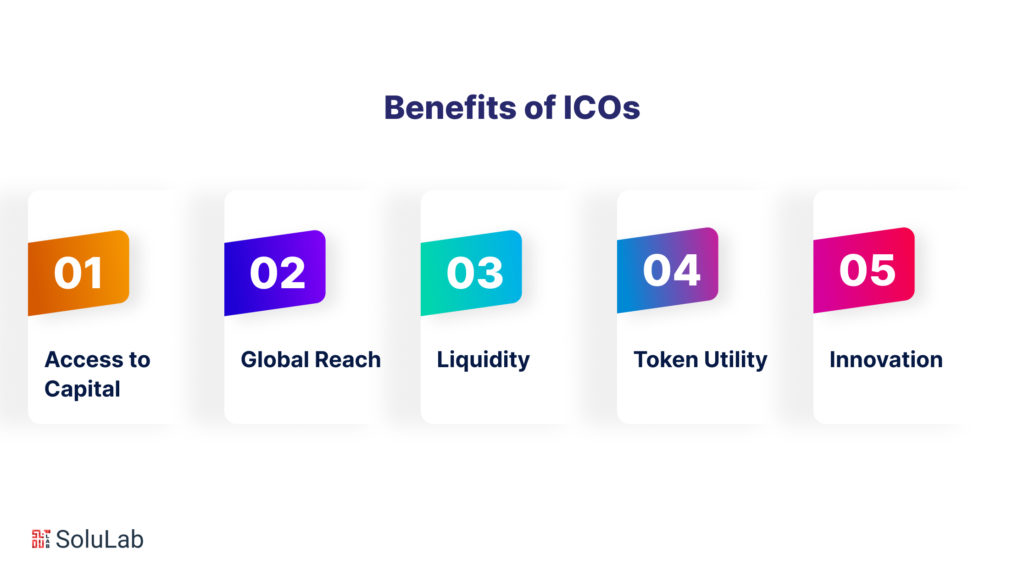
Benefits of ICOs

Benefits of ICOs

ICO participants are drawn to this fundraising model for several reasons:

  • Access to Capital: For blockchain startups and entrepreneurs, ICOs provide a direct route to capital without the need for traditional venture capital or bank loans. This democratizes fundraising and opens up opportunities for projects around the world.
  • Global Reach: ICOs can attract a global pool of investors, allowing projects to reach a diverse and geographically dispersed audience. This global reach can result in a more diverse and engaged user base.
  • Liquidity: Tokens issued through ICOs often become tradeable on cryptocurrency exchanges shortly after the fundraising campaign. This liquidity provides investors with the ability to buy or sell tokens, enhancing market dynamics.
  • Token Utility: ICO tokens typically serve a specific purpose within the project’s ecosystem. They can represent access to a platform’s features, ownership of digital assets, or voting rights. This utility adds intrinsic value to the tokens.
  • Innovation: ICOs have fueled innovation in the blockchain space, giving rise to a multitude of projects exploring novel use cases, from decentralized finance (DeFi) and non-fungible tokens (NFTs) to supply chain management and more.

Read Also: 7 Most Successful ICOs of All Time

Risks of ICOs

However, ICOs also come with inherent risks:

  • Regulatory Uncertainty: The regulatory environment surrounding ICOs varies by country and can change rapidly. This uncertainty poses legal and compliance risks for both project founders and investors.
  • Fraud and Scams: The nascent nature of ICOs has made them susceptible to fraudulent schemes and scams. Investors must exercise caution and conduct thorough due diligence before participating in any ICO.
  • Market Volatility: The cryptocurrency market is highly volatile, and the value of ICO tokens can fluctuate significantly shortly after listing on exchanges. This volatility can impact investor returns and confidence.
  • Lack of Investor Protection: Unlike traditional financial markets, ICOs often lack the investor protections provided by regulatory agencies. Investors may have limited recourse in the event of disputes or project failures.
  • Project Viability: Not all ICO projects are successful in delivering on their promises. Investors face the risk of backing projects that fail to achieve their objectives, resulting in loss of capital.
  • Hype and Speculation: FOMO (Fear of Missing Out) and speculative behavior can drive up token prices during ICOs. This hype-driven environment can lead to irrational investment decisions.

In the following sections, we will explore the steps involved in launching a successful ICO, including the preparation phase, the actual ICO launch, post-ICO activities, legal considerations, and emerging trends in the ICO landscape.

Preparing for Your ICO

Preparing for Your ICO

Before embarking on an ICO journey, meticulous preparation is essential. This phase involves developing your blockchain project, assembling a skilled team, addressing legal considerations, crafting a comprehensive whitepaper, designing tokenomics, and building a community of supporters.

  • Developing Your Blockchain Project

The foundation of a successful ICO lies in the development of a compelling blockchain project. This phase involves ideation, conceptualization, and technical planning to transform your vision into a tangible product or platform. 

Developing your blockchain project is a foundational step that sets the stage for the rest of your ICO journey. A well-conceived and technically sound project is more likely to garner investor interest and support. Once your project reaches a certain level of maturity, you can proceed to the next steps in preparing for your ICO.

  • Assembling Your Team

Building a capable and dedicated team is pivotal to the success of your ICO and blockchain project. The individuals you bring on board should possess the expertise and experience needed to navigate the complexities of blockchain technology, finance, marketing, and legal compliance.

Assembling a well-rounded team with the right mix of skills and expertise is a critical step in preparing for your ICO. Each team member should be aligned with your project’s vision and dedicated to its success. With a strong team in place, you can tackle the multifaceted challenges in the launch of your ICO.

Check Our Blog Post: Top 6 ICO Platforms You Can Trust

  • Legal Considerations

Navigating the legal landscape is essential to avoid regulatory issues in your launch ICO journey. Legal considerations may include the incorporation of your project, compliance with securities regulations, and Know Your Customer (KYC) and Anti-Money Laundering (AML) procedures. Consult with legal experts who specialize in cryptocurrency and blockchain to ensure compliance with local and international laws.

Navigating the legal landscape is essential to the success of your launch ICO. Legal considerations encompass a wide range of factors, from the structure of your token sale to regulatory compliance.

  • Whitepaper Creation

A well-crafted whitepaper is the cornerstone of your launch ICO. It should provide a comprehensive overview of your project, including its objectives, technical details, tokenomics, use cases, and roadmap. A clear and transparent whitepaper builds trust with potential investors. Ensure that it addresses the “why” and “how” of your project, explaining its value proposition and how it aims to solve real-world problems.

A well-structured and informative whitepaper can instill confidence in potential investors and help them make informed decisions. It serves as a foundational document that aligns stakeholders with your project’s vision and objectives.

Read Our Blog Post: ICO vs. STO: What’s the Difference?

  • Tokenomics and Smart Contracts

Tokenomics refers to the economics of your project’s token ecosystem. It encompasses various aspects related to the creation, distribution, and utility of tokens within your project. Designing a robust tokenomics model is essential for the success of your ICO.

Creating a well-balanced tokenomics model requires a deep understanding of your project’s goals and user base. It should align with your whitepaper’s objectives and provide a clear value proposition for token holders. Moreover, smart contracts play a crucial role in implementing and automating the tokenomics rules you define.

  • Building a Community

Building a strong and engaged community is a fundamental aspect of preparing for a successful ICO. A supportive community not only provides initial backing but can also contribute to the long-term success of your project.

Building a community is an ongoing effort that requires dedication and active engagement. A vibrant community can become a powerful advocate for your project, attracting more participants and supporters as you move closer to your ICO launch.
Launching Your ICO

Launching Your ICO

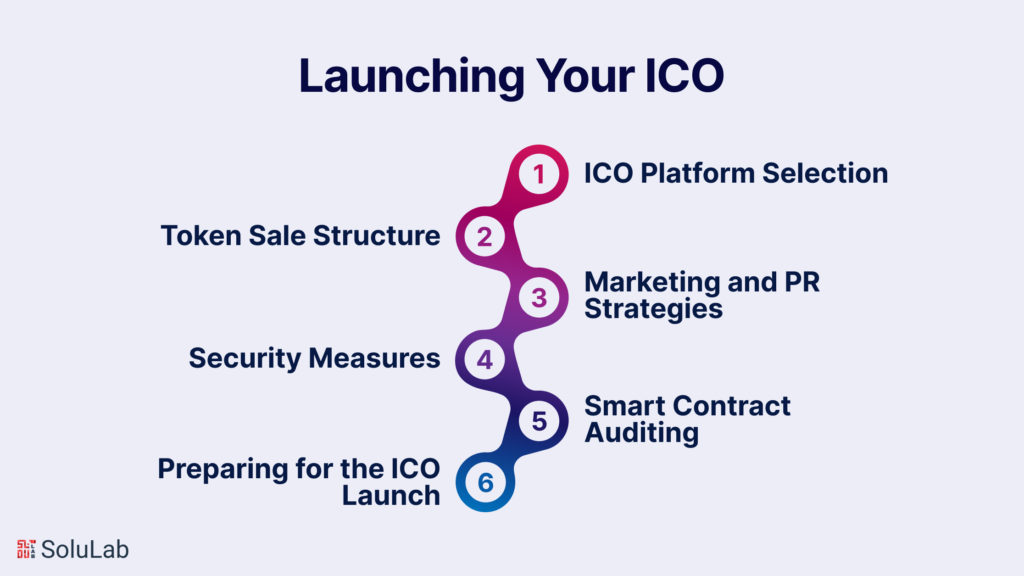
The ICO launch phase involves selecting the right platform, structuring your token sale, crafting marketing and public relations strategies, implementing security measures, conducting smart contract audits, and ensuring everything is in place for a smooth ICO launch.

  • ICO Platform Selection

Choosing the right platform to launch your ICO is a critical decision that impacts your fundraising success. The platform you select should align with your project’s goals, target audience, and technical requirements.

When selecting an ICO platform, assess factors such as transaction costs, network congestion, developer community, security features, and the platform’s track record with previous ICOs. Additionally, consider the preferences of your target audience, as some investors may have platform-specific preferences.

  • Token Sale Structure

The structure of your token sale plays a pivotal role in attracting investors and determining the success of your ICO. Different token sale structures cater to various objectives and investor profiles.

The choice of token sale structure should align with your project’s funding needs, timeline, and strategic goals. Additionally, transparently communicate the structure and terms to potential investors through your whitepaper and marketing materials.

Read Our Blog: What are Some of the Benefits of an ICO?

  • Marketing and PR Strategies

Effective marketing and public relations (PR) strategies are essential for creating awareness, generating interest, and building trust around your ICO. A well-planned marketing campaign can attract a diverse pool of investors.

Developing a comprehensive marketing and PR strategy requires a deep understanding of your target audience and their preferences. Tailor your approach to effectively communicate your project’s value proposition and engage potential investors.

  • Security Measures

Security is paramount throughout the ICO process to protect your project, team, and investors from potential threats and vulnerabilities. Implementing robust security measures can prevent security breaches and instill confidence in your community. 

By prioritizing security at every stage of your ICO, you can create a safe and trustworthy environment for both contributors and your team. Transparency and proactive communication regarding security measures can also instill confidence in your community.

  • Smart Contract Auditing

Before launching your ICO, it’s essential to audit your smart contracts thoroughly. Smart contract audits help identify vulnerabilities or errors that could compromise the security of your token sale. Hiring reputable smart contract auditors or firms is a critical step in ensuring the integrity of your ICO.

Smart contract audits are a crucial component of ICO security. They help identify and mitigate vulnerabilities that could be exploited by malicious actors. Demonstrating a commitment to smart contract security can attract investors and foster confidence in your project.

Read Also: Top 10 ICO Development Companies 

  • Preparing for the ICO Launch

As the launch date approaches, ensure that all systems are in place for a smooth ICO launch. Test your ICO platform, conduct mock token sales, and prepare customer support resources to address inquiries and issues. Make necessary arrangements to handle the high volume of transactions and participants expected during the ICO.

Preparing for the ICO launch requires meticulous attention to detail and a focus on both technical and logistical aspects. A well-executed launch sets the stage for a successful fundraising campaign.
Conducting Your ICO

Conducting Your ICO

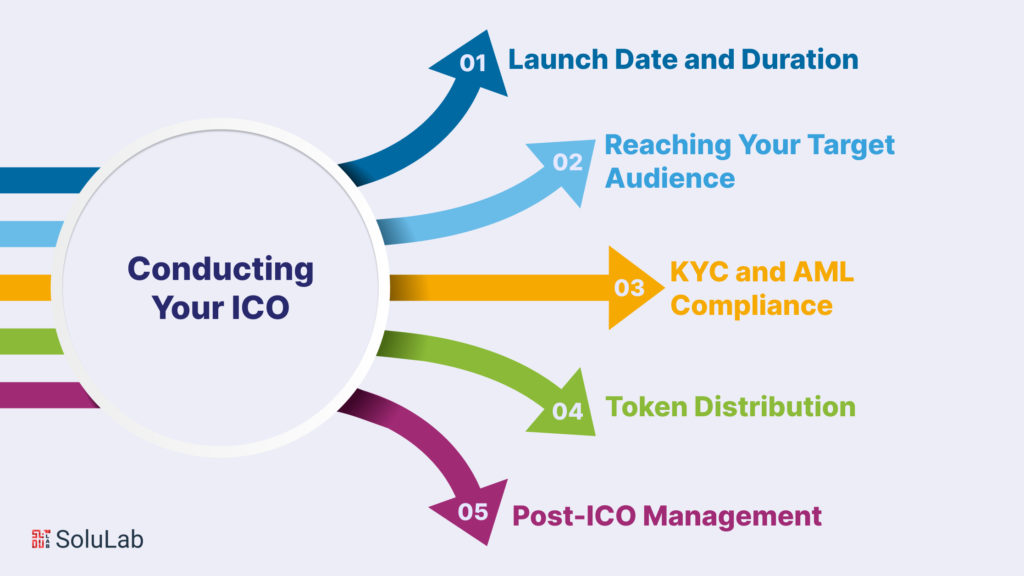
Once your ICO is launched, it’s crucial to manage various aspects, including the launch date and duration, reaching your target audience, KYC and AML compliance, token distribution, and post-ICO management.

  • Launch Date and Duration

Selecting the right launch date and duration for your launch ICO is strategic. Consider factors like market conditions, investor sentiment, and potential competition with other ICOs. Determine the duration of your ICO sale, which can vary from a few days to several weeks, and set a clear end date.

The timing of your ICO should align with your project’s goals and the broader market conditions. It’s important to strike a balance between creating urgency and allowing sufficient time for participation.

  • Reaching Your Target Audience

Effective communication with your target audience is key to a successful ICO. Continue engaging with your community and addressing questions and concerns. Leverage email marketing, social media, and advertising to reach a broader audience. Collaborate with influencers and crypto-related media outlets for additional exposure.

Building a strong and engaged community plays a pivotal role in reaching your target audience. Regularly update your community on project developments, milestones, and important announcements.

Read Our Blog: Which are the Best ICO Listing Websites Out There?

  • KYC and AML Compliance

Compliance with KYC and AML regulations is essential for ICOs to prevent fraudulent activities and money laundering. Implement robust KYC procedures to verify the identity of participants and conduct necessary due diligence. Partner with KYC service providers if needed to streamline the process.

KYC and AML compliance are critical for creating a transparent and secure ICO environment. Properly vetting contributors helps prevent fraudulent activity and promotes trust among investors. Know Your Customer (KYC) and Anti-Money Laundering (AML) compliance measures are essential to ensure the legitimacy of contributors and protect your project from potential legal issues.

  • Token Distribution

After the ICO concludes, distribute tokens to participants as per the terms outlined in your whitepaper and smart contracts. Ensure transparency in the distribution process and keep participants informed about the status of their token allocations. Be prepared to address inquiries and provide support during this phase. 

Managing contributions effectively is crucial for maintaining trust and accountability. Clear communication and transparency regarding the management of funds are essential. Managing contributions and funds during your ICO requires careful planning and execution. Implementing secure and transparent procedures is essential to maintain trust with contributors.

  • Post-ICO Management

The post-ICO phase is crucial for project development and maintenance. Focus on delivering on your project’s promises, meeting roadmap milestones, and engaging with your community. Regular updates, transparency, and active communication with investors contribute to building trust and credibility.

Post-ICO activities are critical for delivering on your project’s promises, building trust, and ensuring the long-term success and sustainability of your blockchain venture.

CTA2

Conclusion

In conclusion, the journey of launching an ICO that is successful is an intricate one that demands meticulous planning, rigorous execution, and unwavering dedication. As blockchain technology continues to evolve, ICOs remain a vital avenue for funding innovative projects and solutions. The significance of this fundraising mechanism lies not only in capital generation but also in creating opportunities for groundbreaking ideas to flourish.

Throughout this comprehensive guide, we have delved into the intricacies of ICOs, from their inception to the multifaceted process of preparation, launch, and post-ICO activities. We’ve explored the critical aspects of developing a blockchain project, assembling a proficient team, addressing legal considerations, crafting a compelling ico whitepaper, defining tokenomics, and nurturing a robust community.

Launch an ICO involves crucial decisions, such as selecting the right ICO platform, structuring the token sale, implementing marketing and security strategies, and ensuring compliance with Know Your Customer (KYC) and Anti-Money Laundering (AML) regulations. Additionally, post-ICO activities, including token distribution, exchange listings, community engagement, and project development, are instrumental in fulfilling your promises to investors and users alike.

As the ICO landscape evolves, adaptability and compliance with regulatory changes are paramount. The blockchain industry continues to witness innovations like Security Token Offerings (STOs) and the integration of Decentralized Finance (DeFi) into fundraising mechanisms, opening new horizons for blockchain entrepreneurs.

At SoluLab, we recognize the transformative potential of ICOs in the world of blockchain technology. As a leading provider of ICO development services and solutions, we are committed to guiding you through every phase of your ICO journey. Our expertise in white label ICO platform development and white label ICO exchange platforms enables you to raise the question of how to launch an ico with confidence, leveraging the latest technologies and best practices.

In the ever-evolving blockchain ecosystem, success in launching an ICO hinges on embracing innovation, fostering transparency, and engaging with your community effectively. Your ICO is not merely a financial endeavor; it’s an opportunity to create lasting value and make a meaningful impact. With the right approach, you can navigate the challenges, achieve your fundraising goals, and contribute to the ongoing evolution of blockchain technology. SoluLab is here to support you every step of the way.

FAQs

1. What is an ICO, and how does it differ from other fundraising methods?

An Initial Coin Offering (ICO) is a fundraising method that involves issuing digital tokens or coins to investors in exchange for capital. It differs from traditional fundraising methods, such as venture capital or initial public offerings (IPOs), as it leverages blockchain technology and offers tokens with specific utilities within a project or platform.

2. What are the key steps to launching a successful ICO?

Launching a successful ICO involves several key steps, including project development, assembling a team, addressing legal considerations, creating a whitepaper, defining tokenomics, choosing an ICO platform, implementing marketing strategies, and ensuring security measures.

3. What is a white label ICO platform, and why is it important?

A white label ICO platform is a pre-built, customizable solution that enables entrepreneurs to launch their ICOs without developing the entire platform from scratch. It saves time, reduces costs, and provides access to essential features and functionalities required for a successful ICO.

4. How can I ensure compliance with regulations during an ICO?

Compliance with Know Your Customer (KYC) and Anti-Money Laundering (AML) regulations is crucial during an ICO. Implementing robust KYC/AML processes, partnering with legal advisors, and staying informed about regulatory changes are essential steps to maintain compliance.

5. What are some common challenges faced during ICO launch?

Common challenges during an ICO launch include building investor trust, attracting a substantial user base, addressing security concerns, and adapting to evolving regulatory landscapes. Managing these challenges effectively is vital for a successful ICO.

6. Are there alternatives to ICOs for fundraising in the blockchain space?

Yes, there are alternatives like Security Token Offerings (STOs) and Initial Exchange Offerings (IEOs), each with its own set of rules and regulations. STOs, for example, involve tokens backed by real-world assets, providing additional security to investors.

7. How can SoluLab assist in launching a successful ICO?

SoluLab offers comprehensive ICO development services and solutions, including white label ICO platform development and white label ICO exchange platforms. With our expertise and guidance, you can navigate the complexities of ICOs, from planning to execution, to achieve a successful fundraising outcome.

How to Create a Cryptocurrency from Scratch and Start an ICO?

Create Cryptocurrency and Start an ICO

Most people agree that starting an Initial Coin Offering (ICO) is a quick and straightforward method to raise money for your enterprise. However, there is more to it than meets the eye, as the regulations around cryptocurrencies make launching an ICO risky, technically challenging, and difficult to market. This page provides an extensive guide on how to start an ICO, including detailed instructions on how to Create Your Own Cryptocurrency and the ICO process. You will also find alternatives to help you decide the best fundraising option for you. Whether you’re looking to build your own cryptocurrency or understand how to create cryptocurrency, this guide covers everything you need to know to start an ICO successfully.

How to Set Up an Initial Coin Offering?

Let’s discuss the ten steps you must take to construct an initial coin offering (ICO) now that you have made the decision to launch your cryptocurrency.

1. White paper

A white paper is a research-based document that explains your project’s technical details and reasoning. You are making this thing, but why? Which issues are you trying to resolve? How are you going to tackle those issues? What use will your token for cryptocurrencies serve?

The creation of a peer-to-peer electronic currency system is covered in length in the 2008 Bitcoin whitepaper written by the anonymous Satoshi Nakamoto. After outlining the possible issues (double spending) that the Bitcoin network could encounter, Nakamoto provides technical information on timestamp servers and proof-of-work schemes to address this problem.

In the same way, a founder should make every effort to include every detail in a white paper. Peers who could be interested in investing in or supporting the initiative will review the white paper closely. Technically and commercially speaking, the white paper is perhaps the most significant document. 

Your ICO might not succeed if the audience is not persuaded by your whitepaper.

2. Token utility and tokenomics

To decide whether to invest in a cryptocurrency, potential buyers want to understand the utility of your token. A cryptocurrency token without practical use may end up as a meme coin, intended solely for trading purposes. For some systems, tokens are often used as a medium of exchange. Native tokens of layer one (L1) are used to pay gas fees, while discount tokens are issued by cryptocurrency exchanges. Many decentralized apps offer tokens with attached voting rights. Tokenomics is an essential aspect that investors thoroughly investigate. Is your token inflationary, like Cosmos’ ATOM, or hardcapped, like Bitcoin? What portion of the tokens is allocated to early investors and the development team? Do these investors have a vesting term and a cliff period? Tokenomics directly impacts a token’s market price, making these questions crucial when considering how to create a cryptocurrency or how to start an ICO. Whether you want to know how do you make your own cryptocurrency or understand the ICO process, these factors are vital to the success of your Initial Coin Offering (ICO). Understanding how to create an ICO and build crypto involves addressing these key aspects to attract and retain investors.

3. Legal Compliance

We can’t emphasize this section enough. Ensuring legal compliance is crucial; otherwise, the authorities may eventually knock on your door. 

To safeguard oneself against the unpredictable regulatory environment around cryptocurrencies and token sales, creators must give legal compliance top priority while organizing an ICO launch.

  • First and foremost, creators need to think about the jurisdiction in which they plan to introduce the initial coin offering (ICO), as laws differ widely between nations. You might need to comply with disclosure laws and register the ICO launch with securities regulators in some areas.
  • Second, creators must remember that, depending on the jurisdiction in which the ICO is launched, it may be subject to know-your-customer (KYC) and anti-money laundering (AML) compliances.
  • Lastly, taxes should not be overlooked. Tax laws pertaining to ICOs and cryptocurrencies are currently in the process of being formulated. Therefore, in order to lower the danger of legal ramifications and cultivate confidence with possible investors, it is imperative to confer with a legal and financial specialist.

4. Team

It should go without saying that any project or business must have the correct staff. Any idea’s most challenging aspect is its execution, and without a qualified team, your vision will be just that—a notion.

A team of software and blockchain engineers, UI/UX designers, copywriters, sales and marketing executives, and other professionals will be needed for your blockchain project. Adding really credible individuals to your advisory board will benefit your project in many ways.

By setting aside a portion of the ICO’s earnings and tokens for your team, you may encourage them. 

5. Choosing the Right Blockchain

There are a plethora of blockchains available. It will be your responsibility as a founder to choose a blockchain that aligns with your values and mission. The first blockchain that springs to mind when considering a platform for an initial coin offering (ICO) is Ethereum. ICO launches were made possible in the first place by Ethereum’s power.

In terms of total value locked and active users, Ethereum remains the world’s most popular smart contract platform. It is regarded as one of the world’s safest public blockchains as well. But because of Ethereum’s widespread use, the blockchain is congested, which causes sluggish transactions and expensive gas costs. 

You might introduce your tokens on an Ethereum layer-two (L2) rollup such as Base or Optimisim if high gas costs are an issue. L2s are gaining traction over time because they let users benefit from Ethereum’s security without having to pay its expensive gas costs.

Poygon and BNB Chain are two well-liked alternative blockchains. ICO producers particularly prefer the BNB Chain because of its interaction with Binance, the largest cryptocurrency exchange in the world. Binance offers its cryptocurrency investors access to newly issued tokens on the BNB Chain through Binance Launchpad, a specialized BSC ICO platform.

Cryptocurrency Services

6. Creating Smart Contracts

Smart contracts control the Create Cryptocurrency on blockchains such as Ethereum and BNB Chain. For your ICO to be launched, a smart contract must be created. Tokens on Ethereum are created using the most widely used token standard, which is ERC-20.

You won’t have any trouble designing a smart contract if you have a team of engineers and programmers. You can generate how to make your own cryptocurrency with ThirdWeb and other no-code alternatives if you don’t have a lot of resources.

Code libraries such as OpenZeppelin can also be used to expedite the generation of smart contracts. These libraries offer a databank of deployable, tested, and community-reviewed code.

7. Auditing your Smart Contract

Any flaws and vulnerabilities in your code will be found through auditing. Before releasing your smart contract to the blockchain, you should audit it, especially if it was created for an initial coin offering (ICO).

Since you are working with someone else’s money, you must take all required precautions to guarantee the security of investment cash. If not, you can end up in hot water.

Additionally, auditing will guarantee that there are no hiccups or technological issues during the ICO process. You might submit your smart contract for public evaluation and consider offering bug bounties, or you can get in touch with reputable auditing services. 

8. Protect your ICO Proceeds

An address for your wallet that will receive ICO funds must be included when setting up your smart contract. 

It is advised that you utilize hardware wallets with the strongest security available. A multi-sig hardware wallet may also be used if your team is larger and you have more founding members.

Moreover, you may program the smart contract to distribute the ICO funds to several wallet addresses in order to spread out the risk in the event that one wallet is hacked. It is important to always prioritize security in the realm of cryptocurrency.

You’ve probably heard the proverb “Better safe than sorry.”

9. Marketing

Get the best cryptocurrency initial coin offering (ICO) via marketing. No matter how great your idea is, consider this: if potential investors are unaware of your project, they will not have the opportunity to invest in it.

A strong website’s branding is the foundation of effective marketing. The public face of your initiative will be your website. You might even designate your website as your ICO’s minting page.

In the present day, increasing brand awareness through blogs, videos, and social media is essential. Because the caliber of the information is so great, you will need to make an investment to get seen. Employing copywriters, community managers, social media moderators, and content producers will be beneficial.

Remember that among enthusiasts of cryptocurrency, Twitter and Discord are the most widely used social media sites. To reach more people, if you have the money, you may employ influencers and purchase advertisements.

Related: ICO Vs IPO: What’s the Difference?

10. Creating a Good Product

Sometimes developing a product that people want to use is the greatest approach to promote your initial coin offering (ICO). You can make your idea so popular that enough people would be eager to invest in your initial coin offering (ICO). This was shown with Ethereum’s layer-two rollup, Arbitrium. 

The goal of Arbitrium was to provide a scaling solution for Ethereum that anybody could use and expand upon. People were excitedly awaiting the introduction of Arbitirum’s ARB token when the company announced its formation. Arbitirum didn’t need to worry about marketing because their accomplishments are enough to speak for themselves.

How Much Does It Cost to Launch an ICO?

By now, you probably know that starting an initial coin offering (ICO) is not inexpensive. It is not possible to cite an exact number here. It truly relies on your spending limit and your objectives. How much it costs to how to create a cryptocurrency

These are a few costs you could have for your impending initial coin offering:

  • Employee costs
  • Attorney fees
  • costs for consultations
  • Gas costs for contract deployment and testing
  • Hardware wallet costs
  • Advertising and influencer costs
  • Expenses for websites: domains, hosting

Why Launch an ICO?

Why Launch an ICO

Here are some points to help you decide on your crypto ICO.

1. Blockchain Industry

Do you have any projects involving blockchain technology? Should blockchain be used in your project at all? Fundamentally, blockchain technology is just a sophisticated database that can be adjusted to emphasize decentralization and transparency and can be created to be open source. Founders must remember that not every idea is a good fit for blockchain technology

It can make sense to start an initial coin offering (ICO) if your project is centered around blockchain technology or if operating in a decentralized or peer-to-peer environment is important to you.

2. Cryptocurrency Tokens

Is a crypto token even necessary for your project? This is the most typical mistake that most entrepreneurs make. By no means is using blockchain technology a requirement to Create Cryptocurrency.

The process of developing, marketing, and maintaining cryptocurrency tokens and smart contracts is fraught with several hazards and complexities. Rather than dealing with market risks, token marketing, tokenomics, hacks, and cryptocurrency, your team could be better off investing time and money into developing a workable product or service.

Above all, a project ought to have value even in the absence of its coin. A project will eventually collapse (and take its token down with it) if the only reason it is unique is that its cryptocurrency token is gaining attention in the marketplace.

It could make sense to start an ICO if your cryptocurrency token will have a notable usefulness.

3. Regulations

Before establishing an ICO, founders need to consider the legislation pertaining to cryptocurrency in their operational regions. The US Securities and Exchanges Commission (SEC) has been pursuing a number of cryptocurrency creators for allegedly trading “unregistered securities” despite not registering with the agency. As of this writing, there is a great deal of uncertainty around crypto regulations. The US SEC is adamant about policing cryptocurrency and initial coin offerings.

There are now solutions that can shield you from regulatory scrutiny and provide you with some of the advantages of an initial coin offering (ICO). Later in this post, we’ll discuss those choices.

Alternatives to ICOs

There are alternatives to ICOs that you should be aware of. Learn about them here before making your final decision.

1. Initial Exchange Offering (IEO)

IEO stands for initial exchange offering, which is sold on a cryptocurrency exchange.

ICOs and IEOs are comparable. You build a smart contract for your freshly produced tokens, but you want to issue the tokens through a cryptocurrency exchange rather than sending investors to a mint page.

Because the cryptocurrency exchange may decide to do due diligence on the coin issuer’s smart contract before listing the coins, IEOs are thought to be safer for investors than ICOs. Investors will have an additional degree of security from this third-party due diligence, which might provide legitimacy to the token sale.

Related: ICO vs. STO: What’s the Difference?

2. Security Token Offering (STO)

The term “STO” describes the controlled selling of cryptocurrency tokens. Since the cryptocurrency tokens are categorized as “securities” in this case, they have to abide by regulations imposed by market watchdogs like the US SEC.

Promoters of STOs will need to adhere to disclosure regulations, which entails disclosing to the public, prior to token offerings, the business strategy, associated risks, team makeup, and other confidential information.

Founders may proceed with their fundraising without fear of regulatory scrutiny in the future when they utilize STO.

ICO Development Company

Conclusion

Creating a cryptocurrency from scratch and starting an ICO can be a complex yet rewarding process. By carefully planning each step, from conceptualizing your unique value proposition to executing a successful ICO, you can tap into the immense potential of the cryptocurrency market. Partnering with a professional cryptocurrency development company can simplify this journey. Such companies offer comprehensive cryptocurrency services, including technical development, compliance, and marketing, ensuring your project stands out in a competitive landscape.

To maximize the effectiveness of your ICO, consider engaging an ICO Development Company that provides specialized ICO development services. These experts can guide you through the intricacies of the ICO process, from smart contract development to token distribution, and help you navigate regulatory requirements. By leveraging these cryptocurrency solutions, you can build a robust and secure platform that attracts investors and achieves your business goals.

For those looking to build crypto projects, SoluLab offers comprehensive support and expertise. From helping you how to create a cryptocurrency to guiding you through the process of how to start an ICO, SoluLab ensures that your project is poised for success in the rapidly evolving digital landscape.

FAQs

1. How do you make your own cryptocurrency?

To make your own cryptocurrency, you’ll need to define your unique value proposition, select a blockchain platform, write the necessary code, create smart contracts, and test the cryptocurrency thoroughly. Collaborating with a development team or hiring a cryptocurrency development company can streamline this process.

2. How to create a cryptocurrency?

Creating cryptocurrency involves choosing the right blockchain, developing the digital currency through smart contracts, and setting up a secure environment for transactions. Comprehensive planning and professional expertise are crucial to ensure a successful launch.

3. What are the steps to make your own cryptocurrency?

The steps to make your own cryptocurrency include conceptualizing your idea, selecting a blockchain platform, developing the cryptocurrency, implementing smart contracts, conducting thorough testing, and preparing for the launch. It’s beneficial to work with experts who offer cryptocurrency services to navigate these steps efficiently.

4. How do you create a cryptocurrency from scratch?

To create a cryptocurrency from scratch, you need to define your project’s goals, choose the right blockchain technology, write and deploy the smart contracts, ensure the security of the platform, and plan for the launch. Engaging with a cryptocurrency development company can help manage these tasks effectively.

5. What is the process to start an Initial Coin Offering (ICO)?

The ICO process involves defining your project, creating a whitepaper, developing the cryptocurrency, marketing the ICO, and ensuring compliance with legal regulations. Partnering with an ICO Development Company can help manage these tasks and provide specialized ICO development services.

6. How to create an ICO and what are the necessary steps?

Creating an ICO involves several steps: drafting a comprehensive whitepaper, developing the token, setting up a secure environment for the ICO, marketing the ICO, and ensuring regulatory compliance. Professional services can help guide you through the process of how to start an ICO, from inception to execution.

7. What are the key elements to consider when you build crypto and start an ICO?

When you build crypto and start an ICO, consider factors such as the uniqueness of your cryptocurrency, the choice of blockchain, smart contract development, security measures, regulatory compliance, and effective marketing strategies. Utilizing cryptocurrency solutions can enhance the chances of a successful ICO.
