Talk to an Expert

OpenSea Business Model and Revenue Sources Explained


OpenSea Business Model and Revenue Sources Explained

In the ever-evolving landscape of the digital economy, Non-Fungible Tokens (NFTs) have emerged as a groundbreaking concept, revolutionizing the way we perceive and trade digital assets. At the forefront of this revolution is OpenSea, an NFT marketplace that has gained significant attention for its role in facilitating the buying, selling, and trading of NFTs. In this article, we will delve into the intricacies of OpenSea’s business model, its revenue sources, and its position in the NFT marketplace ecosystem.

Understanding OpenSea: The Decentralized NFT Marketplace

In the digital age, traditional concepts of ownership and value have undergone a paradigm shift, thanks to the emergence of Non-Fungible Tokens (NFTs). At the forefront of this transformative movement is OpenSea, a decentralized NFT marketplace that has been a driving force behind the rapid growth of the NFT ecosystem. In this article, we will delve deep into understanding OpenSea: its purpose, features, significance, and the role it plays in the world of NFTs.

The Essence of OpenSea:

OpenSea, founded in 2017 by Alex Atallah and Devin Finzer, represents a revolutionary concept that has changed how we perceive and interact with digital assets. At its core, OpenSea is a platform that enables users to buy, sell, and trade NFTs. NFTs are unique digital tokens that establish ownership and authenticity of various digital and physical items, such as digital art, collectibles, music, virtual real estate, and more. Unlike cryptocurrencies like Bitcoin or Ethereum, NFTs are indivisible and cannot be exchanged on a one-to-one basis.

Read Our Blog: How to Build an NFT Marketplace on Ethereum Blockchain?

Empowering Creators and Collectors:

One of OpenSea’s primary functions is to provide creators with a platform to mint their own NFTs. Minting involves tokenizing a digital asset, essentially converting it into a unique, tradable token on the blockchain. This process embeds ownership and provenance information into the token, ensuring its authenticity. Creators can then list their NFTs for sale on OpenSea, reaching a global audience of potential buyers and collectors.

For collectors, OpenSea offers a vast marketplace to discover and acquire a diverse range of NFTs. Whether you’re passionate about digital art, a fan of a specific artist, or interested in a particular category, OpenSea’s interface makes it easy to explore and engage with the NFT ecosystem.
CTA1

Decentralization and Transparency:

Central to OpenSea’s ethos is its decentralized nature. The platform operates on the Ethereum blockchain, leveraging its smart contract functionality to ensure transparency and security. Each NFT transaction, listing, and ownership change is recorded on the blockchain, providing an immutable and publicly accessible ledger. This decentralization eliminates the need for intermediaries, creating a direct connection between buyers and sellers.

NFT Marketplace Dynamics:

OpenSea operates as a hub for NFT transactions, both primary and secondary. Primary transactions involve the initial sale of NFTs from creators to buyers, with creators setting their own pricing and terms. Secondary transactions occur when buyers resell their acquired NFTs to other interested parties. OpenSea’s marketplace provides a seamless environment for these exchanges, fostering liquidity within the NFT ecosystem.

Read Also: Binance Business Model and Revenue Sources Explained

Interoperability and Integration:

OpenSea’s significance extends beyond its own platform. It has become a hub for managing NFTs acquired from various sources. NFTs minted or purchased on other platforms that adhere to Ethereum’s standards can be managed and viewed within a user’s OpenSea wallet. This interoperability enhances convenience for users, who can access their entire NFT collection in one place
How Does OpenSea Work?

How Does OpenSea Work?

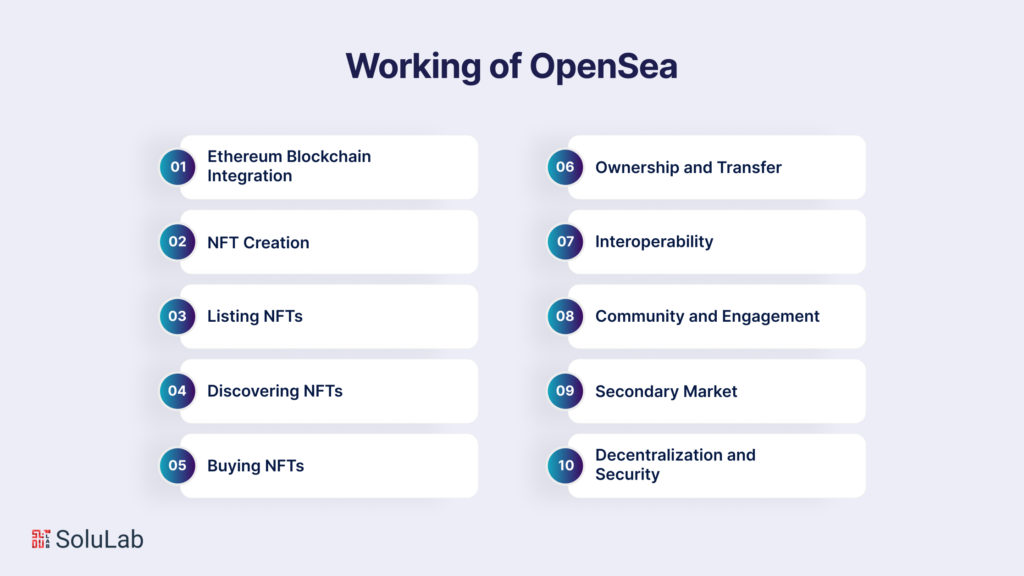
OpenSea operates as a decentralized NFT marketplace that functions on the Ethereum blockchain. Its platform facilitates the creation, discovery, buying, and selling of non-fungible tokens (NFTs), which are unique digital assets that represent ownership of specific items or content. Let’s take a closer look at how OpenSea works:

1. Ethereum Blockchain Integration:

OpenSea is built on the Ethereum blockchain, which is a decentralized and programmable blockchain known for its smart contract functionality. NFTs on OpenSea are ERC-721 tokens, a specific token standard on Ethereum that enables the creation of unique and indivisible digital assets.

2. NFT Creation:

Creators, artists, and users can mint their own NFTs on OpenSea. Minting an NFT involves turning a digital file, such as an image, video, music, or other forms of content, into a unique token on the blockchain. This process establishes ownership and authenticity of the digital asset.

3. Listing NFTs:

Once minted, NFTs can be listed for sale on the OpenSea marketplace. Sellers set the price, choose whether the NFT is an auction or fixed-price listing, and add a description and relevant metadata to provide context about the NFT. These listings are visible to potential buyers on the OpenSea platform.

Read Our Blog Post: Why Should You Start Your Own NFT Marketplace Business?

4. Discovering NFTs:

Buyers and collectors can browse the OpenSea marketplace to discover a wide range of NFTs across various categories such as art, collectibles, virtual real estate, domain names, and more. The platform offers search and filtering options to help users find NFTs based on their preferences.

5. Buying NFTs:

When a buyer finds an NFT they are interested in, they can make a purchase by placing a bid or buying it at the listed price, depending on the seller’s preferences. Bids are placed during auction-style listings, and the highest bidder wins the NFT when the auction ends. For fixed-price listings, buyers can immediately purchase the NFT at the specified price.

6. Ownership and Transfer:

Once a purchase is made, ownership of the NFT is transferred from the seller to the buyer. This ownership transfer is recorded on the Ethereum blockchain, providing an immutable record of the transaction. Buyers can view their NFTs in their OpenSea wallet and manage them from there.

Read Our Blog: Rarible Business Model and Revenue Sources

7. Interoperability:

OpenSea is not limited to its own ecosystem. NFTs bought or acquired from other platforms that are compatible with the Ethereum blockchain can also be managed and viewed within the OpenSea interface. This interoperability allows users to have a comprehensive view of their NFT holdings.

8. Community and Engagement:

OpenSea fosters a community of creators, collectors, and enthusiasts. Users can follow their favorite artists, creators, or NFT projects to stay updated on new releases and developments. The platform often hosts special events, collaborations, and drops that engage the community and promote the NFT ecosystem.

9. Secondary Market:

After purchasing an NFT, buyers have the option to resell their NFTs on the OpenSea marketplace. This creates a secondary market where NFTs can change hands multiple times, each time recorded on the blockchain. The ability to trade NFTs in the secondary market adds to the liquidity and dynamic nature of the platform.

Check Our Blog Post: Top NFT Development Companies To Look At In 2023

10. Decentralization and Security:

OpenSea operates in a decentralized manner, meaning that ownership, transactions, and listings are recorded on the Ethereum blockchain, reducing the risk of fraud and ensuring transparency. The platform does not hold users’ private keys, enhancing security and control over their assets.

In essence, OpenSea serves as a bridge between creators, collectors, and buyers in the NFT ecosystem, leveraging the power of blockchain technology to create a transparent, secure, and accessible marketplace for unique digital assets.
OpenSea Business Model:

OpenSea Business Model

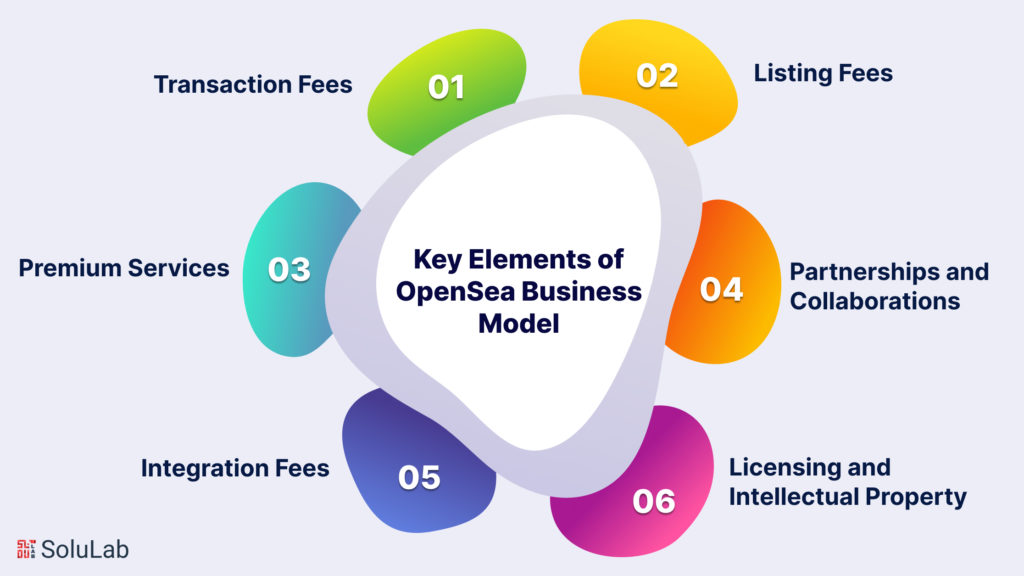
OpenSea’s business model is rooted in several key elements:

Transaction Fees: One of the primary revenue streams for OpenSea is the collection of transaction fees. Whenever a successful NFT transaction occurs on the platform, OpenSea charges a percentage of the sale value as a fee. These fees can vary based on factors such as the type of asset being traded and the total transaction amount.

Listing Fees: In addition to transaction fees, OpenSea may also charge listing fees to creators who wish to list their NFTs on the platform. These fees contribute to the operational costs of maintaining the marketplace.

Premium Services: OpenSea has the potential to introduce premium services for both buyers and sellers. These services could include enhanced visibility for listings, analytics tools, and customization options, all of which could be offered at a premium price.

Read Also: Navigating the NFT Marketplace Landscape: Exploring the Best Platforms in 2023

Partnerships and Collaborations: OpenSea can explore partnerships with brands, artists, and other NFT projects. Collaborative efforts can lead to exclusive drops, special events, and limited editions, generating additional revenue through shared profits or collaboration fees.

Integration Fees: OpenSea can offer integration services to other platforms, allowing them to incorporate OpenSea’s marketplace functionality into their own ecosystems. This could involve licensing fees or revenue-sharing arrangements.

Licensing and Intellectual Property: OpenSea might delve into licensing digital assets from creators, enabling the platform to earn through sublicensing and the commercial use of these assets.

OpenSea’s Revenue Sources

As of 2023, OpenSea’s revenue model has been fueled primarily by transaction fees and listing fees. The exact percentages and fee structures can vary over time and may depend on the evolution of the NFT market. These fees are instrumental in sustaining the platform’s operations, supporting technological advancements, and fostering the growth of the NFT ecosystem.

Service Fees

With each transaction conducted on the platform, OpenSea imposes a service fee of 2.5%. This implies that a transaction amounting to $1000 results in OpenSea earning revenue of $25.

During its initial stages, OpenSea introduced the bundles feature as a solution to address situations where Ethereum gas fees exceeded the value of an NFT. However, at present, OpenSea assumes responsibility for covering all Ethereum gas fees.

Read Our Blog: How To Launch Your Own NFT Marketplace Website in Less Than 2 Days?

Registration Fees

To initiate a user’s account, OpenSea applies an initial fee ranging from $70 to $300. Additionally, for obtaining access to a user’s NFTs, OpenSea imposes a fee of approximately $10 to $30.

OpenSea’s Revenue in 2023

As of 2023, OpenSea’s revenue has seen substantial growth, mirroring the explosive rise of NFTs in mainstream culture. With the increasing adoption of NFTs across industries and the growing interest from collectors, OpenSea’s transaction volume has likely expanded, consequently boosting its revenue.

OpenSea’s Competitive Landscape

While OpenSea has established itself as a prominent player in the NFT marketplace, it faces competition from various other platforms with similar offerings. Competitors include Rarible, Foundation, SuperRare, and Mintable, among others. Each of these platforms employs its own unique business models and revenue strategies, contributing to a diverse and competitive NFT marketplace landscape.
CTA2

Final Remarks

OpenSea’s future growth prospects are closely tied to the evolution of the NFT market. As NFTs continue to infiltrate sectors such as art, gaming, music, and real estate, OpenSea’s user base and transaction volume are poised to expand. The platform’s revenue streams may diversify further as it introduces innovative services and leverages partnerships to tap into emerging trends.

As the NFT ecosystem continues to evolve, OpenSea’s adaptability and capacity to innovate will play a pivotal role in shaping its revenue trajectory and solidifying its position as a key player in the NFT marketplace.

With the increasing popularity of NFTs, businesses and entrepreneurs may find themselves intrigued by the prospect of establishing their own NFT marketplaces. SoluLab stands out as a reputable company specializing in the development of NFT marketplaces, offering customized solutions tailored to the unique requirements of businesses aiming to venture into the NFT domain. 

Whether the need is to enlist the services of NFT developers or to acquire a white-label NFT marketplace, SoluLab possesses the expertise and technical prowess to transform conceptual NFT marketplace ideas into tangible realities.

Leveraging its profound grasp of blockchain technology and its array of NFT marketplace development services, SoluLab brings a range of comprehensive offerings to the table. In summary, OpenSea’s success as a digital asset trading platform highlights the growing demand for NFT marketplaces. If you are considering entering the NFT space, SoluLab is a trusted partner that offers comprehensive services, including NFT marketplace development, hiring NFT developers, and white-label NFT marketplace. Embracing the potential of NFTs and partnering with SoluLab can open up exciting opportunities for businesses in the digital asset industry.

FAQs

1. What is the OpenSea NFT marketplace?

OpenSea is the largest user-friendly exchange platform for buying and selling NFTs. The founders; Devin Finzer and Alex Atallah established OpenSea after the great success of NFT CrypoKitties.  It is a great marketplace to browse through, buy, and sell NFTs, including music, collectibles, art, and video game things. It offers an opportunity for users to trade with one another in a quick, complete, and trustless manner. Users get full access to and control over their cryptocurrency wallets due to the noncustodial aspect of the platform.

2. What is the business model of OpenSea?

The OpenSea business model is flexible because it enables users to buy, sell, and trade non-fungible tokens online. OpenSea turns a profit via service chary. Each successful sale of a digital asset via a platform leads to the collection of these charges. Collectors can safely transfer their money for rare digital products.

3. What are the pros and cons of selling NFTs on OpenSea?

There are certain pros and cons related to selling NFTs on Open Sea. Let’s start with the pros. OpenSea offers significant NFT assets. This has more than 150 different cryptocurrencies, which makes it easy for investors to trade in NFTs. It also accepts over 14 different cryptocurrency wallets for transactions.

4. What are the features of Opensea clone scripts?

The OpenSea Clone Script was built by top-tier computer experts and is completely customizable as per the user’s needs. And experts are 24/7 available to add and remove features based on the user’s requests. OpenSea clone scripts also provide the feature to buy, sell, and trade all the cryptocurrencies and enable the users to trade cryptocurrencies in many domains.

A Simple Guide to Making an NFT Marketplace App Like OpenSea

Make an NFT Marketplace App Like OpenSea

The OpenSea NFT marketplace, a preeminent global platform for trading non-fungible tokens (NFTs), serves as an illustrative example of the inner workings of the NFT market. Established in 2017, it made its debut in August 2021 and swiftly surpassed an impressive daily trading volume of $75 million.

Boasting over 600,000 users and more than 2 million collections, the OpenSea NFT marketplace offers investors and traders a vast array of NFTs, totaling over 80 million. Adhering to the ERC-721 and ERC-1155 standards, all NFTs listed on OpenSea are unique and can be traded seamlessly across various NFT exchanges.

What Is An NFT Marketplace?

In digital assets, NFT marketplaces serve as virtual platforms where users engage in the discovery, buying, selling, and trading of Non-Fungible Tokens (NFTs). These tokens symbolize ownership of exclusive digital creations, including art, music, virtual properties, and collectibles. Unlike cryptocurrencies like Bitcoin and Ethereum, which share fungibility and facilitate one-to-one exchanges, NFTs stand out as unique and irreplaceable.

NFT marketplaces function as intermediaries, enabling seamless interactions between creators and collectors within the NFT ecosystem. They fulfill several pivotal functions, including the ability to create an NFT marketplace like OpenSea:

1. Discoverability: NFT marketplaces act as digital art galleries, providing an organized and accessible platform for users to browse through a diverse collection of NFTs. These NFTs encompass various forms of digital assets, such as artwork, music albums, virtual real estate, and in-game items.

2. Buying and Selling: Users have the ability to effortlessly buy and sell NFTs within these marketplaces. Transactions are typically facilitated using cryptocurrencies like Ethereum, allowing for secure and efficient exchanges.

3. Ownership Transfer: NFT marketplaces leverage blockchain technology and smart contracts to ensure the secure transfer of ownership from sellers to buyers. These mechanisms provide a transparent and immutable record of transactions, guaranteeing the authenticity and provenance of NFTs.

4. Rarity and Provenance: NFT marketplace like OpenSea clone often provide detailed information regarding the rarity and origin of NFTs. This information empowers collectors to make informed decisions, allowing them to identify unique and valuable NFTs that align with their collecting preferences.

How Do NFT Marketplaces Work?

In an NFT marketplace, users can establish an account using their personal data. They must also attach their cryptocurrency wallet. Users can browse through all accessible NFTs on the website and make purchases using cryptocurrency or a credit card. Users can also contribute their own NFTs to the platform and profit from their digital creations.

Additionally, users have the option to buy and resell NFTs. The administrator of the platform can choose to implement a fixed price, auction-style pricing, or a combination of both. Upon completion of an NFT transaction, the blockchain securely records the transfer of ownership. This record provides information about the NFT’s new owner. Ethereum is a widely adopted blockchain for OpenSea alternative NFT marketplaces.

Common Types Of NFT Marketplaces

Types of NFT Marketplaces

NFT marketplaces are virtual platforms where users can discover, buy, sell, and trade non-fungible tokens (NFTs). These marketplaces serve as intermediaries between creators and collectors within the NFT ecosystem, facilitating seamless interactions and enabling the exchange of unique digital assets.

1. Community Marketplace: An NFT marketplace that brings together NFT enthusiasts from various backgrounds. Different types of artists showcase their digital creations here. Categories are provided to facilitate easy sorting and organization of NFTs. High-configuration servers, fast websites, and advanced maintenance are essential for this platform.

2. Specific Marketplace: This NFT marketplace is designed for individuals with shared interests. Typically, people with a common interest join this platform. User activity tends to be higher in this type of marketplace. NFT platform owners must possess knowledge of the common interest to cater to users’ demands.

3. Cross-Blockchain Marketplace: NFT enthusiasts desire to share their NFTs with a wider audience. Blockchain transactions often limit this sharing across different platforms. Ethereum is the most commonly used blockchain for NFT marketplaces. Enabling cross-blockchain compatibility presents a significant opportunity to reach a broader audience of NFT enthusiasts. How to create an NFT marketplace like OpenSea can play a key role in developing cross-chain features.

How Does OpenSea Work? 

Building an NFT marketplace requires an understanding of its internal design and processes. Key procedures include user registration with KYC verification, wallet integration, NFT minting, price selection, NFT selection, and payment. Artists pay for membership to mint NFTs and set prices, while buyers browse the catalog and make purchases through auctions or fixed-price sales. Payments are handled using associated crypto wallets. To create NFT marketplace like OpenSea, these elements must be effectively integrated to provide a seamless experience for both creators and buyers.

Overview of OpenSea Platform

OpenSea, a platform, facilitates the buying, selling, creation, and exchange of NFTs. With over three million active users daily, OpenSea has witnessed a remarkable daily trading volume of approximately $4.5 million in NFTs as of January 2024. This bustling marketplace empowers individuals to engage in buying, selling, and even trading their unique non-fungible tokens. Delving further, here are some noteworthy facts about OpenSea:

  • OpenSea, the world’s largest NFT marketplace, has over 1.2 million registered users and has facilitated the trading of over 200 million NFTs.
  • Last month, OpenSea held a 19.9% market share and traded goods worth $66.52 million.
  • With over 10 million monthly visitors, OpenSea attracts a significant audience.
  • YouTube serves as OpenSea’s second most significant traffic source, contributing 18.8% of its traffic.

Rise in OpenSea

Steps to Create an NFT Marketplace Like OpenSea

NFT marketplaces serve as intermediaries between creators and collectors within the NFT ecosystem, facilitating seamless interactions and enabling the exchange of unique digital assets. In this guide, we will explore the process of how to build an NFT marketplace like OpenSea, a leading platform in the NFT space. We will cover essential steps such as defining your marketplace’s purpose, choosing the right blockchain platform, designing the architecture, developing smart contracts, and building the frontend user interface.

Step 1: Define Your Marketplace’s Purpose and Niche

Before embarking on the journey of building your own NFT marketplace, it’s imperative to define its purpose and target audience. This crucial step will lay the foundation for a successful platform that caters to a specific niche and resonates with users. Here are some key questions to consider:

1. What Type of NFTs Will Your Marketplace Focus On?

Will your marketplace specialize in a particular category of NFTs, such as digital art, music, gaming assets, virtual real estate, or a combination of these? Consider the current market trends and potential growth areas to identify the most promising NFT niches.

2. Who is Your Target Audience?

Clearly define your target audience to understand their needs, preferences, and behaviors. Are you targeting professional artists, collectors, gamers, or a broader range of users? Research your target audience’s demographics, interests, and purchasing habits to tailor your marketplace accordingly.

3. What Unique Features Will Differentiate Your Marketplace From Competitors?

To stand out in the competitive NFT market, your platform must offer unique features that set it apart from existing marketplaces. Consider integrating technologies like artificial intelligence (AI) to enhance the user experience, provide personalized recommendations, and ensure the authenticity and security of NFTs. Explore the potential for cross-chain compatibility to support NFTs built on different blockchains.

4. Additional Considerations for a Successful NFT Marketplace:

Collaborate with reputable artists, creators, and influencers to build a strong community around your marketplace. Implement user-friendly features such as intuitive navigation, seamless wallet integration, and efficient search and filtering options to enhance the user experience. Establish clear policies regarding fees, royalties, and copyright protection to ensure transparency and fairness for all participants. Partner with reliable payment gateways and cryptocurrency exchanges to facilitate secure and convenient transactions. Invest in robust security measures to protect users’ assets and personal information from cyber threats within an NFT marketplace like OpenSea.

Step 2: Choose the Right Blockchain Platform

The blockchain platform you choose for your NFT marketplace will have a profound impact on its functionality, security, and scalability. Each platform offers unique advantages and considerations, catering to different needs and use cases. Here’s an expanded elaboration of the input text:

1. Ethereum:

Ethereum, the pioneer of smart contracts, is widely recognized for its robust smart contract capabilities. Its large and active developer community contributes to its ecosystem’s innovation and growth. However, Ethereum’s popularity often leads to network congestion, resulting in higher transaction fees (gas fees) and slower transaction processing times.

2. Binance Smart Chain (BSC):

Binance Smart Chain is a blockchain platform developed by Binance, one of the world’s largest cryptocurrency exchanges. BSC offers lower transaction fees and faster processing times compared to Ethereum. Its compatibility with Ethereum Virtual Machine (EVM) allows developers to easily port their existing Ethereum applications to BSC.

3. Polygon:

Polygon is a layer-2 scaling solution built on top of Ethereum. It aims to address Ethereum’s scalability limitations by providing a faster and more cost-effective way to process transactions. Polygon offers lower gas fees while maintaining compatibility with Ethereum’s smart contracts.

4. Flow:

Flow is a blockchain platform specifically designed for NFTs and decentralized applications (DApps). It boasts high throughput, enabling the processing of thousands of transactions per second. Flow’s focus on NFTs makes it an attractive option for NFT marketplaces seeking a solution.

5. Solana:

Solana is a high-performance blockchain platform known for its scalability and low transaction costs. It utilizes a unique consensus mechanism called Proof of History (PoH) to achieve fast transaction processing times and high throughput. Solana’s scalability makes it suitable for NFT marketplaces handling large volumes of transactions.

Step 3: Design the Architecture of Your Marketplace

The architecture of an NFT marketplace should encompass the following key components:

1. Frontend:

The frontend serves as the user interface (UI) that interacts directly with users. It facilitates browsing, searching, and filtering of NFTs.It allows users to view NFT details, make purchases, and participate in auctions. The frontend typically utilizes modern web technologies such as HTML, CSS, JavaScript, and React.js for a seamless user experience.

2. Backend:

The backend constitutes the server-side logic that processes user requests and interacts with the blockchain. It handles authentication, user account management, and order processing. The backend communicates with the blockchain using APIs or SDKs provided by blockchain platforms like Ethereum or Polygon. It also manages NFT metadata, transaction records, and other relevant data.

3. Smart Contracts:

Smart contracts are blockchain-based code that automates the creation, transfer, and ownership of NFTs. They’re deployed on the blockchain and act as decentralized programs that execute predetermined rules and conditions. Smart contracts ensure transparency, trust, and immutability in NFT transactions. They define the properties of NFTs, including ownership, transfer rules, and royalties. Incorporating smart contracts is essential for platforms like the OpenSea app, ensuring secure and seamless NFT transactions.

4. Database:

A database is essential for storing user data, transaction history, NFT metadata, and other pertinent information. It allows the NFT marketplace like OpenSea clone to efficiently manage and retrieve data. The database can be centralized or decentralized, depending on the specific requirements and preferences of the marketplace. It’s crucial for maintaining the integrity and reliability of the NFT marketplace.

5. Security:

Robust security measures are indispensable in an NFT marketplace to protect user assets and prevent fraud. This includes implementing encryption techniques, secure authentication mechanisms, and regular security audits. The marketplace should adhere to industry best practices and regulations to ensure the safety of NFTs and user funds.

6. Payment Processing:

An NFT marketplace requires a payment processing system to facilitate transactions. This typically involves integrating with cryptocurrency payment gateways or fiat currency processors. The payment processing system should support multiple payment methods to cater to a diverse user base. It should also ensure fast and secure transactions.

Step 4: Develop Smart Contracts

Smart contracts lie at the core of any NFT marketplace, serving as the backbone for managing the creation, transfer, and ownership of NFTs. Crafting secure and efficient smart contracts is paramount to the success of your marketplace. Here are some key considerations to keep in mind:

1. Standards:

These are the two most widely adopted standards for creating NFTs on the Ethereum blockchain. ERC-721 is the standard that represents individual, unique NFTs. Each token is non-fungible, meaning it cannot be directly replaced by another token. ERC-1155 is the standard that allows for the creation of both fungible and non-fungible tokens. It’s commonly used for items such as game assets, where multiple identical items can exist within an OpenSea NFT marketplace.

2. Security:

Ensuring the security of your smart contracts is of utmost importance. Vulnerabilities in smart contracts could lead to the theft or loss of NFTs. Utilize tools like MythX and OpenZeppelin to analyze and secure your contracts. Implement best practices like access control, input validation, and proper error handling. Regularly audit your contracts for potential vulnerabilities.

3. Gas Optimization:

Gas optimization is crucial for reducing transaction fees on the Ethereum network. Optimize your contracts to minimize the number of operations and gas usage. Use libraries and tools specifically designed for gas optimization. Consider employing layer-2 solutions like Polygon or Immutable X to further reduce gas costs.

4. Metadata:

Metadata is essential for providing information about your NFTs, such as name, description, image, and other attributes. Store metadata on a decentralized storage solution like IPFS to ensure immutability and prevent censorship. Ensure that your smart contracts interact seamlessly with the metadata to enable efficient retrieval and display of NFT information, making it a robust OpenSea alternative for users seeking decentralized solutions.

5. Royalties:

Royalties allow creators to earn a percentage of future sales of their NFTs. Implement a royalty mechanism within your smart contract development to automatically distribute royalties to creators. Consider utilizing platforms like Rarible or Foundation, which offer built-in royalty support.

6. Interoperability:

Interoperability enables NFTs to be transferred and traded across different marketplaces and platforms. Implement standards like ERC-998 or ERC-1155 to facilitate cross-platform compatibility. Collaborate with other marketplaces to establish interoperability partnerships.

7. Scalability:

As your marketplace grows, it’s crucial to consider scalability to handle an increasing number of transactions and users. Explore layer-2 solutions or sidechains to improve transaction throughput and reduce congestion. Implement batch processing and optimization techniques to enhance the efficiency of your smart contracts.

NFT Marketplace Development Solutions

Step 5: Develop the Frontend

The front end of your NFT marketplace is a critical touchpoint for user engagement. It’s the first thing your users interact with, so it’s essential to make an excellent impression. Here are some key aspects to consider when designing your frontend:

1. Frameworks:

Use modern web development frameworks such as React, Angular, or Vue.js. These frameworks offer features like component-based architecture, state management, and virtual DOM, which can help you build a scalable and maintainable front end. Choose a framework that suits your team’s skills and preferences. Angular is a comprehensive framework with a steep learning curve, while React is known for its simplicity and flexibility. Vue.js offers a balance between the two. Additionally, the cost to build an NFT marketplace like OpenSea can influence the choice of a framework based on project requirements and available resources.

2. Web3 Integration:

Integrate Web3.js or Ethers.js to interact with the blockchain. These libraries provide APIs for interacting with Ethereum contracts, sending transactions, and retrieving blockchain data. Ensure your front end is compatible with different Web3 providers, such as MetaMask, WalletConnect, and Coinbase Wallet. This will allow your users to connect their wallets and interact with your marketplace.

3. Responsive Design:

Design your marketplace to be accessible on various devices, including desktops, tablets, and smartphones. Use responsive design techniques to ensure your layout adapts to different screen sizes and orientations. Test your front end thoroughly on different devices and browsers to ensure a consistent user experience.

4. User Interface (UI) and User Experience (UX):

Prioritize usability and user experience by creating an intuitive and user-friendly interface. Use clear and concise language to guide users through the process of buying, selling, and trading NFTs. Provide helpful feedback and error messages to help users troubleshoot any issues.

5. Performance:

Optimize your front end for performance to ensure fast loading times and smooth interactions. Implement techniques like code splitting, lazy loading, and caching to reduce the initial page load time. Use tools like Lighthouse or PageSpeed Insights to identify performance bottlenecks and areas for improvement.

6. Security:

Implement robust security measures to protect your users’ assets and prevent unauthorized access to their accounts. Use SSL (Secure Sockets Layer) to encrypt data transmitted between the browser and the server. Implement authentication and authorization mechanisms to ensure that only authorized users can access sensitive information in NFT Marketplaces.

7. Accessibility:

Ensure your front end is accessible to users with disabilities. Add features like screen reader support, keyboard navigation, and alternative text for images. Follow Web Accessibility Guidelines (WCAG) to ensure your marketplace is compliant with accessibility standards.

Step 6: Integrate Cryptocurrency Wallets

Seamless user experience requires integrating with popular crypto wallets. MetaMask enables secure NFT management and transactions with a user-friendly interface, which is crucial for NFT Art Marketplaces. WalletConnect allows connection to a wide range of wallets, enhancing accessibility and security. WalletConnect supports popular wallets such as MetaMask, Coinbase Wallet, and Trust Wallet, providing users with flexibility and choice in Blockchain development solutions, development solutions, especially for OpenSea-like app platforms.

Coinbase Wallet is a popular cryptocurrency storage and management platform that offers a user-friendly interface and integrates with various exchanges and platforms. By integrating Coinbase Wallet, businesses can tap into a large user base and provide a familiar environment for users to manage their funds. Fortmatic and Magic are wallets that prioritize simplicity and ease of use, allowing users to sign in with just an email address and eliminating the need for complex passwords or private key management. Fortmatic and Magic are ideal for users who are new to cryptocurrency or prefer a streamlined experience within the OpenSea NFT marketplace ecosystem.

Step 7: Implement Search and Filtering

A robust search and filtering system is the backbone of any successful NFT marketplace development. It serves as the primary means for users to navigate the platform and find the NFTs they are interested in. By implementing a comprehensive search and filtering system, you can greatly enhance the user experience, making it easier for users to find the NFTs they are looking for and ultimately increasing their satisfaction with the platform.

Some of the key features that you should include in your search and filtering system include:

  • Keyword search: This is the most basic and essential feature of any search system. It allows users to search for NFTs by their name, description, or any other relevant keyword. Implementing this in an OpenSea marketplace platform helps users easily navigate through the vast catalog of NFTs.
  • Category filters: Category filters allow users to narrow down their search results by specific categories, such as art, music, gaming, or collectibles. This makes it easier for users to find NFTs that are relevant to their interests.
  • Price range sliders: Price range sliders allow users to specify a minimum and maximum price for the NFTs they are looking for. This is an essential feature when considering the cost of building an NFT marketplace like OpenSea, as it provides flexibility for users on different budgets.
  • Sorting options: Sorting options allow users to sort the search results by different criteria, such as price, date, or popularity. This can be helpful for users who are looking for the most popular NFTs or the most recently listed NFTs.
  • Advanced search options: Advanced search options allow users to further refine their search results by specific criteria, such as the NFT’s creator, the blockchain it is based on, or the NFT’s rarity. These features enhance the overall user experience on an OpenSea app, enabling users to discover specific NFTs more efficiently.

Step 8: Develop Auction and Bidding Features

Top NFT marketplaces rely on auctions and bidding systems facilitated by smart contracts to allow users to participate in real-time bidding for unique digital assets. Smart contracts automate and execute various aspects of the auction process, including bid placement, withdrawal, and finalization. Understanding how to create an NFT marketplace like OpenSea is crucial for designing a successful and transparent bidding platform.

As the auction progresses, users can place additional bids or withdraw existing bids based on their strategies and preferences. The smart contract also manages the auction timeline, ensuring that it adheres to predetermined parameters such as starting time, ending time, and bidding intervals. This creates a fair and orderly bidding process for all participants. Once the auction reaches its conclusion, the smart contract automatically determines the highest bidder based on the final bid amounts. The winning bidder’s payment is then processed securely through the smart contract, ensuring a seamless and frictionless transaction. Upon successful payment, the smart contract transfers ownership of the NFT from the seller to the winning bidder. This transfer is recorded on the blockchain, providing tamper-proof proof of ownership and provenance in NFT in Gaming and other NFT Marketplaces.

Step 9: Ensure Security and Scalability

To ensure the security and scalability of an NFT marketplace, it is crucial to implement robust measures that protect the platform from vulnerabilities and enable it to handle increasing user demand. Here’s an expanded and detailed explanation of each measure:

1. Smart Contract Audits:

Regularly engage reputable smart contract auditing firms to thoroughly review and analyze your smart contracts. Smart Contract Audits help identify potential vulnerabilities, security loopholes, and gas optimization opportunities. Ensure that the auditing process is comprehensive and covers all aspects of the smart contract, including functionality, security, and compliance with industry standards. Address any vulnerabilities or issues identified during the audit to minimize the risk of exploitation.

2. Secure User Authentication:

Implement robust user authentication mechanisms to prevent unauthorized access to the platform. Consider using industry-standard protocols such as OAuth (Open Authorization) or JWT (JSON Web Tokens) for secure user authentication. OAuth provides a secure and convenient way for users to log in using their existing social media or Google accounts, eliminating the need for them to create and manage multiple passwords. JWTs are secure tokens that can be used to authenticate users and provide them with access to specific resources or functionalities within the NFT marketplace like the OpenSea platform.

3. DDoS Protection:

Implement distributed denial-of-service (DDoS) protection measures to safeguard the platform from malicious attacks aimed at disrupting its availability. DDoS attacks can overwhelm the server with a flood of traffic, causing it to become unresponsive and inaccessible to legitimate users. Employ a combination of techniques such as traffic filtering, rate limiting, and IP blacklisting to mitigate the impact of DDoS attacks. Partner with a reliable DDoS mitigation service provider to ensure comprehensive protection and rapid response to attacks. Understanding how to build an NFT marketplace like OpenSea involves implementing robust security measures to maintain platform stability and user trust.

4. Scalability Solutions:

Integrate layer 2 scaling solutions like Polygon or sidechains to enhance the platform’s scalability and handle high transaction volumes efficiently. Layer 2 solutions operate alongside the main blockchain, providing additional capacity for processing transactions off-chain. This approach helps reduce transaction fees, increase transaction throughput, and improve overall network performance without compromising security. Continuously monitor the platform’s performance and scale the infrastructure as needed to accommodate growth and maintain a seamless user experience in OpenSea-like app development.

Step 10: Launch and Market Your NFT Marketplace

After the development and thorough testing phases, the next step is to launch your NFT marketplace. Here are some important steps to consider for a successful launch:

1. Beta Testing:

Conduct a beta test with a select group of users, ideally comprising a mix of creators, collectors, and industry experts. Gather feedback on the user experience, functionality, and any potential issues. Use this feedback to refine your platform and address any identified problems before the full launch. Beta testing helps ensure a smooth launch by identifying and resolving potential issues early on.

2. Comprehensive Marketing Strategy:

Develop a comprehensive marketing strategy designed for your target audience. Utilize a combination of channels, including social media platforms, content marketing, influencer partnerships, and email campaigns. Highlight the unique features and benefits of your marketplace, such as low transaction fees, user-friendly interface, or exclusive NFT collections. Create compelling content that resonates with your target audience and showcases the value of your marketplace.

3. Community Building:

Foster a strong community around your marketplace to build trust and loyalty. Engage with users through social media platforms, forums, and regular events. Encourage user-generated content, such as NFT art, stories, and tutorials, to showcase the creativity and talent within your community. Offer incentives, such as rewards or exclusive access, to active community members.

4. Launch Event:

Organize a memorable launch event to generate excitement and momentum around your marketplace. Consider hosting a virtual event, livestream, or in-person gathering, depending on your resources and target audience. Invite influencers, artists, and collectors to participate in the event and showcase their NFTs on your platform. Offer special promotions or limited-edition NFTs to early adopters during the launch event.

5. Continuous Improvement:

After the launch, continuously gather user feedback and monitor the performance of your marketplace. Regularly update and improve your platform based on user suggestions and technological advancements. This includes adding new features, enhancing security measures, and optimizing the user experience. Stay competitive and relevant in the growing NFT marketplace app by welcoming creation and adapting to user needs.

Revenue Streams of the OpenSea Clone App

When creating an NFT marketplace comparable to OpenSea, it’s essential to have a comprehensive understanding of various revenue streams. These channels not only contribute to the platform’s sustainability but also play a crucial role in enhancing the user experience.

There are numerous methods for generating income while simultaneously providing value to both creators and collectors, ranging from transaction fees to premium listings. Among the many monetization methods available, the following five stand out:

  • Listing Fees: After utilizing NFT marketplace development services, you can generate revenue through listing fees. Artists joining your platform and listing their NFTs are subject to gas fees. A fixed fee is charged to all digital creators for listing their collections in NFT art marketplaces.
  • Transaction Fees (Gas): All NFT transactions, including purchases and auctions, occur on the marketplace’s blockchain solution. Therefore, there are gas fees associated with completing these transactions through smart contracts. These fees support network maintenance and ensure smooth operation.
  • Entry Fees: Certain top NFT marketplaces impose a fee on digital artists who wish to join and list their NFTs. These fees vary across platforms based on their policies. While some platforms allow artists to register and mint NFTs without charge, they may require a fee when listing NFTs for sale.
  • Minting Fees: NFTs in gaming marketplaces typically enable digital artists to create new NFTs on their platforms. However, minting NFTs consumes substantial resources, causing most platforms to charge creators a fee for this service.
  • Bidding Fees: To prevent fraudulent or unfair practices in auctions, many NFT marketplaces now charge a bidding fee. Individuals interested in bidding on a specific NFT in an auction must pay this fee. The bidding fee is calculated as a percentage of the bid amount.

Cost to Build an NFT Marketplace

The cost of developing an NFT marketplace is influenced by several factors, and there is no universal or fixed price. To determine the cost, the scope of the project and the resources required must be assessed.

Launch your NFT marketplace by building it from scratch, which requires a significant investment, typically starting at around $100,000. This approach allows for complete customization and the integration of unique features, making it suitable for businesses seeking a solution.

For those looking to build an NFT Marketplace on Solana or other platforms with budget constraints, white-label and clone solutions offer a more cost-effective alternative. These pre-built platforms can be customized to meet specific requirements, and the cost starts at approximately $20,000. The final price increases based on the desired features and the complexity of the app.

NFT Development Solutions

How SoluLab Can Help In Developing An NFT Marketplace

Building an NFT marketplace app like OpenSea requires careful planning, the right technology stack, and a solid understanding of how blockchain works. From selecting a blockchain platform to incorporating features like auction systems, payment gateways, and digital wallet integration, every step is crucial in creating a secure and user-friendly marketplace for digital assets.

If you’re looking to bring your NFT marketplace vision to life, partnering with a trusted NFT development company can make all the difference. SoluLab specializes in developing custom NFT marketplaces with blockchain technology. With a team of expert developers and a proven track record in blockchain projects, we can help you build a robust, scalable, and secure platform for your needs.

Ready to create your own NFT marketplace? Hire NFT developers from SoluLab and turn your creative idea into a reality today. Let us guide you through the complexities of NFT development and deliver a seamless experience from start to finish.

Contact us now to start your project!

FAQs

1. What are the key steps to create an NFT marketplace like OpenSea?

To create an NFT marketplace like OpenSea, you need to follow key steps, including selecting the right blockchain, developing smart contracts for trading, integrating wallets, setting up security features, and adding user-friendly functionalities like bidding and auction systems. Each step is essential to ensure a seamless user experience and secure transactions.

2. What is the cost of building an NFT marketplace like OpenSea?

The cost to build an NFT marketplace like OpenSea depends on several factors, such as the level of customization, blockchain integration, and platform features. A fully custom-built NFT marketplace typically starts at around $100,000, offering the flexibility to create unique functionalities. Alternatively, using white-label or clone solutions can lower the cost, starting at approximately $20,000, but it may increase depending on the complexity and additional features required.

3. What features should I include in an NFT marketplace app?

An NFT marketplace app should include features such as digital wallet integration, search and filter options, an auction system, secure payment gateways, and an intuitive dashboard for users to manage their assets. These features help to create a smooth and interactive experience for buyers and sellers.

4. Can I create an OpenSea alternative with similar functionalities?

Yes, you can create an OpenSea alternative with similar functionalities by leveraging the same blockchain technology, smart contracts, and essential marketplace features like listing, bidding, and purchasing digital assets. A well-structured platform can serve as a competitor or niche alternative in the NFT marketplace space.

5. How long does it take to develop an NFT marketplace like OpenSea?

The timeline to build an NFT marketplace like OpenSea varies based on the project’s complexity, customization, and development team expertise. On average, it can take anywhere from 4 to 8 months to develop a fully functional OpenSea-like app, depending on the scope of work.
