Talk to an Expert

Delve into the Concept of NFTs and Their Use Cases

NFT Use Cases

In the midst of the recent surge in interest surrounding blockchain and cryptocurrency assets, there is a growing recognition of the need for individuals, businesses, and governments to prepare themselves for the impending digital economy. For those venturing into the realm of blockchain, the topic of tokens is a common point of discussion, with numerous blogs and articles elucidating the distinctions between coins and tokens.

Presently, the spotlight is on exploring more advanced and innovative token forms, particularly Non-Fungible Tokens (NFTs). Many experts emphasize the transformative potential of NFTs in shaping the future landscape of blockchain technology. Consequently, these unique tokens have captured significant attention from users and enthusiasts across various domains. 

In this article, we aim to delve into the intricacies of Non-Fungible Tokens (NFTs), unraveling their functionalities and examining their substantial contributions in diverse use cases.

So, without any further ado, let’s get started!

What are Non-Fungible Tokens?

NFT, or non-fungible token, is a specialized form of token created through cryptographic hashing methods, utilizing blockchain technology to associate with a unique digital asset that cannot be duplicated. Unlike major cryptocurrencies such as Monero, Ether, and Bitcoin, non-fungible tokens possess distinct characteristics, making them irreplaceable and non-interchangeable.

Embedded smart contracts development within NFTs play a crucial role in storing exclusive data, setting them apart from other tokens. NFTs are also characterized by their indivisibility; unlike Bitcoins, they cannot be sent in fractional denominations. Consequently, sending a portion of a specific NFT to another person is not feasible.

The uniqueness of non-fungible tokens grants them a distinctive role in the blockchain landscape, particularly in the context of the significant shift toward the next era of blockchain digital transformation. As enterprises gradually embrace blockchain integration into their operations, NFTs emerge as revolutionary entities.
Types of NFT Marketplaces

Types of NFT Marketplaces

Non-fungible tokens (NFTs) come in various types, each serving different purposes and applications. Here are some common types of NFTs:

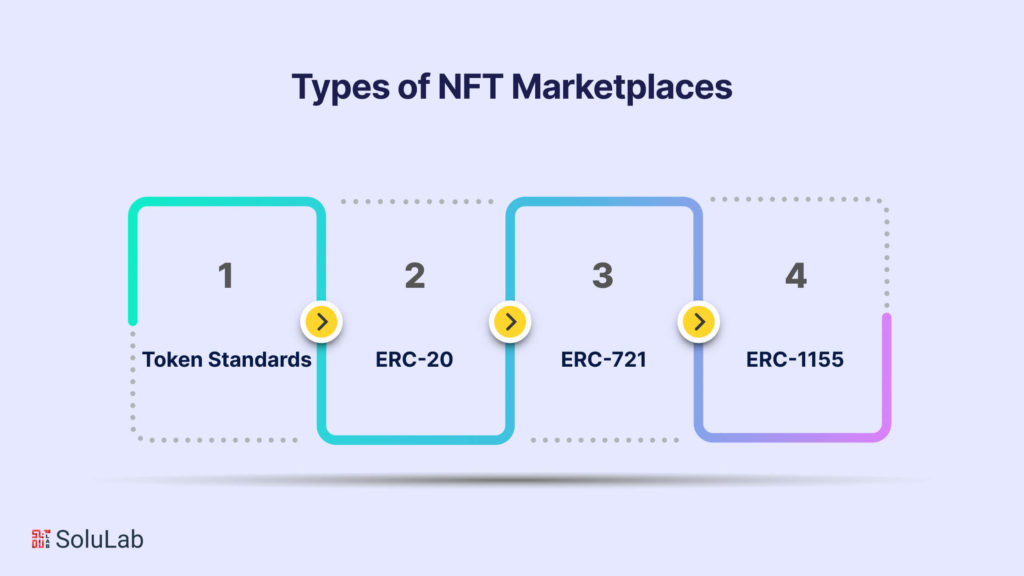
  • Token Standards

Exploring non-fungible token use cases reveals their versatility in serving various purposes for both digital and real-world entities, converting them into blockchain tokens. Before delving into deeper insights into NFT use cases, understanding the operational aspects is crucial. Developers must adhere to specific blockchain token standards to successfully launch token applications. Ethereum, for instance, provides numerous ERC standards for developers. Let’s examine the different token standards in blockchain that play a vital role in NFT functionality.

  • ERC-20

Cryptocurrency tokens on Ethereum adhere to the ERC-20 token standard. It comprises a set of rules that objects must follow to ensure interoperability and compatibility with exchanges or wallets within the Ethereum ecosystem. In October 2020, the Ethereum network had over 300,000 tokens based on the ERC-20 standard, a number continually on the rise.

  • ERC-721

Compared to the ERC-20 token standard, ERC-721 focuses on a single distinct asset without interchangeability. It represents assets, such as certifications or asset tokenization, that cannot be divisible. Tokens based on ERC-721 standard store information in personalized smart contracts, providing transparency regarding ownership, security, and immutability. Essentially, ERC-721 tokens operate as ‘non-fungible.’

  • ERC-1155

ERC-1155, a crucial token standard, forms the foundation of NFT use cases. While ERC-721 is suitable for creating new assets transferable between wallets, a collection of ERC-721 tokens may be insufficient and slow. ERC-1155, often termed the ‘multi-token standard of the next generation,’ proves beneficial in scenarios involving the trade of multiple artifacts, such as weapons and skins for a specific in-game character. Notably, ERC-1155 supports both fungible and non-fungible token applications.

History of NFTs (Non-Fungible Tokens)

The inception of Non-Fungible Tokens (NFTs) wasn’t an instantaneous phenomenon but rather evolved over the years with various early attempts laying the groundwork for what we now recognize as NFTs.

One contender for the title of the first NFT is the concept of Colored Coins, introduced in 2012. According to investor Andrew Steinworld, some argue that Colored Coins could be considered the initial manifestation of NFTs. While Colored Coins showcased a significant advancement in Bitcoin capabilities, they had limitations. Their value representation was contingent on unanimous agreement, and the scripting language of Bitcoin couldn’t accommodate this behavior within its network.

An alternative claim to the first NFT goes to “Quantum” by Kevin McCoy, minted on the Namecoin Blockchain on May 2, 2014. This digital token is considered by some as the rightful pioneer of the NFT title.

However, it was the advent of “CryptoKitties,” a project by Dapper Labs on the Ethereum blockchain, that brought NFTs into the mainstream. During the crypto boom of 2017, these digital cats gained global attention, with some even fetching a staggering price of 600 ETH (equivalent to USD 172k at the time). This marked a turning point, solidifying NFTs as a viable and valuable digital asset class.

Since the CryptoKitties phenomenon, numerous NFT projects have emerged, each contributing to the expansive success and recognition of non-fungible tokens across various industries.

Use Cases of Non-Fungible Tokens Across Various Industries

Non-Fungible Tokens (NFTs) have become a transformative force in the digital landscape, introducing a novel concept of ownership that extends across diverse industries. In this section, we will delve into the expanding realm of NFT use cases, exploring their impact on art, gaming, music, and various other sectors.
Digital Ownership: Exploring NFT Use Cases in the New Era

NFT Use Cases in the New Era

Non-Fungible Tokens have ushered in a new era of digital ownership, reshaping how creators monetize their work and how collectors acquire unique digital assets. This article aims to unravel the myriad use cases for NFT, showcasing the evolution of digital ownership in the contemporary digital world.

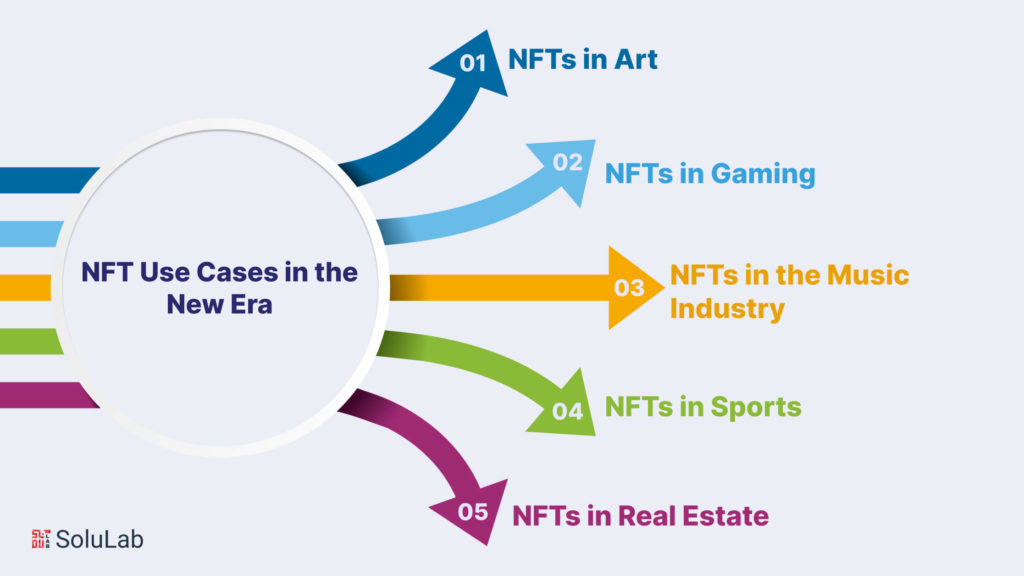
1. NFTs In Art

Within the art world, NFTs have empowered artists to craft extraordinary digital masterpieces, now tradable and saleable akin to physical art. This shift has not only generated fresh revenue streams for artists but has also provided collectors with ownership of exclusive digital creations, verified and authenticated through blockchain technology.

Undoubtedly, NFTs have already left an indelible mark on the art scene, with high-profile sales capturing global attention. A landmark moment occurred in March 2021 when an NFT crafted by digital artist Beeple fetched a record-breaking $69 million at auction. This sale served as a pivotal moment in the acceptance of NFTs within the art domain, illustrating their potential to revolutionize art transactions.

Advantages Of NFTs In Art

  • True Ownership Of Digital Artworks: In the past, digital art lacked uniqueness and intrinsic value. NFTs now allow creators to fashion digital artworks that are distinct and possess genuine ownership, akin to physical art. This transformative shift has profound implications for the perception and valuation of digital art.
  • Bypassing Traditional Gatekeepers: NFTs empower artists to directly sell their works to collectors, eliminating intermediaries like galleries and auction houses. This democratization of the art world holds the promise of enabling more artists to showcase and sell their creations to a broader audience.

In essence, NFTs have unlocked a myriad of possibilities in the realm of art, creating novel avenues for revenue and engagement. The ability to produce, trade, and own unique digital artworks has redefined the dynamics between artists and collectors, marking a revolutionary chapter in the art industry.

2. NFTs in Gaming

The gaming industry, which has witnessed remarkable growth with the advent of mobile phones and gaming platforms, is now experiencing a new wave of innovation with the integration of Non-Fungible Tokens (NFTs). The central question arises: “What exactly do NFTs bring to the gaming arena?” NFTs in gaming represent a groundbreaking fusion, as dedicated developers and gamers explore the potential of NFT-powered games to elevate gameplay and establish innovative revenue channels. In essence, these digital assets within the gaming realm can encompass in-game items, characters, and even entire virtual worlds, providing a fresh dimension to the gaming experience. Such assets can be bought, sold, and traded on blockchain-based marketplaces, introducing novel opportunities for gamers, developers, and investors.

Advantages of NFTs in the Gaming Industry

  • New Revenue Streams for Game Developers: NFT games enable developers to go beyond traditional revenue sources such as game sales and in-game purchases. By crafting unique in-game items that players can own and trade on blockchain-based marketplaces, developers open avenues for additional revenue. This has the potential to establish a more sustainable business model, fostering innovation in game development.
  • Enhanced Transparency and Security for In-Game Assets: The utilization of blockchain technology applications ensures greater transparency and security for in-game assets. Through the tracking of ownership and transfer of assets on the blockchain, players can be confident that their digital possessions are safeguarded and immune to replication or counterfeiting. This instills a sense of trust and fairness in the gaming experience, assuring players that their investments in the virtual game world are well-protected.

Use cases of NFTs in gaming represent not just a technological evolution but a paradigm shift, introducing a layer of ownership, traceability, and security that extends the gaming experience beyond mere entertainment. As the gaming industry continues to embrace NFTs, we anticipate a landscape where creativity flourishes, revenue models diversify, and players engage in more immersive and secure virtual worlds.

3. NFTs in the Music Industry

As a revolutionary trend in the music industry, Non-Fungible Tokens (NFTs) are rapidly becoming a novel avenue for artists to not only monetize their creations but also forge deeper connections with their fan base. NFTs in music encompass digital assets representing music, artwork, concert tickets, and exclusive items related to an artist’s body of work. These assets, imbued with unique value, are traded on blockchain-based marketplaces, providing fans with an opportunity to possess a tangible piece of their favorite artist’s legacy and concurrently establishing innovative revenue channels for musicians.

Advantages of NFTs in Music

  • New Income Source for Artists: NFTs in the music industry unlock a fresh revenue stream for artists. By crafting distinctive NFTs that encapsulate their creative output, artists can sell these digital assets to fans and collectors. This approach extends beyond conventional revenue sources like music sales and streaming royalties, potentially offering a more sustainable income stream for artists amidst the dynamic shifts in the music industry.
  • Unique Fan Engagement: NFTs in music create a personalized and exclusive channel for fans to connect with their favorite artists. Ownership of exclusive NFTs representing a specific album or concert fosters a deeper sense of connection and investment. This unique fan engagement has the potential to cultivate more committed and loyal fan bases, encouraging increased social interaction and trading activities among enthusiasts.

NFTs in the music industry extend beyond mere tokens; they become a conduit for tangible fan experiences and novel revenue models. As artists continue to explore the NFT utility use cases, the music landscape evolves into a realm where creativity meets technology, offering both artists and fans an enriched and interactive music ecosystem.

4. NFTs in Sports

In the dynamic world of sports, Non-Fungible Tokens (NFTs) are redefining how fans connect with their favorite teams and athletes. These digital assets, each possessing unique characteristics, introduce a new layer of fan interaction and provide unprecedented opportunities for sports organizations and enthusiasts. NFTs bring the concept of digital collectibles and memorabilia to sports. Fans can own exclusive digital assets such as virtual trading cards, iconic sports moments, or limited-edition memorabilia, all secured and authenticated through blockchain technology. It also paves the way for virtual stadium experiences. Fans can own virtual seats, granting access to exclusive content, behind-the-scenes footage, and even virtual meet-and-greet opportunities with athletes, creating a more immersive fan experience.

Advantages of NFTs in Sports

  • Authentic Fan Experiences: NFTs redefine the sports fan experience by offering an authentic and immersive connection. Through ownership of unique digital assets like virtual trading cards or exclusive behind-the-scenes content, fans not only gain a sense of authenticity but also form a virtual bond with their favorite teams and athletes. This transcends geographical boundaries, creating a global community united by a shared passion for sports. NFTs become more than just tokens; they become cherished symbols of fandom and shared experiences.
  • New Revenue Streams for Teams: NFTs present a transformative opportunity for sports teams to diversify their revenue streams and ensure financial sustainability. Teams can release limited-edition NFT collectibles, creating a sense of scarcity and exclusivity. Fans, eager to own a piece of sports history, engage in the excitement of acquiring digital assets that commemorate iconic moments or showcase their favorite players. This not only generates revenue but also turns the act of collecting into a dynamic and participatory experience.

As NFTs continue to weave their way into the sports landscape, they bring a wave of innovation, transforming fan engagement and revenue models. From virtual experiences to authentic collectibles, NFTs are reshaping the sports industry, creating new avenues for fan interaction and financial sustainability for teams and athletes alike.

5. NFTs in Real Estate

Just as NFTs have reshaped the art world, they are now making waves in the NFT real world use cases in the sector of real estate, offering a revolutionary approach to property ownership and transactions. These digital assets, underpinned by blockchain technology, present unique opportunities for property developers, investors, and homeowners alike. NFTs enable the tokenization of real estate, breaking down property assets into tradable and divisible digital tokens. This allows for fractional ownership, providing investors with the opportunity to own a portion of high-value properties, and enhancing liquidity in the real estate market. Moreover, real estate developers can utilize NFTs to offer exclusive access and rewards to property owners. NFT holders may receive special privileges, such as access to communal amenities, discounts on property-related services, or even invitations to exclusive events, fostering a sense of community and value.

Advantages of NFTs in Real Estate
  • Fractional Ownership and Accessibility: NFTs democratize real estate investments by introducing fractional ownership, allowing investors to seamlessly buy and trade digital tokens representing fractions of properties. This innovative approach not only broadens participation but also transforms traditionally high-barrier real estate markets into inclusive opportunities for a diverse investor demographic.
  • Transparent Property Transactions: Blockchain technology, integral to NFT-based real estate transactions, goes beyond enhancing transparency. Securely storing ownership records, property details, and transaction history, not only reduces the risk of fraud but also instills confidence in all stakeholders. This heightened transparency, facilitated by blockchain, ensures a secure and reliable platform for conducting property transactions, fostering trust in the real estate market.

Benefits of Non-Fungible Tokens

Benefits of Non-Fungible Tokens

Non-fungible tokens (NFTs) have emerged as a transformative force across various industries, bringing a myriad of benefits that extend beyond traditional forms of ownership and exchange.

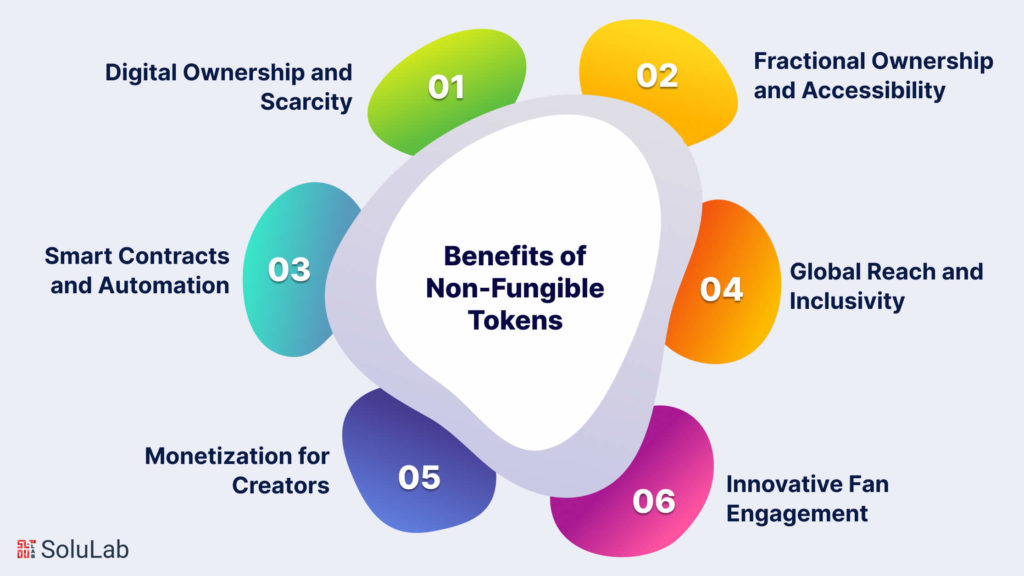
1. Digital Ownership and Scarcity: NFTs provide a novel solution to digital ownership, allowing individuals to truly own and verify unique digital assets. Through blockchain technology, the scarcity and uniqueness of these assets are irrefutably established, offering creators and collectors a new paradigm for valuing and exchanging digital content.

2. Fractional Ownership and Accessibility: NFTs introduce the concept of fractional ownership, making high-value assets, such as real estate or high-profile artworks, accessible to a broader audience. Investors can purchase and trade digital tokens representing fractions of these assets, democratizing investment opportunities and fostering financial inclusivity.

3. Smart Contracts and Automation: Smart contracts embedded within NFTs automate and enforce predefined rules, facilitating transparent and trustless transactions. This not only reduces the need for intermediaries but also ensures that the terms and conditions of ownership and transactions are executed seamlessly, bringing efficiency and reliability to diverse industries.

4. Global Reach and Inclusivity: NFTs break down geographical barriers, allowing creators and investors to participate in a global marketplace. Artists can reach a worldwide audience, while investors can diversify their portfolios beyond traditional limitations. This global reach fosters inclusivity, creating opportunities for collaboration and engagement on an international scale.

5. Monetization for Creators: NFTs empower creators to monetize their digital creations directly. Artists, musicians, and other content creators can tokenize their work, allowing fans and collectors to support them by purchasing unique digital assets. This direct creator-to-collector relationship reduces dependence on intermediaries, providing creators with a more direct and sustainable revenue stream.

6. Transparency and Authenticity: Blockchain technology ensures transparency and authenticity in the provenance of NFTs. Ownership records, transaction histories, and details of digital assets are securely stored on the blockchain, mitigating the risk of fraud and counterfeiting. This transparency builds trust among participants in various industries, from art and music to real estate.

7. Innovative Fan Engagement: In the realm of entertainment and sports, NFTs redefine fan engagement. Fans can own exclusive digital collectibles, participate in tokenized loyalty programs, and access unique experiences, creating a dynamic and interactive relationship between creators and their audience.

As Non-Fungible Tokens continue to evolve and find applications in diverse sectors, their benefits reshape how we perceive ownership, value, and engagement in the digital age. Whether in the art world, real estate, or entertainment, NFTs are unlocking new possibilities and transforming traditional paradigms across the spectrum.

Why are Non-Fungible Tokens Popular These Days?

NFTs, although in existence since 2015, have recently surged in popularity due to several factors. Primarily, the widespread acceptance and enthusiasm for cryptocurrencies and blockchain technology have played a pivotal role. The convergence of technological advancements, fan enthusiasm, royalty economics, and the principle of scarcity has fueled this surge. Consumers are keen to participate in owning exclusive digital assets, viewing them not only as unique content but also as potential investments.

The ownership of an NFT grants control over the associated digital content, even though the content can still be circulated online. The visibility of an NFT online contributes to its popularity, ultimately enhancing its value. When an NFT is traded, the original creator receives a 10 percent share, with a portion going to the platform and the majority to the current owner. This model presents the prospect of continuous revenue for creators as digital assets gain traction in buying and selling transactions.

The essence of NFTs lies in authenticity. Each digital collectible possesses unique information that sets it apart, easily verifiable through blockchain technology. Counterfeiting is impractical as the origins of each item can be traced back to its original creator. Unlike cryptocurrencies, NFTs are not interchangeable because each holds its distinct value, akin to the uniqueness of physical collectibles like baseball cards.
NFT Marketplace Development Services

Final Words

In conclusion, the surging popularity of Non-Fungible Tokens (NFTs) marks a transformative shift in how we perceive and engage with digital assets. Propelled by the normalization of cryptocurrencies, blockchain frameworks, and a convergence of technological, economic, and cultural factors, NFTs have become a novel frontier for ownership and investment. The fusion of fandom, the allure of royalties, and the fundamental concept of scarcity have ignited a widespread desire among consumers to possess exclusive digital content, creating a thriving market for NFTs.

As authenticity becomes paramount in the digital realm, NFTs stand as verifiable and unique digital collectibles, immune to counterfeiting due to the traceability provided by blockchain technology. Their popularity isn’t just confined to ownership but extends to their visibility online, contributing to the value they accumulate over time. Creators, platforms, and current owners participate in a symbiotic relationship, paving the way for ongoing revenue streams in the dynamic landscape of digital assets.

If you’re considering venturing into the NFT space, SoluLab stands as a valuable ally. With our expertise in blockchain development and a deep understanding of the evolving NFT marketplace, we can help turn your vision into a reality. From conceptualization to implementation, SoluLab is your trusted partner in navigating the intricacies of NFT marketplace development. Embrace the future of digital ownership and innovation with SoluLab – where possibilities in the NFT non fungible tokens realm are limitless. Contact us today to embark on your journey into the world of NFTs.

FAQs

1. What exactly is an NFT?

An NFT, or Non-Fungible Token, is a unique digital asset that represents ownership or proof of authenticity of a specific item, often digital content such as art, music, or collectibles. Unlike cryptocurrencies, NFTs are indivisible and each has distinct information stored on the blockchain, ensuring its uniqueness and authenticity.

2. Why are NFTs gaining popularity now?

The recent surge in NFT popularity is attributed to the widespread acceptance of cryptocurrencies and blockchain technology. The combination of technological advancements, fan enthusiasm, the allure of royalties, and the scarcity principle has created a perfect storm, making NFTs a sought-after investment and ownership opportunity for consumers.

3. How do NFTs generate ongoing revenue for creators?

When an NFT is sold, the original creator receives a 10 percent cut of the revenue, with a percentage going to the platform and the majority to the current owner. As the digital asset continues to be bought and sold over time, creators stand to gain ongoing revenue, creating a sustainable income stream from their popular digital creations.

4. Can NFTs be counterfeited or replicated?

No, NFTs cannot be counterfeited or replicated. The distinguishing information within each digital collectible makes it unique and easily verifiable through blockchain technology. This traceability ensures that each NFT can be traced back to its original creator, preventing fraudulent replication.

5. How can SoluLab assist in NFT marketplace development?

SoluLab, with its expertise in blockchain development solution, is well-equipped to assist in NFT marketplace development. From conceptualization to implementation, SoluLab provides comprehensive solutions, guiding clients through the intricacies of the NFT space. Contact us to embark on your journey into the world of NFTs, where innovation and digital ownership possibilities are limitless.

 

NFT Gaming Marketplaces: Creating Opportunities for Game Developers

NFT Gaming Marketplaces: Creating Opportunities for Game Developers

In the rapidly evolving landscape of digital entertainment, the emergence of Non-Fungible Tokens (NFTs) has sparked a revolutionary shift in the way we perceive and engage with virtual assets. Within the realm of gaming, NFTs have opened up a world of unprecedented opportunities for game developers, players, and digital asset enthusiasts. NFT Gaming Marketplaces have emerged as dynamic hubs that facilitate the creation, trade, and exploration of NFT-based gaming assets. These marketplaces not only empower developers to monetize their creations but also offer players the chance to own and trade digital collectibles with real value. This blog delves into the intricate dynamics of NFT Gaming Marketplaces, exploring the myriad features, benefits, and challenges that define this burgeoning sector within the gaming industry.

What is NFT Gaming?

NFT Gaming has emerged as a groundbreaking phenomenon within the gaming industry, offering unique opportunities for both game developers and players alike. By leveraging the blockchain’s decentralized and secure infrastructure, NFT Gaming introduces a new way to own and trade in-game assets, fostering a sense of ownership and value among gamers. This section delves into the fundamental aspects of NFT Gaming and its significance in revolutionizing the traditional gaming landscape

Understanding NFT Gaming

NFT gaming refers to the integration of non-fungible tokens (NFTs) within the gaming industry, enabling the creation of unique, verifiable, and scarce digital assets. These assets, represented by NFTs, can be utilized within various gaming ecosystems, providing players with true ownership of in-game items and assets. By leveraging blockchain technology, NFT gaming introduces a paradigm shift in the way game developers and players interact, allowing for the creation, exchange, and utilization of digital assets with inherent value and authenticity

Read Our Blog : NFTs in Gaming: Unlocking the Future of Virtual Collectibles

Exploring the Role of NFTs in Gaming

The role of NFTs in gaming is multifaceted, encompassing aspects such as asset ownership, digital scarcity, and enhanced gameplay experiences. NFTs enable game developers to create and deploy unique in-game assets that can be bought, sold, and traded by players. These assets can range from virtual goods, such as weapons and skins, to digital collectibles and game items, providing players with a sense of ownership and exclusivity. Additionally, NFTs facilitate the creation of robust gaming economies, allowing for the seamless exchange of digital assets between players, fostering a vibrant and interconnected gaming community.

CTA1

Significance of NFT Gaming Marketplaces

NFT gaming marketplaces play a pivotal role in the evolution of the gaming industry, serving as platforms for the exchange and distribution of NFT-based assets. These marketplaces enable game developers to showcase and monetize their creations while providing players with access to a diverse array of digital collectibles and in-game items. With the rise of NFT gaming marketplaces, developers can tap into new revenue streams and establish direct relationships with their player base. Moreover, these marketplaces foster a thriving ecosystem where players can discover, purchase, and trade NFTs, fostering a sense of engagement and immersion within the gaming community.

 Read Also : How is Gaming Contributing to the NFT Industry?

NFT Gaming Market Overview

With the continuous growth of NFTs in the gaming sector, it becomes crucial to understand the overarching impact these digital assets have had on the industry. This section explores the evolution of NFTs within the gaming industry, highlighting the transformative role they play in enhancing gaming experiences. By offering insights into the advantages NFTs provide to game developers, this segment aims to underscore the importance of integrating NFTs into modern gaming platforms.

  • Evolution of NFTs in the Gaming Industry

The adoption of NFTs within the gaming industry has witnessed a significant evolution, marking a transition from traditional in-game assets to digital assets with inherent value and scarcity. With the introduction of NFTs, game developers have been able to create and tokenize unique virtual assets, offering players verifiable ownership and control over their in-game items. This shift has propelled the gaming industry into a new era, where players can collect, trade, and utilize NFTs across various gaming platforms, fostering a dynamic and interconnected gaming landscape.

  • Impact of NFTs on the Gaming Ecosystem

The integration of NFTs has had a transformative impact on the gaming ecosystem, revolutionizing the way players interact with digital assets and virtual economies. NFTs have enabled game developers to introduce innovative gameplay mechanics, allowing players to truly own and manage their in-game items. Additionally, the implementation of NFTs has led to the emergence of vibrant gaming communities where players can participate in the creation and exchange of digital assets, fostering a sense of inclusivity and engagement. The integration of NFTs has not only enhanced the overall gaming experience but has also introduced new avenues for creativity, collaboration, and monetization within the gaming industry.

Read Also : The Future of NFT Marketplaces: Trends and Innovations

  • Advantages of NFTs for Game Developers

NFTs offer numerous advantages for game developers, providing them with a platform to create and distribute unique digital assets within their gaming ecosystems. One of the key advantages of NFTs is their ability to enable true ownership and scarcity of in-game assets, allowing developers to offer players exclusive and valuable digital collectibles. Moreover, NFTs facilitate direct player engagement, enabling developers to establish direct relationships with their player base and foster a sense of community and loyalty. Additionally, the integration of NFTs allows for the seamless integration of digital assets across different gaming platforms, providing developers with the opportunity to expand their reach and explore new avenues for growth and monetization.

Exploring Top Defi NFT Games

The rise of decentralized finance (DeFi) NFT Game has captured the attention of the gaming community worldwide. This section aims to delve into some of the leading top DeFi NFT Games that have garnered significant attention and user adoption. By analyzing the features, mechanics, and success stories of the top DeFi NFT Games, this segment aims to offer a comprehensive understanding of the innovative gameplay experiences they provide.

  • Analysis of Leading Defi NFT Games

The landscape of top DeFi NFT Games is characterized by a diverse array of titles and platforms, each offering unique gameplay experiences and opportunities for players and developers alike. These games leverage the principles of decentralized finance (DeFi) to integrate NFTs, enabling players to participate in various gaming activities while engaging with digital assets of tangible value. Through the analysis of leading top DeFi NFT Games, developers can gain insights into successful game mechanics, engagement strategies, and monetization models, facilitating the creation of immersive and rewarding gaming experiences.

  • Features and Mechanics of Top NFT Games

Best NFT Games encompass a range of features and mechanics designed to offer players engaging and interactive gameplay experiences. These games often incorporate elements such as play-to-earn models, asset trading, and digital ownership, providing players with avenues for skill development, asset accumulation, and social interaction within the gaming community. Moreover, Best NFT Games integrate blockchain technology to ensure transparent and secure asset management, fostering a sense of trust and reliability among players. By exploring the features and mechanics of Best NFT Games, developers can identify successful gameplay elements and leverage them to create compelling gaming experiences for their audiences.

 Read Also: How is Gaming Contributing to the NFT Industry?

  • Success Stories and User Adoption

Success stories within the realm of top DeFi NFT Games highlight the potential for innovation and growth within the gaming industry. These stories often showcase the journey of developers and players who have successfully leveraged NFTs to create valuable and immersive gaming experiences. Through successful user adoption, these games have been able to cultivate vibrant gaming communities, establish robust in-game economies, and provide players with opportunities for skill development and asset accumulation. By examining success stories and user adoption rates, developers can gain valuable insights into the strategies and tactics that have contributed to the success of top DeFi NFT Games, enabling them to implement similar practices within their own game development endeavors.

Building NFT Games in the Metaverse

Building NFT Games in the Metaverse

The concept of the metaverse has gained traction in recent years, creating new avenues for NFT integration within virtual environments. This section focuses on the integration of NFTs within the metaverse gaming experience and the unparalleled immersive opportunities they present. By exploring the potential of non-fungible tokens in the metaverse, this segment provides valuable insights into the future of gaming and digital asset ownership.

  • Integration of NFTs in Metaverse Gaming

The integration of NFTs within the metaverse has opened up new possibilities for immersive and interactive gaming experiences. By leveraging NFTs, developers can create and distribute unique in-game assets that players can utilize and trade within virtual environments. This integration allows for the seamless transfer of digital assets between different metaverse platforms, enabling players to engage with a diverse array of NFTs and virtual goods. Moreover, the integration of NFTs in the metaverse fosters a sense of digital ownership and exclusivity, allowing players to personalize and enhance their virtual identities and experiences.

  • Leveraging Non-Fungible Tokens for Immersive Experiences

The use of non-fungible tokens (NFTs) in metaverse gaming is instrumental in creating immersive and authentic gameplay experiences for players. NFTs enable developers to introduce unique and scarce virtual assets within the metaverse, providing players with a diverse array of digital collectibles, virtual land, and in-game items. Through the integration of NFTs, players can engage in activities such as virtual asset trading, customization of avatars, and participation in virtual events, fostering a sense of creativity and social interaction within the metaverse. Additionally, the integration of NFTs allows for the creation of personalized and exclusive virtual experiences, enabling players to express their individuality and identity within virtual worlds.

      Read Also : Top NFT Trends That Will Build Revenue Streams to the Business

  • The Future of NFT Games in the Metaverse

The future of NFT Games in the metaverse is characterized by a continuous evolution of immersive and interactive gaming experiences, enabled by the integration of blockchain technology and NFTs. As the metaverse continues to expand and evolve, NFT Games are expected to play a pivotal role in shaping the landscape of virtual economies, social interactions, and digital experiences. The future of NFT Game in the metaverse holds promises of enhanced gameplay mechanics, decentralized governance models, and collaborative storytelling, allowing players to participate in dynamic and engaging virtual environments. Moreover, the future of NFT Games in the metaverse is anticipated to witness the emergence of innovative gameplay elements, interactive narratives, and collaborative gameplay experiences, fostering a sense of community and engagement among players and developers alike.

NFT Gaming Platforms and Marketplaces

The emergence of various NFT gaming platforms and marketplaces has laid the foundation for a thriving ecosystem of digital asset trading and ownership. This section highlights the key features and characteristics of NFT gaming platforms, offering a detailed comparison of the best NFT marketplaces available for game developers. By examining the use cases of NFT marketplace integration in the gaming sector, this segment provides valuable insights into the potential of these platforms for the gaming industry.

  • Features and Characteristics of NFT Gaming Platforms

NFT gaming platforms are essential components of the NFT gaming ecosystem, serving as hubs where developers, players, and NFT collectors converge to explore and engage with digital assets. These platforms offer various features and characteristics that facilitate the creation, trade, and management of NFTs within the gaming context. Notable features may include NFT creation tools, marketplace functionalities, asset verification mechanisms, and user-friendly interfaces. Additionally, they often integrate blockchain technology to ensure asset ownership, scarcity, and authenticity, granting players and collectors the confidence to participate in NFT-based gaming activities.

  • Comparison of the Best NFT Marketplaces for Game Developers

Game developers seeking to explore NFT opportunities must carefully evaluate and select the best NFT marketplaces that align with their objectives. Each NFT marketplace presents its unique set of offerings, including marketplace fees, target audiences, and supporting blockchain networks. By comparing the best NFT marketplaces, developers can make informed decisions regarding the platforms most suitable for their game-related NFTs. The choice of marketplace often depends on factors such as transaction costs, marketplace popularity, target audience, and blockchain interoperability, among others. Understanding these marketplace distinctions aids developers in optimizing the reach and impact of their NFT gaming assets.

      Check Our Blog :How is Gaming Contributing to the NFT Industry?

  • Use Cases of NFT Marketplace Integration for Gaming

The integration of the best NFT marketplaces within gaming ecosystems extends beyond the mere trading of virtual assets. best NFT marketplaces present developers with a spectrum of use cases that can be harnessed to enhance in-game experiences and economic ecosystems. Game developers can utilize the best NFT marketplaces to mint, sell, and distribute in-game assets and NFT collectibles. Furthermore, they can implement interoperable NFTs to facilitate asset cross-utilization across various gaming titles or even metaverse environments. In addition, developers can leverage the best NFT marketplaces to establish dynamic player-driven economies, fostering active participation and virtual asset ownership. The diverse use cases of NFT marketplace integration serve as essential building blocks for the development of NFT-driven gaming ecosystems.

NFT Development Companies and Solutions

Amid the growing interest in NFT gaming, several development companies have stepped up to provide comprehensive solutions for game developers. This section provides an overview of leading NFT development companies and their services tailored to meet the specific needs of game developers. By shedding light on the solutions and offerings available for NFT gaming, this segment aims to guide developers in leveraging the expertise of industry-leading professionals for their gaming projects.

  • Overview of Leading NFT Development Companies

In the rapidly evolving NFT landscape, a multitude of NFT development companies offer solutions and services to game developers. These companies vary in terms of expertise, blockchain specialization, and service portfolios. By exploring an overview of leading NFT development companies, developers can identify strategic partnerships and service providers who can assist them in navigating the complexities of NFT integration. Such partnerships can range from minting NFTs to building custom best NFT marketplaces, integrating blockchain technology, or providing consultation services for optimizing NFT adoption within gaming projects.

  • Services and Offerings for Game Developers

NFT development companies cater to the diverse needs of game developers by offering an array of services and solutions. These services may encompass NFT creation, blockchain integration, smart contract development, marketplace development, and customized solutions tailored to specific gaming projects. Service providers understand the critical role they play in aiding developers to conceptualize, create, and launch NFT gaming assets that resonate with the gaming community. The NFT development industry also emphasizes the importance of security, authenticity, and transparency to instill confidence in both developers and players, ensuring that NFT assets uphold the expected standards of quality and value.

  • Building NFT Gaming Solutions with Industry Experts

Collaborating with NFT development companies and industry experts presents game developers with the opportunity to harness in-depth knowledge and insights. These collaborations often result in the creation of innovative NFT gaming solutions that are well-received by the gaming community. Industry experts can guide developers through the entire process of NFT integration, from ideation to execution, ensuring that NFT assets seamlessly align with the game’s objectives. By leveraging the expertise of NFT development companies and industry leaders, developers can refine their NFT strategy, enhance in-game experiences, and drive the success of their NFT gaming endeavors.

Creating NFT Games: Opportunities and Challenges

Creating NFT Games: Opportunities and Challenges

While NFT gaming presents numerous opportunities for game developers, it also brings forth a set of unique challenges that developers must navigate. This section explores the various opportunities within the NFT gaming space, emphasizing the strategies developers can employ to make the most of these opportunities. Simultaneously, it delves into the challenges faced in NFT game development and implementation, providing insights into the best practices for overcoming these obstacles.

  • Exploring Opportunities for Game Developers in the NFT Space

The NFT space presents game developers with an array of opportunities, providing a unique set of benefits that can elevate their projects. NFTs enable developers to monetize digital assets, attract a broader audience, enhance player engagement, and even create play-to-earn mechanics. Moreover, NFTs are instrumental in fostering a sense of ownership among players, transforming in-game assets into tangible digital collectibles. By exploring these opportunities, developers can make informed decisions about the role of NFTs within their games and their potential for growth and sustainability.

      Read  Our Blog  : Best Play To Earn NFT Games In 2023

  • Challenges Faced in NFT Game Development and Implementation

Despite the vast potential of NFTs in the gaming industry, developers must also navigate challenges unique to the NFT landscape. These challenges may include scalability issues, concerns regarding blockchain network congestion, and the need to ensure robust security measures to safeguard digital assets. Additionally, developers may encounter player skepticism and regulatory challenges related to digital asset ownership. It is essential for game developers to recognize and address these challenges, working towards practical solutions to ensure the successful integration of NFTs within their gaming projects.

  • Strategies for Success in NFT Game Creation

NFT Game creation necessitates a strategic approach to navigate the complexities of blockchain technology and digital asset integration. Developers must devise strategies to optimize in-game experiences, engage players, and establish successful economies within their NFT-driven gaming environments. Strategies for success encompass factors such as designing appealing NFT assets, implementing clear and user-friendly NFT mechanics, and fostering an active player community. Furthermore, developers should consider the importance of collaborating with industry experts, leveraging NFT marketplaces, and exploring interoperable NFTs to extend the reach and utility of in-game assets. By embracing these strategies, developers can embark on their NFT game creation journey with confidence and a well-defined plan for success.

The Future of NFT Gaming

The Future of NFT Gaming

As the NFT in gaming sector continues to evolve, it is essential to keep an eye on the emerging trends and innovations shaping the industry’s future. This section offers a comprehensive analysis of the latest trends and advancements in NFT gaming and marketplaces. By predicting the future growth and expansion of the NFT gaming industry, this segment aims to provide readers with a holistic understanding of the sector’s potential.

  • Emerging Trends in NFT Gaming and Marketplaces

The NFT gaming industry is marked by continuous innovation and evolving trends that shape the future of gaming ecosystems. Emerging trends within the NFT gaming landscape often include the integration of blockchain interoperability, the use of cross-chain NFTs, and the development of decentralized in-game marketplaces. Developers must stay attuned to these trends to remain competitive and provide players with engaging and relevant gaming experiences.

Check this Blog : Top NFT Trends That Will Build Revenue Streams to the Business

  • Potential Innovations and Developments in the NFT Gaming Sector

Innovations and developments within the NFT gaming sector hold the potential to transform the industry, introducing novel gameplay mechanics, advanced asset customization, and enhanced social interactions within gaming communities. Developers are exploring the possibilities of leveraging augmented reality (AR) and virtual reality (VR) technologies to offer immersive and interactive gaming experiences that blur the lines between physical and digital worlds. Additionally, the integration of artificial intelligence (AI) and machine learning (ML) within NFT gaming platforms is anticipated to introduce personalized and dynamic gameplay elements, fostering a sense of adaptability and player engagement.

  • Anticipated Growth and Expansion in the NFT Gaming Industry

The NFT gaming industry is poised for substantial growth and expansion, driven by the increasing adoption of blockchain technology, the rising interest in digital collectibles, and the growing community of NFT enthusiasts. As players and developers recognize the value and potential of NFTs in the gaming space, the industry is expected to witness the launch of innovative NFT projects, the establishment of robust gaming economies, and the proliferation of cross-platform gaming experiences. The anticipated growth and expansion in the NFT gaming industry highlight the significance of sustainable and future-forward strategies that foster innovation, inclusivity, and meaningful player interactions.

CTA2

Conclusion

In the ever-evolving landscape of NFT Gaming Marketplaces, the possibilities seem boundless, promising a future where digital experiences blend seamlessly with tangible value and ownership. As the bridge connecting the vision of developers with the reality of users, SoluLab has been instrumental in shaping the very foundations of this transformative industry. Our extensive expertise in NFT marketplace development, coupled with our commitment to innovation, has positioned us as a key player in the realm of NFT gaming. Through our comprehensive white-label NFT marketplace solutions, we empower game developers to unleash their creativity, drive engagement, and unlock new revenue streams in the world of gaming. Our dedicated team of NFT developers continues to pave the way for groundbreaking solutions that redefine the gaming industry, enabling the creation of immersive, secure, and value-driven gaming experiences.

By harnessing the power of NFTs, we enable seamless integration and collaboration between gamers, developers, and investors, fostering an ecosystem that thrives on trust, transparency, and innovation. Our white-label NFT game marketplace development services offer a gateway for game developers to showcase their creations and connect with a global community of players and enthusiasts. With a focus on user-centric design and cutting-edge technology, our solutions are tailored to meet the diverse needs of the modern gaming landscape, fostering an environment that nurtures creativity and growth.

As the world of NFT gaming continues to evolve, we remain committed to pushing the boundaries of what’s possible, striving to deliver best-in-class solutions that redefine the gaming industry’s future. SoluLab is not just a provider of services but a partner in the journey toward creating immersive gaming experiences that captivate audiences, drive engagement and unlock new dimensions of value and interaction. With our NFT Gaming marketplace development services, we aim to revolutionize the way gaming experiences are created, shared, and valued, ushering in an era of limitless opportunities for game developers, players, and enthusiasts alike.

FAQs

1. What is the significance of NFTs in the gaming industry?

NFTs, or Non-Fungible Tokens, have revolutionized the gaming industry by enabling the creation of unique in-game assets that players can own, trade, and use across various gaming platforms. They provide a means for gamers to truly own their digital assets, fostering a new era of digital ownership and value exchange within the gaming ecosystem.

 2. How can game developers leverage NFTs to enhance player engagement?

Game developers can leverage NFTs to create rare and unique in-game items, characters, and digital collectibles that players can buy, sell, and trade on NFT gaming marketplaces. By incorporating NFTs, developers can offer players a sense of ownership and value, driving increased engagement and fostering a vibrant gaming community.

3. What are the key features to consider when building NFT gaming platforms?

Key features to consider when building NFT gaming platforms include seamless integration with blockchain technology, secure and transparent transaction processing, user-friendly interfaces for buying and selling NFTs, robust asset management systems, and efficient trading functionalities to facilitate smooth and secure transactions.

4. How do NFT gaming marketplaces contribute to the growth of the gaming industry?

NFT gaming marketplaces contribute to the growth of the gaming industry by providing a platform for gamers and developers to create, trade, and collect unique digital assets. They foster a decentralized ecosystem that empowers players and content creators, leading to increased engagement, innovative gaming experiences, and new monetization opportunities within the gaming industry.

5. What are the benefits of using white-label NFT marketplace solutions for game development?

White-label NFT marketplace solutions offer game developers a customizable and cost-effective way to launch their own best NFT marketplaces without the need for extensive development resources. These solutions provide a ready-made platform that can be tailored to specific branding and functionality requirements, enabling developers to enter the NFT gaming market quickly and efficiently.

6. How can NFT development companies assist in the creation of innovative gaming experiences?

NFT development companies specialize in creating tailored solutions for integrating NFTs into gaming platforms. They offer expertise in blockchain technology, smart contract development, and NFT integration, enabling game developers to incorporate unique and valuable digital assets into their games, thereby enhancing player engagement and creating novel gaming experiences.

7. What are the best practices for integrating NFTs into the gaming ecosystem for maximum impact?

Best practices for integrating NFTs into the gaming ecosystem include ensuring a seamless user experience, implementing robust security measures to protect digital assets and transactions, offering engaging and valuable in-game NFTs, fostering a vibrant and supportive gaming community, and continuously innovating to stay ahead of evolving industry trends and player preferences.

NFTs on Instagram and Facebook: How to Show Off Your Digital Collectibles


NFTs on Instagram and Facebook: How to Show Off Your Digital Collectibles

Instagram began testing non-fungible token (NFT) sharing on its platform in May 2022, allowing select U.S. users to connect to their digital wallets and showcase NFTs that they either created or bought. Instagram wrote at the time that it was focused on improving its user experience by creating more monetization opportunities and bringing NFTs to a broader audience.

In August 2022, the social media platform expanded its testing to 100 countries across Africa, Asia-Pacific, the Middle East, and the Americas, and added support for Coinbase Wallet and Dapper Wallet. Meta Platforms, Instagram, and Facebook’s parent company, also started testing the feature on Facebook.

In Sept. 2022, Meta rolled out the ability for all users in the U.S. to be able to connect their digital wallets to either app and be able to share their digital collectibles across both platforms. “Additionally, everyone in the 100 countries where digital collectibles are available on Instagram can now access the feature,” Meta noted in their update.

Read also: Twitter NFT; First Social Media Platform to Support NFT Technology

If you’re able to access the feature and want to show off your NFTs, here’s how it works.

What does having NFTs on Instagram or Facebook mean?

The new NFT integration allows users to connect to their digital wallets and choose which NFTs to share with their followers. This feature sort of functions as a digital art gallery and the NFTS you own or have created can be pinned to your feed next to your other images.

Once a user posts his or her NFT image, the platform adds a shimmery effect to the image and displays public information about the NFT, like a description of the collection, piece, or tagging the creator. The shimmery effect functions similarly to the hexagonal profile pic on Twitter, visually indicating authenticity and ownership over the asset.

Both the creator and collector can be automatically attributed in-feed, another function meant to help track the authenticity and ownership of an NFT. Meta says there are no fees associated with sharing a digital collectible on Instagram or Facebook.

As of August 2022, the platform didn’t support buying and selling digital collectibles.

The integration is part of Meta’s company-wide exploration into Web3 technologies, which it says is aimed at expanding access, reducing costs, and accelerating innovation as it expands its metaverse ambitions. In March 2022, CEO Mark Zuckerberg teased wider NFT integrations across the company’s sites, like augmented-reality NFTs that can be shared on Instagram stories, and the ability to mint NFTs from Instagram.

How to post your NFT to Instagram

If you’re not in the U.S. and looking to see if the feature is available to you, the best way to tell if you are in the test group is to check if the “Digital Collectible” option is available to you as shown in the screenshot below.

Currently, users are allowed to connect to third-party wallets, including Rainbow, MetaMask, Trust Wallet, Coinbase Wallet, and Dapper Wallet. The blockchains it supported as of August 2022 were Ethereum, Polygon, and Flow, with Solana to be added in the future.

Users can connect their digital wallets to the platform by visiting the “Digital Collectible” menu. Once there, a notification will open on your screen taking you through the next steps of connecting to a wallet. You can also connect additional wallets to your account by clicking the “Add Wallet” button. Wallet connection is a one-time authentication, and Meta says it doesn’t “publicly surface” your wallet address.

Next, users can view all of their NFTs and share them as a post. Similar to sharing any other post on Instagram, users can tap the plus sign at the top of their screen and then select “Post.” A special verified checkmark will appear above your phone’s library, which will allow you to select any of the NFTs in your wallet. You can add a description to the selected NFT before sharing it with your feed.

When you share your digital collectible, you will be tagged as the owner or creator of that collectible. Instagram confirms ownership of the blockchain address associated with the collectible to authenticate ownership. Users can discover your digital collectibles in-feed, on your main grid, and through the platform’s Explore page.

Ways to monetize NFTs on Instagram

Connecting your wallet to Instagram may be a good way to show off your NFT collection or creations and verify their authenticity. The move follows other social media platforms like Twitter and Reddit that have recently added NFT functionalities.

As of August 2022, users couldn’t use certain tools like Collab posting, fundraising, location tagging, and monetization features like branded content and boosting that traditionally help content creators make money. The main opportunity regarding monetization was to use Instagram NFTs as an additional way to market or build hype for an NFT collection.

The platform might make it easier to mint or transact with digital collectibles, possibly expanding its Shop functionality. As of August 2022, the limited feature was mainly being used like an NFT trophy case by a small group of testers.

Blog Credits: CoinDesk


The Use of NFTs in the Sports Industry


The Use of NFTs in the Sports Industry

NFTs are non-fungible tokens that exist on a blockchain. At their core, they are digital collectibles. Digital collectibles are a staple of the sports industry. Collecting sports memorabilia has been a popular pastime for many and more than 66 million people globally have bought at least one sports collectible. Market Decipher says that the sports memorabilia industry will be worth $227.2 billion by 2032.

The NFT market is also growing and was valued at $41 billion at the end of 2021. Deloitte predicts that the sports NFT market will be about $2 billion in 2022. Any sports collectible either has already evolved or could evolve into a digital form, creating huge revenue opportunities for leagues, teams, or athletes.

What does evolution look like?

The evolution could dramatically expand collectible options and revenue streams. Many organizations already are collaborating with NFT companies to build digital trading cards. One possibility is to monetize archives by offering collectibles or media of athletes before they were famous. Teams are also expanding the market by offering ticket stubs of popular or special games as NFTs.

The potential

Up to five million sports fans will receive or buy an NFT this year, according to Deloitte. NFTs can provide a variety of marketing benefits for athletes, teams, or leagues in any popular sport. For example, they can provide additional revenue streams and improve fan engagement. NFTs also can help re-enforce the brand and nurture long-term fan relationships. In some uses, NFTs can help boost ticket sales to sports events.

Football and Soccer

Here is an example of using football.

Football revenue has been dropping over the past couple of years, which has led to the exploration of digital opportunities. These federations and leagues are discovering that NFTs can represent various items, including jerseys and footballs. Football-related NFTs also are being integrated into virtual games, which provides a revenue stream and, in turn, makes the collectible even more popular.

Further, The Football Company (TFC) has created an app-based play-to-earn football blockchain game. The global game is accessible even to those who have little crypto knowledge. The new game and its virtual NFT merchandise are enabling football leagues, teams, and sports brands to reach a previously untapped fan base.

TFC replicates real-world items in 3D on the blockchain. It also invents new items and schemes. For example, fans can buy a relatively inexpensive football shirt and become part of a club, increasing their engagement and loyalty.

One German Football League (DFL) has just signed several two-year partnership deals. One deal gives OneFootball the right to create collectible digital trading cards and videos. Another deal grants Sorare exclusive rights to use NFTs based on the league’s players in a fantasy game on the blockchain. The third deal with Topps will continue until 2028/2029. It gives Topps the right to create physical digital stickers and a trading card game and NFT equivalents.

Baseball

NFTs are also making a difference in other sports. For example, Major League Baseball has formed a partnership with Candy Digital to launch a new collection of dynamic NFTs. The collection will feature 720 players and NFTs will have varying levels of scarcity. The collectibles will include daily updates of the players’ stats throughout the season. Officially licensed videos will also be added as the season continues.

NASCAR

NASCAR has partnered with Candy to produce race-day NFTs. NASCAR also partnered with the WAX blockchain to launch an NFT collection of the Daytona 500 race. NASCAR and Candy produced only 500 NFTs and limited them to ticketholders.

NASCAR emailed its 25,000 Daytona ticket holders with instructions to download a WAX digital wallet to enter the contest to receive one of the NFTs. NFT winners had a further opportunity. Their names were put into a draw to win one of five autographed drivers’ helmets.

NASCAR’s 2021 season was the least-watched on TV. Ticket revenues also were down. The strategy to drop an NFT collection only to ticket holders may create a sense of exclusivity and promote further engagement in the sport.

Basketball

The NBA and NBPA also have launched dynamic NFTs that will evolve based on players’ performance throughout the season. The more accomplished the player is, the more the NFT will change.

In April, 18,000 NFTs were minted from NBA Playoff participants. About 2,000 went to Dapper Labs’ NBA Top Shot NFT owners, the rest were issued to those on a special “allowed” list. Fans qualified for the list by being early joiners of the NBA Discord group and connecting their wallets to its website. The list filled up almost immediately.

Golf

The PGA has partnered with Sorare and Autograph for NFTs. In that arrangement, players earn revenue based upon the performance of NFTs with their likeness.

Collegiate sports

The NFT market isn’t just lucrative for professional sports. Marketplaces are also available for collegiate sports.

Want to be a part of the sports NFT action?

Sports organizations and lifestyle brands can all capitalize on the sports NFT market. NFTs can be used to drive engagement through loyalty programs or by expanding and digitizing merchandise and game clips. Companies can also capitalize on unique moments of sports history or individual team highlights with video or by creating NFTs of tickets from those events.

Read also: How to Build an NFT Marketplace like Binance?

Not only can you create new revenue streams from the sales of the NFTs, but you can also increase fan camaraderie and enhance your team or league’s value in the market.

Blog Credits: Medium

What is NFT Minting? A Complete Step by Step Guide!

What is NFT Minting

The use of Non-fungible tokens (NFTs) is becoming an essential form of digital asset. Blockchains are expanding over cryptocurrencies, stablecoins, tokens for governance, and utility tokens to break into today’s cultural mindset. These one of our kind digital collectibles are experiencing growing adoption across a variety of industries, including sports, music, media, entertainment, and more. The surge in their popularity is a signal that blockchains are going beyond these categories.

The straightforward and step-by-step tutorial will teach you how to mint your very first non-fungible token, regardless of whether you are a creator, looking for creative methods to commercialize your work by utilizing modern technology, or just a collector who is entering web3 for the very first time.

What is an NFT?

First of all, it is necessary to have a complete understanding of what NFT exactly means, before moving forward with creating one. Non-fungible tokens also known as NFTs or unique tokens, follow that none of the two NFTs can ever be the same, even if they appear to be the same. This is because every NFT possesses a discrete identification. The analogy that comes to mind is that of barcode. Even though a similar image is associated with the two separate NFTs, you will be able to differentiate between them based on the barcode that they have.

This is another reason why NF is so strong for creators. As time passed, it was possible to make an infinite number of copies of digital artwork, and there was no other method to differentiate between the two files. NFTs are a technology that can shift paradigms, but that is just the tip of the iceberg when it comes to what makes them so transformational.

What is NFT Minting?

NFT Minting refers to the process by which one’s digital art becomes a part of a Blockchain, which is a public ledger. Hence, it is unchangeable and tamper-proof. It functions in representing the digital artwork as an NFT. Being displayed as such; it can be traded in the market by buying and selling online. 

Later, it can be digitally tracked as it can be sold again and even collected shortly. Therefore, it can be considered to be the most effective alternative for democratizing ownership, sales, and purchases of unique digital assets. The basic idea about NFTs can give a reliable impression of the ways to approach their creation and representation.

Process of NFT Minting

The readers now have an understanding of what NFT and NFT minting means. Now, let us delve a bit deeper into the topic to understand the process involved in minting NFTs. Here are the seven easy steps to follow.

1- Begin with the Creation of Assets

The first step towards NFT minting is to create an asset that it would be representing. The digital era has created a wide range of opportunities and choices. Hence, one can create the assets as per their choices. The various digital themes range from dimensional illustrations, abstract, and political to audio, whimsical, and hyper-realistic.

2- Purchasing of Crypto Currency

For our blog, we are taking ETH (Ethereum), it is to be kept in mind that ETH is not the only chain on which NFT minting can be done. ETH is certainly the most popular, reliable, and the highest used blockchain for minting. Once the asset is created on one blockchain, it is nearly impossible to change or transfer it to another blockchain, so think carefully before associating it with any blockchain. So, let us have a look at the different blockchain that supports the NFT token standard in addition to ETH or Ethereum.

NFT Minting can be done on any of the blockchains mentioned above. In this post, we will consider the minting procedure for NFTs on ETH or Ethereum because of their immense popularity over the others.

The second step involves purchasing ether or ETH. Ether is the cryptocurrency of blockchain. The subsequent purchase and sale of the digital assets would not affect the identity of the initial creator and owner. Furthermore, it also features accurate records of every owner and also offers public access so that everyone can see it on the blockchain. If you have to create a record for your NFT art, then you need to pay for the transactions. One can purchase Ether from a local cryptocurrency exchange.

3- Creation of a Non-Custodial Wallet for Ethereum

Now, when you have NFT on the Ethereum blockchain, you need to look for opportunities to sell the work. It is precisely the reason for the need for a non-custodial wallet for Ethereum. From this wallet, all the transactions take place on the online platform. This wallet is a non-custodial one that will have total control over your funds. So, the creation of this non-custodial wallet is an extremely important step in NFT minting.

4- Setting Up the Non-Custodial Wallet

After the creation of the non-custodial wallet, setting up the wallet is of immense importance which can be done in the following steps.

  • Access a trusted website and install the extension in Chrome.
  • Next, choose the option to create the wallet.
  • Follow the step-by-step instructions in the set of prompts and create a password. It is to be kept in mind that this password is not the seed phrase.
  • The next step is where the developers must copy the seed phrase and store the same in a secure as well as retrievable position. The seed phrase is immensely important in the creation of NFT since losing the same can result in loss of access to the funds.
  • The ultimate step is clicking on the ‘next’ button to finish the setup process.

5- Ether Transfer to the Non-Custodial Wallet

Once the non-custodial wallet is set up and running, the next step is NFT minting is underway. It is required to have the wallet address to transfer Ether to the non-custodial wallet. The wallet address is practically the account number that one can use for sending and receiving crypto from one wallet to the other. Two simple steps are required to be followed for using the wallet.

  • Sending the value of ETH purchased to the wallet address on the crypto exchange wallet;
  • Checking the updated wallet balance when the ETH arrives.

6- Selection of NFT Marketplace

The next step of the NFT minting process is the selection of the NFT marketplace. The trick here is to search for the cheapest way to mint NFT which can be done by finding the right NFT minting platform. It is precisely where an NFT marketplace comes to the rescue. The choice of the NFT marketplace is based on different factors. OpenSea and Rarible happen to be the two of the most popular NFT marketplaces in recent times. Once the marketplace is set up, the NFT after minting goes into the wallet and allows selling on the desired platform. Thus, a user can mint NFT on one platform and easily sell it on another platform.

7- Creation of NFT

The ultimate step of the NFT minting process is quite easy and the availability of different platforms has made it easier which can be done with a few clicks. Here are the steps to follow.

  • Access the chosen NFT marketplace’s website.
  • Click on the ‘create’ button where the user will be prompted to sign in to the non-custodial wallet. 
  • Now, it is vital to read the message part of the signature request for the appropriate confirmation of selecting the right option by the user. 
  • Next, click on ‘create’ on the ‘collections’ page where it is required to add a collection name, description, and logo. Users are allowed the flexibility of including multiple NFTs in their collection.
  • Finally, users can add new items to their collection of NFTs on the chosen NFT marketplace. It can be done by clicking ‘add new items’ following the subsequent instructions. Finally click ‘create’ after uploading a high-quality representation of the artwork, giving it a name, and adding external links, descriptions, and properties.

Conclusion

By providing distinct ownership of digital assets, NFTs are enabling both creators and collectors to make a great change in the digital economy. We have broken down the entire procedure of how you can mint an NFT with this guide. These procedures enable creators to easily upload their creations to the Blockchain network, guarantee, authenticity, disability, and revenue potential. In addition to being a technological breakthrough, NFT, minting, and democratic ownership, creators, musicians, and artists maintain control over their work while yet reaching a worldwide audience.

The meeting gives collectors access to the vibrant web3 ecosystem and gives them the chance to acquire and exchange unique digital collectibles. SoluLab can help you navigate the challenges while meeting MFT and marketplace billing to make this process easier. It can also assist you with realizing your vision with its knowledge of Blockchain technology and customized solutions, guaranteeing a smooth, safe, effective NFT experience.

FAQs

1. Does it cost money to mint NFT?

Some NFT marketplaces charge a commission after the NFT is completed, but they let the customers offer their digital currencies for free. Open C charges 2.5% of the complete sale as the NFT minting fee, which must be paid by the creator who chooses Rarible.

2. Where can I get free NFT minting?

Choose a platform that allows gasless minting or blockchain, which doesn’t charge for NFT minting, such as OpenSea, Rarible, or Mintable to mint NFTs for free. Although it is done for free, there can be additional costs associated with transferring or selling your NFT.

3. Does NFT help make money?

NFTs are the most widely used digital currencies in the cryptocurrency industry. Although its market keeps fluctuating over the years, it helps you ultimately generate enormous profits each year, and this trend is expected to continue in 2025.

4. How can someone who has no money? Enter NFTs?

One could step into NFP by minting their own, by this, you can also learn more about NFTs without paying any money for anything. All that you require is a platform like Mintable or Rarible and an original idea.

5. What drawbacks does NFT have?

The value of NFT can fluctuate due to their variable prices; it might become difficult to participate in an NIT market due to the market’s illiquidity. The NFT may tokenize a contaminated, duplicate, or non-existent asset. The NF team may tokenize a contaminated, duplicate, or non-existent asset.
