Talk to an Expert

Exploring How Non-Fungible Tokens (NFTs) are Changing the Landscape

Exploring How Non-Fungible Tokens (NFTs) are Changing the Landscape

In the dynamic realm of the digital economy, the advent of Non-Fungible Tokens (NFTs) has proven to be nothing short of revolutionary. These unique cryptographic tokens, built on the foundation of blockchain technology, are reshaping the landscape of digital ownership and creative expression. At the core of this transformative journey are Smart Contracts, the ingenious self-executing contracts encoded with predefined rules that underpin NFT development. NFTs represent a paradigm shift in the way we perceive and interact with digital assets. Unlike traditional cryptocurrencies such as Bitcoin or Ethereum, NFTs are indivisible and irreplaceable, each possessing a distinctive value and uniqueness. This uniqueness is ensured through the application of Smart Contracts, which imbue NFTs with verifiable authenticity, scarcity, and ownership.

Central to the concept of NFTs is the application of Smart Contracts, which act as the building blocks for the creation and management of these digital assets. Smart Contracts facilitate trustless and transparent transactions, automating the minting, transfer, and ownership processes of NFTs. Through the integration of Smart Contracts, NFTs redefine digital ownership, guaranteeing the rightful attribution and transfer of assets in a secure and decentralized manner. The applications of NFTs span a diverse spectrum, transcending traditional boundaries and finding resonance across various industries. From the world of digital art, real estate, and intellectual property to the realms of gaming and entertainment, NFTs are catalyzing new possibilities for creators, investors, and enthusiasts alike.

Gaming experiences have undergone a metamorphosis with the integration of NFTs. In-game assets, characters, and virtual items are now tokenized, enabling players to truly own and trade their digital possessions. The intersection of NFTs and gaming has given rise to play-to-earn models, revolutionizing the dynamics of virtual economies. The emergence of NFT marketplaces has provided a digital arena for creators to showcase, auction, and sell their NFTs. These platforms operate on blockchain technology, employing Smart Contracts to ensure secure, transparent, and efficient transactions. NFT marketplaces serve as vibrant ecosystems, connecting creators with a global audience of collectors and investors.

Digital wallets play a pivotal role in the NFT ecosystem, serving as secure repositories for these digital treasures. Ensuring the safe storage and seamless transfer of NFTs, digital wallets empower users to engage in the burgeoning world of digital art, gaming, and collectibles with confidence For artists, NFTs represent a groundbreaking avenue to tokenize and monetize their digital creations. The tokenization of digital art not only ensures provenance and authenticity but also opens up new revenue streams through the automated enforcement of royalties via Smart Contracts. As we embark on this exploration of NFTs, Smart Contracts, and their multifaceted applications, we delve into the ever-evolving landscape of digital ownership and creative expression. Join us in uncovering the intricacies of NFT development, the innovative use cases that are reshaping industries, and the role of Smart Contracts in fostering a decentralized and transparent future. This journey promises to unravel the boundless potential of NFTs, transcending the digital realm and leaving an indelible mark on the way we create, exchange, and value digital assets.

What are NFTs?

Embark on a journey to demystify the essence of Non-Fungible Tokens. Discover how NFTs, with their uniqueness and indivisibility, redefine digital ownership, carving out a space for authenticated and scarce digital assets.

  • Unveiling the Concept of Non-Fungible Tokens

Non-Fungible Tokens (NFTs) represent a revolutionary shift in the digital paradigm, providing a unique form of digital ownership. Unlike traditional cryptocurrencies, each NFT is distinct, representing ownership of specific digital or physical items and introducing a new era of digital scarcity and authenticity.

  • Evolution and Adoption of NFTs in the Digital Era

The journey of NFTs started on the Ethereum blockchain and has since evolved into a global phenomenon. NFTs have transcended their initial roots, finding applications in art, gaming, real estate, and more. The widespread adoption speaks to the transformative potential of NFTs in reshaping various industries.

  • Significance of Smart Contracts in NFT Development

At the heart of NFTs lies the ingenious technology of smart contracts. These self-executing contracts, encoded with predefined rules, automate various aspects of NFT transactions, ensuring transparency, security, and efficiency in the complex world of digital ownership.

Smart Contracts in NFT Development

Delve into the core of NFT creation with Smart Contracts. Uncover the functionalities that these self-executing contracts bring to NFT development, ensuring secure, transparent, and automated processes.

  • Understanding the Role of Smart Contracts

Smart contracts form the backbone of NFT development, governing the entire lifecycle of an NFT. From the initial minting process to the transfer of ownership, smart contracts ensure the seamless execution of predefined rules, providing a trustless and efficient way to manage digital assets.
CTA1

  • How Smart Contracts Ensure NFT Authenticity

Smart contracts play a crucial role in ensuring the authenticity of NFTs. By embedding unique attributes and details directly into the NFT’s code, smart contracts prevent duplication and fraud. This not only enhances the collectible value of digital assets but also establishes a verifiable provenance.

  • Smart Contract Innovations in NFTs

Ongoing innovations in smart contract technology are expanding the capabilities of NFTs. Features like programmable royalties, which reward creators for secondary sales, and dynamic attributes that can change over time showcase the adaptability and versatility of smart contracts in the NFT ecosystem.
Use Cases of NFTs

Use Cases of NFTs

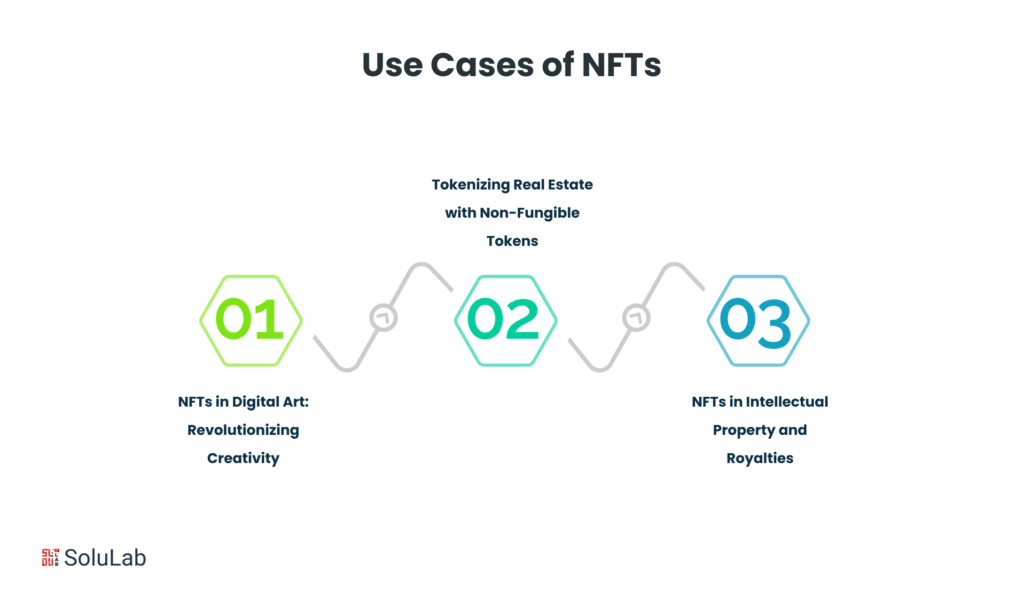
Explore the myriad applications of NFTs that transcend traditional boundaries. From real estate to intellectual property, NFTs are catalyzing innovation and reshaping the dynamics of ownership in various industries.

  • NFTs in Digital Art: Revolutionizing Creativity

NFTs have ushered in a new era for digital artists, providing a decentralized platform to tokenize and sell their work. Each NFT represents a unique piece of art, allowing creators to retain ownership, receive royalties, and connect directly with a global audience.

  • Tokenizing Real Estate with Non-Fungible Tokens

The real estate industry is experiencing a transformative wave with the integration of NFTs. These tokens facilitate fractional ownership, streamline transactions, and enhance transparency, offering investors a novel way to engage with real estate assets on blockchain platforms.

  • NFTs in Intellectual Property and Royalties

Beyond visual art, NFTs extend to intellectual property, including patents, trademarks, and copyrights. Creators can tokenize their intellectual assets, embedding royalty structures into smart contracts to ensure fair compensation for their work, whether it’s transferred or licensed.

Applications of NFTs

Unleash the potential of NFTs as we explore their applications across diverse sectors. Witness how these tokens are transcending traditional limitations, offering a new paradigm for creators, investors, and collectors.

NFTs in Gaming: Transforming the Gaming Industry

The gaming industry is undergoing a monumental transformation with the integration of NFTs. In-game assets, characters, and skins can now be tokenized, allowing players to truly own and trade their digital possessions across different gaming platforms. This introduces a new era of player-driven economies and ownership.

Tokenizing Collectibles: From Trading Cards to Virtual Items

NFTs are revolutionizing the concept of collectibles by digitizing traditional items such as trading cards, stamps, and memorabilia. These digital collectibles can be bought, sold, and traded globally, fostering a vibrant online marketplace that transcends geographical boundaries.

NFTs in the Music Industry: Ownership and Royalties

Musicians and artists are leveraging NFTs to redefine the music industry. Through tokenization, artists can grant fans ownership of exclusive tracks, concert tickets, and merchandise. Smart contracts automate royalty distributions, ensuring fair compensation for creators with every transaction.
NFTs in Gaming

NFTs in Gaming

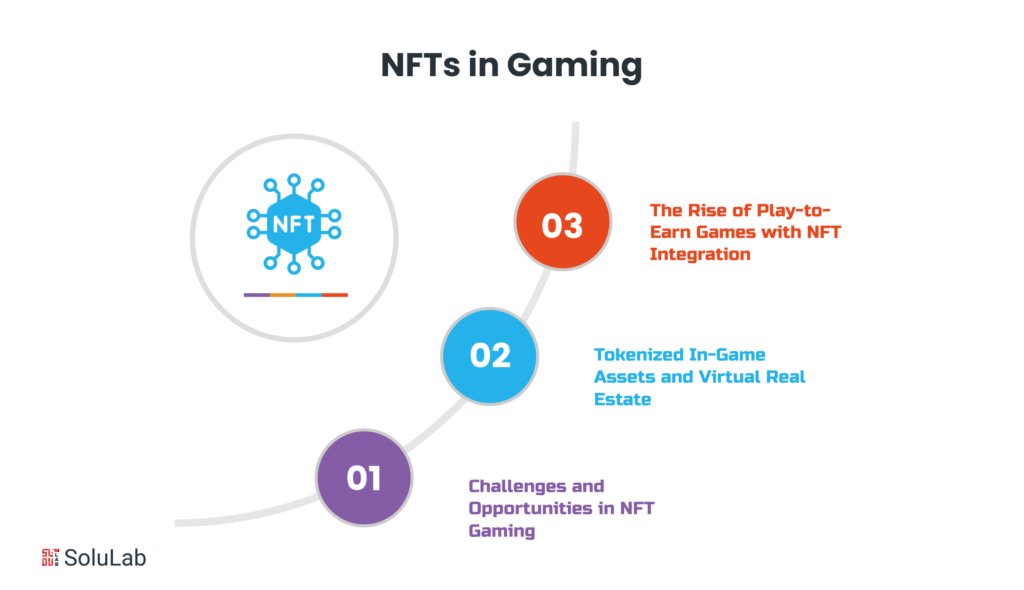
Step into the virtual realms where NFTs are revolutionizing gaming experiences. Dive into the world of play-to-earn models, tokenized in-game assets, and the transformative impact of NFTs on the gaming industry.

  • The Rise of Play-to-Earn Games with NFT Integration

Play-to-earn games represent a groundbreaking concept where players can earn real value through in-game activities. NFTs play a crucial role by facilitating true ownership of in-game assets, creating economic opportunities for players and disrupting traditional gaming models.

  • Tokenized In-Game Assets and Virtual Real Estate

NFTs empower gamers to truly own their in-game assets, whether it’s powerful weapons, unique skins, or rare characters. Virtual real estate markets are emerging, allowing players to buy, sell, and develop digital properties within the gaming universe. This not only enhances the gaming experience but also opens up new revenue streams for players.

  • Challenges and Opportunities in NFT Gaming

While the integration of NFTs in gaming presents exciting possibilities, it comes with its set of challenges. Scalability, interoperability, and environmental concerns are among the issues that need to be addressed for the gaming industry to fully realize the potential of NFTs. Overcoming these challenges will unlock new opportunities and shape the future of gaming.

NFT Marketplaces

Embark on a tour of digital marketplaces dedicated to NFTs. Explore how these decentralized platforms serve as hubs for creators, collectors, and investors, fostering a global exchange of digital assets.

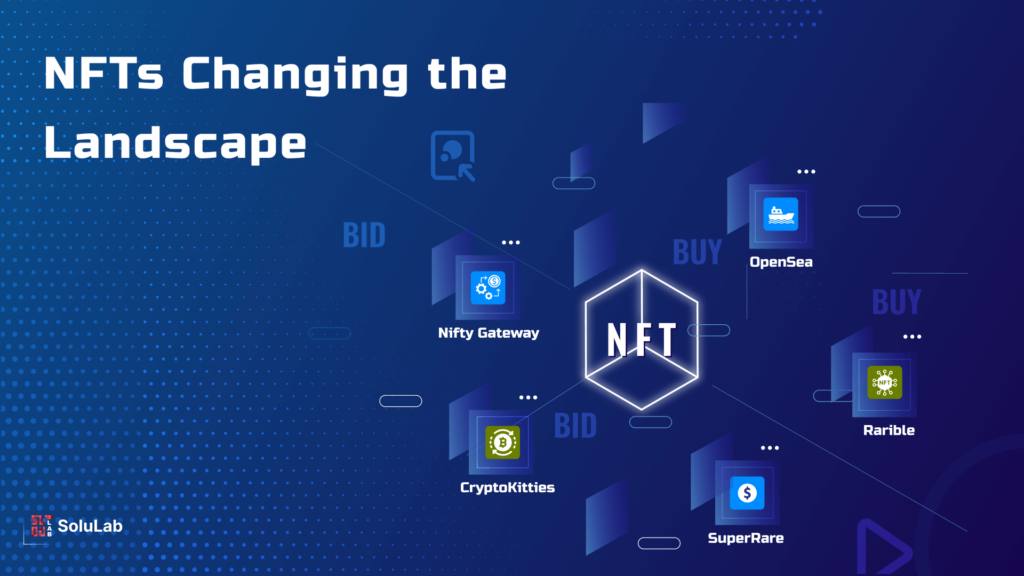
  • Overview of Leading NFT Marketplaces

NFT marketplaces have become the focal point for creators and collectors to engage in the buying, selling, and trading of NFTs. Each marketplace has its unique features, community dynamics, and focus, contributing to the vibrant and diverse NFT ecosystem.

  • How NFT Marketplaces Operate?

NFT marketplaces operate on blockchain technology, providing a decentralized environment for users to list, discover, and transact NFTs. These platforms offer a user-friendly interface, smart contract integration, and secure digital wallets, creating a seamless experience for participants in the NFT marketplace.

  • Emerging Trends in NFT Marketplace Development

The NFT marketplace landscape is dynamic, with constant innovations and trends shaping its evolution. From curated drops and social token integration to environmental sustainability initiatives, NFT marketplaces are adapting to meet user expectations and address broader industry challenges.
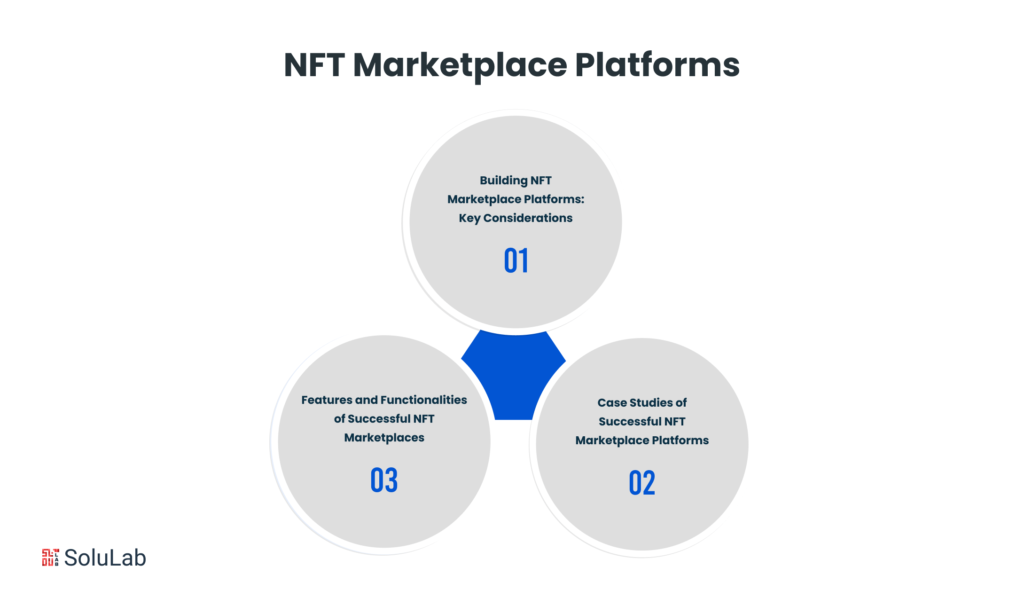
NFT Marketplace Platforms

NFT Marketplace Platforms

Discover the platforms that facilitate the buying, selling, and auctioning of NFTs. Witness how these marketplace platforms leverage blockchain technology and Smart Contracts to ensure secure and transparent transactions.

  • Building NFT Marketplace Platforms: Key Considerations

Entrepreneurs and developers looking to enter the NFT marketplace space must consider various factors. Blockchain compatibility, smart contract functionality, user experience design, and community-building features are critical considerations for successful NFT marketplace platforms.

  • Features and Functionalities of Successful NFT Marketplaces

Successful NFT marketplaces prioritize features such as gas-free transactions, curation tools, social engagement features, and integration with decentralized finance (DeFi) protocols. These functionalities enhance the overall user experience, foster community engagement, and contribute to the growth of the NFT marketplace ecosystem.

  • Case Studies of Successful NFT Marketplace Platforms

Examining case studies of successful NFT marketplaces provides valuable insights into their strategies, challenges, and growth trajectories. Platforms like OpenSea, Rarible, and Mintable have paved the way for innovative marketplace development, setting benchmarks for others in the rapidly evolving NFT space.

Digital Wallets for NFT

Navigate the digital landscape where digital wallets play a crucial role in safeguarding NFTs. Learn how these wallets ensure secure storage and seamless transfer of digital treasures, empowering users to engage confidently in the NFT ecosystem.

  • The Role of Digital Wallets in NFT Transactions

Digital wallets play a pivotal role in the NFT ecosystem, serving as secure storage for NFTs and facilitating interactions with blockchain networks. The choice of a digital wallet influences the user experience, security, and accessibility of NFTs.

  • Security Measures for NFT Wallets

Security is paramount in the NFT space, and digital wallets must implement robust measures to protect users’ private keys and assets. Multisignature authentication, biometric verification, and hardware wallet integrations enhance the security of digital wallets, instilling confidence in users.

  • Integration of Decentralized Identity (DID) in NFT Wallets

The integration of decentralized identity (DID) solutions in NFT wallets adds an extra layer of privacy and security. Users gain greater control over their personal information, contributing to the overall trustworthiness of the NFT ecosystem.

NFTs in Art

Immerse yourself in the intersection of NFTs and the art world. Witness the transformation of creativity and ownership as artists tokenize their digital creations, ushering in new possibilities for artistic expression and monetization.

  • NFTs as a Transformative Force in the Art World

NFTs have disrupted traditional art markets, empowering digital artists with new opportunities. Through NFTs, artists can tokenize their creations, ensuring provenance, direct engagement with buyers, and the potential for ongoing revenue through royalties.

  • NFT Art Collections and Virtual Exhibitions

NFTs enable the creation of digital art collections, allowing collectors to curate and showcase their acquisitions. Virtual exhibitions hosted on blockchain platforms provide a novel way for artists and collectors to engage with a global audience.

  • Challenges and Opportunities in NFTs for Art

While NFTs offer unprecedented opportunities for artists, challenges such as environmental concerns and market saturation need careful consideration. The art world is navigating these challenges, seeking sustainable solutions to ensure the long-term viability of NFTs in the realm of digital art. As we navigate the boundless expanse of the digital realm, the symphony of Non-Fungible Tokens (NFTs) and Smart Contracts resonates with innovation, redefining the very fabric of ownership and creativity. What began as a technological breakthrough has burgeoned into a cultural phenomenon, leaving an indelible mark across diverse sectors. At the forefront of this paradigm shift is the concept of NFTs—unique, indivisible tokens that imbue digital assets with authenticity and scarcity. Our exploration into “What are NFTs?” has revealed their transformative potential, shifting the narrative from the tangible to the digital. 
CTA2

Conclusion

In conclusion, the world of Non-Fungible Tokens (NFTs) has ushered in a paradigm shift in digital ownership and creative expression. Exploring the profound impact of NFTs, we delved into the core concepts such as what NFTs are, the integral role of Smart Contracts in their development, diverse use cases spanning industries, and their applications in gaming, art, and beyond.

As NFTs continue to reshape the digital landscape, SoluLab stands at the forefront of this transformative wave. Our expertise in Smart Contracts and comprehensive understanding of NFT ecosystems position us as the ideal partner for those venturing into this dynamic space. Whether you are an artist seeking to tokenize your creations, a gamer exploring the possibilities of NFTs in virtual worlds, or an enthusiast navigating the NFT marketplace platforms, SoluLab provides tailored solutions.

From conceptualizing and deploying Smart Contracts for NFT development to facilitating secure transactions through digital wallets, SoluLab empowers individuals and businesses to leverage the full potential of NFTs. As we witness the applications of NFTs evolving across various industries, SoluLab remains committed to driving innovation, providing cutting-edge solutions, and being the catalyst for your success in the NFT arena. Embrace the future of digital ownership with SoluLab – your trusted partner in NFT innovation.

FAQs

1. What exactly are NFTs, and how do they work?

NFTs, or Non-Fungible Tokens, represent unique digital assets using blockchain technology. They are indivisible and cannot be exchanged on a one-to-one basis, unlike cryptocurrencies.

2. How are Smart Contracts involved in NFT development?

Smart Contracts, self-executing agreements with coded terms, underpin NFT functionality. They automate processes like ownership transfers and royalties, enhancing transparency and security.

3. What are some practical applications of NFTs?

NFTs find applications in various fields, from real estate and intellectual property to digital art and collectibles, transforming ownership and enabling new business models.

4. Can NFTs be used in the gaming industry?

Absolutely. NFTs in gaming introduce play-to-earn models, allowing players to truly own in-game assets and fostering a decentralized gaming economy.

5. Tell us about NFT marketplaces and platforms.

NFT marketplaces are online platforms where users can buy, sell, and trade NFTs securely. They serve as hubs for digital creators, collectors, and enthusiasts.

6. How do digital wallets play a role in NFT transactions?

Digital wallets are crucial for NFT enthusiasts, providing a secure space to store, manage, and trade their digital assets. They act as a bridge between users and the NFT ecosystem.

7. In what ways are NFTs making an impact in the art world?

NFTs have revolutionized the art industry, enabling artists to tokenize their work, gain exposure, and earn royalties. This digital transformation brings new possibilities and challenges to the art market.

How Non-Fungible Tokens Are Changing the Digital World?

How Non-Fungible Tokens Are Changing the Digital World?

In recent years, the digital landscape has witnessed a transformation that has left the world in awe. A new wave of innovation and disruption has swept through the realms of art, entertainment, real estate, and more, reshaping the way we perceive and interact with the digital world. Non-Fungible Tokens (NFTs), heralded as the future of digital ownership and representation, have played an instrumental role in this paradigm shift. NFTs have transcended the boundaries of traditional digital assets and have introduced a concept that is poised to redefine the very essence of ownership, authenticity, and value in the virtual realm. This phenomenon is not merely a passing trend but a substantial force that is rewriting the rules of the digital world. In this blog, we will explore how Non-Fungible Tokens are leaving an indelible mark on the digital landscape, ushering in a new era of possibilities and reshaping the way we perceive, create, and trade in the digital space.

Understanding NFTs

The advent of Non-Fungible Tokens (NFTs) has brought about a transformative shift in the digital world. To grasp the full extent of their impact on the digital realm, it is essential to delve into the fundamentals of NFTs, understanding what makes them unique, how they are created, and the implications for ownership and authenticity.

A. What Makes an NFT Unique?

NFTs derive their uniqueness from their cryptographic properties and the underlying blockchain technology. Unlike traditional digital assets, NFTs are indivisible, irreplaceable, and cannot be exchanged on a one-to-one basis. Each NFT is a distinct entity with a specific digital signature, making it impossible to forge or replicate. This uniqueness is at the core of NFTs’ value proposition in the digital world.

The impact of NFTs on the digital world is profound in the way they confer ownership and authenticity to digital content. Artists, creators, and even individuals can mint NFTs to represent digital art, music, videos, and virtual assets, establishing a sense of ownership that was previously elusive in the digital realm.

B. How are NFTs Created?

The process of creating NFTs is a testament to the revolutionary power of blockchain technology. NFTs are generated through a process called minting, which involves registering a digital asset on a blockchain. This process creates a unique token associated with the asset, effectively transforming it into an NFT.

The ownership and provenance of NFTs are stored securely on the blockchain, providing a transparent and immutable record of transactions. As a result, the creation and transfer of NFTs are not only secure but also entirely transparent, enhancing trust and authenticity in the digital world.

C. Ownership and Authenticity in the Digital Realm

The impact of NFTs on the digital world extends to the concepts of ownership and authenticity. Prior to NFTs, establishing ownership and proving the authenticity of digital assets were significant challenges. NFTs provide a solution to these issues by allowing creators and buyers to assert ownership with confidence.

Ownership of NFTs is cryptographically verified and recorded on the blockchain, eliminating doubts about the legitimacy of ownership claims. This has profound implications for artists, creators, and collectors, who can now monetize their digital works with a sense of security that was previously unattainable.

In essence, NFT in the digital world has transformed by introducing a novel, secure, and transparent method of asserting ownership and authenticity for a wide range of digital assets. This newfound assurance has opened up exciting possibilities for creators, collectors, and investors, reshaping the way we interact with and perceive the value of digital content.

CTA1

NFTs in Art and Creativity

The world of art and creativity has been profoundly impacted by the emergence of Non-Fungible Tokens (NFTs). Here, we explore how NFTs have revolutionized this space, serving as a game-changer for digital artists while also making significant waves in traditional art markets.

A. NFTs as a Game-Changer for Digital Artists

Digital artists, who have long grappled with the challenge of proving ownership and authenticity of their creations, have found a lifeline in NFTs. NFTs provide a groundbreaking solution, enabling artists to mint their digital works as unique tokens on blockchain platforms.

This development has been nothing short of revolutionary. Digital artists can now attach a sense of rarity and ownership to their creations, allowing them to sell their art directly to a global audience. With NFTs, artists have the potential to earn royalties every time their work is sold or traded on NFT marketplaces.

The impact of NFTs on the digital world in the realm of art is immense. It has democratized the art world, breaking down traditional barriers to entry and recognition for digital artists. Through NFTs, artists can gain more control over their work and financial opportunities they may have struggled to find in the past.

B. Impact on Traditional Art Markets

The emergence of NFTs has not only transformed the digital art landscape but also made waves in traditional art markets. This disruption stems from the growth of NFT marketplaces and the way they have reshaped the dynamics of buying and selling art.

NFT marketplaces, such as OpenSea, Rarible, and SuperRare, have become the platforms of choice for trading NFT art. NFT marketplace development and features have made it easier for artists to mint NFTs, connect with collectors, and secure the value of their digital creations. As NFT marketplaces have matured, they have provided a seamless bridge between digital and traditional art markets, enhancing accessibility and liquidity for art buyers and sellers.

The art world has had to adapt to this evolving landscape. Traditional art institutions and galleries are increasingly exploring partnerships with NFT marketplaces to connect with a broader, tech-savvy audience. As a result, the impact of NFTs on the digital world is not confined solely to the digital realm but extends its influence to the broader art industry.

In brief, NFTs have ushered in a new era of possibilities for artists and collectors alike. They have democratized the art world, providing digital artists with opportunities and control, while also disrupting traditional art markets and opening doors for collaboration and innovation. The NFT marketplace development services have played a pivotal role in these transformations, reshaping how we perceive and engage with art in the digital age.

NFTs in the Gaming Industry

NFTs in the Gaming Industry

The gaming industry has been significantly impacted by the introduction of Non-Fungible Tokens (NFTs), leading to novel experiences and economic opportunities for both players and developers. Here, we explore the integration of NFTs into video games, ownership and tradability of in-game assets, and how NFTs have given rise to the “play-to-earn” model.

A. Integration of NFTs into Video Games

Traditionally, in-game assets like skins, weapons, and character outfits were owned by the game developers, limiting players’ control over their investments. With the advent of NFTs, these assets can now be tokenized and owned by players as verifiable digital possessions. Game developers are leveraging blockchain technology to create unique NFTs representing these in-game items.

This integration allows players to buy, sell, and trade their assets in a decentralized marketplace. These assets can be used across multiple games that support the same standards, providing players with a sense of ownership and control over their digital collections.

B. Ownership and Tradability of In-Game Assets

NFTs enable true ownership of in-game assets. Players have the freedom to trade, sell, or even lend their digital items, giving them a stake in the gaming ecosystem beyond their gameplay skills. This has led to a thriving secondary market for in-game assets, where players can monetize their investments by selling rare or sought-after items to other players.

Moreover, ownership of in-game assets becomes truly provable through the blockchain, reducing the risk of fraud or counterfeit items. The transparent and immutable nature of the blockchain ensures that the asset’s history and authenticity can be easily verified, making it a safe and trustworthy environment for players and collectors.

C. Gamers’ Experiences and the Play-to-Earn Model

NFTs pioneered the notion of “play-to-earn” in the gaming industry. Traditionally, gamers spent countless hours playing without direct financial gains. With NFTs, they can now accumulate valuable in-game assets that have real-world value. This shift has attracted a new audience of players who see gaming as a way to generate income.

In play-to-earn games, players can earn NFTs through gameplay, and these NFTs can be sold on marketplaces for cryptocurrencies or exchanged for other digital or real-world assets. This model has the potential to empower players, particularly in regions with limited economic opportunities, to earn a living by engaging in their favorite pastimes.

However, the play-to-earn model also comes with challenges, including concerns about the balance between gameplay and income generation, the potential for pay-to-win scenarios, and the need for regulations to protect players from exploitation.

In short, the integration of NFTs into the gaming industry has brought about a paradigm shift in the way players perceive and interact with in-game assets. The ownership, tradability, and play-to-earn model are transforming the gaming experience, opening new doors for both gamers and developers. As NFTs continue to evolve, they are likely to shape the future of gaming in ways that we have yet to fully explore.

NFTs in Real Estate and Virtual Land

The innovation of Non-Fungible Tokens (NFTs) extends beyond the realms of digital collectibles and gaming, venturing into the world of real estate and virtual land. This development brings forth the tokenization of real-world assets, virtual land ownership within metaverse platforms, and its potential impact on the real estate industry.

A. Tokenization of Real-World Assets

NFTs have paved the way for the tokenization of real-world assets, such as real estate properties. Tokenization involves breaking down physical assets into digital tokens, making them easily tradable and divisible. Through NFTs, individuals can hold digital ownership rights to specific portions or properties within the real estate market.

This tokenization opens up a range of possibilities, from enabling fractional ownership where multiple investors can hold shares in a single property to simplifying the process of buying and selling real estate. NFTs offer transparency and security by recording ownership and transaction history on a blockchain, reducing the need for intermediaries and enhancing trust in real estate transactions.

Real estate NFTs are often listed on NFT marketplaces, facilitating easy trade and providing a global platform for investors and buyers. Businesses and developers looking to engage in real estate tokenization can hire top NFT developers to create customized NFT marketplace development services that cater to their specific needs.

B. Virtual Land Ownership in Metaverse Platforms

Metaverse platforms, immersive virtual environments where people interact and socialize in digital spaces, have seen a surge in virtual land ownership through NFTs. Within metaverse worlds, parcels of virtual land are represented as NFTs, allowing users to purchase, develop, and trade virtual real estate.

Virtual land in metaverses serves various purposes, from creating digital businesses and virtual storefronts to hosting events and social gatherings. Some popular metaverse platforms include Decentraland, The Sandbox, and Somnium Space, where virtual land ownership has become a fundamental aspect of the user experience.

This development has encouraged businesses and entrepreneurs to invest in virtual land, further boosting the metaverse’s growth. Virtual landowners can develop their properties to generate revenue or simply hold them as digital assets with the potential for appreciation.

C. The Potential Impact on the Real Estate Industry

The integration of NFTs in real estate and virtual land ownership has the potential to disrupt the traditional real estate industry. Here are some of the potential impacts:

  • Accessibility: Real estate tokenization can lower the barriers to entry, making it possible for a broader range of investors to participate in real estate markets.
  • Efficiency: NFTs can streamline the buying and selling process by reducing paperwork and the involvement of intermediaries.
  • Globalization: NFTs enable cross-border investments, allowing investors to diversify their portfolios across different countries.
  • Liquidity: Fractional ownership and NFT-based real estate can increase liquidity, making it easier for investors to exit their positions.
  • Metaverse Integration: As virtual land ownership becomes more popular, the metaverse may emerge as a new dimension for real estate transactions and business opportunities.

In brief, NFTs have brought real estate into the digital age, offering new avenues for investment and diversification. The tokenization of real-world assets and virtual land ownership within metaverse platforms have the potential to revolutionize the real estate industry and redefine how we interact with both physical and digital properties. Businesses looking to leverage this trend can explore the services of top NFT developers to create their own NFT marketplace development solutions.

Challenges and Controversies

Challenges and Controversies

While Non-Fungible Tokens (NFTs) have gained significant attention and adoption, they are not without their share of challenges and controversies. In this section, we’ll explore some of the key issues that have emerged.

A. Scalability Issues and Network Congestion

One of the primary concerns associated with NFTs is the scalability of blockchain networks, particularly Ethereum. As NFTs gained popularity, they led to network congestion and increased transaction fees. The limited capacity of Ethereum and other blockchains has resulted in slow transaction times and high gas costs, making it less accessible for creators and collectors. These scalability issues have prompted discussions about the need for blockchain upgrades and the exploration of Layer 2 solutions to improve the overall NFT ecosystem.

Developers and blockchain communities are actively working on addressing these scalability challenges, but until a scalable solution is widely implemented, network congestion remains a significant hurdle for NFT enthusiasts.

B. Scams and Fraudulent Activities in the NFT Space

The rapid growth of the NFT market has attracted the attention of scammers and fraudsters. There have been instances of fake NFT listings, counterfeit art, and even fraudulent NFT marketplaces. These activities undermine trust in the NFT ecosystem and can lead to financial losses for unsuspecting buyers and creators.

It’s crucial for participants in the NFT space to exercise caution, conduct due diligence, and be aware of the risks associated with fake NFTs and deceptive practices. Emerging NFT marketplaces and services must implement rigorous verification and authentication processes to reduce the prevalence of scams.

C. Criticisms and Debates Surrounding NFTs

NFTs have sparked various criticisms and debates within the digital, artistic, and environmental communities. Some common criticisms include:

  • Environmental Concerns: The energy consumption associated with blockchain networks, particularly in the case of proof-of-work chains like Ethereum, has raised concerns about the carbon footprint of NFTs. These concerns have led to discussions about transitioning to more eco-friendly blockchain technologies.
  • Speculative Bubbles: Some argue that the NFT market has seen speculative bubbles, with overinflated prices for digital assets that may not hold long-term value. The concern is that this speculative behavior could lead to a market crash.
  • Exclusivity and Elitism: NFTs are seen by some as a means for wealthy individuals and celebrities to profit from their digital assets, leaving little room for emerging artists and creators. The question of whether NFTs are democratizing or exacerbating inequalities is a topic of ongoing debate.
  • Lack of Regulation: The lack of regulatory oversight in the NFT space has raised questions about consumer protection, copyright infringement, and legal challenges in case of disputes.

In response to these criticisms, the NFT community and industry are actively engaged in discussions about how to address these issues. This includes exploring more energy-efficient blockchain alternatives, promoting inclusivity supporting emerging artists, and advocating for responsible and ethical practices in the NFT space.

In conclusion, while NFTs have opened up new opportunities and possibilities, they are not immune to challenges and controversies. Addressing scalability, fraudulent activities, and criticisms are essential steps for the NFT ecosystem to mature and establish itself as a sustainable and responsible part of the digital world.

The Future of NFTs

Future of NFTs

As Non-Fungible Tokens (NFTs) continue to reshape various industries and capture the imagination of creators and collectors, it’s essential to consider what the future holds for this innovative technology. In this section, we’ll explore predictions for the NFT market, potential developments in NFT technology, and the evolving role of NFTs in the digital landscape.

A. Predictions for the NFT Market

The NFT market has shown remarkable growth, and its trajectory is likely to continue in the coming years. Here are some predictions for the NFT market:

  • Increased Adoption: NFTs are expected to see broader adoption in industries beyond art and gaming. Sectors like fashion, education, and healthcare may incorporate NFTs for provenance, authentication, and unique experiences.
  • Market Maturity: As the NFT market matures, we can anticipate increased regulation and standardization to address challenges related to fraud, copyright issues, and environmental concerns. This regulatory clarity may help build trust among users.
  • Interoperability: The development of cross-chain NFT solutions may promote interoperability between different blockchain ecosystems, making it easier for users to access and trade NFTs across multiple platforms.
  • Emerging Marketplaces: NFT marketplaces will continue to evolve, offering features such as social interactions, virtual exhibitions, and new ways to showcase and trade digital assets.
  • Secondary Market Growth: The secondary market for NFTs is expected to grow as collectors and investors seek opportunities for trading, flipping, and investing in digital assets. High-value NFTs may appreciate over time.
  • Diversity in NFT Types: New forms of NFTs, such as time-based NFTs, multi-chain NFTs, and NFTs representing real-world assets, will likely emerge, expanding the diversity of the market.

B. Potential Developments in NFT Technology

NFT technology is not static; it continues to evolve and expand its capabilities. Some potential developments include:

  • Scalability Solutions: Scalability issues will drive the development of Layer 2 solutions and the transition to more energy-efficient blockchains, reducing environmental concerns.
  • Enhanced Metadata and Utility: NFTs may become more programmable and dynamic, with metadata that can be updated, and NFTs can carry additional utility beyond ownership, such as granting access to exclusive content or experiences.
  • Deeper Integration with AI and AR: NFTs may be used in conjunction with artificial intelligence (AI) and augmented reality (AR) technologies, creating interactive and adaptive digital experiences.
  • Digital Identity and Authentication: NFTs may play a role in digital identity verification, helping to secure online interactions and protect users’ data and assets.
  • Smart Contracts and Royalty Automation: Smart contracts linked to NFTs will enable automated royalty payments to creators whenever their NFTs are resold, enhancing the fairness of the digital art market.

C. The Role of NFTs in the Evolving Digital Landscape

NFTs are poised to play an integral role in the ongoing transformation of the digital landscape:

  • Metaverse Development: NFTs will become foundational to metaverse environments, enabling users to own, create, and trade digital assets within these immersive virtual worlds.
  • Digital Economy Expansion: NFTs will extend beyond collectibles and art, infiltrating the digital economy as integral components in e-commerce, virtual real estate, and decentralized finance (DeFi) systems.
  • Empowering Creators: NFTs will empower creators and artists by providing more direct access to their audiences, bypassing intermediaries, and granting them greater control over their work and intellectual property.
  • Cultural and Social Impact: NFTs will continue to influence and shape cultural trends, art movements, and the ways we connect and interact in digital spaces.

In conclusion, the future of NFTs appears bright, with the potential for broader adoption, technological advancements, and a growing role in shaping the evolving digital landscape. As NFTs continue to mature, they will bring new opportunities and challenges, ultimately redefining how we perceive and interact with the digital world.

CTA2

Conclusion

In conclusion, the rise of Non-Fungible Tokens (NFTs) has ushered in a transformative era, reshaping how we interact with digital assets and the broader digital world. The impact of NFTs goes well beyond the creative and collectible realms, reaching into areas such as real estate, digital identity, and the metaverse. The emergence of NFT marketplace platforms and white-label NFT marketplace solutions has laid the foundation for a vibrant ecosystem where creators and collectors can connect, exchange, and create value in entirely new ways. These innovations have provided opportunities for entrepreneurs to explore and develop niche marketplaces tailored to specific industries and niches.

As we journey forward, the enduring significance of NFTs in the digital realm becomes more evident. The potential for NFTs to disrupt, innovate, and influence various facets of our digital lives is substantial. This is a world where the boundaries of ownership, creativity, and entrepreneurship are being redefined. It’s a world where opportunities for innovation are boundless, and where the role of NFTs in shaping the future of the digital landscape remains central. The NFT ecosystem continues to evolve, promising a future where the possibilities are as diverse as the digital assets themselves.

SoluLab, a leading blockchain and software development company, plays a pivotal role in the dynamic world of Non-Fungible Tokens (NFTs). As NFTs continue to transform the digital landscape, SoluLab has been at the forefront of innovation, offering NFT marketplace development solutions and white-label NFT marketplace services that empower businesses and entrepreneurs to explore the vast potential of this groundbreaking technology. With a strong commitment to blockchain technology, SoluLab is enabling clients to create custom NFT marketplaces that cater to specific industries and niches, ensuring they stay ahead in the rapidly evolving NFT ecosystem. Their expertise and dedication contribute to the enduring significance of NFTs, driving the digital realm toward a future that is more inclusive, innovative, and interconnected.

FAQs

1. What exactly is an NFT?

An NFT, or Non-Fungible Token, is a digital asset representing ownership or proof of authenticity of a unique item or piece of content, stored on a blockchain. Unlike cryptocurrencies like Bitcoin or Ethereum, NFTs are indivisible and each one has its own distinct value.

2. How can I create my own NFT?

To create your own NFT, you can use various NFT marketplaces like OpenSea, Rarible, or Mintable. You’ll need a digital wallet, connect it to a compatible marketplace, and then follow the platform-specific steps to mint your NFT. You’ll typically need to upload your digital content, set metadata, and determine any royalties for future resales.

3. Are NFTs environmentally friendly?

NFTs on certain blockchains, like Ethereum, have faced criticism for their environmental impact due to energy-intensive proof-of-work consensus mechanisms. However, the industry is actively exploring more eco-friendly solutions through the adoption of proof-of-stake blockchains and Layer 2 scaling solutions to mitigate these concerns.

4. How can NFTs be used in the real estate industry?

NFTs have the potential to revolutionize real estate by enabling the tokenization of property, making it easier to buy, sell, and trade real estate assets. They also offer fractional ownership opportunities, which can lower barriers to entry for real estate investment and make property ownership more accessible to a wider audience.

5. What are white label NFT marketplace solutions?

White label NFT marketplace solutions are customizable platforms provided by companies like SoluLab that allow businesses to create their own NFT marketplaces. They offer a pre-built infrastructure with the flexibility to be tailored to specific needs, industries, and branding, facilitating entrepreneurs and businesses in launching their NFT trading platforms more efficiently.
