Talk to an Expert

Delve into the Concept of NFTs and Their Use Cases

NFT Use Cases

In the midst of the recent surge in interest surrounding blockchain and cryptocurrency assets, there is a growing recognition of the need for individuals, businesses, and governments to prepare themselves for the impending digital economy. For those venturing into the realm of blockchain, the topic of tokens is a common point of discussion, with numerous blogs and articles elucidating the distinctions between coins and tokens.

Presently, the spotlight is on exploring more advanced and innovative token forms, particularly Non-Fungible Tokens (NFTs). Many experts emphasize the transformative potential of NFTs in shaping the future landscape of blockchain technology. Consequently, these unique tokens have captured significant attention from users and enthusiasts across various domains. 

In this article, we aim to delve into the intricacies of Non-Fungible Tokens (NFTs), unraveling their functionalities and examining their substantial contributions in diverse use cases.

So, without any further ado, let’s get started!

What are Non-Fungible Tokens?

NFT, or non-fungible token, is a specialized form of token created through cryptographic hashing methods, utilizing blockchain technology to associate with a unique digital asset that cannot be duplicated. Unlike major cryptocurrencies such as Monero, Ether, and Bitcoin, non-fungible tokens possess distinct characteristics, making them irreplaceable and non-interchangeable.

Embedded smart contracts development within NFTs play a crucial role in storing exclusive data, setting them apart from other tokens. NFTs are also characterized by their indivisibility; unlike Bitcoins, they cannot be sent in fractional denominations. Consequently, sending a portion of a specific NFT to another person is not feasible.

The uniqueness of non-fungible tokens grants them a distinctive role in the blockchain landscape, particularly in the context of the significant shift toward the next era of blockchain digital transformation. As enterprises gradually embrace blockchain integration into their operations, NFTs emerge as revolutionary entities.
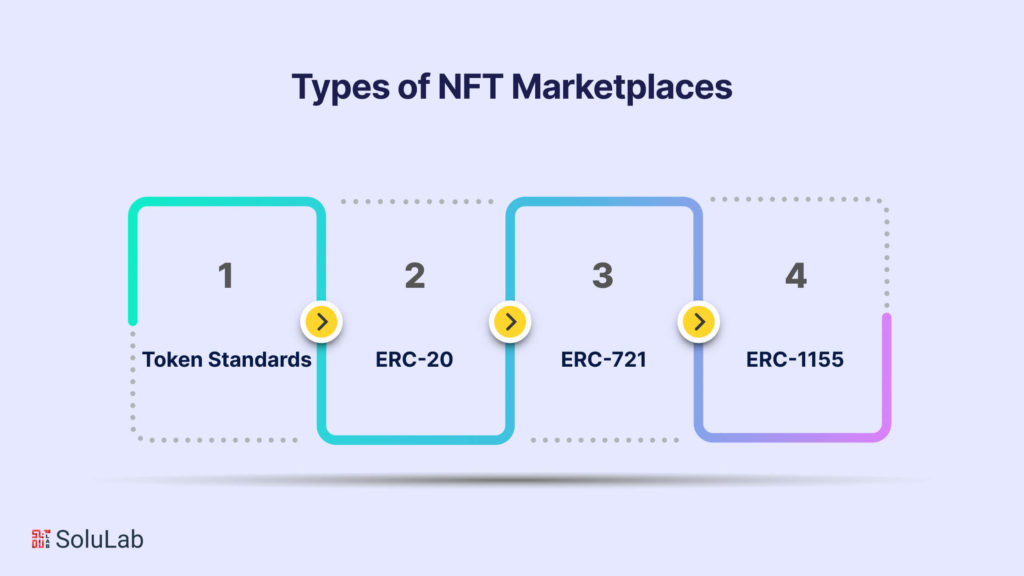
Types of NFT Marketplaces

Types of NFT Marketplaces

Non-fungible tokens (NFTs) come in various types, each serving different purposes and applications. Here are some common types of NFTs:

  • Token Standards

Exploring non-fungible token use cases reveals their versatility in serving various purposes for both digital and real-world entities, converting them into blockchain tokens. Before delving into deeper insights into NFT use cases, understanding the operational aspects is crucial. Developers must adhere to specific blockchain token standards to successfully launch token applications. Ethereum, for instance, provides numerous ERC standards for developers. Let’s examine the different token standards in blockchain that play a vital role in NFT functionality.

  • ERC-20

Cryptocurrency tokens on Ethereum adhere to the ERC-20 token standard. It comprises a set of rules that objects must follow to ensure interoperability and compatibility with exchanges or wallets within the Ethereum ecosystem. In October 2020, the Ethereum network had over 300,000 tokens based on the ERC-20 standard, a number continually on the rise.

  • ERC-721

Compared to the ERC-20 token standard, ERC-721 focuses on a single distinct asset without interchangeability. It represents assets, such as certifications or asset tokenization, that cannot be divisible. Tokens based on ERC-721 standard store information in personalized smart contracts, providing transparency regarding ownership, security, and immutability. Essentially, ERC-721 tokens operate as ‘non-fungible.’

  • ERC-1155

ERC-1155, a crucial token standard, forms the foundation of NFT use cases. While ERC-721 is suitable for creating new assets transferable between wallets, a collection of ERC-721 tokens may be insufficient and slow. ERC-1155, often termed the ‘multi-token standard of the next generation,’ proves beneficial in scenarios involving the trade of multiple artifacts, such as weapons and skins for a specific in-game character. Notably, ERC-1155 supports both fungible and non-fungible token applications.

History of NFTs (Non-Fungible Tokens)

The inception of Non-Fungible Tokens (NFTs) wasn’t an instantaneous phenomenon but rather evolved over the years with various early attempts laying the groundwork for what we now recognize as NFTs.

One contender for the title of the first NFT is the concept of Colored Coins, introduced in 2012. According to investor Andrew Steinworld, some argue that Colored Coins could be considered the initial manifestation of NFTs. While Colored Coins showcased a significant advancement in Bitcoin capabilities, they had limitations. Their value representation was contingent on unanimous agreement, and the scripting language of Bitcoin couldn’t accommodate this behavior within its network.

An alternative claim to the first NFT goes to “Quantum” by Kevin McCoy, minted on the Namecoin Blockchain on May 2, 2014. This digital token is considered by some as the rightful pioneer of the NFT title.

However, it was the advent of “CryptoKitties,” a project by Dapper Labs on the Ethereum blockchain, that brought NFTs into the mainstream. During the crypto boom of 2017, these digital cats gained global attention, with some even fetching a staggering price of 600 ETH (equivalent to USD 172k at the time). This marked a turning point, solidifying NFTs as a viable and valuable digital asset class.

Since the CryptoKitties phenomenon, numerous NFT projects have emerged, each contributing to the expansive success and recognition of non-fungible tokens across various industries.

Use Cases of Non-Fungible Tokens Across Various Industries

Non-Fungible Tokens (NFTs) have become a transformative force in the digital landscape, introducing a novel concept of ownership that extends across diverse industries. In this section, we will delve into the expanding realm of NFT use cases, exploring their impact on art, gaming, music, and various other sectors.
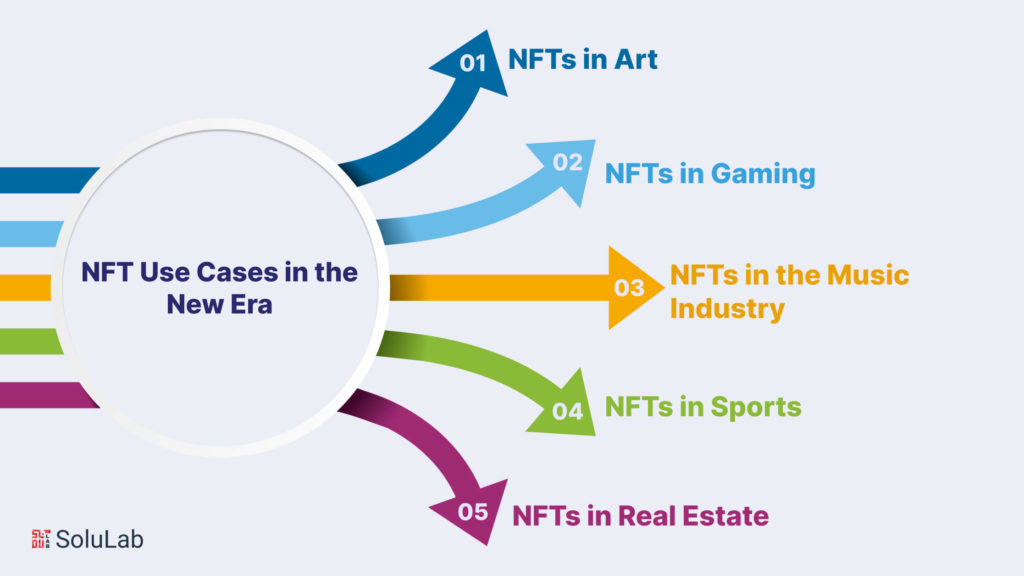
Digital Ownership: Exploring NFT Use Cases in the New Era

NFT Use Cases in the New Era

Non-Fungible Tokens have ushered in a new era of digital ownership, reshaping how creators monetize their work and how collectors acquire unique digital assets. This article aims to unravel the myriad use cases for NFT, showcasing the evolution of digital ownership in the contemporary digital world.

1. NFTs In Art

Within the art world, NFTs have empowered artists to craft extraordinary digital masterpieces, now tradable and saleable akin to physical art. This shift has not only generated fresh revenue streams for artists but has also provided collectors with ownership of exclusive digital creations, verified and authenticated through blockchain technology.

Undoubtedly, NFTs have already left an indelible mark on the art scene, with high-profile sales capturing global attention. A landmark moment occurred in March 2021 when an NFT crafted by digital artist Beeple fetched a record-breaking $69 million at auction. This sale served as a pivotal moment in the acceptance of NFTs within the art domain, illustrating their potential to revolutionize art transactions.

Advantages Of NFTs In Art

  • True Ownership Of Digital Artworks: In the past, digital art lacked uniqueness and intrinsic value. NFTs now allow creators to fashion digital artworks that are distinct and possess genuine ownership, akin to physical art. This transformative shift has profound implications for the perception and valuation of digital art.
  • Bypassing Traditional Gatekeepers: NFTs empower artists to directly sell their works to collectors, eliminating intermediaries like galleries and auction houses. This democratization of the art world holds the promise of enabling more artists to showcase and sell their creations to a broader audience.

In essence, NFTs have unlocked a myriad of possibilities in the realm of art, creating novel avenues for revenue and engagement. The ability to produce, trade, and own unique digital artworks has redefined the dynamics between artists and collectors, marking a revolutionary chapter in the art industry.

2. NFTs in Gaming

The gaming industry, which has witnessed remarkable growth with the advent of mobile phones and gaming platforms, is now experiencing a new wave of innovation with the integration of Non-Fungible Tokens (NFTs). The central question arises: “What exactly do NFTs bring to the gaming arena?” NFTs in gaming represent a groundbreaking fusion, as dedicated developers and gamers explore the potential of NFT-powered games to elevate gameplay and establish innovative revenue channels. In essence, these digital assets within the gaming realm can encompass in-game items, characters, and even entire virtual worlds, providing a fresh dimension to the gaming experience. Such assets can be bought, sold, and traded on blockchain-based marketplaces, introducing novel opportunities for gamers, developers, and investors.

Advantages of NFTs in the Gaming Industry

  • New Revenue Streams for Game Developers: NFT games enable developers to go beyond traditional revenue sources such as game sales and in-game purchases. By crafting unique in-game items that players can own and trade on blockchain-based marketplaces, developers open avenues for additional revenue. This has the potential to establish a more sustainable business model, fostering innovation in game development.
  • Enhanced Transparency and Security for In-Game Assets: The utilization of blockchain technology applications ensures greater transparency and security for in-game assets. Through the tracking of ownership and transfer of assets on the blockchain, players can be confident that their digital possessions are safeguarded and immune to replication or counterfeiting. This instills a sense of trust and fairness in the gaming experience, assuring players that their investments in the virtual game world are well-protected.

Use cases of NFTs in gaming represent not just a technological evolution but a paradigm shift, introducing a layer of ownership, traceability, and security that extends the gaming experience beyond mere entertainment. As the gaming industry continues to embrace NFTs, we anticipate a landscape where creativity flourishes, revenue models diversify, and players engage in more immersive and secure virtual worlds.

3. NFTs in the Music Industry

As a revolutionary trend in the music industry, Non-Fungible Tokens (NFTs) are rapidly becoming a novel avenue for artists to not only monetize their creations but also forge deeper connections with their fan base. NFTs in music encompass digital assets representing music, artwork, concert tickets, and exclusive items related to an artist’s body of work. These assets, imbued with unique value, are traded on blockchain-based marketplaces, providing fans with an opportunity to possess a tangible piece of their favorite artist’s legacy and concurrently establishing innovative revenue channels for musicians.

Advantages of NFTs in Music

  • New Income Source for Artists: NFTs in the music industry unlock a fresh revenue stream for artists. By crafting distinctive NFTs that encapsulate their creative output, artists can sell these digital assets to fans and collectors. This approach extends beyond conventional revenue sources like music sales and streaming royalties, potentially offering a more sustainable income stream for artists amidst the dynamic shifts in the music industry.
  • Unique Fan Engagement: NFTs in music create a personalized and exclusive channel for fans to connect with their favorite artists. Ownership of exclusive NFTs representing a specific album or concert fosters a deeper sense of connection and investment. This unique fan engagement has the potential to cultivate more committed and loyal fan bases, encouraging increased social interaction and trading activities among enthusiasts.

NFTs in the music industry extend beyond mere tokens; they become a conduit for tangible fan experiences and novel revenue models. As artists continue to explore the NFT utility use cases, the music landscape evolves into a realm where creativity meets technology, offering both artists and fans an enriched and interactive music ecosystem.

4. NFTs in Sports

In the dynamic world of sports, Non-Fungible Tokens (NFTs) are redefining how fans connect with their favorite teams and athletes. These digital assets, each possessing unique characteristics, introduce a new layer of fan interaction and provide unprecedented opportunities for sports organizations and enthusiasts. NFTs bring the concept of digital collectibles and memorabilia to sports. Fans can own exclusive digital assets such as virtual trading cards, iconic sports moments, or limited-edition memorabilia, all secured and authenticated through blockchain technology. It also paves the way for virtual stadium experiences. Fans can own virtual seats, granting access to exclusive content, behind-the-scenes footage, and even virtual meet-and-greet opportunities with athletes, creating a more immersive fan experience.

Advantages of NFTs in Sports

  • Authentic Fan Experiences: NFTs redefine the sports fan experience by offering an authentic and immersive connection. Through ownership of unique digital assets like virtual trading cards or exclusive behind-the-scenes content, fans not only gain a sense of authenticity but also form a virtual bond with their favorite teams and athletes. This transcends geographical boundaries, creating a global community united by a shared passion for sports. NFTs become more than just tokens; they become cherished symbols of fandom and shared experiences.
  • New Revenue Streams for Teams: NFTs present a transformative opportunity for sports teams to diversify their revenue streams and ensure financial sustainability. Teams can release limited-edition NFT collectibles, creating a sense of scarcity and exclusivity. Fans, eager to own a piece of sports history, engage in the excitement of acquiring digital assets that commemorate iconic moments or showcase their favorite players. This not only generates revenue but also turns the act of collecting into a dynamic and participatory experience.

As NFTs continue to weave their way into the sports landscape, they bring a wave of innovation, transforming fan engagement and revenue models. From virtual experiences to authentic collectibles, NFTs are reshaping the sports industry, creating new avenues for fan interaction and financial sustainability for teams and athletes alike.

5. NFTs in Real Estate

Just as NFTs have reshaped the art world, they are now making waves in the NFT real world use cases in the sector of real estate, offering a revolutionary approach to property ownership and transactions. These digital assets, underpinned by blockchain technology, present unique opportunities for property developers, investors, and homeowners alike. NFTs enable the tokenization of real estate, breaking down property assets into tradable and divisible digital tokens. This allows for fractional ownership, providing investors with the opportunity to own a portion of high-value properties, and enhancing liquidity in the real estate market. Moreover, real estate developers can utilize NFTs to offer exclusive access and rewards to property owners. NFT holders may receive special privileges, such as access to communal amenities, discounts on property-related services, or even invitations to exclusive events, fostering a sense of community and value.

Advantages of NFTs in Real Estate
  • Fractional Ownership and Accessibility: NFTs democratize real estate investments by introducing fractional ownership, allowing investors to seamlessly buy and trade digital tokens representing fractions of properties. This innovative approach not only broadens participation but also transforms traditionally high-barrier real estate markets into inclusive opportunities for a diverse investor demographic.
  • Transparent Property Transactions: Blockchain technology, integral to NFT-based real estate transactions, goes beyond enhancing transparency. Securely storing ownership records, property details, and transaction history, not only reduces the risk of fraud but also instills confidence in all stakeholders. This heightened transparency, facilitated by blockchain, ensures a secure and reliable platform for conducting property transactions, fostering trust in the real estate market.

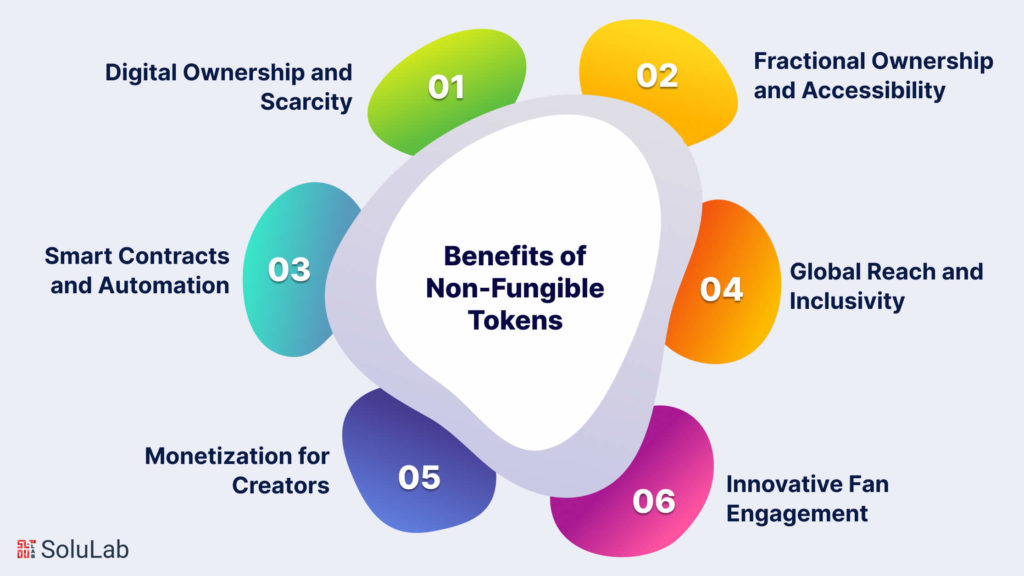
Benefits of Non-Fungible Tokens

Benefits of Non-Fungible Tokens

Non-fungible tokens (NFTs) have emerged as a transformative force across various industries, bringing a myriad of benefits that extend beyond traditional forms of ownership and exchange.

1. Digital Ownership and Scarcity: NFTs provide a novel solution to digital ownership, allowing individuals to truly own and verify unique digital assets. Through blockchain technology, the scarcity and uniqueness of these assets are irrefutably established, offering creators and collectors a new paradigm for valuing and exchanging digital content.

2. Fractional Ownership and Accessibility: NFTs introduce the concept of fractional ownership, making high-value assets, such as real estate or high-profile artworks, accessible to a broader audience. Investors can purchase and trade digital tokens representing fractions of these assets, democratizing investment opportunities and fostering financial inclusivity.

3. Smart Contracts and Automation: Smart contracts embedded within NFTs automate and enforce predefined rules, facilitating transparent and trustless transactions. This not only reduces the need for intermediaries but also ensures that the terms and conditions of ownership and transactions are executed seamlessly, bringing efficiency and reliability to diverse industries.

4. Global Reach and Inclusivity: NFTs break down geographical barriers, allowing creators and investors to participate in a global marketplace. Artists can reach a worldwide audience, while investors can diversify their portfolios beyond traditional limitations. This global reach fosters inclusivity, creating opportunities for collaboration and engagement on an international scale.

5. Monetization for Creators: NFTs empower creators to monetize their digital creations directly. Artists, musicians, and other content creators can tokenize their work, allowing fans and collectors to support them by purchasing unique digital assets. This direct creator-to-collector relationship reduces dependence on intermediaries, providing creators with a more direct and sustainable revenue stream.

6. Transparency and Authenticity: Blockchain technology ensures transparency and authenticity in the provenance of NFTs. Ownership records, transaction histories, and details of digital assets are securely stored on the blockchain, mitigating the risk of fraud and counterfeiting. This transparency builds trust among participants in various industries, from art and music to real estate.

7. Innovative Fan Engagement: In the realm of entertainment and sports, NFTs redefine fan engagement. Fans can own exclusive digital collectibles, participate in tokenized loyalty programs, and access unique experiences, creating a dynamic and interactive relationship between creators and their audience.

As Non-Fungible Tokens continue to evolve and find applications in diverse sectors, their benefits reshape how we perceive ownership, value, and engagement in the digital age. Whether in the art world, real estate, or entertainment, NFTs are unlocking new possibilities and transforming traditional paradigms across the spectrum.

Why are Non-Fungible Tokens Popular These Days?

NFTs, although in existence since 2015, have recently surged in popularity due to several factors. Primarily, the widespread acceptance and enthusiasm for cryptocurrencies and blockchain technology have played a pivotal role. The convergence of technological advancements, fan enthusiasm, royalty economics, and the principle of scarcity has fueled this surge. Consumers are keen to participate in owning exclusive digital assets, viewing them not only as unique content but also as potential investments.

The ownership of an NFT grants control over the associated digital content, even though the content can still be circulated online. The visibility of an NFT online contributes to its popularity, ultimately enhancing its value. When an NFT is traded, the original creator receives a 10 percent share, with a portion going to the platform and the majority to the current owner. This model presents the prospect of continuous revenue for creators as digital assets gain traction in buying and selling transactions.

The essence of NFTs lies in authenticity. Each digital collectible possesses unique information that sets it apart, easily verifiable through blockchain technology. Counterfeiting is impractical as the origins of each item can be traced back to its original creator. Unlike cryptocurrencies, NFTs are not interchangeable because each holds its distinct value, akin to the uniqueness of physical collectibles like baseball cards.
NFT Marketplace Development Services

Final Words

In conclusion, the surging popularity of Non-Fungible Tokens (NFTs) marks a transformative shift in how we perceive and engage with digital assets. Propelled by the normalization of cryptocurrencies, blockchain frameworks, and a convergence of technological, economic, and cultural factors, NFTs have become a novel frontier for ownership and investment. The fusion of fandom, the allure of royalties, and the fundamental concept of scarcity have ignited a widespread desire among consumers to possess exclusive digital content, creating a thriving market for NFTs.

As authenticity becomes paramount in the digital realm, NFTs stand as verifiable and unique digital collectibles, immune to counterfeiting due to the traceability provided by blockchain technology. Their popularity isn’t just confined to ownership but extends to their visibility online, contributing to the value they accumulate over time. Creators, platforms, and current owners participate in a symbiotic relationship, paving the way for ongoing revenue streams in the dynamic landscape of digital assets.

If you’re considering venturing into the NFT space, SoluLab stands as a valuable ally. With our expertise in blockchain development and a deep understanding of the evolving NFT marketplace, we can help turn your vision into a reality. From conceptualization to implementation, SoluLab is your trusted partner in navigating the intricacies of NFT marketplace development. Embrace the future of digital ownership and innovation with SoluLab – where possibilities in the NFT non fungible tokens realm are limitless. Contact us today to embark on your journey into the world of NFTs.

FAQs

1. What exactly is an NFT?

An NFT, or Non-Fungible Token, is a unique digital asset that represents ownership or proof of authenticity of a specific item, often digital content such as art, music, or collectibles. Unlike cryptocurrencies, NFTs are indivisible and each has distinct information stored on the blockchain, ensuring its uniqueness and authenticity.

2. Why are NFTs gaining popularity now?

The recent surge in NFT popularity is attributed to the widespread acceptance of cryptocurrencies and blockchain technology. The combination of technological advancements, fan enthusiasm, the allure of royalties, and the scarcity principle has created a perfect storm, making NFTs a sought-after investment and ownership opportunity for consumers.

3. How do NFTs generate ongoing revenue for creators?

When an NFT is sold, the original creator receives a 10 percent cut of the revenue, with a percentage going to the platform and the majority to the current owner. As the digital asset continues to be bought and sold over time, creators stand to gain ongoing revenue, creating a sustainable income stream from their popular digital creations.

4. Can NFTs be counterfeited or replicated?

No, NFTs cannot be counterfeited or replicated. The distinguishing information within each digital collectible makes it unique and easily verifiable through blockchain technology. This traceability ensures that each NFT can be traced back to its original creator, preventing fraudulent replication.

5. How can SoluLab assist in NFT marketplace development?

SoluLab, with its expertise in blockchain development solution, is well-equipped to assist in NFT marketplace development. From conceptualization to implementation, SoluLab provides comprehensive solutions, guiding clients through the intricacies of the NFT space. Contact us to embark on your journey into the world of NFTs, where innovation and digital ownership possibilities are limitless.

 

Best Real-World Use Cases of NFT Marketplace

Best Real-World Use Cases of NFT Marketplace

A piece of artwork by artist Beeple sold for $69 million in 2021 at the prestigious Christie’s auction house. This is an amazing accomplishment, especially since the item was only a few lines of code on a blockchain, sometimes referred to as a non-fungible token, or NFT.

Because they employ blockchain technology in a way that makes them unique, NFTs are digital assets that offer a safe, decentralized record of ownership and cannot be copied or replaced. NFTs are commonly used to trace the ownership of property, both digital and real because they cannot be reproduced or altered. However, they truly gained traction when they started registering the ownership of digital artwork that was available for purchase and sale on NFT markets.

NFTs are thought of by some as digital representations of the Bored Ape Yacht Club, with a market value in the millions. However, by offering other income streams and cost-cutting measures, NFTs have developed into assets that bring value to society across a variety of businesses. 

Because of their many applications, NFTs—digital assets represented by cryptographic tokens—are growing in popularity. This is demonstrated by the fact that the non-fungible token (NFT) industry is predicted to generate $1.6 billion in sales globally by the end of 2023. It is nearly twice as much as it was in 2021. 

  • Music

An increasing number of musicians are using blockchain technology—more especially, NFTs—to mint and preserve artifacts, album art, and digital audio.

Artists may tokenize their albums and songs, pay royalties to producers and creators, and, if they choose, sell their digital goods to generate extra cash by using NFTs. And artists like Grimes, Kings of Leon, and John Legend are using them. Kings of Leon members were reputedly the first to send a never-before-released rendition of their song “Time in Disguise” into space by turning it into an NFT, putting it on a rocket ship, and having it played there. This shows how excited the band was about the technology.

The music business may find NFTs most enticing for commercial reasons, notwithstanding their intrinsic cool element. Artists have long felt taken advantage of either unfair royalty arrangements or the dearth of opportunities for profit on streaming services. However, NFTs offer a means to eliminate the middleman and get a larger financial share. The “90/10 rule” is what NFT marketplace YellowHeart’s creator and CEO, Josh Katz, refers to as this.

Katz said to Built In earlier this year, “Traditionally, the artist takes home 10% of the revenue that they generate and other parties take 90%.” “With NFTs, the platform takes 10% and the artist takes 90%.”

  • Event Ticketing

If you’re among the millions of fans fighting for a spot on Taylor Swift’s highly anticipated—and, as of late, extremely contentious—2023 Eras Tour, you are well aware of how excruciating the ticket-buying process can be.

Popular event tickets typically sell out quickly, and the problem has gotten worse with the development of ticket bots. A 2019 Distil Networks analysis states that these bots, which purchase a large number of tickets and then resale them on secondary markets for significantly higher rates, account for around 39% of ticketing activity. This issue can deprive event organizers of extra cash and result in the purchase of counterfeit tickets, in addition to annoying and costing consumers.

NFT ticketing is one potential fix. Tickets in the form of NFTs, which are stored on a blockchain, may be used as passes to enter any real or virtual event. This makes them a more convenient and safe option for purchasing tickets than traditional methods. Purchasing NFT tickets directly from the artist eliminates the need for independent vendors, which should lessen frauds and scalping because of increased transparency and authenticity checks. Additionally, because blockchain technology is public, event planners might review transaction history to guard against fraud. 

Related: Top NFT Development Companies To Look At In 2025

  • Virtual Real Estate

To have a complete understanding of virtual real estate, one must first grasp the idea of the metaverse, which is a network of immersive, shared virtual worlds where individuals may create, socialize, work, play games, and shop. The concept of a single, global metaverse is only theoretical as of right now. However, a lot of computer businesses are currently developing it, constructing virtual retail centers, offices, and mental health clinics.

One of the most significant and profitable parts of the metaverse as it now exists is virtual real estate, which can be found on virtual worlds like Roblox, Decentraland, and The Sandbox. There is a finite amount of land accessible in these virtual environments, much like in the real world, but NFTs are exchanged for currency. Stars like Snoop Dogg and Paris Hilton, along with major corporations like Gucci and iHeartMedia, have made their digital mark. A buyer may do anything from creating a virtual music venue to building a house and charging other players rent for it after they purchase a plot of virtual land and the NFT representing that parcel’s ownership is transferred to their cryptocurrency wallet.

  • Gaming

Over the past several years, play-to-earn games have been incredibly popular because they give players access to real-world financial incentives. Players earn in-game items like as virtual land, avatars, weapons, outfits, and other NFTs by performing tasks, competing with other players, and advancing through different game levels. These items may then be removed from the game and exchanged or sold on online markets.

The Sandbox, Splinterlands, and Gods Unchained are a few of the most well-known blockchain-based games available right now. Axie Infinity, a two-dimensional game featuring creatures called “axies,” which are essentially NFTs, is perhaps the most well-known and influential game in this space. Axie Infinity allows players to battle and breed with other axies for the chance to win cryptocurrency tokens known as “smooth love potions,” or SLPs. At its height, Axie Infinity users could make thousands of dollars a month for spending only a few hours a day on the game. According to DappRadar, the game ranked #1 in NFT collectibles in 2021 despite never being offered on well-known app stores and the general reluctance of the game business.

CTA1

  • Food and Drinks

The “foodverse,” a portion of the metaverse where recipes, ingredients, and full meals may be purchased and sold as NFTs, is a creation of the food and beverage business. Well-known restaurants like Wendy’s, Panera Bread, Chipotle, McDonald’s, and Wendy’s have already started to make progress in this area in an effort to take advantage of its branding and financial prospects.

NFTs can also serve as a kind of permit to access exclusive dining establishments and services in the real world. For instance, the NFT membership card Flyfish Club offers unrestricted admission to a 10,000 square foot venue in New York City that houses a restaurant, cocktail bar, and outdoor area in addition to the numerous social, cultural, and culinary events that are held there. Then there is the Crypto Baristas NFT, which sells tickets to the yearly New York Coffee Festival and discounts for its unique coffee brand.

  • Supply Chain

Over the past several years, there has been a lot of technological innovation in the global supply chain. For example, blockchain technology has been adopted to enhance monitoring and transparency, streamline payments, encourage more ethical and sustainable sourcing practices, and much more. Specifically, the use of NFTs can facilitate the tracking and verification of goods as they move from raw materials to final goods along the supply chain.

On its way to a customer, the typical product encounters several touchpoints. Along the way, an NFT marketplace platform can serve as a kind of digital twin by being coupled with a particular product to record and authenticate each touchpoint. Then, when the product is transported from producer to retailer to buyer throughout the supply chain, ownership of that NFT may be transmitted as well, giving everyone a greater understanding and ability to improve the product experience.

  • Decentrasied Finance Loan

NFTs are tradable, much like a lot of other assets; this means that an owner may trade in an NFT for a loan from a decentralized financial company.

This is how it operates: Prior to anything else, the borrower and lender must come to an agreement about the value of the item in question, the loan’s repayment terms, and the amount of interest that must be paid back in addition to the principal. After that, the NFT is locked into a smart contract, which is a self-executing software kept on a blockchain and only activated when specific predefined criteria are satisfied. This contract will remain in place for a predetermined period of time or until the entire loan amount (plus interest) is paid back. 

Even if the NFT is included in this contract, the smart contract itself is the asset’s technical owner and will stay so until the contract’s predetermined terms have been met or terminated. No one has access to the real NFT, not even the smart contract escrow. However, in the event that the borrower fails on the loan, the NFT immediately becomes the new owner of the asset and is delivered to the lender’s wallet as collateral for the remaining sum.

  • Art and Collectibles

A compilation of NFT use cases would be incomplete without include the most widely used use of NFTs: as tradable digital goods that may be amassed and cherished.

Many of the NFTs gathered nowadays are thought of as works of digital art; initially, collecting NFTs was reserved for the rich and tech-savvy, but due to the enormous popularity of NFT art collections like CryptoPunks and Bored Ape Yacht Club, the practice has quickly spread to the general public. While some items sell for only a few dollars, others can fetch hundreds of thousands or even millions of dollars. 

These days, digital artists have access to new avenues for their work in addition to the potentially profitable prospect of collecting NFTs as works of art. Direct transactions between artists and consumers are made possible via NFT markets, while tokenization enables artists to receive royalties from subsequent purchases. Once acquired, NFTs can be used as a profile image on social media and, ultimately, the metaverse. They can also be sold like any other asset and established as a permanent part of a person’s collection.

Read Also: How To Launch Your Own NFT Marketplace Website in Less Than 2 Days?

  • Fashion

In addition to becoming collectibles, NFT apparel has become popular as statement pieces that avatars may wear to mingle with friends, go to concerts, or attend meetings in the virtual world.

Already, major businesses have joined the bandwagon. An NFT bag allegedly sold for more than $4,000 on Roblox, by Gucci, making it more valuable than the real bag. A nine-piece collection of NFTs, each coupled with actual apparel pieces, was auctioned by Dolce & Gabbana for an estimated $5.6 million last year. Additionally, the fast-fashion chain Forever 21 debuted a virtual storefront in Decentraland earlier this year, offering NFT fashion products that were inspired by things seen in its physical stores and online.

In a recent Forbes op-ed, Yanie Durocher, the founder of the fashion consultancy firm POMPOM Creative, stated, “Being part of the fashion industry, I see incredible opportunities with NFTs.” PR and advertising for influencers, creators, artists, and fashion designers will be able to achieve a previously unheard-of degree of dissemination. A designer’s clothing might be seen everywhere in the globe, and not only in a chance social media post including an advertisement; rather, it may be worn by influencers and prospective buyers who buy the digital skins.

  • Web3 Identification

One of the main selling points of blockchain technology and the Web3 area it is helping to create is total sovereignty over one’s online identity; the upcoming internet version promises to return ownership to the user. And NFTs—especially utility NFTs—might play a significant role in that.

Utility NFTs are distinct digital assets on the blockchain, just like any other NFT. However, their function is to provide unquestionable evidence that you are the owner of anything else, as opposed to only being determined by their market worth. This might be used for an airline ticket, your property deed, or your college graduation.

Access to special discounts or bargains, premium material, unique events, and more can be granted using Utility NFTs. Furthermore, if a creator creates a governing body, some or all of the authority in a particular project is transferred to a cooperative community that functions via a token-based system, much like decentralized autonomous organizations, or DAOs.

Utility NFTs improve the idea of digital assets in whichever way they are applied, giving owners a stronger grip over their belongings and identity in the rapidly developing Web3 environment.

CTA2

Conclusion

To sum up, “Best Real-World Use Cases of NFT Marketplace” explores the many uses of non-fungible tokens (NFTs) across a variety of sectors, demonstrating how they may completely change digital rights management, decentralized finance, and asset ownership. 

SoluLab is a leading NFT development Company that provides complete NFT marketplace development services customized to fit the specific demands of clients, as businesses want to capitalize on the rising trend of NFTs. Our team of knowledgeable NFT developers can help organizations make use of this cutting-edge technology for improved digital experiences, more income streams, and decentralized asset ownership. They have the know-how to successfully negotiate the intricacies of developing an NFT marketplace. NFTs are changing the landscape of digital commerce and asset tokenization, influencing everything from gaming and real estate to digital art and collectibles. Join together with SoluLab to go into the exciting and innovative realm of NFTs and achieve success.

FAQs

1. What are NFTs, and how do they differ from cryptocurrencies?

NFTs, or non-fungible tokens, are unique digital assets that represent ownership or proof of authenticity of a particular item or piece of content. Unlike cryptocurrencies like Bitcoin or Ethereum, which are interchangeable and have equal value, NFTs are indivisible and each token is distinct.

2. What are some real-world applications of NFTs?

NFTs have a wide range of applications, including digital art and collectibles, gaming assets, virtual real estate, intellectual property rights, music royalties, ticketing, and more. They enable creators and owners to tokenize and monetize their digital assets in new and innovative ways.

3. How can businesses benefit from leveraging NFTs?

By leveraging NFTs, businesses can unlock new revenue streams, enhance customer engagement, establish digital ownership rights, foster community involvement, and create scarcity for digital assets. NFTs also offer opportunities for brand promotion and marketing through unique and interactive experiences.

4. What are the technical requirements for developing an NFT marketplace?

Developing an NFT marketplace requires expertise in blockchain technology, smart contract development, user interface design, and security protocols. It also involves considerations such as scalability, interoperability, gas fees, and compliance with regulatory frameworks.

5. Are there any legal considerations or challenges associated with NFTs?

Yes, legal considerations for NFTs include copyright infringement, intellectual property rights, licensing agreements, tax implications, fraud prevention, and regulatory compliance. It’s important for businesses to consult legal experts to navigate these complexities and mitigate risks.

6. How can SoluLab help businesses with NFT marketplace development?

SoluLab is a leading NFT development company offering specialized NFT development services tailored to the unique needs of businesses. Our team of expert NFT developers provides end-to-end solutions for NFT marketplace development, including blockchain integration, smart contract development, user experience design, and security auditing.

7. What are some successful examples of NFT marketplace use cases?

Successful examples of NFT marketplace use cases include platforms like OpenSea, Rarible, NBA Top Shot, CryptoPunks, Decentraland, and Sorare, which have facilitated the buying, selling, and trading of digital assets ranging from artwork and collectibles to virtual real estate and sports memorabilia.

What is a Non fungible token (NFT), can your business benefit from it?

Non-Fungible Tokens

As a result of blockchains, a plethora of innovative technologies are emerging that have the potential to completely change the IT industry. One such outcome of the advancements made possible by blockchain technology is NFTs. The need for digital assets is growing exponentially along with the paradigm change from a conventional to an increasingly digital environment. Tokens that aren’t fungible have shown to be a significant step in this approach.

It’s crucial to remember that these tokens are referred to be “non-fungible” since, once created, they cannot be altered or replicated. Every NFT is uniquely identified with the use of smart contracts, and all relevant data is kept on a distributed ledger known as the blockchain. 

Many people are interested in NFTs because of their potential. As a result, a wide range of NFT use cases across several industries, including crypto art, gaming, banking, insurance, certifications, and licensing, are being created and tested. Today, in this blog, we will go deeply into the world of NFTs and all of its important facets.

What is a Non-Fungible Token?

Now, you must be wondering what is NFT in general. Blockchain-based tokenization of assets is known as non-fungible tokenization (NFT). Tokens are distinct identifying codes generated by an encryption mechanism from metadata. These tokens are stored on a blockchain, and the assets actually are stored somewhere else. The connection between the token and the asset is what sets them apart.

NFTs are seen as an alternative investment as they aren’t fungible, or interchangeable, with other similar assets like stocks, bonds, and other conventional investments. NFTs are as same as rare collectibles They were more and more in demand in 2020 and 2021. Due to the involvement of celebrities, content providers, auction houses, and other parties in the market, the price of digital artworks increased.

History of Non-Fungible Tokens

NFTs were developed long before they gained popularity in the mainstream. Based on sources, the first NFT sold proved “Quantum,” which was created and tokenized by Kevin McKoy in 2014 on a single blockchain (Namecoin) while being coined on Ethereum and sold in 2021.

NFTs are designed in accordance with the ERC-721 (Ethereum Request for Comment #721) standard, which specifies how ownership is transmitted, mechanisms for confirming transactions, and how apps manage safe transfers, among other criteria.

The ERC-1155 standard, established six months after ERC-721, enhances on it by batching many non-fungible tokens into a single contract, lowering transaction costs.

NFT Development Services

How Do NFTs Function?

The ownership of the NFT is established using blockchain technology. Blockchain functions as a decentralized ledger, making it possible for NFTs to have public authentication. The technique verifies the originality and ownership of the work using a digital signature. Instead of owning a work of art to display on a wall, an NFT buyer receives a digital copy of the artwork together with a digital certificate of authenticity.

The item’s trademark and copyright are not owned by the NFT buyer. NFT purchasers have an original in the virtual world, notwithstanding the possibility that there are several variations available online. It is possible to build royalties into the token so that artists will eventually get paid a percentage of sales.

Because NFTs are unique, they cannot be exchanged. This is in contrast to fungible assets, which have a predetermined value and can be exchanged for other assets, including stocks, dollar notes, gold bars, Bitcoin, and other cryptocurrencies. NFTs are not interchangeable, even if it is possible to exchange one dollar note for another or one bitcoin for another with ease.

In general, NFTs are not divisible. The token, which is the fundamental unit of the NFT, is often not convertible into lower denominations, unlike dimes, which may be split into ten. However, other platforms, like Fractional, have lately introduced the concept of fractional ownership of NFTs. An NFT may be split up into smaller NFTs and sold to different customers thanks to fractional ownership.

Characteristics of Non-Fungible Tokens

Characteristics of Non-Fungible Tokens

The characteristics of Non-Fungible Tokens (NFTs) include:

  • Uniqueness: Each NFT is distinct and cannot be replicated, ensuring that it represents a one-of-a-kind digital asset.
  • Indivisibility: NFTs cannot be divided into smaller units like cryptocurrencies, maintaining the integrity of the digital asset they represent.
  • Immutability: Once created and recorded on the blockchain, NFTs are immutable and cannot be altered or tampered with, providing a secure and transparent record of ownership.
  • Ownership Verification: NFTs utilize smart contracts and distributed ledger technology to verify ownership, allowing creators and buyers to establish authenticity and provenance.
  • Interoperability: NFTs can be bought, sold, and traded across different platforms and marketplaces, enabling seamless transferability of digital assets.
  • Programmability: Smart contracts embedded within NFTs can include customizable rules and conditions, enabling automated processes such as royalties for creators or restrictions on resale.
  • Digital Scarcity: NFTs introduce scarcity to the digital realm by creating limited editions or unique items, increasing their value and desirability among collectors and investors.

These characteristics collectively contribute to the utility and appeal of NFTs across various industries, from art and gaming to finance and digital identity.

Read Also: Fan Tokens

What is NFT Marketplace?

A Non-Fungible Token (NFT) marketplace is a digital platform where users can buy, sell, and trade NFTs. These marketplaces serve as hubs for creators, collectors, and investors to interact and transact with unique digital assets represented by NFTs.

In an NFT marketplace, users can browse through a diverse range of digital items, including artwork, collectibles, virtual real estate, and more. Each item is represented by its own NFT, providing proof of ownership and authenticity. These marketplaces often feature search and discovery tools to help users find specific NFTs or explore trending collections.

One of the key features of NFT marketplaces is their support for peer-to-peer transactions. Sellers can list their NFTs for sale, setting their own prices and terms, while buyers can browse listings and make purchases directly from the platform. Some marketplaces may also facilitate auctions or bidding processes for high-value NFTs.

Additionally, NFT marketplaces often provide features to enhance the user experience and support the needs of creators and buyers. This may include integrated wallets for storing and managing NFTs, social features for connecting with other users and sharing collections, and analytics tools for tracking the performance of NFT investments.

Overall, NFT marketplaces play a crucial role in the growing ecosystem of digital assets, providing a central venue for the exchange of unique and valuable digital items powered by blockchain technology.

Read Also: ERC-3643 vs ERC-1400 vs ERC-20

Benefits of NFTs

NFTs provide a number of benefits for collectors, artists, and digital artists. Among the most significant benefits of NFTs are the following:

  • Direct Monetization: With NFTs, digital artists may make money from their work without the use of galleries, auction houses, or other middlemen by selling it on online markets like Niio.
  • Immutable Authenticity and Ownership: With NFTs, owners may validate the legitimacy and unchangeable ownership of a digital item. Its provenance, ownership, and transaction history are confirmed via distinctive NFT information. This guarantees that the ownership of an NFT can be quickly and simply confirmed using blockchain technology, giving owners peace of mind and trust.
  • Royalties: Through NFTs, artists may include royalties into their creations, guaranteeing a portion of future revenues when the piece is resold on secondary markets. Even after the first sale, this feature allows artists to profit from the rising value of their works. Furthermore, royalties encourage collectors to help artists and further the development of the NFT marketplace ecosystem as a whole.
  • Accessible Investing and Fractional Ownership: NFTs facilitate fractional ownership, allowing several people to jointly own a digital asset. Individual collectors who may not otherwise be able to buy one can participate and invest in high-value objects thanks to fractional ownership. In the NFT realm, this democratization of ownership opens up new opportunities for collectors and artists alike.
  • Improved Utility and Interactivity: NFTs can include interactive components in addition to static digital data, providing collectors with a one-of-a-kind and immersive experience. Certain NFTs, for instance, provide access to special occasions, first-rate experiences, digital goods, or content associated with the artwork or collectible. This may increase the fidelity of customers.

Use Cases of the NFTs

Use Cases of the NFTs

Non-fungible tokens (NFTs) have exploded in popularity and brought about a wide array of potential use cases across various industries. Here are several examples of NFT use cases:

1. Gaming

The three primary market segments that make up the global gaming industry’s enormous income streams are console, mobile, and PC. In 2018, the worldwide video game business brought in 134.9 billion US dollars in sales. For a long time, the virtual economy has been growing. The staples of the worldwide gaming sector include titles like World of Warcraft and Fortnite. The primary focus of these games is still on marketplaces, currencies, and in-game objects, which players need in order to advance in the game or level up. Players may safely transfer in-game assets and offer authentication proof while using blockchain gaming. The issue of digital ownership of rare and exclusive in-game items can be resolved using NFTs. In order to influence future game improvements, users may also take part in governance.

2. Sports

In the sports sector, blockchain offers a practical way to get rid of fake tickets and goods. By utilizing NFTs, blockchain immutability prevents counterfeiting. The blockchain-issued tokenized tickets for sporting events provide an ideal application for NFTs in the sports industry. While each game gives the audience tickets that are identical to one another, each ticket has particular data about its authorized owner on the blockchain.

3. Art

Digital artists find it difficult to protect the copyright of their creations. It is feasible to fix this problem with NFTs. A work with its whole history may be purchased by a user, who can then proudly exhibit the asset in any virtual place. The copyright data may include the artist’s name, the creation date, the asset’s worth, and the names of prior owners.

4. Media and Entertainment

The entertainment business has seen a number of scams including copyright theft, content duplication, and other related issues as a result of the internet. These are problems that the entertainment business has long faced. Every movie or other work of media may now be linked to the blockchain as an NFT thanks to the development of blockchain technology and NFTs. NFTs may aid in preventing unauthorized file sharing or copying in this manner. Since NFTs offer origin verification, they are also utilized to eradicate false information.

5. Real Estate

Real-world assets, like as real estate, are tokenized on the blockchain with the use of NFTs. Without the assistance of a third party, it would guarantee seamless transactions when purchasing or selling homes. Conflicts about the ownership of lands or other assets won’t be possible with NFTs.

Read Blog: Best Real-World Use Cases of NFT Marketplace

What Makes NFTs Important?

Non-fungible tokens are becoming quite popular, and there are a few reasons why using them is crucial. NFTs provide a number of benefits in addition to resolving persistent problems with large enterprises.

  • No Intermediary: The effectiveness of NFTs in cutting out middlemen and simplifying procedures is one of the main advantages. Direct communication between buyers and creators allows for more openness and a more robust relationship.
  • Unique Identity: Every NFT generated is guaranteed to have a unique identifier thanks to smart contracts. Furthermore, tracking all associated data with a physical item while preserving its scarcity is facilitated by tokenizing it.
  • Multiple Ownership: In terms of democratizing the digital asset market, NFTs are the most effective. Different people may now hold non-fungible tokens thanks to the fractionalization of NFTs, which benefits both purchasers and producers by giving them the ability to resell those partially held digital assets.

The Rising Acceptance of NFT Marketplaces

Non-fungible tokens provide a wide range of applications and advantages that save companies money on fraud detection, copyright problems, fake goods, and personnel handling personal and private data. NFTs have also gained a lot of popularity among digital artists, game publishers, luxury brands, and other providers of digital material as digital evidence of ownership. They are reaching out to the international market using NFTs in order to increase the monetization of their artwork. The need for NFT markets as a venue for NFT trade has grown along with NFTs’ increasing global popularity.

The NFT Marketplace’s Business Strategy

The business concept is based on commissions. NFT owners—mostly cryptocurrency enthusiasts, game producers, and digital artists—sell their NFTs in an NFT marketplace. Digital assets such as music, films, gifs, in-game goods, artwork, and other collectibles are represented by NFTs, which are tokens based on blockchain technology. These assets are verified as owned by NFTs, and NFT owners are able to trade them in an NFT marketplace for a cryptocurrency.

Regarding NFTs, there are two approaches. Let’s say you are a fan of cryptocurrencies or digital art. If so, you may create an NFT to represent your digital asset, use it to trade NFTs, and copyright your ownership. Then, by starting their own NFT markets, startups, entrepreneurs, or interested businesses may also become owners of NFT marketplaces. By setting up their own marketplace, companies may sell NFTs to users directly. Additionally, marketplace owners receive hefty commissions each time an NFT owner sells an NFT through their well-trafficked NFT marketplace.

Hire NFT Developers

Final Words

With their quick trading, non-fungible tokens have taken the globe by storm and caused NFT marketplaces to flourish. They are shown to be beneficial for both artists and art collectors. Users are making enormous profits while taking advantage of a variety of privileges. They also provide authors access to fresh revenue streams and distribution networks. A greater portion of the value derived from artists’ labor is now available to them. NFTs create a strong community by uniting like-minded individuals and defining the genuine worth of digital assets. NFTs will be a ubiquitous technology with a considerably larger following than they have at the moment.

At SoluLab, as a well-known NFT development company, we understand the power of NFTs and offer expert solutions for businesses looking to harness their potential. Our team of skilled NFT developers is equipped to guide you through every step of the development process, from conceptualization to implementation. Whether you’re looking to tokenize assets, create a marketplace, or integrate NFTs into your existing platform, we’re here to help. Contact us today to hire NFT developers and take your business to the next level with this transformative technology.

FAQs

1. What exactly is a Non-Fungible Token (NFT)?

A Non-Fungible Token (NFT) is a unique digital asset that is stored on a blockchain and represents ownership of a specific item or piece of content. Unlike cryptocurrencies such as Bitcoin or Ethereum, which are interchangeable and identical, each NFT has its own distinct value and properties, making it one-of-a-kind and non-interchangeable.

2. How can businesses benefit from using NFTs?

Businesses can benefit from NFTs in various ways, including monetizing digital assets, enhancing brand engagement, and creating new revenue streams. For example, artists can tokenize their artwork and sell it as NFTs, while gaming companies can offer rare in-game items as collectibles. Additionally, NFTs can be used to verify ownership of digital assets, create limited editions or exclusives, and foster community participation through tokenized governance.

3. Are NFTs secure and tamper-proof?

Yes, NFTs are secured by blockchain technology, which ensures that ownership records are transparent, immutable, and tamper-proof. Each NFT is uniquely identified and stored on a decentralized ledger, making it virtually impossible to counterfeit or alter ownership records. This level of security and authenticity is one of the key benefits of using NFTs for digital asset management.

4. How can businesses integrate NFTs into their existing operations?

Businesses can integrate NFTs into their existing operations by partnering with blockchain developers or NFT development companies. These experts can help businesses tokenize their assets, create NFT marketplaces, and implement smart contracts to automate transactions and enforce ownership rights. By leveraging NFT technology, businesses can unlock new opportunities for monetization, engagement, and innovation.

5. What industries are currently leveraging NFTs?

NFTs are being adopted across various industries, including art, gaming, collectibles, real estate, and entertainment. Artists are selling digital artwork as NFTs, gaming companies are offering rare in-game items, and real estate developers are tokenizing property ownership. Additionally, NFTs are being used in sports memorabilia, music royalties, virtual fashion, and more. As the technology continues to evolve, we can expect to see even more industries leveraging the unique benefits of NFTs.
