Talk to an Expert

The Role of DAOs and Their Benefits in the NFT Ecosystem


The Role of DAOs and Their Benefits in the NFT Ecosystem

Since their beginnings, NFTs have advanced substantially. As of May 2022, more than 1 million crypto users have acquired or traded NFTs, and the worldwide NFT industry is expected to increase from $3 billion in 2022 to $13.6 billion in 2027. Along with NFTs’ growing acceptance, other blockchain technologies, including Decentralized Autonomous Organizations (DAOs), are gaining traction in the digital arena by contributing to NFT marketplace platforms.

Is it possible to believe how out of control things have become with JPEG photographs, videos, and memes fetching millions of dollars? Not only that, but people are now purchasing virtual homes and property, and businesses are offering virtual cosmetics and apparel.  Let’s talk about what DAO implies NFT ecosystem for those of you who are curious.

Digital assets known as NFTs are upending many different businesses. They essentially tokenize a wide range of items, including valuables and works of art, and establish distinct digital ownership. Imagine it being similar to having a unique object in the digital realm. 

While NFTs have revolutionized digital ownership, DAOs are changing the way we govern and manage decentralized ecosystems. In this blog post, we will explore the pivotal role of Decentralized Autonomous Organizations (DAOs) and how they benefit the NFT ecosystem.

Before we delve into the role of DAOs, it’s essential to have a clear understanding of NFTs and why they have become a game-changer in the digital world.

What Are NFTs?

Non-fungible tokens (NFTs) are unique digital assets that represent ownership of a specific item, piece of content, or collectible. Unlike cryptocurrencies like Bitcoin or Ethereum, which are fungible and interchangeable on a one-to-one basis, NFT platforms are indivisible and irreplaceable. 

Each NFT marketplace has a distinct value and specific attributes that make it one-of-a-kind. NFTs have found applications across various domains, including digital art, music, virtual real estate, virtual goods in gaming, and more. They are typically built on blockchain platforms like Ethereum, which provides the necessary infrastructure to establish ownership, provenance, and scarcity of these digital assets.
The Rise of DAOs

The Rise of DAOs

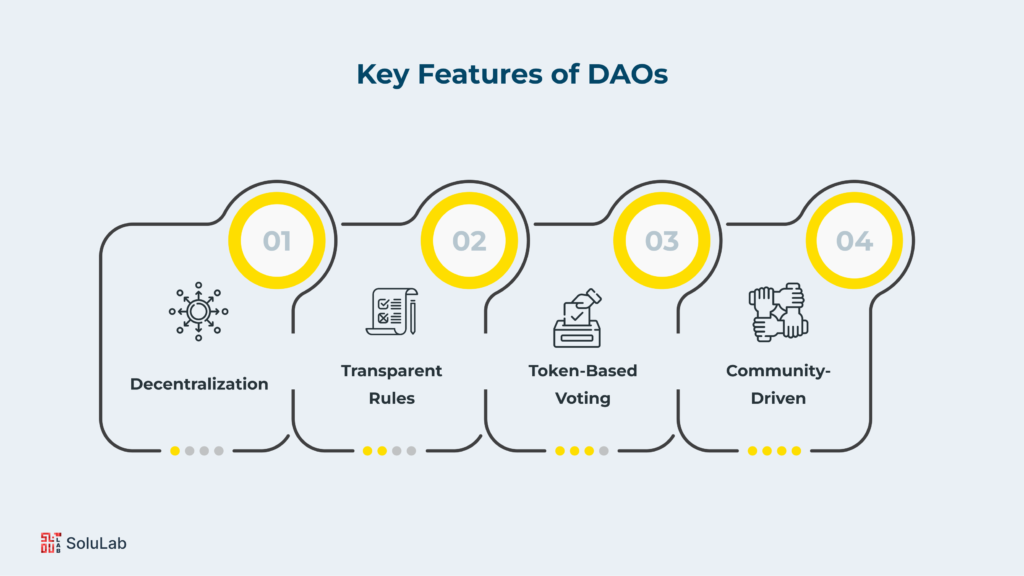
Decentralized Autonomous Organizations (DAOs) are organizations governed by smart contracts and code, rather than a centralized authority. DAOs are characterized by several key features:
  • Decentralization: DAOs operate on blockchain networks, ensuring that decision-making power is distributed among token holders rather than controlled by a single entity.
  • Transparent Rules: The rules and governance processes of DAOs are encoded in smart contracts, making them transparent and immutable.
  • Token-Based Voting: DAOs use tokens to facilitate decision-making. Token holders can participate in governance by voting on proposals using their tokens.
  • Community-Driven: DAOs are often community-driven, where members collectively determine the organization’s direction, policies, and resource allocation.

Before and After DAOs in the Evolution of NFT Platforms

Before and After DAOs in the Evolution of NFT Platforms

The development of NFT (Non-Fungible Token) platforms has undergone a significant transformation due to the emergence of Decentralized Autonomous Organizations (DAOs). In the pre-DAO era, NFT platforms primarily served as centralized marketplaces where users could engage in buying, selling, and trading digital assets represented as NFTs.

During this time, these platforms functioned with a traditional hierarchical structure and relied on central authorities for governance and decision-making.

However, the advent of DAO development introduced substantial changes to NFT platforms and ushered in fresh opportunities. DAOs brought decentralization, autonomy, and community-driven governance to NFT platforms, fundamentally altering their operational dynamics and granting enhanced empowerment to their users.

Here’s a detailed comparison of NFT platforms before and after the integration of DAOs:

Read Also: Top NFT Development Companies To Look At In 2023

  • Governance

Before DAOs, NFT platforms were under the control of a central authority responsible for shaping platform policies, setting fees, and curating assets. With the emergence of DAOs, governance shifted towards community involvement. DAO development platform introduced mechanisms for token holders to participate in decision-making through voting, enabling them to influence platform policies and their evolution.

  • Curation and Discovery 

In the pre-DAO era, NFT platforms predominantly employed centralized methods for curating and showcasing assets, relying on platform administrators or curators to decide which items received prominence. However, DAO-based NFT platforms introduced decentralized curation models that encouraged collective participation in asset curation and discovery. Token holders gained the ability to propose and vote on featured assets, democratizing the curation process.
CTA1

  • Revenue Sharing 

In the absence of DAOs, NFT platforms typically collected fees or commissions from transactions, with the platform itself reaping the financial benefits. With the adoption of DAO development services, a more equitable revenue-sharing model emerged. DAOs enabled the allocation of a portion of the platform’s revenue to token holders, fostering community engagement and providing rewards to contributors.

  • Platform Development 

DAOs introduced a community-driven approach to platform development and enhancement. Instead of relying exclusively on a centralized development team, NFT platforms operating under DAOs could tap into the expertise of community members across various domains. This inclusive approach led to a more diverse and innovative development landscape.

  • Long-term Sustainability 

DAOs opened the door to greater long-term sustainability for NFT platforms. By affording token holders a stake in the platform and involving them in decision-making, the DAO-enabled NFT platform cultivated a heightened sense of ownership and engagement. This, in turn, nurtured a dedicated and vibrant community, contributing to the platform’s growth and enduring success.
Know More: How to Build an NFT Marketplace like Binance?

How Might Users Profit From DAO-enabled NFT Platforms?

How Might Users Profit From DAO-enabled NFT Platforms?

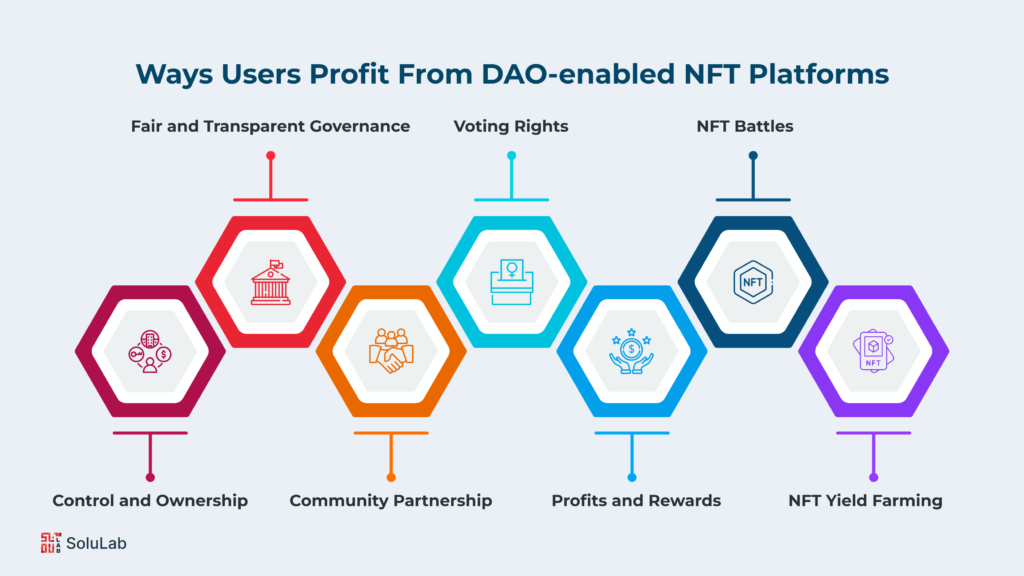
Users who use DAO-enabled NFT platforms get access to a variety of advantages, including more control, involvement, and possible rewards. Users of DAO-enabled NFT platforms can gain from them in the following ways:

  • Control and Ownership 

Users enjoy a higher sense of ownership and power over DAO-enabled NFT systems. They have the ability to take part in active decision-making procedures including voting on platform regulations, governance ideas, and asset curation. Through their participation, users may influence the platform’s growth and direction in accordance with their interests and beliefs.

  • Fair and Transparent Governance 

DAO-based NFT platforms offer decentralized and transparent governance methods. On the blockchain, users have access to and may validate platform operations, transactions, and decision-making procedures. This openness promotes trust and guarantees that choices about governance are made honestly and cooperatively, without the interference of a centralized power.

  • Community Partnership 

NFT systems with DAO support encourage user participation and cooperation. Users may communicate, exchange ideas, and support the expansion of the platform using DAO procedures. New features, alliances, or initiatives can be suggested by community members, and the DAO can decide whether or not to adopt them. 

Read Our Blog Also: An Ultimate Handbook for NFT Creators: Selecting the Best Blockchains for Your NFT Projects

  • Voting Rights 

These platforms differ from normal platforms, which have identical characteristics, in terms of their governance model and management regulations. DAO-enabled NFT platforms rely on member votes to make awards and change the rules and regulations already in place. It makes it possible for any user to take part in decision-making processes and decide on future community policies through decentralized and transparent decision-making.

  • Profits and Rewards

Since gaming-based NFT platforms are cutting-edge and give their users a variety of ways to make money, interest in them keeps growing. Individuals of the NFT platform can suggest possibilities like NFT staking through DAO. By allowing them to access their NFTs and stake into liquidity pools without changing ownership of their NFTs (selling them), NFT staking enables NFT holders to create passive income. We’ll develop more inventive ways to monetize assets over time. Platforms for NFT staking are widely used and have already made it possible for NFT holders to make money using their monetization strategies.

  • NFT Battles

The NFT platform offers its customers the “NFT Battles” functionality via a decentralized application. NFT holders compete with rivals (other NFT holders) by wagering their resources. Others may stake NFT tokens in order to support their chosen NFT and receive returns in NFT tokens and digital assets. 

Have A Look At Our Blog: How is Gaming Contributing to the NFT Industry?

  • NFT Yield Farming 

Users who own both their NFTs and the native token of the site are eligible to engage in yield farming. In order to do this, customers must directly stake their appropriate assets in the platform’s liquidity pools, providing liquidity for the platform and generating incentives. Tokens plus a finite quantity of NFTs make up the awards. However, not every user who stakes their NFTs is eligible to get unusual NFTs as compensation; before staking their NFTs, individuals have to first assess their eligibility.

Challenges and Considerations in the Integration of DAOs in NFT Platforms

The integration of Decentralized Autonomous Organizations (DAOs) in NFT (Non-Fungible Token) platforms offers numerous advantages, but it also presents a set of challenges and considerations that must be carefully addressed. Here are some of the challenges associated with DAOs in NFT platforms:

  • Complex Governance Decision-Making: Achieving consensus among diverse token holders can be challenging, leading to potential gridlock or slow decision-making processes.
  • Sybil Attacks: The risk of Sybil attacks, where malicious entities create multiple fake identities to manipulate voting outcomes, poses a threat to the integrity of DAO-based governance.
  • Regulatory Uncertainty: Navigating the evolving and varied regulatory landscape for DAOs and NFTs across different jurisdictions can be complex and uncertain.

Read Also: BSC NFT Marketplace Development: Everything You Need to Know
  • KYC and AML Compliance: Implementing Know Your Customer (KYC) and Anti-Money Laundering (AML) compliance measures in decentralized DAOs can be difficult while maintaining user privacy.
  • Token-Based Manipulation: Token holders with a significant stake may have disproportionate influence in decision-making, potentially leading to governance centralization.
  • Legal and Taxation Challenges: Legal challenges related to securities laws, taxation, and consumer protection can pose significant hurdles for DAO-operated NFT platforms.
  • Interoperability: Ensuring interoperability between different DAOs and NFT platforms can be challenging, hindering the seamless transfer of assets and governance structures across ecosystems.

Future Trends and Developments in DAOs for NFTs

Future Trends and Developments in DAOs for NFTs

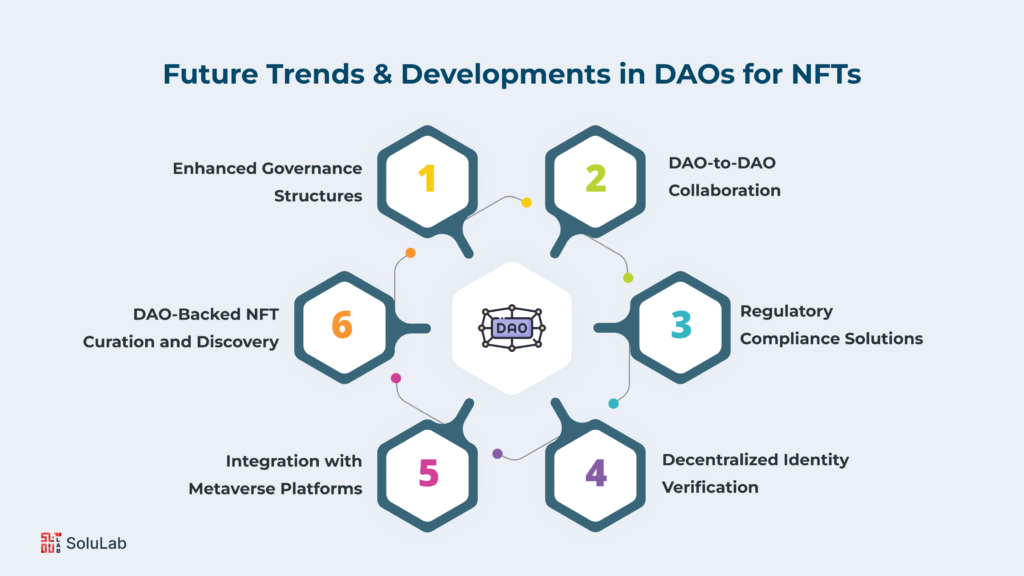
As the integration of Decentralized Autonomous Organizations (DAOs) in the NFT (Non-Fungible Token) space gains momentum, several compelling trends and developments are expected to shape the future of digital ownership and governance. Here’s a glimpse into what we can anticipate:

1. Enhanced Governance Structures

DAOs will evolve to offer more sophisticated governance structures. Multilayered DAOs, where sub-DAOs handle specific aspects of governance, may become more prevalent. This will allow for finer control and specialization in decision-making.

Enhanced governance structures will lead to more efficient and tailored decision-making processes within NFT ecosystems, making them better suited to address complex issues and adapt to the needs of their communities.

Read Blog Also: Why Should You Start Your Own NFT Marketplace Business?

2. DAO-to-DAO Collaboration

We can expect to see increased collaboration between different DAOs within the NFT space. These collaborations may involve shared resources, cross-platform interoperability, and joint initiatives.

DAO-to-DAO collaborations will foster a sense of unity and cooperation within the NFT ecosystem, enabling projects to leverage each other’s strengths, expand their reach, and create new opportunities for NFT holders.

3. Regulatory Compliance Solutions

As regulatory scrutiny of NFTs and DAOs intensifies, there will be a growing demand for compliance solutions tailored to decentralized governance models. Projects will focus on developing tools and frameworks to ensure compliance with evolving regulations.

Regulatory compliance solutions will help NFT platforms and DAOs navigate legal challenges and establish a more secure and compliant environment, potentially reducing legal risks and uncertainties.

4. Decentralized Identity Verification

Decentralized identity verification solutions will emerge to address KYC (Know Your Customer) and AML (Anti-Money Laundering) requirements without compromising user privacy. These solutions will provide a balance between compliance and decentralization.

Decentralized identity verification will enable NFT platforms to meet regulatory obligations while preserving the anonymity and privacy of users, enhancing trust and transparency in DAO-driven ecosystems.

Know More: How to Build an NFT Marketplace on Ethereum Blockchain?

5. Integration with Metaverse Platforms

DAOs in the NFT space will increasingly integrate with metaverse platforms and virtual worlds. NFT ownership and governance will extend to virtual real estate, assets, and experiences within these immersive digital environments.

This integration will create a seamless user experience, allowing NFT holders to have a unified presence and influence across multiple virtual spaces, ultimately blurring the lines between the physical and digital worlds.

6. DAO-Backed NFT Curation and Discovery

DAOs will take a more active role in curating and discovering NFT content. These decentralized curation models will empower token holders to collectively decide which NFTs gain visibility and recognition.

It will democratize the curation process, ensuring that quality NFTs receive recognition based on community consensus rather than centralized decision-makers, fostering diversity and innovation in the NFT ecosystem.
CTA2

Conclusion

In conclusion, the integration of Decentralized Autonomous Organizations (DAOs) into the NFT ecosystem marks a pivotal moment in the evolution of digital ownership and governance. These autonomous structures have revolutionized NFT development platforms and NFT marketplace development services, ushering in a new era of decentralized decision-making, community empowerment, and inclusivity. While challenges such as governance complexities and regulatory considerations persist, the future holds promising trends, including enhanced governance structures, DAO-to-DAO collaborations, and innovative compliance solutions. 

As we navigate the path ahead, it is clear that DAOs will continue to be a driving force, shaping the destiny of NFTs and reaffirming their position as a transformative and sustainable digital asset class. The dynamic synergy between DAOs and NFTs promises a future where digital ownership is not just about possession but active participation, where the community is at the heart of every creation, curation, and decision in the ever-expanding NFT universe.

SoluLab, with its expertise in blockchain technology and NFT development, stands at the forefront of empowering NFT platforms to harness the full potential of DAOs. Our NFT Marketplace Development services and NFT development platform solutions are designed to seamlessly integrate DAO functionality, enhancing governance, security, and user experience. We offer tailored solutions to address the challenges of scalability, regulatory compliance, and smart contract security while staying at the cutting edge of emerging trends in the NFT space. By Partnering with SoluLab, you can navigate the evolving landscape of NFTs and DAOs with confidence, unlocking new possibilities for decentralized digital ownership and community-driven success.

FAQs

1. What is the role of DAOs in NFT platforms, and how do they differ from traditional governance structures?

DAOs (Decentralized Autonomous Organizations) play a pivotal role in NFT ecosystems by shifting decision-making power from central authorities to token holders. They enable community-driven governance, granting users a direct say in platform policies and development, unlike traditional hierarchical structures.

2. How do DAOs benefit NFT creators and collectors in terms of revenue sharing and long-term sustainability?

DAOs offer a fair revenue-sharing model, automatically distributing royalties to creators on secondary sales. This incentivizes creators and fosters long-term sustainability by creating a committed and engaged community that contributes to platform growth.

3. What are the key challenges and considerations associated with implementing DAOs in NFT platforms, especially concerning governance complexities and regulatory aspects?

Challenges include achieving consensus in diverse communities, the risk of Sybil attacks, and navigating complex regulatory landscapes. To address these challenges, clear governance frameworks, identity verification mechanisms, and legal expertise are essential.

4. What trends can we expect to see in the future of DAOs in the NFT space, and how will they impact digital ownership?

The future of DAOs in the NFT space includes enhanced governance structures, DAO-to-DAO collaborations, regulatory compliance solutions, decentralized identity verification, integration with metaverse platforms, and DAO-driven curation. These trends will democratize digital ownership and foster innovation.

5. How can SoluLab assist in harnessing the benefits of DAOs for NFT platforms and what services does it offer in this regard?

SoluLab, with its blockchain and NFT development expertise, offers tailored solutions to seamlessly integrate DAO functionality into NFT platforms. Services include scalability enhancements, regulatory compliance solutions, smart contract security, and staying updated on emerging trends in the NFT space, ensuring a robust and future-ready ecosystem.

The Future of NFT Marketplaces: Trends and Innovations

The Future of NFT Marketplaces: Trends and Innovations

Non-fungible tokens (NFTs) have completely revolutionized the financial industry. These unique digital assets have disrupted traditional notions of ownership and opened up exciting possibilities for creators and collectors alike. Central to the NFT ecosystem are NFT marketplaces, where these digital treasures are bought, sold, and showcased. In this blog, we will delve into the current landscape and the future possibilities of NFT marketplaces. From marketplace development and emerging trends to innovations and the role of NFT developers, we’ll navigate the ever-evolving world of NFTs.

To comprehend the future, we must first grasp the present. NFT marketplaces are the epicenter of the NFT universe, providing the platform for creators to mint, display, and sell their digital assets. At their core, NFT marketplaces are where unique digital tokens meet eager collectors.

What are NFTs and How Do They Work?

NFTs are cryptographic tokens that represent ownership of a specific digital or physical item, typically hosted on a blockchain. Unlike cryptocurrencies like Bitcoin or Ethereum, NFTs are not interchangeable with one another; each NFT has a distinct value and identity.

The process of creating and owning NFTs involves minting, where a digital asset is tokenized, and ownership is recorded on the blockchain. NFTs are typically bought and sold on NFT marketplaces, with each token carrying a unique digital signature to prove its authenticity.

Read Also: Why Should You Start Your Own NFT Marketplace Business?

Role of NFT Marketplaces in NFT Transactions

NFT marketplaces are critical components of the NFT ecosystem. They provide a platform for artists, musicians, gamers, and other content creators to tokenize their work and make it available to a global audience. The marketplace acts as an intermediary that facilitates transactions and ensures the security and authenticity of NFTs.

Key Players in the NFT Marketplace Industry

Key Players in the NFT Marketplace Industry

Several NFT marketplaces have emerged as leaders in the industry, each with its unique features and specialties. OpenSea, Rarible, and SuperRare are some of the most prominent names in the space. These marketplaces cater to different niches, from digital art to virtual real estate, offering creators and collectors a variety of options.

Before we delve into the future, it’s essential to understand the current state of NFT marketplaces. The landscape has evolved rapidly, with market capitalization, trading volumes, and notable sales reaching unprecedented heights.

  • OpenSea: As one of the largest and most well-known NFT marketplaces, OpenSea offers a wide range of digital assets, including art, music, virtual real estate, and more. It has gained immense popularity for its user-friendly interface and extensive collection.
  • Rarible: Rarible stands out for its focus on decentralization. It allows users to create and manage their NFTs without centralized control. This marketplace empowers creators and collectors alike.
  • SuperRare: SuperRare specializes in digital art NFTs. It has become a go-to platform for artists to showcase and sell their unique creations, often fetching high prices in the market.

CTA1

Market Capitalization and Trading Volumes

The NFT marketplace sector has witnessed exponential growth in market capitalization, reflecting the cumulative value of all NFTs in existence. The figures have soared into the billions, underscoring the economic significance of NFTs.

Trading volumes in NFT marketplaces have surged, mirroring the heightened interest and participation of collectors and investors. Transactions range from modest sums to astronomical amounts, emphasizing the market’s diversity and potential.

Know More: Top NFT Development Companies To Look At In 2023

Notable NFT Sales and Records

1. NFTs have garnered global attention thanks to record-breaking sales. These remarkable transactions highlight the multifaceted nature of NFTs:

2. ”Everyday: The First 5000 Days” by Beeple sold for a whopping $69 million, launching NFT art into the mainstream art scene.

NBA Top Shot, an officially licensed NFT marketplace platform for basketball highlights, has seen individual video clips sold for hundreds of thousands of dollars, signaling NFTs’ potential to disrupt sports memorabilia markets.

The Process of Building an NFT Marketplace

The Process of Building an NFT Marketplace

The rise of NFT marketplaces has led to a growing interest in NFT marketplace development. Entrepreneurs and businesses are eager to create their NFT marketplace to tap into the expanding market. Creating an NFT marketplace entails many critical steps:

  • Conceptualization: Define your marketplace’s niche, target audience, and unique selling points.
  • Technical Development: Engage a skilled development team to create the platform, ensuring security and scalability.
  • Smart Contract Development: Smart contracts are the backbone of NFTs; they manage minting, ownership, and transactions securely.
  • User Interface (UI) and User Experience (UX): A user-friendly interface is crucial to attract and retain users.
  • Blockchain Integration: Choose a suitable blockchain (Ethereum, Binance Smart Chain, Flow, etc.) for your marketplace.
  • Testing and Security Audits: Thoroughly test the platform and conduct security audits to identify vulnerabilities.
  • Launch and Marketing: After rigorous testing, launch your marketplace and implement marketing strategies to attract users.

Watch Out: NFT Art for Beginners – How to Make and Sell

Benefits of Creating Your NFT Marketplace

Establishing your NFT marketplace offers several advantages that can be lucrative and strategically advantageous in the fast-growing NFT ecosystem. Here are some of the key benefits of creating your NFT marketplace:

  • Revenue Generation: Transaction fees generate revenue, ensuring a sustainable business model.
  • Control and Customization: You have full control over the platform’s features and design.
  • Niche Focus: Tailoring the marketplace to specific niches or industries can attract passionate and engaged users.

Recent Trends Shaping the NFT Marketplace Ecosystem

Recent Trends Shaping the NFT Marketplace Ecosystem

As NFTs continue to capture the world’s attention, several trends are shaping the NFT marketplace landscape. These trends reflect the evolving interests and demands of creators and collectors.

  • NFTs in Gaming: NFTs have entered the gaming arena, revolutionizing in-game asset ownership. Games like Axie Infinity and Decentraland have harnessed the potential of NFTs, allowing players to own, trade, and monetize in-game assets.
  • Virtual Real Estate: Virtual real estate marketplaces have emerged, providing users with the opportunity to buy, sell, and develop digital properties. These virtual worlds offer a novel investment avenue and a canvas for digital architects.
  • NFT Music and Audio: Musicians and audio creators have embraced NFTs to sell music, concert tickets, and even unique audio clips. This trend has unlocked new avenues for artists to monetize their creations and engage with fans.
  • NFT Fashion: The fashion industry has ventured into the NFT space, offering virtual fashion items and wearables. This convergence of fashion and technology introduces digital couture to the digital realm.
  • Social Tokens: Creators are issuing social tokens, granting ownership of their personal brand. This enables fans to invest in their favorite influencers, bridging the gap between creators and their communities.

Read Also: How will White-Label NFT Marketplace Development Benefit your Business?

Cutting-edge Technologies Transforming NFT Platforms

The world of Non-Fungible Tokens (NFTs) is constantly evolving, driven by innovative technologies that aim to enhance the functionality, accessibility, and sustainability of NFT platforms. These cutting-edge technologies are at the forefront of transforming the NFT landscape, making it more efficient, scalable, and interconnected.

  • Layer 2 Solutions: Layer 2 scaling solutions like Immutable X and Optimism are addressing high gas fees and slow transaction times on the Ethereum network.
  • Cross-Chain Compatibility: NFTs are becoming cross-chain, allowing assets to move seamlessly between different blockchain networks.
  • Interoperability: Efforts are underway to enable interoperability between different NFT platforms, increasing liquidity and options for users.

Unique Features and Functionalities in Innovative NFT Marketplaces

Unique Features and Functionalities in Innovative NFT Marketplaces

Innovative NFT marketplaces are introducing novel features that are redefining how we perceive and interact with digital assets. These groundbreaking functionalities not only enhance the user experience but also open up new possibilities for creators, collectors, and investors in the ever-evolving world of NFTs.

  • Fractional Ownership: Fractional ownership is democratizing NFT ownership. High-value assets can be divided into smaller shares, making them accessible to a broader audience. This trend aligns with the concept of shared ownership, enabling more people to participate in NFT markets.

Read Also: What are some White-Label NFT Marketplace Solutions?

  • NFT Derivatives: NFT derivatives, including futures and options, are emerging as tools for speculating on NFT prices. These financial instruments add depth to the NFT market, allowing users to hedge their NFT investments.
  • Dynamic NFTs: Some NFTs incorporate dynamic elements, evolving over time or responding to external stimuli. These dynamic NFTs add an interactive dimension to ownership, fostering engagement and uniqueness.

The Future of NFT Marketplaces

The trajectory of NFT marketplaces points toward continued growth, innovation, and integration into everyday life. As we delve into the future of NFTs and their associated marketplaces, it becomes increasingly evident that these unique digital assets are not just a passing trend but a transformative force that will shape various aspects of our digital and potentially physical existence.

  • Mainstream Adoption: NFTs and NFT marketplaces are likely to become more accessible to mainstream users, with simpler user interfaces and lower barriers to entry.
  • Increased Regulation: As the NFT market matures, regulatory bodies may introduce guidelines to ensure consumer protection and tax compliance.
  • Cultural Impact: NFTs will continue to influence culture, from digital art trends to the concept of digital ownership.

Read Our Blog: Solana NFT Marketplace: How to build your own NFT Marketplace on Solana

Regulatory Considerations and Challenges

In the realm of Non-Fungible Tokens (NFTs), regulatory considerations and challenges loom large, encompassing a spectrum of legal, financial, and ethical complexities. Chief among these is the intricate web of copyright and intellectual property concerns. As artists, musicians, and creators tokenize their digital works as NFTs, issues of ownership, licensing, and potential copyright infringement surface. 

Establishing explicit licensing terms and mechanisms within NFT smart contracts becomes imperative to safeguard creators’ intellectual property rights and preempt disputes. 

Equally pressing are the concerns surrounding fraud and scams within the NFT ecosystem. The nascent nature of this space renders it susceptible to fraudulent activities, including counterfeit NFT sales, phishing schemes, and unauthorized auctions. 

Combatting these threats necessitates robust verification and authentication protocols to confirm the legitimacy of NFTs and their associated metadata, coupled with user education efforts to bolster security awareness. Moreover, environmental considerations have taken center stage as NFTs, particularly those built on energy-intensive blockchain networks like Ethereum employing Proof of Work (PoW), have faced scrutiny for their substantial carbon footprint. 

CTA2

Conclusion

In conclusion, the realm of Non-Fungible Tokens (NFTs) and their marketplaces has evolved into an exciting and transformative domain. Our journey through this extensive exploration of NFT marketplaces has illuminated the present landscape and provided glimpses into the future possibilities that lie ahead.

NFT marketplaces serve as the epicenter where unique digital tokens meet eager collectors, offering a platform for creators to mint, showcase, and sell their digital assets. Understanding the core principles of NFTs, the role of NFT marketplaces, and the current leaders in the industry sets the stage for what’s to come.

In this ever-evolving landscape, SoluLab stands as a beacon of expertise and innovation. With a deep understanding of NFT marketplace trends and innovations, their trends, and the transformative potential they hold, SoluLab offers NFT marketplace development services and solutions that empower businesses to embark on their NFT journey.

Whether you aim to create your NFT marketplace, explore NFT development, or simply stay updated with the latest trends and innovations in the NFT space, SoluLab is your trusted partner. Our commitment to excellence and innovation positions us as a leader in the NFT development landscape.

As we conclude this exploration of NFT marketplaces, we invite you to embrace the future with open arms. The world of NFTs is teeming with opportunities, waiting for creators, collectors, and innovators like you to shape it. Together, we’ll navigate the evolving trends, harness the power of NFTs, and pave the way for the future of digital ownership.

Seeking top-notch NFT developers skilled in cryptocurrency and blockchain development? Your search ends here! Our experienced NFT programmers deliver premium solutions, from blockchain tech to smart contracts, streamlining your processes. Our user-friendly, advanced platform development, along with secure digital wallets, tailored to your business, ensures a seamless experience. Contact SoluLab today for expert NFT solutions.

FAQs

1. What is the role of NFT marketplaces in the world of NFTs?

NFT marketplaces serve as digital platforms where creators can tokenize their digital assets, and collectors can buy, sell, and trade NFTs. They facilitate transactions, ensure the security of NFTs, and provide a marketplace for the exchange of digital ownership.

2. How do NFT marketplaces generate revenue?

NFT marketplaces typically generate revenue through transaction fees. When users buy or sell NFTs on these platforms, a percentage of the transaction value is collected as a fee. This fee can vary from one marketplace to another.

3. What are some emerging trends in NFT marketplaces?

Emerging trends in NFT marketplaces include the integration of NFTs into gaming, the rise of virtual real estate marketplaces, NFTs for music and audio content, the use of NFTs in the fashion industry, and the issuance of social tokens. Additionally, cross-chain compatibility and Layer 2 solutions are addressing scalability issues.

4. Are there opportunities for businesses to create their NFT marketplaces?

Yes, businesses can create their NFT marketplaces to tap into the growing NFT market. The process involves conceptualization, technical development, smart contract development, UI/UX design, blockchain integration, testing, security audits, and marketing. Many development firms offer specialized NFT marketplace development services.

5. How are NFT marketplaces contributing to the cultural impact of NFTs?

NFT marketplaces are playing a significant role in the cultural impact of NFTs by providing a platform for artists, musicians, and creators to reach global audiences. They are reshaping how digital art and collectibles are created, valued, and traded, influencing trends in the digital art world.

6. What are some challenges and regulatory considerations in the NFT marketplace space?

Challenges in the NFT marketplace space include copyright issues, concerns over fraud and scams, and environmental considerations related to the energy consumption of certain blockchain networks. Regulatory bodies are beginning to explore guidelines to ensure consumer protection and tax compliance.
