Talk to an Expert

Exploring How Non-Fungible Tokens (NFTs) are Changing the Landscape

Exploring How Non-Fungible Tokens (NFTs) are Changing the Landscape

In the dynamic realm of the digital economy, the advent of Non-Fungible Tokens (NFTs) has proven to be nothing short of revolutionary. These unique cryptographic tokens, built on the foundation of blockchain technology, are reshaping the landscape of digital ownership and creative expression. At the core of this transformative journey are Smart Contracts, the ingenious self-executing contracts encoded with predefined rules that underpin NFT development. NFTs represent a paradigm shift in the way we perceive and interact with digital assets. Unlike traditional cryptocurrencies such as Bitcoin or Ethereum, NFTs are indivisible and irreplaceable, each possessing a distinctive value and uniqueness. This uniqueness is ensured through the application of Smart Contracts, which imbue NFTs with verifiable authenticity, scarcity, and ownership.

Central to the concept of NFTs is the application of Smart Contracts, which act as the building blocks for the creation and management of these digital assets. Smart Contracts facilitate trustless and transparent transactions, automating the minting, transfer, and ownership processes of NFTs. Through the integration of Smart Contracts, NFTs redefine digital ownership, guaranteeing the rightful attribution and transfer of assets in a secure and decentralized manner. The applications of NFTs span a diverse spectrum, transcending traditional boundaries and finding resonance across various industries. From the world of digital art, real estate, and intellectual property to the realms of gaming and entertainment, NFTs are catalyzing new possibilities for creators, investors, and enthusiasts alike.

Gaming experiences have undergone a metamorphosis with the integration of NFTs. In-game assets, characters, and virtual items are now tokenized, enabling players to truly own and trade their digital possessions. The intersection of NFTs and gaming has given rise to play-to-earn models, revolutionizing the dynamics of virtual economies. The emergence of NFT marketplaces has provided a digital arena for creators to showcase, auction, and sell their NFTs. These platforms operate on blockchain technology, employing Smart Contracts to ensure secure, transparent, and efficient transactions. NFT marketplaces serve as vibrant ecosystems, connecting creators with a global audience of collectors and investors.

Digital wallets play a pivotal role in the NFT ecosystem, serving as secure repositories for these digital treasures. Ensuring the safe storage and seamless transfer of NFTs, digital wallets empower users to engage in the burgeoning world of digital art, gaming, and collectibles with confidence For artists, NFTs represent a groundbreaking avenue to tokenize and monetize their digital creations. The tokenization of digital art not only ensures provenance and authenticity but also opens up new revenue streams through the automated enforcement of royalties via Smart Contracts. As we embark on this exploration of NFTs, Smart Contracts, and their multifaceted applications, we delve into the ever-evolving landscape of digital ownership and creative expression. Join us in uncovering the intricacies of NFT development, the innovative use cases that are reshaping industries, and the role of Smart Contracts in fostering a decentralized and transparent future. This journey promises to unravel the boundless potential of NFTs, transcending the digital realm and leaving an indelible mark on the way we create, exchange, and value digital assets.

What are NFTs?

Embark on a journey to demystify the essence of Non-Fungible Tokens. Discover how NFTs, with their uniqueness and indivisibility, redefine digital ownership, carving out a space for authenticated and scarce digital assets.

  • Unveiling the Concept of Non-Fungible Tokens

Non-Fungible Tokens (NFTs) represent a revolutionary shift in the digital paradigm, providing a unique form of digital ownership. Unlike traditional cryptocurrencies, each NFT is distinct, representing ownership of specific digital or physical items and introducing a new era of digital scarcity and authenticity.

  • Evolution and Adoption of NFTs in the Digital Era

The journey of NFTs started on the Ethereum blockchain and has since evolved into a global phenomenon. NFTs have transcended their initial roots, finding applications in art, gaming, real estate, and more. The widespread adoption speaks to the transformative potential of NFTs in reshaping various industries.

  • Significance of Smart Contracts in NFT Development

At the heart of NFTs lies the ingenious technology of smart contracts. These self-executing contracts, encoded with predefined rules, automate various aspects of NFT transactions, ensuring transparency, security, and efficiency in the complex world of digital ownership.

Smart Contracts in NFT Development

Delve into the core of NFT creation with Smart Contracts. Uncover the functionalities that these self-executing contracts bring to NFT development, ensuring secure, transparent, and automated processes.

  • Understanding the Role of Smart Contracts

Smart contracts form the backbone of NFT development, governing the entire lifecycle of an NFT. From the initial minting process to the transfer of ownership, smart contracts ensure the seamless execution of predefined rules, providing a trustless and efficient way to manage digital assets.
CTA1

  • How Smart Contracts Ensure NFT Authenticity

Smart contracts play a crucial role in ensuring the authenticity of NFTs. By embedding unique attributes and details directly into the NFT’s code, smart contracts prevent duplication and fraud. This not only enhances the collectible value of digital assets but also establishes a verifiable provenance.

  • Smart Contract Innovations in NFTs

Ongoing innovations in smart contract technology are expanding the capabilities of NFTs. Features like programmable royalties, which reward creators for secondary sales, and dynamic attributes that can change over time showcase the adaptability and versatility of smart contracts in the NFT ecosystem.
Use Cases of NFTs

Use Cases of NFTs

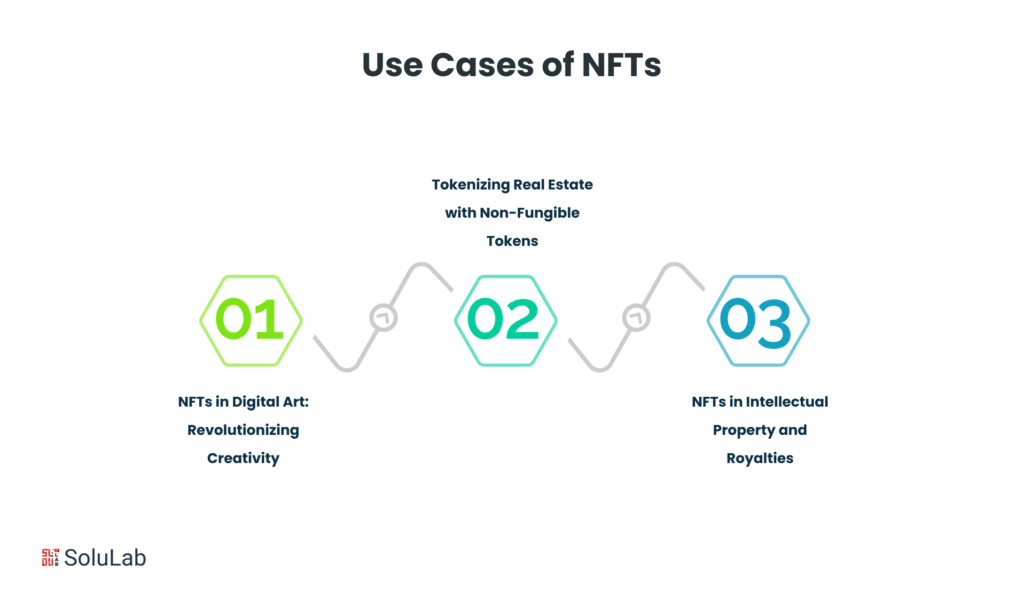
Explore the myriad applications of NFTs that transcend traditional boundaries. From real estate to intellectual property, NFTs are catalyzing innovation and reshaping the dynamics of ownership in various industries.

  • NFTs in Digital Art: Revolutionizing Creativity

NFTs have ushered in a new era for digital artists, providing a decentralized platform to tokenize and sell their work. Each NFT represents a unique piece of art, allowing creators to retain ownership, receive royalties, and connect directly with a global audience.

  • Tokenizing Real Estate with Non-Fungible Tokens

The real estate industry is experiencing a transformative wave with the integration of NFTs. These tokens facilitate fractional ownership, streamline transactions, and enhance transparency, offering investors a novel way to engage with real estate assets on blockchain platforms.

  • NFTs in Intellectual Property and Royalties

Beyond visual art, NFTs extend to intellectual property, including patents, trademarks, and copyrights. Creators can tokenize their intellectual assets, embedding royalty structures into smart contracts to ensure fair compensation for their work, whether it’s transferred or licensed.

Applications of NFTs

Unleash the potential of NFTs as we explore their applications across diverse sectors. Witness how these tokens are transcending traditional limitations, offering a new paradigm for creators, investors, and collectors.

NFTs in Gaming: Transforming the Gaming Industry

The gaming industry is undergoing a monumental transformation with the integration of NFTs. In-game assets, characters, and skins can now be tokenized, allowing players to truly own and trade their digital possessions across different gaming platforms. This introduces a new era of player-driven economies and ownership.

Tokenizing Collectibles: From Trading Cards to Virtual Items

NFTs are revolutionizing the concept of collectibles by digitizing traditional items such as trading cards, stamps, and memorabilia. These digital collectibles can be bought, sold, and traded globally, fostering a vibrant online marketplace that transcends geographical boundaries.

NFTs in the Music Industry: Ownership and Royalties

Musicians and artists are leveraging NFTs to redefine the music industry. Through tokenization, artists can grant fans ownership of exclusive tracks, concert tickets, and merchandise. Smart contracts automate royalty distributions, ensuring fair compensation for creators with every transaction.
NFTs in Gaming

NFTs in Gaming

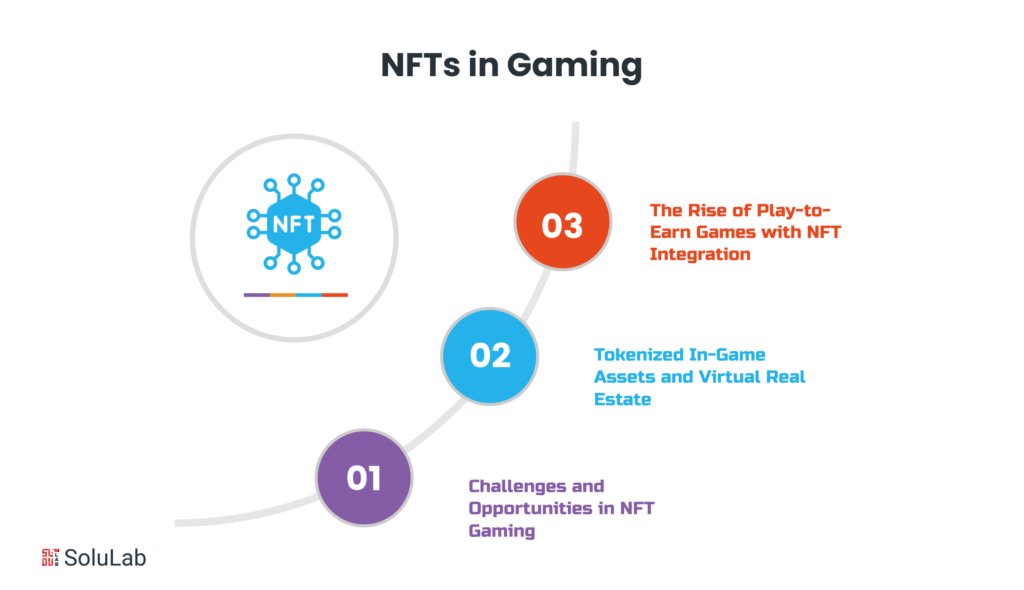
Step into the virtual realms where NFTs are revolutionizing gaming experiences. Dive into the world of play-to-earn models, tokenized in-game assets, and the transformative impact of NFTs on the gaming industry.

  • The Rise of Play-to-Earn Games with NFT Integration

Play-to-earn games represent a groundbreaking concept where players can earn real value through in-game activities. NFTs play a crucial role by facilitating true ownership of in-game assets, creating economic opportunities for players and disrupting traditional gaming models.

  • Tokenized In-Game Assets and Virtual Real Estate

NFTs empower gamers to truly own their in-game assets, whether it’s powerful weapons, unique skins, or rare characters. Virtual real estate markets are emerging, allowing players to buy, sell, and develop digital properties within the gaming universe. This not only enhances the gaming experience but also opens up new revenue streams for players.

  • Challenges and Opportunities in NFT Gaming

While the integration of NFTs in gaming presents exciting possibilities, it comes with its set of challenges. Scalability, interoperability, and environmental concerns are among the issues that need to be addressed for the gaming industry to fully realize the potential of NFTs. Overcoming these challenges will unlock new opportunities and shape the future of gaming.

NFT Marketplaces

Embark on a tour of digital marketplaces dedicated to NFTs. Explore how these decentralized platforms serve as hubs for creators, collectors, and investors, fostering a global exchange of digital assets.

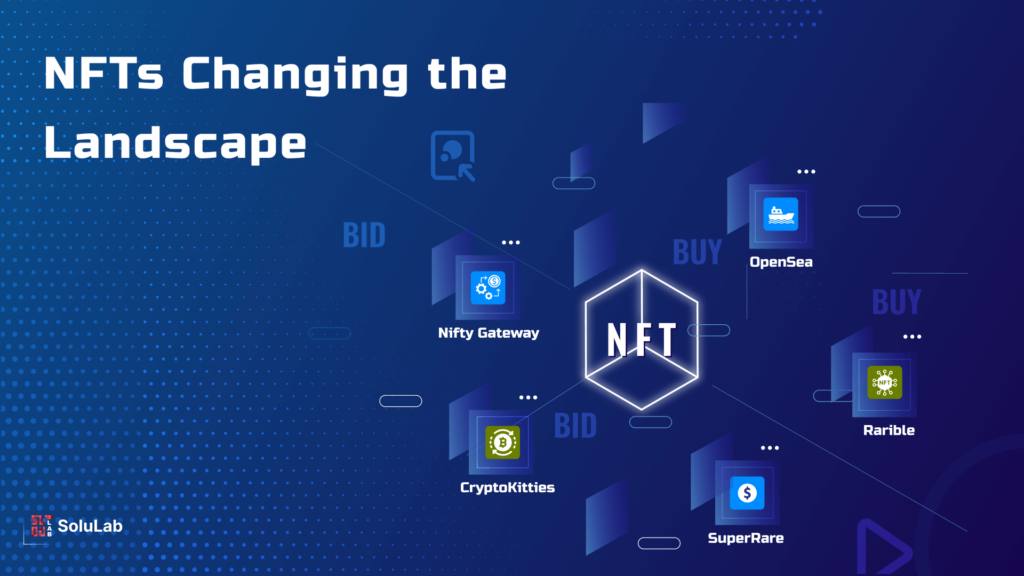
  • Overview of Leading NFT Marketplaces

NFT marketplaces have become the focal point for creators and collectors to engage in the buying, selling, and trading of NFTs. Each marketplace has its unique features, community dynamics, and focus, contributing to the vibrant and diverse NFT ecosystem.

  • How NFT Marketplaces Operate?

NFT marketplaces operate on blockchain technology, providing a decentralized environment for users to list, discover, and transact NFTs. These platforms offer a user-friendly interface, smart contract integration, and secure digital wallets, creating a seamless experience for participants in the NFT marketplace.

  • Emerging Trends in NFT Marketplace Development

The NFT marketplace landscape is dynamic, with constant innovations and trends shaping its evolution. From curated drops and social token integration to environmental sustainability initiatives, NFT marketplaces are adapting to meet user expectations and address broader industry challenges.
NFT Marketplace Platforms

NFT Marketplace Platforms

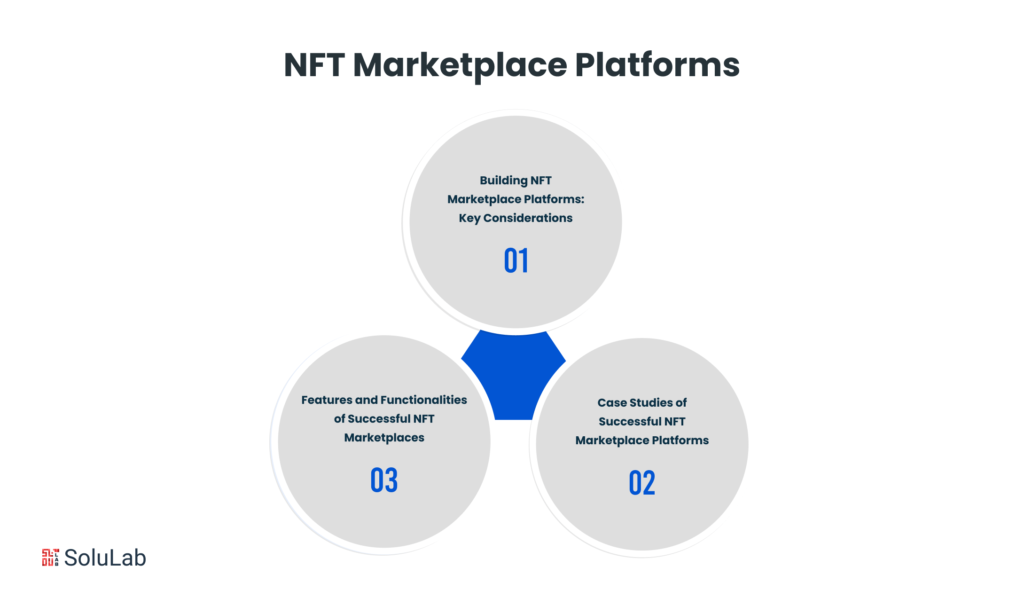
Discover the platforms that facilitate the buying, selling, and auctioning of NFTs. Witness how these marketplace platforms leverage blockchain technology and Smart Contracts to ensure secure and transparent transactions.

  • Building NFT Marketplace Platforms: Key Considerations

Entrepreneurs and developers looking to enter the NFT marketplace space must consider various factors. Blockchain compatibility, smart contract functionality, user experience design, and community-building features are critical considerations for successful NFT marketplace platforms.

  • Features and Functionalities of Successful NFT Marketplaces

Successful NFT marketplaces prioritize features such as gas-free transactions, curation tools, social engagement features, and integration with decentralized finance (DeFi) protocols. These functionalities enhance the overall user experience, foster community engagement, and contribute to the growth of the NFT marketplace ecosystem.

  • Case Studies of Successful NFT Marketplace Platforms

Examining case studies of successful NFT marketplaces provides valuable insights into their strategies, challenges, and growth trajectories. Platforms like OpenSea, Rarible, and Mintable have paved the way for innovative marketplace development, setting benchmarks for others in the rapidly evolving NFT space.

Digital Wallets for NFT

Navigate the digital landscape where digital wallets play a crucial role in safeguarding NFTs. Learn how these wallets ensure secure storage and seamless transfer of digital treasures, empowering users to engage confidently in the NFT ecosystem.

  • The Role of Digital Wallets in NFT Transactions

Digital wallets play a pivotal role in the NFT ecosystem, serving as secure storage for NFTs and facilitating interactions with blockchain networks. The choice of a digital wallet influences the user experience, security, and accessibility of NFTs.

  • Security Measures for NFT Wallets

Security is paramount in the NFT space, and digital wallets must implement robust measures to protect users’ private keys and assets. Multisignature authentication, biometric verification, and hardware wallet integrations enhance the security of digital wallets, instilling confidence in users.

  • Integration of Decentralized Identity (DID) in NFT Wallets

The integration of decentralized identity (DID) solutions in NFT wallets adds an extra layer of privacy and security. Users gain greater control over their personal information, contributing to the overall trustworthiness of the NFT ecosystem.

NFTs in Art

Immerse yourself in the intersection of NFTs and the art world. Witness the transformation of creativity and ownership as artists tokenize their digital creations, ushering in new possibilities for artistic expression and monetization.

  • NFTs as a Transformative Force in the Art World

NFTs have disrupted traditional art markets, empowering digital artists with new opportunities. Through NFTs, artists can tokenize their creations, ensuring provenance, direct engagement with buyers, and the potential for ongoing revenue through royalties.

  • NFT Art Collections and Virtual Exhibitions

NFTs enable the creation of digital art collections, allowing collectors to curate and showcase their acquisitions. Virtual exhibitions hosted on blockchain platforms provide a novel way for artists and collectors to engage with a global audience.

  • Challenges and Opportunities in NFTs for Art

While NFTs offer unprecedented opportunities for artists, challenges such as environmental concerns and market saturation need careful consideration. The art world is navigating these challenges, seeking sustainable solutions to ensure the long-term viability of NFTs in the realm of digital art. As we navigate the boundless expanse of the digital realm, the symphony of Non-Fungible Tokens (NFTs) and Smart Contracts resonates with innovation, redefining the very fabric of ownership and creativity. What began as a technological breakthrough has burgeoned into a cultural phenomenon, leaving an indelible mark across diverse sectors. At the forefront of this paradigm shift is the concept of NFTs—unique, indivisible tokens that imbue digital assets with authenticity and scarcity. Our exploration into “What are NFTs?” has revealed their transformative potential, shifting the narrative from the tangible to the digital. 
CTA2

Conclusion

In conclusion, the world of Non-Fungible Tokens (NFTs) has ushered in a paradigm shift in digital ownership and creative expression. Exploring the profound impact of NFTs, we delved into the core concepts such as what NFTs are, the integral role of Smart Contracts in their development, diverse use cases spanning industries, and their applications in gaming, art, and beyond.

As NFTs continue to reshape the digital landscape, SoluLab stands at the forefront of this transformative wave. Our expertise in Smart Contracts and comprehensive understanding of NFT ecosystems position us as the ideal partner for those venturing into this dynamic space. Whether you are an artist seeking to tokenize your creations, a gamer exploring the possibilities of NFTs in virtual worlds, or an enthusiast navigating the NFT marketplace platforms, SoluLab provides tailored solutions.

From conceptualizing and deploying Smart Contracts for NFT development to facilitating secure transactions through digital wallets, SoluLab empowers individuals and businesses to leverage the full potential of NFTs. As we witness the applications of NFTs evolving across various industries, SoluLab remains committed to driving innovation, providing cutting-edge solutions, and being the catalyst for your success in the NFT arena. Embrace the future of digital ownership with SoluLab – your trusted partner in NFT innovation.

FAQs

1. What exactly are NFTs, and how do they work?

NFTs, or Non-Fungible Tokens, represent unique digital assets using blockchain technology. They are indivisible and cannot be exchanged on a one-to-one basis, unlike cryptocurrencies.

2. How are Smart Contracts involved in NFT development?

Smart Contracts, self-executing agreements with coded terms, underpin NFT functionality. They automate processes like ownership transfers and royalties, enhancing transparency and security.

3. What are some practical applications of NFTs?

NFTs find applications in various fields, from real estate and intellectual property to digital art and collectibles, transforming ownership and enabling new business models.

4. Can NFTs be used in the gaming industry?

Absolutely. NFTs in gaming introduce play-to-earn models, allowing players to truly own in-game assets and fostering a decentralized gaming economy.

5. Tell us about NFT marketplaces and platforms.

NFT marketplaces are online platforms where users can buy, sell, and trade NFTs securely. They serve as hubs for digital creators, collectors, and enthusiasts.

6. How do digital wallets play a role in NFT transactions?

Digital wallets are crucial for NFT enthusiasts, providing a secure space to store, manage, and trade their digital assets. They act as a bridge between users and the NFT ecosystem.

7. In what ways are NFTs making an impact in the art world?

NFTs have revolutionized the art industry, enabling artists to tokenize their work, gain exposure, and earn royalties. This digital transformation brings new possibilities and challenges to the art market.

How Non-Fungible Tokens Are Changing the Digital World?

How Non-Fungible Tokens Are Changing the Digital World?

In recent years, the digital landscape has witnessed a transformation that has left the world in awe. A new wave of innovation and disruption has swept through the realms of art, entertainment, real estate, and more, reshaping the way we perceive and interact with the digital world. Non-Fungible Tokens (NFTs), heralded as the future of digital ownership and representation, have played an instrumental role in this paradigm shift. NFTs have transcended the boundaries of traditional digital assets and have introduced a concept that is poised to redefine the very essence of ownership, authenticity, and value in the virtual realm. This phenomenon is not merely a passing trend but a substantial force that is rewriting the rules of the digital world. In this blog, we will explore how Non-Fungible Tokens are leaving an indelible mark on the digital landscape, ushering in a new era of possibilities and reshaping the way we perceive, create, and trade in the digital space.

Understanding NFTs

The advent of Non-Fungible Tokens (NFTs) has brought about a transformative shift in the digital world. To grasp the full extent of their impact on the digital realm, it is essential to delve into the fundamentals of NFTs, understanding what makes them unique, how they are created, and the implications for ownership and authenticity.

A. What Makes an NFT Unique?

NFTs derive their uniqueness from their cryptographic properties and the underlying blockchain technology. Unlike traditional digital assets, NFTs are indivisible, irreplaceable, and cannot be exchanged on a one-to-one basis. Each NFT is a distinct entity with a specific digital signature, making it impossible to forge or replicate. This uniqueness is at the core of NFTs’ value proposition in the digital world.

The impact of NFTs on the digital world is profound in the way they confer ownership and authenticity to digital content. Artists, creators, and even individuals can mint NFTs to represent digital art, music, videos, and virtual assets, establishing a sense of ownership that was previously elusive in the digital realm.

B. How are NFTs Created?

The process of creating NFTs is a testament to the revolutionary power of blockchain technology. NFTs are generated through a process called minting, which involves registering a digital asset on a blockchain. This process creates a unique token associated with the asset, effectively transforming it into an NFT.

The ownership and provenance of NFTs are stored securely on the blockchain, providing a transparent and immutable record of transactions. As a result, the creation and transfer of NFTs are not only secure but also entirely transparent, enhancing trust and authenticity in the digital world.

C. Ownership and Authenticity in the Digital Realm

The impact of NFTs on the digital world extends to the concepts of ownership and authenticity. Prior to NFTs, establishing ownership and proving the authenticity of digital assets were significant challenges. NFTs provide a solution to these issues by allowing creators and buyers to assert ownership with confidence.

Ownership of NFTs is cryptographically verified and recorded on the blockchain, eliminating doubts about the legitimacy of ownership claims. This has profound implications for artists, creators, and collectors, who can now monetize their digital works with a sense of security that was previously unattainable.

In essence, NFT in the digital world has transformed by introducing a novel, secure, and transparent method of asserting ownership and authenticity for a wide range of digital assets. This newfound assurance has opened up exciting possibilities for creators, collectors, and investors, reshaping the way we interact with and perceive the value of digital content.

CTA1

NFTs in Art and Creativity

The world of art and creativity has been profoundly impacted by the emergence of Non-Fungible Tokens (NFTs). Here, we explore how NFTs have revolutionized this space, serving as a game-changer for digital artists while also making significant waves in traditional art markets.

A. NFTs as a Game-Changer for Digital Artists

Digital artists, who have long grappled with the challenge of proving ownership and authenticity of their creations, have found a lifeline in NFTs. NFTs provide a groundbreaking solution, enabling artists to mint their digital works as unique tokens on blockchain platforms.

This development has been nothing short of revolutionary. Digital artists can now attach a sense of rarity and ownership to their creations, allowing them to sell their art directly to a global audience. With NFTs, artists have the potential to earn royalties every time their work is sold or traded on NFT marketplaces.

The impact of NFTs on the digital world in the realm of art is immense. It has democratized the art world, breaking down traditional barriers to entry and recognition for digital artists. Through NFTs, artists can gain more control over their work and financial opportunities they may have struggled to find in the past.

B. Impact on Traditional Art Markets

The emergence of NFTs has not only transformed the digital art landscape but also made waves in traditional art markets. This disruption stems from the growth of NFT marketplaces and the way they have reshaped the dynamics of buying and selling art.

NFT marketplaces, such as OpenSea, Rarible, and SuperRare, have become the platforms of choice for trading NFT art. NFT marketplace development and features have made it easier for artists to mint NFTs, connect with collectors, and secure the value of their digital creations. As NFT marketplaces have matured, they have provided a seamless bridge between digital and traditional art markets, enhancing accessibility and liquidity for art buyers and sellers.

The art world has had to adapt to this evolving landscape. Traditional art institutions and galleries are increasingly exploring partnerships with NFT marketplaces to connect with a broader, tech-savvy audience. As a result, the impact of NFTs on the digital world is not confined solely to the digital realm but extends its influence to the broader art industry.

In brief, NFTs have ushered in a new era of possibilities for artists and collectors alike. They have democratized the art world, providing digital artists with opportunities and control, while also disrupting traditional art markets and opening doors for collaboration and innovation. The NFT marketplace development services have played a pivotal role in these transformations, reshaping how we perceive and engage with art in the digital age.

NFTs in the Gaming Industry

NFTs in the Gaming Industry

The gaming industry has been significantly impacted by the introduction of Non-Fungible Tokens (NFTs), leading to novel experiences and economic opportunities for both players and developers. Here, we explore the integration of NFTs into video games, ownership and tradability of in-game assets, and how NFTs have given rise to the “play-to-earn” model.

A. Integration of NFTs into Video Games

Traditionally, in-game assets like skins, weapons, and character outfits were owned by the game developers, limiting players’ control over their investments. With the advent of NFTs, these assets can now be tokenized and owned by players as verifiable digital possessions. Game developers are leveraging blockchain technology to create unique NFTs representing these in-game items.

This integration allows players to buy, sell, and trade their assets in a decentralized marketplace. These assets can be used across multiple games that support the same standards, providing players with a sense of ownership and control over their digital collections.

B. Ownership and Tradability of In-Game Assets

NFTs enable true ownership of in-game assets. Players have the freedom to trade, sell, or even lend their digital items, giving them a stake in the gaming ecosystem beyond their gameplay skills. This has led to a thriving secondary market for in-game assets, where players can monetize their investments by selling rare or sought-after items to other players.

Moreover, ownership of in-game assets becomes truly provable through the blockchain, reducing the risk of fraud or counterfeit items. The transparent and immutable nature of the blockchain ensures that the asset’s history and authenticity can be easily verified, making it a safe and trustworthy environment for players and collectors.

C. Gamers’ Experiences and the Play-to-Earn Model

NFTs pioneered the notion of “play-to-earn” in the gaming industry. Traditionally, gamers spent countless hours playing without direct financial gains. With NFTs, they can now accumulate valuable in-game assets that have real-world value. This shift has attracted a new audience of players who see gaming as a way to generate income.

In play-to-earn games, players can earn NFTs through gameplay, and these NFTs can be sold on marketplaces for cryptocurrencies or exchanged for other digital or real-world assets. This model has the potential to empower players, particularly in regions with limited economic opportunities, to earn a living by engaging in their favorite pastimes.

However, the play-to-earn model also comes with challenges, including concerns about the balance between gameplay and income generation, the potential for pay-to-win scenarios, and the need for regulations to protect players from exploitation.

In short, the integration of NFTs into the gaming industry has brought about a paradigm shift in the way players perceive and interact with in-game assets. The ownership, tradability, and play-to-earn model are transforming the gaming experience, opening new doors for both gamers and developers. As NFTs continue to evolve, they are likely to shape the future of gaming in ways that we have yet to fully explore.

NFTs in Real Estate and Virtual Land

The innovation of Non-Fungible Tokens (NFTs) extends beyond the realms of digital collectibles and gaming, venturing into the world of real estate and virtual land. This development brings forth the tokenization of real-world assets, virtual land ownership within metaverse platforms, and its potential impact on the real estate industry.

A. Tokenization of Real-World Assets

NFTs have paved the way for the tokenization of real-world assets, such as real estate properties. Tokenization involves breaking down physical assets into digital tokens, making them easily tradable and divisible. Through NFTs, individuals can hold digital ownership rights to specific portions or properties within the real estate market.

This tokenization opens up a range of possibilities, from enabling fractional ownership where multiple investors can hold shares in a single property to simplifying the process of buying and selling real estate. NFTs offer transparency and security by recording ownership and transaction history on a blockchain, reducing the need for intermediaries and enhancing trust in real estate transactions.

Real estate NFTs are often listed on NFT marketplaces, facilitating easy trade and providing a global platform for investors and buyers. Businesses and developers looking to engage in real estate tokenization can hire top NFT developers to create customized NFT marketplace development services that cater to their specific needs.

B. Virtual Land Ownership in Metaverse Platforms

Metaverse platforms, immersive virtual environments where people interact and socialize in digital spaces, have seen a surge in virtual land ownership through NFTs. Within metaverse worlds, parcels of virtual land are represented as NFTs, allowing users to purchase, develop, and trade virtual real estate.

Virtual land in metaverses serves various purposes, from creating digital businesses and virtual storefronts to hosting events and social gatherings. Some popular metaverse platforms include Decentraland, The Sandbox, and Somnium Space, where virtual land ownership has become a fundamental aspect of the user experience.

This development has encouraged businesses and entrepreneurs to invest in virtual land, further boosting the metaverse’s growth. Virtual landowners can develop their properties to generate revenue or simply hold them as digital assets with the potential for appreciation.

C. The Potential Impact on the Real Estate Industry

The integration of NFTs in real estate and virtual land ownership has the potential to disrupt the traditional real estate industry. Here are some of the potential impacts:

  • Accessibility: Real estate tokenization can lower the barriers to entry, making it possible for a broader range of investors to participate in real estate markets.
  • Efficiency: NFTs can streamline the buying and selling process by reducing paperwork and the involvement of intermediaries.
  • Globalization: NFTs enable cross-border investments, allowing investors to diversify their portfolios across different countries.
  • Liquidity: Fractional ownership and NFT-based real estate can increase liquidity, making it easier for investors to exit their positions.
  • Metaverse Integration: As virtual land ownership becomes more popular, the metaverse may emerge as a new dimension for real estate transactions and business opportunities.

In brief, NFTs have brought real estate into the digital age, offering new avenues for investment and diversification. The tokenization of real-world assets and virtual land ownership within metaverse platforms have the potential to revolutionize the real estate industry and redefine how we interact with both physical and digital properties. Businesses looking to leverage this trend can explore the services of top NFT developers to create their own NFT marketplace development solutions.

Challenges and Controversies

Challenges and Controversies

While Non-Fungible Tokens (NFTs) have gained significant attention and adoption, they are not without their share of challenges and controversies. In this section, we’ll explore some of the key issues that have emerged.

A. Scalability Issues and Network Congestion

One of the primary concerns associated with NFTs is the scalability of blockchain networks, particularly Ethereum. As NFTs gained popularity, they led to network congestion and increased transaction fees. The limited capacity of Ethereum and other blockchains has resulted in slow transaction times and high gas costs, making it less accessible for creators and collectors. These scalability issues have prompted discussions about the need for blockchain upgrades and the exploration of Layer 2 solutions to improve the overall NFT ecosystem.

Developers and blockchain communities are actively working on addressing these scalability challenges, but until a scalable solution is widely implemented, network congestion remains a significant hurdle for NFT enthusiasts.

B. Scams and Fraudulent Activities in the NFT Space

The rapid growth of the NFT market has attracted the attention of scammers and fraudsters. There have been instances of fake NFT listings, counterfeit art, and even fraudulent NFT marketplaces. These activities undermine trust in the NFT ecosystem and can lead to financial losses for unsuspecting buyers and creators.

It’s crucial for participants in the NFT space to exercise caution, conduct due diligence, and be aware of the risks associated with fake NFTs and deceptive practices. Emerging NFT marketplaces and services must implement rigorous verification and authentication processes to reduce the prevalence of scams.

C. Criticisms and Debates Surrounding NFTs

NFTs have sparked various criticisms and debates within the digital, artistic, and environmental communities. Some common criticisms include:

  • Environmental Concerns: The energy consumption associated with blockchain networks, particularly in the case of proof-of-work chains like Ethereum, has raised concerns about the carbon footprint of NFTs. These concerns have led to discussions about transitioning to more eco-friendly blockchain technologies.
  • Speculative Bubbles: Some argue that the NFT market has seen speculative bubbles, with overinflated prices for digital assets that may not hold long-term value. The concern is that this speculative behavior could lead to a market crash.
  • Exclusivity and Elitism: NFTs are seen by some as a means for wealthy individuals and celebrities to profit from their digital assets, leaving little room for emerging artists and creators. The question of whether NFTs are democratizing or exacerbating inequalities is a topic of ongoing debate.
  • Lack of Regulation: The lack of regulatory oversight in the NFT space has raised questions about consumer protection, copyright infringement, and legal challenges in case of disputes.

In response to these criticisms, the NFT community and industry are actively engaged in discussions about how to address these issues. This includes exploring more energy-efficient blockchain alternatives, promoting inclusivity supporting emerging artists, and advocating for responsible and ethical practices in the NFT space.

In conclusion, while NFTs have opened up new opportunities and possibilities, they are not immune to challenges and controversies. Addressing scalability, fraudulent activities, and criticisms are essential steps for the NFT ecosystem to mature and establish itself as a sustainable and responsible part of the digital world.

The Future of NFTs

Future of NFTs

As Non-Fungible Tokens (NFTs) continue to reshape various industries and capture the imagination of creators and collectors, it’s essential to consider what the future holds for this innovative technology. In this section, we’ll explore predictions for the NFT market, potential developments in NFT technology, and the evolving role of NFTs in the digital landscape.

A. Predictions for the NFT Market

The NFT market has shown remarkable growth, and its trajectory is likely to continue in the coming years. Here are some predictions for the NFT market:

  • Increased Adoption: NFTs are expected to see broader adoption in industries beyond art and gaming. Sectors like fashion, education, and healthcare may incorporate NFTs for provenance, authentication, and unique experiences.
  • Market Maturity: As the NFT market matures, we can anticipate increased regulation and standardization to address challenges related to fraud, copyright issues, and environmental concerns. This regulatory clarity may help build trust among users.
  • Interoperability: The development of cross-chain NFT solutions may promote interoperability between different blockchain ecosystems, making it easier for users to access and trade NFTs across multiple platforms.
  • Emerging Marketplaces: NFT marketplaces will continue to evolve, offering features such as social interactions, virtual exhibitions, and new ways to showcase and trade digital assets.
  • Secondary Market Growth: The secondary market for NFTs is expected to grow as collectors and investors seek opportunities for trading, flipping, and investing in digital assets. High-value NFTs may appreciate over time.
  • Diversity in NFT Types: New forms of NFTs, such as time-based NFTs, multi-chain NFTs, and NFTs representing real-world assets, will likely emerge, expanding the diversity of the market.

B. Potential Developments in NFT Technology

NFT technology is not static; it continues to evolve and expand its capabilities. Some potential developments include:

  • Scalability Solutions: Scalability issues will drive the development of Layer 2 solutions and the transition to more energy-efficient blockchains, reducing environmental concerns.
  • Enhanced Metadata and Utility: NFTs may become more programmable and dynamic, with metadata that can be updated, and NFTs can carry additional utility beyond ownership, such as granting access to exclusive content or experiences.
  • Deeper Integration with AI and AR: NFTs may be used in conjunction with artificial intelligence (AI) and augmented reality (AR) technologies, creating interactive and adaptive digital experiences.
  • Digital Identity and Authentication: NFTs may play a role in digital identity verification, helping to secure online interactions and protect users’ data and assets.
  • Smart Contracts and Royalty Automation: Smart contracts linked to NFTs will enable automated royalty payments to creators whenever their NFTs are resold, enhancing the fairness of the digital art market.

C. The Role of NFTs in the Evolving Digital Landscape

NFTs are poised to play an integral role in the ongoing transformation of the digital landscape:

  • Metaverse Development: NFTs will become foundational to metaverse environments, enabling users to own, create, and trade digital assets within these immersive virtual worlds.
  • Digital Economy Expansion: NFTs will extend beyond collectibles and art, infiltrating the digital economy as integral components in e-commerce, virtual real estate, and decentralized finance (DeFi) systems.
  • Empowering Creators: NFTs will empower creators and artists by providing more direct access to their audiences, bypassing intermediaries, and granting them greater control over their work and intellectual property.
  • Cultural and Social Impact: NFTs will continue to influence and shape cultural trends, art movements, and the ways we connect and interact in digital spaces.

In conclusion, the future of NFTs appears bright, with the potential for broader adoption, technological advancements, and a growing role in shaping the evolving digital landscape. As NFTs continue to mature, they will bring new opportunities and challenges, ultimately redefining how we perceive and interact with the digital world.

CTA2

Conclusion

In conclusion, the rise of Non-Fungible Tokens (NFTs) has ushered in a transformative era, reshaping how we interact with digital assets and the broader digital world. The impact of NFTs goes well beyond the creative and collectible realms, reaching into areas such as real estate, digital identity, and the metaverse. The emergence of NFT marketplace platforms and white-label NFT marketplace solutions has laid the foundation for a vibrant ecosystem where creators and collectors can connect, exchange, and create value in entirely new ways. These innovations have provided opportunities for entrepreneurs to explore and develop niche marketplaces tailored to specific industries and niches.

As we journey forward, the enduring significance of NFTs in the digital realm becomes more evident. The potential for NFTs to disrupt, innovate, and influence various facets of our digital lives is substantial. This is a world where the boundaries of ownership, creativity, and entrepreneurship are being redefined. It’s a world where opportunities for innovation are boundless, and where the role of NFTs in shaping the future of the digital landscape remains central. The NFT ecosystem continues to evolve, promising a future where the possibilities are as diverse as the digital assets themselves.

SoluLab, a leading blockchain and software development company, plays a pivotal role in the dynamic world of Non-Fungible Tokens (NFTs). As NFTs continue to transform the digital landscape, SoluLab has been at the forefront of innovation, offering NFT marketplace development solutions and white-label NFT marketplace services that empower businesses and entrepreneurs to explore the vast potential of this groundbreaking technology. With a strong commitment to blockchain technology, SoluLab is enabling clients to create custom NFT marketplaces that cater to specific industries and niches, ensuring they stay ahead in the rapidly evolving NFT ecosystem. Their expertise and dedication contribute to the enduring significance of NFTs, driving the digital realm toward a future that is more inclusive, innovative, and interconnected.

FAQs

1. What exactly is an NFT?

An NFT, or Non-Fungible Token, is a digital asset representing ownership or proof of authenticity of a unique item or piece of content, stored on a blockchain. Unlike cryptocurrencies like Bitcoin or Ethereum, NFTs are indivisible and each one has its own distinct value.

2. How can I create my own NFT?

To create your own NFT, you can use various NFT marketplaces like OpenSea, Rarible, or Mintable. You’ll need a digital wallet, connect it to a compatible marketplace, and then follow the platform-specific steps to mint your NFT. You’ll typically need to upload your digital content, set metadata, and determine any royalties for future resales.

3. Are NFTs environmentally friendly?

NFTs on certain blockchains, like Ethereum, have faced criticism for their environmental impact due to energy-intensive proof-of-work consensus mechanisms. However, the industry is actively exploring more eco-friendly solutions through the adoption of proof-of-stake blockchains and Layer 2 scaling solutions to mitigate these concerns.

4. How can NFTs be used in the real estate industry?

NFTs have the potential to revolutionize real estate by enabling the tokenization of property, making it easier to buy, sell, and trade real estate assets. They also offer fractional ownership opportunities, which can lower barriers to entry for real estate investment and make property ownership more accessible to a wider audience.

5. What are white label NFT marketplace solutions?

White label NFT marketplace solutions are customizable platforms provided by companies like SoluLab that allow businesses to create their own NFT marketplaces. They offer a pre-built infrastructure with the flexibility to be tailored to specific needs, industries, and branding, facilitating entrepreneurs and businesses in launching their NFT trading platforms more efficiently.

The Future of NFT Marketplaces: Trends and Innovations

The Future of NFT Marketplaces: Trends and Innovations

Non-fungible tokens (NFTs) have completely revolutionized the financial industry. These unique digital assets have disrupted traditional notions of ownership and opened up exciting possibilities for creators and collectors alike. Central to the NFT ecosystem are NFT marketplaces, where these digital treasures are bought, sold, and showcased. In this blog, we will delve into the current landscape and the future possibilities of NFT marketplaces. From marketplace development and emerging trends to innovations and the role of NFT developers, we’ll navigate the ever-evolving world of NFTs.

To comprehend the future, we must first grasp the present. NFT marketplaces are the epicenter of the NFT universe, providing the platform for creators to mint, display, and sell their digital assets. At their core, NFT marketplaces are where unique digital tokens meet eager collectors.

What are NFTs and How Do They Work?

NFTs are cryptographic tokens that represent ownership of a specific digital or physical item, typically hosted on a blockchain. Unlike cryptocurrencies like Bitcoin or Ethereum, NFTs are not interchangeable with one another; each NFT has a distinct value and identity.

The process of creating and owning NFTs involves minting, where a digital asset is tokenized, and ownership is recorded on the blockchain. NFTs are typically bought and sold on NFT marketplaces, with each token carrying a unique digital signature to prove its authenticity.

Read Also: Why Should You Start Your Own NFT Marketplace Business?

Role of NFT Marketplaces in NFT Transactions

NFT marketplaces are critical components of the NFT ecosystem. They provide a platform for artists, musicians, gamers, and other content creators to tokenize their work and make it available to a global audience. The marketplace acts as an intermediary that facilitates transactions and ensures the security and authenticity of NFTs.

Key Players in the NFT Marketplace Industry

Key Players in the NFT Marketplace Industry

Several NFT marketplaces have emerged as leaders in the industry, each with its unique features and specialties. OpenSea, Rarible, and SuperRare are some of the most prominent names in the space. These marketplaces cater to different niches, from digital art to virtual real estate, offering creators and collectors a variety of options.

Before we delve into the future, it’s essential to understand the current state of NFT marketplaces. The landscape has evolved rapidly, with market capitalization, trading volumes, and notable sales reaching unprecedented heights.

  • OpenSea: As one of the largest and most well-known NFT marketplaces, OpenSea offers a wide range of digital assets, including art, music, virtual real estate, and more. It has gained immense popularity for its user-friendly interface and extensive collection.
  • Rarible: Rarible stands out for its focus on decentralization. It allows users to create and manage their NFTs without centralized control. This marketplace empowers creators and collectors alike.
  • SuperRare: SuperRare specializes in digital art NFTs. It has become a go-to platform for artists to showcase and sell their unique creations, often fetching high prices in the market.

CTA1

Market Capitalization and Trading Volumes

The NFT marketplace sector has witnessed exponential growth in market capitalization, reflecting the cumulative value of all NFTs in existence. The figures have soared into the billions, underscoring the economic significance of NFTs.

Trading volumes in NFT marketplaces have surged, mirroring the heightened interest and participation of collectors and investors. Transactions range from modest sums to astronomical amounts, emphasizing the market’s diversity and potential.

Know More: Top NFT Development Companies To Look At In 2023

Notable NFT Sales and Records

1. NFTs have garnered global attention thanks to record-breaking sales. These remarkable transactions highlight the multifaceted nature of NFTs:

2. ”Everyday: The First 5000 Days” by Beeple sold for a whopping $69 million, launching NFT art into the mainstream art scene.

NBA Top Shot, an officially licensed NFT marketplace platform for basketball highlights, has seen individual video clips sold for hundreds of thousands of dollars, signaling NFTs’ potential to disrupt sports memorabilia markets.

The Process of Building an NFT Marketplace

The Process of Building an NFT Marketplace

The rise of NFT marketplaces has led to a growing interest in NFT marketplace development. Entrepreneurs and businesses are eager to create their NFT marketplace to tap into the expanding market. Creating an NFT marketplace entails many critical steps:

  • Conceptualization: Define your marketplace’s niche, target audience, and unique selling points.
  • Technical Development: Engage a skilled development team to create the platform, ensuring security and scalability.
  • Smart Contract Development: Smart contracts are the backbone of NFTs; they manage minting, ownership, and transactions securely.
  • User Interface (UI) and User Experience (UX): A user-friendly interface is crucial to attract and retain users.
  • Blockchain Integration: Choose a suitable blockchain (Ethereum, Binance Smart Chain, Flow, etc.) for your marketplace.
  • Testing and Security Audits: Thoroughly test the platform and conduct security audits to identify vulnerabilities.
  • Launch and Marketing: After rigorous testing, launch your marketplace and implement marketing strategies to attract users.

Watch Out: NFT Art for Beginners – How to Make and Sell

Benefits of Creating Your NFT Marketplace

Establishing your NFT marketplace offers several advantages that can be lucrative and strategically advantageous in the fast-growing NFT ecosystem. Here are some of the key benefits of creating your NFT marketplace:

  • Revenue Generation: Transaction fees generate revenue, ensuring a sustainable business model.
  • Control and Customization: You have full control over the platform’s features and design.
  • Niche Focus: Tailoring the marketplace to specific niches or industries can attract passionate and engaged users.

Recent Trends Shaping the NFT Marketplace Ecosystem

Recent Trends Shaping the NFT Marketplace Ecosystem

As NFTs continue to capture the world’s attention, several trends are shaping the NFT marketplace landscape. These trends reflect the evolving interests and demands of creators and collectors.

  • NFTs in Gaming: NFTs have entered the gaming arena, revolutionizing in-game asset ownership. Games like Axie Infinity and Decentraland have harnessed the potential of NFTs, allowing players to own, trade, and monetize in-game assets.
  • Virtual Real Estate: Virtual real estate marketplaces have emerged, providing users with the opportunity to buy, sell, and develop digital properties. These virtual worlds offer a novel investment avenue and a canvas for digital architects.
  • NFT Music and Audio: Musicians and audio creators have embraced NFTs to sell music, concert tickets, and even unique audio clips. This trend has unlocked new avenues for artists to monetize their creations and engage with fans.
  • NFT Fashion: The fashion industry has ventured into the NFT space, offering virtual fashion items and wearables. This convergence of fashion and technology introduces digital couture to the digital realm.
  • Social Tokens: Creators are issuing social tokens, granting ownership of their personal brand. This enables fans to invest in their favorite influencers, bridging the gap between creators and their communities.

Read Also: How will White-Label NFT Marketplace Development Benefit your Business?

Cutting-edge Technologies Transforming NFT Platforms

The world of Non-Fungible Tokens (NFTs) is constantly evolving, driven by innovative technologies that aim to enhance the functionality, accessibility, and sustainability of NFT platforms. These cutting-edge technologies are at the forefront of transforming the NFT landscape, making it more efficient, scalable, and interconnected.

  • Layer 2 Solutions: Layer 2 scaling solutions like Immutable X and Optimism are addressing high gas fees and slow transaction times on the Ethereum network.
  • Cross-Chain Compatibility: NFTs are becoming cross-chain, allowing assets to move seamlessly between different blockchain networks.
  • Interoperability: Efforts are underway to enable interoperability between different NFT platforms, increasing liquidity and options for users.

Unique Features and Functionalities in Innovative NFT Marketplaces

Unique Features and Functionalities in Innovative NFT Marketplaces

Innovative NFT marketplaces are introducing novel features that are redefining how we perceive and interact with digital assets. These groundbreaking functionalities not only enhance the user experience but also open up new possibilities for creators, collectors, and investors in the ever-evolving world of NFTs.

  • Fractional Ownership: Fractional ownership is democratizing NFT ownership. High-value assets can be divided into smaller shares, making them accessible to a broader audience. This trend aligns with the concept of shared ownership, enabling more people to participate in NFT markets.

Read Also: What are some White-Label NFT Marketplace Solutions?

  • NFT Derivatives: NFT derivatives, including futures and options, are emerging as tools for speculating on NFT prices. These financial instruments add depth to the NFT market, allowing users to hedge their NFT investments.
  • Dynamic NFTs: Some NFTs incorporate dynamic elements, evolving over time or responding to external stimuli. These dynamic NFTs add an interactive dimension to ownership, fostering engagement and uniqueness.

The Future of NFT Marketplaces

The trajectory of NFT marketplaces points toward continued growth, innovation, and integration into everyday life. As we delve into the future of NFTs and their associated marketplaces, it becomes increasingly evident that these unique digital assets are not just a passing trend but a transformative force that will shape various aspects of our digital and potentially physical existence.

  • Mainstream Adoption: NFTs and NFT marketplaces are likely to become more accessible to mainstream users, with simpler user interfaces and lower barriers to entry.
  • Increased Regulation: As the NFT market matures, regulatory bodies may introduce guidelines to ensure consumer protection and tax compliance.
  • Cultural Impact: NFTs will continue to influence culture, from digital art trends to the concept of digital ownership.

Read Our Blog: Solana NFT Marketplace: How to build your own NFT Marketplace on Solana

Regulatory Considerations and Challenges

In the realm of Non-Fungible Tokens (NFTs), regulatory considerations and challenges loom large, encompassing a spectrum of legal, financial, and ethical complexities. Chief among these is the intricate web of copyright and intellectual property concerns. As artists, musicians, and creators tokenize their digital works as NFTs, issues of ownership, licensing, and potential copyright infringement surface. 

Establishing explicit licensing terms and mechanisms within NFT smart contracts becomes imperative to safeguard creators’ intellectual property rights and preempt disputes. 

Equally pressing are the concerns surrounding fraud and scams within the NFT ecosystem. The nascent nature of this space renders it susceptible to fraudulent activities, including counterfeit NFT sales, phishing schemes, and unauthorized auctions. 

Combatting these threats necessitates robust verification and authentication protocols to confirm the legitimacy of NFTs and their associated metadata, coupled with user education efforts to bolster security awareness. Moreover, environmental considerations have taken center stage as NFTs, particularly those built on energy-intensive blockchain networks like Ethereum employing Proof of Work (PoW), have faced scrutiny for their substantial carbon footprint. 

CTA2

Conclusion

In conclusion, the realm of Non-Fungible Tokens (NFTs) and their marketplaces has evolved into an exciting and transformative domain. Our journey through this extensive exploration of NFT marketplaces has illuminated the present landscape and provided glimpses into the future possibilities that lie ahead.

NFT marketplaces serve as the epicenter where unique digital tokens meet eager collectors, offering a platform for creators to mint, showcase, and sell their digital assets. Understanding the core principles of NFTs, the role of NFT marketplaces, and the current leaders in the industry sets the stage for what’s to come.

In this ever-evolving landscape, SoluLab stands as a beacon of expertise and innovation. With a deep understanding of NFT marketplace trends and innovations, their trends, and the transformative potential they hold, SoluLab offers NFT marketplace development services and solutions that empower businesses to embark on their NFT journey.

Whether you aim to create your NFT marketplace, explore NFT development, or simply stay updated with the latest trends and innovations in the NFT space, SoluLab is your trusted partner. Our commitment to excellence and innovation positions us as a leader in the NFT development landscape.

As we conclude this exploration of NFT marketplaces, we invite you to embrace the future with open arms. The world of NFTs is teeming with opportunities, waiting for creators, collectors, and innovators like you to shape it. Together, we’ll navigate the evolving trends, harness the power of NFTs, and pave the way for the future of digital ownership.

Seeking top-notch NFT developers skilled in cryptocurrency and blockchain development? Your search ends here! Our experienced NFT programmers deliver premium solutions, from blockchain tech to smart contracts, streamlining your processes. Our user-friendly, advanced platform development, along with secure digital wallets, tailored to your business, ensures a seamless experience. Contact SoluLab today for expert NFT solutions.

FAQs

1. What is the role of NFT marketplaces in the world of NFTs?

NFT marketplaces serve as digital platforms where creators can tokenize their digital assets, and collectors can buy, sell, and trade NFTs. They facilitate transactions, ensure the security of NFTs, and provide a marketplace for the exchange of digital ownership.

2. How do NFT marketplaces generate revenue?

NFT marketplaces typically generate revenue through transaction fees. When users buy or sell NFTs on these platforms, a percentage of the transaction value is collected as a fee. This fee can vary from one marketplace to another.

3. What are some emerging trends in NFT marketplaces?

Emerging trends in NFT marketplaces include the integration of NFTs into gaming, the rise of virtual real estate marketplaces, NFTs for music and audio content, the use of NFTs in the fashion industry, and the issuance of social tokens. Additionally, cross-chain compatibility and Layer 2 solutions are addressing scalability issues.

4. Are there opportunities for businesses to create their NFT marketplaces?

Yes, businesses can create their NFT marketplaces to tap into the growing NFT market. The process involves conceptualization, technical development, smart contract development, UI/UX design, blockchain integration, testing, security audits, and marketing. Many development firms offer specialized NFT marketplace development services.

5. How are NFT marketplaces contributing to the cultural impact of NFTs?

NFT marketplaces are playing a significant role in the cultural impact of NFTs by providing a platform for artists, musicians, and creators to reach global audiences. They are reshaping how digital art and collectibles are created, valued, and traded, influencing trends in the digital art world.

6. What are some challenges and regulatory considerations in the NFT marketplace space?

Challenges in the NFT marketplace space include copyright issues, concerns over fraud and scams, and environmental considerations related to the energy consumption of certain blockchain networks. Regulatory bodies are beginning to explore guidelines to ensure consumer protection and tax compliance.

5 Best White Label NFT Marketplaces In The World

5 Best White Label NFT Marketplaces in the World

A White Label NFT marketplace is a platform that lets you get into the digital market quickly. This allows the digital entrepreneur to build an NFT marketplace with all of the platform’s modifications and features. A White Label marketplace might be built using a variety of blockchain networks. These connections are entirely based on the user’s wish and technological requirements. Customers may use this platform to swiftly put their White Label NFT platforms into the market, assuring immediate popularity for their company.

White Label NFT Market Overview

This White label NFT Marketplace is completely customizable, allowing you to customize it to your unique requirements. White-label item NFT Marketplace, like other NFT platforms, permits users to trade NFTs over many domains. White labeling refers to the process of modifying an existing product. It is equivalent to renaming an established product.

The NFT Marketplace provides ready-to-use solutions, saving you time and money on platform development. Pre-built solutions are widely accessible, and you may tweak them to meet your specific requirements. It is the most popular alternative among businesses due to its low cost.

Why Should You Go for White Label NFT Marketplace Development in 2023?

The temptation of White Label NFT Marketplace Development beckons like a glittering light of possibility in the intriguing universe of 2023. Imagine entering a world where you don’t have to build everything from the start, saving you valuable time and money! It’s similar to having a magic wand of technology at your disposal with these pre-built solutions, offering you the flexibility of scalability and personalization.

This white label NFT marketplace software has strong security mechanisms in place to ensure the privacy of all transactions and data. What’s more, the finest part? You will not require a master’s degree in technology to handle it all, thanks to these intuitive user interfaces and continuing assistance. So, welcome the new age by empowering your business with a Whitelabel NFT Marketplace, where endless possibilities coexist with innovative thinking and creativity.

Expansion of the White Label NFT Market

White labeling NFT Marketplace Development is possible on several major blockchains, including Binance Smart Chain, Cardano, Ethereum, Solana, and Polygon. Developers tailor the White label NFT Marketplace to market demands in order to attract individuals from all over the world to the system and give the most market-ready NFT marketplace platform for consumers. Blockchain white-label uses these procedures to construct white-label NFT markets.

  • Figure out the blockchain network
  • UX development
  • Develop tokens
  • Smart contract coding
  • Including IPFS storage
  • Combining the backend and frontend
  • Bug fixing and beta testing
  • Installation on the client’s server

What Makes The Platform Unique?

  • A Low-Cost Platform: The major benefit of a white-label NFT marketplace is that it is less expensive than designing a proprietary solution. To begin, the initial development costs of developing an NFT marketplace from scratch will be lowered. With a white-label NFT marketplace, you won’t have to pay continuous maintenance charges, as would be required with an unique marketplace, because your service provider would look after the platform’s operation and be accessible anytime you need them.
  • Integrated Security: Because each NFT token is unique, greater care must be given while proving ownership of these NFT tokens. As a result, special care must be taken while developing security measures for the NFT market. Subpar data encryption procedures, for example, might jeopardize data security and integrity. A white label NFT marketplace, on the other hand, offers built-in security and does not require any further effort. Furthermore, since the development firm extensively tested and validated the white-label NFT marketplace platform, you have nothing to worry about the time and cost of security audits.
  • Effortless Customization: You may have the customization and flexibility of a customized NFT store without the expensive cost or prolonged development time by using the best white-label NFT marketplace. It offers particular features devoted to your NFT project, as well as a changeable design and domain name, to ensure that your NFT marketplace correctly represents the identity of your game. By customizing your NFT marketplace, you may differentiate yourself from other gaming projects, provide more value to your clients, and increase your income per transaction and conversion rate.

Key Features of White Label NFT Marketplaces: Empowering Your Digital Marketplace

A white label NFT marketplace serves as a customizable and ready-to-use platform that allows entrepreneurs, businesses, and developers to create their own branded NFT trading platforms. These platforms offer a range of features that enable customization, scalability, and user engagement, providing a unique digital marketplace experience. Let’s explore some of the key features that make white label NFT marketplaces stand out:

  • Customization Options: NFT marketplaces provide a high degree of customization, allowing users to tailor the platform’s design, branding, and user interface to match their vision. This ensures that the marketplace reflects the unique identity of the creator or brand, fostering a sense of ownership and familiarity among users.
  • Scalability: White label NFT marketplaces are built to handle increasing user traffic and transaction volumes. They offer scalability solutions that allow the platform to grow and adapt as the user base expands, ensuring a seamless experience for both creators and collectors.
  • Blockchain Integration: Integration with various blockchain networks is a crucial feature of white label NFT marketplaces. These blockchain platforms enable the creation, listing, and trading of NFTs on popular blockchains like Ethereum, Binance Smart Chain, and more. This integration ensures the security, transparency, and provenance of digital assets.
  • User-Friendly Interface: To draw in and keep people, a user-friendly interface must be easy to use. White label NFT marketplaces prioritize intuitive navigation and streamlined workflows, making it easy for creators to mint NFTs and for collectors to explore, purchase, and manage their digital assets.
  • Asset Management Tools: Effective asset management tools are integral to white label NFT marketplaces. Creators should be able to upload their digital files, customize metadata (such as descriptions and attributes), set pricing, and manage their NFT collections. Similarly, collectors need tools to track and manage the NFTs they own.
  • Royalty and Revenue Distribution: Many white label NFT marketplaces offer built-in royalty mechanisms that allow creators to earn a percentage of the sale price whenever their NFT is resold in the secondary market. This feature ensures that artists continue to benefit from the increasing value of their creations even after the initial sale.
  • Security Measures: Security is paramount in NFT marketplaces. White label solutions implement robust security measures, including two-factor authentication, encryption, and secure wallet integrations, to safeguard user accounts and digital assets from unauthorized access.
  • Integration with External Services: Integration with external services such as payment gateways, identity verification providers, and virtual reality platforms enhances the functionality of white label NFT marketplaces, enabling users to access a broader range of features and services.

CTA1

5 Best White Label NFT Marketplaces in the World

1. SoluLab

SoluLab stands as a prominent player in the realm of NFT marketplace development, offering top-tier white label solutions that empower businesses and entrepreneurs to create their own NFT trading platforms. With a strong focus on innovation and technology, SoluLab provides the top white label NFT marketplace development services that encompass customization, scalability, security, and user engagement. Their expertise in blockchain technology ensures seamless integration with various blockchain networks, enabling the creation and trading of NFTs with transparency and authenticity.

For those seeking the best white label NFT marketplace development services, SoluLab remains a reliable choice, catering to a diverse range of industries and providing solutions that align with the ever-evolving NFT landscape. If you’re considering entering the NFT market, SoluLab offers insights into white label NFT marketplace costs and a wide array of features that can be tailored to your needs.

blockchainappfactoryicon

2. Blockchain App Factory

Blockchain App Factory has earned a reputation as a leading provider of white label NFT platforms, delivering comprehensive solutions that cater to the needs of businesses and individuals looking to venture into the NFT space.

With their in-depth knowledge of blockchain technology and NFT ecosystems, Blockchain App Factory offers customizable white label NFT marketplace solutions that boast scalability, security, and user-centric design. Their commitment to innovation and industry trends positions them as a reliable partner for anyone seeking to establish a presence in the NFT marketplace arena. When exploring white label NFT marketplace cost and development options, Blockchain App Factory’s expertise ensures a seamless transition into the world of NFT trading.

inoruicon

3. INORU

INORU has made its mark by providing cutting-edge white label NFT marketplace solutions that empower entrepreneurs and businesses to tap into the NFT revolution. Offering a comprehensive suite of services, INORU specializes in developing white label NFT platforms that embody customization, user engagement, and blockchain integration.

As the demand for NFTs continues to surge, INORU offers an array of features that align with the dynamic needs of the NFT market. Their expertise in white label NFT marketplace development services ensures that businesses can create a unique platform tailored to their brand, all while gaining insights into the white label NFT marketplace cost. INORU’s commitment to innovation and technology cements its position as a top player in the white label NFT marketplace landscape.

appdupeicon

4. AppDupe

AppDupe has established itself as a trailblazer in the realm of white label NFT marketplace solutions, providing businesses with the tools to create their own NFT trading platforms. With a focus on user experience and functionality, AppDupe offers customizable white label NFT platforms that encompass a wide range of features, from asset management to community engagement. Their expertise in white label NFT marketplace development services is complemented by their commitment to staying abreast of industry trends and technologies.

As businesses explore the potential of NFTs, AppDupe offers insights into white label NFT marketplace cost and a seamless path to establishing a foothold in the NFT ecosystem.

turnkeytownicon

5. Turnkeytown

Turnkeytown is a driving force in the realm of white label NFT platforms, equipping entrepreneurs with the tools they need to launch their own NFT marketplaces. Their white label NFT marketplace development services encompass a spectrum of features, from customizable designs to secure blockchain integration.

Turnkeytown’s commitment to innovation and technology shines through in their white label NFT marketplace solutions, which are designed to cater to the diverse needs of the NFT ecosystem. As the NFT market continues to flourish, Turnkeytown provides valuable insights into white label NFT marketplace cost and a pathway for businesses to venture into the exciting world of NFT trading.

Conclusion

In the dynamic world of NFTs, white label NFT marketplaces have emerged as a cornerstone for entrepreneurs, artists, and businesses looking to harness the potential of this revolutionary technology. With features like customization, scalability, security, and community engagement, these platforms empower creators and collectors to engage in transparent, secure, and innovative NFT trading experiences. As the demand for NFTs continues to grow, the role of white label NFT marketplace development services becomes increasingly vital.

Among the top-tier white label NFT marketplace companies, SoluLab stands out as a trailblazer in the field. With a focus on innovation and technology, SoluLab offers comprehensive solutions that cater to the diverse needs of businesses and individuals aiming to venture into the NFT landscape. Their expertise in blockchain technology and NFT ecosystems ensures seamless integration, secure transactions, and user-centric design. By providing insights into white label NFT marketplace cost, SoluLab offers a tailored pathway for those seeking to establish their presence in the NFT marketplace arena. Whether you’re an artist, entrepreneur, or business, SoluLab’s best white label NFT marketplace development services pave the way for a future where NFT trading thrives, creating a digital economy that’s as unique as the NFTs themselves.

If you’re excited to step into the world of NFTs and create your own white label NFT marketplace, SoluLab is here to guide you on your journey. As a leading provider of white label NFT marketplace development services, SoluLab offers a wealth of expertise, innovation, and technology to help you build a platform that stands out in the competitive NFT landscape.

With customizable solutions that encompass scalability, security, and user engagement, SoluLab empowers you to craft a unique NFT trading experience tailored to your brand. Gain insights into white label NFT marketplace cost and tap into a range of features designed to meet the evolving demands of the NFT ecosystem. Step into the future of NFT trading with confidence – partner with SoluLab today and embark on a path toward NFT success.

CTA2

FAQs

1. What is a white label NFT market?

An adaptable platform known as a white label NFT marketplace enables people, organizations, and entrepreneurs to develop their own customized NFT trading platforms.

2. What are the key features of white label NFT marketplaces?

White label NFT marketplaces offer a range of features, including customization options, scalability, blockchain integration, user-friendly interfaces, asset management tools, royalty mechanisms, and community engagement features. These features collectively enhance the trading experience for creators and collectors.

3. How does SoluLab stand out as a white label NFT marketplace company?

SoluLab is a prominent player in the field of white label NFT marketplace development services. With a focus on innovation and technology, SoluLab provides customizable solutions that cater to the diverse needs of businesses and individuals. Their expertise in blockchain technology and NFT ecosystems ensures seamless integration and secure transactions, making them a reliable partner in the NFT landscape.

4. What is the white label NFT marketplace cost?

The complexity, functionality, customization, and other services needed for the platform can all affect the white label NFT marketplace price. It’s recommended to consult with a white label NFT marketplace provider like SoluLab to get a detailed understanding of the cost based on your specific requirements.

5. How can I get started with my own white label NFT marketplace?

To get started with your own white label NFT marketplace, reach out to a reputable provider like SoluLab. We will guide you through the process, from understanding your needs and customizing the platform to integrating blockchain technology and launching your marketplace. With our expertise, you can step into the world of NFT trading confidently.

Top NFT Marketplace Platforms in 2026

Best NFT Marketplace Platforms

With the NFT market evolving at a gradual pace, finding the right marketplace is more important than ever. New platforms are emerging, established ones are upgrading, and competition is driving better features, lower fees, and enhanced security. But which NFT marketplaces truly stand out in 2026?

Whether you’re an artist, collector, or investor, choosing the right platform can impact your profits and overall experience. In this guide, we’ll break down the top NFT marketplaces of the year, helping you navigate the best options for trading digital assets. 

1. OpenSea

2. Rarible

3. Magic Eden

4. Blur

5. CryptoPunks

6. Mintable

7. SuperRare

8. Foundation

9. AtomicMarket

10. Binance NFT

Let’s dive in! 

Emerging Trends of NFT Marketplaces

In 2026, the landscape of NFT marketplaces has evolved dramatically, presenting a diverse array of platforms for buying, selling, and trading digital assets. Among the prominent players, SuperRare, OpenSea, and Rarible stand out for their exceptional offerings and user-friendly interfaces. These platforms cater to a wide spectrum of digital assets, encompassing digital art, collectibles, and virtual real estate. As a result, they have become preferred destinations for NFT enthusiasts.

Key trends shaping the NFT marketplace in 2026 include:

  • Metaverse Integration: Seamless connection with virtual worlds, enabling immersive experiences in the best NFT marketplaces.
  • Social Tokenization: Creation of community-driven value and engagement through NFT marketplaces.
  • Utility NFTs: NFTs that extend beyond art, offering real-world utility and benefits within the best NFT marketplace platforms.
  • Environmental Sustainability: A shift towards eco-friendly blockchain solutions within NFT marketplaces to mitigate carbon footprints.

Furthermore, the NFT marketplace is characterized by:

  • Royalty Structures: Leveraging smart contracts for fair creator compensation in the best NFT marketplaces.
  • Cross-Platform Integration: Expanding reach by connecting with social media, gaming, and VR platforms within NFT marketplaces.
  • Community Engagement: Events and collaborations to foster a vibrant ecosystem in the best NFT marketplace platforms.
  • Enhanced Security Measures: Advanced solutions for fraud prevention and transaction integrity in the best NFT marketplaces.

These developments reflect the NFT marketplace’s commitment to innovation, inclusivity, and sustainability, ensuring a robust and dynamic ecosystem for both creators and collectors.

Most Expensive NFT Sold

How Do NFT Marketplaces Work?

NFT marketplaces are digital platforms where users can buy, sell, and trade unique digital assets, such as art, collectibles, and virtual real estate. Here’s a step-by-step breakdown of how they work:

1. Set Up a Wallet: To start with, users need to choose a compatible digital wallet to store NFTs and cryptocurrency.

2. Fund Your Wallet: Users must add cryptocurrency to their wallet to cover the cost of NFTs and any associated transaction fees

3. Select a Marketplace: With many options available, users should select a marketplace that suits their needs based on features, fees, and blockchain support.

4. Buy NFTs: Marketplaces allow users to explore various NFT collections, filter by category, and review details before purchasing.

5. Mint & Sell: Creators can upload digital content, set metadata, and mint NFTs directly on supported marketplaces.

6. Trade & Manage: Once purchased, NFTs can be held, resold, or even used in metaverse environments and blockchain games.

As we enter 2026, for NFT marketplaces we can expect enhanced security, better blockchain interoperability, and more seamless user experiences, making NFT trading easier and more accessible than ever.

Here are some Best NFT Marketplace Platforms in 2026

1. Rarible

Rarible is a community-driven NFT marketplace so it stands out with its decentralized governance model, where RARI token holders influence platform decisions. It supports Ethereum, Tezos, and Flow blockchains, allowing artists to create, buy, and sell NFTs with ease. Rarible is known for its strong focus on creator royalties and community engagement. The marketplace supports a wide variety of NFTs, including digital art, music, virtual goods, and more. Additionally, the platform’s decentralized nature provides increased security and autonomy, which appeals to users who value control and transparency. Rarible is solidifying its standing as a leading option in the NFT ecosystem with its increasing popularity.

2. OpenSea

OpenSea is considered the largest and most versatile NFT marketplace. As one of the top NFT marketplaces, it offers a P2P platform that enables direct interactions between buyers and sellers, facilitating frictionless NFT transactions through non-custodial wallets. Compatible with multiple blockchains, it prioritizes security through its verification process. OpenSea caters to a wide range of users, from digital artists to blockchain game developers. Its partnerships with big brands namely Adidas and Disney reflect its potential as a top marketplace. It is a go-to choice for both beginners and experienced traders.

3. Blur

Blur has emerged as a prominent player in the NFT marketplace, attracting traders and collectors with its innovative features. It caters to advanced NFT traders with real-time data, batch sweeping, and zero marketplace fees. It has quickly become the preferred platform for high-volume traders and collectors looking for fast execution and deep liquidity. Its incentive-based trading model makes it stand out in the competitive NFT market. Blur’s exclusive use of the Ethereum network ensures higher gas fees but provides unmatched tools and insights for NFT enthusiasts, reinforcing its status as one of the best NFT platforms for advanced traders.

4. Magic Eden

Magic Eden has established itself as the premier NFT marketplace for the Solana blockchain, offering fast transactions with low fees. It also supports Ethereum and Bitcoin Ordinals, making it a versatile platform for NFT enthusiasts. The marketplace is known for its strong gaming and metaverse integrations. Its user-friendly interface and features cater to the needs of both beginners and experienced traders. The platform caters to digital art, gaming assets, and collectibles. It has become a popular choice for creators and collectors looking for cost-efficient NFT trading.

5. Superrare

SuperRare another leading NFT marketplace platform specializes in crypto art, offering a unique platform for viewing and experiencing digital artworks. As part of the nft marketplace list, it focuses on high-quality, curated digital art, offering exclusive, limited-edition pieces from renowned artists. It operates more like a digital art gallery, emphasizing scarcity, originality, and artist royalties. Collectors seeking premium artwork prefer this Ethereum-based platform. In the environmentally conscious NFT sector, SuperRare stands out as a significant participant by emphasizing the finest and rare artwork and making a commitment to sustainability.

6. CryptoPunks

CryptoPunks, originally launched by Larva Labs and now owned by Yuga Labs, is one of the most iconic NFT collections. It is often considered as the “birth of NFTs.” While it isn’t a traditional marketplace, its exclusive marketplace allows verified sales and trades of these highly valuable pixel-art characters, making it a go-to destination for high-end collectors. Each of the 10,000 pixelated figures in the collection has distinctive characteristics, including various hairstyles, outfits, and accessories. These rare objects have acquired cultural significance and grown to be highly valuable digital assets.

7. Mintable

Mintable simplifies NFT creation and trading, making it accessible for beginners. It supports gas-free minting on Ethereum and offers an intuitive interface for buying and selling NFTs. With strong backing from Mark Cuban, Mintable is positioned as a user-friendly marketplace for digital creators. This platform allows for the creation of gasless, printable, transaction-based, and open-biddable NFTs. Users of Mintable can exchange NFTs in a variety of categories, including digital art, photography, games, videos, and domain names.

8. Binance NFT

Binance is a popular cryptocurrency exchange platform that now supports trading and holding NFTs, including digital artwork and collectibles. It also permits listing and trading Mystery Boxes containing mystery NFTs on its NFT marketplace platforms. Binance NFT provides limited edition gaming NFTs through its gaming NFT trading platform. Creators receive 1% royalties on future sales, and users can place bids in auctions or make offers to vendors. It is suitable for frequent and sporadic NFT traders, collectors, artists, and those interested in NFT branding, among the different NFT marketplaces available today.

9. Foundation

Foundation is a creator-centric NFT marketplace platform that uses an invite-only model, ensuring a high standard of content. It supports various payment methods, including credit/debit cards, PayPal, and direct fiat purchases, as well as cryptocurrencies like Ethereum. It is designed for digital artists and creators looking for a direct and decentralized way to sell their work. One of the key features is auctions of NFTs, giving artists more control over pricing and sales. This whole setup assures that only the best and most genuine talent can join in. This curated model offers users a polished, top-notch experience that’s setting the benchmark for NFT marketplaces.

10. AtomicMarket

AtomiMarket is a top marketplace for NFTs on the WAX blockchain, known for gaming-related assets, digital collectibles, and environmentally friendly transactions. It’s widely used for play-to-earn (P2E) games and trading digital goods in a cost-effective manner. It operates as a shared liquidity marketplace, meaning that listings are shared across multiple platforms, increasing visibility and trading opportunities for NFT sellers and buyers. It is a seamless marketplace for in-game assets, virtual items, and branded NFTs from projects like Alien Worlds, Farmers World, and more.

CTA 2

Conclusion

Whether you’re an artist, collector, or investor, choosing from the top NFT marketplaces ensures you have access to a reliable, user-friendly platform that aligns with your goals. This list of NFT marketplaces has provided insights into the best NFT platforms available in 2026, each offering unique features and opportunities for growth. 

As you explore different NFT marketplaces, consider the factors that matter most to you—such as user experience, fees, and community engagement—when selecting from the best NFT trading platforms. Xinfin NFT Marketplace is an example of such a thriving NFT marketplace crafted by the experts at SoluLab. The platform is powered by the hybrid blockchain of Xinfin itself and offers a feature-packed solution. 

With the right NFT marketplace platform, you can maximize your potential in this dynamic digital ecosystem. For businesses and entrepreneurs looking to create their own NFT marketplace platform, SoluLab stands out as a leading provider of NFT marketplace development services. Partner with SoluLab to join the list of the top NFT marketplace platforms in 2026!

FAQs

1. What is an NFT marketplace?

An NFT marketplace is a digital platform where users can buy, sell, and trade non-fungible tokens (NFTs). These marketplaces support various types of NFTs, including digital art, collectibles, music, and virtual real estate, providing a secure environment for transactions.

2. How do I choose the best NFT marketplace?

To find the best NFT marketplace, consider factors such as user experience, transaction fees, the type of NFTs offered, and community engagement. Researching a list of NFT marketplaces and comparing the features of each can help you make an informed decision.

3. What are the top NFT marketplaces in 2026?

The top NFT marketplaces in 2026 include platforms that offer a wide range of NFTs, have a strong user base, and provide robust security features. This nft marketplace list highlights the leading platforms that cater to different needs, from art and collectibles to virtual worlds.

4. What should I consider during NFT marketplace development?

When embarking on NFT marketplace development, it’s important to consider factors such as the integration of blockchain technology, ease of use, security features, and scalability. Partnering with an experienced provider for nft marketplace platform development can ensure a successful launch.

5. Are there different NFT marketplaces for specific types of NFTs?

Yes, there are different NFT marketplaces that specialize in specific types of NFTs, such as digital art, music, or gaming assets. Understanding your needs and researching the top NFT platforms can help you find a reliable NFT marketplace tailored to your interests.

6. What makes a reliable NFT marketplace?

A reliable NFT marketplace offers strong security measures, a user-friendly interface, transparent fees, and active community support. Evaluating these aspects across the best NFT platforms will help ensure you’re using a trustworthy platform.

7. How can I stay updated on the best NFT marketplaces?

Staying informed about the best NFT marketplaces involves regularly checking industry news, following updates from leading NFT marketplace platforms, and participating in community discussions. This ensures you’re aware of the latest trends and top NFT marketplace platforms in the evolving NFT space.

A Simple Guide to Making an NFT Marketplace App Like OpenSea

Make an NFT Marketplace App Like OpenSea

The OpenSea NFT marketplace, a preeminent global platform for trading non-fungible tokens (NFTs), serves as an illustrative example of the inner workings of the NFT market. Established in 2017, it made its debut in August 2021 and swiftly surpassed an impressive daily trading volume of $75 million.

Boasting over 600,000 users and more than 2 million collections, the OpenSea NFT marketplace offers investors and traders a vast array of NFTs, totaling over 80 million. Adhering to the ERC-721 and ERC-1155 standards, all NFTs listed on OpenSea are unique and can be traded seamlessly across various NFT exchanges.

What Is An NFT Marketplace?

In digital assets, NFT marketplaces serve as virtual platforms where users engage in the discovery, buying, selling, and trading of Non-Fungible Tokens (NFTs). These tokens symbolize ownership of exclusive digital creations, including art, music, virtual properties, and collectibles. Unlike cryptocurrencies like Bitcoin and Ethereum, which share fungibility and facilitate one-to-one exchanges, NFTs stand out as unique and irreplaceable.

NFT marketplaces function as intermediaries, enabling seamless interactions between creators and collectors within the NFT ecosystem. They fulfill several pivotal functions, including the ability to create an NFT marketplace like OpenSea:

1. Discoverability: NFT marketplaces act as digital art galleries, providing an organized and accessible platform for users to browse through a diverse collection of NFTs. These NFTs encompass various forms of digital assets, such as artwork, music albums, virtual real estate, and in-game items.

2. Buying and Selling: Users have the ability to effortlessly buy and sell NFTs within these marketplaces. Transactions are typically facilitated using cryptocurrencies like Ethereum, allowing for secure and efficient exchanges.

3. Ownership Transfer: NFT marketplaces leverage blockchain technology and smart contracts to ensure the secure transfer of ownership from sellers to buyers. These mechanisms provide a transparent and immutable record of transactions, guaranteeing the authenticity and provenance of NFTs.

4. Rarity and Provenance: NFT marketplace like OpenSea clone often provide detailed information regarding the rarity and origin of NFTs. This information empowers collectors to make informed decisions, allowing them to identify unique and valuable NFTs that align with their collecting preferences.

How Do NFT Marketplaces Work?

In an NFT marketplace, users can establish an account using their personal data. They must also attach their cryptocurrency wallet. Users can browse through all accessible NFTs on the website and make purchases using cryptocurrency or a credit card. Users can also contribute their own NFTs to the platform and profit from their digital creations.

Additionally, users have the option to buy and resell NFTs. The administrator of the platform can choose to implement a fixed price, auction-style pricing, or a combination of both. Upon completion of an NFT transaction, the blockchain securely records the transfer of ownership. This record provides information about the NFT’s new owner. Ethereum is a widely adopted blockchain for OpenSea alternative NFT marketplaces.

Common Types Of NFT Marketplaces

Types of NFT Marketplaces

NFT marketplaces are virtual platforms where users can discover, buy, sell, and trade non-fungible tokens (NFTs). These marketplaces serve as intermediaries between creators and collectors within the NFT ecosystem, facilitating seamless interactions and enabling the exchange of unique digital assets.

1. Community Marketplace: An NFT marketplace that brings together NFT enthusiasts from various backgrounds. Different types of artists showcase their digital creations here. Categories are provided to facilitate easy sorting and organization of NFTs. High-configuration servers, fast websites, and advanced maintenance are essential for this platform.

2. Specific Marketplace: This NFT marketplace is designed for individuals with shared interests. Typically, people with a common interest join this platform. User activity tends to be higher in this type of marketplace. NFT platform owners must possess knowledge of the common interest to cater to users’ demands.

3. Cross-Blockchain Marketplace: NFT enthusiasts desire to share their NFTs with a wider audience. Blockchain transactions often limit this sharing across different platforms. Ethereum is the most commonly used blockchain for NFT marketplaces. Enabling cross-blockchain compatibility presents a significant opportunity to reach a broader audience of NFT enthusiasts. How to create an NFT marketplace like OpenSea can play a key role in developing cross-chain features.

How Does OpenSea Work? 

Building an NFT marketplace requires an understanding of its internal design and processes. Key procedures include user registration with KYC verification, wallet integration, NFT minting, price selection, NFT selection, and payment. Artists pay for membership to mint NFTs and set prices, while buyers browse the catalog and make purchases through auctions or fixed-price sales. Payments are handled using associated crypto wallets. To create NFT marketplace like OpenSea, these elements must be effectively integrated to provide a seamless experience for both creators and buyers.

Overview of OpenSea Platform

OpenSea, a platform, facilitates the buying, selling, creation, and exchange of NFTs. With over three million active users daily, OpenSea has witnessed a remarkable daily trading volume of approximately $4.5 million in NFTs as of January 2024. This bustling marketplace empowers individuals to engage in buying, selling, and even trading their unique non-fungible tokens. Delving further, here are some noteworthy facts about OpenSea:

  • OpenSea, the world’s largest NFT marketplace, has over 1.2 million registered users and has facilitated the trading of over 200 million NFTs.
  • Last month, OpenSea held a 19.9% market share and traded goods worth $66.52 million.
  • With over 10 million monthly visitors, OpenSea attracts a significant audience.
  • YouTube serves as OpenSea’s second most significant traffic source, contributing 18.8% of its traffic.

Rise in OpenSea

Steps to Create an NFT Marketplace Like OpenSea

NFT marketplaces serve as intermediaries between creators and collectors within the NFT ecosystem, facilitating seamless interactions and enabling the exchange of unique digital assets. In this guide, we will explore the process of how to build an NFT marketplace like OpenSea, a leading platform in the NFT space. We will cover essential steps such as defining your marketplace’s purpose, choosing the right blockchain platform, designing the architecture, developing smart contracts, and building the frontend user interface.

Step 1: Define Your Marketplace’s Purpose and Niche

Before embarking on the journey of building your own NFT marketplace, it’s imperative to define its purpose and target audience. This crucial step will lay the foundation for a successful platform that caters to a specific niche and resonates with users. Here are some key questions to consider:

1. What Type of NFTs Will Your Marketplace Focus On?

Will your marketplace specialize in a particular category of NFTs, such as digital art, music, gaming assets, virtual real estate, or a combination of these? Consider the current market trends and potential growth areas to identify the most promising NFT niches.

2. Who is Your Target Audience?

Clearly define your target audience to understand their needs, preferences, and behaviors. Are you targeting professional artists, collectors, gamers, or a broader range of users? Research your target audience’s demographics, interests, and purchasing habits to tailor your marketplace accordingly.

3. What Unique Features Will Differentiate Your Marketplace From Competitors?

To stand out in the competitive NFT market, your platform must offer unique features that set it apart from existing marketplaces. Consider integrating technologies like artificial intelligence (AI) to enhance the user experience, provide personalized recommendations, and ensure the authenticity and security of NFTs. Explore the potential for cross-chain compatibility to support NFTs built on different blockchains.

4. Additional Considerations for a Successful NFT Marketplace:

Collaborate with reputable artists, creators, and influencers to build a strong community around your marketplace. Implement user-friendly features such as intuitive navigation, seamless wallet integration, and efficient search and filtering options to enhance the user experience. Establish clear policies regarding fees, royalties, and copyright protection to ensure transparency and fairness for all participants. Partner with reliable payment gateways and cryptocurrency exchanges to facilitate secure and convenient transactions. Invest in robust security measures to protect users’ assets and personal information from cyber threats within an NFT marketplace like OpenSea.

Step 2: Choose the Right Blockchain Platform

The blockchain platform you choose for your NFT marketplace will have a profound impact on its functionality, security, and scalability. Each platform offers unique advantages and considerations, catering to different needs and use cases. Here’s an expanded elaboration of the input text:

1. Ethereum:

Ethereum, the pioneer of smart contracts, is widely recognized for its robust smart contract capabilities. Its large and active developer community contributes to its ecosystem’s innovation and growth. However, Ethereum’s popularity often leads to network congestion, resulting in higher transaction fees (gas fees) and slower transaction processing times.

2. Binance Smart Chain (BSC):

Binance Smart Chain is a blockchain platform developed by Binance, one of the world’s largest cryptocurrency exchanges. BSC offers lower transaction fees and faster processing times compared to Ethereum. Its compatibility with Ethereum Virtual Machine (EVM) allows developers to easily port their existing Ethereum applications to BSC.

3. Polygon:

Polygon is a layer-2 scaling solution built on top of Ethereum. It aims to address Ethereum’s scalability limitations by providing a faster and more cost-effective way to process transactions. Polygon offers lower gas fees while maintaining compatibility with Ethereum’s smart contracts.

4. Flow:

Flow is a blockchain platform specifically designed for NFTs and decentralized applications (DApps). It boasts high throughput, enabling the processing of thousands of transactions per second. Flow’s focus on NFTs makes it an attractive option for NFT marketplaces seeking a solution.

5. Solana:

Solana is a high-performance blockchain platform known for its scalability and low transaction costs. It utilizes a unique consensus mechanism called Proof of History (PoH) to achieve fast transaction processing times and high throughput. Solana’s scalability makes it suitable for NFT marketplaces handling large volumes of transactions.

Step 3: Design the Architecture of Your Marketplace

The architecture of an NFT marketplace should encompass the following key components:

1. Frontend:

The frontend serves as the user interface (UI) that interacts directly with users. It facilitates browsing, searching, and filtering of NFTs.It allows users to view NFT details, make purchases, and participate in auctions. The frontend typically utilizes modern web technologies such as HTML, CSS, JavaScript, and React.js for a seamless user experience.

2. Backend:

The backend constitutes the server-side logic that processes user requests and interacts with the blockchain. It handles authentication, user account management, and order processing. The backend communicates with the blockchain using APIs or SDKs provided by blockchain platforms like Ethereum or Polygon. It also manages NFT metadata, transaction records, and other relevant data.

3. Smart Contracts:

Smart contracts are blockchain-based code that automates the creation, transfer, and ownership of NFTs. They’re deployed on the blockchain and act as decentralized programs that execute predetermined rules and conditions. Smart contracts ensure transparency, trust, and immutability in NFT transactions. They define the properties of NFTs, including ownership, transfer rules, and royalties. Incorporating smart contracts is essential for platforms like the OpenSea app, ensuring secure and seamless NFT transactions.

4. Database:

A database is essential for storing user data, transaction history, NFT metadata, and other pertinent information. It allows the NFT marketplace like OpenSea clone to efficiently manage and retrieve data. The database can be centralized or decentralized, depending on the specific requirements and preferences of the marketplace. It’s crucial for maintaining the integrity and reliability of the NFT marketplace.

5. Security:

Robust security measures are indispensable in an NFT marketplace to protect user assets and prevent fraud. This includes implementing encryption techniques, secure authentication mechanisms, and regular security audits. The marketplace should adhere to industry best practices and regulations to ensure the safety of NFTs and user funds.

6. Payment Processing:

An NFT marketplace requires a payment processing system to facilitate transactions. This typically involves integrating with cryptocurrency payment gateways or fiat currency processors. The payment processing system should support multiple payment methods to cater to a diverse user base. It should also ensure fast and secure transactions.

Step 4: Develop Smart Contracts

Smart contracts lie at the core of any NFT marketplace, serving as the backbone for managing the creation, transfer, and ownership of NFTs. Crafting secure and efficient smart contracts is paramount to the success of your marketplace. Here are some key considerations to keep in mind:

1. Standards:

These are the two most widely adopted standards for creating NFTs on the Ethereum blockchain. ERC-721 is the standard that represents individual, unique NFTs. Each token is non-fungible, meaning it cannot be directly replaced by another token. ERC-1155 is the standard that allows for the creation of both fungible and non-fungible tokens. It’s commonly used for items such as game assets, where multiple identical items can exist within an OpenSea NFT marketplace.

2. Security:

Ensuring the security of your smart contracts is of utmost importance. Vulnerabilities in smart contracts could lead to the theft or loss of NFTs. Utilize tools like MythX and OpenZeppelin to analyze and secure your contracts. Implement best practices like access control, input validation, and proper error handling. Regularly audit your contracts for potential vulnerabilities.

3. Gas Optimization:

Gas optimization is crucial for reducing transaction fees on the Ethereum network. Optimize your contracts to minimize the number of operations and gas usage. Use libraries and tools specifically designed for gas optimization. Consider employing layer-2 solutions like Polygon or Immutable X to further reduce gas costs.

4. Metadata:

Metadata is essential for providing information about your NFTs, such as name, description, image, and other attributes. Store metadata on a decentralized storage solution like IPFS to ensure immutability and prevent censorship. Ensure that your smart contracts interact seamlessly with the metadata to enable efficient retrieval and display of NFT information, making it a robust OpenSea alternative for users seeking decentralized solutions.

5. Royalties:

Royalties allow creators to earn a percentage of future sales of their NFTs. Implement a royalty mechanism within your smart contract development to automatically distribute royalties to creators. Consider utilizing platforms like Rarible or Foundation, which offer built-in royalty support.

6. Interoperability:

Interoperability enables NFTs to be transferred and traded across different marketplaces and platforms. Implement standards like ERC-998 or ERC-1155 to facilitate cross-platform compatibility. Collaborate with other marketplaces to establish interoperability partnerships.

7. Scalability:

As your marketplace grows, it’s crucial to consider scalability to handle an increasing number of transactions and users. Explore layer-2 solutions or sidechains to improve transaction throughput and reduce congestion. Implement batch processing and optimization techniques to enhance the efficiency of your smart contracts.

NFT Marketplace Development Solutions

Step 5: Develop the Frontend

The front end of your NFT marketplace is a critical touchpoint for user engagement. It’s the first thing your users interact with, so it’s essential to make an excellent impression. Here are some key aspects to consider when designing your frontend:

1. Frameworks:

Use modern web development frameworks such as React, Angular, or Vue.js. These frameworks offer features like component-based architecture, state management, and virtual DOM, which can help you build a scalable and maintainable front end. Choose a framework that suits your team’s skills and preferences. Angular is a comprehensive framework with a steep learning curve, while React is known for its simplicity and flexibility. Vue.js offers a balance between the two. Additionally, the cost to build an NFT marketplace like OpenSea can influence the choice of a framework based on project requirements and available resources.

2. Web3 Integration:

Integrate Web3.js or Ethers.js to interact with the blockchain. These libraries provide APIs for interacting with Ethereum contracts, sending transactions, and retrieving blockchain data. Ensure your front end is compatible with different Web3 providers, such as MetaMask, WalletConnect, and Coinbase Wallet. This will allow your users to connect their wallets and interact with your marketplace.

3. Responsive Design:

Design your marketplace to be accessible on various devices, including desktops, tablets, and smartphones. Use responsive design techniques to ensure your layout adapts to different screen sizes and orientations. Test your front end thoroughly on different devices and browsers to ensure a consistent user experience.

4. User Interface (UI) and User Experience (UX):

Prioritize usability and user experience by creating an intuitive and user-friendly interface. Use clear and concise language to guide users through the process of buying, selling, and trading NFTs. Provide helpful feedback and error messages to help users troubleshoot any issues.

5. Performance:

Optimize your front end for performance to ensure fast loading times and smooth interactions. Implement techniques like code splitting, lazy loading, and caching to reduce the initial page load time. Use tools like Lighthouse or PageSpeed Insights to identify performance bottlenecks and areas for improvement.

6. Security:

Implement robust security measures to protect your users’ assets and prevent unauthorized access to their accounts. Use SSL (Secure Sockets Layer) to encrypt data transmitted between the browser and the server. Implement authentication and authorization mechanisms to ensure that only authorized users can access sensitive information in NFT Marketplaces.

7. Accessibility:

Ensure your front end is accessible to users with disabilities. Add features like screen reader support, keyboard navigation, and alternative text for images. Follow Web Accessibility Guidelines (WCAG) to ensure your marketplace is compliant with accessibility standards.

Step 6: Integrate Cryptocurrency Wallets

Seamless user experience requires integrating with popular crypto wallets. MetaMask enables secure NFT management and transactions with a user-friendly interface, which is crucial for NFT Art Marketplaces. WalletConnect allows connection to a wide range of wallets, enhancing accessibility and security. WalletConnect supports popular wallets such as MetaMask, Coinbase Wallet, and Trust Wallet, providing users with flexibility and choice in Blockchain development solutions, development solutions, especially for OpenSea-like app platforms.

Coinbase Wallet is a popular cryptocurrency storage and management platform that offers a user-friendly interface and integrates with various exchanges and platforms. By integrating Coinbase Wallet, businesses can tap into a large user base and provide a familiar environment for users to manage their funds. Fortmatic and Magic are wallets that prioritize simplicity and ease of use, allowing users to sign in with just an email address and eliminating the need for complex passwords or private key management. Fortmatic and Magic are ideal for users who are new to cryptocurrency or prefer a streamlined experience within the OpenSea NFT marketplace ecosystem.

Step 7: Implement Search and Filtering

A robust search and filtering system is the backbone of any successful NFT marketplace development. It serves as the primary means for users to navigate the platform and find the NFTs they are interested in. By implementing a comprehensive search and filtering system, you can greatly enhance the user experience, making it easier for users to find the NFTs they are looking for and ultimately increasing their satisfaction with the platform.

Some of the key features that you should include in your search and filtering system include:

  • Keyword search: This is the most basic and essential feature of any search system. It allows users to search for NFTs by their name, description, or any other relevant keyword. Implementing this in an OpenSea marketplace platform helps users easily navigate through the vast catalog of NFTs.
  • Category filters: Category filters allow users to narrow down their search results by specific categories, such as art, music, gaming, or collectibles. This makes it easier for users to find NFTs that are relevant to their interests.
  • Price range sliders: Price range sliders allow users to specify a minimum and maximum price for the NFTs they are looking for. This is an essential feature when considering the cost of building an NFT marketplace like OpenSea, as it provides flexibility for users on different budgets.
  • Sorting options: Sorting options allow users to sort the search results by different criteria, such as price, date, or popularity. This can be helpful for users who are looking for the most popular NFTs or the most recently listed NFTs.
  • Advanced search options: Advanced search options allow users to further refine their search results by specific criteria, such as the NFT’s creator, the blockchain it is based on, or the NFT’s rarity. These features enhance the overall user experience on an OpenSea app, enabling users to discover specific NFTs more efficiently.

Step 8: Develop Auction and Bidding Features

Top NFT marketplaces rely on auctions and bidding systems facilitated by smart contracts to allow users to participate in real-time bidding for unique digital assets. Smart contracts automate and execute various aspects of the auction process, including bid placement, withdrawal, and finalization. Understanding how to create an NFT marketplace like OpenSea is crucial for designing a successful and transparent bidding platform.

As the auction progresses, users can place additional bids or withdraw existing bids based on their strategies and preferences. The smart contract also manages the auction timeline, ensuring that it adheres to predetermined parameters such as starting time, ending time, and bidding intervals. This creates a fair and orderly bidding process for all participants. Once the auction reaches its conclusion, the smart contract automatically determines the highest bidder based on the final bid amounts. The winning bidder’s payment is then processed securely through the smart contract, ensuring a seamless and frictionless transaction. Upon successful payment, the smart contract transfers ownership of the NFT from the seller to the winning bidder. This transfer is recorded on the blockchain, providing tamper-proof proof of ownership and provenance in NFT in Gaming and other NFT Marketplaces.

Step 9: Ensure Security and Scalability

To ensure the security and scalability of an NFT marketplace, it is crucial to implement robust measures that protect the platform from vulnerabilities and enable it to handle increasing user demand. Here’s an expanded and detailed explanation of each measure:

1. Smart Contract Audits:

Regularly engage reputable smart contract auditing firms to thoroughly review and analyze your smart contracts. Smart Contract Audits help identify potential vulnerabilities, security loopholes, and gas optimization opportunities. Ensure that the auditing process is comprehensive and covers all aspects of the smart contract, including functionality, security, and compliance with industry standards. Address any vulnerabilities or issues identified during the audit to minimize the risk of exploitation.

2. Secure User Authentication:

Implement robust user authentication mechanisms to prevent unauthorized access to the platform. Consider using industry-standard protocols such as OAuth (Open Authorization) or JWT (JSON Web Tokens) for secure user authentication. OAuth provides a secure and convenient way for users to log in using their existing social media or Google accounts, eliminating the need for them to create and manage multiple passwords. JWTs are secure tokens that can be used to authenticate users and provide them with access to specific resources or functionalities within the NFT marketplace like the OpenSea platform.

3. DDoS Protection:

Implement distributed denial-of-service (DDoS) protection measures to safeguard the platform from malicious attacks aimed at disrupting its availability. DDoS attacks can overwhelm the server with a flood of traffic, causing it to become unresponsive and inaccessible to legitimate users. Employ a combination of techniques such as traffic filtering, rate limiting, and IP blacklisting to mitigate the impact of DDoS attacks. Partner with a reliable DDoS mitigation service provider to ensure comprehensive protection and rapid response to attacks. Understanding how to build an NFT marketplace like OpenSea involves implementing robust security measures to maintain platform stability and user trust.

4. Scalability Solutions:

Integrate layer 2 scaling solutions like Polygon or sidechains to enhance the platform’s scalability and handle high transaction volumes efficiently. Layer 2 solutions operate alongside the main blockchain, providing additional capacity for processing transactions off-chain. This approach helps reduce transaction fees, increase transaction throughput, and improve overall network performance without compromising security. Continuously monitor the platform’s performance and scale the infrastructure as needed to accommodate growth and maintain a seamless user experience in OpenSea-like app development.

Step 10: Launch and Market Your NFT Marketplace

After the development and thorough testing phases, the next step is to launch your NFT marketplace. Here are some important steps to consider for a successful launch:

1. Beta Testing:

Conduct a beta test with a select group of users, ideally comprising a mix of creators, collectors, and industry experts. Gather feedback on the user experience, functionality, and any potential issues. Use this feedback to refine your platform and address any identified problems before the full launch. Beta testing helps ensure a smooth launch by identifying and resolving potential issues early on.

2. Comprehensive Marketing Strategy:

Develop a comprehensive marketing strategy designed for your target audience. Utilize a combination of channels, including social media platforms, content marketing, influencer partnerships, and email campaigns. Highlight the unique features and benefits of your marketplace, such as low transaction fees, user-friendly interface, or exclusive NFT collections. Create compelling content that resonates with your target audience and showcases the value of your marketplace.

3. Community Building:

Foster a strong community around your marketplace to build trust and loyalty. Engage with users through social media platforms, forums, and regular events. Encourage user-generated content, such as NFT art, stories, and tutorials, to showcase the creativity and talent within your community. Offer incentives, such as rewards or exclusive access, to active community members.

4. Launch Event:

Organize a memorable launch event to generate excitement and momentum around your marketplace. Consider hosting a virtual event, livestream, or in-person gathering, depending on your resources and target audience. Invite influencers, artists, and collectors to participate in the event and showcase their NFTs on your platform. Offer special promotions or limited-edition NFTs to early adopters during the launch event.

5. Continuous Improvement:

After the launch, continuously gather user feedback and monitor the performance of your marketplace. Regularly update and improve your platform based on user suggestions and technological advancements. This includes adding new features, enhancing security measures, and optimizing the user experience. Stay competitive and relevant in the growing NFT marketplace app by welcoming creation and adapting to user needs.

Revenue Streams of the OpenSea Clone App

When creating an NFT marketplace comparable to OpenSea, it’s essential to have a comprehensive understanding of various revenue streams. These channels not only contribute to the platform’s sustainability but also play a crucial role in enhancing the user experience.

There are numerous methods for generating income while simultaneously providing value to both creators and collectors, ranging from transaction fees to premium listings. Among the many monetization methods available, the following five stand out:

  • Listing Fees: After utilizing NFT marketplace development services, you can generate revenue through listing fees. Artists joining your platform and listing their NFTs are subject to gas fees. A fixed fee is charged to all digital creators for listing their collections in NFT art marketplaces.
  • Transaction Fees (Gas): All NFT transactions, including purchases and auctions, occur on the marketplace’s blockchain solution. Therefore, there are gas fees associated with completing these transactions through smart contracts. These fees support network maintenance and ensure smooth operation.
  • Entry Fees: Certain top NFT marketplaces impose a fee on digital artists who wish to join and list their NFTs. These fees vary across platforms based on their policies. While some platforms allow artists to register and mint NFTs without charge, they may require a fee when listing NFTs for sale.
  • Minting Fees: NFTs in gaming marketplaces typically enable digital artists to create new NFTs on their platforms. However, minting NFTs consumes substantial resources, causing most platforms to charge creators a fee for this service.
  • Bidding Fees: To prevent fraudulent or unfair practices in auctions, many NFT marketplaces now charge a bidding fee. Individuals interested in bidding on a specific NFT in an auction must pay this fee. The bidding fee is calculated as a percentage of the bid amount.

Cost to Build an NFT Marketplace

The cost of developing an NFT marketplace is influenced by several factors, and there is no universal or fixed price. To determine the cost, the scope of the project and the resources required must be assessed.

Launch your NFT marketplace by building it from scratch, which requires a significant investment, typically starting at around $100,000. This approach allows for complete customization and the integration of unique features, making it suitable for businesses seeking a solution.

For those looking to build an NFT Marketplace on Solana or other platforms with budget constraints, white-label and clone solutions offer a more cost-effective alternative. These pre-built platforms can be customized to meet specific requirements, and the cost starts at approximately $20,000. The final price increases based on the desired features and the complexity of the app.

NFT Development Solutions

How SoluLab Can Help In Developing An NFT Marketplace

Building an NFT marketplace app like OpenSea requires careful planning, the right technology stack, and a solid understanding of how blockchain works. From selecting a blockchain platform to incorporating features like auction systems, payment gateways, and digital wallet integration, every step is crucial in creating a secure and user-friendly marketplace for digital assets.

If you’re looking to bring your NFT marketplace vision to life, partnering with a trusted NFT development company can make all the difference. SoluLab specializes in developing custom NFT marketplaces with blockchain technology. With a team of expert developers and a proven track record in blockchain projects, we can help you build a robust, scalable, and secure platform for your needs.

Ready to create your own NFT marketplace? Hire NFT developers from SoluLab and turn your creative idea into a reality today. Let us guide you through the complexities of NFT development and deliver a seamless experience from start to finish.

Contact us now to start your project!

FAQs

1. What are the key steps to create an NFT marketplace like OpenSea?

To create an NFT marketplace like OpenSea, you need to follow key steps, including selecting the right blockchain, developing smart contracts for trading, integrating wallets, setting up security features, and adding user-friendly functionalities like bidding and auction systems. Each step is essential to ensure a seamless user experience and secure transactions.

2. What is the cost of building an NFT marketplace like OpenSea?

The cost to build an NFT marketplace like OpenSea depends on several factors, such as the level of customization, blockchain integration, and platform features. A fully custom-built NFT marketplace typically starts at around $100,000, offering the flexibility to create unique functionalities. Alternatively, using white-label or clone solutions can lower the cost, starting at approximately $20,000, but it may increase depending on the complexity and additional features required.

3. What features should I include in an NFT marketplace app?

An NFT marketplace app should include features such as digital wallet integration, search and filter options, an auction system, secure payment gateways, and an intuitive dashboard for users to manage their assets. These features help to create a smooth and interactive experience for buyers and sellers.

4. Can I create an OpenSea alternative with similar functionalities?

Yes, you can create an OpenSea alternative with similar functionalities by leveraging the same blockchain technology, smart contracts, and essential marketplace features like listing, bidding, and purchasing digital assets. A well-structured platform can serve as a competitor or niche alternative in the NFT marketplace space.

5. How long does it take to develop an NFT marketplace like OpenSea?

The timeline to build an NFT marketplace like OpenSea varies based on the project’s complexity, customization, and development team expertise. On average, it can take anywhere from 4 to 8 months to develop a fully functional OpenSea-like app, depending on the scope of work.

NFT Gas Fees Explained

NFT Gas Fees Explained

Although it is a phrase unique to Ethereum, gas fees are frequently used to refer to service fees with different blockchains. The most popular and widely utilized blockchain is Ethereum, particularly with NFT marketplaces as well as other decentralized applications (dApps).

A gas fee is somewhat akin to a processing fee, which is the fee that fuels the blockchain. You must pay a gas cost to complete a transaction when you sell, buy, or tokenize an item on the blockchain. Since each transaction costs some ether, gas prices also deter criminals from trying to flood a network with fraudulent transactions (ETH).

That is merely the basic explanation, but what are gas surcharges, and why are they necessary? It turns out that no market is entirely free, not even decentralized ones.

Gas fees run Blockchains 

A blockchain is a network of nodes, or computers, that collaborate to validate data and transmit it in blocks. Gas fees come into play since processing transactions and uploading data to these blocks needs power.

You pay a gas price so that it contains your transaction in the following block in exchange for these nodes processing the transaction you desire, such as minting, transferring, or a smart contract.

The transaction’s complexity has a major impact on the number of gas fees you pay. You pay less since less gas is used when a transaction is straightforward. The native currency of Ethereum, ETH, is used to pay for gas.

How much are gas fees?

Depending on the difficulty of the transaction & network congestion, gas prices vary by the second and can range from $1 to $1,000.

Factors that determine NFT gas fees

  • Transactional difficulty. Different transactions use different amounts of gas. Simple network transfers, like sending ETH to some other wallet, are often less expensive to execute than complex smart contracts.
  • Network sluggishness. Simply due to the additional requests clogging the network, the charge for completing a transaction on the chain could rise if Ethereum experiences a surge in popularity. You should anticipate an increase in the cost of processing these transactions if more apps, such as marketplaces and cryptogams, are established on the Ethereum platform.
  • Processing velocity. The price of gas can also vary depending on how quickly you would like the transaction to complete. Want to complete a transaction quickly, almost instantly? Expect to pay more for gas. Is waiting okay? Lower your petrol price. Similar to paying more for rapid shipping to an item rather than waiting multiple days for ordinary shipping, this is how you should think about it.

Read more: How to Create NFT Art Without Coding

How to calculate NFT gas fees

How to Calculate NFT Gas Fees

The formula for gas fees:

Gas units (limit) X (Base fee + Priority fee) = Gas fee

Gas prices are denoted in “gwei” which is a denomination of ETH. Each gwei is 0.000000001 ETH. The minimum amount of gas to process a transaction is 21,000 gas units, so a base price of 200 gwei (0.000000000712 ETH).

If you want to transfer $10 worth of ETH to another wallet, the gas price is the same as if you were transferring $1,000,000 to a wallet — remember that it’s not the amount you’re sending but the complexity of the transaction. The gas limit with a simple transfer is 21,000 units, and the gas price would be 200 gwei, or 0.0042 ETH, which is the amount paid to the miner.

You don’t need the formula to calculate the cost of each transaction. By starting a transaction with your crypto wallet, the gas price will be automatically calculated and you can choose to accept or decline the transaction.

Transactions that require a gas fee

  • Minting an NFT
  • Buying an NFT
  • Transferring an NFT to a wallet
  • Sending cryptocurrency to a wallet

How do you mint NFTs without paying a gas fee?

Users must pay the gas price necessary to tokenize a file on the blockchain in almost every NFT marketplace. However, some NFT marketplaces, including Mintable, permit “gasless minting.”

But there’s a catch. Typically, this entails paying a higher seller charge or the gas fee after NFT has been sold. For gasless NFTs, Mintable charges creators 5% of the final price, as opposed to the standard 2.5%.

Methods to avoid high gas fees

Methods to Avoid High Gas Fees

  • Make purchases during off-peak hours. You can save some money on gas by executing a transaction on a blockchain whenever fewer people are using it, much like it is better to call customer service during its “slow time.” The busiest days are usually Monday through Friday, so try to avoid those days if you can to save money.
  • Observe the ETH price. Keep keeping mind that fuel charges are made in ETH. If ETH is expensive, expect to spend more. Watch market values on current, constantly updated platforms like CoinMarketCap.
  • Choose a longer transaction period. You can save some ETH by choosing a slow transaction over a quick one if you don’t mind the additional processing time.

Conclusion

Blockchains are powered by gas fees. A blockchain relies on nodes cooperating to maintain order in place of a centralized authority controlling transactions.

Gas fees are an element of operating in this market, whether you’re minting NFTs, selling, or purchasing them. They can be a barrier for emerging artists, particularly if petrol prices are high, but you can cut the cost by doing some research, timing your projects well, or making use of markets that offer gas fee subsidies.

The 6 Best NFT Marketplaces to Sell your Art

The 6 Best NFT Marketplaces to Sell your Art

As an artist or organization just getting into NFTs (non-fungible tokens), you might get overwhelmed by the amount of NFT art marketplaces. In this blog post, I will share an overview of the biggest marketplaces on the Ethereum blockchain.

First: the buzzwords, explained

Before we dive in, I will assume you are a total beginner and don’t know anything about the crypto world as a whole. I will, however, assume that you know what an NFT is.

Ethereum

In this post, I’ll be talking about NFT marketplaces on the Ethereum blockchain. Ethereum is the second largest cryptocurrency in existence (after the well-known Bitcoin). It is popular because it was the first cryptocurrency that allowed developers to program on it.

Gas

Like with any cryptocurrency, you need to pay a transaction fee whenever you create, move, or do anything on the blockchain. This is what we call gas. I’ll be talking about transaction fees and gas interchangeably throughout this entire blog post. When you choose a marketplace and you’re just starting out, choosing the right marketplace can be a game changer. Some of these marketplaces have implemented ways to circumvent these gas fees completely or at least to a certain degree.

Minting

Another important term I’ll use often is minting. Minting is what we call the transaction that creates the NFT on the blockchain. It is the most important step in the creation of your NFT since it takes care of the blockchain part. Now that we’ve got those terms out of the way, let’s get into the article itself.

The NFT marketplaces

I will make a comparison between two major categories of NFT marketplaces. For instance, on the one hand, you’ve got the curated marketplaces, and on the other hand, you’ve got the non-curated marketplaces.

Read also: How To Become a Top Earning NFT Artist

On curated marketplaces, you need to apply as an artist and get access to sell art. On a non-curated marketplace, anyone can put up anything for sale. 

Non-Curated NFT Marketplaces

Since non-curated NFT marketplaces are not curated by the company that developed them, anything is possible. You can get your art online within a few minutes. The three marketplaces I like the most are OpenSea, Rarible, and Mintable. Anyone new to NFTs can easily access these and you don’t need any verification from the website. For instance, companies like Adidas and Ubisoft have used these in the past.

OpenSea

OpenSea Logo

Let’s start off with OpenSea. OpenSea is by far the most popular marketplace in the NFT space. In fact, it had the first-mover advantage and hosts some of the most popular collections like the Bored Ape Yacht Club and CryptoPunks. It has over 2M+ Collections, 80M+ Goods, and a total market volume of more than 10B+.

To start selling your art on OpenSea, you need to pay for two transactions. First, you need to initialize your account for making sell orders. Secondly, you have to allow OpenSea access to your item. You will need to do this second transaction every time you list a new item. From then on, you will only need to sign a signature request when you’re listing the item. On OpenSea, the buyer pays a 2.5% fee on every item they buy.

You can offer your NFTs either as a direct-for-sale NFT or sell them via an auction. Auctions can last up to 7 days. In OpenSea, you can set royalties up to 10%. To conclude, you can access the platform from the Ethereum Mainnet or from Polygon to get cheaper gas fees.

Rarible

Rarible Logo

Second, Rarible is an NFT marketplace and issuance platform that utilizes the RARI token to empower users who actively interact with the protocol. The platform offers users a fully-featured marketplace that is filtered and sorted using different categories to create a smooth and easy user experience. Anyone can create and post NFTs on the Rarible marketplace. In 2021 they had over 2.1 million monthly active users, over 400k+ NFTs minted, and over 273M+ in trading volume.

To start selling on Rarible you have two options. Either the seller pays for the minting or the buyer does. On Rarible, the seller and buyer both pay a 2.5% service fee.

You can offer your NFTs either as a direct-for-sale NFT or via a timed auction. In addition, you can allow bids. Auctions can last up to 7 days. In Rarible, you can set royalties up to 50%. To conclude, you can access the platform from the Ethereum Mainnet or from Flow or Tezos for cheaper gas fees.

Mintable

Mintable Logo

Third, Mintable is the third non-curated marketplace I want to highlight. This marketplace is special because it offers gasless minting! Mintable is a platform built on top of Ethereum that allows users to create, sell, distribute, buy, and trade digital items for cryptocurrencies. The platform stands out as an excellent entry platform into the NFT space. It is the perfect place to start your journey since they offer a completely gasless listing.

The best part: to start selling on Mintable you don’t even need crypto! What you do need is a wallet, of course. You can either sell using gas fees and pay a 2.5% service fee or use the gasless option and pay 5%.

Furthermore, you can offer your NFTs either as a direct-for-sale NFT or via a timed auction. In addition, you can also allow bids. Auctions can last up to 7 days. You can set royalties up to 10%. To conclude, you can access the platform from the Ethereum mainnet or from ImmutableX for cheaper gas fees.

Curated NFT Marketplaces

Let’s continue with the curated marketplaces. These are the marketplaces established digital artists almost always use to sell their art and collectible projects. Artists like Murat Pak and Beeple sell their digital ego on these.

Foundation

Foundation Logo

The fourth marketplace, Foundation is the biggest curated marketplace on the Ethereum blockchain. Companies usually opt for Foundation because of its clean UI and easy mint process. Since its launch in February 2021, creators have earned over 47k ETH on the platform.

Creators are invited to join the Foundation by members of the community. Once you’ve received an invite, you’ll need to set up a wallet with ETH before you can create an artist profile and mint an NFT — which means uploading your artwork to a decentralized peer-to-peer storage network. It will then be an NFT you can price in ETH and put up for auction or a private sale on Foundation.

When an artwork is sold on the primary market, creators receive 85% of the final sale price. If an NFT is listed and collected again on the secondary market, a 10% royalty is automatically sent to the creator who originally minted the artwork — in perpetuity.

Companies like Quick (a big fast-food chain from Belgium) have sold NFTs via this platform.

SuperRare

SuperRare Logo

Fifth, SuperRare is an NFT marketplace to collect and trade unique, single-edition digital artworks. Each artwork is authentically created by an artist in the network and tokenized as a crypto-collectible digital item that you can own and trade.

You can think of SuperRare as Instagram meets Christies. A new way to interact with art, culture, and collecting on the internet. To sell on SuperRare as an artist, you need to get an invite. That’s the only way to get in.

You can offer your NFTs either as a direct-for-sale NFT or via a timed auction. In addition, you can allow bids. Auctions can last up to 7 days. Royalties are 10%. Artists receive 85% of the sale price.

On all sales, there’s a 3% marketplace fee added on top of the sale price that’s paid for by the buyer. This excludes gas fees. To conclude, you can access the platform from the Ethereum mainnet and can only use ETH to pay.

NiftyGateway

NiftyGateway Logo

Last but certainly not least, NiftyGateway. This is the platform founded by the Winkelvoss Twins. The NiftyGateway motto is to not stop until at least 1 billion people are involved with NFTs.

Nifty Gateway teams up with top artists and brands to create collections of limited edition, high-quality NFTs, exclusively available on their platform. Each collection will be opened at a specific time (a drop) and will only be available for a limited time. You can pay with your wallet or via credit card to buy NFT drops directly.

If you sell an art piece or a collection on NiftyGateway you receive 95% of the sale price and you get a 10% royalty fee on each secondary sale. NiftyGateway innovates in the Ethereum space by enabling wallet-to-wallet NFT transfers. This reduces the fee sellers and buyers have to pay. You can gain access to the platform as a seller by applying via a form on their website.

Blog Credits: Medium
