


The world of Non-Fungible Tokens (NFTs) has taken the digital landscape by storm, revolutionizing how we perceive ownership and exchange of digital assets. These unique, indivisible tokens, often associated with art, collectibles, virtual real estate, and even in-game items, have created new avenues for creators, investors, and enthusiasts alike.
As the NFT market continues to expand at an unprecedented rate, it has become increasingly evident that trust and transparency are the cornerstones upon which successful NFT marketplaces are built. In a realm where the value of a digital asset can stretch into the millions, establishing trust among buyers, sellers, and creators is paramount.
In this blog, we will delve deep into the intricate web of trust and transparency in the NFT marketplace ecosystem. So, without any further ado, let’s get started!
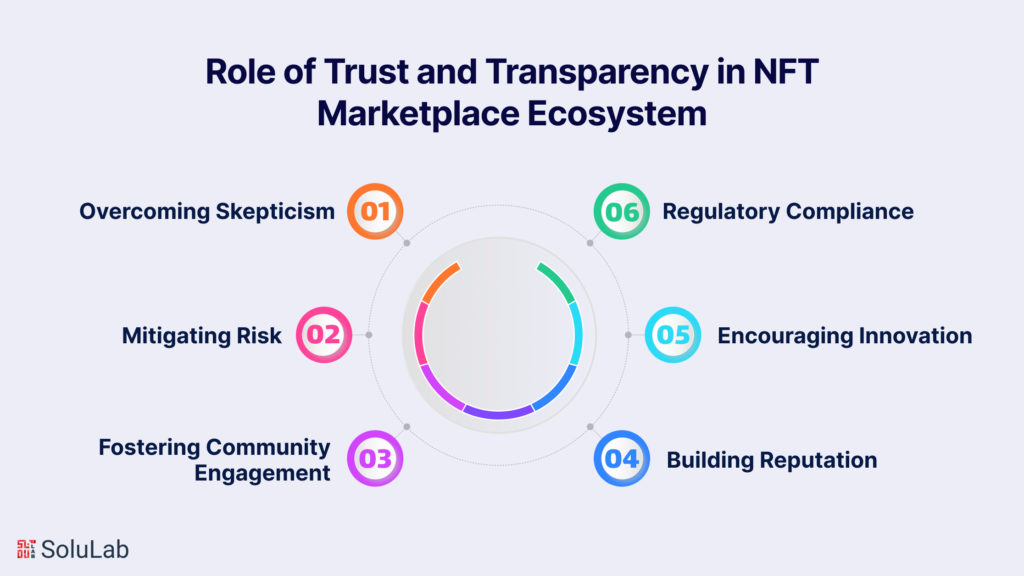
Trust and transparency are the cornerstones upon which successful NFT (Non-Fungible Token) marketplaces are built. In a rapidly evolving digital landscape where the lines between the physical and virtual worlds are becoming increasingly blurred, establishing trust among buyers, sellers, and creators has become paramount.
Here, we explore why trust and transparency play such a pivotal role in the NFT marketplace ecosystem:
Read Our Blog Also: Everything You Need to Know About Metaverse NFT Marketplace Development
The concept of owning a digital asset, whether it’s a piece of digital art, a collectible, or virtual real estate, is still relatively new to many. Skepticism abounds, and potential participants need reassurance that their investments are not in vain. Trust and transparency provide this reassurance by demonstrating the legitimacy and authenticity of NFTs.
In a marketplace where transactions can involve significant sums of money, trust and transparency are essential for risk mitigation. Buyers need to trust that they will receive the NFT they pay for, while sellers and creators want assurance that they will be compensated fairly. Transparent marketplace policies, smart contract audits, and secure authentication mechanisms help reduce the risk of fraud and disputes.
NFT marketplaces are not just transactional platforms; they are vibrant communities of artists, collectors, gamers, and investors. These communities thrive on trust and transparency, as they form the foundation of lasting relationships. When participants feel secure and informed, they are more likely to actively engage with and contribute to the marketplace ecosystem.
Have A Look At Our Blog: How To Launch Your Own NFT Marketplace Website in Less Than 2 Days?
In the digital age, reputation is everything. Trust and transparency contribute significantly to an NFT marketplace’s reputation. Marketplaces that consistently uphold these principles are more likely to attract high-quality creators, collectors, and investors, which, in turn, bolsters their standing in the industry.
NFT marketplace trust and transparency foster an environment where innovation can flourish. Creators are more likely to experiment and push the boundaries of what’s possible when they know their intellectual property rights are protected, and they will be compensated fairly for their work. This leads to a vibrant and dynamic marketplace with a diverse range of NFT offerings.
As the NFT marketplace landscape matures, regulatory scrutiny is inevitable. Marketplaces that prioritize trust and transparency are better positioned to navigate the evolving regulatory landscape. They can demonstrate a commitment to compliance, protecting both themselves and their users from legal challenges.
In the rapidly evolving world of NFTs (Non-Fungible Tokens), trust plays a pivotal role in shaping the success and sustainability of NFT marketplaces. These digital tokens, representing ownership of unique assets, have captured the imagination of creators, collectors, and investors worldwide. However, as the NFT ecosystem continues to expand, establishing trust has become a linchpin for marketplaces.
Read Our Blog: NFT Art for Beginners – How to Make and Sell
In the world of Non-Fungible Tokens (NFTs), trust isn’t just a desirable quality; it’s an absolute necessity. Here’s why trust is the cornerstone of NFT marketplaces:
Trust and transparency in the NFT marketplace have a profound impact on both user participation and investment. Here’s how it influences these crucial aspects:
Know More: How will White-Label NFT Marketplace Development Benefit Your Business?
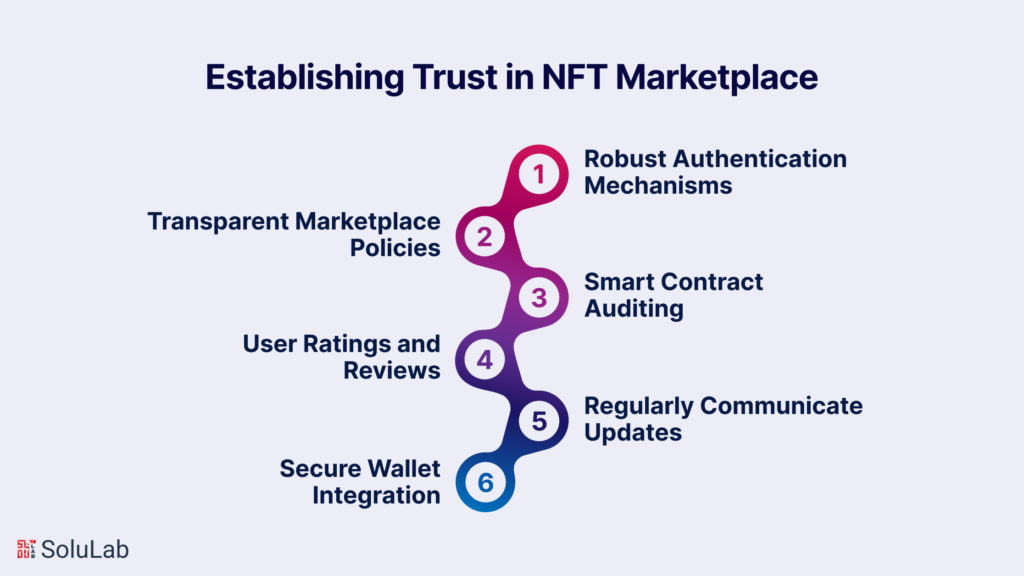
Building trust in your NFT (Non-Fungible Token) marketplace is not just a goal; it’s a necessity. Trust is the foundation upon which successful NFT ecosystems thrive. Users need to feel confident in the authenticity of the digital assets they’re buying, the fairness of transactions, and the security of their investments. Here are essential steps to establish trust in your NFT marketplace:
Read Also: Why Should You Start Your Own NFT Marketplace Business?
By implementing these strategies, you can establish trust in your NFT marketplace and create an environment where users feel confident, secure, and empowered to participate actively. Trust is a valuable asset in the NFT ecosystem, and its cultivation is essential for the long-term success of your platform.
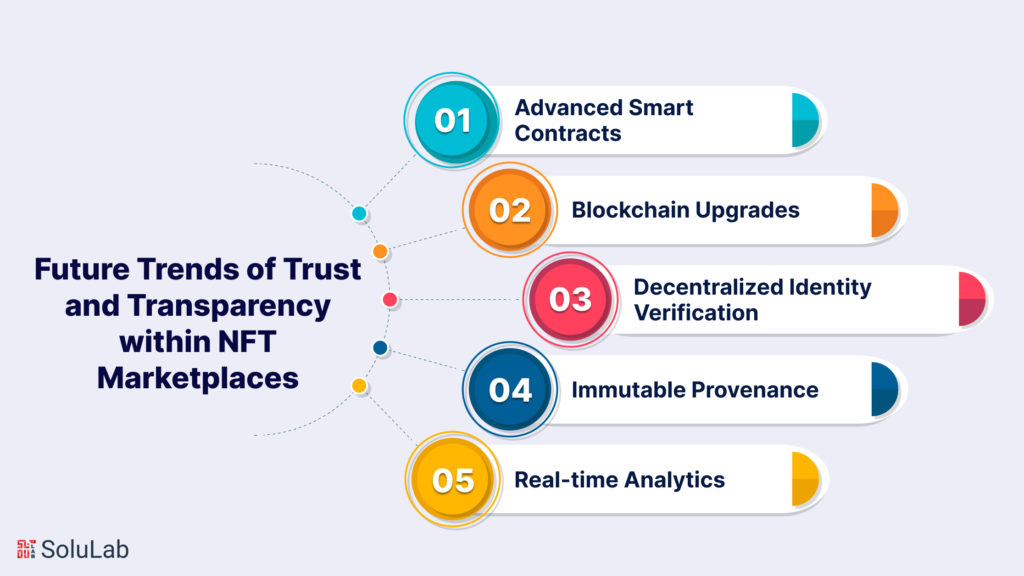
In the dynamic world of NFT (Non-Fungible Token) marketplaces, trust and transparency are evolving concepts that will continue to shape the industry’s trajectory. As technology advances and the ecosystem matures, several future trends are expected to play a significant role in enhancing trust and transparency within NFT marketplaces:
The future of NFT marketplaces will likely feature even more advanced and secure smart contracts. These contracts will not only govern ownership and transactions but also include self-executing agreements that automatically address disputes and conflicts. Advanced smart contracts in NFT Marketplace development solutions will further reduce the need for intermediaries and enhance transparency in transactions.
Blockchain technology, which underpins NFTs, is continuously evolving. Future blockchain upgrades will focus on scalability, speed, and energy efficiency. These improvements will ensure that NFT marketplaces can handle increased traffic, reduce transaction costs, and have a lower environmental impact, thereby enhancing trust in the technology itself.
Check Out Our Blog: The Role of DAOs and Their Benefits in the NFT Ecosystem
Decentralized identity solutions, often based on blockchain technology, will become more prevalent. Users will have control over their personal information and identity verification, reducing the need for centralized KYC processes. This will enhance privacy while maintaining trust and security in NFT transactions.
Blockchain’s immutable ledger will continue to be leveraged for provenance tracking. Users will be able to trace the entire history of an NFT, including its creation, ownership changes, and transactions, with timestamped records. Immutable provenance will further protect against fraud and enhance transparency.
Advanced analytics and data visualization tools will provide users with real-time insights into the NFT marketplace’s health and performance. This transparency will help users make informed decisions about their investments, fostering trust in the marketplace.
In the ever-evolving world of NFT marketplaces, trust and transparency are the bedrock upon which success and longevity are built. As we’ve explored the significance of trust, the impact it has on user participation and investment, and the strategies to establish it in NFT marketplaces, it’s clear that these principles are non-negotiable. They inspire confidence, foster community, and drive the growth of this exciting ecosystem.
Looking ahead, the future trends we’ve discussed, from advanced smart contracts to decentralized identity verification and sustainability measures, promise to elevate trust and transparency to new heights. These developments are not just beneficial; they are essential for the continued evolution of NFT marketplaces.
At SoluLab, we understand the importance of staying ahead of the curve in the world of NFT marketplace development. Being an NFT marketplace development company, with our expertise in blockchain technology and decentralized applications, we can provide solutions that align with these future trends, helping NFT marketplaces build the trust and transparency necessary for long-term success. Whether it’s implementing advanced smart contracts or creating secure and scalable blockchain solutions, hire skilled NFT developers from SoluLab as it is your partner in navigating the ever-changing landscape of NFT marketplaces. Together, we can shape a future where trust and transparency are not just aspirations but the very foundations of this digital revolution. Partner with SoluLab today and embark on a journey where innovation meets trust in the world of NFT marketplaces.
NFT (Non-Fungible Token) marketplaces are platforms where digital assets are bought, sold, and traded. Trust and transparency are crucial because they ensure the authenticity of NFTs, protect users from fraud, and create a secure environment for transactions.
To verify the authenticity of an NFT, check for transparent provenance on the blockchain. Look for timestamped records of ownership changes and consider using reputable marketplaces that conduct smart contract audits. Also, read user reviews and ratings to gauge the marketplace’s credibility.
NFT marketplaces promote fairness through transparent fee structures and clear terms and conditions. Many platforms also employ decentralized governance mechanisms like DAOs, where users have a say in platform policies, ensuring decisions are made collectively and transparently.
Yes, NFT marketplaces must navigate legal and regulatory requirements, including intellectual property rights and tax implications. Compliance with regional and international regulations is essential to maintain trust and transparency in the marketplace.
SoluLab offers expertise in blockchain development solutions and decentralized applications. We can help NFT marketplaces implement advanced smart contracts, ensure secure transactions, and align with future trends in the industry, ultimately enhancing trust and transparency in your platform.


