


The world of cryptocurrency and blockchain technology has witnessed an explosion in interest and innovation in recent years. One of the latest trends that has taken the digital world by storm is the concept of NFTs (Non-Fungible Tokens). These unique digital assets have opened up new opportunities for creators, artists, and investors. Leading cryptocurrency exchange Binance has recognized the potential of NFTs and has ventured into the NFT marketplace space. In this article, we will explore how to create an NFT marketplace like Binance, step by step.
NFTs, or Non-Fungible Tokens, are unique digital assets that represent ownership or proof of authenticity of a specific item, artwork, collectible, or any other digital or physical item. In contrast to cryptocurrencies like Bitcoin or Ethereum, which are interchangeable and can be traded on a one-to-one basis, NFTs are unique and cannot be swapped for an equivalent item.
Binance, one of the world’s largest cryptocurrency exchanges, has entered the NFT space by launching its NFT marketplace. This marketplace allows users to create, buy, sell, and trade NFTs on the Binance Smart Chain (BSC), which is a blockchain network compatible with the Ethereum Virtual Machine (EVM).
In the beginning, the Binance NFT marketplace was managed by Binance, which is recognized as the world’s largest cryptocurrency exchange, catering primarily to significant players in the industry. Furthermore, Binance Smart Chain has demonstrated exceptional speed, security, and cost-effectiveness.
It has maintained a robust security record and offers favorable pricing options when transacting with BUSD or BNB. Notably, Binance Coin (BNB) boasts an impressive capability of processing more than 1.4 million transactions per second.
Read Also: Binance Business Model and Revenue Sources Explained
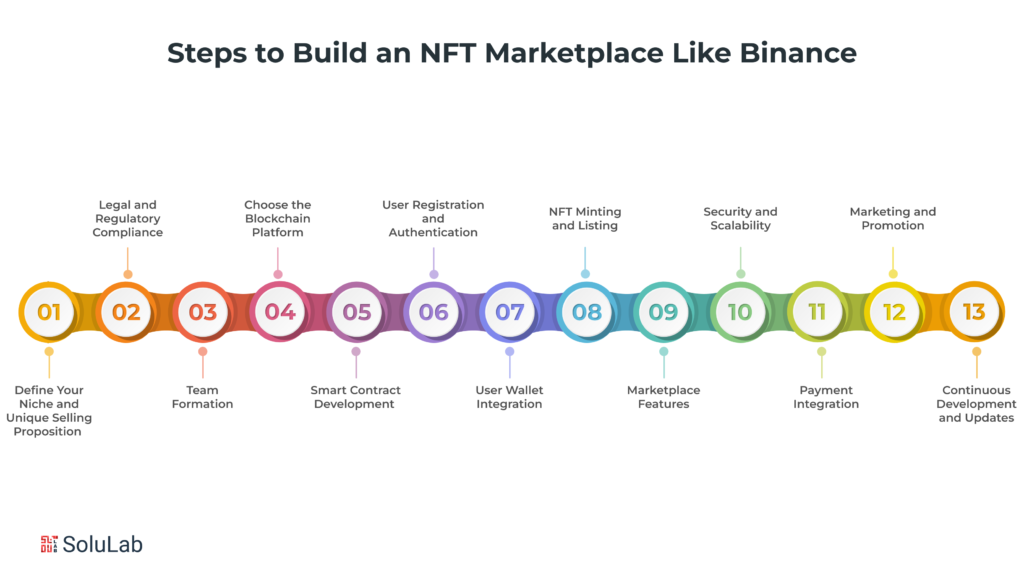
Creating an NFT marketplace like Binance involves several steps. Let’s break down the process:
Before you start building your NFT marketplace, it’s crucial to identify your niche and unique selling proposition (USP). Determine what sets your platform apart from existing NFT marketplaces, including Binance. Consider catering to a specific type of content, such as digital art, music, virtual real estate, or sports memorabilia. Your USP will help attract users and creators to your platform.
Ensure that you comply with all relevant legal and regulatory requirements in your jurisdiction. NFTs and cryptocurrency-related businesses are subject to evolving regulations, and it’s essential to seek legal counsel to navigate this landscape.
Know More: BSC NFT Marketplace Development: Everything You Need to Know
Building a successful NFT marketplace like Binance requires a skilled and dedicated team. Your team should include blockchain developers, smart contract developers, front-end and back-end developers, UI/UX designers, legal experts, and marketing professionals. Collaborate with experts in blockchain technology to ensure a secure and efficient platform.
Selecting the right blockchain platform is a pivotal decision when creating an NFT marketplace. Binance chose the Binance Smart Chain (BSC) for its marketplace. You can follow suit or opt for a different blockchain, such as Ethereum, Polygon, or Solana, depending on your project’s requirements and scalability needs.
Smart contracts are the backbone of NFT marketplaces, as they define the rules and logic of NFT creation, ownership, and transfer. You’ll need to develop and audit smart contracts that govern the minting, buying, selling, and transferring of NFTs on your platform. These contracts should be secure and reliable to gain user trust.
Implement a user registration and authentication system to ensure that users can securely access and use your platform. This may involve integrating KYC (Know Your Customer) procedures to verify user identities and comply with legal requirements.
To create and manage NFTs, users will need cryptocurrency wallets that are compatible with your platform. Consider integrating popular wallet options like MetaMask, and Trust Wallet, or creating a custom wallet solution for your marketplace.
Enable users to create and list their NFTs on your marketplace. Develop a user-friendly interface that allows creators to upload their digital assets, set pricing, and define ownership rights. Ensure that the minting process is seamless and straightforward.
To compete with platforms like Binance, you must offer a range of features that cater to both creators and collectors. Some essential features to consider include:
Read Our Blog Also: Top 10 Decentralized Crypto Exchanges to Consider in 2023
Security is paramount in the world of cryptocurrencies and NFTs. Regularly audit your smart contracts and employ robust security measures to protect user data and assets. Additionally, plan for scalability to accommodate a growing user base without compromising performance.
Integrate a payment gateway to facilitate transactions on your platform. Users should be able to purchase NFTs using cryptocurrencies, including Bitcoin, Ethereum, or your platform’s native token.
Promote your NFT marketplace aggressively to attract both creators and collectors. Utilize digital marketing, social media, partnerships, and influencer collaborations to create awareness and drive user adoption.
The NFT space is constantly evolving, and user feedback is invaluable. Continuously develop and update your NFT marketplace platform to stay competitive and address user needs and emerging trends.
A Binance NFT Marketplace Clone Script is a pre-written software solution designed to replicate the functionality and features of Binance’s NFT marketplace. It provides a ready-made foundation for entrepreneurs and developers who want to create their own NFT marketplace that closely resembles Binance’s platform. This script serves as a time-saving and cost-effective option for entering the NFT marketplace industry quickly.
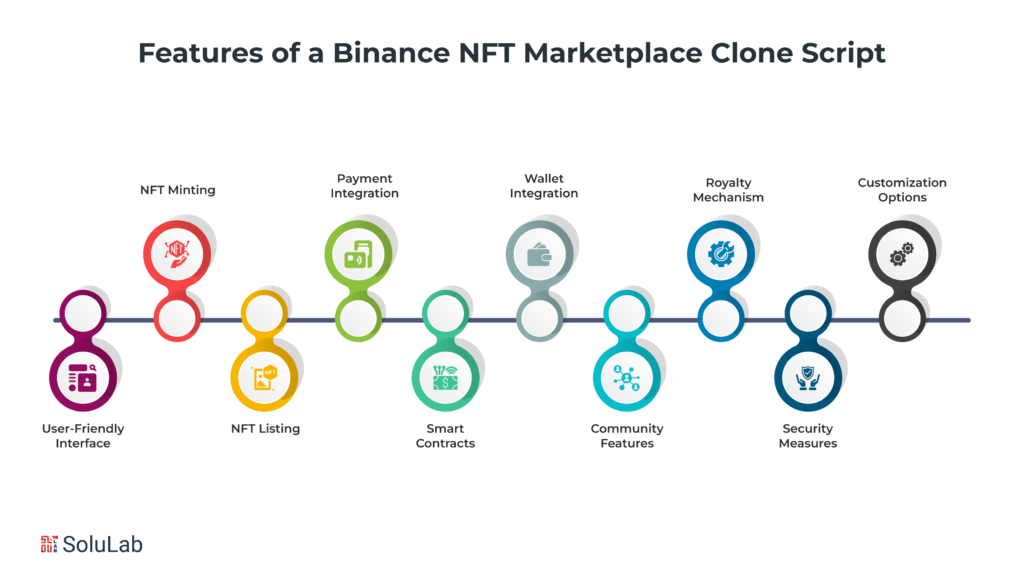
Have a look at some of the key features one gets offered when using a Binance NFT Marketplace Clone Script.
Read Also: How to Hire NFT Developers: Everything You Should Know
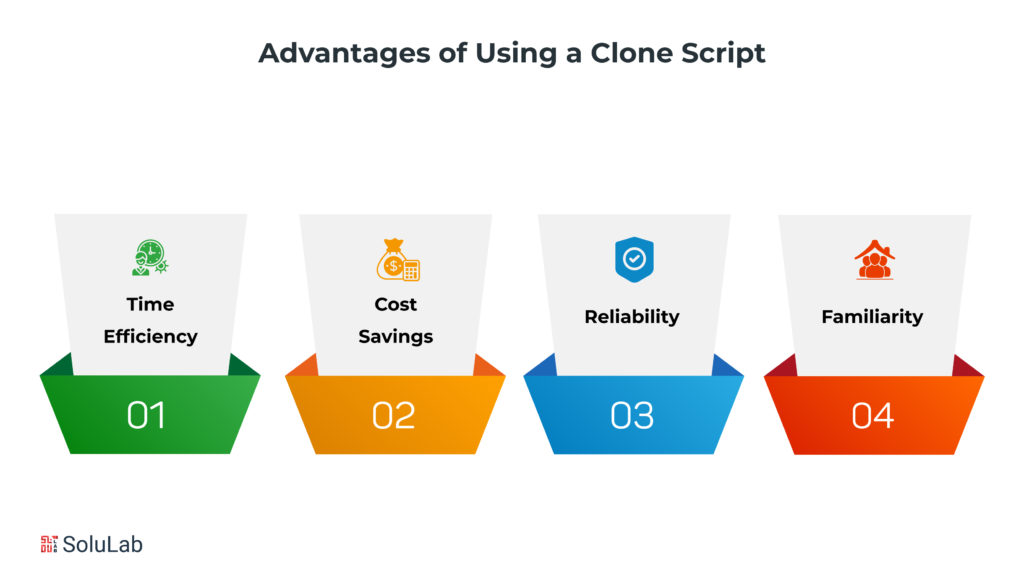
An NFT Binance clone script has several benefits to offer. Here are some of them:
Have A Look At Our Blog: Create Your Own NFT Marketplace In Just 48 Hours With This NFT Website Builder
It’s important to note that while clone scripts offer a convenient starting point, customization is key to differentiating your NFT marketplace from others. You should tailor the platform to your specific niche, branding, and unique selling proposition to stand out in the competitive NFT market.
So, a Binance NFT Marketplace Clone Script provides a practical foundation for entering the NFT industry by replicating the features and functionality of Binance’s successful NFT marketplace. However, success in the NFT space often relies on innovation, community engagement, and a clear value proposition that distinguishes your platform from the rest.
Binance, one of the global leaders in cryptocurrency exchange, ventured into the NFT (Non-Fungible Token) space with the launch of its own NFT marketplace. Binance NFT Marketplace Development refers to the process of creating and maintaining this innovative platform that allows users to create, buy, sell, and trade NFTs on the Binance Smart Chain (BSC). This marketplace has quickly become a prominent player in the NFT ecosystem, attracting artists, creators, collectors, and investors from around the world.
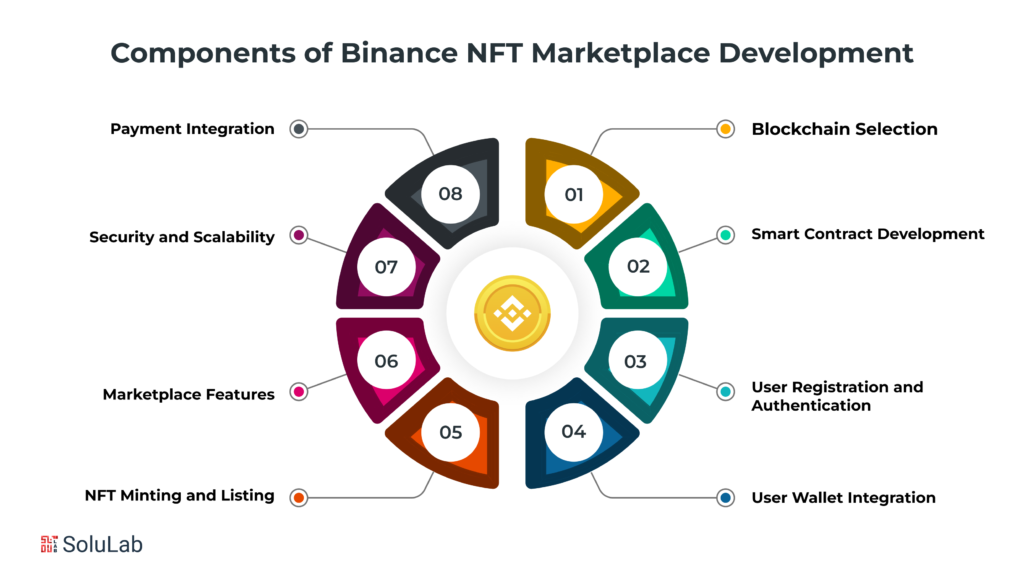
There are a lot of essential components that are required to make a Binance NFT Marketplace.
Creating an NFT marketplace like Binance is a complex undertaking that requires careful planning, development expertise, and adherence to legal and security standards. However, the potential rewards are substantial, as NFTs continue to gain popularity and mainstream adoption. By following the steps outlined in this article and staying updated on industry trends, you can build a successful NFT marketplace that attracts users and creators alike, contributing to the growing NFT ecosystem on the blockchain.
SoluLab stands as a prominent player in the realm of NFT marketplace development services, providing an extensive array of offerings aimed at assisting enterprises in tapping into the flourishing NFT market. Boasting a cadre of seasoned experts with specialized knowledge in blockchain technology, smart contract development, design, and project management, SoluLab is at the forefront of delivering secure and scalable NFT marketplace solutions.
What sets SoluLab apart in the competitive landscape of NFT development is its provision of a highly proficient team of NFT developers. So, contact SoluLab now if you wish to work on an NFT Marketplace like Binance.
NFT marketplace development involves creating an online platform where users can mint, buy, sell, and trade Non-Fungible Tokens (NFTs). NFTs are distinctive digital assets that symbolize the possession of particular items, artworks, or collectibles. It’s important because it enables creators and investors to participate in the growing NFT ecosystem, offering new avenues for monetization and ownership of digital content.
The choice of blockchain depends on factors like scalability, cost, and functionality. Popular options include Ethereum, Binance Smart Chain (BSC), and others. Ethereum is widely used but can be costly in terms of gas fees. BSC offers scalability and lower fees, making it a popular choice. Evaluate your project’s needs before selecting a blockchain.
Key features include NFT minting, listing, and trading capabilities, user authentication, wallet integration, search functionality, auction options, royalty mechanisms, and security measures. A user-friendly interface and community-building tools are also important for engagement.
Yes, clone scripts are pre-built solutions that replicate the functionality of established NFT marketplaces like Binance’s. They can save time and effort but require customization to stand out. Using a clone script can be a good starting point for your project.
Security is paramount. Regular smart contract audits, encryption of user data, robust user authentication, and multi-signature wallets are essential. Implementing best practices and staying updated on security threats is crucial to protecting user assets and data.
Marketing strategies can include digital advertising, social media campaigns, partnerships with artists and creators, influencer collaborations, and participation in NFT communities. Building a strong online presence and engaging with your target audience is key to success.


