Talk to an Expert

How to Choose the Best Whitelabel NFT Development Company?

How to Choose the Best Whitelabel NFT Development Company?

The world of NFTs (Non-Fungible Tokens) has taken the digital landscape by storm, revolutionizing how we perceive and trade digital assets. As the demand for NFTs continues to surge, the need for robust NFT marketplaces and platforms has become increasingly evident. This is where whitelabel NFT development companies come into play, offering customizable solutions to create your own NFT marketplace. In this comprehensive guide, we’ll explore the intricacies of selecting the best whitelabel NFT development company to ensure your venture’s success.

What is a Whitelabel NFT Development Company?

A Whitelabel NFT Development Company is a specialized entity in the NFT (Non-Fungible Token) ecosystem that focuses on providing customizable solutions for creating NFT marketplaces. These companies offer ready-made software, tools, and services that empower businesses and entrepreneurs to swiftly launch their own NFT platforms. Rather than constructing a marketplace from the ground up, clients can procure a whitelabel solution and adapt it to their brand’s unique requirements.

The term “whitelabel” denotes that the solution is provided in a way that allows clients to rebrand and customize it as if it were their own product. In the context of NFT development, a whitelabel solution refers to a pre-built NFT marketplace platform that can be tailored to match a specific brand’s identity and requirements. This approach is particularly advantageous for businesses seeking to enter the NFT market promptly without the extensive time and resources required for custom development.

Whitelabel NFT development companies are proficient in developing white-label NFT marketplace software and offer services catered to this specific niche. They possess expertise in blockchain technology, including knowledge of various blockchain networks such as Ethereum, Binance Smart Chain, and others commonly used for NFT development. Their solutions often come with a range of features and functionalities that can be customized to meet the client’s needs. Additionally, reputable Whitelabel NFT development companies provide ongoing support and maintenance to ensure the platform remains secure and up-to-date.

Read Our Blog Post: Why Should You Start Your Own NFT Marketplace Business?

A whitelabel NFT development company specializes in providing customizable NFT marketplace solutions to businesses and entrepreneurs looking to establish their presence in the NFT space quickly and efficiently. Their expertise lies in crafting pre-built NFT platforms that can be rebranded and tailored to match the client’s specific requirements, making them an invaluable resource for those looking to navigate the burgeoning world of NFTs.

Why Choose a Whitelabel NFT Solution?
Why Choose a Whitelabel NFT Solution?

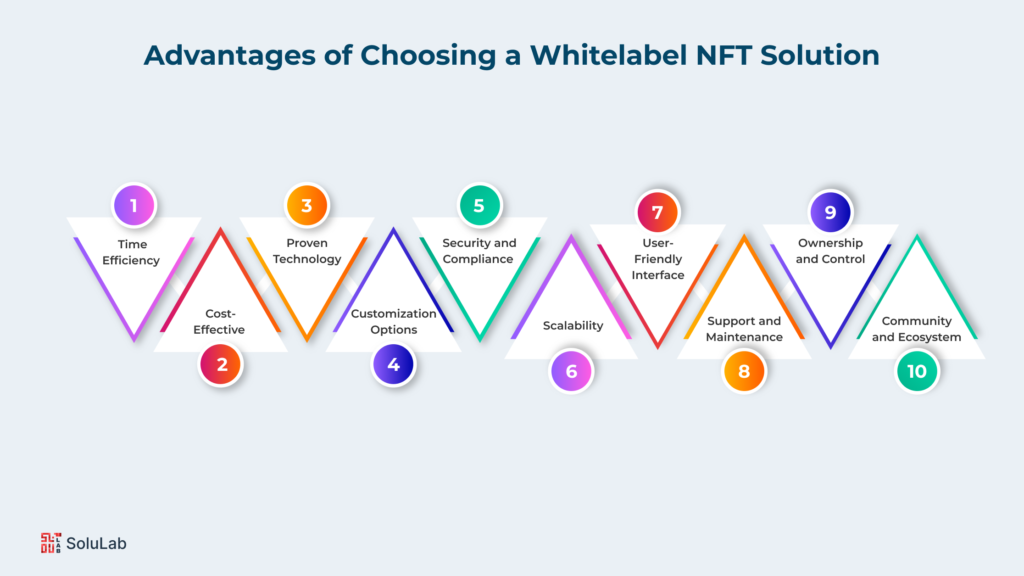
Advantages of Choosing a Whitelabel NFT Development Company

  • Time Efficiency: Building a custom NFT marketplace from scratch can be a time-consuming process, involving extensive development, testing, and refinement. Whitelabel solutions significantly reduce development time, allowing you to launch your NFT platform faster and seize opportunities in the market swiftly.
  • Cost-Effective: Developing a bespoke NFT platform can be expensive due to the associated development, testing, and ongoing maintenance costs. Whitelabel solutions are often more budget-friendly, as they leverage pre-existing technology and infrastructure.
  • Proven Technology: Whitelabel NFT solutions are built on tested and proven technology. When you choose a reputable whitelabel NFT development company, you can leverage their experience and expertise to ensure a stable and secure platform. This is especially crucial in the NFT space, where security and reliability are paramount.

Check Our Blog Post: Top NFT Development Companies To Look At In 2024

  • Customization Options: While whitelabel solutions come with pre-built features and functionalities, they are highly customizable. This means you can tailor the platform to match your brand’s identity and meet your specific requirements. You retain control over the design, features, and user experience.
  • Security and Compliance: Security is of utmost importance in the NFT space, given the value of digital assets being traded. Whitelabel NFT development companies typically implement robust security measures, including encryption, multi-factor authentication, and regular security audits. Moreover, they often stay updated with regulatory changes and can help ensure your platform complies with relevant laws and regulations.
CTA1

  • Scalability: Your NFT marketplace should be prepared to handle increased traffic and transaction volumes as your user base grows. Reputable whitelabel solutions are designed to be scalable, allowing your platform to expand seamlessly without significant disruptions.
  • User-Friendly Interface: A user-friendly and easy to use interface is vital for attracting and retaining users. Many whitelabel NFT solutions come with well-designed user interfaces that provide an intuitive and visually appealing experience for your users.
  • Support and Maintenance: Establishing and maintaining an NFT marketplace requires ongoing support and maintenance. Reliable whitelabel NFT development companies offer support services to address any issues or updates that may arise. This ensures that your platform remains up-to-date, secure, and responsive to user needs.
  • Ownership and Control: When you choose a whitelabel NFT marketplace, you retain ownership and control over your platform. This means you can make decisions about its future development, monetization strategies, and branding without being tied to a third-party platform’s limitations.
  • Community and Ecosystem: Whitelabel NFT development companies often have established communities and ecosystems of users and developers. Joining such an ecosystem can provide you with valuable networking opportunities, partnerships, and insights into industry trends.

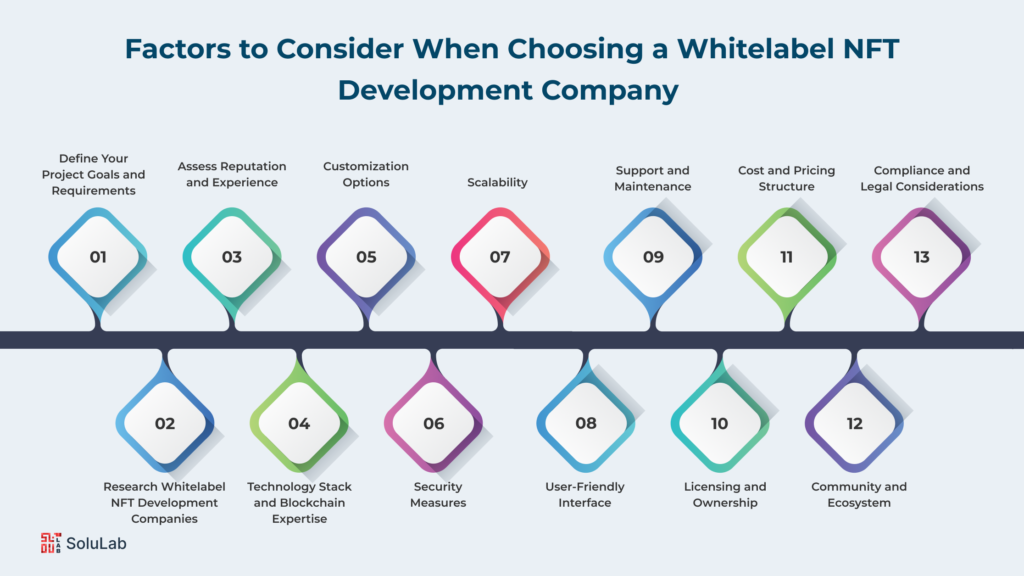
Key Factors to Consider When Choosing a Whitelabel NFT Development Company
Key Factors to Consider When Choosing a Whitelabel NFT Development Company

Selecting the best whitelabel NFT development company is a pivotal decision that can significantly impact the success of your NFT marketplace venture. 

1. Define Your Project Goals and Requirements

Before you start your search for a whitelabel NFT development company, you must have a clear understanding of your project’s goals and requirements. Ask yourself:

  • What is the niche or industry you’re targeting with your NFT marketplace (e.g., art, music, gaming, collectibles)?
  • What specific features and functionalities do you need in your NFT platform?
  • What is your budget for development, maintenance, and ongoing support?
  • Do you have any legal or regulatory considerations, such as compliance with local laws or licensing agreements?
  • Having a well-defined project scope and goals will guide your search and help you identify the company that can best meet your needs.

2. Research Whitelabel NFT Development Companies

Start your research by identifying a list of potential whitelabel NFT development companies. You can do this through a number of means:

  • Online searches: Use search engines and NFT-related forums and communities to find companies that offer whitelabel NFT solutions.
  • Industry referrals: Seek recommendations from industry peers, fellow entrepreneurs, or NFT enthusiasts who have experience working with such companies.
  • NFT marketplaces: Explore existing NFT marketplaces to see if they offer whitelabel solutions or partnerships with development companies.
  • Compile a list of companies that seem promising and align with your project goals.

Know More: How to Build the Best White-Label NFT Marketplace?

3. Assess Reputation and Experience

The reputation and experience of a whitelabel NFT development company are crucial factors to consider. Here’s how to assess them:

  • Portfolio: Review the company’s portfolio of past projects. Look for successful NFT marketplaces they have developed and launched. Pay attention to the diversity of industries and niches they have worked in.
  • Client testimonials: Seek out client testimonials and reviews. Reach out to past clients if possible to gather feedback about their experiences with the company.
  • Case studies: Some companies provide detailed case studies of their projects, highlighting challenges and solutions. Review these to gain insights into their problem-solving abilities.
  • A reputable and experienced company is more likely to deliver a high-quality product and provide reliable support.

4. Technology Stack and Blockchain Expertise

Since NFTs are blockchain-based, it’s crucial that the NFT development company has expertise in blockchain technology. Evaluate:

  • Their knowledge of blockchain networks: Ensure they are well-versed in the blockchain network you plan to use for your NFT marketplace, whether it’s Ethereum, Binance Smart Chain, Flow, or another.
  • Smart contract proficiency: NFTs rely on smart contracts for functionality. Assess the company’s capability to create and audit smart contracts for security and reliability.
  • Scalability: Inquire about their ability to design a scalable NFT platform that can handle growing user traffic and transaction volumes.
  • A solid understanding of blockchain technology is essential to ensure the security and efficiency of your NFT marketplace.

Related: 5 Best White Label NFT Marketplaces In The World

5. Customization Options

NFT marketplaces should be highly customizable to align with your brand identity and specific requirements. Evaluate:

  • The degree of customization offered by the whitelabel NFT solution. Can you modify the platform’s design, features, and functionalities to suit your vision?
  • User interface and user experience (UI/UX): Ensure that the platform’s UI/UX can be tailored to create an engaging and user-friendly environment.
  • White labeling options: Confirm that you have the freedom to rebrand the platform completely, so it appears as your unique product.
  • Customization is essential to differentiate your NFT marketplace from competitors and align it with your brand.

6. Security Measures

The security of your NFT marketplace is paramount, as it deals with valuable digital assets. Inquire about the security measures the company implements, including:

  • Encryption: Data encryption to protect user information and transactions.
  • Multi-factor authentication (MFA): Additional layers of security to prevent unauthorized access.
  • Regular security audits: Routine assessments to identify and address vulnerabilities.
  • Compliance with industry standards: Ensure that the company follows security best practices and complies with relevant industry standards.
  • Security breaches can lead to significant reputational and financial damage, so this aspect should not be overlooked.

7. Scalability

Your NFT marketplace should be capable of accommodating increased traffic and transaction volumes as your user base grows. Assess:

  • The platform’s scalability options: Can it handle growing demand without performance degradation or downtime?
  • Load testing: Inquire if the company conducts load testing to ensure the platform’s ability to handle peak usage periods.
  • Scalability ensures that your NFT marketplace can evolve and expand along with your success.

Read Also: How will White-Label NFT Marketplace Development Benefit your Business?

8. User-Friendly Interface

A user-friendly interface is crucial for attracting and retaining users. Evaluate:

  • The platform’s user interface (UI) design: Is it intuitive, visually appealing, and easy to navigate?
  • User experience (UX): Does the platform provide a seamless and enjoyable experience for users?
  • A well-designed UI/UX can significantly impact user engagement and conversion rates.

9. Support and Maintenance

Building and maintaining an NFT marketplace is an ongoing process. Inquire about the support and maintenance services offered by the company, including:

  • Response time for addressing issues or inquiries.
  • Availability of ongoing updates and improvements.
  • Technical support channels and their responsiveness.
  • A reliable support system ensures that your NFT marketplace remains secure and up-to-date.

10. Licensing and Ownership

Understand the licensing terms and ownership rights associated with the whitelabel solution. Ensure that:

  • You have full control and ownership of your NFT marketplace to avoid legal complications in the future.
  • Licensing agreements are clear and align with your business goals and objectives.
  • Legal clarity is essential to protect your long-term interests.

11. Cost and Pricing Structure

While cost-effectiveness is a key advantage of whitelabel solutions, carefully review the pricing structure and associated fees. Be aware of:

  • Initial development costs.
  • Ongoing maintenance and support fees.
  • Any hidden or unexpected costs that may arise during development and operation.
  • Budget transparency is crucial for managing your financial resources effectively.

Related: What are the Key Features of the White-Label NFT Marketplace?

12. Community and Ecosystem

A strong community and ecosystem can be valuable in the NFT space. Consider whether the whitelabel NFT development company has:

  • An active user community or developer community.
  • Partnerships or collaborations within the NFT industry.
  • A network of experts and enthusiasts who can provide insights and support.
  • Being part of a thriving community can open doors to networking opportunities and industry trends.

13. Compliance and Legal Considerations

NFTs are subject to various regulatory considerations in different jurisdictions. Ensure that the whitelabel solution complies with relevant laws and regulations in your target market. Consult with legal experts if needed to address compliance issues effectively.
CTA2

Conclusion

Choosing the best whitelabel NFT development company is a critical decision that can greatly impact the success of your NFT marketplace. Carefully evaluate each company’s reputation, experience, technology stack, customization options, security measures, and support services.

Remember that the NFT space is continuously evolving, so staying informed about the latest trends and developments is essential. With the right whitelabel NFT development company and a well-thought-out strategy, your NFT marketplace can thrive in this exciting and dynamic ecosystem, opening up new opportunities for your brand and users alike.

On the path towards a future driven by NFTs, SoluLab stands as a reliable partner, leading businesses towards success by leveraging its proficiency in whitelabel NFT marketplace development services. With innovation as its guiding force, SoluLab empowers enterprises to explore new horizons, revolutionize commerce, and establish their unique presence in the digital realm.

Together with SoluLab, you embark on a transformative journey—a journey characterized by innovation driving advancement and turning aspirations into reality. Connect with SoluLab today to enter the realm of white-label NFT marketplaces, where the possibilities are endless, and opportunities know no bounds.

FAQs

1. What is a Whitelabel NFT Development Company?

A whitelabel NFT development company specializes in providing ready-made, customizable solutions for creating NFT marketplaces. These solutions allow businesses to launch their NFT platforms quickly, without building them from scratch.

2. Why should I choose a whitelabel NFT solution over custom development?

Whitelabel NFT solutions are often more cost-effective and time-efficient compared to custom development. They leverage pre-existing technology, reduce development time, and offer customization options, making them a practical choice for entering the NFT market swiftly.

3. What factors should I consider when choosing a whitelabel NFT development company?

Consider factors such as the company’s reputation, experience, technology stack, customization options, security measures, scalability, user interface, support, legal considerations, and pricing structure.

4. How important is security when selecting a whitelabel NFT development company?

Security is crucial in the NFT space due to the value of digital assets. Ensure that the company implements robust security measures, including encryption, multi-factor authentication, and regular security audits, to protect your platform and users.

5. Can I customize a whitelabel NFT solution to match my brand’s identity?

Yes, one of the advantages of whitelabel NFT solutions is their high degree of customization. You can often tailor the platform’s design, features, and functionalities to align with your brand’s identity and specific requirements.

6. What blockchain expertise should a whitelabel NFT development company have?

The company should have proficiency in blockchain technology, including knowledge of the specific blockchain network you plan to use (e.g., Ethereum, Binance Smart Chain). They should also be skilled in creating and auditing smart contracts.

7. How can I ensure ongoing support and maintenance for my whitelabel NFT platform?

When choosing a whitelabel NFT development company, inquire about their support and maintenance services. Ensure they offer timely responses to issues, regular updates, and technical support to keep your platform secure and up-to-date.

8. Is scalability a feature provided by white-label NFT marketplaces?

Indeed, white-label NFT marketplace solutions are intentionally crafted to be scalable, capable of handling a burgeoning user base, surges in transactions, and the growing inventory of NFTs. The foundational infrastructure is primed for high performance, simplifying the process for businesses to manage heightened demand and extend their reach within the market.

Leverage NFT Technology to Foster Trust in Your Digital Identity

Leverage NFT Technology to Foster Trust in Your Digital Identity

In an increasingly digital world, where our online presence and interactions hold significant importance, the concept of digital identity has become more crucial than ever. Digital identity refers to the unique set of attributes, characteristics, and credentials that define an individual or entity in the online realm. However, the traditional methods of managing digital identities have faced challenges such as security breaches, data theft, and privacy concerns. In this era of rapid technological advancement, Non-Fungible Tokens (NFTs) have emerged as a groundbreaking solution to revolutionize the way we perceive and secure digital identities.

This article explores the intersection of NFT technology and digital identity, highlighting how NFTs can be harnessed to enhance trust and security in the digital realm. We will delve into the concept of NFT-based digital identities, discuss emerging trends, showcase notable NFT development companies, and explore potential solutions and services in the domain of NFT development for digital identity.

Before we dive into the implications of NFTs for digital identity, let’s begin with a basic understanding of what NFTs are and why they have gained such immense popularity.

What Are Non-Fungible Tokens (NFTs)?

Non-fungible tokens, commonly known as NFTs, are digital assets that represent ownership or proof of authenticity of a unique item or piece of content, often linked to a digital or physical entity. NFTs are non-fungible, which means each token is unique and cannot be exchanged for another on a like-for-like basis, in contrast to cryptocurrencies like Bitcoin or Ethereum which are fungible and can be transferred on a one-to-one basis. This uniqueness and indivisibility make NFTs ideal for representing digital identities.

NFTs are built on blockchain technology, which provides the immutable and transparent ledger necessary to ensure the authenticity and ownership of these digital assets. Ethereum is the most widely used blockchain platform for NFTs, but other platforms like Binance Smart Chain and Flow are gaining prominence in the NFT space.

The NFT Boom

The NFT craze began gaining mainstream attention in 2021, with artists, musicians, athletes, and collectors flocking to the space to create, sell, and buy digital assets represented as NFTs. High-profile NFT sales, such as Beeple’s artwork selling for $69 million and NBA Top Shot moments fetching substantial sums, demonstrated the enormous potential of NFTs.

Read Blog Post: Top 25 NFT Startups to Watch out in 2024

While NFTs initially found their footing in the world of art and entertainment, they have since transcended these boundaries and are being applied to a wide range of use cases, including digital identity.

NFTs and Digital Identity: A Perfect Match

NFTs and Digital Identity: A Perfect Match

The fusion of NFTs and digital identity brings forth a myriad of opportunities to address the challenges associated with online identification and authentication. Here’s how NFTs can be leveraged to foster trust in your digital identity.

1. Unique and Immutable Identification

NFTs excel at representing unique assets, and this quality can be directly applied to digital identity. When an individual or entity’s identity is represented by an NFT, it becomes a one-of-a-kind, tamper-proof representation that cannot be duplicated or forged. This uniqueness and immutability enhance the security and trustworthiness of the digital identity.

Related: Unlocking the Future: NFT Marketplace Development and Blockchain Technology Insights

2. Ownership and Control

One of the key issues with traditional digital identities is the lack of control individuals have over their own data. NFTs can change this paradigm by allowing users to own and control their digital identities. Users can decide what information is associated with their NFT identity and grant or revoke access to it as needed. This shift in control empowers individuals to protect their data and privacy.

CTA1

3. Transparency and Trust

The blockchain technology underlying NFTs ensures transparency and trust in the system. Every transaction, update, or interaction with an NFT-based digital identity is recorded on the blockchain, creating an auditable trail of activities. This transparency builds trust among users and entities relying on these digital identities.

4. Decentralization

NFT-based digital identities can be stored and managed in a decentralized manner, reducing the reliance on centralized authorities and single points of failure. Decentralized identity systems powered by NFTs distribute identity data across a network of nodes, making it more resilient to attacks and data breaches.

Related: Building Trust and Transparency in Your NFT Marketplace Ecosystem

5. Portability

NFT-based digital identities are highly portable. Users can carry their digital identity with them across different platforms and services, eliminating the need to create and manage separate identities for various online interactions. This convenience simplifies the user experience while maintaining security.

6. Verification and Authentication

Entities and services can easily verify and authenticate NFT-based digital identities by checking the blockchain for the associated NFTs. This streamlined process enhances security while reducing the risk of fraudulent activities and identity theft.

7. Enhanced Security

NFTs inherit the robust security features of blockchain technology, including cryptographic encryption and decentralization. This makes NFT-based digital identities inherently more secure compared to traditional username-password combinations or even biometric authentication methods.

Emerging Trends in NFT-Based Digital Identity

Emerging Trends in NFT-Based Digital Identity

As the adoption of NFTs for digital identity gains momentum, several trends are emerging that indicate the direction this technology is heading.

1. Metaverse Integration

The concept of the metaverse, a virtual shared space where users interact with each other and digital objects, is closely tied to NFTs and digital identity. NFT-based digital identities are poised to play a pivotal role in the metaverse, allowing users to seamlessly transition between virtual and real-world identities.

2. Identity Standards

Standardization of NFT-based digital identity protocols is essential to ensure interoperability across different platforms and services. Organizations like the Decentralized Identity Foundation (DIF) are actively working on defining these standards to facilitate widespread adoption.

Related: How To Launch Your Own NFT Marketplace Website in Less Than 2 Days?

3. Cross-Platform Compatibility

To realize the full potential of NFT-based digital identities, they must be compatible with a wide range of applications, services, and ecosystems. Developers are working on solutions that enable NFT identities to function seamlessly across diverse digital landscapes.

4. Privacy-Centric Solutions

Privacy remains a significant concern in the digital identity space. Emerging trends include the development of privacy-centric NFT-based identity solutions that give users granular control over what information is shared and with whom.

5. Identity NFT Marketplaces

Dedicated marketplaces for trading, buying, and selling identity NFTs are emerging. These marketplaces provide a platform for individuals and organizations to manage their digital identities and access related services.

NFT Development Solutions for Digital Identity

NFT Development Solutions for Digital Identity

Implementing NFT-based digital identity solutions requires a comprehensive approach that encompasses several key components. Let’s explore some of the essential NFT development solutions for digital identity.

1. Identity Minting

Identity minting refers to the process of creating identity NFTs. NFT development companies offer user-friendly interfaces and tools that allow individuals and organizations to mint their unique digital identities on the blockchain. These identity NFTs serve as the foundation for the entire digital identity ecosystem.

2. Identity Management

Once identity NFTs are created, they need to be effectively managed. Identity management solutions provided by NFT development companies enable users to update, modify, and customize their digital identities as needed. This includes adding or removing attributes, verifying information, and setting access controls.

3. Authentication and Verification

Authentication and verification solutions are essential to establish trust in digital identities. NFT-based digital identities can be authenticated by verifying the associated NFTs on the blockchain. NFT development companies often provide tools and APIs for easy integration into existing authentication systems.

4. Privacy Controls

Privacy is a paramount concern in the digital identity space. NFT development solutions for digital identity often include privacy controls that allow users to determine what information is shared and with whom. These controls empower individuals to safeguard their personal data.

5. Integration with Ecosystems

For NFT-based digital identities to be effective, they must seamlessly integrate with a wide range of applications and services. NFT development companies offer integration solutions that enable developers to incorporate NFT identities into their platforms, whether it be social media, financial services, or metaverse environments.

Know More: How to Build an NFT Marketplace like Binance?

6. Decentralized Storage

To enhance security and reduce reliance on centralized entities, NFT development solutions often incorporate decentralized storage options. Identity data can be stored across a distributed network of nodes, ensuring redundancy and resilience.

7. User-Friendly Interfaces

User experience is a critical factor in the adoption of NFT-based digital identities. NFT development companies prioritize creating intuitive and user-friendly interfaces that make it easy for individuals to manage and interact with their digital identities.

NFT Development Services for Digital Identity

NFT Development Services for Digital Identity

In addition to development solutions, NFT development companies offer a range of services to support the implementation and maintenance of NFT-based digital identities. These services play a pivotal role in ensuring the success and sustainability of digital identity projects.

1. Consultation and Strategy

NFT development companies often provide consultation and strategy services to help organizations define their digital identity goals, assess their specific needs, and develop a roadmap for implementation. These services are crucial for aligning digital identity initiatives with broader business objectives.

2. Custom Development

Not all digital identity projects are the same, and customization may be required to meet unique requirements. NFT development companies offer custom development services to tailor NFT identity solutions to the specific needs of their clients.

Read Also: The Future of NFT Marketplaces: Trends and Innovations

3. Security Audits

Security is paramount in digital identity projects. NFT development companies offer security audit services to assess the robustness of NFT-based identity systems, identify vulnerabilities, and implement necessary safeguards.

4. Maintenance and Support

Digital identity systems require ongoing maintenance and support to ensure they remain secure and up to date. NFT development companies provide maintenance and support services to address issues, apply updates, and provide assistance as needed.

5. Training and Education

Educating users and stakeholders is a crucial aspect of successful digital identity adoption. NFT development companies offer training and education services to help individuals and organizations understand how to use and manage their NFT-based digital identities effectively.

CTA2

Conclusion

The convergence of NFT technology and digital identity holds immense promise for transforming how we manage and secure our online personas. NFTs offer unique and immutable identification, ownership and control, transparency and trust, decentralization, portability, verification, and enhanced security, making them a natural fit for digital identity solutions.

As emerging trends in the NFT-based digital identity space continue to evolve, the role of NFTs in shaping the future of online identification is becoming increasingly evident. Notable NFT development companies are actively driving innovation in this field, offering comprehensive solutions and services to support the development and deployment of NFT-based digital identities.

In this digital age, where trust and security are paramount, leveraging NFT technology to foster trust in your digital identity is not just a trend; it’s a transformative leap towards a more secure and user-centric online world. With the right NFT development solutions and services, individuals and organizations can seize the opportunity to redefine and enhance their digital identities in a way that truly empowers and protects them.

A reputable NFT development company with years of experience creating blockchain-based solutions is SoluLab. We have a group of skilled NFT developers who can create distinctive NFTs that are cost-efficient, scalable, and secure.

The considerable experience in NFT development, various engagement choices, cost-effective solutions, and focus on clear communication make SoluLab’s top NFT developers stand out. SoluLab keeps you informed on the status of your project on a regular basis through progress reports, and the design and development expertise of our staff assures high-quality NFTs that are catered to your particular requirements. For further assistance, contact SoluLab today.

FAQs

1. What is a Non-Fungible Token (NFT)?

 A Non-Fungible Token (NFT) is a digital asset that represents ownership or proof of authenticity of a unique item or piece of content. Unlike cryptocurrencies such as Bitcoin, NFTs are non-fungible, meaning each token is distinct and cannot be exchanged on a like-for-like basis.

2. How does an NFT work?

NFTs are peculiarly made based on blockchain technology, such as Ethereum. Each NFT has a unique digital signature, which verifies its authenticity and ownership. This signature is recorded on the blockchain, creating a secure and transparent ledger.

3. What can NFTs be used for?

NFTs have a wide range of use cases, including digital art, collectibles, music, virtual real estate, in-game items, and even digital identity management. They represent ownership and uniqueness in the digital world.

4. How can NFTs enhance digital identity?

NFTs can enhance digital identity by providing a unique and immutable representation of an individual or entity in the online realm. They offer ownership and control over digital identity, increased security, transparency, and decentralized management.

5. Are NFTs secure?

NFTs inherit the security features of blockchain technology, making them highly secure. They rely on cryptographic encryption, decentralized storage, and transparency to protect the integrity and ownership of digital assets.

6. Can NFTs be traded or sold?

Yes, NFTs can be traded or sold on NFT marketplaces. Owners can choose to sell or transfer their NFTs to other individuals or collectors, often for varying amounts depending on the item’s rarity and demand.

7. Are there any standards for NFT-based digital identities?

Yes, standards for NFT-based digital identities are emerging. Organizations like the Decentralized Identity Foundation (DIF) are actively working on defining these standards to ensure interoperability and consistency across different platforms.

8. How can I get started with NFT-based digital identity?

To get started with NFT-based digital identity, you can explore NFT development companies that offer solutions and services for identity minting, management, authentication, and more. Consider consulting with experts in the field to align your goals with the right strategy and implementation plan.

Top NFT Trends That Will Build Revenue Streams to the Business

NFT Trends for Revenue Growth

In recent years, Non-Fungible Tokens (NFTs) have catapulted to the forefront of the digital economy, revolutionizing how we perceive and trade digital assets. These unique tokens, representing ownership and authenticity in the digital realm, are rapidly gaining traction across diverse industries. From art and entertainment to gaming, collectibles, and even real estate, NFT trends in 2024 have expanded their influence, making it imperative for businesses to grasp their implications. 

This blog embarks on an exploration of the burgeoning significance of NFTs in the business landscape and delves into the top NFT trends in 2024 that hold the potential to forge new revenue streams and transform the way enterprises operate in the digital age.

What are Non-Fungible Tokens?

Non-fungible tokens (NFTs) are unique digital assets that represent ownership and proof of authenticity of a specific item, piece of content, or collectible on the blockchain. Unlike cryptocurrencies such as Bitcoin or Ethereum, which are fungible and can be exchanged on a one-to-one basis, NFTs are indivisible and cannot be interchanged on an equal basis due to their distinct characteristics and data embedded within them. Each NFT is cryptographically secured, providing verifiable proof of its uniqueness and ownership, making it an invaluable tool for digital creators, collectors, and businesses in various industries.

The Growing Significance of NFT Trends in the Business Landscape

Significance of NFT Trends in the Business Landscape

Non-fungible tokens (NFTs) have surged in popularity and are significantly impacting the business landscape in various ways. These unique digital assets, which represent ownership and authenticity of digital or physical items on the blockchain, are reshaping industries and providing new avenues for revenue generation. Here, we delve into the expanding importance of NFT trends and their transformative potential for businesses:

  • Digital Ownership and Monetization: NFTs enable businesses to digitize and monetize their assets like never before. Whether it’s art, music, virtual real estate, or in-game items, NFTs provide a secure and transparent way to prove ownership and sell these assets, creating new revenue streams.
  • Enhanced Customer Engagement: NFTs offer a novel way to engage with customers. Brands can create limited edition NFT collectibles, loyalty rewards, or unique digital experiences, fostering a deeper connection with their audience.
  • Unlocking the Creator Economy: NFTs empower content creators, artists, and influencers to directly monetize their work, bypassing traditional intermediaries. This democratization of revenue generation has the potential to reshape the entertainment and content industries.
  • Investment and Speculation: NFTs have become an investment asset class, attracting investors and speculators. Businesses can explore NFT-based financial products and services, opening up new opportunities in the finance sector.
  • Proof of Authenticity: NFTs serve as irrefutable proof of authenticity, making them valuable for verifying the legitimacy of luxury goods, collectibles, and rare items, reducing counterfeit concerns.

Top NFT Trends in 2024

Top NFT Trends

The world of Non-Fungible Tokens (NFTs) is constantly evolving, and 2024 promises to be a year of exciting developments. Here are the trending NFT trends to watch out for:

  • NFT Metaverses and Virtual Realities

In 2024, NFT-powered metaverse projects are poised to redefine the digital landscape. These immersive digital universes allow users to own, trade, and display their NFT assets within expansive virtual worlds. Metaverses are becoming hubs for social interaction, commerce, entertainment, and even work, with NFT space at the core of their economies. These digital environments hold the promise of a new era in social engagement, where users can monetize their creativity and participation. Companies are exploring opportunities for virtual brand activations, immersive events, and unique experiences within these metaverses, making them a focal point of innovation and revenue generation.

  • Play-to-Earn Gaming Revolution

The play-to-earn gaming model, powered by NFTs, is set to disrupt the gaming industry. Players can earn NFT-based rewards, tokens, and unique in-game items, allowing them to truly own and trade digital assets. The NFT industry is reshaping in-game economies, fostering a sense of ownership and value for gamers. As the trend gains momentum, we can expect an influx of blockchain-based games that prioritize player rewards and NFT integration. Game developers are increasingly focusing on creating engaging and rewarding experiences that incentivize players to invest time and resources, further blurring the line between gaming and digital asset ownership.

CTA1

  • NFT Market Trend in the Music Industry

The music industry is undergoing a transformative shift in 2024, with NFTs at the forefront. Musicians and artists are leveraging NFTs to directly engage with fans and create new revenue streams. The NFT market is being used to tokenize exclusive music releases, concert tickets, and unique merchandise. This enables artists to bypass traditional intermediaries, connect directly with their audience, and capture more of their creative value. For fans, owning music-related NFTs becomes a symbol of their support and fandom, creating a novel and personalized music experience. Expect to see more musicians and music platforms adopting NFTs as a fundamental component of their business models, redefining the way music is created, shared, and monetized.

  • Sustainable NFTs Development

With environmental concerns in focus, 2024 will witness the development of sustainable NFT Marketplace Platforms. These platforms aim to mitigate the carbon footprint associated with NFT creation and transactions. Sustainable NFT development initiatives explore blockchain networks with lower energy consumption, emphasizing eco-friendly practices. As sustainability becomes a significant concern for NFT enthusiasts and the broader public, sustainable NFTs will likely gain popularity, attracting environmentally-conscious collectors and creators. This trend aligns with the growing importance of sustainability in various industries and reflects a responsible approach to the NFT ecosystem, addressing concerns related to energy consumption and ecological impact.

  • Decentralized Finance (DeFi) in Top NFT Trends

Amid the top NFT trends of 2024, the integration of Decentralized Finance (DeFi) with the Non-Fungible Token (NFT) space is redefining how NFTs are leveraged. DeFi Protocols are enabling NFT holders to unlock liquidity and generate income from their digital assets. NFTs can now serve as collateral for DeFi loans, allowing collectors and creators to access capital without parting with their prized NFTs. Yield farming and liquidity pools are being introduced, providing opportunities for NFT holders to earn interest and rewards by staking their tokens in DeFi protocols. This synergy between NFTs and DeFi not only enhances the utility of NFTs but also addresses liquidity issues, making NFT markets more dynamic and accessible. As this trend continues to evolve, it is poised to reshape the NFT ecosystem, unlocking new financial opportunities for NFT enthusiasts and investors.

  • Artificial Intelligence (AI) in NFTs

In 2024, the convergence of Artificial Intelligence (AI) and Non-Fungible Tokens (NFTs) is a trend poised to reshape the NFT landscape. AI is being integrated into various aspects of the NFT ecosystem, enhancing the creation, curation, and management of NFTs. One notable application is AI-powered generative art. AI algorithms create unique, algorithmically generated art pieces that are tokenized as NFTs. These AI-generated artworks offer an exciting fusion of technology and creativity, pushing the boundaries of what constitutes art. AI is also playing a crucial role in NFT curation and discovery. AI-driven recommendation systems analyze user preferences and behavior to suggest NFTs tailored to individual tastes. This personalization improves the overall NFT collection browsing and buying experience, making it easier for collectors to discover new gems. Moreover, AI is being used for content verification and authentication. 

  • NFTs in Ticketing

The incorporation of Non-Fungible Tokens (NFTs) in ticketing is a transformative trend in 2024, revolutionizing the event industry. NFTs are being leveraged as digital event tickets, offering numerous advantages over traditional paper or digital tickets. These blockchain-based NFT tickets provide unparalleled security and authenticity, eliminating the risk of counterfeiting and scalping. NFTs also enable event organizers to embed dynamic features into tickets, such as exclusive content access, VIP upgrades, and even ownership rights to event-related digital assets. Furthermore, NFT development solutions are streamlining the creation and distribution of NFT tickets, making them easily accessible to event-goers. This trend not only enhances the fan experience but also introduces new revenue streams and opportunities for artists, performers, and event organizers in the entertainment and live events industry.

  • Virtual Real Estate Trend

The trend of virtual real estate is reshaping the NFT landscape, offering a glimpse into the future of digital ownership. In 2024, NFTs representing virtual land and properties within metaverses and decentralized virtual worlds are gaining unprecedented traction. These digital assets grant ownership rights to specific plots of virtual land, allowing users to develop, monetize, and customize their virtual properties. Investors, creators, and businesses are flocking to virtual real estate markets, envisioning a future where these digital landscapes become hubs for commerce, social interactions, entertainment, and even work. The concept of virtual real estate is driven by the idea that the metaverse will be the next frontier of human interaction, making ownership within these digital realms not only a status symbol but also a strategic move to participate in the emerging digital economy. As virtual real estate projects multiply and metaverse adoption grows, this trend is poised to redefine the way we perceive and utilize digital space.

  • SoulBound Tokens in NFT Trends

In the realm of NFT trends for 2024, the emergence of SoulBound Tokens is garnering significant attention. These tokens represent a novel approach to enhancing the value and uniqueness of NFT projects. SoulBound Tokens are designed to imbue NFTs with irrevocable connections to their creators or originators. This means that no matter how many times an NFT changes hands, the original creator retains a stake, such as a percentage of future sales or royalties. This innovation not only strengthens the bond between creators and their digital creations but also introduces a sustainable source of income for artists and content creators. As NFT projects 2024 continue to evolve, SoulBound Tokens are set to play a pivotal role in ensuring ongoing support for creators and enhancing the long-term value of NFT ecosystems.

  • Interactive and Utility NFTs

Interactive and Utility NFTs are a pivotal trend within the NFT space in 2024. These NFTs represent a departure from traditional static collectibles by offering holders more than just ownership. Interactive NFTs grant access to unique experiences or content, while utility NFTs confer special privileges or rights. For example, interactive NFTs can unlock exclusive virtual events, behind-the-scenes content, or even in-game interactions within the metaverse. Utility NFTs might grant voting rights in decentralized organizations, access to premium services, or real-world benefits like discounts or VIP access. This trend enriches the value proposition of NFTs, making them more engaging and practical for holders. It’s a testament to how NFTs are evolving beyond mere digital assets, becoming dynamic tools that empower users across various industries, from entertainment and gaming to finance and governance.

Few NFT Developments to Boost Market Profitability

Few NFT Developments to Boost Market Profitability

Many people are unsure whether the NFT sector will be viable as we approach 2024. The answer is that it relies on the patterns that develop throughout the course of the upcoming year. In this post, we’ll look at a few of the NFT developments that are most likely to boost market profitability in 2024.

  • Development of the NFT Market on Centralized Exchanges: The conventional method of purchasing NFTs is through exclusive auctions, but this can be scary for novice investors because it entails purchasing bitcoin on exchanges and running the risk of losing money due to errors. By including NFT markets on their platforms, cryptocurrency exchanges may benefit from this by giving better user experiences, lower risks, lower costs, and higher profit margins. Therefore, the idea of developing NFT Marketplaces on centralized exchanges is going to face criticism.
  • Corporate NFTs: Businesses are looking at how they may benefit both content producers and their viewers by using NFTs. NFTs, for instance, can help the music business since they offer a constant path of custody that cannot be changed, doing away with the need for expert authenticity certification services.
  • Venture Capital Investments in NFTs: Given that global NFT sales are expected to reach $634 million in September 2022, it is not surprising that venture capitalists would like to profit from the NFT mania. Many investors are seeking chances in this industry, which has led to a growth in the popularity of the practice of converting VC cash into NFTs.
  • New Alternative Chain Launches: Due to the expensive NFT transaction costs on Ethereum, developers have started using cheaper blockchains like Solana and Avalanche. As more investors and creators explore more affordable ways to mint and trade NFTs in 2024, this trend is expected to continue. Furthermore, when additional alternative chains enter the market, we could observe a rise in interoperability across various blockchain systems, giving NFT producers and consumers more freedom and accessibility.

CTA2

Conclusion

Despite the fact that NFT is just getting started, the technology has a lot of promise. The trends we’ve explored in this blog highlight the ever-evolving nature of this market and the numerous opportunities it offers to businesses looking to capitalize on digital assets. From the integration of NFTs in gaming and virtual worlds to the rise of utility NFTs and the continued growth of the metaverse, there are various avenues for businesses to explore and build revenue streams. However, it’s important to remember that the NFT market can be volatile, and success will require a thoughtful strategy, a keen understanding of market dynamics, and a focus on creating unique, valuable, and authentic digital assets.

As businesses adapt to these NFT trends and navigate the evolving landscape, it’s crucial to stay informed, remain agile, and prioritize the principles of sustainability and ethical creation. NFTs have the potential to reshape industries, and those who approach this space with innovation and integrity stand to reap the rewards while contributing positively to the broader digital ecosystem. In the coming year, we can anticipate NFTs continuing to redefine how businesses engage with their audiences, collaborate with creators, and generate revenue in the ever-expanding digital frontier.

SoluLab is at the forefront of empowering businesses in the NFT space with its cutting-edge NFT development services. By offering the ability to hire the best NFT developers, SoluLab ensures that clients have access to top-notch expertise in creating, deploying, and managing NFT projects. Whether it’s developing NFT marketplaces, minting unique digital assets, or implementing blockchain solutions for enhanced security and transparency, SoluLab’s dedicated team of experts is well-equipped to guide businesses through the complex and rapidly evolving NFT landscape. With their comprehensive NFT development services, SoluLab is a strategic partner for organizations looking to harness the immense potential of NFTs for revenue generation and digital innovation. Contact SoluLab Today and embark on a journey toward NFT-driven success.

FAQs

1. What are NFTs, and how can they benefit my business? 

NFTs, or Non-Fungible Tokens, are unique digital assets that represent ownership or proof of authenticity of digital or physical items. They can benefit your business by creating new revenue streams through the sale of digital collectibles, art, virtual real estate, or exclusive content, and by engaging your audience through tokenized experiences.

2. How can my business leverage the metaverse trend for revenue generation? 

The metaverse trend involves creating virtual, interconnected worlds where users can socialize, work, and play. Businesses can generate revenue by owning virtual real estate, hosting events, selling virtual goods, or offering immersive brand experiences within the metaverse, creating new opportunities for customer engagement and monetization.

3. What role do utility NFTs play in revenue generation? 

Utility NFTs provide access to specific services, products, or experiences. Businesses can use them to offer exclusive memberships, access to premium content, or in-game items. These NFTs not only boost customer loyalty but also create a sustainable revenue model.

4. How can NFTs be integrated into the gaming industry for profit? 

The gaming industry has embraced NFTs to enable players to own and trade in-game assets. Businesses can create and sell NFTs tied to unique in-game items, characters, or virtual real estate, creating a vibrant marketplace and monetizing the gaming ecosystem.

5. What should businesses consider when entering the NFT space to ensure profitability? 

To ensure profitability in the NFT space, businesses should carefully plan their NFT strategy, focus on creating high-quality and authentic digital assets, understand legal and regulatory considerations, and explore partnerships and collaborations within the NFT ecosystem to maximize revenue potential while adhering to ethical and sustainable practices.

Security Tokens vs Utility Tokens vs NFTs – How different are they?

Security Tokens vs Utility Tokens vs NFTs - How different are they?

In the dynamic realm of blockchain and cryptocurrencies, the advent of digital tokens has revolutionized traditional concepts of value, ownership, and interaction. The evolution has ignited a necessity for a profound understanding of the triad of digital tokens: security tokens, utility tokens, and NFTs (Non-Fungible Tokens).

This article embarks on a comprehensive journey, unraveling the intricacies that define each token category. By delving into their attributes, use cases, and distinguishing features, we gain a holistic perspective of their impact on the digital landscape.

The Rise of Digital Tokens

Blockchain technology’s meteoric rise has ushered in the era of digital tokens, reshaping financial systems and digital transactions. Tokens, and cryptographic entities safeguarded by decentralized ledgers, introduce transparency, security, and peer-to-peer trust to digital transactions. These digital representations of value have given rise to an array of tokens, each tailored to distinct purposes and applications.

Within the labyrinth of digital tokens, distinct categories emerge, each bearing unique functionalities and implications. Proficiency in discerning these categories is imperative, enabling stakeholders to make informed decisions and partake in the evolving digital economy. As the technology matures, the ability to differentiate between security tokens, utility tokens, and NFTs becomes pivotal.

Understanding Security Tokens

So, what is a security token? Security token symbolizes ownership in tangible or intangible assets, akin to traditional securities. These tokens offer fractional ownership, affording holders a share in the underlying asset’s value and potential returns. Notably, security tokens undergo regulatory scrutiny, aligning them with established securities regulations.

Security tokens stand out by adhering to regulatory frameworks. Compliance ensures transparency, investor protection, and safeguards against illicit activities, thereby bolstering the credibility of the tokenized ecosystem. The alignment with regulations presents security tokens as a bridge between the worlds of traditional finance and the innovative blockchain landscape.

The practicality of security tokens finds resonance across domains, including real estate, venture capital, and private equity. Tokenization imbues these markets with enhanced liquidity and accessibility, empowering diverse investors to partake in traditionally exclusive spheres. For instance, a historically illiquid asset like real estate becomes more accessible and divisible through security token offerings (STO) and STO development services.

What Is A Utility Token?

Utility tokens serve as digital keys granting access to decentralized platforms or services. Their primary function centers on enabling interaction within a specific ecosystem, rather than conferring ownership rights. These tokens act as the lifeblood of blockchain networks, stimulating engagement and utilization.

Top Utility tokens assume the mantle of powering decentralized applications, incentivizing user engagement and ecosystem participation. This symbiotic relationship fuels the platform’s evolution, nurturing its growth. For instance, the Ethereum network employs Ether (ETH) as a utility token to facilitate smart contract execution and transactions within the platform.

Challenges associated with utility tokens stem from balancing their intrinsic utility with potential investment aspirations. Their value is intrinsically linked to the network’s vitality, posing the challenge of sustaining demand. Critics also raise concerns about the potential for regulatory crackdowns on utility tokens that might be deemed securities.

CTA1

Delving into NFTs (Non-Fungible Tokens)

NFTs stand as unparalleled digital assets representing ownership of specific items, ranging from digital art to collectibles. Each NFT is indivisible, bearing a distinct identity that sets it apart from its fungible counterparts. This uniqueness is a core feature enabled by the underlying blockchain technology.

The artistic landscape experiences a seismic shift with NFTs, empowering artists to tokenize their creations and directly connect with collectors. NFTs’ influence stretches beyond art into collectibles, gaming artifacts, and even tokenized real-world assets. For instance, the NFT for a virtual land parcel in a metaverse holds inherent scarcity and value.

NFTs instigate the inception of novel digital economies, facilitating direct interactions between creators and collectors. Their emergence bridges the chasm between physical and virtual ownership, paving the way for innovative economic models. NFT development services enable creators to monetize their digital works directly, bypassing intermediaries and opening avenues for new revenue streams.

Intersection and Evolution

Instances of Hybrid Tokens: As the boundaries between different token types blur, hybrid tokens emerge as captivating entities. These tokens combine the features of security, utility, and NFTs, embodying a fusion of functions. Imagine an investment token that grants access to exclusive features in a platform while also representing ownership in a digital art piece. These instances of hybrid tokens underscore the creative prowess of blockchain technology in accommodating diverse needs.

Adaptation to Changing Trends: Blockchain trends are as dynamic as the digital era itself. Utility tokens have undergone a metamorphosis, adapting from simple transactional tools to integral components of decentralized platforms. Security tokens, initially associated with regulatory hurdles, have embraced evolving compliance standards. NFTs once limited to art and collectibles, now embrace domains like gaming and virtual real estate. The evolution of token types mirrors the pulse of technological progress, highlighting their ability to remain relevant in a swiftly changing landscape.

Potential Future Developments: The crystal ball of blockchain’s future holds intriguing prospects. Some speculate the convergence of token types into holistic digital asset classes, while others envision platforms offering seamless token swaps to cater to diverse needs. As the technology matures, regulations become clearer, and user demands evolve, the lines between security tokens, utility tokens, and NFTs may blur further, fostering a harmonious ecosystem.

Pros and Cons of Each Token Type: Security Tokens vs Utility Tokens vs NFTs

Each token type brings its unique advantages and challenges, and making informed decisions involves understanding the specific goals, risk tolerance, and preferences of stakeholders.

Security Tokens:

Pros:

  • Regulatory Compliance: Security tokens are subject to regulations that provide investor protection. This regulatory oversight can enhance trust and credibility, making them more appealing to traditional investors.
  • Institutional Acceptance: The regulated nature of security tokens often attracts institutional investors who are more comfortable with established legal frameworks and compliance measures.
  • Fractional Ownership: Security tokens allow fractional ownership of assets, enabling broader participation in high-value investments that might otherwise be inaccessible.

Cons

  • Accessibility Constraints: The stringent regulations and compliance requirements can create entry barriers for smaller investors or projects, limiting the democratization of investment opportunities.
  • Time and Cost: The process of regulatory compliance and issuance of security tokens can be time-consuming and expensive, deterring startups with limited resources.
  • Liquidity Challenges: Despite regulatory clarity, the liquidity of security tokens in secondary markets might be limited due to complex regulations and the nature of the assets.

CTA2

Utility Tokens: 

Pros

  • Ecosystem Engagement: Utility tokens serve as the lifeblood of decentralized platforms, incentivizing users to engage, interact, and contribute to the ecosystem’s growth.
  • Flexible Use Cases: The versatility of utility tokens allows them to be integrated into a wide range of applications, from gaming and social media to governance and access to services.
  • Community Ownership: Utility tokens enable a sense of community ownership, aligning the interests of users and creators toward the platform’s success.

Cons:

  • Value Volatility: The value of utility tokens can be highly volatile, driven by market sentiment and speculative trading, which might overshadow their primary functional purpose.
  • Regulatory Uncertainty: The evolving regulatory landscape could lead to debates about whether certain utility tokens should be classified as securities, potentially exposing projects to legal risks.
  • Functionality Necessity: The success of utility tokens hinges on their utility within the platform; if the functionality doesn’t resonate with users, the token’s value might decline.

NFTs: 

Pros:

  • Digital Ownership: NFTs revolutionize digital ownership, providing a secure and verifiable way for creators to monetize their digital content, fostering a new digital art and collectibles market.
  • Interoperability: NFTs can be used across multiple platforms and applications, enabling cross-ecosystem utilization and creating new opportunities for creators.
  • Unique Scarcity: The concept of unique scarcity adds value to NFTs, as each token represents a distinct piece of content, making them highly attractive to collectors and enthusiasts.

Cons:

  • Sustainability Concerns: The carbon footprint of some NFTs, especially those minted on certain blockchains, has raised environmental concerns, prompting discussions about more eco-friendly solutions.
  • Speculative Nature: Similar to utility tokens, the value of NFTs can be speculative, with significant price fluctuations that might not always align with the artistic or intrinsic value of the content.
  • Long-Term Value: While NFTs have seen remarkable success, questions about the long-term value of digital assets remain, especially as the market matures and the novelty wears off.

Read Also: Top NFT Development Companies To Look At In 2025

Factors to Consider When Choosing Tokens

As the digital token landscape diversifies, making choices becomes a blend of art and science. 

1. Consider your investment goals, risk appetite, and familiarity with blockchain technology. 

2. Evaluate the project’s purpose, team, technology, and roadmap.

3. Dive into the regulatory landscape, understanding how it impacts each token type.

4. Stay informed, for in the realm of digital tokens, each choice shapes the unfolding narrative of blockchain’s journey.

CTA3

Concluding Remarks

As the worlds of regulation and technology continue to evolve, the realm of security tokens stands as a bastion of legitimacy and protection. The embrace of regulatory compliance not only elevates investor confidence but also paves the way for institutional adoption, gradually bridging the gap between traditional finance and the decentralized future. Yet, the path of security tokens may seem arduous, with compliance demands and accessibility constraints urging us to tread thoughtfully.

As we conclude our exploration of security tokens, utility tokens, and NFTs, let us remember that the choices we make in this intricate ecosystem sculpt the future narrative of blockchain technology. With each choice, we contribute to an ever-expanding canvas, painting strokes of innovation, challenges, and discoveries. The journey is intricate, the potential boundless, and the promise of the blockchain era resonates with the echoes of these digital tokens that illuminate the path ahead.

Just as these tokens converge at an intersection of innovation, SoluLab stands at the crossroads of technological expertise, creative vision, and client-centric solutions. With a commitment to embracing novel trends and adapting to changing landscapes, SoluLab mirrors the dynamism of the digital token realm – a versatile entity that navigates intricacies with finesse.

SoluLab, a renowned leader in NFT development services, offers comprehensive solutions tailored to businesses and individuals venturing into the world of non-fungible tokens. Their team of expert developers and blockchain enthusiasts is committed to delivering high-quality, customizable services, whether for artists, brands, or platforms seeking asset tokenization, NFT collectibles creation, or bespoke marketplace development. Security, scalability, and innovation are their core focus, making SoluLab the ideal partner for harnessing the full potential of NFT solutions. With SoluLab, you can unlock the power of STO development services, tokenize physical assets, attract investors, and establish your presence as a global market leader. To become a frontrunner in the NFT realm, leverage SoluLab’s premium NFT token development services, creating unique tokens that stand out and drive the success of your NFT project. Contact SoluLab today to explore the limitless possibilities of blockchain technology.

FAQs

1. What distinguishes security tokens from other types of digital tokens?

Security tokens are a subset of digital tokens that represent ownership in a real-world asset, such as company shares or real estate. Unlike utility tokens that grant access to a platform’s features, security tokens are subject to regulatory compliance, providing investors with legal protection. While utility tokens emphasize functionality, security tokens emphasize ownership rights and adhere to established regulations.

2. Can a token serve both utility and investment purposes?

Yes, there are instances of hybrid tokens that combine elements of security, utility, and NFTs. These tokens offer investors ownership rights while granting access to platform features or unique digital content. The fusion of functions underscores the versatility of blockchain technology, catering to diverse user needs within a single token.

3. How do NFTs go beyond digital art and collectibles?

While NFTs gained prominence through digital art and collectibles, their potential extends far beyond these realms. NFTs can represent ownership in virtual real estate, in-game items, event tickets, music royalties, and more. The unique scarcity and verifiable ownership provided by NFTs open doors to innovative applications in various industries, reshaping how we perceive and trade digital assets.

4. How do I choose the right type of token for my project or investment?

Choosing the right token type involves assessing your goals, risk tolerance, and the nature of your project. If seeking legitimacy and compliance, security tokens might be suitable. For platform participation, utility tokens provide functionality, while NFTs cater to unique ownership and authenticity. Careful evaluation of regulatory considerations, market trends, and user preferences will guide your decision-making process.

How to Hire NFT Developers: Everything You Should Know


How to Hire NFT Developers: Everything You Should Know

In the realm of digital assets, Non-Fungible Tokens (NFTs) have become a transformational force. Both individuals and industries have been enthralled by their distinct qualities and rising appeal. The importance of skilled NFT developers cannot be emphasized since they have the technical know-how and industry expertise required to implement NFT projects successfully.

In order to address the growing need for knowledge in this area, NFT development businesses have developed. NFT development encompasses a number of essential components, from blockchain integration to the construction of smart contracts. 

NFTs & Their Growing Popularity

Non-Fungible Tokens, or NFTs, stand for digital assets that have distinctive qualities that separate them apart from other tokens like bitcoins. Because each NFT is unique, it cannot be traded one-to-one and is thus indivisible. Blockchain technology ensures proven ownership and scarcity, therefore guaranteeing its uniqueness.

NFTs have become incredibly popular in recent years. A booming market for these digital assets has emerged as a result of the growth in NFT sales. The conversion of famous pieces of art, musical CDs, sports collectibles, and digital real estate into NFTs has garnered a lot of media interest. The hype around NFTs has been heightened by eye-catching sales numbers, such as the renowned Beeple artwork selling for $69.3 million.

Read Our Blog: Things you need to know about NFT Marketplace

Statistical findings support the rising acceptance of NFTs. The amount of NFT sales have significantly increased, which reflects the rising demand for these distinctive digital assets. The market capitalization for NFTs has also seen a striking increase, reflecting the growing importance of this emerging business. 

Further evidence of the increasing popularity and involvement of NFTs throughout the world can be seen in the rise in the number of active NFT wallets and users. NFTs have been used by a variety of industries, including art, gaming, and collectibles, which has sparked innovation and creativity in each of these fields. Further highlighting the worldwide scope of this phenomenon is the regional dispersion of NFT buyers and sellers.

The Role of NFT Developers and Their Significance

NFT developers play a vital role in the creation and success of NFT projects. They possess the technical expertise required for blockchain and smart contract development, enabling them to bring NFT concepts to life. NFT developers understand the intricacies of NFT standards such as ERC-721 and ERC-1155, ensuring seamless integration and compatibility with various blockchain platforms.

Their knowledge extends beyond technical proficiency; NFT developers are well-versed in integrating NFTs with wallets and marketplaces. This enables NFT owners to securely store and trade their digital assets, while also facilitating a smooth user experience. NFT developers also contribute to the growth and evolution of the NFT ecosystem by developing unique and innovative features that enhance the value and utility of NFTs.

CTA 1

Understanding NFT Development 

NFT development encompasses several crucial aspects. Creation of NFTs involves selecting the appropriate blockchain platform, such as Ethereum or Binance Smart Chain, and writing and deploying smart contracts that define the properties and characteristics of the NFTs. This process is followed by minting and issuing NFTs with associated metadata, providing additional information and context to the digital assets.

Integration with blockchain networks is another crucial aspect of NFT development. NFT developers interact with blockchain APIs and infrastructure, ensuring efficient transaction handling and secure storage of NFT data. Compliance with blockchain protocols is of paramount importance to maintain the integrity and immutability of NFTs.

NFT development companies have emerged to cater to the growing demand for NFT expertise. These companies specialize in providing comprehensive NFT development services, ranging from smart contract creation to marketplace integration. They possess a deep understanding of the NFT ecosystem, enabling them to assist clients in bringing their NFT projects to fruition.

How to Hire NFT Developers: All the Information You Need

How to Hire NFT Developers: All the Information You Need

As the NFT ecosystem continues to evolve, the contributions of NFT developers will shape the future of this exciting digital frontier. The following steps will guide you through the process of hiring nft developers.

Step 1: Determining Your NFT Development Needs

To start the hiring process, it’s crucial to define your NFT development needs. Clearly articulate your project goals, objectives, and the specific features and functionalities you require. This will help you identify the type of NFT developers you need and set realistic expectations in terms of project timeline and budget.

Step 2: Finding NFT Developers

There are several options for finding and hiring skilled NFT developers:

  • In-house Developers: Hiring full-time NFT developers as part of your team can provide better control and collaboration. You can advertise job openings on relevant platforms, attend blockchain conferences, and leverage professional networks to find suitable candidates.
  • Freelancers: Freelance NFT developers offer flexibility and cost-effectiveness. Platforms like Upwork, Freelancer, and specialized blockchain job boards can help you find experienced freelancers with NFT development skills.
  • Development Agencies: NFT development agencies specialize in providing end-to-end NFT development services. They have a team of experts who can handle various aspects of your project. Research and reach out to reputable agencies that align with your project requirements.

Essential Factors to Consider

When evaluating NFT developer candidates, consider the following factors:

  • Skillset and Expertise: Assess their technical skills, experience with blockchain development, and proficiency in NFT standards and protocols.
  • Portfolio and Previous Experience: Review their portfolio and previous NFT development projects. Look for relevant experience that aligns with your project requirements.
  • Knowledge of Blockchain Platforms and Protocols: Ensure that they are familiar with the blockchain platform you plan to use and have experience working with its protocols.
  • Familiarity with NFT Standards: Verify their understanding of NFT standards such as ERC-721 and ERC-1155, as adherence to these standards is crucial for seamless integration and interoperability.
  • Ability to Integrate with Wallets and Marketplaces: Assess their capability to integrate NFTs with popular wallets and marketplaces, enabling easy buying, selling, and management of NFTs.

Step 3: Interviewing and Assessing Candidates

During the hiring process, conduct thorough interviews and assessments to evaluate candidates effectively:

  • Prepare Relevant Interview Questions: Ask about their experience with NFT development, their problem-solving abilities, and how they approach technical challenges specific to NFTs.
  • Conduct Technical Assessments and Code Reviews: Request code samples or assign small coding tasks to assess their technical proficiency and the quality of their work.
  • Evaluate Communication Skills and Cultural Fit: Effective communication and collaboration are crucial for a successful partnership. Assess their ability to communicate complex technical concepts and their compatibility with your team and project culture.

Step 4: NFT Development Contract and Legal Considerations

Once you have selected a candidate or a team of NFT developers, it is essential to establish a comprehensive contract that outlines the scope of work, deliverables, timelines, and payment terms. Consider legal aspects such as intellectual property rights, ownership of the developed code, and any compliance requirements related to the NFT project.

Check Out Our PR Article: SoluLab Bridging the Gap Between Technology And Innovation

Step 5: Collaboration and Project Management

Establishing effective collaboration and project management processes is vital for successful NFT development:

  • Communication Channels: Set up clear communication channels, such as regular meetings, chat platforms, and project management tools, to ensure seamless interaction and updates.
  • Project Milestones and Deliverables: Define clear milestones and deliverables to track progress and ensure the timely completion of the project.
  • Regular Updates and Feedback Cycles: Maintain regular progress updates and feedback cycles to address any issues promptly and keep the project on track.

Step 6: Working with NFT Developers

To foster a productive relationship with NFT developers:

  • Provide Appropriate Documentation and Resources: Provide pertinent project documents, design assets, and any other resources needed for efficient development.
  • Encourage Collaboration and Knowledge Sharing: Create an atmosphere where your team and the developers can work together, share their experiences, and come up with original solutions to problems.
  • Resolve Challenges and Conflicts: Resolve any challenges or conflicts that may arise promptly and constructively, helping to promote an encouraging and fruitful work environment.

Read Our Blog Post: How to Build an NFT Marketplace on Ethereum Blockchain?

Best Practices for Successful NFT Development

For effective NFT development, take into account the following recommendations:

  • Implement stringent testing and quality assurance procedures to guarantee the reliability and functionality of the created NFTs.
  • Adopt agile methodologies and iterative development approaches, which promote flexibility, regular feedback, and continuous improvement throughout the development process.
  • To guarantee that your project remains relevant and competitive, keep up with the most recent innovations, trends, and developments in the NFT field.

NFT Developer Resources and Community

NFT Developer Resources and Community

Collaboration, information exchange, and a welcoming developer community are essential for the world of NFT development to prosper. It’s crucial to utilize the resources at your disposal and interact with the larger community when you start the process of hiring NFT developers. The importance of the NFT developer community is examined in this part, along with helpful resources for both developers and those wishing to employ them.

  • Developer Forums and Communities:  Online forums and communities dedicated to NFT development provide a platform for developers to connect, share insights, and seek guidance. Platforms like Discord, Telegram, and specialized NFT developer forums host discussions, and Q&A sessions, and offer opportunities for networking. Engaging with these communities can help you identify talented developers, gain insights into best practices, and stay updated with the latest trends in NFT development.
  • NFT Developer Documentation and Tutorials: Blockchain platforms and NFT standards often provide extensive documentation and tutorials to assist developers in understanding the technical aspects of NFT development. Resources such as the Ethereum Developer Documentation and tutorials on platforms like OpenSea and Rarible offer valuable insights into NFT contract creation, metadata handling, and integration with wallets and marketplaces. Encourage your hired NFT developers to leverage these resources to enhance their knowledge and expertise.

Read Our Blog: How To Launch Your Own NFT Marketplace Website in Less Than 2 Days?

  • Hackathons and Developer Competitions: Participating in NFT-focused hackathons and developer competitions can be an excellent way to discover talented developers and showcase their skills. These events provide an opportunity for developers to collaborate, build innovative NFT projects, and gain recognition in the NFT developer community. Keeping an eye on upcoming hackathons and competitions can help you identify developers who have proven their abilities and passion for NFT development.
  • Developer Portfolios and Open-Source Projects: When hiring NFT developers, it can be beneficial to review their portfolios and explore any open-source projects they have contributed to. Portfolios and open-source projects not only demonstrate a developer’s technical abilities but also showcase their creativity, problem-solving skills, and commitment to the NFT ecosystem. Reviewing their codebase and contributions can provide valuable insights into their development style, code quality, and proficiency in NFT-related technologies.
  • Blockchain Developer Conferences and Events: Attending blockchain developer conferences and events focused on NFTs can offer unique opportunities to connect with experienced NFT developers. These events often feature workshops, panel discussions, and presentations by industry experts, providing valuable knowledge and networking opportunities. Networking with developers at these events can help you establish connections, learn from experienced practitioners, and gain a broader perspective on NFT development.

CTA 2

Concluding Remarks

In conclusion, one of the most important steps in realizing the success of your NFT project is recruiting NFT engineers. You may make wise choices and create fruitful partnerships by comprehending your NFT development requirements, carefully analyzing prospects, and using the tools offered within the NFT developer community. The NFT developer community provides a variety of information, assistance, and growth possibilities. You may access this dynamic ecosystem by engaging in forums, reading developer manuals and tutorials, taking part in hackathons and going to blockchain events.

SoluLab possesses extensive expertise in developing NFT marketplaces, covering a diverse array of solutions such as artwork, digital collectibles, gaming, asset tokenization, and more. Their NFT marketplace development services exhibit a meticulous focus on feature-rich solutions and achieving perfection in their deliverables. SoluLab is the perfect choice for those seeking to distinguish themselves in the competitive NFT development landscape. Their team of highly skilled NFT developers stands out by prioritizing agile development practices and delivering outstanding business outcomes. SoluLab’s commitment to excellence sets them apart from other companies in the industry. To take advantage of their services, contact SoluLab today.

FAQs

1. What is the role of the NFT developer community in NFT development?

 The NFT developer community plays a crucial role in NFT development by fostering collaboration, knowledge sharing, and innovation. Within the community, developers engage in discussions, share insights, and exchange ideas on NFT development best practices, emerging technologies, and industry trends. Engaging with the NFT developer community provides access to valuable resources, mentorship opportunities, and a platform for addressing challenges and staying updated with the latest developments in the NFT space.

2. Do I need to have a technical background to hire NFT developers?

 It might be helpful to comprehend the complexities of NFT development to have a technical background, but it is not a must for employing NFT developers. However, in order to work and communicate with the developers successfully, it is crucial to have a comprehensive grasp of your project’s objectives and specifications. To establish a successful relationship, place a high priority on good communication, offer thorough project documentation, and participate in frequent updates and feedback cycles.

3. What is the typical cost of hiring NFT developers?

 You should budget between $50 and $200 per hour if you’re wanting to employ an NFT marketplace developer. The cost of hiring NFT developers can vary depending on factors such as their level of experience, the complexity of the project, and the geographic location. Rates may be hourly, project-based, or monthly retainer-based. It’s recommended to discuss the project requirements and negotiate a mutually beneficial agreement with the developers. Keep in mind that prioritizing quality and expertise over cost can lead to better outcomes for your NFT project in the long run.

4. What skills and expertise should I look for when hiring NFT developers?

When hiring NFT developers, it is essential to look for a combination of technical skills and industry knowledge. Key skills include proficiency in blockchain technology, smart contract development, and programming languages such as Solidity. Familiarity with NFT standards (e.g., ERC-721 and ERC-1155), experience in integrating with wallets and marketplaces, and a solid understanding of the NFT ecosystem is also important. Additionally, the ability to adapt to evolving trends and an eye for user experience can set exceptional NFT developers apart.

5. Where can I find NFT developers for hire?

NFT developers are available for employment through a variety of channels. To find independent NFT developers, look into online job forums for the blockchain industry, Upwork, and Freelancer. As an alternative, you may find excellent NFT developers and make contacts by going to blockchain conferences and networking gatherings. There are also NFT development studios and agencies available, providing end-to-end services to make your NFT project a reality.

