Talk to an Expert

How to Choose the Best Whitelabel NFT Development Company?

How to Choose the Best Whitelabel NFT Development Company?

The world of NFTs (Non-Fungible Tokens) has taken the digital landscape by storm, revolutionizing how we perceive and trade digital assets. As the demand for NFTs continues to surge, the need for robust NFT marketplaces and platforms has become increasingly evident. This is where whitelabel NFT development companies come into play, offering customizable solutions to create your own NFT marketplace. In this comprehensive guide, we’ll explore the intricacies of selecting the best whitelabel NFT development company to ensure your venture’s success.

What is a Whitelabel NFT Development Company?

A Whitelabel NFT Development Company is a specialized entity in the NFT (Non-Fungible Token) ecosystem that focuses on providing customizable solutions for creating NFT marketplaces. These companies offer ready-made software, tools, and services that empower businesses and entrepreneurs to swiftly launch their own NFT platforms. Rather than constructing a marketplace from the ground up, clients can procure a whitelabel solution and adapt it to their brand’s unique requirements.

The term “whitelabel” denotes that the solution is provided in a way that allows clients to rebrand and customize it as if it were their own product. In the context of NFT development, a whitelabel solution refers to a pre-built NFT marketplace platform that can be tailored to match a specific brand’s identity and requirements. This approach is particularly advantageous for businesses seeking to enter the NFT market promptly without the extensive time and resources required for custom development.

Whitelabel NFT development companies are proficient in developing white-label NFT marketplace software and offer services catered to this specific niche. They possess expertise in blockchain technology, including knowledge of various blockchain networks such as Ethereum, Binance Smart Chain, and others commonly used for NFT development. Their solutions often come with a range of features and functionalities that can be customized to meet the client’s needs. Additionally, reputable Whitelabel NFT development companies provide ongoing support and maintenance to ensure the platform remains secure and up-to-date.

Read Our Blog Post: Why Should You Start Your Own NFT Marketplace Business?

A whitelabel NFT development company specializes in providing customizable NFT marketplace solutions to businesses and entrepreneurs looking to establish their presence in the NFT space quickly and efficiently. Their expertise lies in crafting pre-built NFT platforms that can be rebranded and tailored to match the client’s specific requirements, making them an invaluable resource for those looking to navigate the burgeoning world of NFTs.

Why Choose a Whitelabel NFT Solution?
Why Choose a Whitelabel NFT Solution?

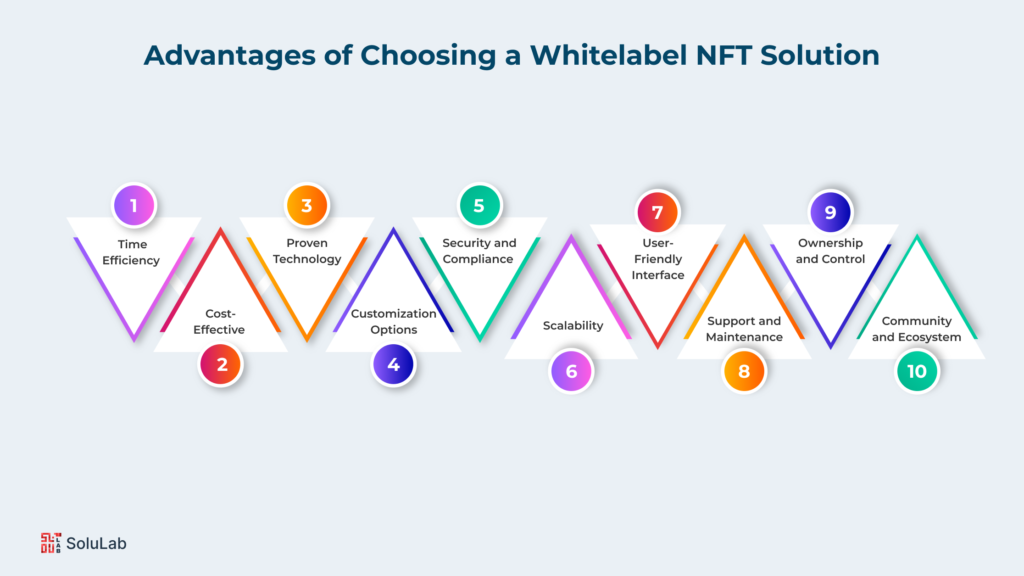
Advantages of Choosing a Whitelabel NFT Development Company

  • Time Efficiency: Building a custom NFT marketplace from scratch can be a time-consuming process, involving extensive development, testing, and refinement. Whitelabel solutions significantly reduce development time, allowing you to launch your NFT platform faster and seize opportunities in the market swiftly.
  • Cost-Effective: Developing a bespoke NFT platform can be expensive due to the associated development, testing, and ongoing maintenance costs. Whitelabel solutions are often more budget-friendly, as they leverage pre-existing technology and infrastructure.
  • Proven Technology: Whitelabel NFT solutions are built on tested and proven technology. When you choose a reputable whitelabel NFT development company, you can leverage their experience and expertise to ensure a stable and secure platform. This is especially crucial in the NFT space, where security and reliability are paramount.

Check Our Blog Post: Top NFT Development Companies To Look At In 2024

  • Customization Options: While whitelabel solutions come with pre-built features and functionalities, they are highly customizable. This means you can tailor the platform to match your brand’s identity and meet your specific requirements. You retain control over the design, features, and user experience.
  • Security and Compliance: Security is of utmost importance in the NFT space, given the value of digital assets being traded. Whitelabel NFT development companies typically implement robust security measures, including encryption, multi-factor authentication, and regular security audits. Moreover, they often stay updated with regulatory changes and can help ensure your platform complies with relevant laws and regulations.
CTA1

  • Scalability: Your NFT marketplace should be prepared to handle increased traffic and transaction volumes as your user base grows. Reputable whitelabel solutions are designed to be scalable, allowing your platform to expand seamlessly without significant disruptions.
  • User-Friendly Interface: A user-friendly and easy to use interface is vital for attracting and retaining users. Many whitelabel NFT solutions come with well-designed user interfaces that provide an intuitive and visually appealing experience for your users.
  • Support and Maintenance: Establishing and maintaining an NFT marketplace requires ongoing support and maintenance. Reliable whitelabel NFT development companies offer support services to address any issues or updates that may arise. This ensures that your platform remains up-to-date, secure, and responsive to user needs.
  • Ownership and Control: When you choose a whitelabel NFT marketplace, you retain ownership and control over your platform. This means you can make decisions about its future development, monetization strategies, and branding without being tied to a third-party platform’s limitations.
  • Community and Ecosystem: Whitelabel NFT development companies often have established communities and ecosystems of users and developers. Joining such an ecosystem can provide you with valuable networking opportunities, partnerships, and insights into industry trends.

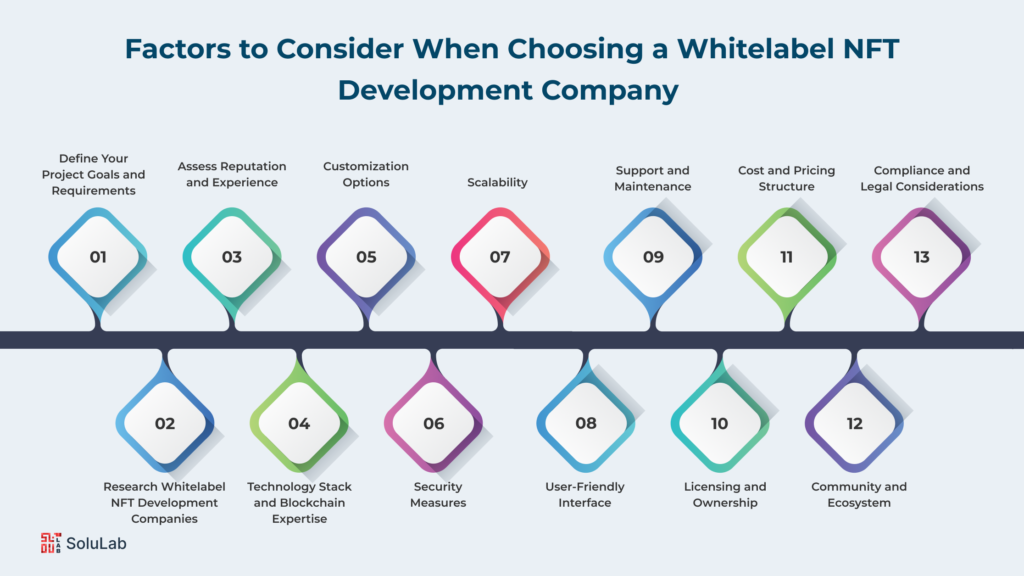
Key Factors to Consider When Choosing a Whitelabel NFT Development Company
Key Factors to Consider When Choosing a Whitelabel NFT Development Company

Selecting the best whitelabel NFT development company is a pivotal decision that can significantly impact the success of your NFT marketplace venture. 

1. Define Your Project Goals and Requirements

Before you start your search for a whitelabel NFT development company, you must have a clear understanding of your project’s goals and requirements. Ask yourself:

  • What is the niche or industry you’re targeting with your NFT marketplace (e.g., art, music, gaming, collectibles)?
  • What specific features and functionalities do you need in your NFT platform?
  • What is your budget for development, maintenance, and ongoing support?
  • Do you have any legal or regulatory considerations, such as compliance with local laws or licensing agreements?
  • Having a well-defined project scope and goals will guide your search and help you identify the company that can best meet your needs.

2. Research Whitelabel NFT Development Companies

Start your research by identifying a list of potential whitelabel NFT development companies. You can do this through a number of means:

  • Online searches: Use search engines and NFT-related forums and communities to find companies that offer whitelabel NFT solutions.
  • Industry referrals: Seek recommendations from industry peers, fellow entrepreneurs, or NFT enthusiasts who have experience working with such companies.
  • NFT marketplaces: Explore existing NFT marketplaces to see if they offer whitelabel solutions or partnerships with development companies.
  • Compile a list of companies that seem promising and align with your project goals.

Know More: How to Build the Best White-Label NFT Marketplace?

3. Assess Reputation and Experience

The reputation and experience of a whitelabel NFT development company are crucial factors to consider. Here’s how to assess them:

  • Portfolio: Review the company’s portfolio of past projects. Look for successful NFT marketplaces they have developed and launched. Pay attention to the diversity of industries and niches they have worked in.
  • Client testimonials: Seek out client testimonials and reviews. Reach out to past clients if possible to gather feedback about their experiences with the company.
  • Case studies: Some companies provide detailed case studies of their projects, highlighting challenges and solutions. Review these to gain insights into their problem-solving abilities.
  • A reputable and experienced company is more likely to deliver a high-quality product and provide reliable support.

4. Technology Stack and Blockchain Expertise

Since NFTs are blockchain-based, it’s crucial that the NFT development company has expertise in blockchain technology. Evaluate:

  • Their knowledge of blockchain networks: Ensure they are well-versed in the blockchain network you plan to use for your NFT marketplace, whether it’s Ethereum, Binance Smart Chain, Flow, or another.
  • Smart contract proficiency: NFTs rely on smart contracts for functionality. Assess the company’s capability to create and audit smart contracts for security and reliability.
  • Scalability: Inquire about their ability to design a scalable NFT platform that can handle growing user traffic and transaction volumes.
  • A solid understanding of blockchain technology is essential to ensure the security and efficiency of your NFT marketplace.

Related: 5 Best White Label NFT Marketplaces In The World

5. Customization Options

NFT marketplaces should be highly customizable to align with your brand identity and specific requirements. Evaluate:

  • The degree of customization offered by the whitelabel NFT solution. Can you modify the platform’s design, features, and functionalities to suit your vision?
  • User interface and user experience (UI/UX): Ensure that the platform’s UI/UX can be tailored to create an engaging and user-friendly environment.
  • White labeling options: Confirm that you have the freedom to rebrand the platform completely, so it appears as your unique product.
  • Customization is essential to differentiate your NFT marketplace from competitors and align it with your brand.

6. Security Measures

The security of your NFT marketplace is paramount, as it deals with valuable digital assets. Inquire about the security measures the company implements, including:

  • Encryption: Data encryption to protect user information and transactions.
  • Multi-factor authentication (MFA): Additional layers of security to prevent unauthorized access.
  • Regular security audits: Routine assessments to identify and address vulnerabilities.
  • Compliance with industry standards: Ensure that the company follows security best practices and complies with relevant industry standards.
  • Security breaches can lead to significant reputational and financial damage, so this aspect should not be overlooked.

7. Scalability

Your NFT marketplace should be capable of accommodating increased traffic and transaction volumes as your user base grows. Assess:

  • The platform’s scalability options: Can it handle growing demand without performance degradation or downtime?
  • Load testing: Inquire if the company conducts load testing to ensure the platform’s ability to handle peak usage periods.
  • Scalability ensures that your NFT marketplace can evolve and expand along with your success.

Read Also: How will White-Label NFT Marketplace Development Benefit your Business?

8. User-Friendly Interface

A user-friendly interface is crucial for attracting and retaining users. Evaluate:

  • The platform’s user interface (UI) design: Is it intuitive, visually appealing, and easy to navigate?
  • User experience (UX): Does the platform provide a seamless and enjoyable experience for users?
  • A well-designed UI/UX can significantly impact user engagement and conversion rates.

9. Support and Maintenance

Building and maintaining an NFT marketplace is an ongoing process. Inquire about the support and maintenance services offered by the company, including:

  • Response time for addressing issues or inquiries.
  • Availability of ongoing updates and improvements.
  • Technical support channels and their responsiveness.
  • A reliable support system ensures that your NFT marketplace remains secure and up-to-date.

10. Licensing and Ownership

Understand the licensing terms and ownership rights associated with the whitelabel solution. Ensure that:

  • You have full control and ownership of your NFT marketplace to avoid legal complications in the future.
  • Licensing agreements are clear and align with your business goals and objectives.
  • Legal clarity is essential to protect your long-term interests.

11. Cost and Pricing Structure

While cost-effectiveness is a key advantage of whitelabel solutions, carefully review the pricing structure and associated fees. Be aware of:

  • Initial development costs.
  • Ongoing maintenance and support fees.
  • Any hidden or unexpected costs that may arise during development and operation.
  • Budget transparency is crucial for managing your financial resources effectively.

Related: What are the Key Features of the White-Label NFT Marketplace?

12. Community and Ecosystem

A strong community and ecosystem can be valuable in the NFT space. Consider whether the whitelabel NFT development company has:

  • An active user community or developer community.
  • Partnerships or collaborations within the NFT industry.
  • A network of experts and enthusiasts who can provide insights and support.
  • Being part of a thriving community can open doors to networking opportunities and industry trends.

13. Compliance and Legal Considerations

NFTs are subject to various regulatory considerations in different jurisdictions. Ensure that the whitelabel solution complies with relevant laws and regulations in your target market. Consult with legal experts if needed to address compliance issues effectively.
CTA2

Conclusion

Choosing the best whitelabel NFT development company is a critical decision that can greatly impact the success of your NFT marketplace. Carefully evaluate each company’s reputation, experience, technology stack, customization options, security measures, and support services.

Remember that the NFT space is continuously evolving, so staying informed about the latest trends and developments is essential. With the right whitelabel NFT development company and a well-thought-out strategy, your NFT marketplace can thrive in this exciting and dynamic ecosystem, opening up new opportunities for your brand and users alike.

On the path towards a future driven by NFTs, SoluLab stands as a reliable partner, leading businesses towards success by leveraging its proficiency in whitelabel NFT marketplace development services. With innovation as its guiding force, SoluLab empowers enterprises to explore new horizons, revolutionize commerce, and establish their unique presence in the digital realm.

Together with SoluLab, you embark on a transformative journey—a journey characterized by innovation driving advancement and turning aspirations into reality. Connect with SoluLab today to enter the realm of white-label NFT marketplaces, where the possibilities are endless, and opportunities know no bounds.

FAQs

1. What is a Whitelabel NFT Development Company?

A whitelabel NFT development company specializes in providing ready-made, customizable solutions for creating NFT marketplaces. These solutions allow businesses to launch their NFT platforms quickly, without building them from scratch.

2. Why should I choose a whitelabel NFT solution over custom development?

Whitelabel NFT solutions are often more cost-effective and time-efficient compared to custom development. They leverage pre-existing technology, reduce development time, and offer customization options, making them a practical choice for entering the NFT market swiftly.

3. What factors should I consider when choosing a whitelabel NFT development company?

Consider factors such as the company’s reputation, experience, technology stack, customization options, security measures, scalability, user interface, support, legal considerations, and pricing structure.

4. How important is security when selecting a whitelabel NFT development company?

Security is crucial in the NFT space due to the value of digital assets. Ensure that the company implements robust security measures, including encryption, multi-factor authentication, and regular security audits, to protect your platform and users.

5. Can I customize a whitelabel NFT solution to match my brand’s identity?

Yes, one of the advantages of whitelabel NFT solutions is their high degree of customization. You can often tailor the platform’s design, features, and functionalities to align with your brand’s identity and specific requirements.

6. What blockchain expertise should a whitelabel NFT development company have?

The company should have proficiency in blockchain technology, including knowledge of the specific blockchain network you plan to use (e.g., Ethereum, Binance Smart Chain). They should also be skilled in creating and auditing smart contracts.

7. How can I ensure ongoing support and maintenance for my whitelabel NFT platform?

When choosing a whitelabel NFT development company, inquire about their support and maintenance services. Ensure they offer timely responses to issues, regular updates, and technical support to keep your platform secure and up-to-date.

8. Is scalability a feature provided by white-label NFT marketplaces?

Indeed, white-label NFT marketplace solutions are intentionally crafted to be scalable, capable of handling a burgeoning user base, surges in transactions, and the growing inventory of NFTs. The foundational infrastructure is primed for high performance, simplifying the process for businesses to manage heightened demand and extend their reach within the market.

The Role of DAOs and Their Benefits in the NFT Ecosystem


The Role of DAOs and Their Benefits in the NFT Ecosystem

Since their beginnings, NFTs have advanced substantially. As of May 2022, more than 1 million crypto users have acquired or traded NFTs, and the worldwide NFT industry is expected to increase from $3 billion in 2022 to $13.6 billion in 2027. Along with NFTs’ growing acceptance, other blockchain technologies, including Decentralized Autonomous Organizations (DAOs), are gaining traction in the digital arena by contributing to NFT marketplace platforms.

Is it possible to believe how out of control things have become with JPEG photographs, videos, and memes fetching millions of dollars? Not only that, but people are now purchasing virtual homes and property, and businesses are offering virtual cosmetics and apparel.  Let’s talk about what DAO implies NFT ecosystem for those of you who are curious.

Digital assets known as NFTs are upending many different businesses. They essentially tokenize a wide range of items, including valuables and works of art, and establish distinct digital ownership. Imagine it being similar to having a unique object in the digital realm. 

While NFTs have revolutionized digital ownership, DAOs are changing the way we govern and manage decentralized ecosystems. In this blog post, we will explore the pivotal role of Decentralized Autonomous Organizations (DAOs) and how they benefit the NFT ecosystem.

Before we delve into the role of DAOs, it’s essential to have a clear understanding of NFTs and why they have become a game-changer in the digital world.

What Are NFTs?

Non-fungible tokens (NFTs) are unique digital assets that represent ownership of a specific item, piece of content, or collectible. Unlike cryptocurrencies like Bitcoin or Ethereum, which are fungible and interchangeable on a one-to-one basis, NFT platforms are indivisible and irreplaceable. 

Each NFT marketplace has a distinct value and specific attributes that make it one-of-a-kind. NFTs have found applications across various domains, including digital art, music, virtual real estate, virtual goods in gaming, and more. They are typically built on blockchain platforms like Ethereum, which provides the necessary infrastructure to establish ownership, provenance, and scarcity of these digital assets.

The Rise of DAOs

The Rise of DAOs

Decentralized Autonomous Organizations (DAOs) are organizations governed by smart contracts and code, rather than a centralized authority. DAOs are characterized by several key features:

  • Decentralization: DAOs operate on blockchain networks, ensuring that decision-making power is distributed among token holders rather than controlled by a single entity.
  • Transparent Rules: The rules and governance processes of DAOs are encoded in smart contracts, making them transparent and immutable.
  • Token-Based Voting: DAOs use tokens to facilitate decision-making. Token holders can participate in governance by voting on proposals using their tokens.
  • Community-Driven: DAOs are often community-driven, where members collectively determine the organization’s direction, policies, and resource allocation.

Before and After DAOs in the Evolution of NFT Platforms

Before and After DAOs in the Evolution of NFT Platforms

The development of NFT (Non-Fungible Token) platforms has undergone a significant transformation due to the emergence of Decentralized Autonomous Organizations (DAOs). In the pre-DAO era, NFT platforms primarily served as centralized marketplaces where users could engage in buying, selling, and trading digital assets represented as NFTs.

During this time, these platforms functioned with a traditional hierarchical structure and relied on central authorities for governance and decision-making.

However, the advent of DAO development introduced substantial changes to NFT platforms and ushered in fresh opportunities. DAOs brought decentralization, autonomy, and community-driven governance to NFT platforms, fundamentally altering their operational dynamics and granting enhanced empowerment to their users.

Here’s a detailed comparison of NFT platforms before and after the integration of DAOs:

Read Also: Top NFT Development Companies To Look At In 2023

  • Governance

Before DAOs, NFT platforms were under the control of a central authority responsible for shaping platform policies, setting fees, and curating assets. With the emergence of DAOs, governance shifted towards community involvement. DAO development platform introduced mechanisms for token holders to participate in decision-making through voting, enabling them to influence platform policies and their evolution.

  • Curation and Discovery 

In the pre-DAO era, NFT platforms predominantly employed centralized methods for curating and showcasing assets, relying on platform administrators or curators to decide which items received prominence. However, DAO-based NFT platforms introduced decentralized curation models that encouraged collective participation in asset curation and discovery. Token holders gained the ability to propose and vote on featured assets, democratizing the curation process.

CTA1

  • Revenue Sharing 

In the absence of DAOs, NFT platforms typically collected fees or commissions from transactions, with the platform itself reaping the financial benefits. With the adoption of DAO development services, a more equitable revenue-sharing model emerged. DAOs enabled the allocation of a portion of the platform’s revenue to token holders, fostering community engagement and providing rewards to contributors.

  • Platform Development 

DAOs introduced a community-driven approach to platform development and enhancement. Instead of relying exclusively on a centralized development team, NFT platforms operating under DAOs could tap into the expertise of community members across various domains. This inclusive approach led to a more diverse and innovative development landscape.

  • Long-term Sustainability 

DAOs opened the door to greater long-term sustainability for NFT platforms. By affording token holders a stake in the platform and involving them in decision-making, the DAO-enabled NFT platform cultivated a heightened sense of ownership and engagement. This, in turn, nurtured a dedicated and vibrant community, contributing to the platform’s growth and enduring success.

Know More: How to Build an NFT Marketplace like Binance?

How Might Users Profit From DAO-enabled NFT Platforms?

How Might Users Profit From DAO-enabled NFT Platforms?

Users who use DAO-enabled NFT platforms get access to a variety of advantages, including more control, involvement, and possible rewards. Users of DAO-enabled NFT platforms can gain from them in the following ways:

  • Control and Ownership 

Users enjoy a higher sense of ownership and power over DAO-enabled NFT systems. They have the ability to take part in active decision-making procedures including voting on platform regulations, governance ideas, and asset curation. Through their participation, users may influence the platform’s growth and direction in accordance with their interests and beliefs.

  • Fair and Transparent Governance 

DAO-based NFT platforms offer decentralized and transparent governance methods. On the blockchain, users have access to and may validate platform operations, transactions, and decision-making procedures. This openness promotes trust and guarantees that choices about governance are made honestly and cooperatively, without the interference of a centralized power.

  • Community Partnership 

NFT systems with DAO support encourage user participation and cooperation. Users may communicate, exchange ideas, and support the expansion of the platform using DAO procedures. New features, alliances, or initiatives can be suggested by community members, and the DAO can decide whether or not to adopt them. 

Read Our Blog Also: An Ultimate Handbook for NFT Creators: Selecting the Best Blockchains for Your NFT Projects

  • Voting Rights 

These platforms differ from normal platforms, which have identical characteristics, in terms of their governance model and management regulations. DAO-enabled NFT platforms rely on member votes to make awards and change the rules and regulations already in place. It makes it possible for any user to take part in decision-making processes and decide on future community policies through decentralized and transparent decision-making.

  • Profits and Rewards

Since gaming-based NFT platforms are cutting-edge and give their users a variety of ways to make money, interest in them keeps growing. Individuals of the NFT platform can suggest possibilities like NFT staking through DAO. By allowing them to access their NFTs and stake into liquidity pools without changing ownership of their NFTs (selling them), NFT staking enables NFT holders to create passive income. We’ll develop more inventive ways to monetize assets over time. Platforms for NFT staking are widely used and have already made it possible for NFT holders to make money using their monetization strategies.

  • NFT Battles

The NFT platform offers its customers the “NFT Battles” functionality via a decentralized application. NFT holders compete with rivals (other NFT holders) by wagering their resources. Others may stake NFT tokens in order to support their chosen NFT and receive returns in NFT tokens and digital assets. 

Have A Look At Our Blog: How is Gaming Contributing to the NFT Industry?

  • NFT Yield Farming 

Users who own both their NFTs and the native token of the site are eligible to engage in yield farming. In order to do this, customers must directly stake their appropriate assets in the platform’s liquidity pools, providing liquidity for the platform and generating incentives. Tokens plus a finite quantity of NFTs make up the awards. However, not every user who stakes their NFTs is eligible to get unusual NFTs as compensation; before staking their NFTs, individuals have to first assess their eligibility.

Challenges and Considerations in the Integration of DAOs in NFT Platforms

The integration of Decentralized Autonomous Organizations (DAOs) in NFT (Non-Fungible Token) platforms offers numerous advantages, but it also presents a set of challenges and considerations that must be carefully addressed. Here are some of the challenges associated with DAOs in NFT platforms:

  • Complex Governance Decision-Making: Achieving consensus among diverse token holders can be challenging, leading to potential gridlock or slow decision-making processes.
  • Sybil Attacks: The risk of Sybil attacks, where malicious entities create multiple fake identities to manipulate voting outcomes, poses a threat to the integrity of DAO-based governance.
  • Regulatory Uncertainty: Navigating the evolving and varied regulatory landscape for DAOs and NFTs across different jurisdictions can be complex and uncertain.

Read Also: BSC NFT Marketplace Development: Everything You Need to Know

  • KYC and AML Compliance: Implementing Know Your Customer (KYC) and Anti-Money Laundering (AML) compliance measures in decentralized DAOs can be difficult while maintaining user privacy.
  • Token-Based Manipulation: Token holders with a significant stake may have disproportionate influence in decision-making, potentially leading to governance centralization.
  • Legal and Taxation Challenges: Legal challenges related to securities laws, taxation, and consumer protection can pose significant hurdles for DAO-operated NFT platforms.
  • Interoperability: Ensuring interoperability between different DAOs and NFT platforms can be challenging, hindering the seamless transfer of assets and governance structures across ecosystems.

Future Trends and Developments in DAOs for NFTs

Future Trends and Developments in DAOs for NFTs

As the integration of Decentralized Autonomous Organizations (DAOs) in the NFT (Non-Fungible Token) space gains momentum, several compelling trends and developments are expected to shape the future of digital ownership and governance. Here’s a glimpse into what we can anticipate:

1. Enhanced Governance Structures

DAOs will evolve to offer more sophisticated governance structures. Multilayered DAOs, where sub-DAOs handle specific aspects of governance, may become more prevalent. This will allow for finer control and specialization in decision-making.

Enhanced governance structures will lead to more efficient and tailored decision-making processes within NFT ecosystems, making them better suited to address complex issues and adapt to the needs of their communities.

Read Blog Also: Why Should You Start Your Own NFT Marketplace Business?

2. DAO-to-DAO Collaboration

We can expect to see increased collaboration between different DAOs within the NFT space. These collaborations may involve shared resources, cross-platform interoperability, and joint initiatives.

DAO-to-DAO collaborations will foster a sense of unity and cooperation within the NFT ecosystem, enabling projects to leverage each other’s strengths, expand their reach, and create new opportunities for NFT holders.

3. Regulatory Compliance Solutions

As regulatory scrutiny of NFTs and DAOs intensifies, there will be a growing demand for compliance solutions tailored to decentralized governance models. Projects will focus on developing tools and frameworks to ensure compliance with evolving regulations.

Regulatory compliance solutions will help NFT platforms and DAOs navigate legal challenges and establish a more secure and compliant environment, potentially reducing legal risks and uncertainties.

4. Decentralized Identity Verification

Decentralized identity verification solutions will emerge to address KYC (Know Your Customer) and AML (Anti-Money Laundering) requirements without compromising user privacy. These solutions will provide a balance between compliance and decentralization.

Decentralized identity verification will enable NFT platforms to meet regulatory obligations while preserving the anonymity and privacy of users, enhancing trust and transparency in DAO-driven ecosystems.

Know More: How to Build an NFT Marketplace on Ethereum Blockchain?

5. Integration with Metaverse Platforms

DAOs in the NFT space will increasingly integrate with metaverse platforms and virtual worlds. NFT ownership and governance will extend to virtual real estate, assets, and experiences within these immersive digital environments.

This integration will create a seamless user experience, allowing NFT holders to have a unified presence and influence across multiple virtual spaces, ultimately blurring the lines between the physical and digital worlds.

6. DAO-Backed NFT Curation and Discovery

DAOs will take a more active role in curating and discovering NFT content. These decentralized curation models will empower token holders to collectively decide which NFTs gain visibility and recognition.

It will democratize the curation process, ensuring that quality NFTs receive recognition based on community consensus rather than centralized decision-makers, fostering diversity and innovation in the NFT ecosystem.

CTA2

Conclusion

In conclusion, the integration of Decentralized Autonomous Organizations (DAOs) into the NFT ecosystem marks a pivotal moment in the evolution of digital ownership and governance. These autonomous structures have revolutionized NFT development platforms and NFT marketplace development services, ushering in a new era of decentralized decision-making, community empowerment, and inclusivity. While challenges such as governance complexities and regulatory considerations persist, the future holds promising trends, including enhanced governance structures, DAO-to-DAO collaborations, and innovative compliance solutions. 

As we navigate the path ahead, it is clear that DAOs will continue to be a driving force, shaping the destiny of NFTs and reaffirming their position as a transformative and sustainable digital asset class. The dynamic synergy between DAOs and NFTs promises a future where digital ownership is not just about possession but active participation, where the community is at the heart of every creation, curation, and decision in the ever-expanding NFT universe.

SoluLab, with its expertise in blockchain technology and NFT development, stands at the forefront of empowering NFT platforms to harness the full potential of DAOs. Our NFT Marketplace Development services and NFT development platform solutions are designed to seamlessly integrate DAO functionality, enhancing governance, security, and user experience. We offer tailored solutions to address the challenges of scalability, regulatory compliance, and smart contract security while staying at the cutting edge of emerging trends in the NFT space. By Partnering with SoluLab, you can navigate the evolving landscape of NFTs and DAOs with confidence, unlocking new possibilities for decentralized digital ownership and community-driven success.

FAQs

1. What is the role of DAOs in NFT platforms, and how do they differ from traditional governance structures?

DAOs (Decentralized Autonomous Organizations) play a pivotal role in NFT ecosystems by shifting decision-making power from central authorities to token holders. They enable community-driven governance, granting users a direct say in platform policies and development, unlike traditional hierarchical structures.

2. How do DAOs benefit NFT creators and collectors in terms of revenue sharing and long-term sustainability?

DAOs offer a fair revenue-sharing model, automatically distributing royalties to creators on secondary sales. This incentivizes creators and fosters long-term sustainability by creating a committed and engaged community that contributes to platform growth.

3. What are the key challenges and considerations associated with implementing DAOs in NFT platforms, especially concerning governance complexities and regulatory aspects?

Challenges include achieving consensus in diverse communities, the risk of Sybil attacks, and navigating complex regulatory landscapes. To address these challenges, clear governance frameworks, identity verification mechanisms, and legal expertise are essential.

4. What trends can we expect to see in the future of DAOs in the NFT space, and how will they impact digital ownership?

The future of DAOs in the NFT space includes enhanced governance structures, DAO-to-DAO collaborations, regulatory compliance solutions, decentralized identity verification, integration with metaverse platforms, and DAO-driven curation. These trends will democratize digital ownership and foster innovation.

5. How can SoluLab assist in harnessing the benefits of DAOs for NFT platforms and what services does it offer in this regard?

SoluLab, with its blockchain and NFT development expertise, offers tailored solutions to seamlessly integrate DAO functionality into NFT platforms. Services include scalability enhancements, regulatory compliance solutions, smart contract security, and staying updated on emerging trends in the NFT space, ensuring a robust and future-ready ecosystem.

How to Market and Promote Your NFT Marketplace Effectively?

How to Market and Promote Your NFT Marketplace Effectively?

Non-fungible tokens (NFTs) have emerged as a game-changing innovation in the fast-growing field of digital assets. These unique, indivisible tokens, often representing digital or physical assets, have created a buzz in the art, entertainment, and collectibles industries. As NFTs gain widespread recognition, so do the platforms that facilitate their creation, sale, and exchange—NFT marketplaces.

Launching your NFT marketplace is an exciting venture, but in a landscape becoming increasingly crowded, effective marketing and promotion are key to standing out. In this blog, let’s explore strategies and best practices to help you successfully market and promote your NFT marketplace.

Understanding Your Niche-to-Market NFT Marketplace

Understanding Your Niche-to-Market NFT Marketplace

Know Your Audience: One of the first steps in marketing your NFT marketplace effectively is understanding your target audience. NFTs cover a broad spectrum, from digital art and music to virtual real estate and collectibles. To tailor your marketing efforts, you must identify your niche within the NFT space. Consider the following questions:

  • What types of NFTs will your platform primarily feature?
  • Who are the potential buyers and creators in your chosen niche?
  • What are their interests, preferences, and motivations for engaging with NFTs?

Conduct Market Research: Conducting thorough market research is crucial. It helps you gain insights into your potential users and competitors. Explore existing NFT marketplaces within your niche to understand what works and what gaps you can fill. Research your target audience’s online behavior and interests to craft targeted marketing campaigns.

Know Your Competitors: To succeed in your NFT marketplace venture, you need to be aware of the competition. Analyze other NFT marketplace platforms within your niche, noting their strengths, weaknesses, and strategies. Identify gaps or areas where your marketplace can offer something unique. Your goal is not just to replicate what others are doing but to find a distinct position in the market.

User Personas: Create detailed user personas to represent your target audience segments. These personas should include demographic information, behaviors, goals, and pain points. Understanding your users on a personal level will help you tailor your marketing efforts to resonate with them effectively.

Market Trends: Stay up-to-date with trends in the NFT space and your niche. Monitor the kinds of NFTs that gain attention and the artists or creators making waves. Knowing what’s trending can help you curate your platform’s content and anticipate user preferences.

Read Also: Solana NFT Marketplace: How to build your own NFT Marketplace on Solana

Creating a Unique Selling Proposition (USP) for Your NFT Marketplace

Creating a Unique Selling Proposition (USP) for Your NFT Marketplace

In a crowded NFT marketplace services/landscape, having a Unique Selling Proposition (USP) is paramount. Your USP should clearly communicate what sets your platform apart from the competition and why users should choose your marketplace. Consider the following strategies to create a compelling USP:

  • Exclusivity: Offer exclusive NFT drops or collaborations that users can’t find elsewhere. Limited editions and unique partnerships can generate buzz and attract both creators and collectors.
  • Ease of Use: Ensure your platform is user-friendly and intuitive. A seamless user experience, from creating an account to minting NFTs and making transactions, can be a strong selling point.
  • Low Fees: Consider competitive fee structures for creators and buyers. Transparent fee policies can be a significant attraction.

CTA1

  • Community Engagement: Build a strong and engaged user community around your platform. Active communities can foster loyalty, word-of-mouth marketing, and valuable feedback.
  • Quality Curation: Curation is the key to ensuring that your platform showcases high-quality NFTs. Avoid clutter and low-value items in your marketplace. Implement a rigorous curation process to ensure that only valuable and authentic NFTs are featured.
  • Exclusivity and Rarity: Exclusivity is a powerful driver in the NFT market. Offer limited edition NFT drops or partnerships with renowned creators to create a sense of rarity and value. Scarcity often drives demand, and collectors are often drawn to the idea of owning something unique or one-of-a-kind.
  • User-Friendly Experience: The user experience is critical. Make sure your platform is simple to use and comprehend. From creating accounts to minting NFTs and conducting transactions, every step should be intuitive. Complex or confusing processes can deter users.
  • Transparent Fee Structure: Be transparent about your fee structure. Hidden or unclear fees can lead to mistrust among users. Consider competitive fees for creators and buyers, and clearly communicate how fees are calculated and applied.

Know More: Best Tron NFT Marketplace Platforms of 2025

  • Building a Community: Community building is essential. Encourage interactions among users, such as discussions, feedback sharing, and collaborations. Actively engage with your community on social media and within your platform to foster a sense of belonging.

Marketing Strategies for Your NFT Marketplace

Marketing Strategies for Your NFT Marketplace

With a clear understanding of your niche and a compelling Unique Selling Proposition (USP), it’s time to dive into effective marketing strategies for your NFT marketplace. Successful promotion involves reaching your target audience, building trust, and creating a buzz. Here are essential strategies to consider:

1. Leveraging Social Media

  • Harness the Power of Visual Platforms: Visual content is a cornerstone of NFT marketing. Utilize platforms like Instagram and Pinterest to showcase NFT artwork and assets. Regularly post high-quality visuals and engage with your audience through comments, likes, and shares.
  • Twitter Engagement: Twitter is a hub for NFT discussions and announcements. Build a strong presence on Twitter by following key players in the NFT community, participating in conversations, and sharing updates about your marketplace.
  • Discord Communities: Discord is a popular platform for NFT communities. Create and manage a Discord server for your marketplace to facilitate discussions, host AMAs (Ask Me Anything sessions), and engage with your community.

2. Influencer Marketing

  • Identify Niche Influencers: Collaborate with influencers within your niche. These influencers can promote your platform to their dedicated followers who are interested in NFTs within your chosen category. Authentic endorsements can drive significant traffic.
  • Sponsored Content: Consider sponsoring influencer content, such as YouTube reviews, live streams, or blog posts that feature your platform. Make sure the material is relevant to your USP and connects with your target audience.

Have A Look At Our Blog: How to Build an NFT Marketplace from Scratch

3. Community Building

  • Foster Community Engagement: Actively engage with your community through regular updates, discussions, and contests. Encourage user-generated content, such as showcasing user-created NFTs on your platform or social media.
  • Feedback Loops: Listen to user feedback and implement changes based on their suggestions. When users feel heard and see improvements, they’re more likely to become loyal advocates for your platform.
  • Events and Virtual Gatherings: Host virtual events, webinars, or conferences related to your niche. To ensure seamless streaming and global reach, consider using a live TV CDN that can handle high traffic and deliver content without buffering or delays.

4. SEO and Content Marketing

  • Content Creation: Develop high-quality, informative content related to NFTs in your niche. Create blog posts, guides, tutorials, and videos that address common questions and challenges faced by your target audience.
  • Keyword Optimization: Optimize your content for relevant keywords. Use tools like Google Keyword Planner to identify search terms that your potential users are looking for.
  • Guest Posting: Contribute guest posts to established blogs and websites within your niche, either on your own or by working with a guest posting agency. This not only builds backlinks but also establishes your platform as an authority.

5. Paid Advertising and Partnerships

  • Targeted Ads: Invest in paid advertising efforts on sites such as Google Ads or Facebook. Target specific demographics, interests, and behaviors that align with your niche.
  • Strategic Partnerships: Collaborate with other NFT marketplaces, artists, or influencers for joint promotions. Partnerships can expand your reach and introduce your platform to new audiences.

Read Also: Benefits Of An NFT Marketplace On Cardano

6. Data Analytics and Iteration

  • Track User Behavior: Utilize web analytics tools to monitor user behavior on your platform. Analyze which NFTs are gaining traction, how users navigate your site, and where they drop off.
  • A/B Testing: Conduct A/B tests to optimize different elements of your platform, such as landing pages, call-to-action buttons, or email subject lines. Data-driven improvements can enhance user engagement and conversions.
  • Iterate and Adapt: Continuously iterate your marketing strategies based on data insights. What works today may not work tomorrow in the dynamic NFT landscape.

7. Security and Trust

Building and maintaining trust is paramount in the NFT marketplace development. Here are essential steps to enhance security and instill trust among users:

  • Secure Transactions: Implement robust security measures for transactions, including encryption and multi-factor authentication. Users should feel confident about the safety of their assets.
  • Smart Contract Audits: If your platform uses smart contracts, ensure they undergo rigorous security audits to prevent vulnerabilities and potential hacks.
  • QR Codes for Easy NFT Access: Beyond authentication, the QR code Generator can be used to simplify NFT transfers and access. Users can scan a QR code to view, share, or display their NFTs without needing to log into their wallets manually. This is particularly useful for physical NFT integrations such as digital artwork linked to QR codes on event tickets, merchandise, or real-world collectibles.
  • Verified Profiles: Offer profile verification for creators and collectors. Verified profiles can add a layer of trust, assuring users of the authenticity of participants.
  • Transparent Policies: Clearly communicate your platform’s policies, including fee structures, dispute resolution, and ownership rights. Transparency fosters trust among users.

Read Our Blog: What are some White-Label NFT Marketplace Solutions?

8. Legal and Compliance Considerations

Navigating the legal landscape is essential for the long-term sustainability of your NFT marketplace development :

  • Regulatory Compliance: Stay informed about regulations related to NFTs and cryptocurrencies in your jurisdiction. Comply with anti-money laundering (AML) and know-your-customer (KYC) requirements if necessary.
  • Intellectual Property Rights: Implement policies to protect intellectual property rights. Ensure that creators have the appropriate rights to mint and sell NFTs on your platform.
  • Terms of Service and Privacy: Draft comprehensive terms of service and privacy policies that govern user interactions on your platform. Clearly outline user responsibilities and data handling practices.

CTA2

Conclusion

Effectively marketing and promoting your NFT marketplace is a multifaceted endeavor that combines understanding your niche, creating a compelling USP, and implementing a range of strategies to reach your target audience. By leveraging social media, engaging influencers, building a strong community, and focusing on security and compliance, you can establish a reputable presence in the NFT ecosystem.

In this dynamic landscape, adaptability and data-driven decision-making are key. Continuously assess your marketing efforts, listen to user feedback, and evolve your strategies to meet the changing demands of NFT  development companies. With the right approach and dedication, your NFT marketplace can thrive and contribute to the growing world of digital assets.

SoluLab is a leading blockchain and software development company known for its innovative solutions in the digital landscape. With a commitment to cutting-edge technology and a track record of successful projects, SoluLab has established itself as a trusted partner for businesses seeking to navigate the evolving world of blockchain and NFTs (Non-Fungible Tokens). Their expertise extends to creating secure and user-friendly NFT marketplaces, aligning perfectly with the topic of effectively marketing and promoting such platforms. By leveraging SoluLab’s technical prowess and industry insights, businesses can not only develop unique NFT marketplaces but also gain the guidance needed to implement marketing and promotional strategies that resonate with their target audiences.

Our NFT Website Development Company offers secure and customizable NFT marketplace development services, emphasizing user-friendliness and security through digital wallets and smart contracts. We have a team of experienced NFT developers specializing in cryptocurrency and blockchain solutions, providing top-tier NFT services, including blockchain technology and smart contract development for process automation. Our user-friendly and advanced platform development, along with highly secure digital wallets tailored to your business needs, ensures a seamless NFT experience. Contact SoluLab today to explore our NFT solutions.

FAQs

1. What is the role of market research in promoting an NFT marketplace?

Market research is essential for understanding your target audience, competitors, and trends within your niche. It helps you tailor your marketing efforts, create user personas, and identify opportunities for differentiation. By conducting thorough research, you can make informed decisions and refine your strategies to effectively reach your audience.

2. How can I create a Unique Selling Proposition (USP) for my NFT marketplace?

Creating a USP involves identifying what makes your platform unique. You can do this by offering exclusive NFT drops, ensuring a user-friendly experience, setting transparent fee structures, fostering community engagement, and emphasizing quality curation. Your USP should clearly communicate why users should choose your marketplace over others.

3. Why is community building important for an NFT marketplace?

Community building is crucial for several reasons. It fosters user loyalty, encourages word-of-mouth marketing, and provides valuable feedback. A strong community can also enhance the reputation and credibility of your marketplace. Active engagement with your user base can create a sense of belonging and trust, making users more likely to return and participate.

4. How can I ensure the quality of NFTs in my marketplace?

Quality curation is key to maintaining the reputation and trustworthiness of your NFT marketplace. Implement a rigorous curation process that includes verifying the authenticity of NFTs and ensuring they meet your platform’s quality standards. Avoid clutter and low-value items by carefully selecting which NFTs to feature on your platform.

5. What legal and compliance considerations should I be aware of when operating an NFT marketplace?

Operating an NFT marketplace comes with legal and regulatory responsibilities. You may need to address issues such as copyright infringement, intellectual property rights, tax compliance, and data privacy. Consult with legal experts who specialize in blockchain and digital assets to ensure that your platform operates within the bounds of relevant laws and regulations.

Top 10 NFT Development Companies To Look At In 2026

In recent years, NFTs have gained immense popularity, allowing individuals to tokenize and trade unique digital assets, ranging from artwork and music to virtual real estate and collectibles. The demand for NFTs is skyrocketing, leading to the emergence of specialized NFT development companies that are pushing the boundaries of what’s possible with digital ownership.

As NFTs continue to revolutionize the digital landscape, these companies are at the forefront of creating innovative NFT solutions and driving the growth of this booming industry.

In this blog, we will introduce you to the top NFT development companies that are leading the way in building groundbreaking platforms, marketplaces, and technologies for the NFT ecosystem. From their expertise in blockchain technology to their creative vision, these companies are shaping the future of digital ownership and transforming the way we interact with and value digital assets. So, let’s dive in and explore the top NFT development companies to keep an eye on in 2026.

What is the Importance of NFT Development Companies in Shaping the NFT Ecosystem?

In the rapidly evolving digital landscape, Non-Fungible Tokens (NFTs) have emerged as a revolutionary technology, transforming the way we perceive and trade digital assets. NFT development companies play a crucial role in shaping the NFT ecosystem by driving innovation, providing technical expertise, and creating platforms that enable the seamless creation, distribution, and ownership of unique digital assets. Let’s explore the importance of NFT development companies in shaping the NFT ecosystem.

  • Technical Expertise and Innovation: NFT development companies bring in-depth technical expertise to the table. They possess a deep understanding of blockchain technology, smart contracts, and decentralized systems, which are the building blocks of NFTs. These companies are at the forefront of technological advancements, constantly pushing the boundaries of what’s possible with NFTs. They explore innovative solutions, such as interoperability, scalability enhancements, and improved user experiences, to drive the growth and adoption of NFTs.
  • Creation of NFT Marketplaces and Platforms: NFT development companies play a pivotal role in creating NFT marketplaces and platforms where users can mint, buy, sell, and trade digital assets. These platforms act as the foundation for the NFT ecosystem, providing a secure and user-friendly environment for creators, collectors, and investors. By developing robust and intuitive platforms, NFT development companies facilitate the seamless transfer of ownership and establish trust among participants in the NFT market.
  • Standardization and Tokenization: NFT development companies contribute to the standardization of NFTs, establishing guidelines, protocols, and best practices for the creation and implementation of these unique digital assets. They define the technical specifications and metadata standards that ensure interoperability and compatibility across different NFT platforms. Additionally, NFT development companies facilitate the tokenization of a wide range of digital assets, including art, music, virtual real estate, and collectibles, unlocking new avenues for creators to monetize their work and enabling fractional ownership.
  • Security and Authenticity: One of the critical challenges in the NFT ecosystem is ensuring the security and authenticity of digital assets. NFT development companies implement robust security measures, leveraging blockchain’s decentralized and immutable nature to guarantee the uniqueness and provenance of NFTs. Through smart contracts and cryptographic techniques, they establish transparent ownership records and prevent fraudulent activities, safeguarding the integrity and value of digital assets.
  • Expansion of NFT Applications: NFT development companies are actively exploring new applications and use cases for NFTs beyond art and collectibles. They are bridging the gap between traditional industries and blockchain technology, enabling the tokenization of real-world assets like real estate, intellectual property, and even virtual goods within video games. By expanding the horizons of NFT applications, these companies unlock new opportunities for creators, investors, and businesses across diverse sectors.
  • Market Education and Awareness: NFT development companies contribute to market education and awareness by providing resources, tutorials, and workshops to help users understand the intricacies of NFTs. They play a crucial role in demystifying complex concepts and terminology, empowering individuals to participate in the NFT ecosystem confidently. By fostering a knowledgeable community, NFT development companies drive wider adoption and foster a vibrant marketplace for unique digital assets.

What NFT Developers Can Help With?

NFT developers can provide a range of services and expertise to help with various aspects of creating and deploying Non-Fungible Tokens (NFTs). Here are some areas where NFT developers can assist:

  • Smart Contract Development: NFT developers can create and deploy smart contracts on blockchain platforms like Ethereum, Binance Smart Chain, etc. These contracts define the logic and rules governing the creation, ownership, and transfer of NFTs.
  • NFT Marketplace Development: Developers can build decentralized or centralized NFT marketplaces where users can buy, sell, and trade NFTs. They can handle functionalities like user authentication, NFT listing, bidding, auctions, and transaction processing.
  • Token Standards: NFT developers are well-versed in token standards such as ERC-721 (Ethereum) or BEP-721 (Binance Smart Chain) and can help you implement these standards to ensure compatibility and interoperability with existing NFT ecosystems.
  • Metadata and Storage: NFTs often include metadata such as images, descriptions, and other relevant information. Developers can assist in defining metadata structures, handling storage solutions (IPFS, decentralized storage), and integrating with off-chain or on-chain data sources.
  • NFT Minting and Tokenization: NFT developers can create mechanisms to mint new NFTs, defining token attributes and associating them with unique identifiers. They can implement features like limited editions, royalties, or unlockable content tied to NFT ownership.
  • Security Audits: It’s crucial to ensure the security and robustness of NFT contracts and related systems. NFT developers can conduct security audits to identify vulnerabilities, suggest improvements, and provide best practices followed to protect user assets.
  • Cross-Chain Integration: Developers can facilitate interoperability by implementing cross-chain solutions, allowing NFTs to be created, traded, or used across different blockchain networks.

CTA 1

Meet the Top NFT Development Companies.

1. SoluLab

SoluLab, a leading NFT development company, offering comprehensive solutions tailored to the requirements of both businesses and individuals operating within the non-fungible tokens sphere. Their team of experienced developers and blockchain enthusiasts is committed to delivering top-notch services that cater to specific needs. Whether one’s objective is to tokenize assets, create NFT collectibles, or establish a customized marketplace, SoluLab’s expertise enables them to transform ideas into reality. Prioritizing security, scalability, and innovation, SoluLab stands as an ideal partner for fully harnessing the potential of NFT development solutions. Discover the boundless opportunities of blockchain technology by collaborating with SoluLab today.


$25-$49


50-249


2014


Los Angeles, CA, USA


Liquid Craft, XinFin

2. Fueled

Fueled specializes in creating scalable, intuitive, powerful, and visually appealing products. They believe in constantly improving their products throughout the entire development process, rather than just focusing on one concept. They understand the growing significance of NFTs and can provide expert assistance in developing a blockchain-based NFT marketplace or any other NFT-focused application. Their team of knowledgeable product managers, engineers, and designers ensures scalability and meets the requirements of both customers and businesses. Fueled believes that entering the market is just the beginning, as they strive for continuous growth and innovation.


$150-$199


50-249


2007


New York, United States


9Gag, Afterlight, QuizUp

3. PixelPlex

PixelPlex, a renowned development firm, offers invaluable strategic guidance and specializes in creating distinctive tokens and complete ecosystems to drive the progress and financial growth of non-fungible tokens (NFTs). Their expertise spans developing NFT solutions, refining existing strategies, and pioneering novel approaches that transcend mere theoretical concepts. With their innovative design solutions, your business will experience exponential growth, surpassing all expectations and propelling it to new heights.


$50-$99


51-200


2007


New York, United States


Microsoft, Oracle, BMW

4. Antier Solutions

Antier Solutions is a renowned expert in developing and scaling top-notch marketplaces, specifically designed for NFTs. With their exceptional expertise and experience, they enable users to effortlessly mint, sell, purchase, and trade NFTs. Considered the leading global firm in NFT marketplace development, Antier specializes in creating customized NFT marketplaces that enhance and elevate diverse business domains. Their marketplace solutions incorporate unique digital artifacts to add glamour and prestige to your brand.


$25-$49


501-1000


2005


Nottingham, United Kingdom


Pocial-California, Zon-US

5. Tokenminds.co

TokenMinds is a highly regarded Crypto & NFT Agency comprised of experienced professionals in various fields such as development, design, community management, authorship, consulting, and training. Their focus is on delivering exceptional services that exceed client expectations. With a dedicated team of passionate experts, TokenMinds covers all aspects of project requirements, including community moderation, engineering, and web3 marketing management, ensuring the utmost quality in their work.


$55-$90


11-50


2017


Amsterdam, Netherlands


Capdax, Trueplay, Cryptoblade

6. Artjoker.net

Artjoker.net can help you monetize your NFT marketplace by providing you with a custom marketplace tailored to your project. With their extensive experience in offering NFT development services and solutions, they understand the importance of attracting more visitors to a platform through user-friendly interfaces and enhanced functionality. By creating a specialized marketplace, you can avoid relying on intermediaries or adhering to external platform regulations.


$55-$90


50-249


2006


New York, United States


Panasonic, Wargaming

7. TurnkeyTown

Turnkeytown provides a white-label NFT marketplace solution that effectively addresses the issue by offering businesses an established platform that can be tailored to their unique requirements. With the ability to customize the front-end, integrate a secure payment gateway, and ensure compatibility with multiple blockchain networks, the system offers several benefits. Moreover, the platform grants businesses access to a global community of buyers and sellers, enabling them to capitalize on the increasing popularity and demand for NFTs.


$55-$99


250-999


2000


Chennai, India


Amazon, Mitsubishi

8. Interexy

Interexy specializes in offering advanced NFT development solutions, leveraging their expertise in the latest technological advancements. They design services and revenue-enhancing tools catered to digital art enthusiasts and businesses alike. By providing NFT marketplace development services, they empower clients to participate in the expanding crypto landscape and establish the NFT realm as a dominant platform within the digital sphere.


$50-$99


51-100


2017


Florida, United States


Sandbox, Lil Durk, General Electric

9. SemiDot Infotech

SemiDot Infotech, a prominent NFT token development firm, specializes in simplifying the process of tokenizing digital assets for NFT collections through their comprehensive non-fungible token development services. They primarily work with Ethereum NFTs, which are widely utilized in the market. By leveraging SemiDot Infotech’s expertise, businesses can seamlessly launch their NFTs and cater to all their specific requirements. The NFT smart contract crafted by the company guarantees the immutability and transparency of the information, making it an optimal solution for effectively managing digital assets.


$25-$50


51-100


2010


Colorado, United States


Reebok, Joom, TONI&GUY

10. Blockchain App Factory

Blockchain App Factory provides comprehensive NFT end-to-end solutions, catering to diverse industries and customized requirements. Their services cover the entire spectrum of NFT creation, implementation, and integration, encompassing ideation, design, smart contract development, and marketplace establishment. With a range of offerings tailored to specific client needs, Blockchain App Factory is a one-stop destination for all aspects of NFT development and deployment.


$25-$50


251-500


2010


Chennai, India


Motorola, Unilever, Ubisoft

Conclusion

In conclusion, the NFT development companies mentioned above are leading the way in shaping the NFT ecosystem and driving the growth of this exciting industry. These companies bring technical expertise, innovation, and creative vision to develop cutting-edge platforms, marketplaces, and technologies for NFTs. They play a pivotal role in standardization, tokenization, security, and expanding the applications of NFTs across various sectors.

By providing services such as smart contract development, NFT marketplace creation, cross-chain integration, and security audits, these companies enable individuals and businesses to participate in the NFT market confidently. They contribute to market education, awareness, and the establishment of trust among participants in the NFT ecosystem. As the demand for NFTs continues to rise, these top NFT development companies are poised to make significant contributions to the ongoing evolution of digital ownership and the way we interact with and value digital assets.

SoluLab serves as a trusted partner for businesses seeking comprehensive NFT development services. As a renowned NFT development company, they offer customized solutions that cater to unique requirements. Their team of expert developers guides clients through the entire process, from conceptualization to implementation, ensuring seamless integration of NFTs into their business models. With their expertise in crafting secure smart contracts, clients can confidently navigate the world of NFTs, unlocking new revenue streams and engaging with a global audience. SoluLab’s specialized NFT developers excel in cryptocurrency and blockchain development, delivering top-of-the-line solutions that automate processes. Their user-friendly and advanced platform development, coupled with highly secure digital wallets tailored to specific business needs, solidifies their position as industry leaders. To experience the power of seamless NFT solutions, hire an NFT developer from SoluLab and reach out to them today.

FAQs

1. What is an NFT development company?

An NFT development company is a company that specializes in creating and developing non-fungible tokens (NFTs). NFTs are unique digital assets that are stored on a blockchain, typically on platforms like Ethereum, and can represent ownership or proof of authenticity for various types of digital or physical assets.

2. What makes a top NFT development company in 2026?

A top NFT development company in 2026 would possess certain key characteristics. These may include a strong track record of successful NFT projects, a talented team of developers and designers with expertise in blockchain technology, a deep understanding of the NFT market and its trends, and a commitment to delivering high-quality and secure NFT solutions to clients.

3. What services can I expect from a top NFT development company?

A top NFT development company in 2026 can provide a range of services, including NFT marketplace development, smart contract development for NFTs, NFT minting and tokenization, NFT wallet integration, NFT consulting and advisory services, and customization of NFT platforms to meet specific client requirements.

4. How can a top NFT development company help me launch my own NFT project?

A top NFT development company can guide you through the entire process of launching your own NFT project. They can assist you in conceptualizing and designing your NFTs, developing the underlying smart contracts, building the NFT marketplace or platform, ensuring proper integration of wallets and payment gateways, conducting thorough testing and security audits, and providing ongoing support for maintenance and updates.

How to Hire NFT Developers: Everything You Should Know


How to Hire NFT Developers: Everything You Should Know

In the realm of digital assets, Non-Fungible Tokens (NFTs) have become a transformational force. Both individuals and industries have been enthralled by their distinct qualities and rising appeal. The importance of skilled NFT developers cannot be emphasized since they have the technical know-how and industry expertise required to implement NFT projects successfully.

In order to address the growing need for knowledge in this area, NFT development businesses have developed. NFT development encompasses a number of essential components, from blockchain integration to the construction of smart contracts. 

NFTs & Their Growing Popularity

Non-Fungible Tokens, or NFTs, stand for digital assets that have distinctive qualities that separate them apart from other tokens like bitcoins. Because each NFT is unique, it cannot be traded one-to-one and is thus indivisible. Blockchain technology ensures proven ownership and scarcity, therefore guaranteeing its uniqueness.

NFTs have become incredibly popular in recent years. A booming market for these digital assets has emerged as a result of the growth in NFT sales. The conversion of famous pieces of art, musical CDs, sports collectibles, and digital real estate into NFTs has garnered a lot of media interest. The hype around NFTs has been heightened by eye-catching sales numbers, such as the renowned Beeple artwork selling for $69.3 million.

Read Our Blog: Things you need to know about NFT Marketplace

Statistical findings support the rising acceptance of NFTs. The amount of NFT sales have significantly increased, which reflects the rising demand for these distinctive digital assets. The market capitalization for NFTs has also seen a striking increase, reflecting the growing importance of this emerging business. 

Further evidence of the increasing popularity and involvement of NFTs throughout the world can be seen in the rise in the number of active NFT wallets and users. NFTs have been used by a variety of industries, including art, gaming, and collectibles, which has sparked innovation and creativity in each of these fields. Further highlighting the worldwide scope of this phenomenon is the regional dispersion of NFT buyers and sellers.

The Role of NFT Developers and Their Significance

NFT developers play a vital role in the creation and success of NFT projects. They possess the technical expertise required for blockchain and smart contract development, enabling them to bring NFT concepts to life. NFT developers understand the intricacies of NFT standards such as ERC-721 and ERC-1155, ensuring seamless integration and compatibility with various blockchain platforms.

Their knowledge extends beyond technical proficiency; NFT developers are well-versed in integrating NFTs with wallets and marketplaces. This enables NFT owners to securely store and trade their digital assets, while also facilitating a smooth user experience. NFT developers also contribute to the growth and evolution of the NFT ecosystem by developing unique and innovative features that enhance the value and utility of NFTs.

CTA 1

Understanding NFT Development 

NFT development encompasses several crucial aspects. Creation of NFTs involves selecting the appropriate blockchain platform, such as Ethereum or Binance Smart Chain, and writing and deploying smart contracts that define the properties and characteristics of the NFTs. This process is followed by minting and issuing NFTs with associated metadata, providing additional information and context to the digital assets.

Integration with blockchain networks is another crucial aspect of NFT development. NFT developers interact with blockchain APIs and infrastructure, ensuring efficient transaction handling and secure storage of NFT data. Compliance with blockchain protocols is of paramount importance to maintain the integrity and immutability of NFTs.

NFT development companies have emerged to cater to the growing demand for NFT expertise. These companies specialize in providing comprehensive NFT development services, ranging from smart contract creation to marketplace integration. They possess a deep understanding of the NFT ecosystem, enabling them to assist clients in bringing their NFT projects to fruition.

How to Hire NFT Developers: All the Information You Need

How to Hire NFT Developers: All the Information You Need

As the NFT ecosystem continues to evolve, the contributions of NFT developers will shape the future of this exciting digital frontier. The following steps will guide you through the process of hiring nft developers.

Step 1: Determining Your NFT Development Needs

To start the hiring process, it’s crucial to define your NFT development needs. Clearly articulate your project goals, objectives, and the specific features and functionalities you require. This will help you identify the type of NFT developers you need and set realistic expectations in terms of project timeline and budget.

Step 2: Finding NFT Developers

There are several options for finding and hiring skilled NFT developers:

  • In-house Developers: Hiring full-time NFT developers as part of your team can provide better control and collaboration. You can advertise job openings on relevant platforms, attend blockchain conferences, and leverage professional networks to find suitable candidates.
  • Freelancers: Freelance NFT developers offer flexibility and cost-effectiveness. Platforms like Upwork, Freelancer, and specialized blockchain job boards can help you find experienced freelancers with NFT development skills.
  • Development Agencies: NFT development agencies specialize in providing end-to-end NFT development services. They have a team of experts who can handle various aspects of your project. Research and reach out to reputable agencies that align with your project requirements.

Essential Factors to Consider

When evaluating NFT developer candidates, consider the following factors:

  • Skillset and Expertise: Assess their technical skills, experience with blockchain development, and proficiency in NFT standards and protocols.
  • Portfolio and Previous Experience: Review their portfolio and previous NFT development projects. Look for relevant experience that aligns with your project requirements.
  • Knowledge of Blockchain Platforms and Protocols: Ensure that they are familiar with the blockchain platform you plan to use and have experience working with its protocols.
  • Familiarity with NFT Standards: Verify their understanding of NFT standards such as ERC-721 and ERC-1155, as adherence to these standards is crucial for seamless integration and interoperability.
  • Ability to Integrate with Wallets and Marketplaces: Assess their capability to integrate NFTs with popular wallets and marketplaces, enabling easy buying, selling, and management of NFTs.

Step 3: Interviewing and Assessing Candidates

During the hiring process, conduct thorough interviews and assessments to evaluate candidates effectively:

  • Prepare Relevant Interview Questions: Ask about their experience with NFT development, their problem-solving abilities, and how they approach technical challenges specific to NFTs.
  • Conduct Technical Assessments and Code Reviews: Request code samples or assign small coding tasks to assess their technical proficiency and the quality of their work.
  • Evaluate Communication Skills and Cultural Fit: Effective communication and collaboration are crucial for a successful partnership. Assess their ability to communicate complex technical concepts and their compatibility with your team and project culture.

Step 4: NFT Development Contract and Legal Considerations

Once you have selected a candidate or a team of NFT developers, it is essential to establish a comprehensive contract that outlines the scope of work, deliverables, timelines, and payment terms. Consider legal aspects such as intellectual property rights, ownership of the developed code, and any compliance requirements related to the NFT project.

Check Out Our PR Article: SoluLab Bridging the Gap Between Technology And Innovation

Step 5: Collaboration and Project Management

Establishing effective collaboration and project management processes is vital for successful NFT development:

  • Communication Channels: Set up clear communication channels, such as regular meetings, chat platforms, and project management tools, to ensure seamless interaction and updates.
  • Project Milestones and Deliverables: Define clear milestones and deliverables to track progress and ensure the timely completion of the project.
  • Regular Updates and Feedback Cycles: Maintain regular progress updates and feedback cycles to address any issues promptly and keep the project on track.

Step 6: Working with NFT Developers

To foster a productive relationship with NFT developers:

  • Provide Appropriate Documentation and Resources: Provide pertinent project documents, design assets, and any other resources needed for efficient development.
  • Encourage Collaboration and Knowledge Sharing: Create an atmosphere where your team and the developers can work together, share their experiences, and come up with original solutions to problems.
  • Resolve Challenges and Conflicts: Resolve any challenges or conflicts that may arise promptly and constructively, helping to promote an encouraging and fruitful work environment.

Read Our Blog Post: How to Build an NFT Marketplace on Ethereum Blockchain?

Best Practices for Successful NFT Development

For effective NFT development, take into account the following recommendations:

  • Implement stringent testing and quality assurance procedures to guarantee the reliability and functionality of the created NFTs.
  • Adopt agile methodologies and iterative development approaches, which promote flexibility, regular feedback, and continuous improvement throughout the development process.
  • To guarantee that your project remains relevant and competitive, keep up with the most recent innovations, trends, and developments in the NFT field.

NFT Developer Resources and Community

NFT Developer Resources and Community

Collaboration, information exchange, and a welcoming developer community are essential for the world of NFT development to prosper. It’s crucial to utilize the resources at your disposal and interact with the larger community when you start the process of hiring NFT developers. The importance of the NFT developer community is examined in this part, along with helpful resources for both developers and those wishing to employ them.

  • Developer Forums and Communities:  Online forums and communities dedicated to NFT development provide a platform for developers to connect, share insights, and seek guidance. Platforms like Discord, Telegram, and specialized NFT developer forums host discussions, and Q&A sessions, and offer opportunities for networking. Engaging with these communities can help you identify talented developers, gain insights into best practices, and stay updated with the latest trends in NFT development.
  • NFT Developer Documentation and Tutorials: Blockchain platforms and NFT standards often provide extensive documentation and tutorials to assist developers in understanding the technical aspects of NFT development. Resources such as the Ethereum Developer Documentation and tutorials on platforms like OpenSea and Rarible offer valuable insights into NFT contract creation, metadata handling, and integration with wallets and marketplaces. Encourage your hired NFT developers to leverage these resources to enhance their knowledge and expertise.

Read Our Blog: How To Launch Your Own NFT Marketplace Website in Less Than 2 Days?

  • Hackathons and Developer Competitions: Participating in NFT-focused hackathons and developer competitions can be an excellent way to discover talented developers and showcase their skills. These events provide an opportunity for developers to collaborate, build innovative NFT projects, and gain recognition in the NFT developer community. Keeping an eye on upcoming hackathons and competitions can help you identify developers who have proven their abilities and passion for NFT development.
  • Developer Portfolios and Open-Source Projects: When hiring NFT developers, it can be beneficial to review their portfolios and explore any open-source projects they have contributed to. Portfolios and open-source projects not only demonstrate a developer’s technical abilities but also showcase their creativity, problem-solving skills, and commitment to the NFT ecosystem. Reviewing their codebase and contributions can provide valuable insights into their development style, code quality, and proficiency in NFT-related technologies.
  • Blockchain Developer Conferences and Events: Attending blockchain developer conferences and events focused on NFTs can offer unique opportunities to connect with experienced NFT developers. These events often feature workshops, panel discussions, and presentations by industry experts, providing valuable knowledge and networking opportunities. Networking with developers at these events can help you establish connections, learn from experienced practitioners, and gain a broader perspective on NFT development.

CTA 2

Concluding Remarks

In conclusion, one of the most important steps in realizing the success of your NFT project is recruiting NFT engineers. You may make wise choices and create fruitful partnerships by comprehending your NFT development requirements, carefully analyzing prospects, and using the tools offered within the NFT developer community. The NFT developer community provides a variety of information, assistance, and growth possibilities. You may access this dynamic ecosystem by engaging in forums, reading developer manuals and tutorials, taking part in hackathons and going to blockchain events.

SoluLab possesses extensive expertise in developing NFT marketplaces, covering a diverse array of solutions such as artwork, digital collectibles, gaming, asset tokenization, and more. Their NFT marketplace development services exhibit a meticulous focus on feature-rich solutions and achieving perfection in their deliverables. SoluLab is the perfect choice for those seeking to distinguish themselves in the competitive NFT development landscape. Their team of highly skilled NFT developers stands out by prioritizing agile development practices and delivering outstanding business outcomes. SoluLab’s commitment to excellence sets them apart from other companies in the industry. To take advantage of their services, contact SoluLab today.

FAQs

1. What is the role of the NFT developer community in NFT development?

 The NFT developer community plays a crucial role in NFT development by fostering collaboration, knowledge sharing, and innovation. Within the community, developers engage in discussions, share insights, and exchange ideas on NFT development best practices, emerging technologies, and industry trends. Engaging with the NFT developer community provides access to valuable resources, mentorship opportunities, and a platform for addressing challenges and staying updated with the latest developments in the NFT space.

2. Do I need to have a technical background to hire NFT developers?

 It might be helpful to comprehend the complexities of NFT development to have a technical background, but it is not a must for employing NFT developers. However, in order to work and communicate with the developers successfully, it is crucial to have a comprehensive grasp of your project’s objectives and specifications. To establish a successful relationship, place a high priority on good communication, offer thorough project documentation, and participate in frequent updates and feedback cycles.

3. What is the typical cost of hiring NFT developers?

 You should budget between $50 and $200 per hour if you’re wanting to employ an NFT marketplace developer. The cost of hiring NFT developers can vary depending on factors such as their level of experience, the complexity of the project, and the geographic location. Rates may be hourly, project-based, or monthly retainer-based. It’s recommended to discuss the project requirements and negotiate a mutually beneficial agreement with the developers. Keep in mind that prioritizing quality and expertise over cost can lead to better outcomes for your NFT project in the long run.

4. What skills and expertise should I look for when hiring NFT developers?

When hiring NFT developers, it is essential to look for a combination of technical skills and industry knowledge. Key skills include proficiency in blockchain technology, smart contract development, and programming languages such as Solidity. Familiarity with NFT standards (e.g., ERC-721 and ERC-1155), experience in integrating with wallets and marketplaces, and a solid understanding of the NFT ecosystem is also important. Additionally, the ability to adapt to evolving trends and an eye for user experience can set exceptional NFT developers apart.

5. Where can I find NFT developers for hire?

NFT developers are available for employment through a variety of channels. To find independent NFT developers, look into online job forums for the blockchain industry, Upwork, and Freelancer. As an alternative, you may find excellent NFT developers and make contacts by going to blockchain conferences and networking gatherings. There are also NFT development studios and agencies available, providing end-to-end services to make your NFT project a reality.

A Comprehensive Guide to NFT Drops

Non-Fungible Token (NFT) Drops

The digital world has seen a major shift in our perception and interaction with digital assets with the emergence of Non-Fungible Tokens, or NFTs. Every NFT, in contrast to conventional cryptocurrencies like Bitcoin, is distinct—think of them as digital versions of one-of-a-kind trading cards. Each NFT is identifiable and cannot be traded like-for-like, making them non-fungible. This uniqueness is ensured via a smart contract using blockchain technology.

An NFT drop is an event when a fresh batch of NFTs is made available to the general public, usually on a certain day and time. It’s similar to an album release in the music business but for digital art. Digital art in many forms, including animated pieces, audio files, and static photos, can be included in these drops. NFT producers, which can range from lone artists to groups, use these events to introduce their latest works, frequently generating excitement via marketing strategies and on platforms like Discord servers.

In this comprehensive guide, we delve into the intricacies of NFT Drops, providing a roadmap for both newcomers and seasoned enthusiasts. But, first, let’s introduce you all to what is NFT Drop exactly and its significance.

What are NFT Drops?

NFT drops also described the public distribution of newly created NFTs by artists and producers. Additionally, these drops are usually publicized ahead of time, building excitement among fans and collectors. Furthermore, NFT drops frequently include exclusive features and limited editions, which increase their demand.

Key Elements of an NFT Drop

In order to fully understand Non-fungible tokens drops, it’s also necessary to explore the key elements that influence these events. 

1. Concept and Theme: Every successful NFT drop begins with a clear concept or theme that resonates with the target audience. Whether it’s exploring a specific artistic style, narrative, or cultural trend, the concept serves as the foundation upon which the entire drop is built.

2. Artistic Content: The core of an NFT drop lies in the artistic content being offered. This can range from digital images and animations to audiovisual experiences and interactive pieces. The quality, creativity, and uniqueness of the artwork play a pivotal role in attracting collectors and driving demand.

3. Tokenomics: The tokenomics of an NFT drop refers to the economic model governing the distribution, pricing, and scarcity of the NFTs. Factors such as the number of editions available, pricing tiers, royalties for creators, and bonuses for early adopters contribute to shaping the perceived value of the NFTs within the drop.

4. Minting and Release Schedule: A well-planned minting and release schedule is crucial for generating excitement and managing the flow of NFTs within the drop. This includes setting specific dates and times for the drop, as well as any pre-sale or whitelisting phases to give dedicated collectors early access.

5. Marketing and Promotion: Effective marketing and promotion are essential for maximizing the visibility and impact of an NFT drop. This involves leveraging various channels such as social media, newsletters, online communities, and partnerships to reach and engage with the target audience.

6. Community Engagement: Building and nurturing a vibrant community around the NFT drop can significantly enhance its success. This includes fostering dialogue with potential collectors, providing updates and behind-the-scenes insights, and offering opportunities for community involvement and feedback.

7. Secondary Market Strategy: While the primary focus of an NFT drop is on the initial sale, a well-defined strategy for the secondary market can also contribute to long-term success. This may involve implementing features such as rarity mechanics, gamification elements, or exclusive perks for secondary market transactions.

8. Legal and Compliance Considerations: Ensuring compliance with relevant legal and regulatory requirements is essential for maintaining trust and credibility in NFT ecosystem. This includes addressing issues such as intellectual property rights, licensing agreements, and tax implications associated with the sale and ownership of NFTs.

NFT development solutions

Types of NFT Drops

There are different types of NFT drops, each type of NFT drop offers a unique experience for collectors and creators, catering to different preferences, objectives, and market dynamics within the evolving landscape of digital art and collectibles.

1. Open Edition Drops

  • In an open edition drop, an unlimited number of copies of an NFT are made available for purchase.
  • These drops allow for broader accessibility, as collectors can acquire the NFT at any time during the sale period.
  • Open edition drops are often used for digital art pieces that don’t rely on scarcity for their value proposition.

2. Limited Edition Drops

  • Limited edition drops offer a fixed number of copies of an NFT, creating scarcity and exclusivity.
  • The number of editions available is typically disclosed in advance, with each edition numbered or serialized to denote its uniqueness.
  • Limited edition drops often generate high demand, with collectors vying to secure a rare and coveted NFT from the collection.

3. Auction Drops

  • Auction drops involve the sale of NFTs through a bidding process, where collectors compete to submit the highest bid for each item.
  • Auctions can be conducted in various formats, including English auctions (ascending bids), Dutch auctions (descending bids), and sealed-bid auctions.
  • Auction drops offer a dynamic and transparent mechanism for determining the value of NFTs based on market demand and bidding activity.

4. Blind Box Drops

  • Blind box drops present collectors with a curated selection of NFTs packaged as mystery boxes, where the contents are unknown until purchased.
  • Collectors purchase blind boxes without knowing which specific NFT they will receive, adding an element of surprise and excitement to the acquisition process.
  • Blind box drops often feature a range of rarities, with some NFTs being more sought-after than others, incentivizing collectors to participate in multiple purchases.

5. Free Drops

  • Free drops involve the distribution of NFTs to collectors at no cost, either as promotional giveaways or as part of community engagement initiatives.
  • Free drops can help drive awareness and interest in a project, attract new collectors to the platform, and reward loyal community members.
  • While the NFTs in free drops may not have a monetary value up front, they can still hold significance for collectors due to their rarity or association with a particular event or milestone.

6. Bundle Drops

  • Bundle drops offer collectors the opportunity to purchase multiple NFTs together as a bundle or package deal.
  • Bundles may include themed collections, collaborations between multiple artists, or curated selections of complementary artworks.
  • Bundle drops provide added value and convenience for collectors by offering a diverse range of NFTs in a single purchase, often at a discounted price compared to buying each item individually.

How NFT Drops Work?

How NFT Drops Work

NFT drops are meticulously orchestrated events that involve the release and distribution of digital assets in the form of Non-Fungible Tokens (NFTs). These drops are not only pivotal moments for creators to showcase their work but also exciting opportunities for collectors to acquire unique pieces of digital art and collectibles. Understanding how NFT drops work is essential for both creators and collectors alike, as it encompasses various stages and processes:

1. Announcement and Teasers:

  • NFT drops typically begin with the announcement of the upcoming release, where creators unveil details about the collection, such as the theme, artwork previews, and launch date.
  • Teasers, sneak peeks, and behind-the-scenes content may be shared across NFT in social media platforms, online communities, and creator-owned channels to generate anticipation and buzz among potential collectors.

2. Minting and Sale Process:

  • Once the drop date arrives, the minting and sale process commences, allowing collectors to acquire NFTs from the collection.
  • Minting refers to the creation and registration of new NFTs on a blockchain platform, where each token is assigned a unique identifier and metadata, including details about the artwork, creator, and ownership rights.
  • Collectors typically purchase NFTs using cryptocurrency through dedicated marketplaces or platforms hosting the drop. Transactions are executed via smart contracts, ensuring transparency, security, and immutability on the blockchain.

3. Secondary Market Trading:

  • Beyond the initial sale, NFTs can be traded and exchanged on the secondary market, allowing collectors to buy, sell, and trade their digital assets with other enthusiasts.
  • Secondary market platforms facilitate peer-to-peer transactions, providing liquidity and price discovery for NFTs based on supply and demand dynamics.
  • Creators may receive royalties or commissions from secondary market transactions, providing ongoing incentives for their participation in the ecosystem.

Navigating the intricacies of an NFT drop requires careful planning, execution, and engagement from both creators and collectors. From building hype and attracting interest to facilitating seamless transactions and fostering a vibrant community, every aspect of the process contributes to the success and impact of the drop.

Where Can I Find An NFT Drop?

The following are spots where you may obtain information on NFT drops:

#1: NFT Marketplaces

NFT markets are one method for discovering impending NFT drops. NFT markets organize future NFT projects into a dedicated section where users can filter for upcoming NFT drops based on parameters such as category, blockchain, and more. NFT markets vary in size and design. Mass NFT markets include a diverse range of NFT collections related to sports, digital art, trading cards, and virtual reality. Examples of NFT markets include OpenSea, Nifty Gateway, Rarible, and more.

#2: Social Media

Twitter serves as the main communication medium for the majority of NFT initiatives. Hence, Twitter NFT is a useful resource for learning about impending NFT dips. NFT drops are also available on several social media sites, including Facebook, Instagram, YouTube, LinkedIn, and others. Following your visit to these sites, be sure to follow prominent NFT figures. This will notify you of any forthcoming NFT prizes. 

#3: Instant Messaging Channels

Discord and Telegram, for example, are excellent platforms for discovering impending NFT drops. In such message groups, individuals are inclined to discuss free NFT drops and those with low floor pricing. However, you must exercise caution to avoid falling victim to NFT drops that make unrealistic promises.

#4: NFT Drop Calendar

You may be informed about NFT drops on Ethereum as well as additional decentralized blockchain networks for NFTs, such as Solana and Polygon, by subscribing to an NFT drop calendar. The NFT calendars display the time and date of each NFT drop along with a countdown that lets you know how many NFT drops are left before the collection is deleted from the internet. Users who have a decent NFT drop calendar can filter by free NFTs.

Step-by-Step Guide to Using the NFT Drop Calendar to Find NFT Drops

You may use an NFT drop calendar to locate an NFT drop. Most NFT drop calendars are substantially identical, and the methods listed below may be used on practically any NFT drop calendar:

Step 1: Look for a Website That Provides NFT Drops

You should first look for a reputable website that provides NFT drops. NFT Drops Calendar is a fantastic example of this type of website. Choose a platform that permits you to filter NFT drops based on price and blockchain.

Step 2: Sort the NFT Drops

  • After selecting a website, sort the NFTs by price or blockchain. You may locate relevant NFT drops depending on pricing or the chosen blockchain. To obtain free NFT drops, sort them by price, low to high. Free NFT collections will show first.
  • If you’re seeking free NFT drops, check for those labeled “FREE MINT”. This may be referred to differently on different websites, but they all have a function that displays free NFT drops.
  • You may also choose the blockchain of your choosing to see all NFT drops on the network.

Step 3: Select a Project to Participate In

Finally, read the information offered on the NFT projects and select which NFT drop to participate in.

Benefits of Participating in Upcoming NFT Drops

Benefits of Participating in Upcoming NFT Drops

Participating in upcoming NFT drops presents a myriad of opportunities for both collectors and creators alike, offering unique advantages and experiences within the dynamic era of digital art and collectibles. Here are some compelling benefits to consider:

1. Access to Exclusive Content: By participating in NFT drops, collectors gain access to exclusive digital artworks and collectibles that are often unavailable through traditional channels. These pieces may feature cutting-edge designs, innovative concepts, and limited-edition releases, adding significant value and prestige to one’s collection.

2. Investment Potential: NFT drops provide opportunities for collectors to invest in digital assets with the potential for appreciation over time. With trends such as digital art, gaming assets, and virtual real estate gaining traction in the NFT space, early participation in promising projects can yield substantial returns on investment as the market matures.

3. Cultural and Artistic Engagement: Engaging with NFT drops allows collectors to immerse themselves in a vibrant ecosystem of creativity, innovation, and cultural expression. By supporting artists and creators through their work, collectors contribute to the growth and diversification of digital art forms, fostering a dynamic and inclusive community.

4. Participation in Emerging Trends: NFT drops serve as barometers for emerging trends and developments within the NFT ecosystem, providing insights into evolving artistic styles, technological innovations, and market dynamics. By staying informed and engaged with upcoming drops, collectors can position themselves at the forefront of these trends, enhancing their understanding and appreciation of the digital art landscape.

5. Community Building and Networking: Participating in NFT drops fosters opportunities for community building and networking among collectors, creators, and enthusiasts. By connecting with like-minded individuals through online forums, social media groups, and virtual events, collectors can share their passion for digital art, exchange insights and experiences, and form valuable relationships within the NFT community.

6. Early Access and Benefits: Some NFT drops offer early access or exclusive benefits to participants, such as access to limited-edition merchandise, VIP events, or bonuses for early adopters. By taking advantage of these perks, collectors can enhance their overall experience and gain additional value from their participation in upcoming drops.

How to Participate in Upcoming NFT Drops?

1. Registration and Account Setup

To participate in upcoming NFT drops, you’ll first need to register an account on the platform hosting the drop. This typically involves providing basic personal information such as your name, and email address, and creating a password. Some platforms may require additional verification steps, such as identity verification, to ensure compliance with regulatory requirements.

Once registered, you’ll need to set up a digital wallet compatible with the platform to store and manage your purchased NFTs. Wallet requirements vary depending on the platform but generally include support for software, hardware, or web-based wallets. Ensure that your chosen wallet meets the platform’s specifications and follows any additional setup or security measures required.

2. Gas Fees and Transaction Costs

Gas fees are a crucial aspect of blockchain transactions, including those involving NFTs. These fees represent the cost of computational resources required to execute transactions on the blockchain network. Gas fees are calculated based on factors such as network congestion and transaction complexity.

To optimize gas fees and minimize transaction costs, consider factors such as the current gas price and network congestion before initiating transactions. Tools and resources are available to help you monitor gas prices and choose optimal transaction timings to avoid high fees and network delays.

3. Timing and Notifications

Staying informed about upcoming NFT drops is essential to participate effectively. Subscribe to relevant newsletters, follow official social media accounts of platforms and creators, and set up notifications to receive timely updates about upcoming drops.

Tips for Successful Participation

1. Plan Ahead and Be Prepared

Effective participation in NFT drops requires careful planning and preparation. Research upcoming drops, set reminders, and allocate time to participate actively, ensuring you don’t miss out on opportunities.

2. Join Communities and Follow Social Media Channels

Engage with communities and forums dedicated to NFTs to stay connected with fellow collectors and enthusiasts. Follow the official social media channels of artists, creators, and platforms to stay updated with the latest information and announcements.

3. Monitor Gas Prices and Network Congestion

Keep an eye on gas prices and network congestion to optimize transaction costs and avoid delays. Utilize resources and tools to track current gas prices and choose optimal transaction timings for a seamless experience.

4. Stay Informed about Market Trends

Stay abreast of market trends, industry news, and the evolving landscape of NFTs to make informed decisions. Follow reputable blogs, podcasts, and industry influencers to gain insights and stay ahead of developments in the NFT space.

NFT Developers

Final Words

In a nutshell, a combination of imagination, cleverness, and forethought is needed for success in NFT drops. This thorough guide has shed light on the specifics of NFT drops, covering everything from their different kinds and their operation to useful advice for effective involvement. Redefining concepts of ownership and value, NFTs are changing the digital environment. As such, both producers and collectors must keep informed about impending drops and participate appropriately. By taking advantage of NFT drops, people may add to the digital art and collectibles in addition to growing their investments and collections.

Are you interested in using NFTs for your upcoming project? As a top NFT development company, SoluLab has the know-how and experience to create custom NFT solutions that meet your specific needs. Our team of knowledgeable NFT developers can assist you if you’re an artist wishing to tokenize your works or a platform looking to host NFT drops. Hire NFT developers from SoluLab to start your journey toward discovering the full potential of NFTs. Reach out to us right now to find out more and implement your NFT concepts.

FAQs

1. What is an NFT drop, and how does it differ from a traditional art sale?

An NFT drop is an event where a collection of Non-Fungible Tokens (NFTs) is released to the public, often at a specific date and time. Unlike traditional art sales, where physical or digital artworks are sold individually or in galleries, NFT drops typically involve the simultaneous release of multiple digital assets, ranging from images and animations to audiovisual experiences. Additionally, NFT drops leverage blockchain technology to ensure the uniqueness and authenticity of each token, providing collectors with verifiable ownership and provenance.

2. How can I participate in upcoming NFT drops?

To participate in upcoming NFT drops, you’ll first need to register an account on the platform hosting the drop and set up a compatible digital wallet to store and manage your purchased NFTs. Stay informed about upcoming drops by subscribing to newsletters, following official social media accounts, and setting up notifications to receive timely updates. Plan ahead, join communities, and monitor gas prices and network congestion to optimize your participation and enhance your chances of securing desired NFTs.

3. What are gas fees, and how do they impact NFT transactions?

Gas fees are transaction fees paid to miners on a blockchain network to execute and validate transactions, including those involving NFTs. Gas fees vary based on network congestion and transaction complexity, with higher fees often resulting in faster processing times. To minimize transaction costs, monitor gas prices and choose optimal transaction timings, considering factors such as network congestion and gas limit settings.

4. What are some tips for successful participation in NFT drops?

Plan ahead and be prepared by researching upcoming drops, setting reminders, and allocating time to participate actively. Join communities and follow the social media channels of artists, creators, and platforms to stay updated with the latest information. Monitor gas prices and network congestion to optimize transaction costs and avoid delays. Stay informed about market trends by following reputable blogs, podcasts, and industry influencers to make informed decisions.

5. How can SoluLab assist with NFT development and deployment?

SoluLab is a leading NFT development company offering expertise in building bespoke NFT solutions tailored to your unique requirements. Whether you’re an artist looking to tokenize your creations or a platform seeking to host NFT drops, our team of skilled NFT developers can help. Hire NFT developers from SoluLab to unlock the full potential of NFTs and bring your ideas to life. Contact us now to learn more about our NFT development services and how we can support your NFT projects.

