Talk to an Expert

Metaverse NFT – Foundation Of Next Blockchain Revolution!


Metaverse NFT – Foundation Of Next Blockchain Revolution!

The idea of the Metaverse is one of the new digital frontiers that has emerged as a result of the quick development of technology. We are moving from a physical reality to a digital one as technology advances, where virtual experiences and interactions are very valuable. The idea of the Metaverse, a virtual environment that incorporates both real and digital locations and offers consumers an immersive and linked experience, is at the core of this change.

The Metaverse can be defined as a collective virtual shared space that encompasses various virtual worlds, augmented reality, and virtual reality environments. It is a digital realm where users can interact with each other, engage in activities, and create and consume content. In the Metaverse, boundaries between physical and virtual realities blur, allowing users to transcend the limitations of the physical world and enter a realm of endless possibilities.

Non-Fungible Tokens, commonly known as NFTs metaverse, have gained immense popularity in recent years. NFTs metaverse are unique digital assets that are stored on a blockchain, making them secure, transparent, and immutable. Unlike cryptocurrencies such as Bitcoin or Ethereum, which are fungible and interchangeable, NFTs metaverse is indivisible and holds distinct characteristics that set them apart from one another. In this blog, we will talk about the foundation of the next blockchain revolution.

What is the Role of NFTs Metaverse?

The role of Non-Fungible Tokens (NFTs metaverse) cannot be overstated. NFTs metaverse plays a pivotal role in shaping and defining the virtual universe by providing unique digital assets, ownership verification, and enabling vibrant economies within the Metaverse.
CTA 1

  • Unique Digital Assets

NFTs Metaverse serves as the building blocks, offering a wide range of unique digital assets. These assets can include virtual real estate, virtual identities, artwork, fashion, collectibles, virtual goods, and much more. 

Each NFT represents a distinct and irreplaceable item, making it possible for users to own and trade virtual assets that hold inherent value. These digital assets contribute to the immersive and customizable experiences within the Metaverse, allowing users to express themselves and engage with the virtual world on a personal level.

  • Ownership Verification

One of the most significant contributions of the NFTs metaverse to its ability to establish ownership and provenance of digital assets. Through the use of blockchain technology, the NFTs metaverse offers transparent and immutable records of ownership, ensuring that users can prove their rightful ownership of virtual assets. 

This ownership verification is essential in the Metaverse, where the value of virtual assets can be substantial. NFTs Metaverse eliminates the risk of fraudulent claims and provides a secure platform for users to buy, sell, and trade their digital assets with confidence.

  • Enabling Vibrant Economies

NFTs metaverse has revolutionized the concept of virtual economies. With the NFTs metaverse, users can participate in dynamic and thriving digital marketplaces, where they can buy, sell, and trade virtual assets. These virtual economies operate on top blockchain platforms, allowing for secure and transparent transactions. 

NFTs Metaverse provides creators and artists with new avenues for monetization by tokenizing their work and earning royalties whenever their assets are sold or used. Additionally, users can invest in and speculate on the value of the rare and desirable NFTs metaverse, creating a dynamic market driven by supply and demand.

Read Our Blog Post: Everything You Need to Know About Metaverse NFT Marketplace Development

  • Interoperability and Cross-Platform Functionality

NFTs Metaverse also enables interoperability and cross-platform functionality. By utilizing open standards and protocols, the NFTs metaverse can be transferred and used across various virtual worlds, platforms, and applications. 

This interoperability allows users to carry their virtual assets and identities seamlessly between different Metaverse environments, enhancing their overall experience and eliminating the need for asset duplication. NFTs Metaverse enables users to build a digital presence that transcends individual platforms, contributing to a more cohesive and interconnected Metaverse ecosystem.

  • Community Engagement and Participation

NFTs Metaverse fosters vibrant communities. Users can come together to trade, collect, and showcase their NFTs metaverse, creating a social fabric within the virtual realm. These communities provide opportunities for collaboration, creativity, and social interactions. 

Users can connect with like-minded individuals, join virtual events, and participate in collaborative projects, all facilitated by the ownership and exchange of the NFTs metaverse. This community-driven aspect adds depth and richness to the Metaverse, making it a truly immersive and engaging environment.

What is the Relationship Between the Metaverse and Non-Fungible Tokens (NFTs)?

NFTs serve as the foundational elements that power the Metaverse, while the Metaverse provides a fertile ground for the growth and adoption of the NFTs Metaverse. Together, they create a dynamic and transformative digital ecosystem.
CTA 2

  • NFTs as Building Blocks of the Metaverse

NFTs metaverse acts as the building blocks, providing unique digital assets that populate the virtual universe. These assets can represent virtual real estate, virtual identities, artwork, fashion, collectibles, virtual goods, and much more. 

NFTs Metaverse gives users ownership over these assets, allowing them to buy, sell, and trade within the Metaverse. Without NFTs, the Metaverse would lack the distinct and valuable digital assets that make it an immersive and engaging environment.

  • Ownership and Provenance in the Metaverse

One of the key challenges in the virtual realm is establishing ownership and provenance of digital assets. NFTs Metaverse solves this problem by utilizing blockchain technology to create transparent and immutable records of ownership. 

In the Metaverse, users can prove their ownership of NFTs, ensuring that their digital assets are secure and protected. This ownership verification adds value and trust to the virtual assets within the Metaverse, enabling users to confidently engage in transactions and interactions.

  • Monetization and Empowerment of Creators

NFTs empower creators within the Metaverse by offering new avenues for monetization. Artists, musicians, game developers, and other content creators can tokenize their work as NFTs metaverse, retaining ownership rights and earning royalties whenever their creations are sold or used. 

This model allows creators to showcase their talent, reach a global audience, and establish sustainable revenue streams. NFTs Metaverse provides a direct and decentralized means for creators to engage with their audience and monetize their digital creations within the Metaverse.

Check Out Our PR Article: SoluLab Bridging the Gap Between Technology And Innovation

  • Interoperability and Cross-Platform Functionality

The Metaverse is a vast and interconnected digital landscape that encompasses various virtual worlds, platforms, and applications. NFTs metaverse enables interoperability and cross-platform functionality within this complex ecosystem. Through the use of open standards and protocols, the NFTs can be transferred and used across different Metaverse environments. 

Users can carry their NFTs metaverse seamlessly between virtual worlds, ensuring the continuity and consistency of their digital assets. This interoperability enhances the overall user experience and facilitates the seamless integration of NFTs into the Metaverse.

  • Community Engagement and Participation

NFTs foster vibrant communities within the Metaverse. Users can come together to trade, collect, and showcase their NFTs metaverse, creating a social fabric within the virtual realm. These communities provide opportunities for collaboration, creativity, and social interactions. 

Users can connect with like-minded individuals, join virtual events, and participate in collaborative projects, all facilitated by the ownership and exchange of the NFTs metaverse. This community-driven aspect adds depth and richness to the Metaverse, making it a truly immersive and engaging environment.
What is the Usability of NFTs and Metaverse?

What is the Usability of NFTs and Metaverse?

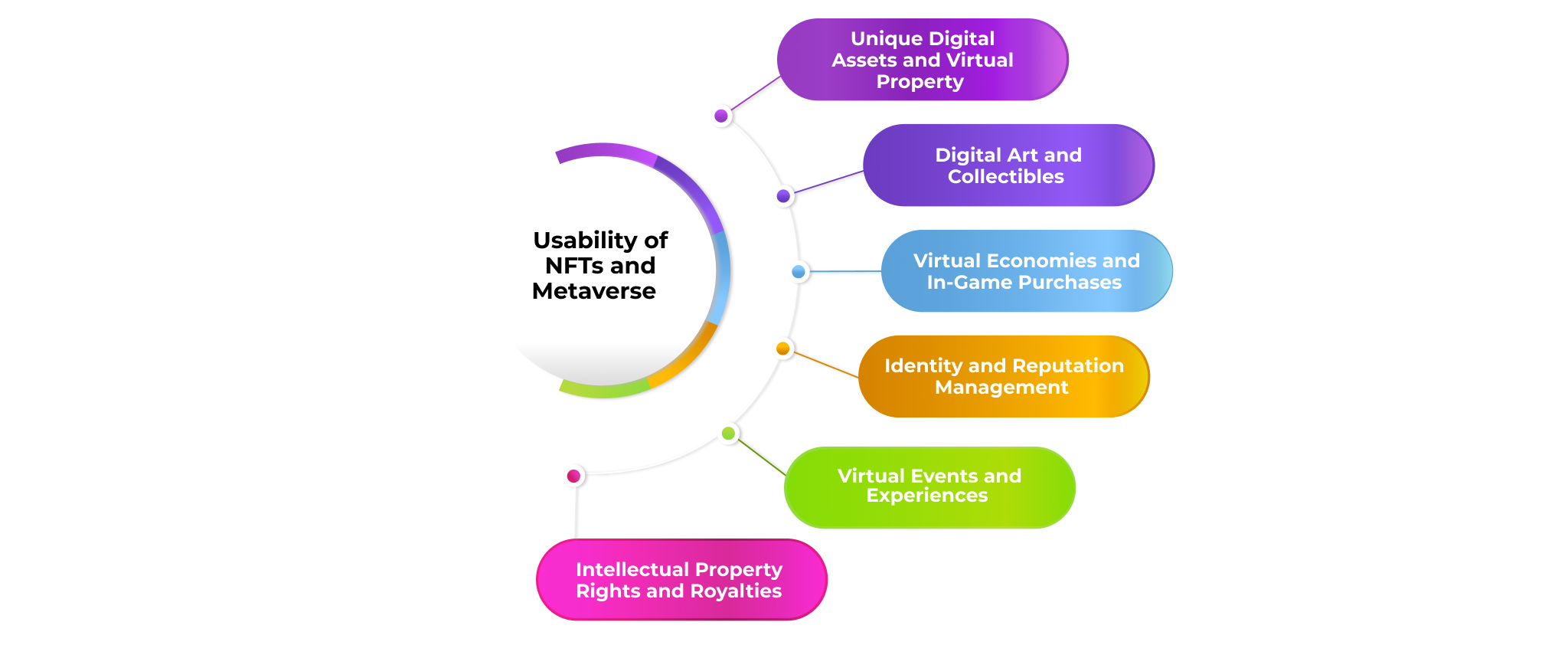
The usability of Non-Fungible Tokens (NFTs metaverse) within the Metaverse holds tremendous potential, offering users a wide range of practical applications and benefits. As the Metaverse continues to evolve, NFTs play a crucial role in enhancing user experiences, facilitating transactions, and enabling seamless interactions within the virtual realm.

  • Unique Digital Assets and Virtual Property

NFTs Metaverse provides users with the ability to own and trade unique digital assets. These assets can include virtual real estate, virtual identities, artwork, fashion, collectibles, and more. By utilizing the NFTs metaverse, users can establish ownership of virtual properties, customize their virtual identities, and showcase their collections. This usability feature allows individuals to express their creativity, establish their digital presence, and engage with the Metaverse on a personal level.

  • Digital Art and Collectibles

NFTs Metaverse has revolutionized the world of digital art and collectibles. Artists can tokenize their creations as NFTs metaverse, providing unique and verifiable proof of ownership. Collectors can then purchase and own these digital artworks and collectibles, knowing they possess a one-of-a-kind item. The usability of the NFTs metaverse in this context not only enables artists to monetize their work but also empowers collectors to build valuable and curated collections within the Metaverse.

  • Virtual Economies and In-Game Purchases

NFTs metaverse serves as a foundation for virtual economies, allowing for the creation and exchange of digital currencies and goods. Users can utilize the NFTs metaverse to purchase virtual assets, participate in in-game transactions, and engage in virtual commerce. This usability feature facilitates a seamless and secure environment for buying, selling, and trading virtual goods, enhancing the overall user experience and enabling vibrant virtual economies within the Metaverse.

Read Our Blog: What is the Virtual Reality Metaverse?

  • Identity and Reputation Management

NFTs metaverse can be employed for identity and reputation management. Users can create and customize their virtual identities, attaching NFTs metaverse that represents their unique characteristics, achievements, and reputation. These NFT-based identities can be utilized for social interactions, networking, and establishing trust within the virtual realm. The usability of the NFTs metaverse in this context allows for seamless and reliable identity management, enabling users to build their digital personas and participate in virtual communities.

  • Virtual Events and Experiences

NFTs Metaverse offers usability in the realm of virtual events and experiences. Event organizers can issue limited-edition NFT tickets, granting access to exclusive virtual gatherings, concerts, conferences, and more. These NFT tickets can provide unique perks, bonuses, or collectible elements, enhancing the overall value and experience for attendees. The usability of NFTs metaverse in this context ensures secure and verifiable access to virtual events, while also providing additional benefits to participants.

  • Intellectual Property Rights and Royalties

NFTs Metaverse provides usability in terms of intellectual property rights and royalty management. Creators can tokenize their work as NFTs metaverse, retaining ownership rights and setting up smart contracts that automatically distribute royalties whenever their NFTs metaverse is sold or used. This usability feature ensures that creators receive fair compensation for their contributions to the Metaverse, while also protecting their intellectual property rights in a transparent and enforceable manner.
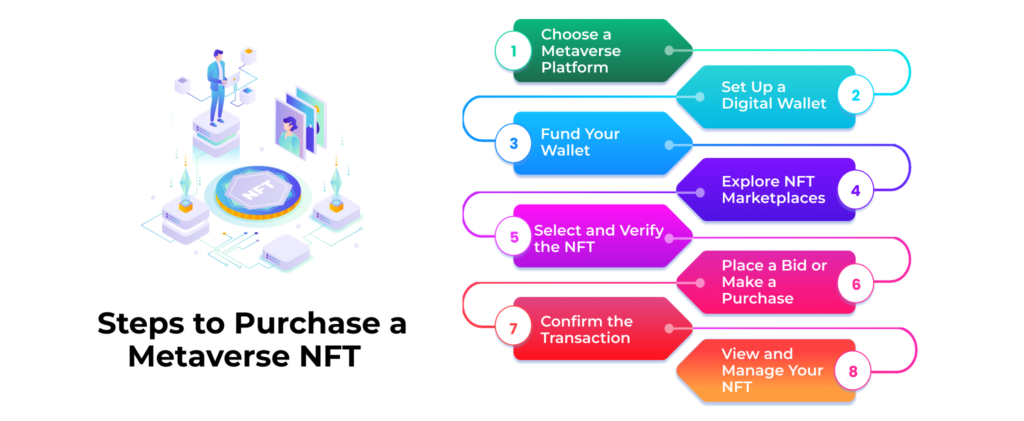
How Can You Purchase a Metaverse NFT?

How Can You Purchase a Metaverse NFT?

Purchasing a Metaverse NFT (Non-Fungible Token) is an exciting process that allows individuals to own unique digital assets within the virtual realm. While the specific steps may vary depending on the platform or marketplace, here is a general guide on how you can purchase a Metaverse NFT:

1. Choose a Metaverse Platform

First, you need to identify the Metaverse platform where the NFTs metaverse you’re interested in is available. Popular platforms include Decentraland, Cryptovoxels, Sandbox, Somnium Space, and others. Research and explore these platforms to find the one that aligns with your interests and preferences.

2. Set Up a Digital Wallet

To purchase and store NFTs metaverse, you’ll need a digital wallet that supports the blockchain network on which the NFTs metaverse are minted. Ethereum is the most commonly used blockchain for the metaverse, so a wallet compatible with Ethereum (such as MetaMask or Trust Wallet) is often necessary. Set up your wallet by following the instructions provided by the wallet provider and ensure you secure your private keys or seed phrases.

3. Fund Your Wallet

Once your wallet is set up, you’ll need to acquire the cryptocurrency (usually Ether, or ETH) used on the platform to purchase NFTs Metaverse. You can buy ETH from popular cryptocurrency exchanges and transfer it to your wallet. Ensure that you have enough funds in your wallet to cover the cost of the NFT you want to purchase, as well as any transaction fees associated with the blockchain network.

Check Out Our Press Release: SoluLab Honored By GoodFirms as Winner of the Trusted Choice Award 2023

4. Explore NFT Marketplaces

NFTs Metaverse is typically bought and sold on specialized marketplaces. Each platform may have its marketplace, or there might be dedicated NFT marketplaces like OpenSea, Rarible, or SuperRare that support multiple Metaverse platforms. Browse through these marketplaces to find the NFTs metaverse that captures your interest.

5. Select and Verify the NFT

Once you find an NFT you want to purchase, click on the listing to view its details, including the description, artwork, and any additional information provided by the creator. Take the time to understand what you are buying and ensure that the NFT meets your expectations. Pay attention to factors such as the rarity, provenance, and authenticity of the NFT.

6. Place a Bid or Make a Purchase

Depending on the marketplace, you may have different options to acquire the NFT. You can either place a bid or make an outright purchase. If you place a bid, you’ll need to wait for the auction to end and see if your bid is successful. If you choose to make an immediate purchase, you can typically do so by clicking the “Buy Now” button and following the prompts to complete the transaction.

7. Confirm the Transaction

After you’ve selected the purchase option, you’ll be prompted to confirm the transaction. Review the details, including the price, gas fees (transaction fees), and any other relevant information. Once you’re satisfied, approve the transaction using your wallet. This will initiate the transfer of funds and the ownership of the NFT to your wallet address.

8. View and Manage Your NFT

Once the transaction is confirmed and completed, you can view and manage your NFT in your wallet. The NFT will be associated with a unique token ID and metadata, which you can access through your wallet interface or by exploring the blockchain explorer specific to the blockchain network.

CTA 3

Conclusion

Non-Fungible Tokens (NFTs metaverse) are undeniably the foundation of the next blockchain revolution within the Metaverse. The intersection of the NFTs metaverse has ushered in a new era of digital ownership, unique virtual assets, and immersive experiences. NFTs serve as the backbone of the Metaverse, providing users with ownership of one-of-a-kind digital assets that range from virtual real estate and artwork to collectibles and virtual identities.

The Metaverse, a virtual universe where users can interact, create, and engage with digital environments, relies on NFTs to establish ownership, provenance, and value within its vast landscape. NFTs metaverse ensures that each digital asset is distinct, verifiable, and securely owned by an individual. This ownership verification fosters trust and enables vibrant virtual economies to thrive, where users can buy, sell, and trade the NFTs metaverse seamlessly and transparently.

Moreover, NFTs play a vital role in enhancing the user experience within the Metaverse. Through the NFTs metaverse, users can customize their virtual identities, express their creativity, and engage with virtual communities. Artists and creators can tokenize their work as NFTs, empowering them to monetize their digital creations and establish direct relationships with their audience. NFTs also enable participation in virtual events, access to exclusive experiences, and the establishment of reputations and identities within the Metaverse.

SoluLab is a reputable company renowned for its extensive expertise in developing a diverse range of NFT solutions. They are known for their meticulous attention to detail and a wide array of features in their NFT marketplace development services. With a proven track record in delivering top-notch solutions, SoluLab excels in various NFT-related endeavors, including artwork, digital collectibles, gaming, and asset tokenization. Additionally, as a leading provider of metaverse development services, SoluLab specializes in turning visionary Metaverse projects into reality. Utilizing cutting-edge tools and state-of-the-art technologies, their skilled team of metaverse experts is dedicated to delivering tailored solutions that align with the specific needs of clients. For further information and assistance, contact SoluLab today.

FAQs

1. How do the NFTs and the Metaverse intersect?

NFTs Metaverse intersects by allowing users to purchase, own, and trade unique digital assets within the virtual realm. NFTs Metaverse provides ownership verification enables monetization for creators, facilitates virtual economies, and enhances community engagement.

2. Can NFTs Metaverse be used on multiple platforms?

Yes, NFTs Metaverse can be used on multiple platforms, thanks to its interoperability and cross-platform functionality. Open standards and protocols allow the NFTs metaverse to be transferred and used across various virtual worlds, platforms, and applications, providing users with seamless access and utilization of their digital assets.

3. How do the NFTs contribute to the Metaverse?

NFTs Metaverse contributes to the Metaverse by serving as unique digital assets that can represent virtual real estate, artwork, fashion, collectibles, and more. They establish ownership and provenance, enable vibrant virtual economies, foster community engagement, and facilitate interoperability within the virtual realm.

4. Is NFT part of metaverse?  

NFTs Metaverse provides a mechanism for establishing ownership and authenticity of digital assets. Each NFT is unique and verifiable, ensuring that users can prove their ownership of virtual properties, artwork, collectibles, and more. This ownership verification adds value and trust to the assets within the Metaverse, enabling secure and transparent transactions.

Everything You Need to Know About Metaverse NFT Marketplace Development

Everything You Need to Know About Metaverse NFT Marketplace Development

The notion of the metaverse NFT has gained great popularity in recent years, capturing the imaginations of both consumers and companies. Non-Fungible Tokens (NFTs) have emerged as an essential component of the metaverse as it continues to expand. The NFT marketplace, which acts as a venue for trading, buying, and selling these unique digital assets, is a critical component of the metaverse. 

The metaverse’s development has transformed the digital world, providing immersive virtual experiences and a new frontier for interaction. Non-fungible tokens (NFTs), digital assets that grant ownership and authenticity to distinct virtual goods, are at the heart of this breakthrough technology. Metaverse NFT Metaverse Marketplace has become a haven for producers, collectors, and fans to exchange and display virtual goods. This blog will cover all you need about Metaverse NFT Marketplace creation, from important principles to the process.

The metaverse is a virtual world in which people may interact with one another and their surroundings in a highly immersive and linked way. It is a communal virtual shared area that blurs the distinction between the physical and digital worlds. Consider it a massive digital world comprising linked virtual environments such as video games, social networks, virtual reality experiences, and more. This blog article will review everything you need to know regarding establishing a Metaverse NFT Marketplace.

What Exactly are NFTs?

Non-fungible Tokens (NFTs) are one-of-a-kind digital assets kept on a blockchain, often Ethereum’s blockchain, through the ERC-721 or ERC-1155 specifications. NFTs, unlike cryptocurrencies such as Bitcoin or Ethereum, cannot be swapped one-to-one due to their distinct properties. Each NFT Metaverse has individual indivisible features, making replication or interchange impossible. Because of these characteristics, NFTs are suitable for expressing ownership of digital assets like artwork, collectibles, virtual real estate, virtual products, and more.

What is the Metaverse’s Role in NFT Marketplaces Development?

NFT markets are online marketplaces where anyone may purchase, sell, and exchange  Metaverse NFT. They serve as go-betweens, connecting makers and collectors from all over the world.

These platforms ensure digital asset validity, provenance, and ownership by providing a safe and user-friendly environment for NFT transactions.

What are the Key Concepts in Metaverse NFT Marketplaces Development?

Non-fungible tokens (NFTs) are one-of-a-kind digital assets representing ownership of virtual goods such as artwork, collectibles, virtual real estate, and more. Each NFT is unique and indivisible, giving evidence of ownership and validity on the blockchain.

These platforms allow users to buy, sell, and trade NFTs. They provide creators with a smooth and safe place to promote and sell their digital works, while collectors can find and purchase unique virtual items.

Smart contracts are self-executing agreements allowing parties to conduct transactions without using intermediaries. They are critical components of Metaverse NFTs Marketplace. They are providing safe ownership transfer and automating royalty payments to authors.

CTA 2

How to Create a Metaverse NFT Marketplace? 

Creating a Metaverse NFT Marketplace development entails many critical phases. Here are some important considerations:

  • Conceptualisation and Planning

Identify your NFT Metavercce marketplace’s objective, target audience, and unique selling characteristics. Investigate current platforms to discover gaps and possibilities that may be capitalized on.

  • Platform Selection

Choose an appropriate blockchain platform that supports NFTs. Ethereum is now the most popular option, but other blockchains, such as Binance Smart Chain and Flow, are gaining steam. When selecting a blockchain platform, consider scalability, transaction costs, and community support.

  • Smart Contract Development

Create smart contracts using Solidity or another programming language relevant to your blockchain platform of choice. The rules and functionality of NFTs, such as ownership, transferability, and royalties, are defined via smart contracts.

  • User Interface and Experience

Create an easy-to-use interface for your NFT marketplace. To appeal to desktop and mobile consumers, consider elements like ease of navigation, smooth onboarding, and responsive design.

Read Our Blog: What Are NFT dApps and How To Launch A Full-Stack NFT Marketplace dApp?

  • Security and Scalability

Security is a top priority in the Metaverse NFT marketplace to safeguard user data, digital assets, and transactions. Implement strong security mechanisms to safeguard user data, prevent fraud, and assure transaction integrity. Using open-source database managers helps developers ensure secure, transparent, and customizable data handling.

  • Wallet Integration

Integrate popular cryptocurrency wallets such as MetaMask or Trust Wallet to promote smooth transactions and give users a convenient experience.

  • Community and Social Features

Include social features like user profiles, comments, and sharing options to encourage interaction and community-building inside your NFT marketplace.

  • Marketing and Promotion

Develop a complete marketing approach to attract artists, collectors, and fans to your platform. Social media, influencers, and partnerships increase awareness and user uptake.

How Does NFT Marketplace Work on the Metaverse?

The NFT and metaverse have arisen as a virtual cosmos in which people may connect and exchange. Integrating Non-Fungible Token (NFT) markets is one of the fundamental aspects driving this digital ecosystem. This article examines how NFT markets work in the metaverse, including the underlying technology, buying and selling NFTs, and the impact on producers and users.

Before entering into an NFT Marketplace development, it’s critical to understand the principles of NFTs and blockchain technology. NFTs are one-of-a-kind digital assets on a blockchain, typically developed on platforms such as Ethereum. Each NFT has unique properties and cannot be traded one for one.

The Metaverse’s NFT Marketplaces: How Do They Work?

  • Creation & Minting

To begin the metaverse journey of an NFT, creators mint their digital assets as NFTs. This procedure entails using specific platforms or markets that allow producers to post digital files such as artwork, virtual fashion, music, or collectibles. During the minting process, metadata identifying the NFT’s unique qualities, ownership information, and any further details the author desires to provide are added to the NFT.

  • Listing and Discoverability

Once an NFT is minted, it may be listed for sale on the metaverse’s NFT marketplaces. These marketplaces serve as virtual shops for potential purchasers to view NFTs. They are detailing the NFT, its price, and the creator’s terms of sale. Users may search the marketplace for and browse through a variety of NFTs.

  • Buying and Selling

When a buyer discovers an NFT they like, they may purchase it. NFT markets support transactions through cryptocurrency, most often Ether (ETH). The buyer submits a bid or buys the NFT at the quoted price. When the transaction is completed successfully, ownership of the NFT is transferred to the buyer’s digital wallet, and the transaction details are recorded on the blockchain.

Read Also: Solana NFT Marketplace: How to build your own NFT Marketplace on Solana

  • Secondary Market Trade 

Besides main sales, Metaverse NFT Marketplace markets enable secondary market trade. An individual who has an NFT has the opportunity to sell or exchange it with others. These secondary market transactions occur on the marketplace platform, with the marketplace serving as a middleman to ensure secure and transparent trades.

  • Royalties and Smart Contracts

NFT and Metaverse price creators can include smart contracts in their digital assets. Smart contracts are agreements that self-execute and automate certain activities depending on predetermined parameters. Creators may establish royalty rates using smart contracts, allowing them to earn a percentage of future sales if their NFT is purchased in the secondary market. When a resale happens, these royalties are immediately sent to the inventor’s wallet, guaranteeing that the original creator continues to benefit.

  • Interoperability and Cross-Platform Integration 

Metaverse NFT price Marketplace markets encourage interoperability by allowing users to transfer and use their digital assets across multiple virtual worlds and platforms. This implies that an NFT bought in one metaverse may be used or shown in another, broadening the scope and utility of these virtual assets.

What are the Different Types of Metaverse NFT Marketplace?

What are the different Types of Metaverse NFT Marketplace?

The metaverse is constantly growing, with a wide spectrum of metaverse NFT price catering to various hobbies and user preferences. These markets act as portals to the virtual world, letting users purchase, sell, and trade unique digital assets known as Non-Fungible Tokens (NFTs). This article will look at many Metaverse NFT Marketplace development, each with its features, purpose, and target audience. 

1. General NFT markets

General NFT markets are the core of the metaverse ecosystem, offering a diverse range of digital goods in various categories. These markets are the go-to sites for consumers who want to discover and interact with a diverse spectrum of NFTs, such as digital art, collectables, virtual fashion, gaming equipment, and more. OpenSea is an example of a generic NFT marketplace.

2. Virtual Real Estate Marketplaces

These sites specialize in the purchase and sale of virtual land and properties within the NFTs and metaverse. These markets allow users to purchase virtual land plots for various uses, such as erecting virtual constructions, organizing events, or starting virtual enterprises. Virtual real estate marketplaces in the metaverse include Decentraland and Sandbox.

3. Gaming NFT markets

Gaming NFT markets cater to the gaming community, particularly providing a venue for trading in-game products, characters, and accessories as NFTs. These markets let users monetize their gaming experiences by selling unique or valuable virtual items to other players. Gaming NFT markets include Axie Infinity, NBA Top Shot, and Gods Unchained.

4. Art and Collectibles Marketplaces

Metaverse art and collectibles marketplaces focus on displaying and exchanging digital art, rare collectibles, and limited edition items. These platforms connect artists and collectors by allowing artists to exhibit and sell their digital creations and collectors to buy and display unique digital artworks. SuperRare and KnownOrigin are well-known metaverse art and collectibles marketplaces.

Read Also: Metaverse NFT – Foundation Of Next Blockchain Revolution!

5. Social NFT markets

In the metaverse, social NFT in the Metaverse prices prioritizes community involvement and social interaction. Virtual galleries, social profiles, discussion rooms, and the opportunity to follow and connect with other users are all available on these platforms. 

They provide creators and enthusiasts a place to network, share ideas, and cooperate. Social NFT markets that generate a feeling of community in the metaverse include Async Art and Mintbase.

6. Clothing and Avatar Marketplaces

Fashion and avatar marketplaces in NFT in the Metaverse focus on virtual apparel, accessories, and customizable avatars. Users may purchase and modify their virtual identities on these markets, allowing them to show their style and uniqueness. 

Users may improve their virtual presence by purchasing virtual apparel, accessories, haircuts, and other configurable aspects. Decentraland’s Fashion District and Cryptovoxels are two examples.

7. Niche and Specialized Marketplaces

Aside from the major categories described above, the metaverse offers smaller, specialized marketplaces catering to certain hobbies and sectors. These marketplaces specialize in music, sports, virtual pets, virtual reality experiences, etc. 

They give enthusiasts technical forums to study and engage with NFTs relevant to their interests. NBA Top Shot is an example of a basketball-related NFT, while CryptoKitties is an example of a virtual pet NFTs Metaverse price.

What are the Benefits of Metaverse NFT Marketplace Development Company?

What are the Benefits of Metaverse NFT Marketplace development company?

Metaverse NFT Marketplace markets have grown in prominence, and they are changing how we see and interact with digital goods. These metaverse markets provide a venue for users to purchase, sell, and trade unique digital assets known as Non-Fungible Tokens (NFTs). Let’s examine these markets’ multiple advantages to authors, collectors, and the larger metaverse community.

  • Authenticity and Ownership

NFT uses blockchain technology to ensure digital asset authenticity and ownership in the Metaverse NFT Avatar market. Each NFT symbolizes a one-of-a-kind digital object or piece of artwork, and its request is recorded on the blockchain, assuring transparency and removing the potential of counterfeit or replicated assets. 

This ensures artists and collectors that their digital assets are authentic and verifiable.

  • Opportunity for Monetization

NFT in metaverse development companies provides authors an unparalleled opportunity to monetize their digital works. Artists, musicians, and content providers can create NFTs of their work and sell them on various channels. 

This allows them to engage their audience directly, create market value for their products, and earn royalties from future sales. 

  • Worldwide Reach and Accessibility

The worldwide reach and accessibility of NFT in metaverse development are one of their most notable features. These platforms cross borders, allowing artists to display their work globally. Collectors and purchasers, meanwhile, may access and acquire digital assets from anywhere in the globe. 

This worldwide marketplace promotes cultural exchange, cooperation, and new opportunities for artists and collectors.

  • Transparency and traceability

Transparency is a key feature of Metaverse NFT Marketplace development. All transactions, ownership transfers, and interactions with NFTs are recorded on the distributed ledger and are available to all participants thanks to blockchain technology. 

This openness eliminates the need for intermediaries while lowering the possibility of fraud or manipulation. Collectors can verify the ownership history and provenance of NFTs, increasing market trust and confidence.

Read Our Blog: Top 10 NFT Marketplace Development Companies

  • Increased Creativity

Metaverse NFT Marketplace development company provides innovators greater creative flexibility. Unlike conventional art marketplaces, these platforms do not have gatekeepers or intermediaries, allowing creators to engage directly with their audience while maintaining ownership over their work. 

Artists may try new mediums, investigate emerging digital art forms, and interact with a wide spectrum of collectors and enthusiasts. This independence promotes artistic inquiry and invention.

  • Community Engagement and Collaboration

NFT in metaverse development companies generate lively producers, collectors, and fan communities. These platforms enable people with similar interests to connect, cooperate, and communicate with one another. 

Users may join discussions, attend virtual events, and keep track of their favorite artists or collections. These markets foster a healthy ecology in which ideas are shared, partnerships are developed, and relationships are forged.

  • Interoperability and Cross-Platform Integration

Metaverse NFT Marketplace development value interoperability, allowing users to move and use their digital assets across virtual worlds and platforms. An NFT acquired in one metaverse can be displayed, exchanged, or used in another. 

This seamless connection increases the usefulness and worth of digital assets by giving users a larger canvas to express themselves and participate in various metaverse activities.

  • Preservation of Digital Art and Culture

The creation and trading of digital assets in Metaverse NFT Marketplace development company contribute to conserving digital art and culture. These markets keep a permanent and decentralized record of digital works, ensuring their long-term viability and accessibility for future generations. 

These platforms identify and verify the cultural relevance of digital inventions by providing a market for digital art and collectibles, preventing them from being lost or forgotten.

What are the Technological Attributes Present in Metaverse Marketplace Development?

The creation of the Metaverse development relies on various cutting-edge technologies to construct immersive and dynamic virtual worlds in which users may buy, sell, and exchange digital goods. 

These technological characteristics are critical in facilitating smooth transactions, assuring security, and improving overall user experience. In this essay, we will look at some of the important technological components involved in establishing metaverse marketplaces.

1. Blockchain Technology

The cornerstone of metaverse markets is blockchain technology. It offers a decentralized and transparent ledger that records all Non-Fungible Token (NFT) transactions and ownership data. 

Metaverse markets use blockchain to provide the legitimacy, provenance, and immutability of digital goods by employing blockchain. It facilitates safe peer-to-peer transactions, reduces the need for intermediaries, and builds market confidence.

2. Smart contracts 

They are self-executing digital agreements that automate asset exchange depending on established criteria. Smart contracts are essential in metaverse markets for enabling transactions and enforcing selling agreements. 

When an NFT is acquired, they automate the transfer of ownership, disburse royalties to artists, and facilitate smooth secondary market trade. Smart contracts provide transaction execution transparency, efficiency, and correctness.

3. Interoperability Protocols

Interoperability protocols allow for the smooth integration and interoperability of various virtual worlds and platforms inside the metaverse. These protocols ensure that NFTs may be moved, shown, and used in multiple metaverse contexts. 

They allow users to display their digital assets in different virtual environments, broadening the scope and utility of NFTs. Protocols for interoperability improve the overall user experience and boost the value of digital assets.

4. Decentralised Storage

Metaverse markets require strong and secure digital asset storage solutions. Decentralized storage solutions, which frequently include distributed ledger technology, ensure that NFTs are kept securely and reliably. 

Data is distributed among numerous nodes in these systems, lowering the risk of data loss or manipulation. Decentralized storage ensures the safety of digital assets in the metaverse by providing scalability, redundancy, and anonymity.

5. Virtual Reality (VR) and Augmented Reality (AR) technology

Virtual Reality (VR) and Augmented Reality (AR) technologies are important in generating immersive and interactive experiences in metaverse markets. VR immerses viewers in a completely immersive virtual experience, whereas AR superimposes digital features on the actual world. 

Metaverse markets improve the visualization and presentation of NFTs by combining VR and AR, allowing consumers to tour virtual galleries, engage with digital art, and try on virtual apparel.

6. Artificial Intelligence (AI) and Machine Learning (ML)

AI and ML technologies are rapidly used in metaverse markets to improve search engines, recommendation systems, and fraud detection methods. 

To deliver tailored suggestions and improve the overall user experience, AI systems may assess user preferences, behavior patterns, and transaction history. ML algorithms may also aid in detecting fraudulent activity and the security of transactions.

7. Cryptocurrencies and Wallet Integration

Metaverse markets frequently make transactions using cryptocurrencies such as Ethereum (ETH). For purchasing and selling NFTs, cryptocurrency provides a safe and efficient medium of exchange. 

Users may safely store, manage, and exchange digital assets by integrating cryptocurrency wallets into metaverse markets. Wallet integration allows smooth and simple transactions while protecting consumers’ funds.

8. Scalability and Performance Optimization:

Scalability and performance improvement are becoming increasingly important as metaverse markets draw more users and transactions. Technologies like sharding, layer-2 solutions, and off-chain scaling assist in minimizing blockchain congestion, enhancing transaction speed, and reducing costs. 

These scaling solutions ensure that metaverse markets can accommodate rising user demand while providing a fluid and responsive user experience.

Read Also: Top 10 Metaverse Development Companies

What is Metaverse NFT?

In recent years, the metaverse concept has gained significant attention and sparked the imagination of individuals and businesses worldwide. At the heart of this virtual realm lies the concept of Non-Fungible Tokens (NFTs). NFTs are unique digital assets that are stored on a blockchain, typically utilizing Ethereum’s ERC-721 or ERC-1155 standards.

Unlike cryptocurrencies such as Bitcoin or Ethereum, which are fungible and can be exchanged on a one-to-one basis, NFTs are indivisible and possess distinct properties that make them one-of-a-kind. Each NFT represents ownership and authenticity of a specific digital asset, whether it’s a piece of artwork, a collectible item, virtual real estate, or even a virtual identity.

NFTs provide a mechanism for proving the ownership and provenance of digital assets in the metaverse. By leveraging blockchain technology, NFTs offer a transparent and secure way to establish virtual goods’ uniqueness, scarcity, and value of virtual goods. The metaverse is a virtual world where these NFTs can be bought, sold, and traded, creating an ecosystem that fosters creativity, ownership, and immersive experiences.

How to Buy Metaverse NFTs

Buying metaverse NFTs can be an exciting and rewarding experience. Here’s a step-by-step guide on purchasing these unique digital assets:

Step 1: Choose a Metaverse NFT Marketplace

Start by identifying a metaverse NFT marketplace that aligns with your interests and preferences. Some popular metaverse NFT marketplaces include OpenSea, Rarible, SuperRare, and Decentraland Marketplace. Each platform has its own unique features, collections, and user base, so take the time to explore and find the marketplace that suits your needs.

Step 2: Create a Digital Wallet

To buy and store NFTs, you’ll need a digital wallet that supports the blockchain on which the NFTs are based. The most common wallet for Ethereum-based NFTs is MetaMask, which is available as a browser extension or a mobile app. Install and set up your wallet, following the instructions provided by the wallet provider.

Step 3: Fund Your Wallet

Once your wallet is set up, you must add funds. Depending on the wallet you’re using, you may be able to purchase cryptocurrencies like Ethereum directly within the wallet or transfer them from another exchange. Ensure that your wallet has sufficient funds to cover the cost of the NFTs you wish to purchase, as well as any associated transaction fees.

Step 4: Browse and Discover NFTs

Explore the marketplace’s collections and discover the NFTs that catch your interest. Metaverse NFT marketplaces typically categorize NFTs by type, artist, popularity, and more, making it easier for you to find what you’re looking for. Take your time to browse through the available options and explore the diverse range of digital assets.

Step 5: Place Your Bid or Make a Purchase

Once you’ve found an NFT you’d like to buy, you have a couple of options. If the NFT is listed at a fixed price, you can simply click on the “Buy” button and follow the prompts to complete the transaction. If the NFT is listed for auction or as a “bid only” item, you can place your bid or make an offer based on the instructions provided by the marketplace. Remember that there may be a time limit for auctions, and you’ll need to stay engaged to ensure you don’t miss out.

Read Our Blog Post: Benefits Of An NFT Marketplace On Cardano

Step 6: Confirm the Transaction

After you’ve selected the NFT and agreed on the price, the marketplace will prompt you to confirm the transaction. Review the transaction details, including the NFT’s description, price, and any associated fees. Ensure that all the information is accurate, and if you’re satisfied, proceed with confirming the transaction.

Step 7: Pay for the NFT

To complete the purchase, you’ll need to pay for the NFT using the marketplace-supported cryptocurrency. Typically, this involves transferring the required amount of Ethereum or another compatible cryptocurrency from your digital wallet to the designated wallet address provided by the marketplace. Follow the instructions provided by the marketplace and your wallet to initiate and confirm the transaction.

Step 8: Wait for Confirmation

Once you’ve submitted the transaction, it will be added to the blockchain network for verification and confirmation. The time it takes to confirm the transaction can vary depending on network congestion and other factors. Be patient and wait for the confirmation, which will be visible in your wallet’s transaction history.

Step 9: Transfer the NFT to Your Wallet

Once the transaction is confirmed, the NFT will be transferred to your digital wallet. The wallet will provide you with the necessary information to view and manage your NFT, including its unique identifier, metadata, and associated rights. You can store, display, or transfer the NFT as desired, depending on the capabilities of your wallet and the specific NFT.

Step 10: Enjoy and Engage with Your Metaverse NFT

Congratulations! You’re now the proud owner of a metaverse NFT. Take the time to appreciate and enjoy your digital asset. Depending on the metaverse and the capabilities of the NFT, you can showcase it in virtual galleries, use it within virtual worlds and games, or engage with other collectors and creators in the metaverse community.

What are the Fundamental Tools and Technologies Needed for Market Development?

A robust foundation of tools and technologies that enable rapid development, flawless functionality, and a wonderful user experience is required to build a successful marketplace. This post will look at some of the most important tools and technologies for marketplace development.

1. Programming Languages

Programming languages are fundamental to market development. Different wording might be utilized depending on the needs and preferences of the development team. Popular options include:

  • JavaScript is a flexible programming language used for both front-end and back-end development.
  • Python is extensively used for web development because of its simplicity and readability.
  • Ruby is well-known for its clean syntax and simplicity of use, and it is frequently used with the Ruby on Rails framework.
  • PHP is a popular web development language with frameworks like Laravel.

2. Frameworks

Frameworks give an organized approach to development, with pre-built components and libraries that help to speed up the process. Frameworks for marketplace development that are often utilized include

  • Ruby on Rails: A full-stack framework noted for its efficiency and simplicity of use that stresses convention over configuration.
  • Django: A high-level Python web framework that encourages rapid development while adhering to the “don’t repeat yourself” (DRY) philosophy.
  • Laravel: A PHP framework with clear and elegant syntax and many built-in capabilities.

3. Database Management Systems (DBMS)

A DBMS is required to store and manage data in a marketplace. Popular market development options include

  • MySQL: A popular open-source relational database management system noted for scalability and performance.
  • PostgreSQL: A powerful and feature-rich open-source database management system (DBMS) noted for its robustness and support for complex data formats.
  • MongoDB: A versatile and scalable NoSQL database that makes it simple to work with unstructured data.

Read Also: How is NFT Music Transforming The Music Industry?

4. Front-End Development Tools

Marketplace development must create an appealing, user-friendly front-end interface. Front-end development tools that are regularly used include

  • HTML/CSS: The building blocks of web development used to structure and style web pages.
  • Frameworks and Libraries for JavaScript: React.js, AngularJS, and Vue.js are popular solutions for creating interactive and responsive user interfaces.
  • Cloud Services and Hosting: Cloud services and hosting platforms guarantee that marketplace apps are scalable, reliable, and accessible. Among the prominent alternatives are:
  • AWS (Amazon Web Services): A complete cloud computing platform that provides various services such as hosting, storage, and database administration.
  • Microsoft Azure: It is a versatile and scalable cloud platform that offers a variety of hosting, storage, and analytics services.
  • GCP (Google Cloud Platform): A cloud computing service package that provides scalable infrastructure and several application development and deployment tools.

5. Analytics and Monitoring Tools

Monitoring and analyzing market performance is critical to detect and manage difficulties. Among the most often used analytics and monitoring tools are:

  • Google Analytics: Gives you precise information on user behavior, traffic sources, and conversion rates.
  • New Relic: Tracks application performance, finds bottlenecks and delivers real-time performance measurements.

What is the Cost of Developing the Metaverse Marketplace?

Several variables impact the overall cost of developing a metaverse marketplace. The project’s complexity, intended features, development methodology, technology stack, and team size are all important factors. While providing an accurate cost estimate with detailed project information is easier, we may investigate the aspects contributing to the total cost of establishing a metaverse marketplace.

  • Project Scope and Complexity

The extent and complexity of the metaverse marketplace substantially influence the development cost. The number of features, customization needs, and interaction with external systems increases the complexity. A marketplace with simple functionality will be less expensive than a platform with advanced features such as virtual reality (VR), augmented reality (AR), or blockchain integration.

  • Design and User Experience

A visually appealing and user-friendly design is essential for a metaverse marketplace. The cost is influenced by the intricacy of the invention, the number of displays, and the interactive aspects. Customized UI/UX design and immersive VR/AR experiences require additional development work and expenditure.

  • Technology Stack

The technology stack chosen has an impact on development costs. The development difficulties and expenses of various programming languages, frameworks, and libraries differ. Choosing well-established technologies may result in faster growth, but embracing newer or niche technologies may require more effort and knowledge, raising the cost.

  • Blockchain Integration

Integrating blockchain technology into a metaverse marketplace, particularly for NFT (non-fungible token) transactions, increases the development process’s complexity and expense. Blockchain deployment entails smart contracts, transaction verification, and safe storage, necessitating blockchain development knowledge and may require additional resources.

  • Third-Party Integrations

Third-party integrations, like payment gateways, analytics tools, and social networking platforms, can improve a metaverse marketplace’s functionality and user experience. However, each integration complicates the development process, necessitating more time and effort. The complexity of the APIs, documentation, and requirements determines the cost of these integrations.

CTA 1

Conclusion

Metaverse NFT Marketplace developments alter our perceptions of and interactions with digital assets. As the metaverse expands, these marketplaces provide intriguing options for artists, collectors, and entrepreneurs. You may build a thriving platform that enables the trade of unique digital assets inside this virtual reality by grasping the basic ideas and following best practices in Metaverse NFT Marketplace development. Accept this new frontier and let your imagination run wild in the metaverse!

Metaverse NFT marketplace development companies offer several advantages to producers, collectors, and the larger metaverse community. These markets have transformed how we view and interact with digital goods, from proving legitimacy and ownership to unleashing new revenue options. Metaverse NFT Marketplace markets are creating the future of the digital economy and the metaverse ecosystem by focusing on openness, accessibility, and creative freedom.

Check Out our Blog: Things you need to know about NFT Marketplace

The construction of a metaverse marketplace involves various technological features to build immersive, safe, and efficient virtual environments for buying, selling, and exchanging digital goods. The metaverse marketplace ecosystem is powered by blockchain technology, smart contracts, interoperability protocols, decentralized storage, VR/AR, AI/ML, cryptocurrency integration, and scalability solutions, to name a few major components. 

SoluLab, a leading provider of Metaverse development services, specializes in turning dream projects into reality. With a team of proficient Metaverse experts, they offer customized solutions tailored to meet the varied needs of clients. By leveraging top-notch tools and cutting-edge technologies, SoluLab ensures premium quality in its NFT marketplace development services. From artwork and digital collectibles to gaming and asset tokenization, they possess proven experience across a wide range of NFT solutions. Their marketplace development services are known for their feature-rich nature and commitment to perfectionism. To bring your Metaverse NFT marketplace vision to life, contact SoluLab today.

FAQs

1. What exactly is the Metaverse NFT marketplace?

A metaverse NFT marketplace is a virtual world or metaverse-based online platform where users may buy, sell, and trade non-fungible tokens (NFTs). It offers a digital marketplace for artists and collectors to engage, exchange, and monetize their one-of-a-kind digital assets.

2. What is the operation of a Metaverse NFT marketplace?

A Metaverse NFT marketplace uses blockchain technology to secure digital asset ownership, validity, and scarcity. Users may sell their NFTs, and others can browse, search, and buy those assets with cryptocurrency. Smart contracts enable safe transactions and the automated distribution of royalties to authors.

3. What are the advantages of creating a Metaverse NFT marketplace?

Creating a metaverse NFT marketplace has various advantages, including

  • Artists, musicians, game developers, and content creators may monetize their digital assets and receive royalties on subsequent sales.
  • User engagement increases because users may explore and interact with unique digital goods, boosting their immersion and experience in the metaverse.

4. What technologies are used to create the Metaverse NFT marketplace?

The development of the Metaverse NFT marketplace incorporates several technologies, including

  • NFTs, which are often developed on blockchain platforms like Ethereum, Binance Smart Chain, or Flow, offer the infrastructure required for asset ownership and transactions.
  • These self-executing contracts allow for the automated transfer of ownership, payment of royalties, and other preset activities without mediators.

NFT Games in the Metaverse

NFT Games in Metaverse

The metaverse market, currently valued at over $38.5 billion, is projected to grow significantly. Analysts predict an annual expansion rate of 13.1%, driven by the willingness of individuals to invest in advanced VR equipment and the increasing popularity of metaverse real estate, with investors purchasing over $500 million worth so far.

The Metaverse, a revolutionary concept, merges the best of virtual and physical reality, allowing users to interact in real time. It offers vast potential in various sectors, including virtual education, immersive shopping experiences, and transformative entertainment. Beyond its immersive experience, the Metaverse represents the evolutionary leap of the internet, transcending traditional screens and keyboards. However, privacy concerns, ethical considerations, and its impact on mental health require careful attention. The Metaverse has the power to reshape society, redefining work, education, entertainment, and communication, but its development must be guided by ethical, social, and technological considerations to ensure a positive and sustainable impact on humanity.

What is Metaverse Gaming?

Metaverse gaming, empowered by Blockchain technology, has revolutionized the gaming industry by offering immersive experiences beyond mere entertainment. Players can earn in-game rewards, trade assets, and interact with each other in a virtual world. The unique blend of gaming, social interaction, and education makes Metaverse gaming a multifaceted platform. Its potential to generate revenue streams through NFTs and virtual land ownership further enhances its appeal. As technology advances, Metaverse gaming is poised to become a multi-billion dollar industry, reshaping the way we play, interact, and explore virtual worlds.

Elements of Metaverse gaming 

In Metaverse gaming, where immersive experiences and technological advancements converge, a multitude of components come together to shape this revolutionary gaming domain. While our list may not encompass all, it delves into the fundamental elements that define Metaverse games:

  • 3D Virtual Worlds:

Accessible and expansive 3D environments are the foundation of Metaverse gaming, allowing players to interact, explore, and immerse themselves in the game’s universe.

  • Virtual Characters and In-Game Interactions:

Players assume the role of virtual characters, facilitating communication and collaboration with others. These interactions extend beyond the game environment, fostering socialization and teamwork among players.

  • In-Game Items and Assets:

Ownership of in-game items is crucial, often utilizing blockchain technology for secure and transparent transactions, including asset trading and sales.

  • Gameplay Principles and Goals:

Metaverse games feature underlying principles and objectives that guide the player experience, albeit in a more immersive setting compared to traditional games.

  • VR and AR Technologies:

Virtual Reality (VR) and Augmented Reality (AR) technologies are pivotal to Metaverse gaming, blending digital and physical realities for an immersive experience.

  • Blockchain and Cryptocurrency:

Blockchain provides a secure framework for in-game economies, enabling real-world value transactions and digital asset ownership through cryptocurrencies and Non-Fungible Tokens (NFTs).

CTA1

  • Internet of Things (IoT):

IoT technology integrates real-world objects into the Metaverse, enhancing the gaming experience by incorporating real-time data and physical world interactions.

  • 3D Reconstruction and Mixed Reality:

3D models of real environments and mixed reality experiences enhance immersion, allowing seamless navigation between various virtual experiences.

  • Brain-Computer Interfaces:

Emerging technologies such as brain-computer interfaces are being explored to enable players to control their avatars through their thoughts, creating a more intuitive gaming experience.

These elements collectively drive the Metaverse gaming industry toward a more immersive, socially interactive, and economically vibrant ecosystem, shaping the future of gaming and entertainment.

Metaverse Coins

Metaverse games are gaining popularity and offer immersive virtual worlds for players to explore. A list of top Metaverse games has been compiled based on specific criteria. Player engagement is a key factor, achieved through engaging gameplay mechanics, immersive storytelling, and meaningful player choices. Graphics and gameplay are crucial, with high-quality visuals, smooth mechanics, and a sense of progression. Community is important for enhancing the overall experience and ensuring the game’s longevity. Ultimately, a top Metaverse game provides a rich and rewarding experience that keeps players engaged and coming back for more.

DO YOU KNOW?”

Notably, 53% of companies investing in the metaverse also invest in cryptocurrencies. With over 400 million active monthly users and the potential to contribute an additional five trillion US dollars to the world economy by 2030, the metaverse holds immense promise.

Top Metaverse Games and Company

Top Metaverse Games

1. Decentraland

Decentraland, a virtual metaverse platform, was introduced to the public in the early 2020s. It enables players to use MANA to create avatars, purchase items, and acquire virtual land parcels, which can be rented out or used to host events and sell virtual artwork. The platform’s unique feature is LAND, non-fungible tokens representing virtual land parcels. Players can use LAND and MANA to develop immersive experiences and games that can be shared with others. Decentraland’s popularity stems from its immersive gameplay, user-generated content, and partnerships with brands and organizations. In 2021, the launch of the In-World Builder further enhanced user-generated content and experiences within the platform.

2. Axie Infinity

Axie Infinity is a Vietnamese company founded in 2018 that allows players to breed, raise, collect, and trade fictional creatures called Axies in a Pokemon-inspired computer game. Axies have interchangeable body parts that determine their appearance and abilities, and players can acquire land and houses for them to live in. Simulated creatures and other in-game items are represented as non-fungible tokens (NFTs) controlled by blockchain technology. Players can earn Small Love Potion (SLP) tokens by winning battles, which can be exchanged for Ethereum or other cryptocurrencies. Axie Infinity’s popularity is attributed to its innovative gameplay and the ability for players to earn real money while playing. User-generated content has played a significant role in the game’s success, and players have been able to create their mini-games within the Axie Infinity universe. Axie Infinity has had a positive impact on communities in developing countries, where players have been able to earn a living wage by playing the game.

3. The Sandbox

The Sandbox is a user-generated infrastructure where individuals can create and share content using Metaverse Blockchain technologies and smart contracts. It encompasses three main elements: VoxEdit for designing avatars and objects, a marketplace for trading creations, and Game Maker for building 3D games without coding. Unique to Sandbox is its use of NFTs to represent virtual assets, enabling players to monetize their creations and trade them on the game’s marketplace. SAND is the native token used for purchasing virtual properties on the Sandbox map, which can also be sold on the Open Sea NFT marketplace. The Sandbox’s thriving community of creators and players is a major factor in its success. Players can create games, virtual real estate, and in-game items, contributing to a vibrant user-generated content ecosystem. The Creator Fund provides financial support to creators making innovative and engaging content on the platform.

4. Alien Worlds

Alien Worlds is a play-to-earn game where players mine Trilium, the in-game currency, on six different planets. Players can own and trade in-game assets represented by non-fungible tokens (NFTs) and create and participate in organizations called Decentralized Autonomous Organizations (DAOs). The game’s popularity stems from its engaging gameplay, unique features, and the potential to earn cryptocurrency. The game’s thriving community contributes to its success by creating user-generated content, such as planets, quests, and mini-games, enhancing the gaming experience and attracting new players.

5. Illuvium

Illuvium, a recently launched video game, has gained significant popularity by offering a unique blend of gameplay features and blockchain technology. The game allows players to explore a strange world, capture and cure mythical creatures called Illuvials, and use them in battles. Illuvial NFTs are tradable, and their value increases with their strength and rarity. Players can earn Illuvium cryptocurrency (ILV) by completing challenges and assignments, which can be traded on the IlluviDEX. Illuvium’s appeal to both gamers and NFT collectors, its community-driven approach, and user-generated content have contributed to its success. The game’s recognition by the Blockchain and gaming industries further solidifies its status as a game-changer in the Blockchain gaming landscape.

6. Roblox

Roblox, a Metaverse gaming platform, has gained immense popularity among young gamers since its inception in 2006. With millions of active players daily, Roblox offers a vast array of user-generated games and experiences. Its accessibility, social aspect, and endless possibilities for creativity and customization have made it a favorite among children and young adults. The supportive and creative community fosters a sense of loyalty and engagement among players. The platform’s focus on user-generated content ensures constant new offerings, while its social and interactive features allow players to connect and play with friends globally. Roblox’s public offering highlights its potential for developers and investors, attracting big-name brands and generating significant revenue.

7. My Neighbor Alice

My Neighbor Alice is a popular Metaverse game built on the Ethereum Blockchain. It allows players to explore a virtual world, create and customize their islands, and interact with other players. The game’s popularity is attributed to its immersive gameplay, earning potential through cryptocurrency, and unique experiences created by user-generated content. Players can design their islands, participate in community events, and buy, sell, and trade virtual assets. The game’s focus on user-generated content has led to a thriving economy, with some players earning significant money from trading NFTs. My Neighbor Alice offers a strong social aspect, allowing players to interact with each other and collaborate on projects within the game world.

Related: Blockchain-Based Gaming Companies in 2024

8. Minecraft

Minecraft, developed by Mojang Studios, is a popular Metaverse game known for its endless possibilities for creativity, exploration, and adventure. Its open-world gameplay, procedurally generated 3D world, and simple mechanics make it accessible to players of all ages and skill levels. Minecraft’s appeal extends beyond gameplay, with educational value and inclusivity features. Its emphasis on player creativity and imagination, along with user-generated content, mods, and multiplayer mode, contribute to its popularity and longevity. Minecraft continues to captivate players by providing a platform for building, designing, and collaborating, fostering a vibrant community that shares creations and experiences.

9. Voxels

Voxels, previously known as Cryptovoxels, is a Metaverse platform built on the Ethereum Blockchain. It allows users to buy, sell, and build on land parcels using voxels, small cubes used to create three-dimensional structures. The game’s simplicity and accessibility, combined with its use of Blockchain technology, have made it popular in the NFT space. Voxels emphasizes community and collaboration, fostering a sense of engagement and creativity among players. The game’s appeal extends beyond the Blockchain community, attracting gamers, artists, and even educational institutions.

10. Battle Infinity

Battle Infinity is a Metaverse-focused gaming platform that offers an immersive gaming experience in a virtual world. It uses Blockchain technology to create a decentralized ecosystem where players have complete ownership of their in-game assets. The platform allows players to create their own games and share them with others, making it a platform for gamers, by gamers. Battle Infinity has gained immense popularity due to its unique features such as PVE and PVP battles and sports games. It has attracted over 20,000 players and generated over $200,000 in its presale. The platform’s success is attributed to its focus on user-generated content, allowing players to create and monetize their games. The use of NFTs further enhances the platform’s appeal by providing complete ownership of in-game assets. Battle Infinity has fostered a strong community, with players sharing tips and experiences, making it one of the most successful Metaverse-focused gaming platforms.

Current Market Status of Metaverse Gaming

The Metaverse gaming market is rapidly growing, reaching $13.84 billion in 2023 and predicted to hit $710.21 billion by 2027. This growth is driven by advancements in VR and AR, which enhance gaming experiences. The Metaverse is also being used for education and training, with game-based learning expected to reach $52.3 billion by 2030. Sandbox games are popular and growing fastest, offering players limitless environments. North America leads, but Asia Pacific is expected to experience the highest growth. Challenges include high equipment costs and privacy concerns. Companies are focusing on alliances and partnerships to stay competitive.

DO YOU KNOW?”

Roblox stands as the largest virtual world within the metaverse, catering to a predominantly young audience, with 51% of users under the age of 13. In the United States, 74% of adults have considered or joined the metaverse, and by 2026, it is estimated that 25% of Americans will spend at least an hour a day immersed in this virtual reality. 

Challenges in Metaverse Gaming

The Metaverse gaming industry’s rapid growth and evolution present various challenges that must be addressed for its long-term success. Here are key challenges in Metaverse gaming:

1. Technical Infrastructure Limitations:

  • Developing Metaverse games requires advanced technological infrastructure, including high-speed internet and powerful computing resources.
  • This can pose a significant barrier, especially in regions with limited infrastructure.

2. Expensive Equipment Costs:

  • Accessing the full Metaverse experience often requires costly equipment such as VR headsets and gaming consoles.
  • This high-cost limits accessibility for many potential users, reducing the market reach of these games.

3. Privacy and Data Security Concerns:

  • The increasing amount of personal data shared in the Metaverse raises concerns about privacy and data security.
  • Protecting user data against cyber threats is a significant challenge for game developers and platform providers.

4. User Experience and Inclusivity:

  • Creating an immersive and engaging user experience accessible to a broad audience is crucial.
  • This includes designing intuitive interfaces and ensuring the Metaverse is inclusive for users with different abilities and preferences.

5. Content Moderation and Ethical Considerations:

  • The Metaverse opens up new realms for content creation, leading to concerns about content moderation.
  • Ensuring appropriate content and preventing harmful behavior in virtual worlds is a critical challenge.

6. Integration of Blockchain and NFT Technologies:

  • While blockchain and NFTs offer new possibilities for in-game economies and asset ownership, integrating these technologies securely and user-friendly is complex and challenging.

7. Interplatform Interoperability:

  • Seamless interoperability between different Metaverse platforms and games is essential for a unified user experience.
  • Achieving this interoperability is technologically challenging and requires coordination among various stakeholders.

8. Regulatory and Legal Frameworks:

  • The Metaverse gaming industry operates in a relatively new and rapidly evolving space, often lacking clear regulatory and legal frameworks.
  • Navigating these uncharted waters and ensuring compliance with different jurisdictions is a major challenge.

9. Sustainable Business Models:

  • Developing sustainable business models that balance profitability with user experience is crucial.
  • This includes finding the right balance between monetization strategies and providing value to users.

10 Adoption and User Base Growth:

  • Despite its potential, the Metaverse gaming sector faces challenges in attracting and retaining a large and active user base.
  • Overcoming skepticism and building a community of engaged users is essential for the success of Metaverse gaming platforms.

Addressing these challenges requires collaboration among developers, investors, regulatory bodies, and the gaming community. A collaborative approach is necessary to ensure the Metaverse gaming industry reaches its full potential and positively impacts the digital entertainment landscape.

CTA2

Future of Metaverse gaming

The metaverse revolutionizes the NFT in gaming industry by offering immersive experiences through advanced technologies like VR and AR. It introduces economic ecosystems where players can create and trade virtual assets, fostering a vibrant in-game economy. The metaverse serves as a social platform where players can connect, interact, and build communities, facilitated by features like voice chat and multiplayer experiences. Unlike traditional games, the metaverse offers persistent worlds that continuously evolve even when players are offline. AI integration enhances gameplay experiences and creates dynamic virtual environments. Beyond entertainment, the metaverse has potential applications in education, training, collaboration, and social gatherings. It redefines how we interact with virtual environments and opens up new possibilities for the future.

Conclusion

In conclusion, NFT Games in the Metaverse represent an exciting intersection of digital innovation and interactive entertainment. Understanding What is NFT game and exploring the best NFT games in the metaverse can provide unparalleled experiences and opportunities. As Metaverse games evolve, the integration of NFTs in the Metaverse will shape the future of NFTs and the broader Metaverse future. Metaverse NFT games are not only redefining gameplay but also creating new economic models through NFT token economies. Companies like SoluLab are at the forefront of this transformation, offering expertise in Metaverse game development. Embrace the future of the metaverse and gaming NFT tokens with SoluLab’s innovative solutions to stay ahead in this dynamic landscape.

FAQs

1. What is an NFT game?

An NFT game integrates non-fungible tokens (NFTs) into its gameplay, allowing players to own, trade, and earn unique digital assets within the game.

2. What are NFTs in the Metaverse?

NFTs in the Metaverse are digital assets that represent ownership of virtual items, such as avatars, properties, and collectibles, within a metaverse environment.

3. What are the best NFT games in the Metaverse?

The best NFT games in the Metaverse offer immersive experiences, unique NFTs, and robust in-game economies. These games leverage blockchain technology to enhance player ownership and interactivity.

4. How do Metaverse NFT Games work?

Metaverse NFT games work by integrating blockchain technology to create and manage NFTs, which players can use, trade, or sell within the metaverse. These games often feature decentralized economies and player-driven marketplaces.

5. What is the future of NFTs in the Metaverse?

The future of NFTs in the Metaverse looks promising, with increasing adoption, technological advancements, and innovative use cases driving growth and creating new opportunities for players and developers.

6. Why is SoluLab important for the future of the Metaverse and NFT games?

SoluLab is a leading developer in the NFT and Metaverse space, providing cutting-edge solutions for NFT Metaverse game development. Their expertise ensures high-quality, innovative games that leverage the full potential of NFTs and blockchain technology for the future of the metaverse.
