
Talk to an Expert

Software Development Cost: Factors & Estimates


Software Development Cost: Factors & Estimates

A common misconception about software development cost estimating is that it is a technical issue that can be resolved using computation models, measurements, and processes. The exact opposite, though, is true. It’s the “human characteristics” that matter most. The project leader’s ability to inspire his developers, encourage them, and keep them committed will have a greater impact on the software’s ability to be delivered on schedule and within budget than utilizing strict calculations.

This blog provides an overview of what takes place at the leading software development company in USA in 2023. It explains what to remember when figuring out a software project’s budget to avoid common blunders. Let’s begin by asking, “What makes estimating the cost of the software so hard?”

Why Is It So Challenging To Estimate Software Costs?

a. Information on finished software programs is scarce. This kind of information can help project management with estimations.

b. Estimates are frequently completed in a hurry and without regard for the time needed to complete a reliable project. Additionally, it happens far too often that an estimate is required prior to the creation of detailed specifications for the system requirements. As a result, a common scenario occurs where estimators are under pressure to create an estimate for a system they are unfamiliar with too rapidly.

c. Specifications can be challenging to create, particularly at the beginning of a project. Plans and budgets must be adjusted as a result since changes, adjustments, and additions are more often the norm than the exception.

d. Software characteristics and software development make estimation challenging. For instance, the degree of abstraction, complexity, product and process measurability, innovative aspects, etc.

e.  Software development effort and time are influenced by a large number of factors. “Cost drivers” refer to these elements. The software’s size and complexity, user organization participation and commitment, and development team experience are all examples. In general, it is difficult to identify these cost drivers in practice.

f.  Stabilization of the estimation process is hindered by rapid IT and software development methodology modifications. New workbenches, fourth- and fifth-generation languages, prototyping strategies, and so on all have unpredictable effects.

g. An estimator—mostly a project manager—cannot have a lot of experience making estimates, particularly for large projects. How many “large” projects can an individual manage in, say, ten years?

h. A clear tendency among software developers to underestimate. The non-linear aspects of software development, such as coordination and management, are likely to be ignored by an estimator, who will take into account how long a particular section of the software would take and then apply this estimate to the remainder of the system.

i.  The estimator makes an estimate of how long it would take for him or her to complete the task on their own, ignoring the fact that a lot of the work will be performed by junior staff members who have less experience and a lower rate of productivity.
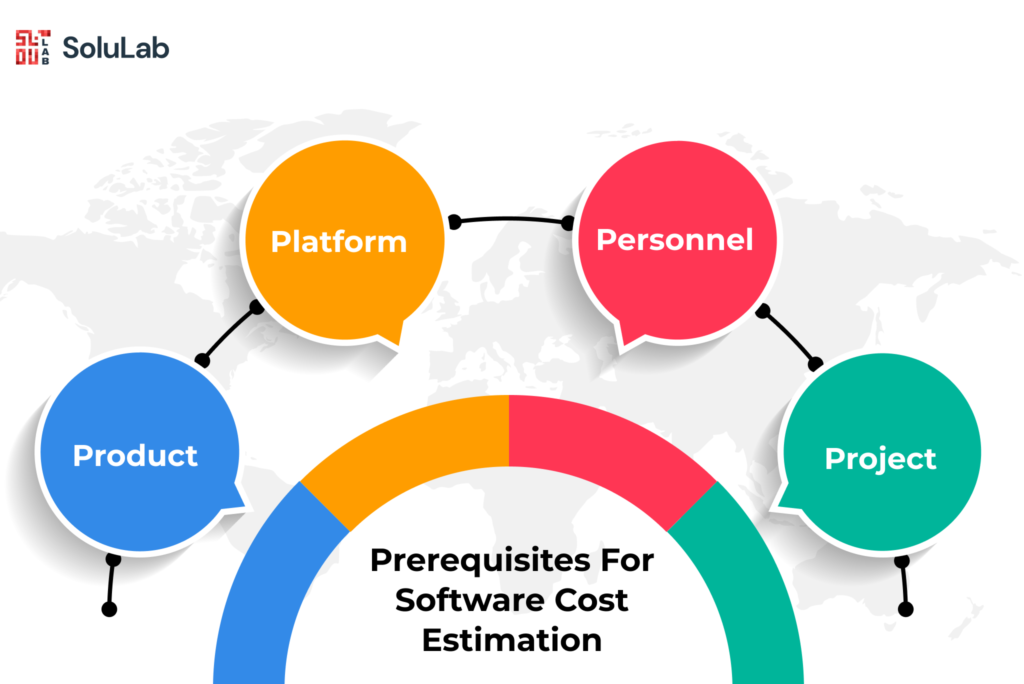
Prerequisites For Software Cost Estimation

Prerequisites For Software Cost Estimation

There are numerous approaches to solving Software cost estimation issues. There are several techniques to enhance software project management from an organizational standpoint, including responsibility distribution, decision-making, arranging project work, monitoring, and auditing of development tasks. Also, sociological and psychological perspectives on software cost estimation are possible. This includes dedication, organizational group cohesion, leadership style, and more. Another crucial factor to consider is the job’s technical aspect. For instance, having access to quality tools for design, programming, testing, documentation, hardware facilities, etc.

The time and effort required for software development are influenced by many factors. Several conditions must be met to solve the issues mentioned earlier and ensure a solid foundation for estimating the effort, duration, and capacity to create the program. 

These conditions are:

Product 

  1. Required Software Reliability 
  2. Database Size Product Complexity 
  3. Required Reusability 
  4. Documentation matches to life-cycle needs 

Platform 

  1. Execution Time Constraint 
  2. Main Storage Constraint
  3. Platform Volatility

 Personnel 

  1. Analyst and Programmer Capability
  2. Application Experience 
  3. Platform Experience 
  4. Language and Tool Experience 
  5. Personnel Continuity

Project 

  1. Use of Modern Programming Practices 
  2. Use of Software Tools 
  3. Multisite Development 
  4. Required Development Schedule 
  5. Classified Security Application

Software Development Cost Estimation

The typical project management tools frequently used by project managers, such as Gantt charts, Fishbone diagrams, Critical Path Analysis flow diagrams, and brainstorming, enable better control of both human and financial resources. They believe that the feedback loops in these tools are advantageous to customer relationships and that the metrics, which included measurements of the development process, helped to improve the performance of the organizations in the direction of faster development times, lower costs, higher software quality and reliability, and higher profit margins. To estimate the time needed for software development, several methods for software cost estimating have been presented. Nevertheless, a sizable portion of estimation overruns are documented, and several variables that affect the software development process and result in overruns are identified.

Major Types Of Software Projects

Software development takes many different forms. However, the first step in estimating development costs and classifying software development cost breakdowns is to comprehend the software development type of your project. Remember, each software development requires additional development effort and has its distinct team.

New software development refers to the creation of brand-new software, including custom software development. 

Software modification refers to the process of improving already existing business software.

Read Also: A 5-Step Guide To Successful Software Development Outsourcing

Software integration refers to the addition of custom code to incorporate previously developed software into other procedures. This would include modifying data that moves between an accounting system and an inventory system, as well as plugins and packages like “Office.”

Web development: custom web-based software development.
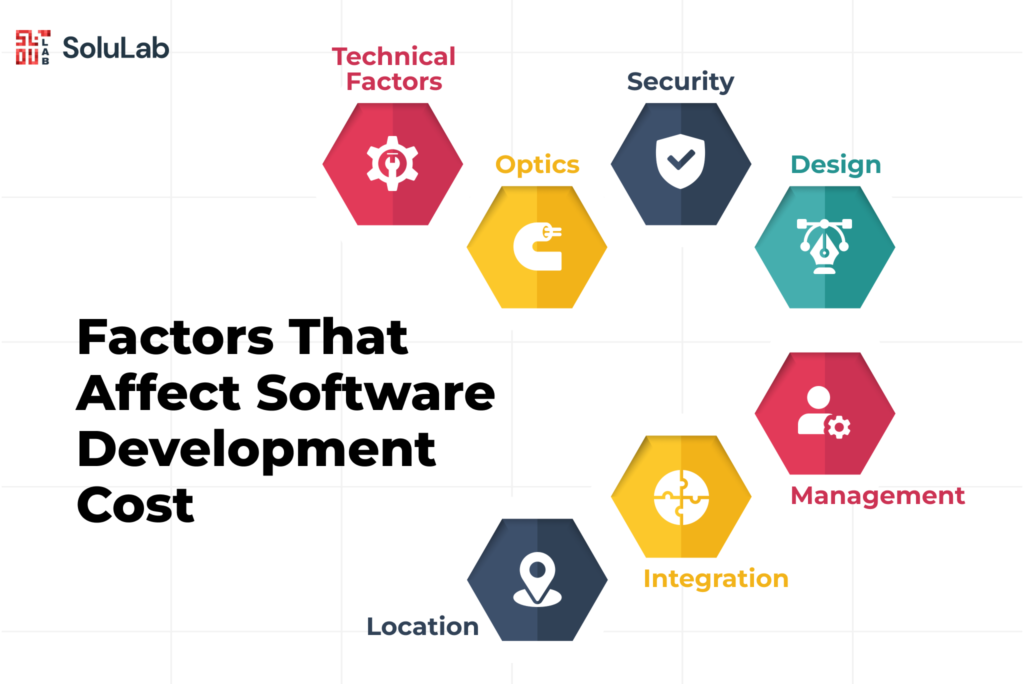
Factors That Affect Software Development Cost

Factors That Affect Software Development Cost

Barring the standard cost of the production factors—labor, capital, land, and business—known as the factor cost, consider how much it costs to create a new custom software solution.

Technical Factors 

Most of the time, regulatory cost estimates don’t consider the possibility of technological advancement. As previously mentioned, regulators frequently have to figure out how businesses can comply with the law, which seems to make it impossible to predict or extrapolate costs in the future or anticipate cost reductions. After all, technological change is notoriously difficult to anticipate; Based on previous experience, the only thing we can say with some certitude is that the cost of compliance will decrease, but we cannot say at what rate. In software engineering, soft or human-related factors that should be analyzed alongside more technical aspects receive special attention. In the process of estimating costs, selecting the appropriate tool is crucial. Accurate outcomes are achieved with the appropriate tool. A spreadsheet or Microsoft Excel, as well as Microsoft Projects, are the most common tools for cost estimation. The accuracy of the traditional method is the greatest obstacle. To produce cost estimation results with high precision, the software development communities required assistance. As a result, a lot of research has been done to create automated cost estimation tools. However, they have not yet asserted that the tool they propose could deliver accurate results.

Optics

As the software is being developed, stakeholders are providing ongoing feedback, which increases the likelihood that the scope will vary throughout the project. The development will cost more the wider the scope. You can either add features that will increase the cost or delete features that are not necessary. To give you a notion of how the range can affect the price, consider that the development of simple mobile apps with a constrained set of features can cost anywhere from $20,000 to $80,000, while the development of more complicated apps with both web and mobile functionality or customer-facing service apps can cost anywhere from $80,000 to $150,000.

Security

An application’s security must be protected at a high expense. To encrypt data in transit, purchasing a TLS/SSL certificate While purchasing a TLS/SSL certificate to encrypt data in transit may be inexpensive, investing more money in custom encryption is another security step. Despite this, you shouldn’t reduce the amount of money you spend on data protection.

Design

While planning is the precise formulation of the project’s strategy in terms of time, cost, quality, and quantity, design is related to the conceptual framework that makes up the project and sets its key attributes and objectives. The plan is primarily restricted to the operational perspective, while the design gives a complete overview of the project. The issues are caused by improper components due to lack of training, maintenance, too sophisticated or ambitious parts, etc

Management

When creating and putting into place business continuity management initiatives and systems, top management commitment is the element that decides the tipping point between possible success and failure. You have two alternatives when it comes to managing: you can handle it yourself, or you can delegate the task to a vendor project manager. Management is all about your level of commitment and desire to become involved in the project. Even though the first choice will help you avoid “additional” administration expenditures, the second one will eliminate headaches.

Integration 

There are several third-party integrations available on the market that can improve your system’s functionality. However, there are costs associated with each one. You will probably want to integrate your software with other applications from outside the company. Depending on how many integrations you want your software to be able to do and how difficult it is to integrate with particular apps, this can be simple or extremely difficult. The problem is that you don’t know how well the apps you want to integrate with let in or out information. As a result, software integration costs can vary from project to project.

Read Also: How To Ensure That Your App Development Project Do Not Cross Budget

Location

It can take a lot of work to figure out how much a particular software development project will cost. The country’s rate of development will also have a significant impact on the cost of your software project. Software development services in Western Europe and North America are the most expensive. At the same time, countries in Eastern Europe and Asia are thought to be the most cost-effective and high-quality locations for outsourcing software development.

Concluding Remarks

Software cost estimation is a crucial step in creating software that helps project managers make decisions and makes software projects successful. The cost of a software development project is also affected by other factors. These aspects that have been discussed vary between projects, resulting in variations in their total costs. When it comes to a software development project, there are too many variables to accurately estimate its cost. However, we hope this guide has been of some assistance to you in comprehending software pricing or even evaluating the cost of your project. 

FAQs

What is the hourly rate to hire software developers in USA?

It is typical for competent software developers to make up to $350-400 per hour. Hourly pay for highly skilled workers falls under the heading of high cost. The hourly rate for a part-time software developer is more than average for the field.

What kinds of solutions do software development firms offer?

Several of the services that bespoke development firms offer

  • Proven, intricate, and tried APIs- adopting industry standards for simple integration.
  • Upgrades, product evolution, and maintenance and evolution-support services are all covered.
  • Web apps- help you take advantage of browser features to improve user experience.
  • Hybrid and native mobile apps for iOS and Android are available.
  • Machine learning – Artificial Intelligence as a part of your software. 
  • New products: incremental product value focus and product roadmaps.
  •  Infrastructure automation: Environment and tools automation driven by versioned infrastructure definitions.
  • Monolith TO Microservices-Software that is modular and designed for high availability and robust services 
  • Cloud Services: Cloud-based distributed systems for lightning-fast performance.

Which of the best cost estimation tools are utilized by businesses all over the world?

JIRA, Microsoft Project, Concerto, Primavera Project Planner, and other tools are used by software development companies to estimate costs.

How do you select a software development company in USA?

A corporation should perform a more thorough analysis of its business and understand the significance of bespoke development before deciding whether it is worthwhile to produce new custom software or choose a custom software development company. The following are a few criteria that will aid in your search for the best custom software development business in the USA:

  • Check for leveled integration, adaptability, and sustainability of the custom software.
  • Number of completed projects
  • Examine client testimonials
  • See the company’s portfolio for the Development Process 
  • Examine the Technology Stack.

How is software development consulting carried out?

Even though each development company may have a slightly different software process, the minimum steps that are shared by all of them are planning, designing, programming, testing, deployment, and maintenance. Specialized software that meets the requirements of our customers is developed using agile methods. For many years, we have assisted businesses in enhancing and optimizing their IT strategy. With the help of a software development company’s strategic advice, you can digitize and automate important operational tasks while also optimizing your workflow.

9 Tips To Become A Software Developer in 2023


9 Tips To Become A Software Developer in 2023

Only a small portion of software development involves programming. The majority of software development initiatives try to automate a manual process or create a cutting-edge automated solution to a problem that was previously too difficult for people to handle. Even if programming occupies a significant portion of your day, you will need more than coding skills if you want to pursue and make a career as software developer. 

Learning how to get started in software development in USA and coding are two very different things. It is amazing how many things you need to know to be an effective software developer, which can be overwhelming, especially for new programmers. Debugging, methodologies, SCRUM, Agile, programming languages, source control, testing, continuous integration, web development, HTML, CSS, design patterns, databases, and the list goes on and on.

Software Engineering Subfields

There are numerous well-liked software engineering disciplines in top software development companies in USA:

  • Front-End Engineers

The user interface (UI) and client-side functionality of software applications are the primary concerns of front-end engineers.

  • Back-End Engineers

The majority of back-end developers in the world of web development focus on developing the application’s actual logic. When compared to front-end developers, back-end developers typically devote significantly more time to implementing algorithms and resolving issues.

  • Full-Stack Engineers

Working on all of a software development stack’s layers and components is part of full-stack development. It might even necessitate familiarity with server architecture and hardware, also known as “dev ops.”

  • Data Engineers

Data engineers concentrate on changing data, so it is readily comprehensible and available for data scientists to analyze.

  • Machine Learning (Ml) Engineers

On data science teams, machine learning (ML) engineers create and put into use programs and systems that can learn and decide for themselves.

  • Security Engineers

Security engineers are experts at examining the safety of systems, identifying vulnerabilities, and implementing fixes.

How To Become A Renowned Software Developer?

How To Become A Renowned Software Developer?

If you intend to pursue a career as a developer, the following 9 suggestions will assist you in achieving your objectives.

1. Learn One Programming Language

Before attempting to land their first position as software engineers, many beginning programmers try to spread their risks by simultaneously studying numerous programming languages. Although learning more than one programming language is something you should eventually accomplish, it is better to do it right away because it will need clarification and take your focus away from many other technical skills you will need to acquire. Instead, you should concentrate on mastering just one programming language to be confident in writing code.

The four most frequently used programming languages are:

C –

C is one of the more ancient programming languages still in use today. Despite its age, it is arguably the most widely used programming language worldwide. C is the foundation for many of the other major programming languages that are used today. Learning C will likely make it simpler for you to learn C++, C#, Java, JavaScript, and many other languages.

Read Also: A 5-Step Guide To Successful Software Development Outsourcing

C++ –   

C++ is the programming language frequently used in conjunction with C. This is primarily because many C++ programmers need to understand object-oriented concepts in C++ to write C code that includes some C++ features. If you work on C++-based legacy systems, you will likely encounter this kind of code.

JAVA – 

C# is technically very similar to Java because it is older. It was conceived by James Gosling at Sun Microsystems in 1995 as a language that could be written once and used anywhere. The idea was that Java could run on any computing platform using a virtual machine, making it simple for Java programs to run on multiple platforms.

PYTHON –

Python is one of my favorite programming languages. It is a very elegant and straightforward language whose primary goal is to be easy to read. Because more information can be expressed in fewer lines of code than in C++, Java, or C#, Python code is frequently much breezier.

2. Learn How To Structure Code

A commitment to the art that goes beyond simply getting the task done can be shown in good code structure. The art of software development actually lies in the organization of the code, but it’s also crucial since you and your colleagues will spend much more time maintaining old code than writing new code. Instead of learning this ability afterward, you should learn how to write good, clean code from the start. 

Even if you are a newbie, every interviewer who looks at your code will presume you are an experienced professional if you can produce decent, clear, simple, and intelligible code that reflects its meaning in the structure itself.

3. Enhance Your Non-Technical Abilities

There are multiple prospects to advance your career at software development conferences. As discussed in the networking chapter, attending conferences is a good way to meet new individuals and learn from some of the most experienced programmers in the industry. However, you must become a speaker if you want to benefit from software development conferences. You can build your brand as a speaker, network with other speakers and conference hosts, and land consulting or side business work.

Starting and maintaining a blog is one of the soundest fortes you can do for your job in software development. Someone searching for your name online will find your blog if you blog frequently and consistently. If you maintain a blog that is regularly updated, this will improve your reputation with potential employers, recruiters, or customers.

4. The T-Shaped Knowledge

T-shaped knowledge is what you should really work toward. It means that you know much about your field and knows something in at least one deep, specialized area. Best practices, algorithms, data structures, different architectures, front-end, back-end, databases, and so on should all be well-known to software developers. You will use this specialization when you market yourself and build your personal brand.

5. Object Oriented Designing

In software development, complexity management is a constant concern. Although numerous functional programming languages are available today, object-oriented design and analysis continue to have a significant, if not exclusive, effect on software development’s most common languages and patterns. You must comprehend OO design since it affects how the software development industry thinks. Using the object-oriented design, a complicated program can be broken down into discrete classes or objects (instantiations of classes). These classes and objects include functionality and have distinct roles and responsibilities. You should be familiar with concepts like polymorphism and encapsulation, the many types of inheritance, and when to use each.

CTA -1

6. Basic Database Knowledge

Relational databases and document databases are the two primary database technologies. Today’s developers should be familiar with relational databases and likely have some knowledge of document databases as well. Databases are frequently used in software development to store data for an application. Although some teams will have dedicated database administrators (DBAs) or database developers (DBDs), you can still learn at least the fundamentals of databases. Additionally, depending on your platform and/or framework, you should understand how to access and store data programmatically from your code. The ability to create code that can interface with a database is expected of the developer.

7. Contribute To Stack Overflow And GitHub

StackOverflow and GitHub are, without a doubt, excellent platforms for both novice and experienced developers. You absolutely require platforms that are both competitive and beneficial. Programmers collaborate, create intricate systems, and write code. Services like StackOverflow and GitHub facilitate the free transfer of knowledge, creativity, and contributions from various developers. 

Read Also: How to Choose The Right Software Development Methodology For Your Business

You can improve your skills there and gain further understanding from a large number of developers who are willing to share information.

Additionally, developers from all walks of life possess varied expertise and skills. Participating in digital communities like GitHub will improve your creative and problem-solving abilities. It’s similar to a cheat code that lets developers easily use what they have to make magic in their terrain.

8. Diversify

Due to the extent to which tech giants are pushing the boundaries with new software applications, content management systems, and operating systems, the software development industry is highly competitive. Your financial growth may be hampered if you stick to a particular niche. In addition, starting a new business from scratch necessitates earning money. So, make sure to settle for a job with a high salary. To climb the success ladders steadily, keep learning and improving your skills. The tech market may be ready for all developers. However, there are some positions and industries with greater promise than others. Concentrate on a few of the most sought-after jobs in the sector.

9. Side Projects

Your life and career won’t be affected as much by your 15 or so years of work experience as they will by the small side project you finally finished. Side projects are undoubtedly one of the best methods to advance your profession as a software developer. In point of fact, most software developers ought to make their initial side project a clone of something already in existence. If you don’t try to simultaneously design software and build it, your project will be much simpler and more likely to succeed. Start by creating software. 

When you have more experience working on side projects and more confidence in yourself, you can work on designing and building something new. It may be time to choose something more ambitious once you have completed a few of these smaller, simpler side projects and established your confidence. . You can always come up with new versions and build on a side project over time—maybe even make it your full-time job, but you want to finish it and put it out there as soon as possible so you can benefit from it and test the idea instead of letting it take years to complete. Consider how you can use that project in many different ways.

Concluding Remarks

Being a good programmer is both challenging and noble. When learning a new programming language, you should try to complete a small project first. To learn any skill, you must put yourself in a forgiving position where you can exercise that skill. You must put yourself where you can practice any skill to understand it. I hope this article helped you learn more about this career that is expanding quickly and find recommendations for courses that will help you build skills.

CTA

FAQs

What considerations should be made when hiring a software developer in USA?

Outstanding problem-solving abilities, self-assurance in one’s abilities, and a can-do attitude toward any issue are crucial software developer talents that elevate a developer’s value to any firm. When choosing to hire custom software developers, bear the following in mind:

  • Get online recommendations
  • Discuss programming and coding
  • Experience in the field
  • Look up customer feedback and endorsements
  • Understanding of current market trends
  • To successfully manage a project, communication is key
  • Troubleshooting ability
  • Evaluate their success ratio

How much does it cost to hire a software developer in USA?

It takes a lot of work to calculate the cost of a software developer and custom project. In nations like the USA and Canada, hiring software developers typically costs between $70 and $120 per hour. The project timetable has a significant impact on the cost incurred. The time it takes to execute a project influences its final price because developers are paid by the hour (estimates range from $30 to $150 per hour based on skills, experience, and responsibilities).

How do I choose a software developer in USA?

It takes time to choose and evaluate a software developer based on several factors. Here is a list of qualities to consider when choosing a software developer to help you reduce your alternatives.

  • Examine the success rate of earlier projects
  • Look over the pricing structures
  • Review the suggestions made by the clients
  • Proof of conceptual knowledge of current trends in development
  • Capacities for communication and integration

Are software developers in high demand?

According to the data, software engineers earn a lot of money and will continue to be in high demand. The job market in this sector looks promising. Between 2021 and 2031, the demand for software developers is expected to rise by 25%. This is faster than average growth, which indicates a high order.

Best Technology Stacks for Software Development

Best Technology Stacks for Software Development

We always put more effort into finding the best software development company in USA or elsewhere than the technologies that go into building a solution. The technology stack of software development is the nuance of new possibilities, new trends, and technological advancements that push the very potential of software development to deliver next-gen solutions.

This may sound mighty, but the technology stacks are indeed nothing but the ingredients used to create perfect software, just like you use food ingredients in your kitchen to make any delicacy.

However, technology stacks, like different ingredients, can be used to create different or the same software. This is what developers and IT professionals call “stacks of technologies,” which are at points altered and used to develop solutions to cater to specific needs, also known as “custom software development.”

But as we know, it all comes down to some of the best, capable of delivering fine-tuned software applications. So here are some of the best technology stacks for software development that, in our opinion, excel in IT development practices.

What is Technology Stack?

Software development began with programming languages that could perform a specific task as commanded in the codes. This element became the first stack of software development technology for creating sophisticated programs. 

Later, as it evolved, the world started to rely on electronic equipment, which created a need for software programs to match the pace and reduce the complexity of using electronic products.

And the revolution started, and new emerging programming languages in the 80s and 90s gave birth to some of the supporting elements known as frameworks, libraries, and tools. These supporting elements elevated the potential of software’s operability in every industry and made them more efficient to use. As a result, these supporting elements became the other parts of the technology stack.

So to put it simply, the technology stack is nothing but a set of tools, frameworks, libraries, and programming languages used for the creation of sophisticated software solutions. 

Technology stacks examples- Java, Python, C, NodeJS, ReactJS, MySQL, Apache 

Why Do We Need Technology Stacks?

A technology stack is the foundation of software that comprises the right database, framework, libraries, and UI elements to create solutions according to specific needs and requirements. 

The fate, viability, and competitiveness of software depend on what tech stacks companies use. And the choice of the stack has a long say as it influences,

  • The purpose of the solution
  • How the solution works
  • How it will cater services to the audience
  • How it will work and behave shortly
  • The choice of data storage
  • The solution, its scalability, and maintenance 
  • The capacity of the server to sustain the solution

Moreover, the tech stacks are necessary to eliminate the risk factors and any challenges in software development to grant better agility in developing sophisticated solutions for maximum outcomes.

Elements of Technology Stacks 

Have you ever thought about how your favorite software and applications work? The layout they have and how it changes when you click something and how some information shows up in a second. It’s all because of two sides of software.

Read Also: A 5-Step Guide To Successful Software Development Outsourcing

The technology stack is divided into two different categories: the front end, the interactive part that users see, and the back end, the part that users can’t see but that contributes equally to smooth software functioning.

Any top software development company in USA or elsewhere relies on these components to create sophisticated solutions. 

Moreover, the companies have roles divided into the same categories, with front-end developers and back-end developers each committing to serve their respective sides.

Front-end

The front end includes all of the software components that users can interact with, such as buttons, layout, and content format. In other words, it’s the visual representation of software codes and their functionality for a task in a simpler manner.

The frontend/client-side tech stack involves the creation of user interfaces, user interactive graphics, and representations, layouts that deliver an exceptional user experience.

It includes everything from page structure, layout, design, and graphics, to interactive buttons, styles, and schemas that make software applications more appealing and eye-pleasing.

  • Backend

The backend is the part where all the activities happen, from data sharing to database operations to command execution. This part is not visible to users as it takes place on a server situated far away at data centers; hence, it’s also known as server-side.

The backend part has all the business logic and operates on CRUD (create, read, update, and demand). Some of the crucial elements of the backend are programming languages, databases, and frameworks.

Best Technology Stacks For Software Development

There are multiple tech stacks used by developers, IT professionals, and companies to get the results and solutions they need, calibrated just for a specific area of industry. Let’s shed light on each and grab some insights.

1. LAMP

The industry’s standard, LAMP, is one of the best technology stacks. It is mostly used for web development to get code efficiency, performance, and flexibility. LAMP has many layers, and most of them are free-to-use or open-source, which is useful for small businesses and startups as they run on a tight budget.

Moreover, it’s affordable and platform-independent which means it is capable of utilizing solutions for all types of platforms. The LAMP stack is crucial for those who require sustainable market outcomes, as some of the popular open-source CMS such as Drupal and WordPress are built upon it.

The LAMP stack contains:

  • Linux (OS/Platform)
  • Apache (HTTP Server)
  • MySQL (Relational Database)
  • PHP (Programming Language)

2. MEAN

MEAN uses JavaScript on all ends, because of which developers get to reuse codes at any point of development, which increases productivity and decreases the groundwork of writing the same principles over and over again. This also assures better future development practices, as it only relies on JavaScript. It is most suitable for those who want a future-proof solution that can be scaled without worrying about any technological dependencies.

Visit Also: Hire Mean Stack Developers

MEAN stack consists:

  • MongoDB (NoSQL Database)
  • Express JS (Backend Web-Framework)
  • Angular JS (Front-end Framework)
  • Node JS (Server-side JavaScript)

The only thing developers and IT companies should consider here are the front-end framework, as Angular JS and its support were discontinued by Google, the company that built it. Instead, developers and companies can replace it with another front-end framework.

3. MERN

MERN is much like MEAN, the only difference is that it uses React instead of Angular, and focuses more on the user experience and caliber solutions that look more elegant and appealing.

MERN contains:

  • MongoDB (NoSQL Database)
  • Express JS (Backend Web-Framework)
  • React JS (Front-end Framework)
  • Node JS (Server-side JavaScript)

When you choose React, you get the easiest approach to building front-end elements with React integration. This facilitates coding on both servers and browsers at the same time.

Another part of MERN that stands out is its functional libraries, especially their large amounts, which offer developers the option of heavy customization. And since it’s free to use, it can be used by anyone who wants to create elegant software applications.

4. ASP.NET

Every developer and company in the world has heard of ASP.NET and its capabilities. It’s the best stack when you decide to develop software. Even so, Microsoft has made improvements to the older ASP.NET technology stack, making it a much lighter tool for development. The technology stack is capable of running on both Linux and Windows platforms to create native software applications.

Here are the software application used in ASP.NET

  • ASP.NET (MVC framework)
  • IIS (Microsoft web server)
  • Typescript (front-end framework)
  • SQL (Enterprise database from Microsoft)
  • Microsoft Azure (Cloud service)

5. MEVN

If the MERN and MEAN stacks do not align with your software development type, then MEVN is right for you. It replaces the Angular framework from MERN with Vue JS as a front-end framework. 

Vue JS is exceptionally good when it comes to building resilient and high-performing software thanks to its MVC-based architecture. The only downside here is that developers may have to rely on some third-party plugins and libraries to make the most of Vue JS. 

The MEVN stack contains:

  • MongoDB (NoSQL Database)
  • Express JS (Backend Web-Framework)
  • Vue JS (Front-end Framework)
  • Node JS (Server-side JavaScript)

6. ROR (Ruby on Rails)

Based on MVC architecture, ROR is among the most popular tech stacks for creating the most efficient and elegant software without compromising on performance. 

ROR offers plenty of features, libraries, gems, and some advanced techniques, such as metaprogramming, and DSL writing, to facilitate fully loaded custom software development. With such tremendous tech advantages, Ruby on Rails is loved by many, and companies such as Airbnb, GitHub, and others have used the ROR tech stack to make scalable solutions.

ROR is well known for its aesthetic and eye-pleasing software development, which is generally used in conjunction with MySQL databases. It eases out developers’ work by introducing techniques such as DRY, low code, and others for better productivity.

7. Serverless Stack

The term “serverless stack” refers to the use of cloud platforms to build software services and make them available to customers on the cloud. It is a revolutionizing tech stack that offers nothing but advantages to software firms on all ends, such as cost-efficient software development and deployment, regular maintenance, and system upgrades.

If a company wants to gain digital agility by diversifying its operations on cloud services such as SaaS, a serverless stack is the best option. This makes infrastructure management easy with efficient operations and high scalability.

The Verdict, Which Tech Stack is Best

All the technology stacks listed in this article are capable of elevating any software development practice, but there are some things to consider, such as the type of development. Since companies develop different types of solutions, they have to choose the best technology stack for that specific need.

If a company decides to develop web applications, then it’s best to choose LAMP, MEAN, MEVN, or ROR, as they are originally targeting the web development domain. Other listed tech stacks can be used to develop websites as well, but they are not calibrated for those specific requirements.

In the case of mobile app development, ASP.NET, MERN, and ROR can be used as they offer plenty of libraries, plugins, and elegance required for mobile apps.

Alternatively, if an organization requires cloud infrastructure for software, then choosing a serverless stack makes sense as it targets software creation and delivery via cloud platforms.

However, these tech stacks can be altered at times, such as by replacing technologies as per projects’ requirements or clients’ needs to calibrate products accordingly.

So this means it all depends on the preferences and requirements of the project, company, and clients.

Final Words

There you have it, the best technology stacks for software development.

Each technology stack is distinct and offers something unique that you may admire for your software development practices or even despise in some cases. That’s why the choice of the best tech stack comes down to your personal preferences, opinions, and the project’s requirements.

Nonetheless, you can alternatively use different technologies combined with a tech stack for different development domains to obtain maximum outcomes and retain clients for a longer period.

FAQs

1. What Factors Should You Consider When Opting for a Technology Stack?

The right technology stack is essential for quality software development aligned to the specific needs of a business; hence, when opting for tech stacks, these points must be thoroughly considered – project size, complexity, scope, audience, and objectives, teams’ knowledge of technologies, required database, security protocols, scalability of the solution for future operations, time to market and end-user experience.

2. Why Are Technology Stacks Essential for Software Development?

Technology stacks are the foundation of software solutions. With these, a company can build solutions that are robust, efficient, resilient, performant, and secure, for better outcomes and to facilitate the reach of business operations. Hence, it’s suggested to choose the right technology stack by assessing their pros and cons for better development practices.

3. What Are The Most Common Technology Stacks?

LAMP, MERN, MEVN, and ROR are some of the most commonly used technology stacks for software development, because of their huge sets of plugins, code libraries, and additional features.

4. What Problems Might Occur If Used The Wrong Technology Stack?

The wrong technology stack can cause problems, and they might just keep piling up until the solution becomes hard to repair. For instance, performance issues, vulnerabilities to security, decreased scalability, growth crisis, and maintenance issues.

5. Is It Possible To Transition From The Incorrect Technology Stack To The Correct One?

The migration from the wrong technology stack to the right one is possible, but it’s a tedious process that consumes an awful lot of time. And, if it’s necessary, working with professionals or an IT firm like SoluLab to get every aspect of the product calibrated and geared by the right tech stack for skyrocketing growth is highly recommended.

SoluLab is the place for all your development needs. It is the best software development company in USA, from which you can hire software developers in USA for custom software development, web, and mobile app development, or any other service.


How to Choose The Right Software Development Methodology For Your Business


When it comes to software development, veteran developers, quality testing, and bug removal, these three steps decide whether the software will succeed or not. Proper market segmentation is also an important task, and in modern days, internet marketing is something that can be a contributing factor. However, another factor resides in the software development field and must be clarified before starting any development-related activities. 

We’re talking about software development methodologies. Since the first software was developed in the world, some rules, regulations, and formulas have existed to make the development work more efficiently. Not only that, but development strategies are also effective in removing counter-productivity from the project. Cost efficiency can also be obtained from a suitable software development methodology; that’s why choosing the right software development strategy is crucial for gaining success. 

Steps To Choose The Right Software Development Methodology

Measure The Scope Of Development 

Adobe, Microsoft Office and CAD are some softwares with broader scope and large audience base that includes different market segments and are used for other real-life use cases. Similarly, micro-scoped softwares available in the market serves a small target audience. 

Your project might need specific developers, quality analysts and marketing professionals dependent on the scope; also, they require time and resources to show up the best of them. 

Based on the scope of development, the software requires different features, development strategies and all the above, a suitable software development methodology which can justify project needs. 

So, measuring the scope of development is very important when choosing the best software development methodology. 

Understand The Software Development Culture

Whether your developers are working from the office or they’re working from home, the working and development culture also requires the best suitable software development framework. 

For working from-home developers, coordination and accountability are most needed. Likewise, motivational and intrapersonal factors can heavily affect software development, so the software development framework is different for working-from-home professionals. 

In contrast, office workers are naturally capable of generating good coordination between them. Software development strategies like Agile and Spiral require frequent connection and rapport. 

Set Up With The Project Timeframe & Flexibility

Depending on any project deadline, you should choose a software development plan for yourself. Usually, heavy software projects require a steady and rigid development strategy, and the opposite is with smaller projects. 

Flexibility is also an important contributing factor in a software development project. As software evaluates, many things related to feature and scalability change, and flexibility factors change. 

Read Also: A 5-Step Guide To Successful Software Development Outsourcing

So, the Waterfall software development strategy is considered best for complex and heavy software, where everything is based on a rigorous but simple evaluation. However, implementing a ‘halt and inspect’ strategy also works, as complex things can become messy if unchecked. So, implementing a combined approach can also be done. 

Consider A Financial Inspection

Financial things also matter when choosing a software development methodology. Depending upon the scope of the project, you’ll be appointing developers and other workers for your software. The higher the number of project workers, the higher the cost is going to be. 

Similarly, complex software development methodologies require the best strategists, as the majority of the requirements and strategies must be settled before starting out. Also, complex projects are bound to make mistakes, so you’ll be requiring veteran developers to complete all tasks without potential errors.

All-over financial inspection is also required and a must before choosing the right software development methodology for your business. 

3 Software Development Methodology For Business

Let’s check 3 software development strategies available that you might find valuable for your project. They are – 

1.  Waterfall

Like the water stream flows downwards and never goes up, the Waterfall software development methodology maintains a good and simple method like a water stream. 

As explained before, the waterfall is the best strategy for complex and huge development projects. Developers break down the whole development into parts and manage them sequentially. Each step must be completed fully before moving to the next project. 

Also, participants in a project have a very distinct and fixed role in development, and nothing is going to change after the development process starts. 

2.  Lean Development

Lean development is a productivity-based software development program for minimizing wastage and building productivity. 

This development strategy from the automotive manufacturing farm Toyota implements an open-mind approach while developing tasks. Through the course of development, managers curate strategies to avoid potential counter-productive things. Also, developers are asked to identify the things that can hamper the development stages. 

However, the lean development process requires high-end connection and frequent communication among the participants. So, you must evaluate your development team before choosing this software development methodology. 

3.  Prototype Model

The prototype model is heavily based on customer testing, feedback and evaluation. Instead of building full-fledged software, this software development methodology allows for making a prototype version of the expected final product. 

After creating a prototype model, developers allow a few users for testing and bug-identifying factors. One of the advantages of this model is less failure risk. As users participate in the software-enhancing process, the software is going to get enhanced step-by-step. 

Choosing a perfect software development methodology requires a mind capable of strategizing the best strategies; consider booking a consultation service. Also, methods work best with the best developers; hire software developers usa with a full spectrum of experiences. Altogether, make your software development project a success by choosing the right software development methodology. 

Read Also: Top 9 Software Development Methodologies 

Author Bio

Akash Guha is a content writer with a grasp of different web content creation. He has an interest towards writing website content for multiple industries like blockchain, mental health and finance. Also, he is aimed to write simple and easy-to-understand content. 

Top 9 Software Development Methodologies For Your Business Requirements

Top 9 Software Development Methodologies

Following a proper software development structure can be highly valuable for your company. Instead of only development and launching, effective planning speeds up the process emphasizes core business requirements and helps manage a productive workflow. 

Likewise, eliminating potential bugs and wasting efforts also can be possible with a proper software development company in usa. So, let’s condense our thoughts on learning the 9 best software development methodologies.  

Lean Development Methodology

The lean development methodology is among the most popular software development methodologies. With this framework, the software manager aims to elevate a flawless development framework removing any counter-productive possibilities. 

Developed in the mid-twenty century, lean development originated by the Toyota Foundation to enhance manufacturing efficiency. After gaining more popularity in the last twenty decades, software engineers adopted this framework in 2003. 

To curate this methodology, ask your software developers to enlist activities that can hamper the software development process. After identifying time-wasting activities, you can eliminate or automate those tasks to improve the core-development process. Communication is one of the pillars of this software development system, which must be managed carefully and efficiently. 

Prototype Methodology

Prototype software development methodology follows feedback and a testing-focused development system. In this development framework, developers streamline the development process to build a prototype version of full-fledged software. 

After developing a prototype software, developers allow a limited number of users and testers to go through the software. Then, based on user and tester feedback, developers evaluate the development process and make software. 

Through this process, developers can sense a ton of possibilities based on user feedback. As this process is made to find potential bugs, developers can also ensure software’s flawlessness during mass usage. Through prototype development and a successful testing phase, developers can start working on the final product with zero bugs. 

DevOps Methodology

In contrast to any traditional software development methodology, the DevOps software development framework is designed to deliver software with high velocity and much-efficiency. This process combines effective tools and practices to facilitate software development, as both the development and the operational teamwork simultaneously function all the activities of a software life-cycle. 

The main motto of this development process is the simultaneous performance of the development and operational team. Working together and formally, the DevOps system allows businesses to provide constant innovation and improvement, providing a better final product. 

DevOps software development supports all kinds of businesses; the only demand is cultural change. Your business should follow the DevOps system after implementing new-age business development and organizing culture. 

Waterfall Methodology

The waterfall software development process is among the oldest and simplest forms of software development. Like a waterfall, this software development system only follows simplicity and easiness throughout the process, making it understandable for people. 

Likewise, a water stream never goes upward; the waterfall framework divides a software curation process with a step-by-step approach. Development and operation workers must ensure the proper flow; after completing one full step, they can go into the next one.  For timeline-heavy phases, visualizing scope with a Gantt chart helps map milestones, owners, and dependencies; teams can create gantt chart easily with Canva to coordinate sprints or stage-gates without losing sight of critical paths.

For amateur developers and businesses, the waterfall software development system is approachable. This system isn’t as flexible as the other ones, so if your software requires frequent plan-changing, this system isn’t for you.  

Feature-driven Methodology

Popular in large business farms, the feature-driven methodology focuses on the feature-centric development of software. It facilitates building softwares in simple and short iterations, which leads to a timely finish. For large business software or heavy software projects, a feature-driven software development process provides great usability and velocity. 

Invented in 1999, this software development process is highly customer focused. Firstly, clients inspect every feature; then, developers push it to the building code. This software development process follows a flexible approach and releases continuous features and improvements. 

Spiral Methodology

A balanced combination of an iterative and waterfall software development framework, spiral software development is one of the most effective software development plans available. Especially preferable for large, heavy and expensive development projects, the spiral development framework initiates early risk management to remove all the counter-productivity from the development phase. 

Similarly, developers explore and streamline development step-by-step. The main advantage of this process is risk management. A heavy risk management procedure highly helps developers in many ways. 

Extreme Programming Methodology

Extreme programming methodology, or XP methodology, is made for software development in a highly-unstable environment. Likewise, this system also supports cost-effectiveness and extreme flexibility. 

Through this process, software developers are also able to achieve time-effectiveness, as the XP framework is final product dependent. 

Rapid Application Development Methodology

With user participation, time-effectiveness and high efficiency, the rapid action development process has the best of every other development framework. Proper planning and risk management are also a plus of RAD; this is one of the old software development strategies. 

James Martin invented this software development process while working with IBM. Highly flexible with feature-driven and timely delivery, RAD is considerably the most used software development form. 

Read Also: A 5-Step Guide To Successful Software Development Outsourcing

Scrum Development Methodology

Scrum software development is for highly-emerging fields, and fields require flexibility. With cutting-edge development technology, high velocity and continuous testing, the scrum framework is highly effective among software development systems. 

Conclusion

These software development frameworks have both advantages and disadvantages. So, planning and efficient execution are more valuable than learning about these things. It is recommended to hire dedicated software developers or strategists to consult these strategies aligning with project requirements.  

Author Bio

Akash Guha is a content writer with a grasp of different web content creation. He has an interest towards writing website content for multiple industries like blockchain, mental health and finance. Also, he is aimed to write simple and easy-to-understand content.
