Talk to an Expert

Generative AI and Human Creativity

Generative AI and Human Creativity: Where the Line is to be Drawn?

Generative AI, at its core, refers to a subset of Artificial intelligence (AI) that focuses on creating rather than merely processing data. It stands as a testament to the relentless evolution of technology, transforming the way we perceive and harness AI capabilities.

The evolution of Generative AI technology has been marked by significant milestones, from early experiments to the current era of advanced models. The journey involves the continuous refinement of algorithms, the introduction of deep learning techniques, and the exploration of novel architectures that enhance the generative capabilities of AI.

In the broader technological landscape, Generative AI holds immense significance, particularly in fostering a dynamic relationship between machines and human creativity. By enabling the creation of content that mirrors human-like expression, Generative AI becomes a powerful tool for artists, writers, and innovators seeking new avenues for creative exploration.
What Impact of Generative Al on Creativity?

What impact of Generative Al on Creativity?

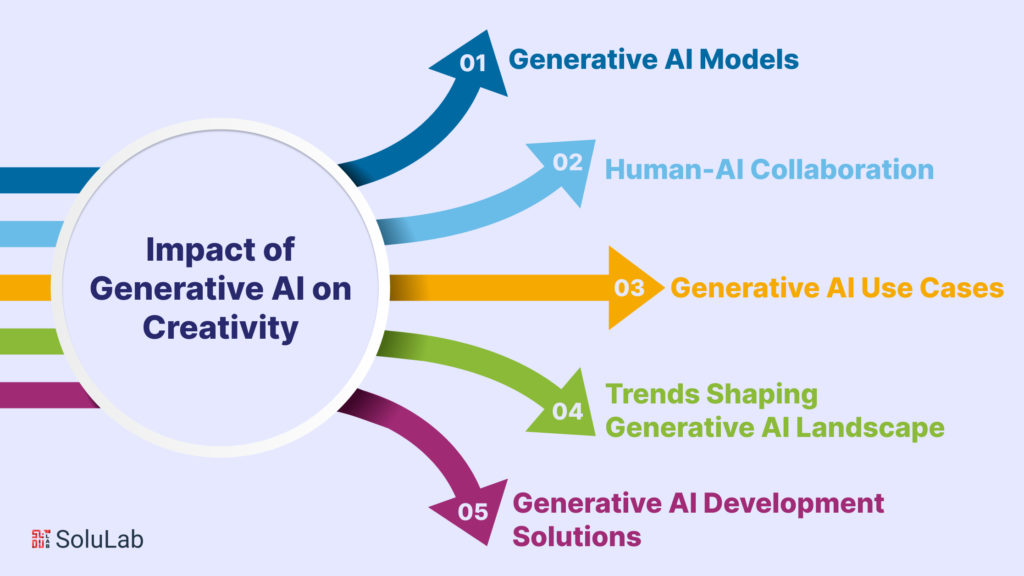
The advent of Generative AI technology has ushered in a transformative era for creativity, profoundly impacting the creative process through its sophisticated models and collaborative potential.

  • Generative AI Models

Generative AI models, powered by advanced algorithms and neural networks, have become veritable engines of creativity. These models possess the capability to analyze vast datasets and generate content autonomously, mimicking and often surpassing human-like creative outputs. This impact is most evident in fields such as art, design, and content creation, where Generative AI models contribute novel perspectives, styles, and ideas that augment the creative repertoire.

  • Human-AI Collaboration

The intersection of Generative AI and human creativity unfolds in a dynamic collaboration. This synergy is not about replacing human creativity but enhancing it. Generative AI and Human-AI collaboration become a symbiotic relationship where Generative AI acts as a co-creator, aiding humans in ideation, suggesting alternative solutions, and automating routine tasks. This collaboration amplifies efficiency, allowing creatives to focus on high-level thinking and innovation.

  • Generative AI Use Cases

The impact of Generative AI extends across diverse use cases. In fields like graphic design, Generative AI tools assist in rapid prototyping and ideation. In content creation, language models generate coherent and contextually relevant text. In healthcare, Generative AI aids in drug discovery and medical imaging interpretation. The breadth of applications showcases the versatility of Generative AI in catalyzing creativity across industries.

CTA1

  • Trends Shaping Generative AI Landscape

The Generative AI landscape is marked by dynamic trends. Continuous advancements in algorithms, increased computing power, and improved datasets contribute to the evolution of Generative AI models. Ethical considerations, responsible AI deployment, and transparency are becoming pivotal trends, reflecting a growing awareness of the societal impact of Generative AI.

  • Generative AI Development Solutions

Navigating the complexities of Generative AI development requires tailored solutions. Specialized Generative AI development companies play a crucial role in providing expertise, from algorithmic development to ethical considerations. These solutions ensure responsible and effective integration of Generative AI into existing workflows.
How to Analyze the Intersection of Generative Al and Human Creativity?

How to Analyze the intersection of Generative Al and human creativity?

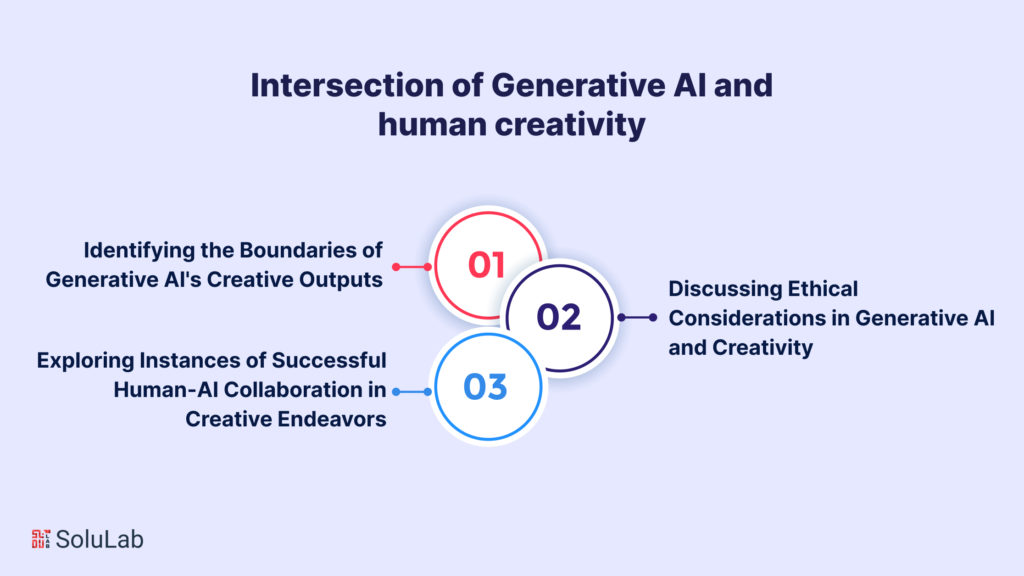
Generative AI, a powerful technological force, intersects with human creativity, sparking a nuanced exploration of boundaries, ethics, and collaborative potentials.

  • Identifying the Boundaries of Generative AI’s Creative Outputs

Generative AI, while capable of producing impressive creative outputs, operates within defined limits. Understanding these boundaries is crucial to harness its potential responsibly. By deciphering the extent of AI-generated creativity, we ensure harmonious integration without overshadowing the human touch.

  • Discussing Ethical Considerations in Generative AI and Creativity

The fusion of Generative AI and creativity introduces ethical dimensions. Delving into questions of authorship, intellectual property, and the unintended consequences of AI-generated content is imperative. Striking a balance between innovation and ethical integrity safeguards against potential pitfalls in the evolving landscape of AI-driven creativity.

Related: How Generative AI is Revolutionizing Art

  • Exploring Instances of Successful Human-AI Collaboration in Creative Endeavors

Examining instances where Generative AI collaborates with human creatives reveals the potential for groundbreaking synergy. From aiding artists in ideation to assisting writers in content creation, these collaborations showcase the harmonious coexistence of technology and human intuition. Such success stories serve as beacons guiding the path toward fruitful partnerships.

What are the Current Trends that are Shaping the Generative AI Landscape?

The current trends in the Generative AI landscape reflect a dynamic interplay between technology, creativity, and collaborative efforts, shaping the way we approach problem-solving and innovation.

Generative AI technology has witnessed a surge in advancements, with cutting-edge tools and models driving the landscape’s evolution. These technologies are not merely computational tools; they’ve become enablers of creativity, unlocking novel possibilities across various industries.

Generative AI and human creativity are converging, fostering a symbiotic relationship where AI acts as a catalyst for human ingenuity. This collaboration is particularly evident in fields like art, design, and content creation, where Generative AI tools serve as creative assistants, augmenting human capabilities and pushing the boundaries of what’s achievable.

Related:How Generative AI is Transforming Industries

The proliferation of Generative AI tools is influencing diverse use cases. From generating realistic AI images to aiding in complex decision-making processes, these tools are proving versatile across sectors such as healthcare, finance, and entertainment. The adaptability of Generative AI models ensures their relevance in addressing a broad spectrum of challenges.

With expertise in Generative AI technology, SoluLab provides comprehensive Generative AI consulting services that encompass strategic planning, implementation, and ongoing support. The company recognizes the critical intersection of Generative AI and human creativity, and its consulting services are designed to facilitate a seamless integration that enhances creative processes across industries.

What are the Challenges in Generative AI Development and Potential Solutions?

Developing Generative AI poses several challenges, reflecting the intricate nature of merging technology and human creativity.

Challenge: Building sophisticated Generative AI models requires a deep understanding of complex algorithms and neural networks.

Solution: Continuous research and collaboration among developers to simplify model architectures and enhance accessibility.

  • Ethical Concerns in Creativity

Challenge: Striking a balance between Generative AI’s creative outputs and ethical considerations is challenging.

Solution: Implementing robust ethical guidelines, involving diverse perspectives in development, and fostering responsible AI practices.

  • Limited Interpretability

Challenge: Understanding the decision-making process of Generative AI models can be challenging due to their black-box nature.

Solution: Incorporating explainable AI techniques to enhance model interpretability and build trust among users.

  • Data Quality and Bias

Challenge: Generative AI heavily relies on training data, and biased or low-quality data can lead to biased model outputs.

Solution: Rigorous data preprocessing, diverse dataset curation, and ongoing monitoring to identify and rectify biases.

Read Our Blog: Real-World Applications of Generative AI and GPT

  • Human-AI Collaboration Barriers

Challenge: Establishing effective collaboration between Generative AI systems and human creators requires overcoming communication barriers.

Solution: Develop intuitive user interfaces, foster interdisciplinary teams, and enhance AI’s adaptability to user preferences.
What is the Role of Generative AI Development Companies in Addressing Industry Needs?

What is the Role of Generative AI development companies in addressing industry needs?

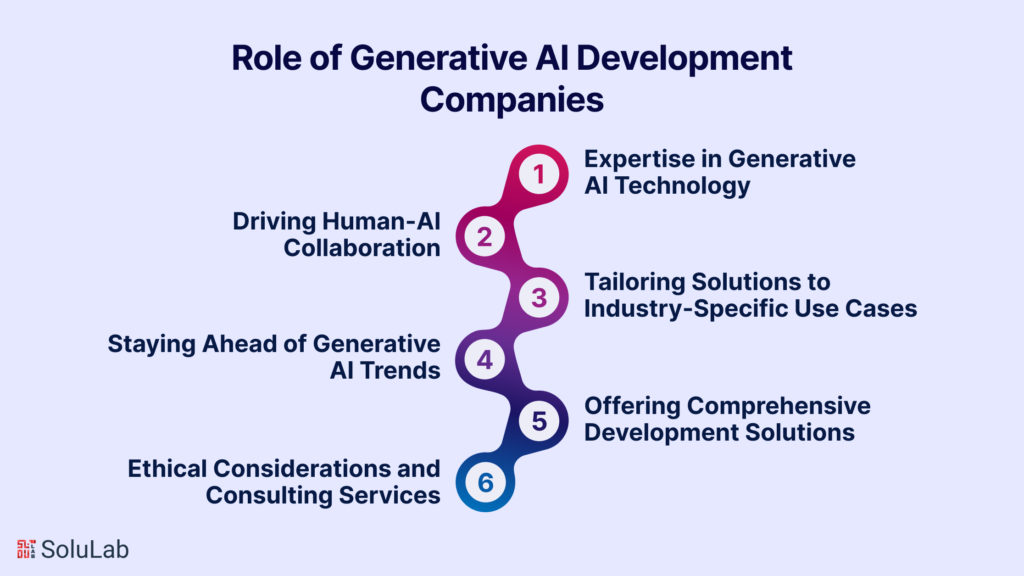
Generative AI development companies play a pivotal role in addressing the evolving needs of industries in the era of artificial intelligence. As businesses increasingly leverage Generative AI technology to enhance creativity and streamline processes, these companies become essential catalysts for innovation and progress.

1. Expertise in Generative AI Technology

  • Generative AI development companies possess specialized knowledge in cutting-edge Generative AI technology, ensuring that businesses can tap into the full potential of these advancements.
  • Their expertise extends to the intricate workings of Generative AI tools and models, allowing for the seamless integration of these solutions into diverse industry frameworks.

2. Driving Human-AI Collaboration

  • Fostering effective collaboration between Generative AI and human creativity is a nuanced challenge. Development companies bridge this gap by crafting solutions that empower human-AI synergy.
  • They design Generative AI models that complement human capabilities, fostering a harmonious partnership where technology augments and enhances creative processes.

3. Tailoring Solutions to Industry-Specific Use Cases

  • Understanding the unique demands of various industries, Generative AI development companies tailor solutions to specific use cases, be it in healthcare, finance, or creative arts.
  • By customizing Generative AI applications, these companies address industry-specific challenges, maximizing the impact of AI on operational efficiency and creativity.

Related: 10 Ways Generative AI is Revolutionizing Healthcare
4. Staying Ahead of Generative AI Trends

  • The landscape of Generative AI is dynamic, with trends evolving rapidly. Development companies play a crucial role in staying ahead of these trends, ensuring that their clients benefit from the latest advancements.
  • Proactive adaptation to emerging Generative AI trends positions businesses to maintain a competitive edge in their respective sectors.

5. Offering Comprehensive Development Solutions

  • Generative AI development companies provide end-to-end solutions, encompassing everything from ideation and prototyping to deployment and maintenance.
  • This comprehensive approach streamlines the implementation of Generative AI, reducing the burden on businesses and enabling them to focus on leveraging the technology for strategic goals.

6. Ethical Considerations and Consulting Services

  • Addressing ethical concerns related to Generative AI is a crucial aspect of development. Companies in this domain often offer consulting services, guiding businesses on responsible AI practices.
  • Their role extends beyond technical expertise to encompass ethical considerations, ensuring that Generative AI is deployed with a mindful approach to societal impact.

What are the Essential Skills for Generative AI Developers?

What are the Essential Skills for Generative AI Developers?

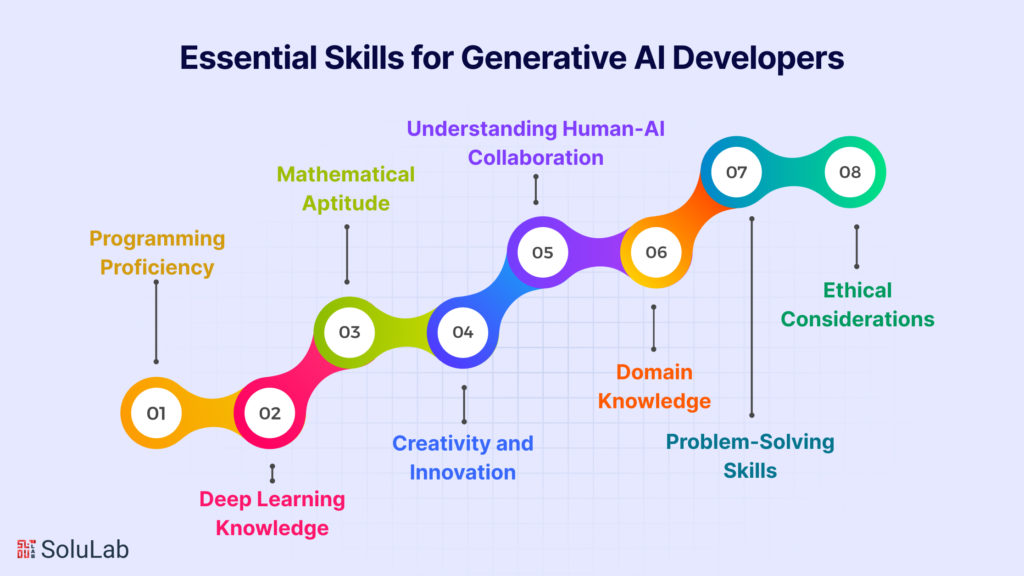
To excel in the dynamic field of Generative AI development, developers must possess a diverse skill set that extends beyond traditional programming. The essential skills for Generative AI developers encompass technical expertise, creativity, and a deep understanding of the collaboration between Generative AI and human creativity.

  • Programming Proficiency

Generative AI developers should have a strong foundation in programming languages such as Python, TensorFlow, and PyTorch. Proficiency in these languages is crucial for implementing and fine-tuning Generative AI models.

  • Deep Learning Knowledge

A comprehensive understanding of deep learning principles is essential. Developers must grasp concepts like neural networks, backpropagation, and optimization algorithms to effectively design and train Generative AI models.

  • Mathematical Aptitude

Strong mathematical skills, particularly in linear algebra, calculus, and probability, are vital. These skills underpin the algorithms and statistical models used in Generative AI development.

  • Creativity and Innovation

Generative AI is at the intersection of technology and creativity. Developers should possess a creative mindset to push the boundaries of AI-generated content and explore innovative applications.

Understanding Human-AI Collaboration

Successful Generative AI developers understand how to facilitate meaningful collaboration between AI and human creativity. This involves developing models that augment human capabilities rather than replacing them entirely.

  • Domain Knowledge

Depending on the application, developers should have domain-specific knowledge. Whether it’s art, music, language, or other fields, a deep understanding enhances the ability to create relevant and impactful Generative AI solutions.

Read Also: Generative AI in the Manufacturing 

  • Problem-Solving Skills

Generative AI development often involves tackling complex problems. Developers must be adept at breaking down challenges, devising creative solutions, and iterating on models to achieve optimal results.

  • Ethical Considerations

Awareness of ethical implications is crucial. Generative AI developers should prioritize responsible AI practices, considering issues like bias, fairness, and the potential societal impact of their creations.
CTA2

Conclusion

In navigating the evolving landscape of Generative AI technology, the delineation between artificial intelligence and human creativity is a pivotal concern. As Generative AI models and tools continue to advance, the imperative lies in orchestrating a symbiotic relationship between the ingenuity of human minds and the computational prowess of AI. SoluLab emerges as a trailblazer in this paradigm, providing cutting-edge Generative AI development solutions.

The delicate balance between Generative AI and human creativity hinges on thoughtful collaboration. While Generative AI offers unprecedented capabilities to generate content, ideas, and designs, it is paramount to recognize its role as a tool rather than a replacement for human innovation. SoluLab, as a Generative AI development company, exemplifies this synergy, fostering an environment where human-AI collaboration amplifies creative outputs.

Exploring Generative AI use cases, SoluLab navigates diverse industries, harnessing the technology to streamline processes, enhance efficiency, and unlock novel possibilities. The company’s Generative AI consulting services underline a commitment to guiding clients in harnessing the technology responsibly, ensuring that AI augments human creativity rather than supplants it.

FAQs

1. What is Generative AI, and how does it differ from traditional AI?

Generative AI refers to technology that produces content, mimicking human creativity. It diverges from traditional AI by creating original outputs rather than relying solely on predefined patterns.

2. How can Generative AI technology enhance human creativity?

Generative AI tools empower creators by offering new perspectives, automating routine tasks, and fostering collaborative efforts, ultimately expanding the boundaries of human creativity.

3. Where is the line drawn between Generative AI and human creativity?

The line is defined by the synergy between Generative AI models and human input. While AI generates content, human creativity guides the process, ensuring a harmonious collaboration.

4. What are the key use cases for Generative AI in creative industries?

Generative AI finds applications in content creation, design, music composition, and more. Its versatility contributes to novel solutions across various creative domains.

5. What trends are emerging in the Generative AI landscape?

Trends include personalized content generation, improved natural language processing, and enhanced collaboration between Generative AI and human creators.

6. How can SoluLab contribute to Generative AI development solutions?

SoluLab, as a leading Generative AI development company, specializes in crafting innovative solutions. Their expertise lies in leveraging Generative AI to address specific industry challenges.

 

How Generative AI is Revolutionizing Art?

How Generative AI is Revolutionizing Art: The Way AI Unlocks Creativity

Artificial intelligence (AI) has transformed businesses all over the world, including the creative sphere. Generative AI, a cutting-edge branch of AI, is revolutionizing creative labor. It expands brand opportunities globally by improving content development and picture generation. But what does this signify for your company’s image? How can you use Generative AI technology to keep one step ahead of the competition?

In this blog article, we will look at how generative AI revolutionizing art affects creative work. We will also go through its pros and drawbacks, as well as offer advice on how to incorporate this cutting-edge technology into your brand’s workflow. 

The Impact of Generative AI on Creative Work

The Impact of Generative AI on Creative Work

A type of artificial intelligence known as Generative AI is transforming the way creative professions approach their work. Generative AI models may produce material that resembles human expression by employing powerful machine learning algorithms and natural language processing models. It also provides a plethora of time-saving and inspiration-stimulating alternatives for people who regularly participate in creative activities. Some artists, authors, and musicians, however, are skeptical about generative AI’s ability to replicate human expression. Furthermore, the intangible component of a creative’s work is because neural networks may not entirely grasp the core characteristics of human creativity.

Despite these reservations, the use of generative AI in creative work has transformed many parts of the creative process. Let’s look at how generative AI improves content production, picture development, and cooperation with human intelligence, providing new potential for companies.

  • Improving Content Creation

By automating activities, creating ideas, and optimizing for search engine optimization (SEO), generative AI systems can help to simplify content development.

GPT-4 language models, for example, are extremely excellent at creating human-like text. As a result, they are crucial for creating content for marketing and other communication-focused applications.

CTA1

 By utilizing Generative AI trends to improve content creation, brands can:

  • Create more persuasive, specialized content that appeals to their intended audience. Highly tailored content is possible because of the ability of language models to be trained on particular content kinds or writing etiquette.
  • Increase productivity by automating the development of repeated content categories, such as product descriptions or customer communications.
  • Deliver a user experience that is more tailored and engaging. Brands may employ language models to provide content that is extremely relevant to each user, increasing user engagement and conversion rates.
  • Differentiate themselves from the opposition. Brands can remain ahead of the curve and stand out in a crowded market by employing AI to produce content.

Read Our Blog: Top 25 Generative AI Use Cases in 2024

  • Modernizing Image Generation

Brands now generate graphics for advertising and product design using tools like DALL-E, Midjourney, and others that are trained on stable diffusion models. The innovative and appealing pictures produced by these potent Generative AI tools, which employ deep learning techniques, provide companies with a competitive edge.

Generative AI images can still benefit from human input and traditional software expertise, though. It makes sure that the finished item complies with the objectives and vision of the brand. Brands may open up a world of artistic possibilities by employing generative AI development techniques in picture production. Additionally, it creates eye-catching graphics that appeal to its target audience and stand out in a market that is becoming more saturated.

  • Working in Conjunction With Human Intelligence

In many creative areas, generative AI models have the ability to work in conjunction with human intelligence to increase creativity and productivity. Generic AI creates new ideas and concepts that allow professionals to explore their creativity by automating repetitive work. This increases the potential for creative endeavors. Implementing generative AI can also improve the accuracy and quality of the output while lowering the costs related to creative activity.

However, it is essential to take into account the difficulties and ethical concerns when using generative AI development services in creative industries, such as intellectual property and copyright issues, data bias and justice, and balancing automation and human creativity. By tackling these issues, companies can make sure that AI and human intelligence work in harmony to provide new and creative results.

Read Also: Top 10 Generative AI Development Companies

How AI Works as a Tool for Artists and Creators?

How AI Works as a Tool for Artists and Creators?

Artists and creators have always sought innovative tools and techniques to bring their visions to life. In recent years, Generative AI has emerged as a transformative tool that empowers artists in unprecedented ways.

  • Expanding the Artist’s Toolkit

Generative AI provides artists with a versatile set of tools to expand their creative toolkit. Whether it’s generating complex textures, intricate patterns, or unique compositions, AI algorithms can automate tasks that were once time-consuming or technically challenging. Generative AI examples, for instance in visual art, AI algorithms can create detailed backgrounds or repetitive elements, freeing the artist to focus on the core elements of the piece.

  • Customization and Efficiency

One of the significant advantages of AI for artists is the ability to customize AI tools to match their specific style and preferences. AI algorithms can be trained on an artist’s previous works, learning to mimic their distinctive techniques. This customization allows artists to efficiently generate content that aligns with their artistic vision, saving time and effort.

Read Our Blog Post: From Theory to Reality: Real-World Applications of Generative AI and GPT

  • Breaking Down Technical Barriers

Generative AI also has the potential to democratize art creation. It can make art more accessible to individuals who may not have formal artistic training or technical skills. With user-friendly AI tools, anyone can experiment with creating art, leading to a more inclusive and diverse artistic landscape.

Thus, AI serves as a powerful tool for artists and creators, offering expanded creative possibilities, customization, efficiency, and accessibility. It encourages the fusion of traditional and modern artistic practices, opening up exciting new avenues for artistic expression. As AI continues to evolve and become more accessible, we can expect artists to push the boundaries of their creativity further, creating a vibrant and dynamic art landscape for the future.

The Benefits of Implementing Generative AI for Your Brand

The Benefits of Implementing Generative AI for Your Brand

Being ahead of the curve is crucial in today’s fast-paced and fiercely competitive corporate environment. One way to gain a significant edge is by incorporating Generative AI art into your brand strategy. Generative AI, a subset of Artificial intelligence, offers a wide array of benefits that can elevate your brand’s presence and impact. Here are some of the key advantages of implementing Generative AI for your brand:

1. Enhanced Personalization

  • Customized User Experiences: Generative AI allows you to create highly personalized experiences for your customers. It can analyze user data and behavior to deliver tailored product recommendations, content, and offers.
  • Building Strong Customer Relationships: By understanding your customers’ preferences and needs, Generative AI enables you to forge deeper connections and foster customer loyalty.

2. Content Creation and Marketing

  • Automated Content Generation: Generative AI can produce high-quality, relevant content at scale. From blog posts and social media updates to product descriptions, AI can handle content creation efficiently.
  • Consistent Brand Messaging: Maintaining a consistent brand voice and message across various platforms and channels is vital. Generative AI can ensure your brand’s message is coherent and on point.

Related: Exploring the Current State of Generative AI

3. Data-Driven Insights

  • Analyzing Consumer Behavior: Generative AI can analyze vast amounts of data to gain insights into consumer behavior. This helps in understanding trends, preferences, and pain points, which can inform your marketing and product development strategies.
  • Market Trend Prediction: Stay ahead of market trends with AI-driven predictions. This enables your brand to proactively respond to changing consumer demands.

4. Improved Customer Support

  • Chatbots and Virtual Assistants: Implement AI-powered chatbots and virtual assistants to provide round-the-clock customer support. They can handle routine inquiries, offer product recommendations, and enhance the overall customer experience.
  • 24/7 Availability and Quick Responses: AI-driven customer support is available 24/7, ensuring that customers receive timely responses and assistance, ultimately leading to higher customer satisfaction.

5. Cost Efficiency and Scalability

  • Reducing Manual Labor: Automation through Generative AI can significantly reduce manual and repetitive tasks, saving time and resources.
  • Scalability in Marketing Efforts: AI allows your brand to scale marketing efforts efficiently, reaching a broader audience without proportional increases in costs.

Implementing Generative AI consulting services for your brand can unlock a plethora of advantages, from personalized customer experiences and data-driven decision-making to enhanced efficiency and improved customer support. By embracing AI innovation, your brand can not only stay competitive but also lead the way in delivering exceptional value to your customers. The transformative potential of Generative AI in branding is boundless, and now is the time to leverage it for your brand’s success.

Challenges and Ethical Considerations of Implementing Generative AI for Your Brand

While the benefits of integrating Generative AI into your brand strategy are substantial, it’s essential to be aware of the challenges and ethical considerations that come with this technological advancement. Navigating these challenges responsibly is crucial to maintaining brand integrity and ensuring ethical AI practices. Here are some key considerations:

  • Bias in AI

AI systems can inadvertently perpetuate biases present in training data, potentially leading to biased recommendations or content. Brands must actively address bias issues by carefully curating training data, monitoring AI outputs for bias, and implementing fairness and bias mitigation techniques.

  • Transparency and Explainability

AI algorithms can be complex and challenging to understand, making it difficult for consumers to know how decisions are made. Brands should prioritize transparency by providing clear explanations of AI-driven processes, especially when AI influences user experiences or decisions.

Read Our Blog: Generative AI and Human-AI Collaboration

  • Data Privacy

Generative AI relies on data, and improper handling of user data can lead to privacy breaches and legal consequences. Brands must adhere to data protection regulations, obtain informed consent from users, and implement robust security measures to safeguard customer data.

  • Intellectual Property and Copyright

AI-generated content raises questions about copyright ownership and intellectual property rights, particularly when AI creates works that resemble existing content. Brands should establish clear guidelines and policies regarding the ownership and usage of AI-generated content to avoid legal disputes and respect the rights of creators.

By proactively addressing these challenges and adhering to ethical considerations, brands can harness the power of Generative AI responsibly, fostering trust with customers, and contributing to positive societal outcomes while reaping the benefits of AI-driven innovation.

The Future of Generative AI in the Creative World

The Future of Generative AI in the Creative World

Generative AI has already made profound strides in the creative world, transforming the way we think about art, music, literature, and more. However, its journey is far from over, and the future holds exciting possibilities that promise to take the concept of “Generative AI revolutionizing art” to new heights.

  • Advanced Artistic Collaboration: In the future, we can anticipate even more advanced forms of collaboration between artists and Generative AI systems. Artists may work hand in hand with AI algorithms to create truly hybrid artworks, blending the human touch with the computational creativity of AI.
  • Personalized Art Experiences: Generative AI will continue to evolve in its ability to create highly personalized art experiences. Imagine walking into an art gallery where the pieces on display change dynamically based on your preferences, emotions, or even the weather outside. Generative AI can make this a reality, tailoring art to individual viewers in real-time.
  • Art Curation and Recommendation: As AI gains a deeper understanding of art styles, genres, and historical contexts, it will become a powerful curator and recommender of art. It can introduce audiences to lesser-known artists, uncover hidden gems, and provide insightful interpretations of artworks.
  • AI as a Muse: Beyond assisting artists, Generative AI may act as a constant muse, sparking new ideas and pushing creative boundaries. Artists will turn to AI not just for technical assistance but as a source of inspiration, resulting in innovative and thought-provoking creations.
  • AI-Generated Art Movements: We might witness the emergence of entirely new art movements inspired by Generative AI. These movements could challenge traditional artistic norms and redefine our understanding of creativity.
  • AI-Generated Literary Works: Just as AI has started producing poetry and literature, we can expect AI-generated novels and stories to become more sophisticated and immersive. Authors may collaborate with AI systems to co-create captivating narratives.
  • AI in Art Education: Generative AI will likely play a significant role in art education, providing tools and resources that help students explore their creativity and develop their skills. AI-powered art teachers may become a common feature of the classroom.
  • Interactive and Immersive Art: With the integration of augmented reality (AR) and virtual reality (VR), Generative AI will enable entirely new dimensions of interactive and immersive art experiences. Users can step inside digital worlds created in real-time by AI.
  • Global Art Accessibility: Generative AI could democratize art by making it more accessible to people worldwide. Whether it’s creating art in remote areas or offering virtual museum tours to those who can’t physically visit, AI can bridge geographical and cultural gaps.
  • Ethical AI in Art: The future will place a stronger emphasis on ethical AI practices in the art world. Regulations and guidelines may emerge to ensure fairness, transparency, and responsible AI use in the creation and curation of art.

The future of Generative AI in the creative world is brimming with potential. It promises to break down traditional boundaries, inspire new forms of artistic expression, and foster a global community of artists, creators, and appreciators. As we embark on this journey, the phrase “Generative AI revolutionizing art” will become even more synonymous with innovation, creativity, and limitless possibilities.

CTA2

Conclusion

In conclusion, the world of art is undergoing a remarkable transformation, driven by the unprecedented capabilities of Generative AI. We’ve witnessed how AI algorithms, fueled by vast datasets and intricate algorithms, are pushing the boundaries of creativity, blurring the lines between human imagination and machine intelligence. As we’ve explored the profound impact of Generative AI on art creation, it’s evident that this technological revolution is not about machines replacing artists; it’s about machines empowering artists, offering them new tools, sources of inspiration, and opportunities for collaboration.

The journey of Generative AI in the realm of art is a testament to the endless wellspring of human creativity and the remarkable potential of technology. It challenges us to reevaluate our definitions of art, creativity, and authorship. As we look toward the future, we anticipate an era where Generative AI continues to evolve, where human and machine collaboration becomes the norm, and where art becomes a dynamic, ever-evolving expression of the human spirit, with the phrase “Generative AI revolutionizing art” forever etched into the canvas of our creative landscape.

SoluLab, a Generative AI Development Company, with its cutting-edge expertise in AI and deep understanding of the evolving landscape, is uniquely positioned to empower you in the world of Generative AI. We provide custom Generative AI models and ethical AI practices, ensuring you harness the transformative power of AI while maintaining your creative vision and brand integrity. With our guidance, you can revolutionize your creative processes and stay at the forefront of the Generative AI revolution. Hire top generative AI developers from SoluLab today to embark on this exciting journey of AI-driven creativity and innovation. Contact SoluLab today to embark on this exciting journey of AI-driven creativity and innovation.

FAQs

1. What is Generative AI, and how does it relate to art?

Generative AI is a subset of artificial intelligence that focuses on creating content, including art, using algorithms and data. It relates to art by offering new tools and methods for artists and creators to generate, enhance, and collaborate on artistic works.

2. Can Generative AI truly replace human creativity in art?

No, Generative AI technology is not meant to replace human creativity but to complement and enhance it. While AI can generate art, it lacks the unique human experiences, emotions, and perspectives that artists bring to their work. AI serves as a tool to assist and inspire human artists.

3. What are the ethical considerations when using AI in art creation?

Ethical considerations include issues of bias in AI-generated content, intellectual property rights, transparency in AI processes, and maintaining the authenticity and integrity of art. Ensuring responsible AI use and addressing these concerns is essential.

4. How can businesses leverage Generative AI for marketing and content creation?

Businesses can use Generative AI to automate content creation, personalize user experiences, and gain data-driven insights into consumer behavior. This helps in delivering tailored content, improving engagement, and making informed marketing decisions.

5. What does the future hold for Generative AI in the art world?

The future of Generative AI in art promises advanced collaboration between AI and artists, more personalized art experiences, innovative art movements, and ethical AI practices. It will continue to push the boundaries of creativity and redefine traditional notions of artistry.


How Generative AI is Transforming Industries

Unleashing Business Value: How Generative AI is Transforming Industries

In the ever-evolving landscape of technology, artificial intelligence (AI) has been a driving force behind transformative changes in various industries. Within the realm of AI, Generative AI has emerged as a powerful tool with the potential to reshape entire sectors, disrupt traditional business models, and unlock unprecedented value. In this comprehensive blog, we will delve deep into the world of Generative AI, exploring its technology, applications, and profound impact on diverse industries.

Understanding Generative AI

Generative AI, a subset of Artificial Intelligence (AI), is a fascinating technology that focuses on the creation of content rather than traditional problem-solving or decision-making tasks. Here are a few things to know about Generative AI.

Generative AI, short for Generative Artificial Intelligence, is a subset of artificial intelligence that focuses on enabling machines to generate content, data, or even human-like responses. What sets Generative AI apart is its ability to produce original content rather than relying solely on pre-existing data or patterns. It leverages neural networks, particularly generative models, to create content that can be remarkably human-like in quality.

At its core, Generative AI is all about teaching machines to be creative, innovative, and capable of independent thought, albeit within the parameters and data it’s trained on. It’s a significant departure from traditional AI, which primarily involves pattern recognition and data analysis.

How Generative AI Differs from Other AI Models?

To understand Generative AI better, it’s crucial to differentiate it from other AI models. In traditional AI, models are designed for specific tasks, such as image recognition or language translation. These models excel in their predefined roles but lack the versatility of Generative AI.

Generative AI models, on the other hand, are designed to be creative and adaptable. They can generate text, images, music, and more, making them incredibly versatile. They don’t rely solely on structured data; instead, they learn from vast datasets and then create content that fits within the patterns they’ve learned. This flexibility has made Generative AI a game-changer in various industries.

The Inner Workings of Generative AI Technology

Generative AI’s inner workings are a blend of mathematics, computer science, and neural networks. At its core, it relies on deep learning techniques, specifically generative models. These models are trained on extensive datasets, learning patterns, and correlations within the data.

Generative models use various algorithms and architectures, such as Variational Autoencoders (VAEs), Generative Adversarial Networks (GANs), and Transformers, to create content. VAEs and GANs are well-known for their ability to generate images and other multimedia content, while Transformers excel in natural language processing tasks, such as text generation and translation.

Generative AI Models: A Closer Look

Generative AI Models: A Closer Look

Generative AI is a vast field with numerous models, each designed for specific tasks. Some of the most prominent Generative AI models include:

  • GPT-3 (Generative Pre-trained Transformer 3): Developed by OpenAI, GPT-3 is a language-based model capable of generating human-like text. It has gained immense attention for its natural language understanding and generation capabilities.
  • DALL-E: Also from OpenAI, DALL-E generates images from text descriptions. It’s known for creating unique and imaginative visual content based on textual prompts.
  • StyleGAN: This model, developed by NVIDIA, is used for generating realistic images, especially faces. It can create high-resolution images of people who don’t even exist.
  • BERT (Bidirectional Encoder Representations from Transformers): Although primarily used for language understanding tasks, BERT has generative capabilities and can be fine-tuned for text generation tasks.

Use Cases of Generative AI

Use Cases of Generative AI

Generative AI, which includes models like GPT-3 and its successors, has a wide range of use cases across various industries. These models have the ability to generate human-like text, images, and even music. Here are some notable use cases of generative AI:

  • Natural Language Processing (NLP)

Generative AI technology has achieved remarkable success in natural language processing tasks. One of the key models driving this progress is GPT-3 (Generative Pre-trained Transformer 3). GPT-3 can generate coherent and contextually relevant text, making it a game-changer for various applications. Content generation is a prominent use case. GPT-3 can generate articles, marketing copy, and even code snippets. This has implications for content creators, businesses, and developers looking to streamline their workflows. Another application is chatbots and virtual assistants. GPT-3 can power chatbots that provide more human-like interactions, enhancing customer support and engagement. OpenAI’s ChatGPT is a prime example of this technology in action.

  • Image Generation and Manipulation

Generative AI models like StyleGAN and DALL-E have reshaped the creative landscape when it comes to images. StyleGAN, for instance, can create photorealistic faces of people who don’t exist. This has implications for the entertainment industry, where CGI characters can be generated with ease. DALL-E, on the other hand, takes textual descriptions and generates corresponding images. This is a boon for designers and artists looking to bring their ideas to life visually. Advertisers can also benefit from this technology by generating visuals for their campaigns.

CTA1

  • Drug Discovery and Healthcare

In the field of drug discovery, Generative AI has made significant strides. It can predict molecular structures and assess their potential as drugs. This accelerates the drug development process, reducing costs and timeframes. Generative AI is also vital in medical image analysis. It can assist radiologists in identifying anomalies in X-rays, MRIs, and CT scans. This not only enhances diagnostic accuracy but also speeds up the process, which is crucial in healthcare.

  • Content Recommendation and Personalization

Generative AI plays a crucial role in content recommendation systems. It can analyze user behavior and preferences to generate personalized recommendations. Streaming platforms like Netflix and music services like Spotify rely on these algorithms to keep users engaged. Moreover, e-commerce platforms use Generative AI to suggest products based on user browsing and purchase history. This leads to increased sales and customer satisfaction. As AI continues to improve its understanding of user preferences, these recommendations will become even more accurate and effective.

  • Creative Content Generation

Generative AI has transformed the way creative content is produced. Whether it’s generating text, images, music, or videos, Generative AI can assist or even take the lead in content creation. This has implications for content creators, marketers, and artists, who can now harness AI’s creative power to streamline their workflows and push the boundaries of their craft.

  • Data Augmentation and Enhancement

In data-driven fields like machine learning and research, Generative AI plays a vital role in data augmentation. By generating synthetic data that mimics real-world data, it helps improve the robustness and performance of AI models. Additionally, Generative AI can enhance low-quality images or videos, making them more usable and visually appealing.

  • Personalization and Customer Engagement

Generative AI has revolutionized personalization in customer experiences. Chatbots and virtual assistants powered by Generative AI technology can engage customers with human-like interactions, answering queries and providing personalized recommendations. This not only enhances customer satisfaction but also streamlines customer support.

  • Scientific Discovery and Research

Generative AI is a game-changer in scientific research. It can analyze complex datasets, identify patterns, and generate hypotheses that would be challenging for humans to discern. In genomics, AI-driven analysis of DNA sequences is helping uncover genetic patterns related to diseases and traits. Similarly, in materials science, AI models are aiding in the discovery of new materials with unique properties, potentially revolutionizing various industries.

  • Healthcare and Medical Advancements

The healthcare industry benefits immensely from Generative AI. It can assist radiologists in identifying anomalies in medical images like X-rays, MRIs, and CT scans, enhancing diagnostic accuracy and speed. In drug discovery, Generative AI models simulate molecular structures, significantly accelerating the process. This has the potential to revolutionize the pharmaceutical industry by reducing drug development timelines and costs.

Related: Generative AI in Healthcare

  • Manufacturing and Supply Chain Optimization

Manufacturing and Industry 4.0 are transformed by Generative AI. It plays a significant role in predictive maintenance, where AI models predict when machines or equipment are likely to fail, allowing for timely maintenance and reducing downtime. Supply chain optimization benefits from AI’s ability to forecast demand, optimize inventory levels, and streamline logistics, resulting in cost savings and operational efficiency.

Generative AI Transforming the Industries

Generative AI Transforming the Industries

Generative AI has the potential to transform various industries by automating tasks, enhancing creativity, and improving decision-making processes. Here’s a look at how generative AI can impact different sectors:

  • Revolutionizing Healthcare

Generative AI industries are ushering in a revolution in healthcare. Its ability to analyze vast amounts of medical data and generate insights is invaluable. For instance, Generative AI can help in medical image analysis, assisting radiologists in detecting anomalies in X-rays or MRIs with high accuracy. Moreover, it can be used to predict disease outbreaks by analyzing global health data and recognizing patterns that humans might overlook. In drug discovery, Generative AI models can simulate molecular structures, significantly accelerating the process. Traditional drug discovery often takes years, but with the aid of AI-generated compounds, this timeline can be drastically reduced. Companies like Insilico Medicine are at the forefront of using Generative AI for drug development.

  • Transforming Creative Industries

The creative landscape is experiencing a paradigm shift thanks to Generative AI. One of the most notable examples is the art generation. Generative models like DALL-E can take textual descriptions and turn them into stunning and imaginative visual art. This has opened up new avenues for artists and designers, allowing them to explore ideas that were previously unattainable. Music composition is another area being transformed. AI can analyze existing music and create original compositions in various styles. This is not about replacing musicians but rather collaborating with AI to enhance creativity. Projects like AIVA are producing beautiful symphonies, demonstrating how Generative AI can be a muse for human artists.

  • Redefining Finance and Investment

The financial sector is no stranger to data-driven decision-making, and Generative AI is taking it to the next level. In trading, AI models can analyze vast datasets in real-time, identifying trading patterns and making split-second decisions. Hedge funds and asset management firms are increasingly relying on AI-powered trading algorithms to gain an edge in the market. Risk assessment is another critical area. Banks and insurance companies use Generative AI industries to predict creditworthiness and assess insurance claims. This not only speeds up processes but also enhances accuracy. It’s a win-win for businesses and customers.

  • Enhancing Customer Experiences

Generative AI is redefining customer experiences across industries. Chatbots and virtual assistants powered by Generative AI can provide more human-like interactions, solving customer queries and offering personalized recommendations. This not only improves customer satisfaction but also reduces the workload of customer support teams. In e-commerce, Generative AI models can generate product descriptions, reviews, and even personalized shopping suggestions. This enhances the overall shopping experience, leading to increased sales and customer loyalty. Retail giants like Amazon are already using AI to improve product recommendations.

Trends in Generative AI

Trends in Generative AI

Generative AI is a rapidly evolving field, and several trends have emerged in 2023. These Generative AI trends continue to shape the development and applications of generative AI:

  • AI in Art and Creativity

The intersection of AI and creativity is a hotbed of innovation. Artists and designers are increasingly collaborating with Generative AI to push the boundaries of what’s possible. AI-generated art exhibitions are gaining popularity, blurring the lines between human and machine creativity. In music, AI-generated compositions are becoming more intricate and emotionally resonant. AI-generated literature and poetry are also emerging as fascinating experiments in generative AI & human-AI collaboration. The future of creative expression may well be a fusion of human ingenuity and AI assistance.

  • Conversational AI and Virtual Assistants

Conversational AI powered by Generative AI models is making waves in customer service and virtual assistants. These AI systems are becoming more conversational and context-aware, making interactions with AI-driven chatbots and virtual assistants feel increasingly human. Voice assistants like Siri, Alexa, and Google Assistant are also benefiting from Generative AI. They can generate natural-sounding responses and hold more dynamic and context-aware conversations. As AI becomes more integrated into our daily lives, conversational AI will continue to evolve.

  • AI in Scientific Research

Generative AI is transforming scientific research by accelerating data analysis and hypothesis generation. Researchers can use AI models to analyze complex datasets, identify patterns, and generate hypotheses that would be challenging for humans to discern. In fields like genomics, AI-driven analysis of DNA sequences is helping scientists uncover genetic patterns related to diseases and traits. Similarly, in materials science, AI models are aiding in the discovery of new materials with unique properties. These applications have the potential to revolutionize scientific discovery and innovation.

Tools and Frameworks of Generative AI

Tools and Frameworks of Generative AI

Generative AI relies on various tools and frameworks to develop, train, and deploy models for generating text, images, and other types of content. Here are some of the notable tools and frameworks commonly used in the field of generative AI:

  • OpenAI’s GPT-3 and ChatGPT

OpenAI’s GPT-3 is one of the most prominent Generative AI models available. It’s capable of a wide range of natural language processing tasks, making it a versatile tool for content generation, chatbots, and more. Developers can access GPT-3 through OpenAI’s API, allowing them to integrate it into their applications. ChatGPT, a sibling model to GPT-3, is specifically designed for chatbot applications. It powers human-like conversations and can be customized for various use cases. Developers can fine-tune ChatGPT to create chatbots that suit specific industries and customer needs.

  • StyleGAN and DALL-E by NVIDIA

NVIDIA’s StyleGAN and DALL-E have revolutionized image generation and manipulation. StyleGAN, known for its ability to create realistic faces, is available as an open-source tool. It’s widely used by artists, designers, and developers to generate high-quality images. DALL-E, another creation from NVIDIA, is currently in research and development. It has the potential to be a groundbreaking tool for generating images from textual descriptions. As these tools evolve, they are likely to become even more accessible to creative professionals.

  • AI Frameworks and Libraries

Various AI frameworks and libraries empower developers to work with Generative AI. TensorFlow and PyTorch are two popular frameworks that offer tools and resources for building and training AI models, including generative models. These frameworks come with pre-built models and tutorials to kickstart projects. Additionally, specialized libraries like Hugging Face Transformers provide pre-trained models for natural language processing tasks. These libraries simplify the process of incorporating Generative AI into applications, making it more accessible to developers.

Future Prospects of Generative AI

Future Prospects of Generative AI

The future prospects of generative AI are promising and are expected to bring about significant advancements and transformations across various domains. Here are some of the key future prospects and trends for generative AI:

  • Advancements in Generative AI Models

The future of Generative AI promises even more advanced models that can create content of unprecedented quality. Researchers are working on refining existing models like GPT-3 and developing new architectures that can generate highly realistic text, images, and multimedia content.

  • Human-AI Collaboration

Generative AI will increasingly be seen as a creative tool, facilitating collaboration between humans and machines in various creative fields. Musicians, writers, artists, and designers will incorporate AI into their creative processes, pushing the boundaries of what’s possible.

  • AI-Powered Personalization

Generative AI technology will continue to enhance personalization in various industries, from entertainment to e-commerce. AI will better understand individual preferences and deliver highly tailored content, products, and experiences. This will lead to higher customer satisfaction and engagement.

CTA2

Conclusion

In conclusion, Generative AI has emerged as a transformative force across industries, revolutionizing content creation, data augmentation, personalization, and more. Its ability to generate creative and contextually relevant content is reshaping how businesses operate and innovate. As we’ve explored, Generative AI is not only a technological breakthrough but also a catalyst for efficiency, creativity, and innovation.

In this rapidly evolving landscape, staying ahead in Generative AI development is crucial. Businesses seeking to harness the full potential of Generative AI can benefit from Generative AI development services and solutions. These services encompass a spectrum of offerings, from custom Generative AI model development to consulting services that guide organizations in integrating Generative AI into their workflows.

When it comes to Generative AI development services, SoluLab stands out as a leading partner. With a team of top Generative AI developers and experts, SoluLab offers comprehensive Generative AI development solutions tailored to your specific needs. Whether you aim to automate content generation, enhance data quality, or innovate in your industry, SoluLab’s Generative AI consulting services can help you achieve your goals. By partnering with SoluLab and leveraging their expertise in Generative AI development, businesses can unlock new possibilities, streamline operations, and pioneer innovation in their respective domains. As Generative AI continues to evolve, SoluLab remains at the forefront, empowering businesses to thrive in a generative AI-powered future.

FAQs

1. What is Generative AI, and how does it differ from other AI models?

Generative AI is a subset of artificial intelligence that focuses on creating data, content, or solutions autonomously. Unlike other AI models that primarily analyze and interpret existing data, Generative AI has the unique ability to generate new and original content, making it a powerful tool for creative tasks, data augmentation, and personalization.

2. What are some prominent use cases of Generative AI technology?

Generative AI technology finds application in various industries, including content generation, data augmentation, personalized recommendations, scientific research, healthcare, finance, manufacturing, and more. Specific use cases include generating creative content, enhancing data quality, optimizing supply chains, and predicting financial trends.

3. How is Generative AI transforming industries?

Generative AI is driving significant transformations across industries by automating tasks, improving efficiency, and fostering innovation. In entertainment, it’s revolutionizing content creation; in healthcare, it’s accelerating drug discovery; and in finance, it’s enhancing risk management and forecasting.

4. What are the key trends in the Generative AI landscape?

Some key trends in the Generative AI landscape include the rapid evolution of Generative AI models, ethical considerations related to AI-generated content, privacy and security concerns, and the development of regulatory frameworks. Additionally, collaborative AI, where humans work alongside Generative AI systems, is gaining prominence.

5. How can businesses benefit from Generative AI development services?

Businesses can benefit from Generative AI development services by leveraging the expertise of top Generative AI developers to build custom AI models tailored to their needs. These services enable organizations to automate processes, enhance content quality, and innovate in their industries.

6. What sets SoluLab apart in the field of Generative AI development?

SoluLab distinguishes itself in Generative AI development by offering comprehensive solutions and consulting services. With a team of top Generative AI developers, SoluLab provides customized Generative AI development services, empowering businesses to harness the power of AI for content generation, data enhancement, and innovation.

7. How can I hire top Generative AI developers for my project?

To hire top Generative AI developers, you can reach out to experienced AI development firms like SoluLab. They have a pool of skilled professionals with expertise in Generative AI technology. By partnering with such firms, you gain access to top talent to bring your AI projects to life.

Generative AI Landscape: 2025 Trends and Beyond


Generative AI Landscape: A Comprehensive Look at Current and Emerging Trends

In recent years, generative AI technology has become prevalent across numerous areas.  Generative AI employs natural language processing, enormous training datasets, and more advanced AI technologies such as neural networks and deep learning to produce unique content

Content generation models like ChatGPT are becoming more recognizable to both IT experts and laypeople, but this example of generative AI barely scratches the surface of what this technology can achieve and where it’s headed.

In this blog on the generative AI environment, we’ll look at what generative AI is capable of and how it arose and got so popular. We’ll also look at current trends in the generative AI competitive landscape and anticipate what customers might expect from this technology shortly.

What is Generative AI?

Generative AI is a subfield of artificial intelligence (AI) with an emphasis on creating algorithms and models that can generate fresh data that reflects human-created content. Unlike traditional AI systems that are designed for specific tasks and follow predefined rules, generative AI models can produce novel output by learning from large datasets. These models can create new content, such as images, text, music, videos, and more, without direct human intervention, making them particularly valuable for creative tasks and problem-solving in various domains.

At the heart of generative AI are advanced machine learning techniques, primarily Generative Models. These models learn patterns and structures from input data to generate new data that is statistically similar to the training examples. Among the most popular generative models are Generative Adversarial Networks (GANs), Variational Autoencoders (VAEs), and Autoregressive Models.

Generative Adversarial Networks (GANs): Introduced by Ian Goodfellow and his team in 2014, GANs consist of two neural networks – the generator and the discriminator – engaged in a game-like competition. The generator generates synthetic data, whereas the discriminator distinguishes between actual and false data. The generator learns to produce more realistic output over time as it tries to “fool” the discriminator, leading to the generation of increasingly realistic content. GANs have been exceptionally successful in generating high-quality images, art, and even synthesizing realistic human faces.

Read Also: Top 10 Generative AI Development Companies

Why is Generative AI Becoming More Popular Now?

Generative AI is growing rapidly for two reasons: 1) advanced neural networking algorithms have evolved, and 2) models and computational capacity are becoming more available.  Google developed the groundwork for today’s generative AI when it originally announced the Transformer neural network design in 2017. With transformers, it became feasible to design higher-quality language models with more adjustable characteristics that could be trained more efficiently. Predictive text tools and primitive AI chatbots began to appear and mature around this period.

However, generative AI models stayed prohibitively costly despite the invention of transformers and associated neural networking architecture. Processing generative AI queries requires power resources that most businesses lacked or did not have exposure to. Beginning in 2022, computational power and the AI platform infrastructure layer started catching up to the processing needs for generative AI tools, allowing more firms to build generative AI solutions. More crucially, current generative AI developers will be able to expand their models to additional users at a reasonable cost.

Meanwhile, new neural networking approaches, such as diffusion models, appeared to lessen the entry hurdles for generative AI research. Because generative AI requires less energy and money, the generative AI ecosystem has grown to encompass several existing tech businesses and generative AI startups. The Generative AI landscape is evolving as current models are made available to more users via APIs and open-source software, resulting in the development of new applications and use cases regularly.

CTA 1

Leaders in the  Generative AI Landscape

OpenAI is the undisputed leader in the generative AI sector, with a market capitalization of approximately $30 billion. OpenAI is primed for continuous expansion and third-party investments to drive that development, thanks to its tight collaboration with Microsoft, its newest GPT-4 model, its immensely popular ChatGPT application, and ongoing advances in other types of content production.

Amazon and IBM are also pushing the generative AI situation, but Microsoft and Google are the most visible of the main firms right now. Microsoft now has an advantage over Google in terms of content production, AI aid, cybersecurity, and coding support tools. 

Google has long been a trailblazer in the generative AI arena. While Google’s actual release of generative AI tools has been delayed, its dedication to extensive testing and AI ethics implies that its planned solutions will be strong and successful when they are ultimately published.

Use Cases of Generative AI Landscape

Use Cases of Generative AI Landscape

The generative AI application landscape is vast and diverse, encompassing a wide range of use cases across various industries. Let’s explore some compelling applications that showcase the transformative power of generative AI:

  • Personal Usage: Generative AI systems are often used for textual content production by recreational users; particular use cases include Q&A, travel and event planning, discussion, and research.
  • Developer Tasks: Generative AI technologies may be used to forecast code sequences, assist with problem-solving, document existing code, and automate jobs.
  • Art Generation and Creative Expression: Generative AI has revolutionized the world of art and creative expression. Artists can now collaborate with AI algorithms to produce unique artworks, blending human creativity with machine intelligence. Generative models like GANs can generate paintings, sculptures, and other visual art forms that captivate audiences worldwide.
  • Natural Language Generation and Chatbots: Language models, such as the ones based on GPT-3, have opened up new possibilities in natural language generation. These models can write human-like articles, and stories, and even generate code snippets. Additionally, they power interactive chatbots that can engage in meaningful conversations and provide personalized assistance to users.

Read Also: Top 25 Generative AI Use Cases

  • Image-to-Image Translation: Generative models are capable of translating images from one domain to another. For instance, they can convert sketches into realistic images or turn satellite images into maps. This technology finds applications in architectural design, urban planning, and style transfer in the fashion industry.
  • Medical Image Synthesis and Analysis: In the healthcare domain, generative AI plays a vital role in medical image synthesis. It can generate synthetic medical images that augment limited training data, improving the accuracy of medical image analysis and assisting in disease diagnosis.
  • Content Creation and Data Augmentation: Generative models are valuable for content creators, writers, and marketers. They can automatically produce blog posts, marketing materials, and social media content. Additionally, these models aid in data augmentation, generating synthetic data to expand training datasets for better model performance.
  • Drug Discovery and Material Design: Generative AI is transforming drug discovery by generating molecular structures with desired properties, potentially speeding up the drug development process. Similarly, in material design, generative models assist in creating new materials with specific characteristics and properties.
  • Video Generation and Editing: Advancements in generative AI have extended into the realm of video generation and editing. Models can generate realistic videos from limited input, alter video content in various ways, and even create deep fake videos for entertainment and special effects.
  • Virtual Avatars and Virtual Reality: Generative AI is leveraged to create realistic virtual avatars for use in virtual reality (VR) and augmented reality (AR) applications. These avatars enhance immersive experiences and interactions within virtual worlds.
  • Fashion and Product Design: In the fashion and product design industries, generative AI is employed to create unique and aesthetically appealing designs. It can assist designers in generating new clothing styles, accessories, and even automotive designs.
  • Game Development and Level Design: Game developers utilize generative AI to create procedural content, such as levels, landscapes, and characters, providing players with more dynamic and engaging gaming experiences.

Read Our Blog: From Theory to Reality: Real-World Applications of Generative AI and GPT

Generative AI Applications Across Industries

Generative AI Applications Across Industries

As the generative AI application landscape continues to expand and evolve, various industries and departments have recognized the potential of this technology and integrated it into their operations. Let’s explore some of the key sectors where generative AI is making a significant impact:

  • Marketing and Sales

Generative AI is reshaping marketing and sales strategies by enabling automated content creation. Marketers use language models to generate engaging blog posts, social media content, and personalized product descriptions. Additionally, generative AI aids in predictive customer analytics, allowing businesses to target specific customer segments with tailored marketing campaigns, increasing conversion rates and customer engagement.

  • Customer Service and Contact Centers

In customer service, generative AI powers intelligent chatbots and virtual assistants capable of understanding and responding to customer queries in real time. These AI-powered agents provide instant support, improve response times, and reduce the workload on human agents, leading to enhanced customer satisfaction and efficient contact center operations.

  • Graphic Design and Video Production

Generative AI revolutionizes graphic design and video production, automating the creation of visual content. Graphic designers leverage generative models to generate diverse design ideas, logos, and branding materials. In video production, AI-driven tools assist in generating animations, special effects, and even automated video editing, streamlining the creative process and reducing production costs.

  • Healthcare

Generative AI in healthcare is employed for medical image synthesis and analysis. Models generate synthetic medical images, aiding in medical research, diagnostic accuracy, and training of healthcare professionals. Additionally, generative AI supports drug discovery by generating molecular structures with desired properties, accelerating the development of potential new drugs.

  • Pharmaceuticals

Pharmaceutical companies use generative AI to optimize drug discovery and development processes. AI-driven models analyze vast datasets to identify potential drug candidates, predict drug interactions, and simulate molecular structures. This streamlines the drug development pipeline, leading to faster and more cost-effective pharmaceutical research.

  • Biology, Chemistry, and Biophysics

Generative AI plays a crucial role in advancing research in biology, chemistry, and biophysics. It assists in protein folding prediction, generating molecular structures for drug design, and simulating complex biological processes. These applications have the potential to revolutionize drug development and our understanding of biological systems.

  • Entertainment

The entertainment industry leverages generative AI for content creation, personalization, and recommendation systems. Streaming platforms use AI algorithms to suggest relevant content based on viewers’ preferences, enhancing user experience. Moreover, generative AI powers interactive storytelling and game development, creating immersive virtual worlds and dynamic gaming experiences.

  • Legal and Government

In the legal and government sectors, generative AI aids in legal document analysis, contract generation, and natural language processing. AI-powered chatbots handle initial client interactions, assisting with legal inquiries and providing relevant legal information. Additionally, generative models assist in analyzing large volumes of legal texts and documents, streamlining legal research and decision-making processes.

  • Fashion, Retail, and E-commerce

Generative AI transforms retail industries and fashion by assisting in designing new clothing styles, accessories, and even store layouts. AI-powered recommendation systems provide personalized product suggestions to customers, improving cross-selling and upselling opportunities. In e-commerce, generative AI facilitates virtual try-on experiences, allowing customers to visualize products before purchase.

As generative AI continues to evolve, its applications across various industries will expand, unlocking new opportunities for automation, creativity, and enhanced customer experiences. The competitive landscape will witness fierce competition among tech giants and startups, driving further innovation and advancements in the field. The integration of generative AI in industries promises to reshape the future of work and revolutionize how we interact with technology.

Generative AI: The Future Landscape

Generative AI: The Future Landscape

Generative AI has emerged as one of the most promising and transformative fields within artificial intelligence. Over the years, this technology has demonstrated its capabilities in generating realistic content, sparking creativity, and revolutionizing various industries. As we look ahead to the future, the landscape of generative AI holds even greater potential, with advancements poised to reshape the way we interact with technology and unlock novel applications across diverse domains. In this exploration of the future generative AI landscape, we’ll delve into key trends and developments that are set to drive this field forward.

  • The Impact of Generative AI on Education

Teachers and parents are concerned because students have been using programs like ChatGPT to respond to homework problems or create essays. While these huge language models may not “know” the solutions to educational tasks, their training has enabled them to effectively anticipate a sequence of text for a variety of inputs, allowing students to utilize these tools to solve educational challenges. Of course, this might have a detrimental influence on students’ education; yet, if education institutions understand how to incorporate AI solutions as assistive tools for learning, it might also help students and instructors.

Similar to how classroom technology has evolved in the past — overhead projectors, anyone? – generative AI will need changes in instructors’ pedagogical approaches. For example, virtual learning is an intriguing and rapidly expanding field of generative AI. AI games and AI storytelling solutions are now available, providing teachers with instructional support and entertaining new methods to convey educational information to pupils.

However, there is still the problem of AI-based copying. Teachers can utilize one of the numerous free AI content plagiarism checker that have recently been developed to counteract students’ inclination to rely on ChatGPT and related programs to perform their assignments. Though not perfect, these methods may successfully assess what percentage of information has been intentionally created. Users may expect these plagiarism-detecting programs to change as educational issues increase.

  • Virtual Reality and Generative AI

Video and 3D models are among the most rapidly expanding generative AI model forms today. This innovation will undoubtedly improve games and entertainment industries, but many people are more interested in the influence these models will have on virtual reality (VR) and augmented reality (AR) technologies — the metaverse. As they progress, these more advanced models will employ generative AI technologies to produce realistic experiences that make virtual reality seem real.

  • Career Changes and Opportunities

Generative AI technologies are already enhancing some sorts of work and may eventually replace certain types of employment. However, the ordinary working professional need not be concerned as long as they are prepared to pivot and expand on their abilities when employment demands alter. For example, many authors now concentrate on SEO writing, which is creating material that performs well in search results. This is the sort of material that generative AI models can generate through algorithmic training. 

It will be crucial for writers to gain new strategic abilities, such as editing planning as well as quality assurance management of the content, and to collaborate with organizations that value human creativity and research as massive language models grow more capable.  On the bright side, using these tools should make simple chores like taking notes and sending emails easier. You can simplify meeting documentation even further with an AI meeting note taker, which captures and organizes key discussion points automatically. Employees will be better able to concentrate on higher-value strategic tasks than ever before if they have time saved up as a result of these chores being removed from their workloads.

  • Applications for Embedded AI

A lot of major tech firms are presently experimenting with AI assistants that direct users’ web search experiences, including Microsoft. Additionally, several of the top generative AI businesses, including Cohere and Glean, provide consumers with corporate search solutions that are driven by AI. Many businesses will start to integrate enterprise search technologies into their websites and software applications as their features and functionalities continue to grow to improve the self-service user experience for both consumers and workers.

  • Contextualized Generative AI

The bulk of generative AI models available today contain language and time-based restrictions. As the need for generative AI increases globally, more and more of these providers will need to guarantee that their tools can accept inputs and produce outputs that are compatible with multiple language and cultural settings.

Furthermore, as time goes on, consumers will demand increasingly precise, real-time information from generative AI models. Although ChatGPT is now the most well-liked content creation and big language model accessible, it could soon lag behind rivals like Bard that are connected to the internet and provide replies based on up-to-date information. ChatGPT, in comparison, is presently using data that will expire in September 2021.

CTA 2

Bottom Line: The Generative AI Landscape

The generative AI landscape is a dynamic and rapidly evolving domain within artificial intelligence. This revolutionary field centers around developing algorithms and models capable of generating new content, encompassing images, text, music, and videos, among others. As generative AI matures, it is shaping industries and sparking innovation across a wide range of applications.

In the generative AI application landscape, several prominent use cases stand out. From art generation and content creation to medical image synthesis and drug discovery, generative AI is leaving its mark in diverse sectors. Creative industries, such as graphic design and video production, are benefiting from AI-generated content, automating tedious tasks and fostering creative collaborations between human designers and AI algorithms. In customer service and contact centers, generative AI-powered chatbots provide efficient and personalized support, enhancing customer experiences. Moreover, generative AI is transforming the entertainment industry, driving the creation of lifelike virtual avatars and dynamic storytelling experiences.

The generative AI competitive landscape is marked by intense competition among major tech giants, startups, and academic institutions. Companies like Google, Facebook, and OpenAI are at the forefront, investing heavily in research and development to push the boundaries of generative AI capabilities. Additionally, startups specializing in generative AI are emerging, providing niche solutions for specific industry needs. The pursuit of innovation and advancements in generative AI is supported by academic research, with research papers published at major AI conferences driving the field’s progress.

As the generative AI landscape continues to evolve, we can expect further breakthroughs in enhancing realism and creativity. Models will be more adept at generating content that closely resembles human creations, creating novel opportunities in virtual reality, gaming, and artistic expression. The responsible and ethical usage of generative AI will gain prominence, with a focus on mitigating biases, maintaining transparency, and safeguarding privacy. Furthermore, interdisciplinary integration with other AI technologies will lead to powerful synergies, opening up new frontiers in fields like healthcare, education, and human-computer interaction.

In conclusion, the generative AI landscape presents a thrilling frontier of innovation and transformation. With its vast array of applications and intense competition, the future of generative AI promises to shape industries, foster creativity, and revolutionize how we interact with technology. Striking a balance between ethical AI practices and cutting-edge advancements will be instrumental in harnessing the full potential of generative AI for a better, more interconnected world.

SoluLab, a leading Generative AI Development Company, offers comprehensive Generative AI development services tailored to diverse industries and business verticals. Their team of skilled and experienced artificial intelligence developers harness state-of-the-art Generative AI technology, software, and tools to craft bespoke solutions that cater to each client’s unique business needs. From streamlining business operations to optimizing processes and elevating user experiences, SoluLab’s Generative AI solutions are designed to unlock new possibilities for businesses, setting them apart from competitors. To leverage the power of ChatGPT, DALL-E, Midjurney, and more, businesses can hire Generative AI programmers from SoluLab.

Contact SoluLab today to explore how their expertise can help propel your business forward with custom, high-quality content that stands out in the market.

FAQs

1. What is generative AI, and how does it differ from other AI technologies? 

Generative AI is a branch of artificial intelligence focused on developing algorithms and models that can generate new content, such as images, text, music, and videos, imitating and resembling human creations. Unlike traditional AI, which follows predefined rules for specific tasks, generative AI models can produce novel output by learning from large datasets. This ability to generate content makes it particularly valuable for creative tasks and problem-solving in various domains.

2. What are some of the popular applications of generative AI? 

Generative AI finds applications across diverse industries. Some popular applications include image generation, text generation, medical image synthesis, drug discovery, content creation, language translation, virtual avatars in gaming and virtual reality, and fashion design. Additionally, generative AI is transforming customer service with intelligent chatbots and enhancing marketing strategies with automated content creation.

3. How is the generative AI competitive landscape evolving? 

The generative AI competitive landscape is characterized by intense rivalry among tech giants, startups, and research institutions. Major companies like Google, Facebook, and OpenAI invest heavily in research and development to advance generative AI capabilities. Startups are also emerging, providing specialized generative AI solutions for various industries. Academic institutions and research labs contribute significantly through published papers and open-source initiatives, driving further innovation.

4. What can we expect from the future of generative AI? 

The future of generative AI holds immense promise. Advancements in deep learning techniques and access to large datasets will lead to even more realistic and creative content generation. Ethical AI practices will gain prominence, focusing on mitigating biases and ensuring transparency in AI decision-making. Additionally, interdisciplinary integration with other AI technologies will result in powerful synergies and new applications across industries such as healthcare, education, and entertainment.

5. How can businesses and industries benefit from generative AI? 

Generative AI offers numerous benefits to businesses and industries. It can streamline content creation processes, augment creativity, and enhance customer experiences through personalized interactions. In healthcare, generative AI aids in medical image analysis, disease diagnosis, and drug discovery, leading to improved patient care and treatment options. Moreover, generative AI can revolutionize marketing strategies, virtual reality experiences, and product design, providing companies with a competitive edge in the market.
[/fusion_text][/fusion_builder_column][/fusion_builder_row][/fusion_builder_container]
