Talk to an Expert

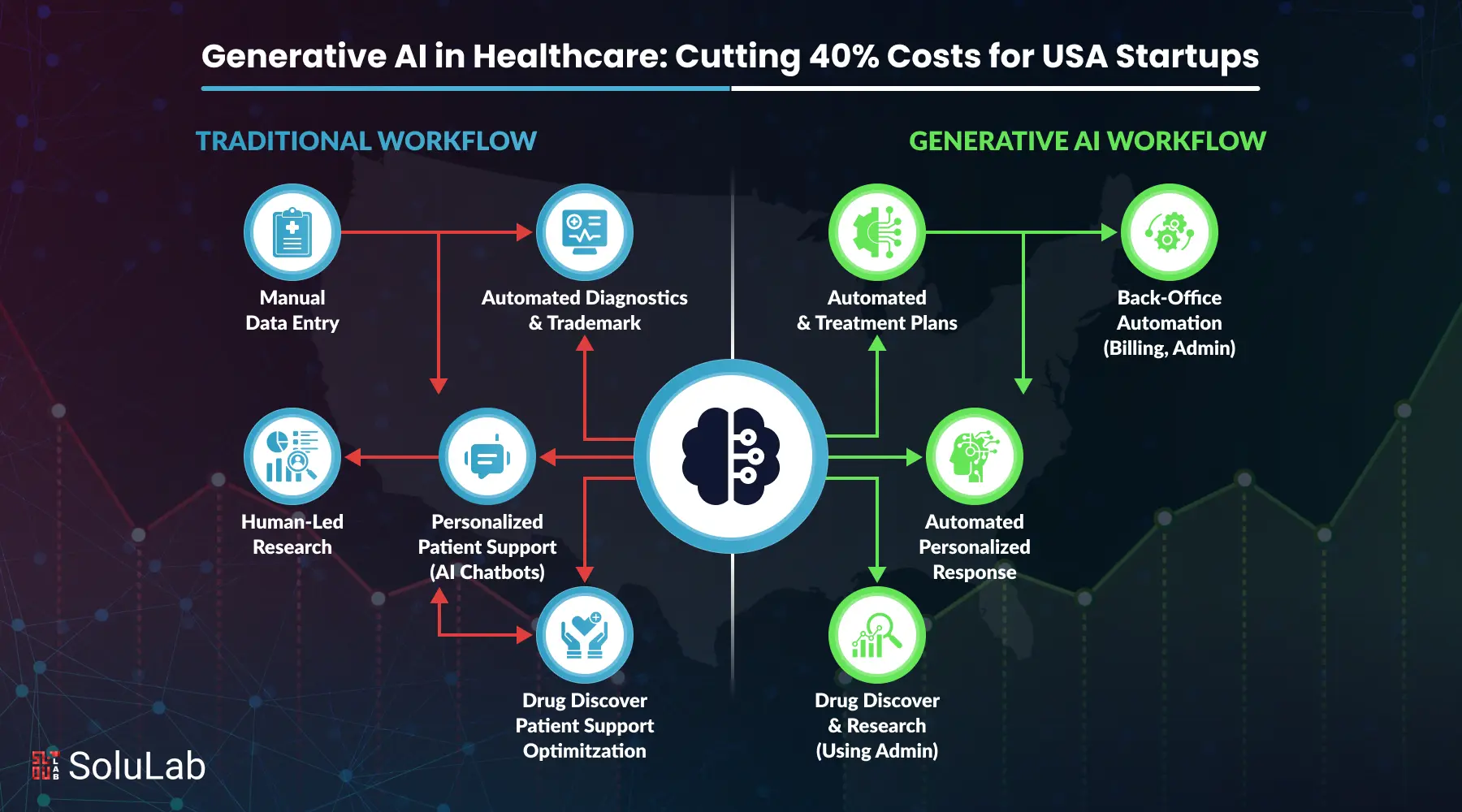
How Healthcare Startups in the USA Leverage Generative AI to Cut 40% Costs? 

Generative AI Healthcare Startups in USA

In the USA, healthcare costs keep rising, putting heavy pressure on hospitals, clinics, and healthcare startups that need to stay profitable. High administrative costs, slow medical documentation, and repeated billing backlogs waste billions of dollars every year and reduce margins for service providers.

Many forward-thinking founders now turn to Generative AI as a practical business tool. This technology can automate medical notes, speed up diagnostics, and shorten revenue-cycle management, helping companies cut operating costs and scale faster.

Early case studies show that focused Generative AI solutions can lower documentation and billing expenses by up to 40%, while also improving patient care and overall workflow efficiency.

Rising Cost Challenges in U.S. Healthcare

The U.S. healthcare system is under pressure from rising costs that climb every year. Much of this spending doesn’t go toward actual treatment; it disappears into administrative work and outdated processes.

For a healthcare technology buyer or enterprise leader, the key pain points are easy to see:

1. Administrative drag 

Physicians lose an average of 15–20 hours per week to insurance paperwork, prior authorizations, and compliance tasks. That is time that could be spent on patient care or revenue-generating services.

2. Revenue leakage 

Manual billing and coding errors create 3–5% losses in every claim cycle, eating directly into profit margins for hospitals and private practices alike.

3. Clinical documentation delays 

Slow charting and disconnected electronic health record (EHR) systems delay treatment planning and make it harder to share accurate patient data across teams.

4. Diagnostic bottlenecks 

Repetitive tests, fragmented lab systems, and siloed data increase operational costs and frustrate patients, sometimes leading to lower satisfaction scores and penalties.

These inefficiencies are not just soft costs. They represent billions of dollars in wasted spending across the healthcare industry, and they open the door for automation solutions and AI technology that can reduce expenses while improving care.
Why Startups and Providers Are Turning to Generative AI?

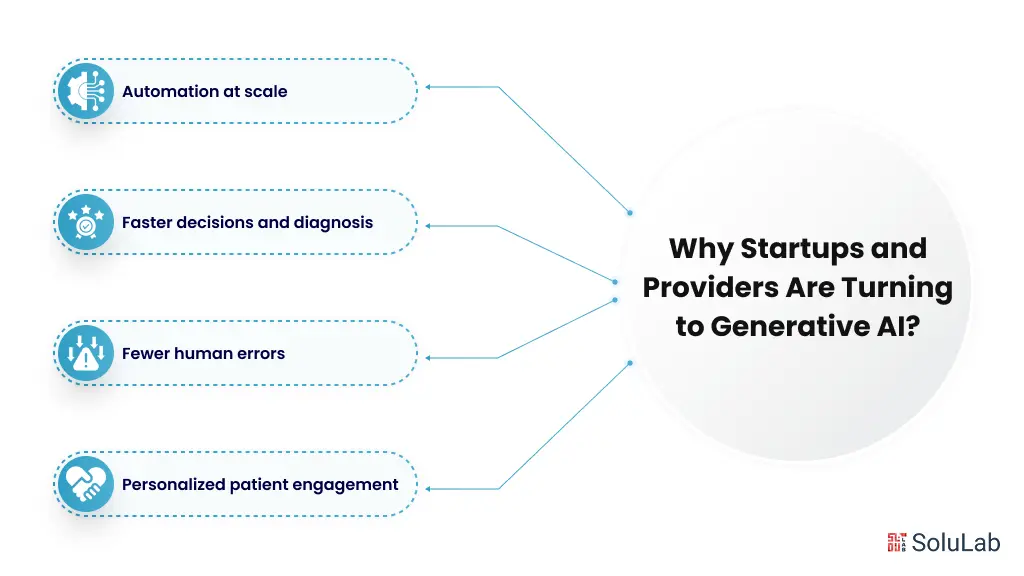
Why Startups and Providers Are Turning to Generative AI

Unlike traditional rule-based automation, generative AI can read and interpret messy, unstructured healthcare data, think about physician notes, lab results, and imaging reports, and produce clear, usable outputs in seconds. 

1. Automation at scale 

From patient intake forms to claims management, generative AI solutions reduce manual data entry, lower full-time staffing requirements, and improve turnaround times.

2. Faster decisions and diagnosis 

AI-driven summaries of lab results and medical imaging allow clinicians to reach decisions more quickly, cutting patient wait times and improving throughput.

3. Fewer human errors 

Advanced models catch inconsistencies in documentation and billing, lowering compliance risk and helping meet regulatory standards such as HIPAA.

4. Personalized patient engagement 

AI creates tailored discharge instructions, follow-up plans, and educational materials, boosting patient satisfaction and long-term outcomes.

Early pilots in large health systems show up to 40% cost savings in high-volume tasks such as documentation, revenue-cycle management, and clinical note summarization.

For any healthcare executive, those numbers represent a clear return on investment and a competitive advantage.

Why Generative AI in Healthcare?

Healthcare is an industry where every second counts; lives depend on speed, accuracy, and personalization. Traditionally, administrative tasks, diagnostic processes, and patient interactions consume significant human and financial resources. Generative AI in Healthcare acts as a transformational solution that reshapes workflows, reduces errors, and drives measurable ROI.

Most people still think of AI as something that writes text or generates content. But in healthcare, its applications are far more strategic:

  • Generating precise clinical notes and reports.
  • Accelerating diagnostic image analysis
  • Automating appeal letters for rejected claims 
  • Designing drug molecules and clinical trial protocols 

For enterprise healthcare startups, these are not incremental improvements; they are game-changing transformations that scale operations without proportional costs.
CTA1

Key Benefits of Generative AI in Healthcare for Startups

For healthcare startups, hospital systems, and enterprise executives evaluating new technology, the benefits are measurable:

1. Automation That Reduces Manual Load

Repetitive tasks like documentation and coding often occupy 30–50% of clinician’s time. Generative AI implementation services eliminate this burden, letting teams focus on patient care while saving significant operational costs.

2. Scalability Without Compromise

Whether a startup serves 100 or 10,000 patients, AI enables enterprise CRM AI integration that scales support, diagnostics, and communications without proportional expense increases.

3. Faster, More Accurate Diagnoses

AI-assisted tools analyze imaging and patient data to shorten time-to-treatment and minimize errors. Startups leveraging generative AI implementation report quicker diagnosis times and reduced misdiagnoses, a clear advantage for patient trust and retention.

4. Personalization at Scale

From appointment reminders to follow-up instructions, AI connects patients with personalized communication. This enhances engagement and reduces call center costs.

5. Error Reduction in Billing & Claims

Claim denials cost startups millions annually. With AI, appeal letters are automated, errors minimized, and reimbursements expedited, one of the highest-impact applications of Generative AI integration services in healthcare.
Key Areas Where Generative AI Cuts Costs

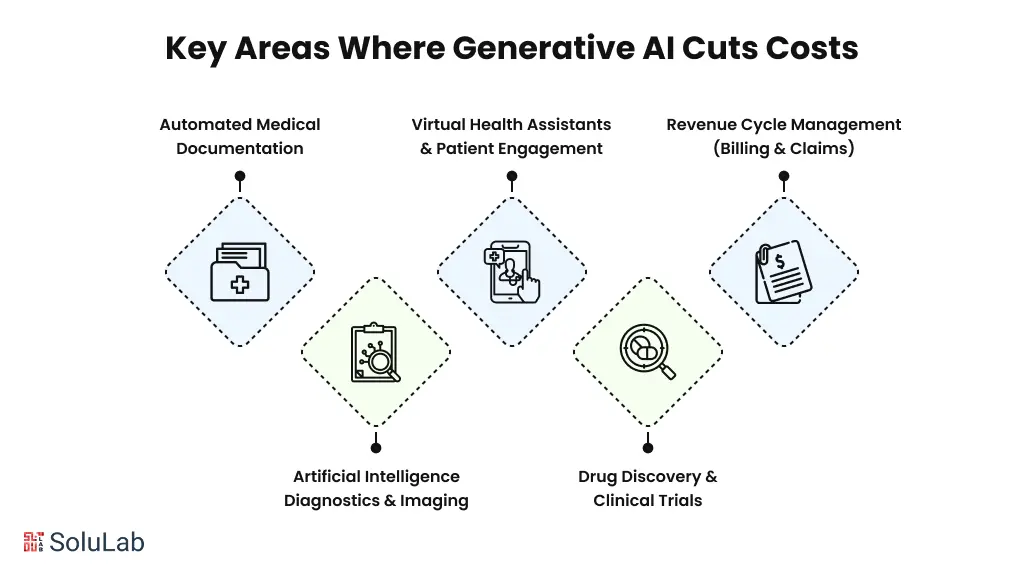
Key Areas Where Generative AI Cuts Costs

Though there are various aspects in costing, some of the key areas where the incorporation of AI can help in cutting costs are:

1. Automated Medical Documentation 

AI writers capture and summarize doctor-patient interactions automatically, translating them into organized Electronic Medical Records (EMR). This minimizes clinician workload by 30–50%, resulting in significant time and cost savings. 

2. Artificial Intelligence Diagnostics & Imaging 

Generative AI in the healthcare industry is applied to scan analysis, show anomalies, and prepare radiology reports. This shortens diagnostic time, enhances accuracy, and prevents unnecessary procedures. 

3. Virtual Health Assistants & Patient Engagement 

AI-powered chatbots manage FAQs, triage, appointment reminders, and follow-ups. This saves call center overhead and enhances patient satisfaction. 

4. Drug Discovery & Clinical Trials 

Generative AI models create drug molecules, select trial candidates, and model outcomes. This reduces years and millions of dollars from R&D pipelines. 

5. Revenue Cycle Management (Billing & Claims)

Startups utilize AI to automatically generate claims, mark denials, and produce appeal letters. This minimizes human errors and facilitates faster reimbursements, one of the most important generative AI applications in healthcare

How Mandolin based in San Francisco Transformed Insurance Verification?

For specialty medications like cancer or Alzheimer’s treatments insurance verification often takes weeks, delaying care and increasing costs. Mandolin applied Generative AI in healthcare to automate the process using AI agents, reducing manual follow-ups and insurer handoffs.

Results:

  • Verification times dropped from ~30 days to 3 days, showing the efficiency of enterprise automation.
  • Fewer denials and financial losses, as the AI escalates complex cases to humans while continuously learning.
  • Staff focus improved, enabling teams to prioritize high-value patient care instead of repetitive tasks, a clear benefit of Generative AI implementation.

Thoughtful AI deployment can speed operations, cut costs, and improve outcomes. Mandolin’s example demonstrates how integrating AI agents into healthcare workflows delivers measurable ROI.

How Generative AI Implementation Helps Beyond Cost Reduction?

For healthcare startups, Generative AI implementation services are not just about saving money, they unlock scalability and efficiency. AI can handle documentation, billing, and initial patient triage across hundreds of clinics without adding staff. This allows your team to focus on growth, strategy, and innovation.

Accuracy improves significantly. By minimizing human errors in documentation, billing, and diagnosis, startups reduce claim denials, rework, and compliance risks. Deploying AI-powered CRM solutions ensures reliable data management while maintaining patient trust, a critical advantage for decision-makers.

Patient experience benefits too. AI reduces wait times, personalizes interactions, and anticipates patient needs. Startups using AI gain stronger patient retention and a competitive edge in a crowded healthcare market.

Tasks that once took months like R&D and trial cycles, can now be completed faster. Generative AI implementation fuels rapid testing, iteration, and scaling of new healthcare solutions.

What is the Future Outlook of AI-Powered Affordable Care?

The AI healthcare market is growing fast, with projections showing exponential expansion by 2030. Generative AI CRM integration is helping startups move from costly, reactive care to preventive, personalized, and affordable healthcare.

Early adopters gain operational savings, competitive differentiation, and stronger patient engagement. For founders, this is a chance to stay ahead of competitors and build scalable, future-ready systems.

Why Founders Should Act Now?

Healthcare is entering a transformative phase. Startups leveraging Generative AI implementation services today can reduce operational costs by up to 40% while improving patient outcomes. 

Delaying adoption means slower growth, missed cost savings, and losing the first-mover advantage in a competitive market. Companies with successful AI pilots are already seeing faster patient onboarding, reduced claim denials, and improved compliance.

CTA2

Conclusion

Generative AI is more than a cost-cutting tool; it drives scalability, innovation, and measurable patient impact. Startups using AI in documentation, billing, and diagnostics can streamline operations, cut expenses, and scale efficiently.

At SoluLab, #1 Generative AI development company, we help healthcare startups design and deploy custom solutions that automate repetitive processes, optimize data workflows, and enhance decision-making accuracy. Recently, we partnered with a California-based healthcare startup to build a GenAI-powered Clinical Decision Support platform, cutting their administrative workload by over 40% within three months.

If your healthcare startup is ready to leverage Generative AI to enhance efficiency, contact us today!

FAQs

1. How long does it take to implement a Generative AI solution in healthcare?

Implementation time depends on project complexity, data volume, and integration needs. On average, SoluLab delivers functional AI prototypes within 8–12 weeks, with full deployment taking up to 4–6 months.

2. What ROI can healthcare startups expect from Generative AI adoption?

Startups typically experience 30–40% cost reductions, improved accuracy in operations, and faster turnaround times in diagnostics and research — leading to better financial and patient outcomes.

3. Can small healthcare startups afford to use Generative AI?

Absolutely. With the rise of custom AI solutions and scalable cloud infrastructure, startups can start small and expand gradually. SoluLab helps design cost-effective AI systems tailored to each startup’s goals and budget.

4. How do healthcare startups ensure AI compliance in the USA?

Startups must follow HIPAA, GDPR, and FDA guidelines when handling medical data. Partnering with experts like SoluLab ensures that AI tools meet all regulatory, ethical, and data protection standards.

5. Why should healthcare startups partner with SoluLab for AI development?

SoluLab specializes in healthcare-specific Generative AI solutions, offering expertise in automation, predictive analytics, and compliance. With proven success stories in US-based healthtech projects, SoluLab helps startups achieve faster results, lower costs, and scalable growth.

 

Why Is Saudi Arabia Investing in AI Doctor Clinics?

Saudi Arabia Investing in AI Doctor Clinics

What if your next doctor’s visit began not with a long wait in the lobby, but with an AI system that could instantly review your medical history, analyze your symptoms, and suggest possible treatments—before you even met a physician?

This isn’t science fiction anymore! Saudi Arabia has already launched its first AI-only medical clinic, showing how artificial intelligence can move from supporting tools to front-line healthcare delivery. The move reflects more than just a fascination with technology; it’s part of a larger strategy to improve patient access, cut costs, and position the country as a global leader in healthcare innovation.

For MedTech companies, healthcare providers, and investors, the rise of AI doctor clinics in Saudi Arabia raises an important question: Is this the future of healthcare, and how can businesses prepare to be part of it?

What Do We Mean by an AI Doctor?

An AI Doctor isn’t a robot in a white coat, but it’s a smart digital healthcare assistant powered by artificial intelligence, machine learning, and medical data analytics. Instead of replacing human doctors, it acts as a virtual specialist, working alongside healthcare professionals to improve the accuracy, speed, and accessibility of care.

The idea is already gaining momentum with the rise of AI doctor clinics, such as the first-of-its-kind in Saudi Arabia. These clinics use AI systems as front-line digital assistants, guiding patients through initial assessments, analyzing medical data in real time, and supporting doctors in delivering personalized treatment.

What Can an AI Doctor Do?

  • Interpret Medical Reports

AI can analyze lab tests, X-rays, MRIs, and CT scans quickly and accurately, highlighting anomalies that might otherwise take hours for human review.

  • Diagnose Symptoms

By processing patient-reported symptoms and health records, AI doctors can suggest possible conditions, supporting early diagnosis and minimizing misdiagnosis.

  • Recommend Treatments

AI systems are trained on vast medical databases and global research. They provide evidence-based treatment recommendations, ensuring patients receive the most updated options.

  • Provide Real-time Health Monitoring

Through wearables and IoT devices, AI doctors monitor vital signs like heart rate, oxygen level, and blood sugar continuously, offering 24/7 support and emergency alerts.

  • Promote Preventive Healthcare

AI analyzes lifestyle data, predicts risks, and advises on healthier habits, helping patients prevent illnesses before they become severe.

  • Assist Doctors, Not Replace Them

AI handles repetitive tasks such as data analysis and documentation, freeing doctors to focus on complex decisions and patient interaction.

What Can an AI Doctor Do


Why Saudi Arabia’s First AI Doctor Clinic Matters?

Saudi Arabia’s AI-only clinic is significant because it aligns with the country’s Vision 2030 plan to diversify its economy and strengthen its healthcare infrastructure.

Key benefits include:

  • Speed: Faster medical checkups and immediate report processing.
  • Precision: Reduced diagnostic errors compared to traditional methods.
  • Cost-Effectiveness: Lower operational costs make healthcare more affordable.
  • Accessibility: Rural and remote regions can benefit from AI-enabled consultations.

This clinic is not about replacing doctors—it’s about providing them with smarter tools to enhance patient care.

Check Out Our Blog Post: Generative AI in Healthcare

How Saudi Vision 2030 Promotes AI in Healthcare?

Saudi Arabia’s Vision 2030 is all about shaping a smarter, healthier, and more self-reliant future. One of the key pillars of this vision is healthcare transformation, and Artificial Intelligence (AI) is at the heart of it.

The launch of AI doctor clinics is not just about technology—it’s about improving lives, building trust in local systems, and creating opportunities for the future. Here’s how it fits into Vision 2030:

1. Making Advanced Healthcare Accessible

Vision 2030 wants every citizen to benefit from the latest medical innovations. With AI-driven tools, people can get faster diagnoses, accurate treatment suggestions, and 24/7 healthcare support without waiting for long hospital queues. Simply put, AI brings world-class healthcare closer to home.

2. Becoming Less Dependent on Foreign Healthcare

For years, many Saudis had to travel abroad for specialized treatments. Vision 2030 changes this by building advanced medical solutions inside the Kingdom. AI doctor clinics mean fewer trips overseas and more trust in local healthcare facilities. It’s a step towards self-reliance and making Saudi Arabia a regional hub for healthcare excellence.

3. Training and Empowering Local Talent

Vision 2030 is not just about machines—it’s about people. By introducing AI in healthcare, the government is creating new learning opportunities for doctors, nurses, and young Saudi professionals. Universities and training centers are focusing on AI in medicine, ensuring that the next generation of healthcare leaders is homegrown.

4. Attracting Global Investments and Start-ups

AI healthcare isn’t just good for patients—it’s good for the economy too. Saudi Arabia is opening doors for foreign investors and healthcare tech start-ups by creating a supportive ecosystem. The AI doctor clinic is a clear signal to the world: Saudi is ready to lead in digital health innovation. This encourages global companies to invest, collaborate, and innovate in the Kingdom.

Book A Free Discovery Call

Why Are AI Doctor Clinics the Next Big Opportunity in Healthcare?

AI doctor clinics go beyond being a tech experiment—they represent a scalable, patient-centric model that addresses critical gaps in today’s healthcare systems. By combining advanced GenAI with clinical expertise, these clinics offer faster, more accessible, and cost-effective care. For MedTech companies and healthcare providers, they open doors to both innovation and revenue growth.

Key Reasons AI Doctor Clinics Are a Breakthrough:

1. Accessibility at Scale: AI-powered clinics can serve more patients with fewer resources, reducing wait times and improving healthcare reach in underserved regions.

2. Cost Efficiency: Automating initial diagnostics and routine monitoring lowers operational costs while keeping care quality high.

3. Patient-Centric Care: With real-time monitoring and predictive analytics, AI clinics personalize treatments and promote preventive healthcare.

4. 24/7 Availability: Unlike traditional clinics, AI-driven systems provide round-the-clock support, improving patient trust and satisfaction.

5. Faster Clinical Decisions: AI analyzes medical data instantly, supporting doctors in delivering quicker and more accurate diagnoses.

6. New Business Models: From subscription-based care to telehealth integrations, AI doctor clinics create fresh revenue streams for MedTech innovators.

7. Global Momentum: Early adopters like Saudi Arabia are proving the model works, paving the way for international adoption and market expansion.

Major Use Cases of AI in Healthcare

Saudi Arabia’s AI doctor clinic is a real-world example of how technology is reshaping medicine. Some areas of impact include:

1. AI in Healthcare Applications

AI tools help detect diseases early, offer online consultations, and analyze health records, making the patient experience smoother and more reliable.

2. AI in Treatment Planning

Data-driven algorithms allow AI systems to create personalized treatment plans, improving recovery outcomes for patients with chronic or complex illnesses.

3. AI in Drug Discovery and Development

Pharmaceutical research that once took decades can now be accelerated with AI drug discovery. This shortens the time it takes to develop new medicines and vaccines.

4. AI-Powered Chatbots

Patients can access round-the-clock medical guidance through AI chatbots, reducing unnecessary hospital visits and improving patient engagement.

5. Generative AI in Healthcare

By analyzing patient data, generative AI in healthcare industry can provide customized lifestyle and treatment recommendations and even assist in creating synthetic medical data for research.

6. AI Agents in Healthcare

AI agents in the healthcare sector assist doctors by analyzing reports, predicting outcomes, and supporting decision-making, helping reduce errors in complex cases.

Read Our Blog: AI Agents in Healthcare for Cancer HIV COVID

7. Integrating AI into Healthcare

Hospitals and clinics worldwide are moving toward smart healthcare ecosystems, where AI seamlessly works alongside doctors and nurses.

How AI Doctor Clinics Benefit Patients?

AI-powered clinics are designed with patients in mind, making healthcare more accessible, affordable, and efficient. Here’s how they truly make a difference:

How AI Doctor Clinics Benefit Patients

1. Faster Medical Consultations – No Long Waiting Hours

In traditional clinics, patients often wait for hours before meeting a doctor. AI clinics speed up the process by analyzing symptoms quickly and providing initial assessments within minutes. This means patients get help faster, and doctors can focus on more complex cases.

2. Lower Treatment Costs

Healthcare can be expensive, especially when it involves multiple tests or specialist visits. AI clinics reduce costs by using smart tools that cut down on unnecessary procedures and make diagnoses more precise. This makes healthcare more affordable for families without compromising on quality.

3. 24/7 Access to Healthcare Advice

AI doctor systems are available around the clock, so whether it’s late at night or early in the morning, patients can still get reliable medical guidance. This is especially helpful for parents with small children, elderly patients, or people managing chronic conditions.

4. Personalized Therapy and Nutrition Counseling

AI doesn’t just look at symptoms—it can also track patient history, lifestyle, and medical records. This allows clinics to offer personalized treatment plans, including custom diet charts, exercise routines, and therapy sessions. Instead of a one-size-fits-all approach, patients get care that is tailored to their unique needs.

Read Blog: How Is AI Healthcare in the UAE Elevating Medical Efficiency?

5. Video Consultations for Underserved Areas

Not everyone lives near a big hospital or specialist doctor. AI clinics bridge this gap by providing video consultations, bringing healthcare access to remote and rural areas. Patients in small towns or villages can talk to specialists without needing to travel long distances.

Global Developments in AI-Driven Healthcare

AI in healthcare isn’t confined to one region—its adoption is accelerating across the world, reshaping how care is delivered:

  • China: Hospitals are leveraging AI for predictive diagnosis and robotic-assisted surgeries, making advanced treatments more accessible.
  • United States: From cancer detection to genomics and patient management systems, AI is powering precision medicine and improving outcomes.
  • Europe: Healthcare systems are adopting AI to streamline electronic medical records and enable predictive analytics that support proactive care.
  • Saudi Arabia: With the launch of its first AI-specialized medical clinic, the country is positioning itself as a leader in next-generation healthcare innovation.

AI’s global footprint highlights one clear message: the future of healthcare is being redefined everywhere, and MedTech is at the center of it.

The Future of AI in Healthcare

The launch of Saudi Arabia’s AI-only clinic could be a glimpse into what’s next for global healthcare. Similar models may soon emerge worldwide, unlocking new possibilities such as:

  • AI-assisted robotic surgeries that enhance precision and reduce recovery times.
  • Predictive healthcare platforms capable of detecting illnesses before symptoms appear.
  • Smart hospitals are powered by AI-driven systems that optimize operations and patient care.
  • AI-enabled mental health support delivered through intelligent virtual therapy assistants.

Over the next decade, AI is set to move beyond being an experimental add-on. It will likely evolve into a trusted healthcare partner—supporting doctors, patients, and entire health systems in ways once thought impossible.

AI Development Company

Conclusion

Saudi Arabia’s first AI doctor clinic is more than a headline; it’s a world healthcare revolution. By applying AI to treatment planning, drug discovery, diagnosis, and patient care, Saudi Arabia is showing the world how to create a smarter, faster, and less expensive medical system with technology.

If you are a start-up, clinic, or hospital, it is time that you collaborate with SoluLab, a leading name for AI development, to create customized healthcare solutions. From treatment platforms to chatbots with artificial intelligence capabilities, SoluLab keeps healthcare facilities ahead of their time. Contact us now!

FAQs

1. What is the first all-AI clinic on Earth?

It is a Saudi clinic with artificial intelligence that manages diagnosis and treatment assistance, not usual human doctors.

2. How does an AI doctor function?

AI learns from medical records and symptoms, then provides diagnoses and treatment suggestions using advanced algorithms.

3. Is an AI doctor safe?

Yes. It has learned from millions of medical cases and is guided by physicians. Human physicians can intervene for complex cases.

4. What is distinctive about Saudi Arabia’s clinic?

It is the world’s first AI-powered clinic, establishing a new world standard for healthcare access and innovation.

5. Will human doctors be replaced by AI?

No. Computers help doctors with diagnosis and planning for treatment, but human judgment remains necessary for surgery, emergencies, and patient reassurance.

6. What can help a patient with AI? 

Patients enjoy faster consultations, cost savings, personalized treatments, and round-the-clock medical access. 

7. Why should startups or hospitals opt for SoluLab?

SoluLab provides safe, scalable, and customized AI healthcare products that result in smooth adoption and lasting success.

How Is AI Healthcare in the UAE Elevating Medical Efficiency?

AI innovations in healthcare in UAE

Artificial intelligence isn’t just entering hospitals; it’s taking on real roles in surgeries, diagnostics, hospital operations, and even virtual patient care. In the UAE, this isn’t a concept for tomorrow. It’s already in motion. With a national AI strategy and major investments in digital health, the country is fast becoming a global hub for AI innovations in healthcare.

From AI-powered genomic analysis that predicts diseases early to generative AI in healthcare creating personalized treatment plans, the UAE is redefining modern medicine. It’s all about faster diagnoses, smarter systems, and better outcomes.

So how exactly is AI transforming care in the UAE? What does it mean for patients, doctors, and hospitals? And who’s behind these AI-based healthcare applications? Let’s dive in and find out.

What Makes The UAE a Global Leader In Adopting AI in Healthcare So Quickly?

Because the UAE doesn’t wait for change, it builds it!

While many countries are still drafting AI roadmaps, the UAE has already rolled out a national AI strategy, invested billions into digital health, and made AI a central pillar of its healthcare vision. The leadership is clear: smarter tech means better care.

Add to that a diverse population, world-class infrastructure, and a government that moves fast, and you’ve got the perfect testing ground for AI-based healthcare applications. Whether it’s AI in diagnostics, hospital management, or personalized medicine, the UAE is turning ambition into real, working systems and doing it at record speed.

CTA1

Game-Changing Medical Innovations for Healthcare in the UAE

From AI-driven diagnostics to culturally tuned mental health tools, the UAE is embracing healthcare innovation at every level. These breakthroughs are not just futuristic ideas; they are real solutions transforming how care is delivered, personalized, and experienced across the country.

Genomics–Powered Personalization

  • AI-Powered Polygenic Risk Scoring: Uses machine learning and genetic markers to predict a person’s lifetime risk for complex diseases like diabetes, cancer, and heart conditions.
  • Personalized Drug Response Algorithms: AI evaluates genetic variants to predict how patients will respond to medications, reducing trial-and-error and adverse drug reactions.
  • Nutrigenomics Platforms: AI-driven systems that combine DNA analysis with lifestyle data to deliver custom diet and fitness plans.
  • Cancer Genomics Decision Tools: AI models trained on tumor genomics help oncologists personalize treatments by targeting mutation-specific therapies.

 AI-Driven Public Health

  • AI Epidemiological Forecasting Models: Predicts potential disease outbreaks by analyzing large-scale data sources like travel, climate, and human behavior, helping governments act early.
  • AI-Powered Environmental Health Sensors: Tracks real-time air, water, and soil quality using IoT and AI to flag emerging public health threats.

Pandemic Preparedness

  • Wastewater Surveillance with AI Analytics: Analyzes viral and bacterial loads in sewage systems to detect outbreaks before they reach hospitals.
  • AI-Enhanced Pathogen Genome Tracking: Uses AI to monitor mutations in viruses (like SARS-CoV-2) during pandemics, enabling rapid vaccine updates and targeted interventions.

Culturally-Tuned AI for Mental Health

  • Multilingual Mental Health Chatbots: AI chatbots are designed with cultural awareness, supporting users in different languages and respecting regional values and communication styles.
  • AI-Curated VR Therapy for PTSD and Phobias: Combines virtual reality with adaptive AI to deliver immersive therapy sessions that adjust in real time to a user’s emotional and cultural needs.

Read More: AI In Dubai’s Public Services

How AI in Healthcare is Improving Lives in the UAE?

How AI in Healthcare is Improving Lives in UAE

Medical innovation sounds big and technical, but what does it do for people like you and me? In the UAE, the benefits of AI and genomics are already making care faster, smarter, and more personalized. Here’s how:

1. Know Your Health Risks Early

Knowing your risk of diabetes, heart disease, or cancer years in advance, based on your DNA, is now possible. That’s already achievable in the UAE thanks to AI-powered genetic testing. It gives you a chance to make changes early and avoid long-term health issues.

2. Get Medications That Work for You

Ever tried a medicine that didn’t help or worse, made you feel worse? AI in UAE healthcare is now assisting doctors to match medications to your genetic makeup. That means fewer side effects, faster recovery, and no more wasted time on trial and error.

3. Care That Feels Personal

Whether you’re Emirati, Indian, Filipino, or British, healthcare in the UAE is becoming more culturally aware. AI chatbots and wellness apps now speak your language, understand your lifestyle, and tailor recommendations that feel relevant to you.

4. Safer, Smarter Cities

AI-powered sensors in cities like Dubai and Abu Dhabi track air quality and potential health hazards in real time. That means faster alerts about pollution spikes, water safety, or potential outbreaks before they reach your doorstep.

5. Better Outbreak Preparedness

The UAE learned from COVID-19. Today, AI monitors sewage systems, tracks virus mutations, and predicts where illness might spread next. This helps keep communities ahead of the curve so you’re not caught off guard.

6. Smarter Hospitals and Surgery

AI is streamlining hospital operations in the UAE, from smart facility design and patient flow to inventory management and supply tracking. AI-powered robots are also assisting with care tasks, improving efficiency and easing staff workloads.

7. Mental Health That Understands You

Mental health support in the UAE is becoming more accessible and culturally respectful. AI-powered chatbots and VR therapy tools can now recognize emotional distress, offer guidance in your preferred language, and respond in a way that feels human, not robotic.

Read Also: How Founders and Businesses Can Leverage Digital Asset Treasury in UAE?

Ethics and AI Regulations in Healthcare

Let’s be real, AI doesn’t come without ethical baggage. But the UAE isn’t ignoring it. The country is actively shaping frameworks to ensure AI is not only powerful but also responsible.

  • Protecting Patient Data in a Connected World: As healthcare data travels across borders, privacy becomes a global concern. The UAE is drafting policies that ensure medical data used in AI systems stays secure, anonymized, and ethically sourced without slowing down collaboration or innovation.
  • Building Bias-Free AI for a Diverse Population: AI in healthcare must work for everyone, not just the demographic it was trained on. In the UAE, systems are being audited and stress-tested for fairness to prevent discrimination based on race, gender, language, or socioeconomic background.
  • Who’s Responsible When AI Gets It Wrong: If an AI tool makes the wrong call on a diagnosis, who’s liable: the developer, the doctor, or the hospital? The UAE is addressing these grey areas by working on legal frameworks to define accountability as AI becomes more involved in clinical decision-making.

Artificial Intelligence at Every Step of the Patient Journey

AI isn’t just used in high-tech labs or emergency rooms. In the UAE, it’s becoming part of the patient journey from the very first symptom search to long-term recovery.

1. Smarter Symptom Checks and Triage

Many clinics now offer smart digital assistants that help patients assess symptoms and recommend next steps. These tools reduce unnecessary ER visits and connect patients to the right care faster.

2. AI as Your Doctor’s Second Brain

Doctors are using AI to double-check diagnoses, analyze scans, and personalize treatment plans based on real-time data and global research. It’s not replacing physicians; it’s making them faster, more accurate, and better informed.

3. Keeping Tabs on Recovery After You Leave the Hospital

From wearables to mobile apps, AI tracks recovery and alerts doctors if something’s off. This is a game-changer for managing chronic conditions like diabetes, heart disease, or post-surgical recovery, especially in remote areas or busy urban centers.

How SoluLab Can Help Build the Future of Healthcare in the UAE?

All these breakthroughs, like personalized medicine, AI-powered hospitals, and mental health chatbots, don’t happen on their own. They need expert hands to design, build, and scale them. That’s where SoluLab can assist.

As a leading AI development company in the UAE, SoluLab helps healthcare providers, hospitals, startups, and government projects turn ambitious ideas into real, working solutions. Whether you’re looking to develop:

  • AI-based healthcare applications
  • Custom generative AI tools for diagnostics or triage
  • AI-powered patient engagement platforms or hospital management systems
  • Robotics-integrated systems for elderly care or surgery support
  • Or even a multilingual AI chatbot tuned for cultural sensitivity in the UAE

SoluLab has the technical depth, domain expertise, and UAE-specific healthcare experience to make it happen.

CTA2

Conclusion

The UAE isn’t just adopting AI in healthcare; it’s actively shaping what the future of medicine looks like. From genomics-powered personalization to AI-driven public health strategies, pandemic readiness, mental health support, and smart hospital infrastructure, the country is building a system that’s faster, smarter, and more human-centered.

By blending advanced technology with cultural sensitivity and real-world needs, the UAE is proving that healthcare innovation isn’t just about machines, it’s about people. And in that vision, AI is becoming not just a tool, but a trusted partner in care.

Get in touch with SoluLab today and start building AI solutions that will shape the future of healthcare in the UAE!

FAQs

1. How is AI improving medical efficiency in the UAE?

AI streamlines hospital operations, automates administrative tasks, assists in accurate diagnostics, predicts patient outcomes, and optimizes resource management, reducing delays and costs.

2. What are the benefits of AI in UAE hospitals?

Key benefits include faster and accurate diagnosis, improved patient outcomes, optimized resource allocation, reduced human error, and better decision-making for doctors and management.

3. Can AI assist doctors without replacing them?

Absolutely. AI acts as a support system, providing insights, diagnostics, and predictive analytics, while doctors make the final clinical decisions, ensuring human oversight.

4. How is AI helping with patient monitoring in the UAE?

AI-powered wearables and remote monitoring systems track vital signs in real time, alerting doctors to potential issues and allowing proactive care, reducing hospital readmissions.

5. How can SoluLab help implement AI in healthcare?

SoluLab builds custom AI solutions tailored for healthcare providers in the UAE. From predictive analytics and smart diagnostics to workflow automation, SoluLab delivers scalable, secure, and patient-centric AI applications that elevate efficiency and improve outcomes.


How Can Healthcare Professionals Benefit from Generative AI?

Generative AI in Healthcare

Generative AI technologies could ensure the long-term viability of healthcare organizations while reducing the labor expenditures that are inherent in this services-intensive sector. With the use of advanced algorithms and large volumes of data, AI systems can forecast results, produce new insights, and even develop answers to difficult medical problems. 

Generative AI, for example, can help with personalized pharmaceutical regimens based on individual genetic profiles, forecasting the course of diseases, and optimizing treatment strategies for individuals with chronic disorders.

Although the majority of existing applications concentrate on automating and reducing costs in back-office activities, the ultimate objective is to enhance the experience of patients and healthcare providers. This blog will examine generative AI in healthcare, as well as its uses, advantages, and other important topics.

Healthcare Applications for Generative AI

Healthcare Applications for generative AI

Generative AI has demonstrated considerable promise in a number of healthcare-related applications. Let’s examine each of these uses in more detail:

1. Imaging in Medicine

Convolutional neural networks (CNNs) and other deep learning frameworks are two famous examples of sophisticated approaches seen in advanced AI models, particularly in those intended for medical analysis. The following are some salient features of generative AI’s influence on medical imaging:

  • Image Synthesis: Through the use of visually understandable representations, generative models create pictures of organs or tissues for educational objectives such as teaching medical practitioners and making medical conditions easier to explain to patients.
  • Automated Segmentation: By using generative AI, medical picture analysis may be streamlined and time-saving for healthcare workers by automatically classifying organs or anomalies.
  • Pathology Prediction: By utilizing Generative AI and healthcare to analyze patterns in medical pictures, it is possible to predict or diagnose pathological disorders. This allows for early identification and intervention, which leads to better patient outcomes.

2. Drug Development and Discovery

Drug development pipelines may become faster and more effective as a result of the potential for generative AI approaches to completely reimagine drug research and development. This is the application of generative AI in healthcare:

  • Compound Generation: By effectively examining a wide range of chemical space, Generative AI models can help researchers find drugs more quickly. By suggesting new compounds with desirable features, these models optimize the search for possible drug candidates and speed up the process of identifying molecules that show promise for additional research and development.
  • Drug-Drug Interactions: Generative AI and healthcare play a critical role in predicting possible drug interactions, helping researchers assess the efficacy and safety of mixing drugs. This skill is essential for the strategic planning of combination therapy, guaranteeing the best possible therapeutic results while reducing the hazards related to pharmacological interventions.
  • Biomarker Discovery: Generative AI is essential for identifying biomarkers associated with disease, which allows patients to be categorized according to personal traits. This procedure improves the creation of customized treatments, resulting in more accurate and successful medical interventions catered to particular patient requirements.
  • Clinical Trial Design: AI models make use of previous data from clinical trials to improve trial design, identify suitable patient populations, and foresee possible problems. This optimization greatly increases the effectiveness of drug development by improving the clinical trial’s strategic strategy.
  • Predicting the Negative Effects of Drugs: Medical Artificial Intelligence models are a valuable tool for predicting and reducing the possibility of negative drug side effects. They also actively participate in the safety assessment of drug candidates during the development process. This proactive strategy improves the entire risk management process in drug development by facilitating the early detection and resolution of safety risks.
  • Repurposing already-approved Pharmaceuticals: Generative AI is essential in this process because it can forecast the effectiveness of currently approved treatments against various ailments and suggest innovative uses for them. This presents opportunities for the expedited development of medicines for a range of medical disorders by utilizing the well-established safety profiles of repurposed medications to tackle a variety of health issues.For healthcare startups, especially those entering MedTech, aligning AI-driven innovation with a structured medical device business plan is critical for securing regulatory approval, funding, and market adoption.

CTA1

3. Personalized Medical Care

The goal of personalized medicine is to give individualized treatment recommendations based on patient data, and generative AI is essential to this effort. This is the application of generative AI in healthcare:

  • Customized Treatment Regimens: Generative models are able to provide individualized treatment regimens by analyzing patient data, such as clinical data, genetic information, and medical history. This can help in determining which treatments will work best for each patient as well as forecasting their unique reaction.
  • Predictive Analytics for Treatment Response and Illness Progression: By combining several patient characteristics and analyzing massive datasets, Generative AI may create predictive models that forecast treatment results and disease progression. This optimizes patient care by assisting medical practitioners in making well-informed decisions about treatment plans.
  • Clinical Decision Assistance in real-time: GenAI in healthcare gives doctors evidence-based suggestions for individualized treatment plans based on a patient’s genetic profile in real-time. This expedites the decision-making process by quickly and precisely taking into account large volumes of data.
  • Support for Ethical and Legal Compliance: GenAI in healthcare helps ensure that privacy laws and ethical standards are followed while negotiating ethical and legal issues around customized medicine. This preserves legal compliance with healthcare and fosters patient trust.
  • Genetic Testing: Resource optimization is made possible by GenAI in healthcare, which improves genetic testing operations’ efficiency, streamlines workflows, and automates repetitive jobs. In order to overcome resource constraints and provide access to individualized medication, this is crucial.
  • Pharmacogenomic Optimization: Using genetically-based medicine prescriptions, GenAI evaluates pharmacogenomic data to forecast individual medication responses. This reduces side effects and maximizes therapeutic results.

Read Blog: Top Generative AI Use Cases 

4. Analyzing Data and Doing Medical Research

Data analysis and medical research provide a great deal of potential for generative AI approaches. These are some ways that generative AI and healthcare supports data analysis and medical research:

  • Data Processing: Generative AI automates document inspections and data extraction while quickly analyzing large amounts of medical data. This is one of the key generative AI in healthcare use cases, as it streamlines administrative procedures and frees up researchers to concentrate more on important facets of their jobs.
  • Medical Document Summarization: Generative AI is very good at providing scholars with brief summaries of long medical records. This facilitates understanding and decision-making more quickly, particularly while sifting through voluminous medical information, showcasing another vital generative AI healthcare use case.
  • Analyzing and Identifying Trends: Generative AI examines patterns and trends in medical research by processing massive datasets. This keeps researchers up to date on the most recent advancements, encouraging a proactive and knowledgeable strategy in the sector, and highlighting generative AI in healthcare use cases
  • Resource Optimization: By automating processes and making the most use of the resources at hand, generative AI helps medical research overcome its resource limitations. Projects with little funds or access to high-performance computer resources can especially benefit from this, making it a significant generative AI healthcare use case.
  • Predictive Analytics Insights: Generative AI uses previous medical data to give insights into possible outcomes. This helps researchers plan and make decisions about their medical research initiatives, underlining the importance of generative AI in healthcare use cases.

5. Administrative Assignment

  • Effective Administration of Appointments: Generative AI in healthcare examples include streamlining scheduling by automating reservations and rescheduling, guaranteeing patient-friendly timeslots, and improving overall scheduling effectiveness.
  • Automated Record-keeping and Documentation: Generative AI frees healthcare workers from administrative duties by automating documentation chores like updating patient records and transcribing medical notes. This promotes more efficient record-keeping, showcasing Generative AI in healthcare examples
  • Streamlined Billing and Claims Processing: Generative AI in healthcare examples features AI automating billing and claims processing, increasing financial workflows by decreasing mistakes, increasing accuracy, and speeding up the reimbursement cycle for healthcare providers.
  • Automation of Data Entry and Extraction: GenAI reduces the amount of human data entering and improves the accuracy of healthcare databases by automating processes and extracting relevant information from a variety of sources, illustrating Generative AI in healthcare examples
  • Efficient Communication Management: AI-powered chatbots, as part of Generative AI in healthcare examples, take care of standard questions, rescheduled appointments, and follow-ups, freeing up healthcare personnel to concentrate on more difficult jobs and enhancing communication.
  • Automated Regulatory Compliance Checks: Generative AI promotes compliance with legal requirements by guaranteeing that administrative procedures comply with healthcare norms and regulations, as seen in various examples of Generative AI in healthcare.
  • Optimization of Workflow Efficiency: Generative AI in healthcare examples include AI analyzing administrative workflows to find inefficiencies and making recommendations for improvements that result in more efficient and productive procedures, improving total workflow efficiency.

Read Also: How Healthcare Startups in the USA Leverage Generative AI to Cut 40% Costs? 

6. Risk Assessment for Pandemic Readiness

  • Early Detection and Surveillance: To discover early indicators of developing infectious illnesses, GenAI examines real-time data from a variety of sources, including social media, health reports, and environmental data. Early warning systems are developed in part by the identification of anomalous patterns or clusters.
  • Predictive Analytics to Epidemics: Artificial General Intelligence in healthcare analyzes population density, travel patterns, and environmental factors to anticipate probable hotspots for disease outbreaks by utilizing historical data and machine learning. This gives information on riskier places.
  • Increasing the Efficiency of Vaccine Development: GenAI uses genetic data analysis and prediction to speed up medication research. This speeds up research and testing and helps us respond to new infections more quickly.
  • Increasing the Robustness of the Supply Chain: Artificial General Intelligence in healthcare makes supply chain management better by anticipating and averting interruptions. It ensures a more resilient and adaptable supply chain for medications and medical equipment by analyzing global logistics, keeping an eye on inventory levels, and forecasting demand.
  • Resource Allocation Optimization: In order to ensure the effective use of resources during a pandemic, GenAI examines data on labor distribution, equipment availability, and healthcare facility capacity in order to forecast epidemic trends and optimize resource allocation.
  • Planning and Preparation for Numerous Scenarios: GenAI models several scenarios based on past data and present circumstances, assisting government agencies and healthcare institutions in making plans and getting ready for a range of possible outcomes. This makes it possible to respond to pandemics in a proactive and flexible manner.

These uses of Generative AI in revolutionizing healthcare show how it might advance medication development, customized treatment, diagnostics, and medical research. Healthcare practitioners may improve patient outcomes, optimize treatment tactics, and make better decisions by utilizing generative AI approaches.

Read Also: AI Healthcare in the UAE

How does Generative AI in Healthcare Work?

Generative AI in Healthcare Working

Generative AI integration into healthcare systems uses several elements to improve decision-making, produce insights, and expedite data processing. By incorporating effective Large Language Models (LLMs) and linking them to an organization’s specific knowledge base, it surpasses conventional healthcare techniques. 

This architecture enables patients and healthcare professionals to make data-driven decisions instantly and contributes to the creation of new insights. Here’s how generative AI in healthcare works:

1. Data Collection & Preprocessing

Generative AI systems begin by collecting vast amounts of healthcare data, such as patient records, medical images, lab reports, and clinical notes. This data is cleaned, organized, and anonymized to ensure privacy and accuracy before being used to train AI models.

2. Model Training

The AI is trained on this data using machine learning algorithms, especially deep learning techniques. It learns patterns, relationships, and medical language from historical data, helping it understand how to replicate or predict outcomes in a clinical setting.

3. Natural Language Processing (NLP)

Generative AI uses NLP to understand and generate human-like text. In healthcare, this enables AI to write summaries, interpret clinical notes, and respond to patient queries, helping reduce doctors’ documentation workload.

4. Image & Signal Analysis

AI models can also analyze medical images (like X-rays or MRIs) and biosignals (like ECGs). Generative models help in reconstructing, enhancing, or predicting diagnostic images for faster and more accurate assessments.

5. Generating Outputs

Based on the input data, generative AI can create new, relevant content like treatment suggestions, discharge summaries, or even synthetic data for research, ensuring personalized and context-aware results.

6. Continuous Learning

Modern generative AI models can be updated with new data, helping them adapt to medical advancements, evolving guidelines, and rare case patterns, making them more effective over time.

Health Benefits of Generative AI

Generative AI has several advantages in the medical field, some of which are as follows:

1. Automating Normal and Repetitive Jobs: Data input, administrative procedures, and image analysis are just a few of the repetitive tasks that generative AI healthcare may automate in the healthcare industry. Healthcare personnel benefit from time savings from this automation, freeing them up to focus on more intricate and important areas of patient care.

2. Streamlined Processes and Efficient Use of Resources: By wisely assigning resources and setting priorities for tasks, generative AI may optimize healthcare operations. It can help with appointment scheduling, patient flow management, and care coordination, which can facilitate more seamless operations and effective use of available resources. Both cost savings and increased patient satisfaction may come from this.

3. Reducing Human Error and Bias: Diagnoses, treatment choices, and patient outcomes can all be impacted by human error and bias, which are ubiquitous in the healthcare industry. When trained and tested appropriately, generative AI healthcare models can reduce these inaccuracies by offering unbiased, consistent insight. They can guarantee more precise and objective diagnosis and prognosis while reducing the impact of human biases.

4. More Precise Prognoses and Diagnoses: Large amounts of patient data, like as genetic information, medical records, and environmental variables, may be analyzed using generative AI models. AI algorithms can find patterns and links in these data pieces that people would miss by combining and evaluating them. This may result in more precise forecasts of the course of the disease, individualized treatment programs, and early identification of possible hazards.

5. Training Scenarios and Virtual Simulations: For medical education, generative AI can provide realistic training scenarios and virtual simulations. By simulating a variety of medical situations and treatments, these simulators give medical practitioners a secure setting in which to hone their skills. It permits practical instruction without jeopardizing patient safety and offers chances for repeated practice and evaluation.

6. Access to a Wide Range of Case Studies and Professional Knowledge: Synthetic medical data, such as patient profiles and clinical situations, may be produced using generative AI. For teaching reasons, this synthetic data may be utilized to access a variety of case studies and uncommon illnesses. It helps medical personnel to broaden their knowledge, pick the brains of specialists, and gain proficiency in specific fields that could be scarce in actual patient interactions.

How to Implement Generative AI in Healthcare Industry?

The generative AI in healthcare market was valued at USD 1.95 billion in 2024 and is projected to reach USD 39.7 billion by 2034, growing at a CAGR of 35.17%.

A systematic methodology is necessary to ensure the successful adoption and use of generative AI in the healthcare sector. Here’s how to implement generative AI in healthcare businesses:

  • Determine the Use Cases: Clearly outline the precise applications of generative AI in healthcare, such as drug development, medical image analysis, clinical documentation using natural language processing, predictive analytics, or customized medicine.
  • Gathering and Preparing Data: Collect relevant and high-quality datasets to train generative AI models. Make sure the information is representative, varied, and complies with legal and privacy requirements. To improve the accuracy of model training, clean and preprocess the data.
  • Choose a Suitable Generative Model: Based on the use cases that have been discovered, select the appropriate one. Generative Adversarial Networks (GANs), Variational Autoencoders (VAEs), and language models such as Generative Pre-trained Transformer (GPT) are examples of common designs.
  • Get the Model Trained: Train the selected generative model using the prepared datasets. The task’s level of complexity will determine how much computing power is needed. Adjust the model to function at its best for the particular medical use case.
  • Testing and Validation: Use different datasets that weren’t utilized for training to validate the generative model. To make sure the model satisfies the requirements for implementation in a healthcare setting, test its functionality, accuracy, and dependability.
  • Connecting with Medical Systems: Connect the generative AI model to the workflows and systems used in healthcare today. Verify interoperability with Electronic Health Records (EHR) and other pertinent healthcare industry tools.
  • Take Care of Regulatory Compliance: Respect healthcare legislation, such as the Health Insurance Portability and Accountability Act (HIPAA) in the US or comparable data protection statutes in other jurisdictions. Implement strong security measures to protect patient information.
  • Continuous Improvement and Monitoring: Put in place systems for tracking the performance of the generative AI system on an ongoing basis. Update the model frequently with fresh data to increase accuracy and adjust to shifting healthcare environments.
  • Concerns About Ethics and Openness: Address moral issues like prejudice in AI algorithms and make sure the application of generative AI in healthcare is transparent. Keep lines of communication open with patients and stakeholders regarding how AI is affecting healthcare procedures.

CTA2

Conclusion

Global healthcare systems will include AI technologies even more as generative AI develops. Among other things, this includes developments in personalized medicine, virtual assistants, and medical image analysis. Leaders must evaluate every possible use case, weighing the benefits against any potential risks.

Specifically for generative AI, 82% of healthcare providers have implemented or intend to implement governance and oversight frameworks. They use generative AI to improve patient care and operations. 

SoluLab, a generative AI development company, is backed by a team of AI professionals and technical experts who can render the best solutions for business needs. We’ve already helped forward-thinking organizations like Ambetter Health Insurance harness the power of AI to transform healthcare operations. By integrating advanced AI technologies, Ambetter achieved a 40% reduction in claims processing time, accelerating resolutions and significantly boosting customer satisfaction.

Whether you’re a healthcare provider, insurer, or tech-forward medical practice, we’re ready to help with Generative AI solutions tailored to your needs. Contact us today! 

FAQs

1. What is Generative AI, and how is it used in healthcare?

Generative AI is one kind of machine learning that produces original text, images, videos, and music. It can also write code for developing software as well.

2. What are some examples of Generative AI applications in healthcare?

Generative AI has various applications in healthcare, including medical image generation, drug discovery, patient data analysis, disease prediction, and virtual patient simulation.

3. Which is the best AI for healthcare?

One of the best AI tools for healthcare that can identify diabetic retinopathy is IDx-DR. Without human assistance, IDx-DR examines retinal images taken by a particular camera and produces data quickly. 

4. How will AI improve medical care?

Enhancing patient results using predictive analysis, for instance, AI is capable of analyzing big datasets to find trends and risk factors related to illness. By doing this, it aids medical professionals in determining the probability of how people would contract illness.

5. How can SoluLab assist with Generative AI development for healthcare?

SoluLab is a leading Generative AI development company with expertise in creating innovative solutions for the healthcare industry. Our Generative AI developers specialize in developing tailored solutions to address specific healthcare challenges, such as medical image generation, predictive analytics, and personalized treatment planning.

6. How can healthcare organizations get started with incorporating Generative AI into their operations?

Healthcare organizations interested in leveraging Generative AI can start by identifying specific use cases that align with their goals and challenges. Partnering with a reputable Generative AI development company like SoluLab can provide guidance and expertise throughout the implementation process, from initial planning to deployment and beyond.
