


Artificial intelligence (AI) has transformed businesses all over the world, including the creative sphere. Generative AI, a cutting-edge branch of AI, is revolutionizing creative labor. It expands brand opportunities globally by improving content development and picture generation. But what does this signify for your company’s image? How can you use Generative AI technology to keep one step ahead of the competition?
In this blog article, we will look at how generative AI revolutionizing art affects creative work. We will also go through its pros and drawbacks, as well as offer advice on how to incorporate this cutting-edge technology into your brand’s workflow.
A type of artificial intelligence known as Generative AI is transforming the way creative professions approach their work. Generative AI models may produce material that resembles human expression by employing powerful machine learning algorithms and natural language processing models. It also provides a plethora of time-saving and inspiration-stimulating alternatives for people who regularly participate in creative activities. Some artists, authors, and musicians, however, are skeptical about generative AI’s ability to replicate human expression. Furthermore, the intangible component of a creative’s work is because neural networks may not entirely grasp the core characteristics of human creativity.
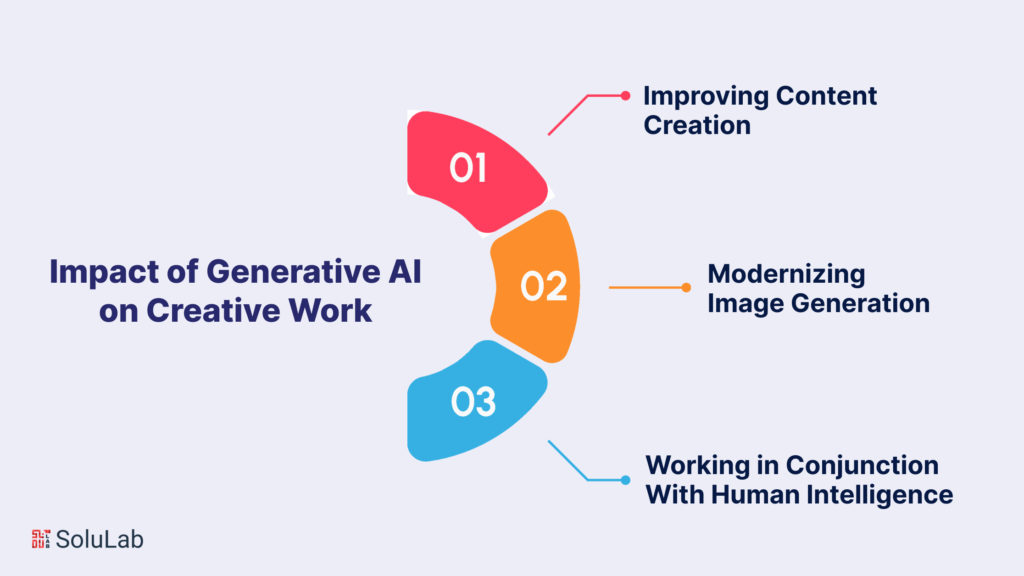
Despite these reservations, the use of generative AI in creative work has transformed many parts of the creative process. Let’s look at how generative AI improves content production, picture development, and cooperation with human intelligence, providing new potential for companies.
By automating activities, creating ideas, and optimizing for search engine optimization (SEO), generative AI systems can help to simplify content development.
GPT-4 language models, for example, are extremely excellent at creating human-like text. As a result, they are crucial for creating content for marketing and other communication-focused applications.

By utilizing Generative AI trends to improve content creation, brands can:
Read Our Blog: Top 25 Generative AI Use Cases in 2024
Brands now generate graphics for advertising and product design using tools like DALL-E, Midjourney, and others that are trained on stable diffusion models. The innovative and appealing pictures produced by these potent Generative AI tools, which employ deep learning techniques, provide companies with a competitive edge.
Generative AI images can still benefit from human input and traditional software expertise, though. It makes sure that the finished item complies with the objectives and vision of the brand. Brands may open up a world of artistic possibilities by employing generative AI development techniques in picture production. Additionally, it creates eye-catching graphics that appeal to its target audience and stand out in a market that is becoming more saturated.
In many creative areas, generative AI models have the ability to work in conjunction with human intelligence to increase creativity and productivity. Generic AI creates new ideas and concepts that allow professionals to explore their creativity by automating repetitive work. This increases the potential for creative endeavors. Implementing generative AI can also improve the accuracy and quality of the output while lowering the costs related to creative activity.
However, it is essential to take into account the difficulties and ethical concerns when using generative AI development services in creative industries, such as intellectual property and copyright issues, data bias and justice, and balancing automation and human creativity. By tackling these issues, companies can make sure that AI and human intelligence work in harmony to provide new and creative results.
Read Also: Top 10 Generative AI Development Companies
Artists and creators have always sought innovative tools and techniques to bring their visions to life. In recent years, Generative AI has emerged as a transformative tool that empowers artists in unprecedented ways.
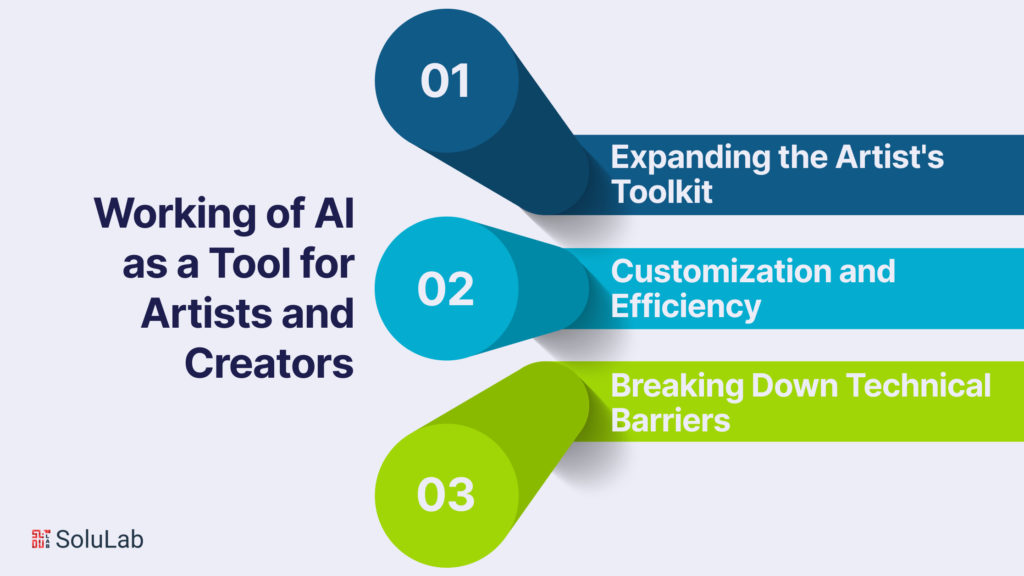
Generative AI provides artists with a versatile set of tools to expand their creative toolkit. Whether it’s generating complex textures, intricate patterns, or unique compositions, AI algorithms can automate tasks that were once time-consuming or technically challenging. Generative AI examples, for instance in visual art, AI algorithms can create detailed backgrounds or repetitive elements, freeing the artist to focus on the core elements of the piece.
One of the significant advantages of AI for artists is the ability to customize AI tools to match their specific style and preferences. AI algorithms can be trained on an artist’s previous works, learning to mimic their distinctive techniques. This customization allows artists to efficiently generate content that aligns with their artistic vision, saving time and effort.
Read Our Blog Post: From Theory to Reality: Real-World Applications of Generative AI and GPT
Generative AI also has the potential to democratize art creation. It can make art more accessible to individuals who may not have formal artistic training or technical skills. With user-friendly AI tools, anyone can experiment with creating art, leading to a more inclusive and diverse artistic landscape.
Thus, AI serves as a powerful tool for artists and creators, offering expanded creative possibilities, customization, efficiency, and accessibility. It encourages the fusion of traditional and modern artistic practices, opening up exciting new avenues for artistic expression. As AI continues to evolve and become more accessible, we can expect artists to push the boundaries of their creativity further, creating a vibrant and dynamic art landscape for the future.
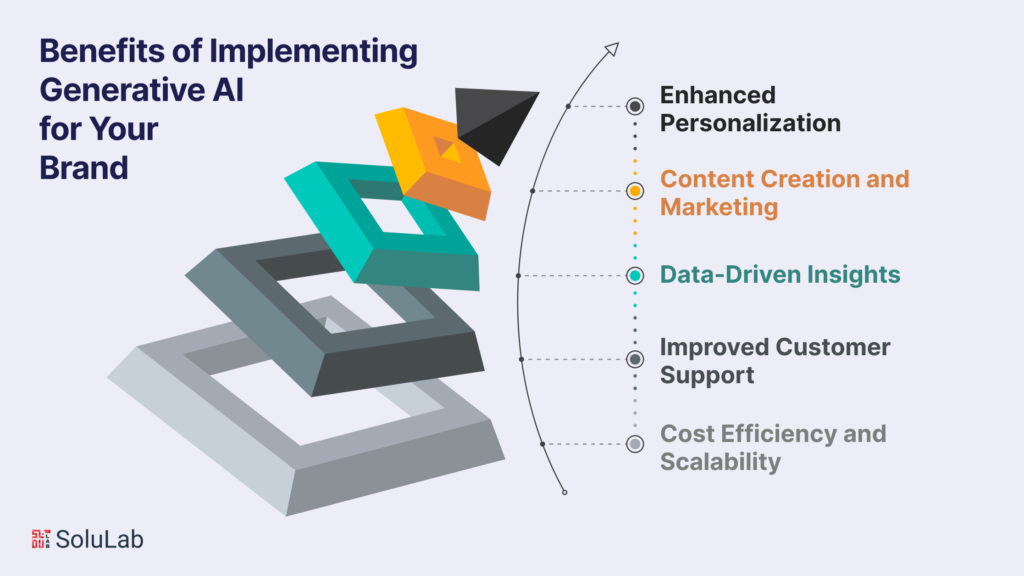
Being ahead of the curve is crucial in today’s fast-paced and fiercely competitive corporate environment. One way to gain a significant edge is by incorporating Generative AI art into your brand strategy. Generative AI, a subset of Artificial intelligence, offers a wide array of benefits that can elevate your brand’s presence and impact. Here are some of the key advantages of implementing Generative AI for your brand:
Implementing Generative AI consulting services for your brand can unlock a plethora of advantages, from personalized customer experiences and data-driven decision-making to enhanced efficiency and improved customer support. By embracing AI innovation, your brand can not only stay competitive but also lead the way in delivering exceptional value to your customers. The transformative potential of Generative AI in branding is boundless, and now is the time to leverage it for your brand’s success.
While the benefits of integrating Generative AI into your brand strategy are substantial, it’s essential to be aware of the challenges and ethical considerations that come with this technological advancement. Navigating these challenges responsibly is crucial to maintaining brand integrity and ensuring ethical AI practices. Here are some key considerations:
AI systems can inadvertently perpetuate biases present in training data, potentially leading to biased recommendations or content. Brands must actively address bias issues by carefully curating training data, monitoring AI outputs for bias, and implementing fairness and bias mitigation techniques.
AI algorithms can be complex and challenging to understand, making it difficult for consumers to know how decisions are made. Brands should prioritize transparency by providing clear explanations of AI-driven processes, especially when AI influences user experiences or decisions.
Read Our Blog: Generative AI and Human-AI Collaboration
Generative AI relies on data, and improper handling of user data can lead to privacy breaches and legal consequences. Brands must adhere to data protection regulations, obtain informed consent from users, and implement robust security measures to safeguard customer data.
AI-generated content raises questions about copyright ownership and intellectual property rights, particularly when AI creates works that resemble existing content. Brands should establish clear guidelines and policies regarding the ownership and usage of AI-generated content to avoid legal disputes and respect the rights of creators.
By proactively addressing these challenges and adhering to ethical considerations, brands can harness the power of Generative AI responsibly, fostering trust with customers, and contributing to positive societal outcomes while reaping the benefits of AI-driven innovation.
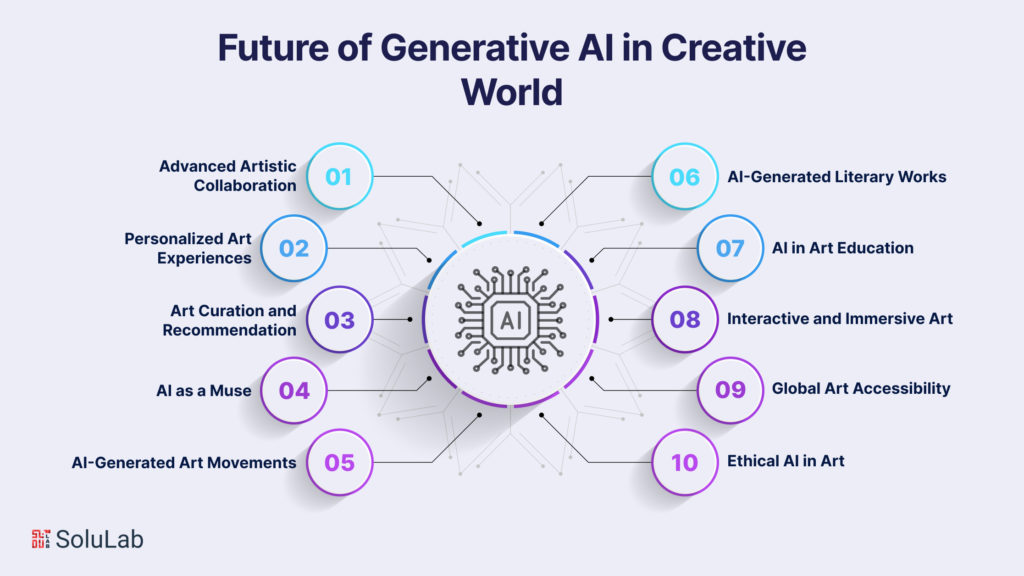
Generative AI has already made profound strides in the creative world, transforming the way we think about art, music, literature, and more. However, its journey is far from over, and the future holds exciting possibilities that promise to take the concept of “Generative AI revolutionizing art” to new heights.
The future of Generative AI in the creative world is brimming with potential. It promises to break down traditional boundaries, inspire new forms of artistic expression, and foster a global community of artists, creators, and appreciators. As we embark on this journey, the phrase “Generative AI revolutionizing art” will become even more synonymous with innovation, creativity, and limitless possibilities.

In conclusion, the world of art is undergoing a remarkable transformation, driven by the unprecedented capabilities of Generative AI. We’ve witnessed how AI algorithms, fueled by vast datasets and intricate algorithms, are pushing the boundaries of creativity, blurring the lines between human imagination and machine intelligence. As we’ve explored the profound impact of Generative AI on art creation, it’s evident that this technological revolution is not about machines replacing artists; it’s about machines empowering artists, offering them new tools, sources of inspiration, and opportunities for collaboration.
The journey of Generative AI in the realm of art is a testament to the endless wellspring of human creativity and the remarkable potential of technology. It challenges us to reevaluate our definitions of art, creativity, and authorship. As we look toward the future, we anticipate an era where Generative AI continues to evolve, where human and machine collaboration becomes the norm, and where art becomes a dynamic, ever-evolving expression of the human spirit, with the phrase “Generative AI revolutionizing art” forever etched into the canvas of our creative landscape.
SoluLab, a Generative AI Development Company, with its cutting-edge expertise in AI and deep understanding of the evolving landscape, is uniquely positioned to empower you in the world of Generative AI. We provide custom Generative AI models and ethical AI practices, ensuring you harness the transformative power of AI while maintaining your creative vision and brand integrity. With our guidance, you can revolutionize your creative processes and stay at the forefront of the Generative AI revolution. Hire top generative AI developers from SoluLab today to embark on this exciting journey of AI-driven creativity and innovation. Contact SoluLab today to embark on this exciting journey of AI-driven creativity and innovation.
Generative AI is a subset of artificial intelligence that focuses on creating content, including art, using algorithms and data. It relates to art by offering new tools and methods for artists and creators to generate, enhance, and collaborate on artistic works.
No, Generative AI technology is not meant to replace human creativity but to complement and enhance it. While AI can generate art, it lacks the unique human experiences, emotions, and perspectives that artists bring to their work. AI serves as a tool to assist and inspire human artists.
Ethical considerations include issues of bias in AI-generated content, intellectual property rights, transparency in AI processes, and maintaining the authenticity and integrity of art. Ensuring responsible AI use and addressing these concerns is essential.
Businesses can use Generative AI to automate content creation, personalize user experiences, and gain data-driven insights into consumer behavior. This helps in delivering tailored content, improving engagement, and making informed marketing decisions.
The future of Generative AI in art promises advanced collaboration between AI and artists, more personalized art experiences, innovative art movements, and ethical AI practices. It will continue to push the boundaries of creativity and redefine traditional notions of artistry.


