


In recent years, the healthcare industry has witnessed a significant transformation due to the emergence of innovative technologies. One such groundbreaking technology that has revolutionized healthcare is Generative Artificial Intelligence (AI). Generative AI applications have introduced a new era of possibilities and advancements, enabling healthcare professionals to streamline processes, enhance patient care, and improve overall outcomes. With the application of Generative AI, the healthcare sector has experienced a paradigm shift, leading to improved diagnostics, personalized treatment plans, and optimized drug development processes. In this blog, we will explore 10 key ways in which Generative AI is reshaping and revolutionizing the healthcare landscape.
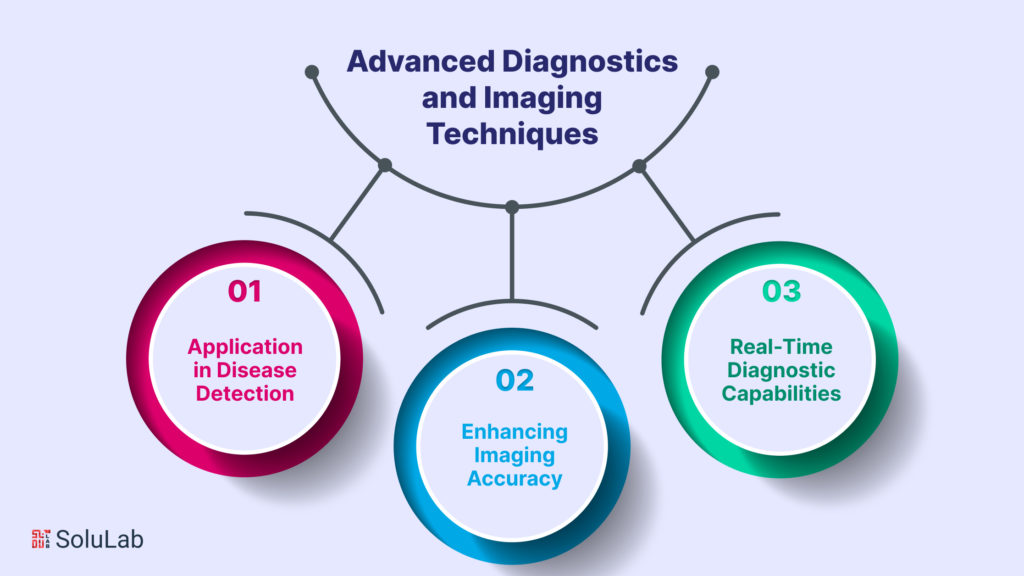
With the aid of Generative Artificial Intelligence AI applications, healthcare providers can now delve into a realm of advanced diagnostics and imaging techniques. Leveraging Generative Artificial Intelligence (AI) models, medical professionals can enhance disease detection, improve imaging accuracy, and enable real-time diagnostic capabilities for improved patient care and treatment outcomes.
Generative AI applications in diagnostics enable healthcare professionals to detect diseases with greater precision and accuracy. By analyzing medical images and data, Generative AI can identify subtle patterns and indicators that may not be apparent to the human eye, facilitating early disease detection and proactive intervention.
The integration of Generative AI models in imaging technologies has significantly improved imaging accuracy and quality. Through advanced image processing algorithms and pattern recognition capabilities, Generative AI enhances the clarity and detail of medical images, enabling healthcare providers to make accurate and informed diagnostic decisions.
Generative AI-powered diagnostic tools offer real-time capabilities, allowing healthcare professionals to access immediate diagnostic insights and recommendations. By leveraging Generative AI models, healthcare providers can expedite the diagnostic process, reduce waiting times, and deliver prompt and effective medical interventions, thereby improving patient outcomes and satisfaction.
Generative AI plays a crucial role in shaping personalized treatment plans for patients. By utilizing Generative AI tools, healthcare providers can tailor medication regimens, design customized therapy protocols, and recommend lifestyle modifications based on individual patient needs and medical history. This personalized approach to treatment fosters better patient engagement and overall healthcare experiences.
Generative AI facilitates the customization of medication regimens based on patient-specific data and treatment requirements. By analyzing patient health records, medical history, and genetic predispositions, Generative AI models assist healthcare providers in developing personalized medication plans that address individual health needs and optimize treatment outcomes.
Generative AI-powered therapy protocols enable healthcare professionals to design customized treatment plans that align with the unique needs and preferences of each patient. By integrating patient data and therapeutic insights, Generative AI models recommend tailored therapy approaches, rehabilitation strategies, and lifestyle modifications, fostering patient engagement and adherence to treatment regimens.
Generative AI applications offer comprehensive lifestyle modification recommendations based on patient health data and behavioral patterns. By analyzing patient behavior, dietary habits, and activity levels, Generative AI models provide personalized lifestyle modification suggestions, wellness strategies, and preventive measures that promote healthy living and disease prevention.
Read Also: How Healthcare Startups in the USA Leverage Generative AI to Cut 40% Costs?
In the realm of drug discovery and development, Generative AI has emerged as a powerful tool. By leveraging AI-driven predictive modeling, healthcare professionals can identify potential drug candidates more efficiently, accelerate clinical trial processes, and enhance the efficacy and safety of new pharmaceutical interventions. Generative AI models have the potential to revolutionize the drug development landscape and bring about significant advancements in patient care.
Generative AI facilitates predictive modeling for efficient drug identification and development. By analyzing molecular structures, biochemical interactions, and pharmacological data, Generative AI models accelerate the drug discovery process, optimize compound selection, and improve the efficacy and safety of pharmaceutical products, leading to the development of novel treatments and therapies for various medical conditions.
Generative AI-powered clinical trial processes streamline the evaluation and validation of pharmaceutical products and treatments. By integrating data analysis tools and predictive modeling techniques, Generative AI expedites clinical trial phases, enhances participant recruitment and selection, and ensures accurate data interpretation, contributing to the timely approval and market launch of innovative drugs and therapies.
Generative AI plays a crucial role in enhancing drug efficacy and safety by optimizing drug formulation and dosage specifications. By conducting comprehensive data analysis and clinical simulations, Generative AI models predict the potential outcomes and adverse effects of pharmaceutical interventions, enabling healthcare professionals to design and administer safe and effective drug treatments that minimize risks and maximize patient well-being.
Genomic analysis and precision medicine have been significantly enhanced with the integration of Generative AI technologies. Through the identification of genetic markers and the implementation of personalized disease risk assessments, healthcare providers can develop targeted treatment approaches for various health conditions. Generative AI’s role in precision medicine continues to expand, offering promising avenues for personalized healthcare solutions.
Generative AI facilitates the identification of genetic markers and biomarkers associated with various health conditions and diseases. By analyzing genomic data and conducting in-depth genetic profiling, Generative AI models identify specific genetic variations and mutations that may contribute to disease susceptibility or therapeutic responses, enabling healthcare professionals to develop targeted interventions and personalized treatment approaches.
Read Blog Also : Influence of AI on Mobile Application Development
Generative AI-powered disease risk assessments provide comprehensive evaluations of individual health risks and predispositions. By integrating genetic data, medical histories, and lifestyle factors, Generative AI models assess patients’ susceptibility to specific diseases and health complications, allowing healthcare providers to offer personalized preventive measures, health management strategies, and early intervention plans that mitigate health risks and promote overall well-being.
Generative AI supports the development of targeted treatment approaches that address the unique genetic characteristics and biological profiles of individual patients. By leveraging genetic insights and disease-specific data, Generative AI models recommend tailored therapeutic interventions, precision medicine strategies, and genetic-based treatments that optimize treatment efficacy and minimize adverse effects, leading to improved patient outcomes and satisfaction.
Virtual health assistants and patient support systems have been transformed by the capabilities of Generative AI. By incorporating AI-powered symptom analysis and remote consultation services, healthcare providers can deliver comprehensive patient education and support. These virtual health assistants serve as a vital bridge between patients and healthcare professionals, offering timely assistance and guidance for various healthcare concerns.
Generative AI-powered virtual health assistants enable remote consultation services and telehealth solutions for patients and healthcare providers. By integrating natural language processing and machine learning capabilities, Generative AI models facilitate interactive virtual consultations, medical guidance, and patient education, enhancing the accessibility and convenience of healthcare services and fostering continuous patient engagement and support.
Read Blog Post: Strategies for Leveraging Generative AI in E-Commerce
Generative AI-driven symptom analysis tools offer accurate and reliable assessments of patient symptoms and health conditions. By analyzing patient-reported data and medical histories, Generative AI models generate comprehensive symptom evaluations, differential diagnoses, and treatment recommendations, empowering patients to make informed healthcare decisions and enabling healthcare providers to deliver timely and effective medical interventions.
Generative AI applications support the development of patient education and support systems that provide comprehensive health information and wellness resources. By utilizing interactive learning modules and personalized health content, Generative AI models facilitate patient education, self-care management, and preventive health initiatives, promoting patient empowerment, health literacy, and active participation in healthcare decision-making processes.
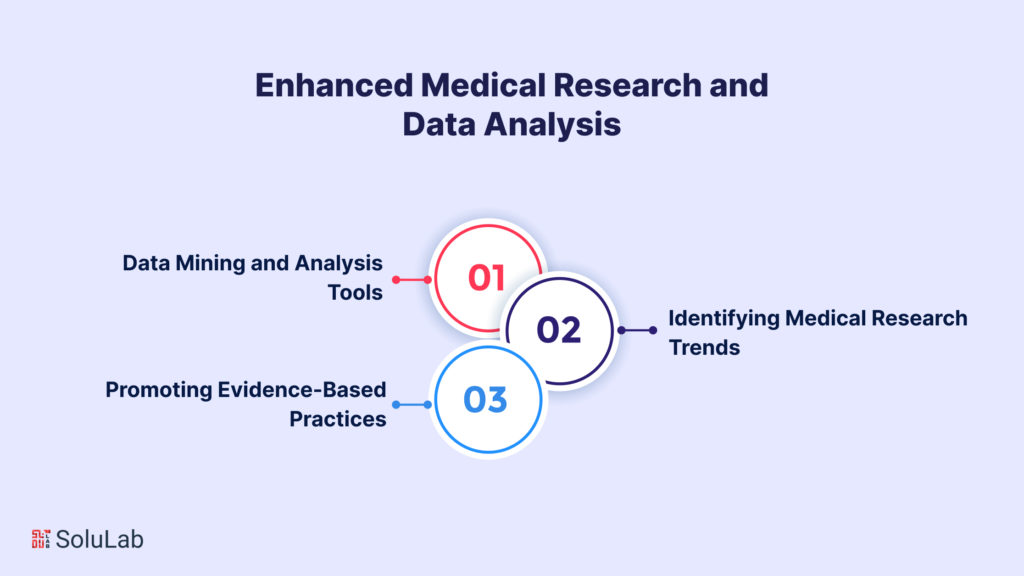
Generative AI has significantly bolstered medical research and data analysis capabilities. By utilizing advanced data mining and analysis tools, healthcare organizations can identify emerging medical research trends and promote evidence-based practices. Generative AI applications enable healthcare professionals to gain deeper insights from vast datasets, paving the way for informed decision-making and enhanced research outcomes.
Generative AI-powered data mining and analysis tools enable comprehensive exploration and extraction of valuable insights from large-scale healthcare datasets and research repositories. By utilizing machine learning algorithms and predictive analytics, Generative AI models uncover hidden patterns, correlations, and trends within complex healthcare data, facilitating evidence-based research, clinical studies, and medical discoveries that drive advancements in patient care, disease management, and healthcare innovation.
Generative AI models play a crucial role in identifying emerging medical research trends and research priorities within the healthcare industry. By analyzing scientific literature, clinical trials, and research publications, Generative AI applications highlight key areas of research interest, innovative technologies, and novel treatment modalities, providing valuable guidance and strategic direction for healthcare organizations, research institutions, and medical professionals involved in cutting-edge research and development initiatives.
Generative AI promotes evidence-based practices and informed decision-making processes within the healthcare ecosystem. By evaluating clinical evidence, treatment outcomes, and real-world data, Generative AI models generate evidence-based guidelines, clinical recommendations, and best practice protocols that guide healthcare professionals in delivering high-quality, patient-centered care, fostering standardized treatment approaches, and ensuring optimal healthcare delivery across diverse clinical settings and specialties.
With the integration of Generative AI, healthcare institutions can streamline administrative processes and optimize operational efficiency. By automating workflow management and optimizing resource allocation, healthcare providers can ensure smoother operations and improved resource utilization. Moreover, Generative AI emphasizes the importance of data security and compliance, facilitating a secure and efficient healthcare ecosystem.
Generative AI-driven workflow management solutions streamline administrative processes and operational workflows within healthcare organizations and medical facilities. By automating routine tasks, appointment scheduling, and administrative procedures, Generative AI models optimize resource utilization, minimize operational inefficiencies, and enhance productivity. In mental health practices, for example, an AI therapy notes generator enables faster and more structured clinical note-taking without compromising quality.
Generative AI supports the optimization of resource allocation and resource utilization strategies in healthcare settings. By analyzing resource demands, patient needs, and operational requirements, Generative AI models facilitate efficient resource planning, staff scheduling, and inventory management, enabling healthcare organizations to allocate resources effectively, reduce wastage, and enhance cost-effectiveness, leading to improved operational efficiency and financial sustainability within the healthcare sector.
Generative AI applications ensure robust data security and compliance measures to safeguard sensitive healthcare information and protect patient privacy. By implementing advanced encryption protocols, data anonymization techniques, and regulatory compliance frameworks, Generative AI models establish secure data management practices, data governance standards, and data protection policies that adhere to industry regulations, compliance guidelines, and ethical data handling practices, fostering a secure and trustworthy healthcare environment for all stakeholders and ensuring data integrity and confidentiality at every stage of healthcare operations and service delivery.
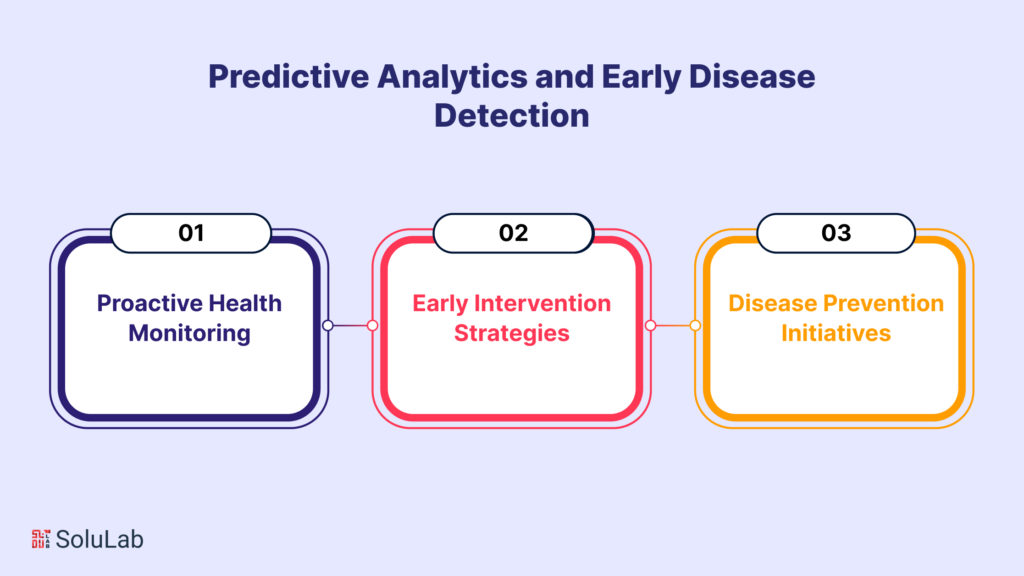
Predictive analytics powered by Generative AI has empowered healthcare providers to engage in proactive health monitoring and early disease detection. By implementing early intervention strategies and disease prevention initiatives, healthcare professionals can mitigate potential health risks and promote proactive healthcare management. Generative AI’s role in predictive analytics is instrumental in enabling timely and effective healthcare interventions.
Generative AI-powered predictive analytics enable proactive health monitoring and early detection of potential health risks and medical conditions. By analyzing patient data, vital signs, and health metrics, Generative AI models can identify subtle changes and anomalies in patient health patterns, facilitating timely interventions, personalized health monitoring plans, and preventive care strategies that promote proactive wellness management and disease prevention initiatives, leading to improved health outcomes and enhanced patient well-being.
Generative AI supports the development of early intervention strategies and preventive healthcare measures that aim to mitigate health risks and prevent the onset of chronic diseases. By leveraging predictive modeling and risk assessment algorithms, Generative AI models can identify high-risk populations, vulnerable patient groups, and individuals predisposed to specific health conditions, enabling healthcare providers to implement targeted interventions, preventive screenings, and wellness programs that promote early detection, disease prevention, and health promotion, fostering a culture of proactive healthcare and wellness management among diverse patient communities and population groups.
Read the Blog Post: Generative AI and Human-AI Collaboration
Generative AI-driven disease prevention initiatives and public health campaigns play a vital role in promoting community health and fostering population wellness. By analyzing epidemiological data, disease patterns, and public health trends, Generative AI models can identify prevalent health concerns, community health disparities, and population-specific health challenges, facilitating the implementation of preventive measures, health education programs, and community outreach initiatives that raise awareness, promote healthy lifestyles, and address public health priorities, leading to improved health outcomes, reduced disease burden, and enhanced community well-being.
Generative AI plays a vital role in facilitating robotic surgery and precision procedures. With AI-assisted surgical technologies and precision instrumentation, healthcare providers can perform minimally invasive surgical techniques with enhanced precision and control. Generative AI’s contribution to robotic surgery has transformed the landscape of surgical interventions, promoting safer and more efficient procedures for patients.
Generative AI-driven robotic surgery and AI-assisted technologies have transformed the landscape of modern surgical procedures and minimally invasive interventions. By integrating advanced robotics, machine learning algorithms, and surgical automation systems, Generative AI models enable precise, controlled surgical interventions, complex procedures, and intricate medical techniques that enhance surgical accuracy, improve patient safety, and optimize surgical outcomes, offering healthcare professionals advanced tools and technologies that redefine surgical precision and revolutionize the field of surgical medicine and healthcare delivery.
Read Also: Leveraging Generative AI for Data Analysis and Modeling
Generative AI supports the development and implementation of minimally invasive surgical techniques and advanced medical procedures that minimize patient discomfort, reduce surgical risks, and promote faster recovery times. By leveraging robotic-assisted technologies, image-guided navigation systems, and real-time surgical visualization tools, Generative AI models enable healthcare professionals to perform complex surgeries, intricate interventions, and delicate procedures with greater precision, dexterity, and control, offering patients minimally invasive treatment options, less invasive alternatives, and advanced surgical therapies that enhance patient comfort, improve clinical outcomes, and redefine the standards of surgical excellence in modern healthcare practice.
Generative AI-driven precision instrumentation and surgical control systems enhance the capabilities of healthcare professionals and surgical teams in delivering high-precision medical interventions and specialized surgical procedures. By integrating advanced robotics, AI-driven control mechanisms, and real-time feedback loops, Generative AI models enable precise instrument manipulation, accurate tissue handling, and controlled surgical maneuvers that optimize surgical performance, reduce the risk of surgical errors, and ensure exceptional surgical precision and accuracy, empowering healthcare providers with innovative surgical tools and technologies that elevate the standards of surgical care and redefine the future of surgical excellence in healthcare practice.
Read more : Generative AI for Enterprises
Remote patient monitoring and telemedicine solutions have been significantly enhanced with the integration of Generative AI technologies. Through the deployment of virtual health monitoring devices and secure telehealth consultation platforms, healthcare providers can ensure secure data transmission and privacy protection for remote patient interactions. Generative AI’s role in remote patient monitoring has led to a more accessible and efficient healthcare system, enabling patients to receive quality care from the comfort of their homes.
Generative AI-powered remote patient monitoring solutions and virtual health monitoring devices have transformed the landscape of remote healthcare delivery and patient care management. By integrating advanced sensor technologies, wearable devices, and data analytics platforms, Generative AI models enable real-time health monitoring, remote patient tracking, and virtual care management, empowering healthcare providers to monitor patient health metrics, vital signs, and medical data from a distance, facilitating timely interventions, remote consultations, and personalized care plans that enhance patient engagement, improve clinical outcomes, and redefine the standards of remote healthcare delivery and telemedicine practice.
Generative AI supports the development and implementation of telehealth consultation platforms and virtual healthcare delivery systems that facilitate seamless communication, remote consultations, and virtual care interactions between patients and healthcare providers. By leveraging advanced communication technologies, video conferencing tools, and secure data transmission channels, Generative AI models enable real-time telehealth consultations, remote medical assessments, and virtual healthcare interactions, enabling healthcare professionals to offer personalized care, expert medical advice, and comprehensive treatment recommendations to patients in remote locations, fostering patient convenience, enhancing care accessibility, and redefining the dynamics of virtual healthcare delivery and telemedicine practice.
Generative AI-driven secure data transmission protocols and privacy protection measures play a critical role in safeguarding patient information, maintaining data confidentiality, and ensuring regulatory compliance in remote healthcare settings. By integrating advanced encryption algorithms, data security protocols, and privacy-enhancing technologies, Generative AI models enable secure data transmission, protected data storage, and confidential information sharing, empowering healthcare providers to uphold patient privacy, comply with data protection regulations, and safeguard sensitive medical data during remote consultations, virtual care interactions, and telehealth engagements, establishing a secure and trusted virtual healthcare environment that prioritizes patient confidentiality, data security, and ethical data handling practices in telemedicine and remote patient care settings.
In conclusion, the transformative impact of Generative AI in the healthcare sector cannot be overstated. From advanced diagnostics to remote patient monitoring, Generative AI has redefined the standards of patient care, operational efficiency, and medical research. Its role in fostering personalized treatment plans, streamlining administrative processes, and enhancing medical research capabilities has revolutionized the way healthcare services are delivered and managed.
SoluLab, as a leading Generative AI development company, remains committed to harnessing the power of Generative AI to drive innovation and excellence in healthcare. Our Generative AI consulting services, AI development solutions, and the expertise of our dedicated developers are geared towards leveraging Generative AI for the betterment of healthcare practices and patient outcomes.
As the Generative AI revolution continues to unfold, its potential to enhance healthcare services, improve patient experiences, and drive meaningful outcomes will remain at the forefront of transformative change in the healthcare industry. With the support of pioneering Generative AI models, tools, and applications, healthcare providers and organizations can embrace the future of healthcare delivery, ushering in an era of personalized, data-driven, and patient-centric care. Contact SoluLab today to discover how our expertise can shape this transformative journey.
Generative AI is revolutionizing the healthcare industry by enabling advanced diagnostics, personalized treatment plans, streamlined administrative processes, and more. Its applications range from enhancing imaging accuracy to improving drug discovery and development processes, ultimately leading to better patient care and outcomes.
The key benefits of integrating Generative AI in healthcare practices include improved diagnostic accuracy, personalized treatment approaches, streamlined operational efficiency, enhanced research capabilities, and proactive health monitoring. By leveraging Generative AI, healthcare providers can deliver more effective and tailored care to patients, leading to better overall healthcare experiences.
Healthcare organizations can leverage Generative AI to enhance patient care and outcomes through various means, such as implementing virtual health assistants for remote consultation, utilizing predictive analytics for early disease detection, and adopting robotic surgery for precision procedures. By leveraging Generative AI tools and models, healthcare providers can offer more efficient and effective healthcare services to their patients.
The adoption of Generative AI in healthcare settings may come with challenges, such as data security and privacy concerns, regulatory compliance issues, integration complexities, and the need for specialized expertise. Overcoming these challenges requires careful planning, robust security measures, and collaboration with experienced Generative AI development companies like SoluLab, which specialize in providing tailored Generative AI solutions for the healthcare sector.
SoluLab plays a critical role in providing Generative AI development and consulting services for the healthcare sector. With a focus on leveraging cutting-edge Generative AI technologies, SoluLab offers comprehensive AI development services, including the development of custom Generative AI models, consulting on Generative AI use cases, and providing dedicated Generative AI developers with expertise in healthcare-specific applications.
Generative AI contributes to personalized treatment plans and precision medicine in healthcare by facilitating the identification of genetic markers, enabling tailored medication regimens, and supporting customized therapy protocols. By leveraging Generative AI, healthcare providers can deliver more targeted and effective treatment approaches, leading to improved patient outcomes and better management of various health conditions.
When implementing Generative AI solutions in the healthcare domain, security and privacy considerations are crucial. Healthcare organizations must ensure compliance with data protection regulations, implement robust encryption and data security measures, and prioritize patient privacy at every step. By working with experienced Generative AI development companies like SoluLab, healthcare providers can ensure the implementation of secure and privacy-conscious Generative AI solutions tailored to their specific needs.


