


The technological landscape has witnessed a paradigm shift in the way applications are developed and deployed, thanks to the rise of decentralized applications (DApps) and blockchain technology. This transformative fusion has paved the way for innovative solutions that challenge the conventional models of centralized systems.
In this blog, we embark on a comprehensive exploration of decentralized applications and the underlying blockchain technology, delving into the key steps involved in the blockchain/dapp development processes and highlighting their potential to reshape the technological landscape across various sectors.
At its core, a decentralized application, commonly referred to as a DApp, is a software application that operates on a decentralized network, utilizing the principles of blockchain technology. Unlike traditional applications, which rely on a central authority to manage data and processes, DApps operate on a distributed network of computers, providing enhanced transparency, security, and autonomy. DApps are characterized by their open-source nature, cryptographic security, and peer-to-peer interactions, making them a formidable alternative to centralized counterparts.
Read Blog Post: Top 10 dApp Development Companies
DApps can encompass a wide array of functionalities, ranging from finance and supply chain management to social networking and gaming. What sets them apart is their ability to function autonomously, free from the control of any single entity. Users of DApps become participants in a collective network, contributing to consensus mechanisms that validate transactions and ensure the integrity of the application. This unique architecture not only empowers users but also reduces the risk of data breaches and censorship.
Central to the development and operation of DApps is the revolutionary concept of blockchain technology. At its core, a blockchain is a distributed, immutable ledger that records transactions across a network of computers in chronological order. This ledger is secured through advanced cryptographic techniques, ensuring that once data is recorded, it cannot be altered or tampered with, bolstering the authenticity and integrity of the information.
The blockchain’s structure comprises a series of blocks, each containing a batch of transactions. These blocks are linked together in a chain, forming an unbroken record of historical transactions. Decentralization is achieved by the network of participants, often referred to as nodes, who maintain copies of the entire blockchain. To reach a consensus on the validity of transactions, various consensus mechanisms, such as Proof of Work (PoW) and Proof of Stake (PoS), are employed, ensuring a trustworthy and transparent environment.
Blockchain technology serves as the backbone of DApps, providing the infrastructure for secure and efficient transaction processing, data storage, and execution of smart contracts. Smart contracts, self-executing agreements with predefined conditions, automate processes within DApps, eliminating the need for intermediaries and streamlining operations.
The process of creating a decentralized application involves a meticulous and multifaceted journey. Each step, from idea conceptualization to continuous improvement, plays a crucial role in shaping the success and impact of your DApp. By immersing yourself in the intricacies of each phase, collaborating with experts, and maintaining a user-centric approach, you can navigate the complexities of DApp development and contribute to the transformative potential of blockchain technology.
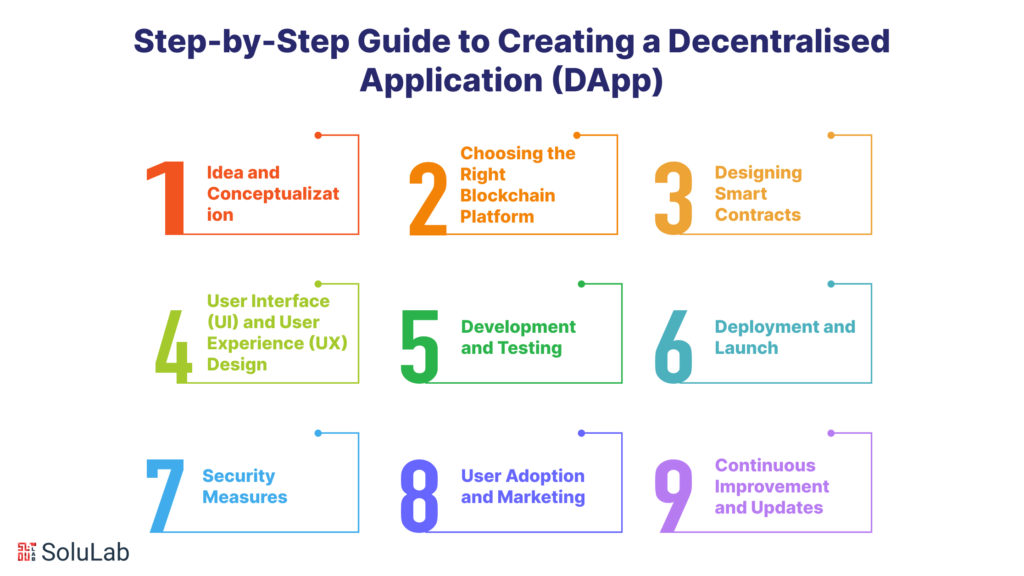
In the initial phase of developing a decentralized application (DApp), it’s crucial to lay a solid foundation through comprehensive idea conceptualization. This involves identifying a real-world challenge or inefficiency that can be effectively addressed through the unique capabilities of blockchain technology. Engage in thorough market research to pinpoint existing gaps and shortcomings in the target industry. By conducting a detailed analysis of current solutions and their limitations, you can craft a DApp concept that not only stands out but also delivers substantial value.
Outline the purpose and core functionalities of your DApp, aligning them with the identified problem. Consider creating a detailed project scope that encompasses various use cases and user personas. This scope will serve as a guiding document throughout the development process, ensuring that your DApp remains focused on its intended objectives.
Selecting the most suitable blockchain platform for your DApp is a pivotal decision that can significantly impact its success. Delve into a comprehensive assessment of various blockchain platforms, considering aspects such as consensus mechanisms, scalability, transaction speeds, interoperability, and developer community support.
Ethereum, for instance, is renowned for its robust smart contract capabilities, making it an ideal choice for complex decentralized applications. Conversely, Binance Smart Chain offers lower transaction fees, making it more suitable for applications that require frequent microtransactions. By thoroughly evaluating the pros and cons of each platform, you can make an informed decision that aligns with your DApp’s technical requirements and long-term vision.
Smart contracts are the backbone of any DApp, as they define the rules and logic governing interactions within the application. This step involves detailed planning and designing of these self-executing agreements, ensuring that they accurately reflect the intended functionalities of your DApp.
Detail the specific functions and interactions that each smart contract will facilitate. Consider outlining conditions that trigger these contracts, specifying the data they need to process and store. To expedite this process, leverage the capabilities of programming languages like Solidity (for Ethereum) that offer libraries and frameworks designed to simplify smart contract development. Thorough documentation of these contracts is essential to ensure transparency and effective collaboration among developers.
User experience (UX) design takes center stage as you embark on designing the user interface (UI) of your DApp. The goal here is to craft an intuitive and visually appealing interface that resonates with your target audience. This phase involves meticulous attention to detail to ensure seamless user interactions and navigation.
Lay out user flows and navigation paths that guide users through the various features of the DApp. Consider the placement of buttons, menus, and interactive elements to minimize user friction. Responsive design is paramount, ensuring that the DApp functions seamlessly across different devices and screen sizes. Collaborate with designers and UI/UX experts to create prototypes and wireframes that provide a tangible visualization of the DApp’s design and functionality.
Check Blog Post: Top Blockchain Technology Companies
With a well-defined design in place, it’s time to roll up your sleeves and delve into the actual development of the DApp. This step encompasses both backend and frontend development, requiring proficiency in programming languages, frameworks, and development tools.
Write clean and efficient code for the backend, implementing the smart contract interactions and business logic. Simultaneously, I worked on the front end, bringing the design elements to life. Adhere to Software Development best practices, version control systems, and coding standards to ensure code quality, readability, and maintainability.
Testing plays a critical role in this phase. Set up testing environments, such as testes (sandbox environments), to simulate real-world interactions with the DApp. Perform rigorous testing, including unit tests that examine individual components, and integration tests that validate the interactions between different parts of the DApp. Security audits and vulnerability assessments are paramount to identify potential threats and weaknesses that could compromise the integrity of the DApp.
The deployment of your DApp marks a significant milestone in the development process. Deploying smart contracts involves interacting with deployment tools provided by the chosen blockchain platform. This step requires meticulous attention to detail to ensure the accurate and secure uploading of your code onto the blockchain network.
Craft a comprehensive deployment plan that outlines the steps, tools, and configurations required for a successful deployment. After deployment, your DApp becomes accessible to users through their Crypto Wallets. Plan a comprehensive launch strategy that includes promotional activities, press releases, and user onboarding materials. Effectively communicate how users can access and interact with your DApp, providing them with a seamless entry point into the decentralized world you’ve created.
Security considerations are paramount in DApp development due to the sensitive nature of blockchain-based applications. Ensuring the integrity of your DApp involves a combination of proactive measures, audits, and continuous vigilance.
Conduct thorough code audits to identify vulnerabilities and potential attack vectors. Implement security best practices such as input validation, secure coding patterns, and access controls. As blockchain technology evolves, so do potential security threats. Stay updated on the latest security advisories and patches for your chosen blockchain platform, implementing updates promptly to mitigate risks.
Consider engaging third-party security auditing services to provide an independent assessment of your DApp’s security posture. This external review can offer valuable insights and help identify potential blind spots that may have been overlooked during development.
The success of your DApp hinges on its adoption by users. Crafting a robust marketing strategy is essential to generate awareness, attract users, and foster engagement within the DApp’s ecosystem.
Utilize social media platforms, content creation, and influencer collaborations to spread the word about your DApp. Develop informative and engaging content that showcases the features and benefits of your DApp. Consider creating a dedicated website or landing page that serves as a central hub for information and user resources.
Community engagement is key in the blockchain space. Host webinars, Ask Me Anything (AMA) sessions, and online forums to interact with potential users, address their queries, and gather feedback. By actively participating in conversations and demonstrating your commitment to user satisfaction, you can build a loyal user base that becomes an integral part of your DApp’s growth journey.
Read Our Blog Post: 4 Big Problems to Solve in Crypto
Even after the successful launch of your DApp, the journey is far from over. The landscape of blockchain technology is dynamic and ever-evolving, requiring constant vigilance and adaptation to remain competitive and relevant.
Monitor user engagement and gather feedback to identify areas for improvement. Regularly release updates that address bug fixes, enhance features, and incorporate user-requested changes. Stay informed about emerging trends and advancements in blockchain technology, considering how these developments can be integrated into your DApp’s roadmap.
Exploring partnerships and collaborations within the blockchain community can open up new avenues for growth and innovation. By staying proactive and receptive to user needs and technological advancements, you can position your DApp as a leading solution within its niche.
In conclusion, the amalgamation of decentralized applications and blockchain technology has ushered in a new era of innovation and disruption. DApps offer a novel approach to application development, leveraging blockchain’s inherent characteristics to provide trust, security, and empowerment to users. By embracing these advancements, industries stand to reshape their operations, unlocking unprecedented opportunities while addressing long-standing challenges.
SoluLab excels in decentralized application (DApp) development services, aligning seamlessly with the guide’s steps. Their strengths lie in ideation, blockchain selection, user-centric design, security, user engagement, and technological innovation. As pioneers in blockchain solutions, SoluLab exemplifies the transformative potential of DApps.
In the fast-paced world of blockchain development solutions, innovation knows no bounds. With dedication, creativity, and a commitment to the principles of decentralization, your dApp could be the next groundbreaking solution that changes the way we interact with the digital world. So, go forth, dream big, and build the future of decentralized applications! For expert guidance and support, contact SoluLab today.
A decentralized application (DApp) is a software application that operates on a decentralized network of computers, utilizing blockchain technology. Unlike traditional apps, DApps eliminate the need for intermediaries and offer greater transparency, security, and autonomy.
Blockchain technology secures DApps through its decentralized and immutable ledger. Transactions are recorded in blocks, cryptographically linked to form a chain. This prevents unauthorized alterations, ensuring data integrity. Additionally, the consensus mechanism ensures that transactions are validated by a network of participants, reducing the risk of fraudulent activities.
Smart contracts are self-executing agreements that automate processes within DApps. They facilitate, verify, or enforce the negotiation or performance of a contract, eliminating the need for intermediaries. Smart contracts enhance transparency, efficiency, and accuracy in various applications, from financial transactions to supply chain management.
The cost of developing a DApp can vary widely depending on factors like the complexity of the project, the blockchain platform chosen, and the desired features. While the initial investment in blockchain technology can be higher, DApps can lead to long-term cost savings by reducing intermediary fees and enhancing operational efficiency.
Yes, DApps can be integrated with existing systems or applications through APIs (Application Programming Interfaces) or other interoperability solutions. This allows organizations to harness the benefits of blockchain technology without completely overhauling their infrastructure, making adoption more seamless and efficient.


