Talk to an Expert

A Dedicated Team vs Freelance Developer: Which is Right for You?

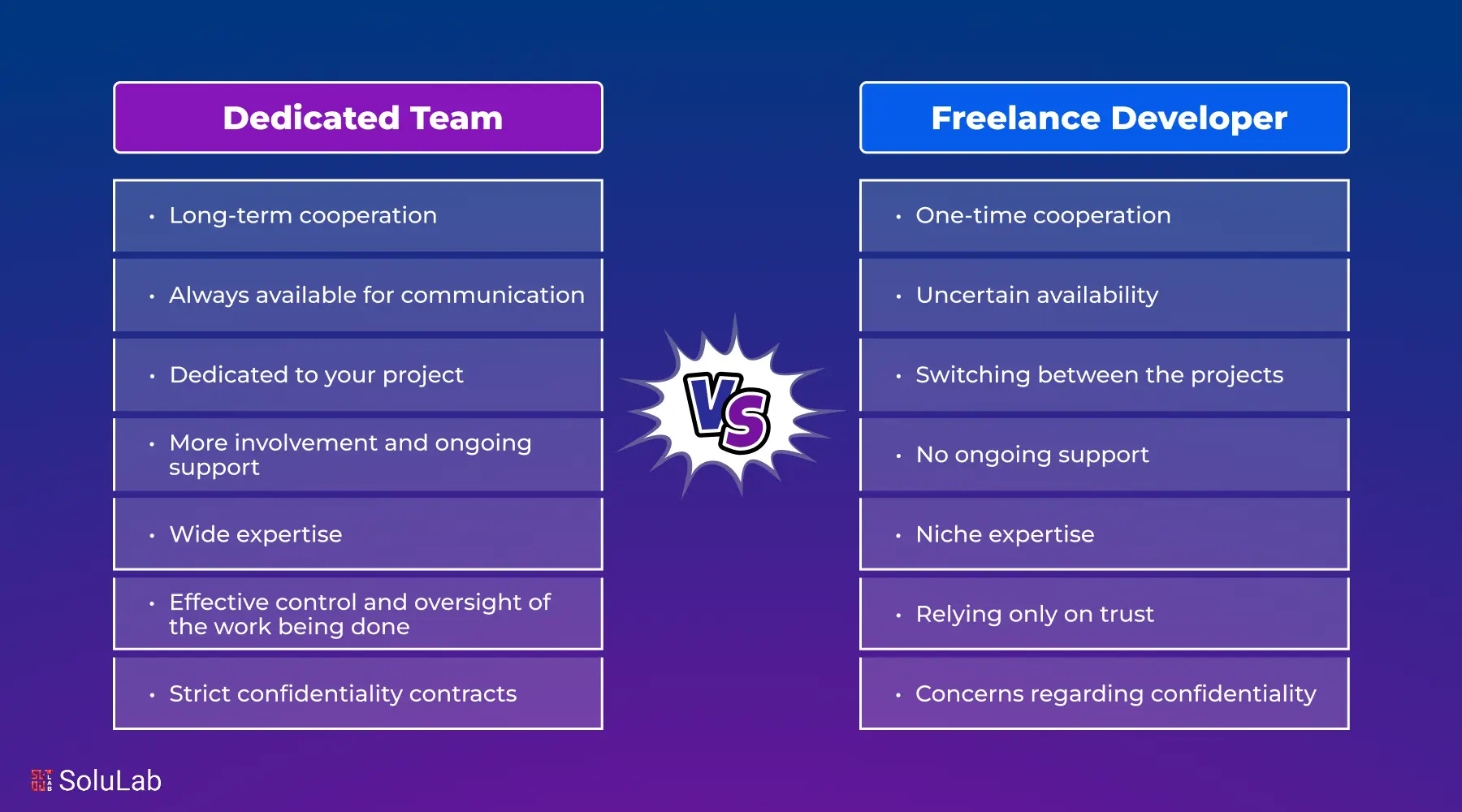
Dedicated Team vs Freelance Developer

Deciding between a dedicated team and a freelance developer isn’t just a technical choice; it could shape how smooth, cost-effective, and successful your project turns out to be. Both options have their strengths, depending on what you’re building, how much you’re willing to spend, and how fast you need it done.

A dedicated team provides you with structure, long-term support, and a combination of specialized skills. On the other hand, freelancers offer more flexibility and can be a great fit for shorter, task-based work, especially when you’re on a tighter budget.

In this guide, we’ll break down the pros, cons, and real-world use cases to help you choose what’s best for your project.

What is a Dedicated Development Team?

A dedicated development team is a group of developers, designers, testers, and sometimes even project managers, hired to work exclusively on your project. They don’t juggle multiple clients. 

This setup is ideal if you’re building something long-term, such as a product that will require ongoing updates, an app that needs continuous improvements, or a SaaS platform that requires regular support. With an expected CAGR of 8.28% from 2025 to 2029, this pattern of growth is expected to continue, with a market volume of US$812.71 billion by that year.

The best part? You don’t have to spend hours on hiring, training, or managing everything in-house. It’s like having an extended arm of your company, minus the overhead.
Advantages of Hiring Dedicated Developers

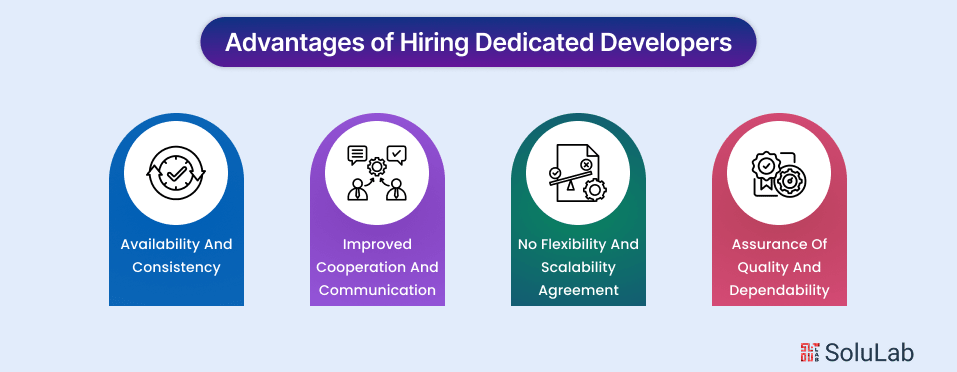
Advantages of Hiring Dedicated Developers

Here are some advantages of hiring a dedicated developer team you should be aware of:

1. Availability and Consistency: With constant project focus, committed developers provide stability and sustained dedication to the project. Their constant availability enables smoother cooperation, quicker problem-solving, and improved alignment with corporate objectives.

2. Improved Cooperation and Communication: By collaborating closely with your team, specialized developers will guarantee smooth integration with your workflow and open communication. Better coordination, quicker decision-making, and an effective development process are all improved by this.

3. Flexibility and Scalability: By providing flexibility, committed developers will assist you in scaling up or down your team as required for the project. This means that you won’t have to sacrifice effectiveness or quality to swiftly adjust to your changing requirements or expanding company.

4. Assurance of Quality and Dependability: You can guarantee access to a workforce that provides excellent development, proven competence, and continuous support when you engage remote developers. Their dedication to the project reduces mistakes, increases dependability, and guarantees efficient progress.

CTA1

What is a Freelance Developer?

A freelance developer is someone you could hire for a specific task, project, or time frame. Without bringing them on as a full-time team member. A freelancer is a go-to expert you’d call when you need something built quickly.

They work with multiple clients and bring a mix of skills and experiences from different industries. That means they could offer fresh ideas and flexibility you might not get from a full-time hire. Approximately 1.57 billion people worldwide are freelancers, accounting for 46.7% of the global workforce.

You could hire a freelance developer to build a landing page, fix bugs, develop an MVP, or even just consult on tech decisions as well. And because they often work solo, you would need to manage timelines and expectations to make things run smoothly.

If your project is small, short-term, or you just want to test an idea without a big commitment, a freelancer could be the perfect fit.
Advantages of Hiring Freelance Developers

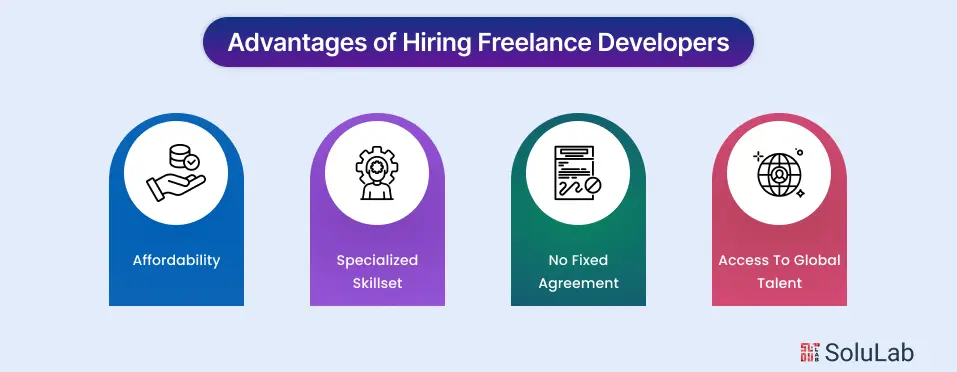
Advantages of Hiring Freelance Developers

There are some key benefits to hiring freelance developers that you should know.

1. Affordability: Because they are cheaper, freelancers are a good pick for small projects or new companies. Due to flexible pricing, firms can be charged just for hours worked or certain services.

2. Specialized Skillset: Because freelancers are usually experienced in specific skills or technology, they can handle difficult specialty projects well. Having experience on different projects allows businesses to pick those who possess the essential technical skills.

3. No Fixed Agreement: You don’t have to stick with a freelance developer for a long period. It’s possible to hire them for a week, a month, or until a project is finished. As a result, you can increase or decrease your server resources to fit your project.

4. Access to Global Talent: It’s possible to hire a React specialist from India, a UI designer from Poland, or a blockchain developer from Singapore, all from your home computer.

Dedicated Team vs Freelance Developer: A Head-to-Head Comparison

There are several considerations when deciding between a committed team and a freelance developer. Short-term projects are best suited for freelancers, but long-term development requirements are best served by committed teams.

Companies must evaluate their needs, financial constraints, and technological expectations before making a decision. The following elements should be taken into account when deciding between a freelance developer and a committed team:

  • Cost

Since freelancers cost less, they are often a good fit for those working on a budget. Yet, if you have a dedicated team, you may end up paying more, but you can count on the same results, faster deliveries, and future benefits. Your decision will be based on whether you’re looking for short-term or a return in the long run.

  • Time & Availability

A dedicated developer group is working on your project all the time, ensuring that it’s done quickly and you’re always able to reach them. Being responsible for many clients, freelancers may face delays, especially when their task comes second to others.

  • Expertise & Collaboration

Having a dedicated team means there are designers, developers, and project managers to balance their skills. It’s obvious how smoothly they operate together. A freelancer often specializes, although you’ll need to handle or hire for everything except that service.

  • Data Security & Reliability

Security practices may not be followed by freelancers until their importance is taught and enforced. In most cases, a team committed to this work operates in an agency or strict environment, where expectations for data safety and agreements are the norm. When you handle confidential information, this could be a main reason to choose.

  • Communication & Workflow

Freelancers might rather communicate without real-time contact, which can make things slow and cause errors. Working according to a plan, many teams often get regular updates, work with Jira or Slack, and have project managers steering the progress. It can make your job much simpler when you manage larger projects.

  • Scalability & Flexibility

Do you need to grow your staff quickly? A business with a dedicated team can bring in extra developers or designers with little to no delay. For freelancers, to scale means finding and training new people from the beginning. Given this, if you’re looking to grow, teams can give more flexibility in the future.

When Should You Hire a Dedicated Team? 

If you’re working on something big or long-term, a dedicated team could be the smarter choice. Here’s when it makes the most sense:
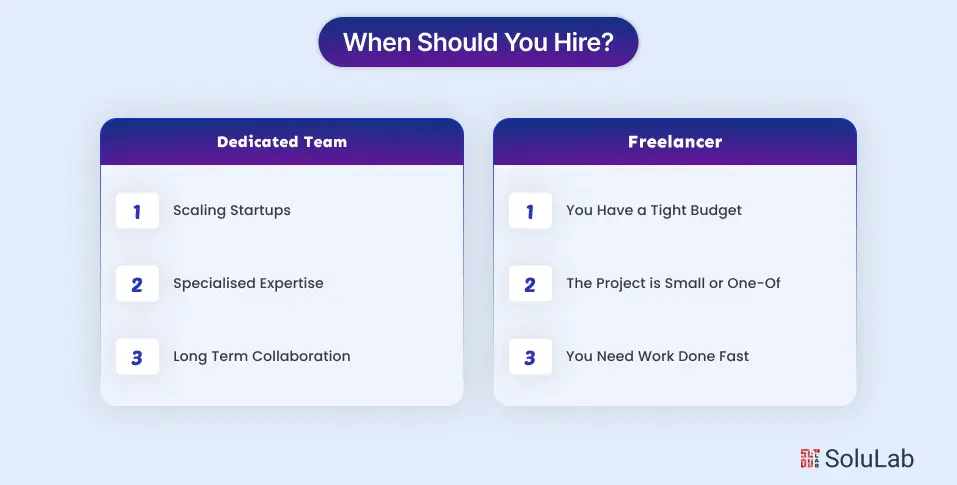
  • Scaling Startups: When your startup is growing fast, you’ll need consistent support to keep up with new features, updates, and user demands. A dedicated team would help you scale without constantly rehiring.
  • Specialised Expertise: If your project requires niche skills like AI, fintech, or blockchain, a dedicated team could bring in focused experts who understand your industry and can hit the ground running.
  • Long Term Collaboration: For projects that need ongoing development, maintenance, and regular improvements, a dedicated team would offer stability and deep familiarity with your product—something short-term freelancers often can’t provide.

Who Should You Hire

When Should You Hire a Freelancer?

Freelancers could be a smart choice when your needs are short-term or very specific. Here’s when it would make the most sense:

1. You have a tight budget: If you’re working with limited funds, a freelancer could help you get things done without the overhead of a full-time team. You only pay for what you need—no benefits, office space, or long-term commitments involved.

2. The project is small or one-off: Freelancers are perfect for tasks like fixing bugs, creating landing pages, or building MVPs. These projects wouldn’t require a full-time team and could be handled efficiently by a skilled solo expert.

3. You need work done fast: Need something done yesterday? Freelancers are often more agile than agencies or teams. If they have availability, they could jump in quickly and deliver results without too much onboarding.

4. You’re testing an idea: If you’re experimenting with a new feature, product, or business idea, hiring a freelancer would let you test it out without investing too heavily upfront.

CTA2

Conclusion

The factors that decide between a dedicated team and a freelance developer are the size of your project, your budget, and what you want to accomplish over time. Building more complex or continual projects may require to hire dedicated developer to ensure things run smoothly and peacefully.

If your requirements are meant for only a short period or are set by a small budget, working with a freelancer suits your needs. There isn’t a universal answer; the important thing is to go with what fits your current situation. Spend some time figuring out what is important for you and select the setup that goes with those goals.

SoluLab, an enterprise software development company with its team can help you build software apps or platforms. Contact us today to discuss further. 

FAQs

1. How do communication styles differ between dedicated developers and freelancers?

Freelancers often prefer asynchronous communication, like emails or chats. Dedicated teams usually hold regular meetings, give detailed updates, and have a more structured workflow.

2. Do both options require me to manage the project?

Freelancers often need more direct oversight. Dedicated teams usually come with a project manager, so you could stay focused on the bigger picture while they handle daily progress.

3. What kind of projects are best for freelancers?

Short-term, well-defined projects like creating a landing page, fixing bugs, or building a prototype work best with freelancers. It’s ideal when the scope and timelines are clear.

4. Are dedicated teams more reliable?

Generally, yes. With a team, you get consistent output, backups if someone’s unavailable, and accountability through structured processes. Freelancers might be more hit or miss.

5. Can I switch from a freelancer to a dedicated team later?

Absolutely. Many startups begin with freelancers and move to a team model as their project or business grows. Just make sure the transition is planned to avoid workflow gaps.

 

Top Custom Software Development Companies in 2026

Companies are no longer looking for one-size-fits-all solutions; they need software built around their processes, customers, and long-term growth goals. From AI-powered platforms and cloud-native applications to secure enterprise systems, the demand for reliable custom software partners is higher than ever.

In fact, the global custom software development market is expected to reach USD 386,012 million by 2034, expanding at a CAGR of 23.03%. So, choosing the right development company can directly impact project success, scalability, and return on investment. 

In this blog, we’ve curated a list of the top custom software development companies in 2026 based on key business and technical criteria. 

How Did We Compile the List of Top Custom Software Development Companies?

To ensure accuracy and business relevance, we followed a structured evaluation process combining market research, technical expertise, and client-focused performance metrics to shortlist top custom software development service providers.

1. Technical Expertise: We assessed companies based on their technology stack, engineering capabilities, and ability to deliver scalable, secure, and future-ready custom software solutions for diverse business needs.

2. Industry Experience: Firms with proven experience across multiple industries were prioritized, ensuring they understand complex business workflows, compliance requirements, and domain-specific challenges.

3. Client Reviews and Testimonials: We analyzed verified client feedback to measure satisfaction levels, communication quality, delivery timelines, and long-term partnership reliability.

4. Project Portfolio: A strong portfolio showcasing real-world projects, measurable outcomes, and innovative problem-solving approaches helped identify companies with consistent delivery excellence.

5. Business Scalability and Support: We evaluated each company’s ability to scale teams, provide post-launch support, and maintain software performance as business requirements evolve.

Top Custom Software Development Companies in 2026

The comparison table below highlights the key differences between leading custom software development companies in 2026, enabling businesses to quickly evaluate expertise, scale, and suitability for their specific project needs.

Company HQ / Primary Presence Key Services Focus Typical Client Type Notable Strengths (positioning idea)
SoluLab Global, strong India/US Custom software, blockchain, Web3, AI, mobile & web apps ​ Startups, SMEs, enterprises, Fortune 500 ​ Deep expertise in emerging tech (Web3, AI) and product ideation support ​
Luxoft Global (origin: Switzerland) Enterprise custom software, digital engineering, automotive, finance solutions ​ Large enterprises, regulated industries Strong domain know‑how and large engineering teams for complex systems ​
Avenga Europe‑led, global End‑to‑end custom software, CX platforms, cloud & data solutions ​ Mid‑market and enterprises Blends consulting and engineering; good fit for digital transformation programs ​
Chetu US‑based, global delivery Custom software, staff augmentation, industry‑specific solutions ​ SMEs and large enterprises Very broad tech stack coverage and scalable dedicated teams ​
Vention North America & Europe Custom product development, dedicated engineering teams, SaaS builds ​ Startups and high‑growth scaleups Strong for long‑term, embedded product teams and startup‑style velocity ​
Radixweb India‑centric, global Custom software, legacy modernization, cloud, DevOps ​ SMEs, ISVs, mid‑market Cost‑effective delivery with focus on reliability and long‑term support ​
ScienceSoft Eastern Europe/US presence Custom software, data & analytics, cybersecurity, QA ​ SMBs to enterprises Mature processes and broad tech portfolio across industries ​
Q3 Technologies India/US Custom software, enterprise apps, product engineering ​ Mid‑market enterprises Strong record in full‑cycle development and global delivery centers ​
Simform US & India Custom software, cloud‑native apps, AI/ML, DevOps, data engineering ​ Digital‑first SMEs and enterprises Recognized in rankings and strong at modern cloud and AI projects ​
Tuvoc India‑led (boutique) Custom web & mobile apps, product engineering, staff augmentation ​ Startups and SMBs Flexible engagement models and focus on rapid, cost‑efficient delivery

Use this comparison as a starting point to shortlist partners that align with your technical requirements, industry focus, and long-term growth goals before making a final custom software development decision.

1. SoluLab

SoluLab is a leading custom software development company known for building scalable, secure, and high-performance digital solutions. The company works across modern technologies and frameworks to deliver tailored software aligned with specific business goals.

SoluLab offers end-to-end custom software services, from strategy and development to deployment and ongoing support. Backed by strong client trust, SoluLab follows global compliance standards, including ISO, GDPR, and SOC 2, ensuring reliability and data security.


$25 – $49 / hr


50 – 249


2014


Los Angeles, CA, USA


Disney, Mercedes Benz, Goldman Sachs

Luxoft

2. Luxoft

Luxoft is a global custom software development company known for delivering complex, enterprise-grade digital solutions. Luxoft offers end-to-end custom software services, including consulting, development, integration, and modernization.

Its delivery model is flexible, supporting agile, dedicated teams and long-term partnerships. With strong enterprise trust, Luxoft follows strict compliance standards, including ISO certifications, GDPR, and SOC 2.


$100 – $149 / hr


1000+


2000


Switzerland

Avenga

3. Avenga

Avenga is a custom software development firm delivering scalable, enterprise-grade solutions using modern technologies and frameworks. The company offers end-to-end custom software services, following agile delivery and flexible engagement models.

Avenga serves industries like fintech, healthcare, and manufacturing, with a strong focus on security, compliance, and quality. Backed by trusted partnerships and certifications such as ISO and GDPR, Avenga is a reliable choice for long-term digital transformation initiatives.


$50 – $99 / hr


1000+


2019


Germany

Chetu

4. Chetu

Chetu is a custom software development service provider known for delivering tailored, scalable solutions across complex business environments. The company works with modern technologies and frameworks to build enterprise-grade applications aligned with client requirements.

Chetu offers end-to-end custom software services, following flexible engagement models that support long-term partnerships. With strong industry coverage, certified processes, and compliance with global standards.


$25 – $49 / hr


2,000+


2000


USA

Vention

5. Vention

Vention is a custom software development company known for building scalable, high-performance solutions using modern technologies and proven frameworks. The company offers custom software services, from product engineering to ongoing support.

Vention follows flexible engagement models, including dedicated teams and agile delivery, ensuring smooth collaboration. With compliance standards like ISO and GDPR, Vention serves industries such as fintech, healthcare, SaaS, and eCommerce.


$50 – $99 / hr


1,000 – 9,999


2002


NY, USA


DirectID, guide:human

Radixweb

6. Radixweb

Radixweb is a custom software development firm known for delivering scalable, secure, and business-driven digital solutions. The company works across modern technologies and frameworks.

Radixweb offers end-to-end custom software services, following flexible engagement models and agile delivery practices. With strong industry experience, global client trust. Radixweb serves businesses across multiple industries with reliability and consistency.


$25 – $50 / hr


600+


2000


India

ScienceSoft

7. ScienceSoft

ScienceSoft is a custom software development company known for delivering scalable, secure, and business-centric digital solutions. The company works with modern technologies and frameworks. It offers end-to-end custom software services, including development, modernization, and integration.

ScienceSoft serves industries like healthcare, finance, retail, and manufacturing, with strong trust and credibility backed by long-term client partnerships. Its commitment to quality and security is reinforced through certifications and compliance with standards like ISO, GDPR, and SOC 2.


$50 – $99 / hr


700+


1989


McKinney, Texas, United States

Q3 Technologies

8. Q3 Technologies

Q3 Technologies is a custom software development service provider delivering scalable, high-performance digital solutions for modern enterprises. The company specializes in advanced technologies and frameworks to build secure, business-ready applications tailored to specific needs.

Q3 Technologies offers end-to-end custom software services using flexible engagement models. Trusted by enterprises across industries, the firm maintains strong credibility through global certifications and compliance standards, including ISO and GDPR.


$20 – $49 / hr


500+


1996


USA

9. Simform

Simform is a custom software development company known for building scalable, high-performance digital products for global enterprises. The company leverages modern technologies and proven frameworks to deliver tailored software solutions.

Simform provides custom software services, following agile and flexible engagement models to ensure faster delivery and transparency. Trusted by startups and large organizations alike, Simform serves multiple industries while adhering to global certifications and compliance standards such as ISO, GDPR, and SOC 2.


$25 – $49 / hr


250 – 999


2010


FL, USA


Tudu, Equilo

Tuvoc

10. Tuvoc

Tuvoc is a custom software development company known for building scalable, secure, and business-centric digital solutions. The company works with modern technologies and frameworks to deliver tailored web, mobile, and enterprise software.

With strong industry experience across multiple domains, it focuses on compliance-ready development aligned with global standards. Its commitment to quality, security, and long-term partnerships strengthens trust with growing and enterprise-level businesses.


$30 – $49 / hr


200+


2018


India

Conclusion

Choosing the right custom software development partner in 2026 is a strategic decision that directly impacts business growth, scalability, and digital resilience. Whether you’re modernizing legacy systems, building enterprise-grade platforms, or scaling digital products, the right partner can increase outcomes while reducing risk. 

SoluLab, a custom software development company, helps businesses design, build, and scale tailored solutions that align with your goals. We recently delivered a software for a promising US healthcare company that provides staff with a unified system for making, accessing, and managing patients’ health status reports.

If you also wish to have software for your business operations, book a free discovery call today!

FAQs

1. What industries benefit most from custom software development?

Industries like healthcare, fintech, logistics, retail, manufacturing, education, and SaaS gain the most value from tailored software solutions.

2. How much does custom software development cost in 2026?

Costs vary based on project complexity, features, team size, and technology stack, typically ranging from hourly pricing to fixed-cost project models.

3. How long does it take to build custom software?

Development timelines can range from a few months to over a year, depending on project scope, integrations, and testing requirements.

4. What technologies do top custom software development companies use?

Leading firms work with modern technologies like cloud computing, AI, blockchain, IoT, web and mobile frameworks, and scalable backend architectures.

5. Can custom software integrate with existing business systems?

Most custom software solutions are designed to integrate seamlessly with CRMs, ERPs, payment systems, and other third-party tools.

10 Reasons Why Your Business Needs Custom Software Development

10 Reasons Why Your Business Needs Custom Software Development

Developers must adapt the program to meet the expectations of each group of users, each of whom has a unique set of requirements. The only way to provide the customization, scalability, and convenience that customers and organizations need from on-demand software is through custom software development.

Custom software development is the procedure of conceiving software to meet the unique requirements of an organization’s users. It generally differs from commercial off-the-shelf software (COTS) because it has additional criteria focused on addressing the user, typically absent from COTS-based solutions.

This article focuses on various advantages that a custom software development company can offer to a firm. Thus helping improve their workflow and customer satisfaction.

Ten Reasons Your Business Needs Custom Software

Typical software is designed to perform basic functions that are necessarily not specific to a particular type of business. It may need to be equipped to meet the unique requirements of any particular industry or organization. If you’re considering custom software development, below are a few reasons it may be the right choice.

1. Innovation

The creation of custom software for businesses may be a potent innovation tool. Custom software may assist firms in innovating and staying ahead of the competition by automating operations, optimizing processes, improving customer experiences, discovering areas for improvement, complying with laws, and accessing new markets.

The success of enterprises has been significantly influenced by custom software development. Netflix’s recommendation engine, which aids customers in finding new films and TV series, was created using bespoke software. Customized software powered Amazon’s logistics network, enabling speedy and effective product delivery. Uber’s ride-hailing service is powered by customized software, allowing it to upend the taxi business and dominate the transportation sector.

Check Out Our Blog: What is Custom Software Development?

2. Brand Awareness

The creation of custom software may be a decisive marketing strategy. You can utilize bespoke software to make your label stand out from the competition by giving consumers an exceptional and memorable experience, making it simple to share their experiences with others, and leveraging the software to promote your brand through advertising and marketing campaigns.

Here are some instances when bespoke software development has aided companies in raising their brands: 

  • Nike developed an interactive experience that lets users build their own sneakers using special software. Due to this event’s extensive social media sharing, Nike’s brand recognition increased. 
  • Starbucks developed a smartphone app that lets users order and pay for coffee in advance using special software. Millions have downloaded this app, which has helped Starbucks establish its brand presence.
  • For each consumer, Amazon customizes the purchasing experience using proprietary technologies. Because of personalization, customers are more satisfied and loyal, which promotes brand recognition.

3. Personalization

By customizing the user experience, personalization may raise engagement, increase customer happiness, and increase revenue. Users’ hobbies, demographics, and past purchases may all be collected using custom software. The user experience can then be tailored using this data by making recommendations for goods or services that the user will likely find appealing. 

Additionally, content customization may tailor the material user’s view by showing them blog entries or news stories pertinent to their interests. For example, a customized user experience can be offered by letting users choose how the software looks and feels.

CTA 1

4. Lower Integration Cost

Custom software development can lower integration costs by integrating seamlessly with existing systems and applications, being flexible and adaptable, and using open-source technologies. 

These can save time and money on integration projects, as there is no need to modify or replace existing systems. Additionally, custom software can be developed using open-source technologies, saving money on licensing fees and making it easier to find and hire custom software developers with the skills to construct and strengthen the software.

5. Low-code Development

Developers make Lego blocks possible, reducing the need for complicated codes in software development. This makes it easier to customize software as you want. A company could need to design a customized application that communicates with its current CRM system, has a unique user interface distinct from the user interfaces provided by low-code development platforms, or requires security measures not supplied by low-code development platforms. These interconnections, the specialized user interface, and the security mechanisms all need the creation of custom software.

Low-code development platforms might not have pre-built interfaces for this particular CRM system. Therefore, organizations could use bespoke software development to construct the integration.

6. Flexibility

Custom software development may be a worthwhile investment for companies of all sizes. Bespoke software development can be the best option for you if you’re searching for a means to increase the adaptability of your company. Because it is made to meet particular requirements, custom software development may assist firms in becoming more adaptable. 

In contrast to off-the-shelf software, which is frequently devised to encounter the necessities of a broad range of businesses and may not be readily tailored to the individual requirements of a specific industry, the software can be easily adapted to changes in the business environment.

Custom software may be scaled up or down as a business’s demands change. This might be a significant advantage for firms that are expanding quickly or dealing with demand changes. Custom software solutions are easily adaptable to new technological advancements or industry demands. By doing this, firms may stay one step ahead of the competition and save money by not having to replace outmoded software.

7. Improved Compliance

Although developing custom software can be difficult and time-consuming, it can be a worthwhile investment for companies trying to increase compliance. Businesses may obtain the best solution for their needs by partnering with an experienced software development firm. 

By automating operations, optimizing workflows, offering insights into compliance risks and challenges, and producing reports to monitor compliance activities and progress, custom software development may help firms enhance compliance. Employees may focus on other duties and guarantee compliance standards are routinely met by automating repetitive processes.

Process simplification can boost productivity and lower mistake rates. Businesses may detect compliance risks and manage them before they become problems by receiving insights on compliance risks and issues. Companies can show compliance by reporting to authorities and stakeholders.

Read Our Latest Blog: 10 Ways Custom Software Development Can Transform Your Business

8. Security

Businesses may identify and manage security threats unique to their operations with the assistance of custom software developers. Strong authentication and authorization rules, encryption to safeguard sensitive data, and security monitoring and auditing are periodic instances of what may be done in this regard.

Software purchased off the market is frequently developed with security as an afterthought, leaving it open to attack. Customized software may be created with safety in mind from the outset and updated regularly, and staff members can receive security training. These services can assist companies in lowering the possibility of security flaws being used against them.

The updating of software may be automated, and staff can receive security awareness training from custom software developers. Through this training, Employees may better understand the security risks posed by software use and the methods for defending against attacks. It is crucial to regularly update software with the most delinquent safety updates, as pristine vulnerabilities are always being discovered.

9. Improved Decision Making

A variety of factors influence decision-making, including custom software development. It can first provide companies access to real-time data and insights. Making informed judgments on enhancing operations may be done using this data to recognize trends, pinpoint issues, and identify trends. 

Second, by automating routine processes and procedures, bespoke software frees up staff members to concentrate on more strategic work. As a result, firms may see an improvement in production and efficiency that gives them a competitive advantage. 

Third, using specialized software may enhance departmental and employee communication and collaboration. Ensuring everyone is informed and on the same page helps firms make better decisions.

10. Boost Employee Morale

Employees are more effective and productive when they have access to specialized software that is created just for their jobs. This can result in a sense of pleasure and achievement, which might raise spirits. 

  • Improved communication: Custom software may aid in enhancing communications inside organizations as well as between businesses and their clients. This might result in a clearer knowledge of each other’s obligations, lowering tension and boosting morale.
  • Increased work satisfaction: Employees are more likely to be pleased with their employment when they utilize simple software that improves their performance. As a result, morale may rise, and attitudes may improve.

Stress levels can be decreased when staff members have access to software that automates jobs and streamlines procedures. As a result, the workplace may become more enjoyable, and employees may have increased confidence.

Choosing the Best Custom Software Development Company

Businesses of all sizes can benefit from investing in custom software, but it’s crucial to be sure it’s the best option for your particular requirements.

Following are some recommendations for picking a business that develops bespoke software: 

  • Consult with other companies in your field for advice. Before choosing a company, do interviews with many of them. 
  • Check to see if the firm has expertise in creating software for your sector. Learn everything there is to know about the project’s scope and schedule. 
  • Obtain a formal agreement that specifies the project’s parameters, budget, and timetable. 

CTA 2

Conclusion

In conclusion, your company requires bespoke software development for various reasons. Custom software may assist you in enhancing security, lowering costs, increasing flexibility, enhancing decision-making, enhancing compliance, enhancing brand recognition, enhancing staff morale, and enhancing efficiency and productivity. Be sure to thoroughly analyze the expenses and advantages if you’re considering developing bespoke software for your company. 

Custom software development involves the customization and maintenance of software to cater to specific users, functions, or organizations. SoluLab’s team of experts utilizes cutting-edge technologies to create custom software solutions that are both scalable and functional. They offer comprehensive assistance throughout the entire software development process, from ideation to full deployment, ensuring all aspects of modern software development are addressed to meet the client’s specific requirements. For professional custom software development services, contact SoluLab today.

FAQs

1. How much does custom software development cost in the US?

Custom software development might cost anything from $120,000 to $220,000.The complexity of the program, the size of the development team, and the level of expertise of the development business are some of the variables that affect the price of developing bespoke software. Custom software creation often costs more than off-the-shelf software, but it can offer a variety of advantages that make the cost worthwhile.

2. What are the different stages of custom software development?

The many phases of developing bespoke software include:

  • Requirements gathering: Information on the business demands that the software is meant to meet is gathered during the requirements stage.
  • Design: During this phase, a thorough blueprint for the software’s architecture, features, and user interface must be created.
  • Development: This stage includes writing the software’s code and testing it to make sure it complies with the specifications.
  • Deployment: Installing the program and making it accessible to users are both steps in the deployment process.
  • Maintenance: Fixing issues and incorporating new features into the program is part of the maintenance phase.

3. What particular kinds of customized software are utilized by companies?

Several instances of unique software used by companies include:

  • Enterprise resource planning (ERP) software: ERP software assists companies in managing their finances, inventories, production, and other processes.
  • Customer relationship management (CRM) software: CRM software assists firms in managing all aspects of their client contacts, including sales, marketing, and customer support.
  • Human resources (HR) software: HR software assists companies in managing their workforce, including payroll, benefits, and training.
  • Project management software: Using project management software, firms may better plan, monitor, and control their projects.

4. What advantages do firms get from deploying custom software?

Several advantages of custom software development for enterprises include:

  • Efficiency gain: Tasks and procedures may be automated using custom software, which can save a lot of time and money.
  • Increased productivity: Employees may operate more effectively and efficiently with the aid of custom software.
  • Better customer service: By automating processes like order processing and customer assistance, bespoke software may offer better customer service.
  • Increased competitive advantage: By offering special features and capabilities that are unavailable from off-the-shelf software, custom software may be utilized to obtain a competitive edge.
