Talk to an Expert

How to Build a Centralized Cryptocurrency Exchange in 2026?

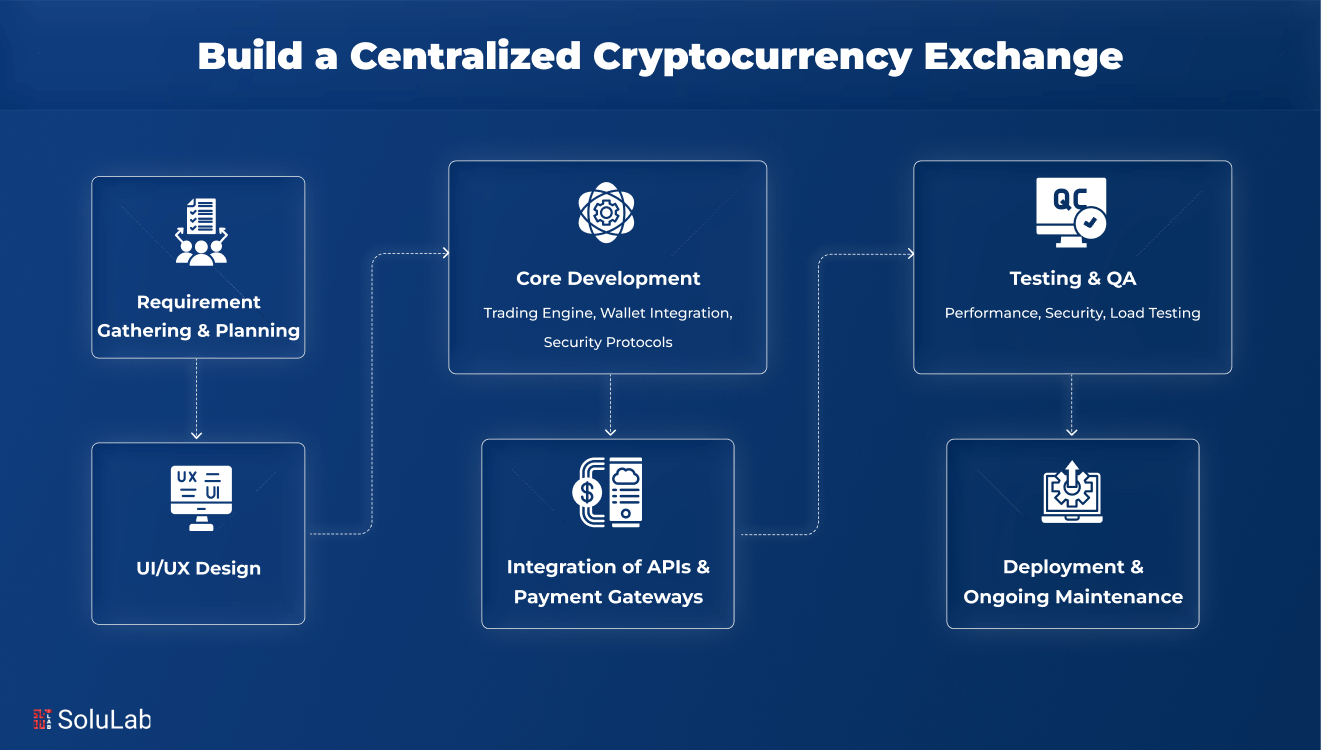
Build a Centralized Cryptocurrency Exchange

Today, cryptocurrency trading is no longer a niche activity but a global financial force. While decentralized platforms are gaining traction, centralized cryptocurrency exchanges (CEXs) remain the backbone of digital asset trading, offering liquidity, user-friendly interfaces, and faster transactions that attract both beginners and professional traders.

However, building a centralized exchange isn’t as simple as deploying trading software. With evolving regulations, growing security threats, and rising user expectations, launching a successful CEX requires careful planning, robust technology, and a compliance-first approach.

In this guide, we’ll break down the step-by-step process of building a centralized crypto exchange, explore the essential features, and highlight how expert development partners like SoluLab can help you turn your vision into a secure, scalable, and profitable reality.

What is a Centralized Exchange (CEX)?

A Centralized Cryptocurrency Exchange (CEX) is a digital platform where users can buy, sell, and trade cryptocurrencies through an intermediary — the exchange itself. Unlike decentralized exchanges, where transactions occur directly between users, a CEX acts as the middleman, managing order books, holding funds, and ensuring trades are executed quickly and securely.

Popular examples include Binance, Coinbase, and Kraken, all of which rely on a centralized structure to provide high liquidity, customer support, and advanced trading tools.

The Rise of Centralized Exchanges

In the crypto ecosystem, Centralized Exchanges (CEXs) function much like traditional banks — acting as trusted intermediaries that safeguard user assets, process trades efficiently, and ensure liquidity is always available. While decentralized exchanges (DEXs) have been gaining attention, the majority of retail and institutional traders still gravitate toward centralized platforms for one simple reason: trust backed by performance.

Why CEXs Still Lead the Pack in 2026?

  • Deeper Liquidity: Tighter spreads, minimal slippage, and better trade execution.
  • Faster Transactions: Centralized order-matching engines enable near-instant trade settlement.
  • Accessible for All: Intuitive interfaces make it easy for both beginners and professionals to trade confidently.
  • Industry Benchmarks: Giants like Binance, Coinbase, and Kraken have redefined the trading experience — proving that a successful exchange requires far more than just a token swap feature.

For newcomers aiming to compete, launching a CEX today means blending security, compliance, and innovation into one seamless trading platform — the very formula top blockchain developers like SoluLab specialize in delivering.

Core Components of a Centralized Crypto Exchange

A successful CEX isn’t just about connecting buyers and sellers — it’s about building a robust, secure, and intuitive ecosystem. Every high-performing exchange is built on four essential pillars:
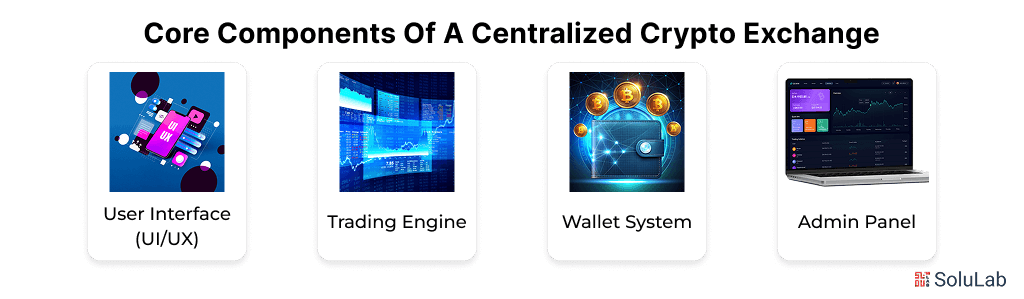
Core Components of a Centralized Crypto Exchange

a. User Interface (UI/UX)

Your interface is your first impression — your digital handshake. A well-designed UI must deliver:

  • Clean, intuitive dashboards for effortless navigation.
  • Streamlined workflows that make trading simple, even for first-time users.
  • Mobile responsiveness so users can trade on the go without sacrificing functionality.

b. Trading Engine

Think of this as the brain of your exchange — the powerhouse that keeps everything running smoothly. An effective trading engine must:

  • Instantly and accurately match buy/sell orders.
  • Handle high volumes and simultaneous user activity without lag.
  • Process trades with low latency to maintain price accuracy.
  • Support multiple order types — market, limit, and stop-limit — with real-time updates across user dashboards.

c. Wallet System

Your wallet system is more than just a balance display — it’s the digital vault protecting your users’ assets. A secure setup includes:

  • Hot wallets for instant access during trades.
  • Cold wallets are stored offline to prevent breaches.
  • Multi-currency support with seamless switching between assets.

A smart fund management system automates transfers between hot and cold wallets, keeping exposure low while ensuring liquidity.

d. Admin Panel

The admin panel is your team’s mission control. A strong back-end panel should enable you to:

  • Approve and manage KYC documentation.
  • Set trading limits and tiered access for different user levels.
  • Add, remove, or pause token listings with full audit trails for compliance.

A CEX is only as strong as its foundation — and these components form the framework that determines its security, speed, and user trust.

Development Process of Centralized Crypto Exchange

The development of a centralized cryptocurrency exchange has many components. Each stage requires careful attention. Let’s check the following details to know all the steps needed.

1.  Initial Planning and Research

Every successful exchange starts with planning. Teams define business goals, user profiles, and core functionalities. Will it support fiat deposits, margin trading, or just crypto-to-crypto? Understanding regulations for each target region is crucial. 

The roadmap is laid out with timelines, cost estimates, legal support, and milestones to align business goals with development execution from the very beginning.

2. Regulatory and Compliance Mapping

Complying with financial laws is non-negotiable. Countries have different crypto rules, so identifying licensing needs, registration processes, and anti-money laundering (AML) frameworks early is vital. 

Planning includes integrating identity verification (KYC), transaction monitoring, and AML checks that satisfy global regulations.

Legal advisors and compliance consultants are involved even before development begins to avoid risks later.

3. Feature Definition and Exchange Type

Developers work with stakeholders to finalize the exchange’s core features. This includes spot trading, order types, fiat on-ramp support, liquidity solutions, and token listing processes. 

Teams also choose between custom-built platforms and white-label options. A clear product specification document is created, outlining every expected function and integration, from APIs to user account management.

4. Tech Stack Selection

The tech stack forms the foundation of the exchange. Languages like Go, Node.js, or Rust are chosen for backend performance. Frontends use React or Vue.js to ensure responsive design. 

Databases like PostgreSQL or Redis handle user sessions and trading data. The right tech ensures the platform is fast, scalable, secure, and easy to maintain long-term.

5. Blockchain and Token Support

Exchanges need to support multiple tokens and chains. Integration is done using blockchain APIs and SDKs for Ethereum, Solana, BNB Chain, and more. Developers set up wallet modules to accept ERC-20, BEP-20, and native tokens. 

These integrations enable smooth deposits, withdrawals, and balance management with blockchain confirmations and gas fee optimization for efficiency.

Read Our Blog Post: How to Launch a Crypto Exchange in Switzerland?

6. Designing User Experience (UI/UX)

User interface design focuses on clarity, accessibility, and speed. Designers create wireframes for trading views, wallets, and dashboards. The goal is to help both beginners and experienced traders navigate effortlessly. 

Tools like Figma or Adobe XD are used to build and test responsive designs for web and mobile, ensuring a seamless user experience across all devices.

7. Trading Engine Development

The trading engine is the system’s core. It matches buy and sell orders using algorithms that ensure high-speed execution. It must support different order types like market, limit, and stop-limit. 

Latency optimization and load balancing are added to handle massive concurrent trades. The engine also manages real-time order book updates and price discovery mechanisms.

8. Wallet Infrastructure Setup

Hot wallets manage live user transactions, while cold wallets offer offline storage for security. Wallet infrastructure includes private key encryption, transaction broadcasting, and auto-syncing of balances. Systems must prevent double-spending and provide instant wallet-to-exchange fund transfers. 

Multisig setups and hardware wallet integrations ensure maximum protection for both platform and customer assets.

9. KYC/AML Integration

KYC and AML systems are integrated using services like Sumsub, Shufti Pro, or Jumio. Users upload identity documents, take live selfies, and pass region-specific compliance checks. Real-time verifications ensure fast onboarding. 

AML tools monitor user behavior and flag suspicious activities. These tools run continuously in the background and adapt based on evolving regulatory requirements.

10. Admin and Monitoring Panel

Admin panels allow exchange staff to manage users, approve KYC, suspend accounts, set trading limits, and monitor system health. Activity logs, fraud alerts, and trade flow analytics are part of this panel. 

Developers also integrate dashboards for real-time performance stats, allowing quick responses to anomalies or spikes in user activity.

11. API Development and Testing

REST and WebSocket APIs are built for external traders, bots, and partners. These APIs allow market data access, trading, and account operations. Rate limiting, permissions, and key rotation are implemented for security. 

Developers run unit, integration, and performance tests. Load testing simulates thousands of users to ensure stable performance during high traffic.

12. Deployment and Post-Launch Scaling

After developing the platform is deployed on ie, AWS or GCP cloud services using Docker and Kubernetes. This test is mainly to test the scalability of the system. Monitoring tools like Grafana and Prometheus are used to track the time, errors, and latency os the platform. 

The support team handles the user challenges, and developers work based on the feedback received. At last, new features such as staking, referral bonus, offers, and margin trading are added. 

Must-Have Features for Centralized Cryptocurrency Exchange Development

Your users expect more than just a basic trading window. To compete with established players and deliver real value, your Centralized Crypto Exchange should offer a full suite of modern, secure, and high-performance features.

Let’s break down the essentials:

1. Seamless Registration, Login, and KYC/AML Integration

The user onboarding process sets the tone for your entire platform. A good experience should:

  • Be smooth and fast; users should be able to create an account in minutes.
  • Include KYC (Know Your Customer) verification using government IDs, selfies, and automated checks.
  • Comply with AML (Anti-Money Laundering) standards to detect suspicious behavior early.

Tools like Sumsub, Shufti Pro, or Jumio can automate this while keeping friction low. Remember: compliance isn’t optional. But the experience shouldn’t feel like applying for a loan.

2. Real-Time Trading Charts, Order Books, and Market Data

Your users need to make smart trading decisions and they need tools to do that.

Include:

  • Live price charts with multiple indicators (candlesticks, moving averages, RSI, etc.)
  • A detailed order book showing bid/ask depth
  • Trade history and price movement summaries
  • Custom timeframes, drawing tools, and volume overlays

Integrating tools like TradingView or custom chart engines helps here. This is where pro traders spend most of their time, make it powerful, fast, and customizable.

3. Deposit and Withdrawal System (Crypto + Fiat)

If users can’t move money in or out easily, they won’t use your platform. It’s that simple.

You’ll need:

  • Crypto deposits/withdrawals: Fast, reliable wallet integrations with status tracking and blockchain confirmations.
  • Fiat on-ramps/off-ramps: Connect to payment gateways (like Stripe, MoonPay, or local banks) to support fiat deposits and withdrawals in USD, EUR, INR, etc.
  • Built-in controls for transaction fees, withdrawal limits, and fraud checks.

Also, show pending and completed transactions clearly in user dashboards. Transparency builds trust.

4. API Access for Algo Traders and Institutions

Professional and institutional traders need API access to automate strategies.

You should offer:

  • REST and WebSocket APIs for market data and order execution
  • Clear documentation with example calls
  • High rate limits for premium accounts
  • API key management with granular permissions

APIs aren’t just a bonus, they’re a revenue opportunity. You can offer tiered access, analytics, and even white-labeled trading bots as add-ons.

5. Two-Factor Authentication (2FA), IP Whitelisting, and Session Logs

Security should feel invisible but strong.

These tools do just that:

  • 2FA (Google Authenticator, SMS, or Email) for login, withdrawals, and API calls.
  • IP whitelisting to allow access only from approved devices or networks, especially useful for institutional traders.
  • Session logs that show when and where the account was accessed. Users can revoke access if they notice something unusual.

These features dramatically reduce the risk of account takeovers. They’re essential if you want to be taken seriously.

6. Security Architecture

Security isn’t a feature you tack on at the end it’s the foundation your entire exchange stands on. Without it, you’re handing hackers and bad actors an open invitation.

Here’s what it takes to secure a Centralized Crypto Exchange the right way:

  • End-to-end encryption protects all sensitive data, whether it’s moving across networks or sitting in your database. Think user credentials, transaction history, API keys, everything encrypted by default.
  • Secure API frameworks like OAuth2 and JWT ensure only verified apps and users can access critical systems. Combine this with tight access controls and permission-based routing.
  • DDoS protection, bot filtering, and rate limiting keep your platform online when traffic surges, whether from real users or malicious actors. This helps maintain uptime during peak volumes.
  • Cold storage with multi-signature wallets keeps the bulk of your user funds offline, where they’re safest. With multi-sig, no single person can access or move funds alone, adding another layer of defense.
  • Regular third-party audits and penetration testing catch vulnerabilities before attackers do. If you’re not constantly testing your own system, someone else eventually will.
  • Real-time monitoring and alert systems help you catch threats in the moment, not after the damage is done. Automated detection paired with human oversight creates a proactive security posture.

Legal and Regulatory Compliance to Adhere for Crypto Exchanges

Crypto might be borderless, but regulation isn’t. Every region has its own framework, and ignoring it isn’t an option, it’s a fast track to shutdown.

  • Licensing comes first. In the US, you’ll need to register as a Money Services Business (MSB) with FinCEN. In the EU, that likely means a VASP license. In the UAE, look to regulators like VARA and ADGM. Each has its own paperwork, audit process, and ongoing reporting requirements.
  • AML and KYC checks aren’t just checkboxes; they’re legal safeguards. Integrate automated identity verification tools like Chainalysis, Sumsub, or ShuftiPro to monitor transactions and flag suspicious activity without slowing down onboarding.
  • Data privacy regulations like GDPR (EU) and CCPA (California) demand clear communication. Users should know what data you’re collecting, why, and have the power to export or delete it at any time.
  • Legal guidance isn’t optional. Partner with crypto-savvy lawyers early to map out your compliance game plan. Waiting until after launch to “figure it out” can cost you licenses, users, and millions in fines.

Revenue Model of Centralized Crypto Exchange Platforms

A well-built exchange isn’t just a tech product; it’s a business. Here’s how a Centralized Crypto Exchange turns traffic into revenue:

  • Trading fees are your primary income stream. Most platforms use a maker-taker model, rewarding liquidity providers (makers) with lower fees while charging slightly more to takers. Volume-based discounts can help attract big traders.
  • Deposit and withdrawal fees offer steady income, especially if you support multiple fiat and crypto assets. You can set dynamic rates based on network congestion or asset type.
  • Token listing fees are another major source, especially from new crypto projects eager for visibility. Some exchanges even offer tiered listing packages with optional marketing boosts.
  • Premium features like margin trading, high-speed APIs, advanced analytics, and pro dashboards can be monetized through subscriptions or membership tiers.

The key is balance. Diversify your revenue streams without making users feel nickel-and-dimed. A transparent, scalable model builds trust and long-term sustainability.
Cryptocurrency Exchange Development Services

Final Thoughts

Centralized Cryptocurrency Exchange Development isn’t just about building software. It’s about building trust, utility, and long-term value. Whether you’re targeting day traders, institutions, or the next billion crypto users, you need to nail the execution.

At SoluLab, we specialize in Centralized Crypto Exchange Development, from building secure trading engines to deploying compliant, scalable infrastructures. Whether you’re starting fresh or looking to upgrade an existing platform, we bring technical expertise and blockchain know-how to every step of the journey.

Our team has worked with leading fintechs and crypto startups across the globe. Let’s build something that actually lasts. Want to launch your own crypto exchange? Let’s talk.

FAQs

1. How long does it take to build a centralized crypto exchange? 

Generally, to build a featured centralized crypto exchange takes 4 to 6 months. However, this depends on your business requirements (fully custom takes more time compared to using white-labeled tools) and your budget. 

2. Is it legal to operate a centralized crypto exchange? 

Yes, it’s legal in many countries, but only if you meet local law, register with regulators, and maintain licenses like MSB, VASP, or their equivalents based on your operational region.

3. What’s the difference between a white-label exchange and a custom-built one? 

White-label exchanges are plug-and-play and faster to launch, but offer limited control. Custom platforms take more time but give you full freedom to design features and scale your way.

4. How can I make my crypto exchange secure? 

Security isn’t optional, it’s the basic requirement of every user. So, using encrypted data storage, multi-signature wallets, anti-DDoS layers, and real-time monitoring keeps the privacy of the customer safe. Also, running regular audits to keep hackers out.

5. How do I choose the right tech stack for my crypto exchange? 

The right tech stack depends on your goals, but go for scalable, secure tools, like Node.js or Go for backend, React for frontend, and PostgreSQL or Redis for robust data handling.

 

The Future of User Experience (UX) in Cryptocurrency Wallets: Trends and Innovations


The Future of User Experience (UX) in Cryptocurrency Wallets: Trends and Innovations

Cryptocurrencies are establishing themselves as a disruptive force in the financial environment due to the availability of secure, decentralized digital assets with a chance to totally transform a number of sectors. At the heart of this digital revolution are the crypto wallets, a piece of software that allows users to securely store, manage, and spend their cryptocurrency in transactions.

As the use of cryptocurrencies grows, new and intriguing advancements in crypto wallets that will enhance security, and user experience, and bring up fresh opportunities are on the horizon. In this blog, we’ll look at the trends and innovations that will influence the rise of crypto wallet development in the future.

So, let’s get started!

Have a Look at Our Blog: How to Buy Real Estate Using Cryptocurrency?

What are Cryptocurrency Wallets?

A cryptocurrency wallet is a digital tool or software application that allows individuals to securely store, manage, and interact with their cryptocurrencies. It stores the private keys necessary to access and control one’s digital assets on a blockchain network. Cryptocurrency wallets enable users to send, receive, and monitor their cryptocurrency holdings, providing a user-friendly interface to interact with the decentralized blockchain technology underlying cryptocurrencies. These wallets come in various forms, including software wallets (online, desktop, or mobile), hardware wallets (physical devices), and paper wallets (physical documents with key information). The choice of wallet type depends on factors such as security preferences and ease of use for the individual user.

Importance of UX in Cryptocurrency Wallets

Importance of UX in Cryptocurrency Wallets

User Experience (UX) in cryptocurrency wallets plays a pivotal role in the success and adoption of these digital tools. As the crypto landscape continues to expand, the importance of providing a seamless and intuitive user interface (UI) becomes increasingly evident. Let’s explore why UX improvement is paramount in the world of crypto.

  • Enhanced Security Awareness: One of the critical aspects of using cryptocurrency wallets is security. Users need to feel confident that their digital assets are safe from theft or hacking. An intuitive UI with clear security features not only helps users understand the safety measures in place but also encourages them to take necessary precautions. Improved UX in crypto wallets ensures that users can easily manage security settings and feel in control of their assets.
  • Complexity Reduction: The world of cryptocurrency can be intimidating for newcomers. A user-friendly UI simplifies the complexities associated with crypto, making it accessible to a wider audience. When users can navigate a wallet without confusion, they are more likely to engage with cryptocurrencies, contributing to broader adoption.
  • Efficient Transactions: Smooth and efficient user experiences in crypto wallets are pivotal for transaction execution. A well-designed UI streamlines the process of sending, receiving, and monitoring cryptocurrency transactions. This efficiency not only saves users time but also reduces the likelihood of errors.

CTA1

  • Market Data Accessibility: Many cryptocurrency wallets provide users with real-time market data, including price charts and portfolio performance. A good UX ensures that users can access and interpret this data effortlessly. This empowers them to make informed decisions regarding their crypto investments.
  • User Retention: In the highly competitive crypto wallet landscape, user retention is crucial. A positive UX encourages users to stick with a particular wallet, fostering loyalty and trust. It’s not just about attracting new users but also about keeping existing ones satisfied.
  • Cross-Platform Consistency: As users engage with cryptocurrency across various devices, a consistent UX is essential. Whether using a mobile app, a web-based wallet, or a desktop client, users should find familiar and coherent interfaces. Cross-platform consistency enhances the overall user experience.

Read Also: 4 Big Problems to Solve in Crypto

  • Adoption Among Diverse Audiences: Cryptocurrency is no longer the domain of tech-savvy individuals. To achieve mainstream adoption, wallets must cater to diverse audiences, including those who may not be well-versed in blockchain technology. A user-friendly UI accommodates a wide range of users, from beginners to experts.
  • Positive Brand Image: Finally, the user interface and overall UX of a cryptocurrency wallet contribute to the wallet provider’s brand image. A well-designed and user-centric wallet can enhance the reputation of the provider, fostering trust and credibility in the crypto community.

Overall, the User Experience (UX) and user interface are more than just aesthetics; they are a critical factor that determines the success and widespread adoption of cryptocurrency wallets. As the crypto space continues to evolve, wallet providers must prioritize UX improvement to simplify the user journey, enhance security, and make cryptocurrency accessible to a global audience. A positive and intuitive user interface not only attracts users but also keeps them engaged, ultimately contributing to the growth of the crypto ecosystem.

Building a Secure Future with Crypto Wallet Development

Building a Secure Future with Crypto Wallet Development

The necessity of safe and user-friendly cryptocurrency wallets in the ever-expanding world of cryptocurrency cannot be emphasized. Developers are working relentlessly to improve cryptocurrency wallet security, usability, and usefulness in crypto wallets, which has become an important element of the business. Let’s take a deeper look at the trends and innovations influencing the future of the crypto community.

Decentralized Finance (DeFi) Integration

Decentralized Finance, or DeFi, has been a transformative force in cryptocurrency investment, offering users the ability to participate in various financial activities, such as lending, borrowing, yield farming, and decentralized exchange, without relying on traditional financial intermediaries. Wallet providers are recognizing the growing popularity of DeFi and are integrating these functionalities into their platforms to enhance the cryptocurrency investment experience.

  • DeFi Dashboards: Cryptocurrency wallets with DeFi integration often feature dedicated DeFi dashboards. These dashboards provide users with a consolidated view of their DeFi holdings, including assets deposited in liquidity pools, yield farming strategies, and decentralized loans.
  • Staking and Governance: Many wallets now allow users to stake their crypto assets directly within the wallet’s interface. Users can also participate in on-chain governance processes, such as voting on proposals for DeFi protocols, making cryptocurrency investment more interactive.
  • DeFi Yield Tracking: Wallets with DeFi integration offer users real-time information on their DeFi investments’ performance, including current yields and historical data. This feature empowers users to make informed decisions about managing their cryptocurrency investments within the DeFi ecosystem.

Multi-Platform Compatibility

Multi-platform compatibility is essential for users who want to access their cryptocurrency investments and engage in cryptocurrency exchanges across various devices and interfaces. Wallet providers are striving to offer a consistent and seamless user experience, regardless of the platform or device being used.

  • Cross-Device Synchronization: Wallets are implementing synchronization features that ensure users can access their cryptocurrency holdings and transaction history from their mobile phones, tablets, desktop computers, and web browsers. This synchronization keeps users updated on their investments, no matter where they are.
  • Browser Extensions: Some wallet providers are offering browser extensions that seamlessly integrate with popular web browsers. These extensions enable users to interact with cryptocurrency exchanges, DeFi platforms, and wallet functions directly from their web browsers, simplifying cryptocurrency investment activities.
  • Smartwatch Integration: Forward-thinking wallet providers are exploring integration with smartwatches. This integration allows users to check their cryptocurrency balances, receive transaction notifications, and even authorize transactions directly from their wrist, providing a new level of accessibility and convenience to cryptocurrency investors. It aligns with the trend of wearable technology and the desire for quick, on-the-go access to financial information and assets.

Know More: Top 10 Decentralized Crypto Exchanges to Consider in 2023

Enhanced Security Measures

Security is paramount in the world of cryptocurrency wallet development. Wallet providers are continually innovating to enhance security measures and protect users’ digital assets from potential threats.

  • Hardware Wallet Integration: To bolster security, wallets are now offering compatibility with hardware wallets. Hardware wallets, which are physical devices designed solely for storing cryptocurrencies, provide an extra layer of protection by keeping private keys offline and away from potential online threats.
  • Biometric Authentication: Some wallets are incorporating biometric authentication methods, such as fingerprint recognition or facial recognition, to ensure that only authorized users can access their cryptocurrency investments. Biometric authentication adds a convenient yet secure layer of access control.
  • Multi-Signature Transactions: Multi-signature (multi-sig) support is becoming more prevalent in wallets. With multi-sig transactions, multiple private keys are required to authorize a cryptocurrency transfer, making it significantly harder for unauthorized access to occur.

Non-Fungible Token (NFT) Integration

NFTs have emerged as a prominent asset class within the cryptocurrency ecosystem, representing unique and indivisible digital assets. The integration of NFT support into cryptocurrency wallets enhances the overall user experience and caters to the growing demand for NFT management.

  • NFT Wallets: Wallets are evolving to include dedicated sections or tabs for NFT management. Users can view their NFT collections, including art, collectibles, virtual real estate, and more, all within their cryptocurrency wallet.
  • Seamless NFT Transactions: Wallets are streamlining the process of buying, selling, and transferring NFTs. A user-friendly interface simplifies the often complex procedures associated with NFT trading, making it accessible to a broader audience.
  • Enhanced Display and Metadata: To improve the user experience, NFT integration includes rich displays of NFTs with associated metadata, such as descriptions, provenance, and historical ownership. This enhances the enjoyment and understanding of NFT assets.

Read Blog Also: The Ultimate Guide for Asset Tokenization on Blockchain

Enhanced User Experience (UX)

A user-friendly and intuitive interface is at the core of the Future of User Experience (UX) in Cryptocurrency Wallets. Improvements in UX contribute to increased user satisfaction, engagement, and adoption of cryptocurrency wallets.

  • Simplified Onboarding: Wallets are implementing streamlined onboarding processes, reducing barriers to entry for new users. Clear and user-friendly steps guide users through the setup and security measures, making it easier for beginners to get started.
  • Intuitive Navigation: Improved wallet designs prioritize intuitive navigation, ensuring users can easily access critical functions such as sending, receiving, and managing their crypto assets. A well-structured UI minimizes the learning curve.
  • Customization Options: Some wallets now offer customization features, allowing users to personalize their wallet interface. This includes selecting themes, layouts, and widgets, and creating a tailored and visually appealing user experience.

Interoperability

Interoperability is a key consideration in the development of cryptocurrency wallets. It ensures that users can easily access and manage their assets across different platforms, services, and blockchains.

  • Multi-Blockchain Support: To cater to the diverse range of cryptocurrencies and blockchain networks, wallets are incorporating support for multiple blockchains. Users can manage assets on various chains within a single wallet interface.
  • Cross-Platform Compatibility: Cryptocurrency wallets are designed to function seamlessly across different platforms, including mobile apps, web-based applications, and desktop clients. Users experience consistency in functionality and design.
  • Interoperable Wallet Standards: Industry-wide efforts are underway to establish wallet standards that promote interoperability between different wallet providers and services. This simplifies the process of transferring assets and interacting with various crypto ecosystems.

Read Our Blog Also: 8 Best NFT Wallets for 2023

Privacy Features

Privacy is a paramount concern for many cryptocurrency users, and wallet providers are increasingly prioritizing privacy features to safeguard user data and transaction information:

  • Coin Mixing: Some wallets are incorporating coin mixing services that anonymize transactions by pooling user funds and mixing them with those of other users, making it challenging to trace the origins of a specific transaction.
  • Confidential Transactions: Wallets are exploring the integration of confidential transaction protocols, which hide transaction amounts and sender/receiver information on the blockchain, thus enhancing privacy.
  • User Data Control: Privacy-centric wallets empower users with more control over their data. Users can choose to store transaction history and other sensitive data locally, ensuring that it doesn’t leave their device.

Cross-Chain Swaps

Cross-chain swaps are becoming a vital component of cryptocurrency wallets, enabling users to trade assets across different blockchain networks directly within their wallet interface:

  • Asset Diversification: Wallets are allowing users to diversify their cryptocurrency portfolios by easily swapping tokens between different blockchains, reducing the need to use centralized exchanges.
  • Interoperability: Cross-chain swaps promote interoperability in the crypto ecosystem, breaking down silos between various blockchain networks and enhancing user accessibility to a wider range of digital assets.
  • User-Friendly Interface: The user experience for cross-chain swaps is being improved with intuitive interfaces that guide users through the process, making it accessible to both novice and experienced cryptocurrency investors.

Accessibility and Inclusion

To cater to a broader audience and foster cryptocurrency development services adoption, wallet providers are focusing on making their products more accessible and inclusive:

  • Multi-Language Support: Cryptocurrency wallets are offering support for multiple languages, ensuring that users worldwide can access and use their services comfortably.
  • Accessibility Features: Some wallets are incorporating accessibility features such as screen readers, voice commands, and larger font sizes to accommodate users with disabilities.
  • Educational Resources: To empower newcomers, wallets are providing educational resources within the interface, including tutorials, FAQs, and articles, helping users understand cryptocurrency basics and wallet functionality.

Read Also: What are the Benefits of Using Digital Identity with Blockchain in the Future?

Sustainability Initiatives

Sustainability is gaining importance in the cryptocurrency space, and wallet providers are adopting sustainable practices:

  • Green Blockchain Selection: Some wallets allow users to choose environmentally friendly blockchain networks for their transactions, minimizing the carbon footprint associated with cryptocurrency activities.
  • Reduced Energy Consumption: Wallet providers are optimizing their applications to consume less energy, contributing to the overall reduction of energy usage in the blockchain industry.
  • Transparent Reporting: Wallets may include features that provide users with information about the energy consumption and carbon emissions associated with their crypto transactions, promoting transparency and awareness.

CTA2

Conclusion

In conclusion, the future of user experience (UX) in cryptocurrency wallets is poised to revolutionize the way individuals interact with digital assets. As the crypto landscape continues to expand, wallet providers are at the forefront of innovation, catering to the diverse needs and expectations of users. With the integration of trends like DeFi support, enhanced security measures, NFT integration, and sustainability initiatives, cryptocurrency wallets are evolving into multifunctional hubs that offer not only secure storage but also seamless access to the entire crypto ecosystem. These user-centric enhancements aim to simplify cryptocurrency investment, boost accessibility, and foster greater trust in digital assets, ultimately paving the way for broader cryptocurrency adoption.

As cryptocurrency wallets continue to refine their interfaces, prioritize user-friendly designs, and embrace privacy-conscious features, users can look forward to an era where managing and investing in digital assets becomes as intuitive and secure as traditional financial transactions. With the ongoing commitment to innovation, cross-chain interoperability, and user inclusivity, the future of UX in cryptocurrency wallets is set to democratize access to cryptocurrencies, making them an integral part of the global financial landscape for users of all backgrounds and preferences.

SoluLab, as a leading crypto wallet app development company, is well-equipped to play a pivotal role in enhancing User Experience (UX) in cryptocurrency wallets. It excels in elevating User Experience (UX) in cryptocurrency wallets through its expertise in custom development, security, DeFi and NFT integration, cross-platform compatibility, accessibility, sustainability, and continuous improvement. With our tailored solutions and commitment to enhancing wallet usability, we empower cryptocurrency wallet providers to deliver a seamless, secure, and user-friendly experience for their clients. Partner with SoluLab to transform your cryptocurrency wallet into an intuitive and accessible platform that truly engages and empowers users in the world of digital assets. 

FAQs

1. What is the significance of user experience (UX) in cryptocurrency wallets?

UX in cryptocurrency wallets is crucial as it determines the ease of use, security, and accessibility of digital asset management. A positive UX encourages broader cryptocurrency adoption and fosters user trust.

2. How do cryptocurrency wallets ensure security while improving UX?

Cryptocurrency wallets enhance security through features like biometric authentication and hardware wallet integration. These measures protect user assets while maintaining an intuitive and user-friendly interface.

3. What is the role of Decentralized Finance (DeFi) in cryptocurrency wallet UX?

DeFi integration in wallets simplifies access to decentralized financial services like lending and trading, providing users with a comprehensive experience within their wallets.

4. How can cryptocurrency wallets ensure cross-platform compatibility for users?

Wallets achieve cross-platform compatibility by offering consistent functionality and design across mobile apps, web browsers, and desktop clients, ensuring users have access to their assets from any device.

5. What sustainability initiatives are cryptocurrency wallets adopting to promote eco-friendliness?

Some wallets are selecting green blockchain networks and optimizing energy consumption to reduce their carbon footprint. They may also offer carbon offset options to users concerned about the environmental impact of their crypto activities.

6. How can SoluLab assist in enhancing the accessibility and inclusivity of cryptocurrency wallets?

SoluLab focuses on making cryptocurrency wallet applications accessible to a wide range of users. By offering multi-language support, accessibility features for users with disabilities, and user-friendly educational resources, SoluLab ensures that cryptocurrency wallets are inclusive and user-centric.


Enhancing Security in Cryptocurrency Wallets: Best Practices and Emerging Technologies

Enhancing Security in Cryptocurrency Wallets: Best Practices and Emerging Technologies

Cryptocurrencies have witnessed an explosive global surge in popularity, attracting over 300 million users in nearly 150 countries. The rapid adoption can be attributed to their convenience compared to traditional banks, cost-saving benefits by avoiding transaction fees, and accessibility for prospective investors.

However, like any financial system, cryptocurrencies are not without their imperfections. There exist security threats within the cryptocurrency realm that pose risks when dealing with digital assets. This cryptocurrency security blog serves as a valuable resource to enhance your safety in the crypto space. We’ve delved into crypto wallet security, prevalent crypto scams, and the pros and cons of digital currencies, and outlined essential security measures to safeguard your cryptocurrency wallets.

So, let’s dive in!

What Exactly is a Cryptocurrency?

Cryptocurrency is a form of digital currency that employs advanced encryption techniques, making it extremely difficult to counterfeit. Unlike conventional currencies, cryptocurrencies operate on a blockchain, which can be thought of as a virtual ledger that operates independently, beyond the control of governments and traditional banks.

Starting with the emergence of Bitcoin (BTC) in 2009, the term “cryptocurrency” stems from its utilization of encryption for transaction verification. Since then, the world has witnessed the ascent of other cryptocurrencies like Ether (ETH), Binance Coin (BNB), Tether (USDT), and many more, igniting heightened interest in these novel digital assets.

Read Our Blog Also: Top 10 Decentralized Crypto Exchanges to Consider

Cryptocurrency Theft Is Almost Always Avoidable

Cryptocurrency wallet thefts can usually be avoided through proactive measures and cautious practices. Investors in cryptocurrencies have the means to protect themselves from frequent security breaches. By implementing specific security protocols and exercising vigilance to steer clear of risky situations, they can participate in one of the world’s most rapidly expanding industries without the constant fear of losing their hard-earned digital assets.

While cybercriminals continually seek opportunities to exploit weaknesses, many times, it’s the straightforward actions that hold the most significance for the typical investor. These actions encompass securing their cryptocurrencies in a personal and highly secure wallet and, importantly, refraining from connecting their wallets to precarious platforms.

9 Cryptocurrency Security Measures You Should Know About!

9 Cryptocurrency Security Measures You Should Know About!

Consider using these cryptocurrency security procedures to help keep your crypto wallets safe from various sorts of hackers.

Research Trustworthy Cryptocurrency Exchanges

When selecting a cryptocurrency exchange, research is your best defense against potential risks. Here’s what you should do:

  • Start by checking the exchange’s reputation. 
  • Look for user reviews, testimonials, and feedback on social media and forums. Investigate whether the exchange complies with relevant regulations in your country or region, as regulatory oversight can enhance security.
  • Additionally, assess the exchange’s security measures. 
  • Reputable exchanges employ cold storage solutions to keep most user funds offline, safeguarding them from online threats. They also do frequent security audits in order to detect vulnerabilities.
  • Moreover, inquire if the exchange offers insurance coverage for digital assets in case of theft or hacking incidents.

Be cautious of new or unregulated exchanges, as they may lack a proven track record of security. Remember that the security of your investments largely depends on the exchange you choose, so take the time to make an informed decision.

CTA1

Create Complex Passwords

Passwords are your first line of defense in protecting your cryptographic operations. Follow these steps to generate a strong password:

  • Uppercase and lowercase letters, numerals, and special characters should all be combined.
  • Avoid easily guessable information like names, birthdays, or common phrases.
  • Make your passwords lengthy and unique for each online account.
  • To develop and securely store complicated passwords, consider utilizing a trustworthy open-source team password manager.

Frequent password changes are also recommended and never use the same password across multiple accounts. Adhering to these practices can significantly reduce the risk of unauthorized access to your cryptocurrency accounts.

Read Also: The Ultimate Guide for Asset Tokenization on Blockchain

Diversify Your Crypto Assets

Diversification is a risk management approach that spreads your assets among other cryptocurrencies. This approach aims to reduce the impact of a poor-performing asset on your overall portfolio. Here’s how it works:

  • Invest in a mix of well-established cryptocurrencies like Bitcoin (BTC) and Ethereum (ETH), along with promising but less-known projects.
  • Divide your assets according to your risk level and long-term goals.
  • Regularly review your portfolio and make adjustments as appropriate.

Diversifying your crypto assets can help you mitigate the inherent volatility of the cryptocurrency market and minimize potential losses.

Keep Your Keys Private and Store Them Securely

Your keyphrase, also known as your private key or recovery phrase, is the ultimate access to your cryptocurrency wallet development. Guarding it is paramount. Follow these key security practices:

  • Never share your key phrase with anyone. It should remain confidential.
  • Store your keyphrase offline in a secure location, such as a physical safe or a hidden, tamper-proof container.
  • Consider using hardware wallets or paper wallets, both of which keep your keyphrase offline and out of reach of online threats.
  • Avoid storing digital copies of your keyphrase on cloud services, email accounts, or unsecured devices.

Losing your keyphrase can result in permanent loss of access to your cryptocurrency holdings, so take utmost care in safeguarding it.

Avoid Public Wi-Fi

Public Wi-Fi networks are notorious for their lack of security, making them vulnerable to hackers who can intercept your online activities. To protect your cryptocurrency holdings:

  • Refrain from accessing your crypto accounts or making transactions while connected to public Wi-Fi.
  • If you need to access your crypto holdings on the go, consider using your mobile data connection or setting up a personal hotspot for a secure internet connection.
  • Use a VPN (Virtual Private Network) when connecting to public Wi-Fi networks to encrypt your online traffic and enhance your privacy.

By avoiding public Wi-Fi, you reduce the risk of unauthorized access to your cryptocurrency accounts and transactions.

Check Out Our Blog: Binance Business Model and Revenue Sources Explained

Installing a VPN (Virtual Private Network)

A VPN is a potent tool for bolstering your online security and privacy, particularly when engaging with cryptocurrencies. Here’s a thorough summary of its features:

  • A VPN employs advanced encryption techniques to secure your internet connection. This encryption makes it exceptionally challenging for malicious actors to intercept or decipher your data. 
  • By using a VPN, you obscure your real IP address with that of the VPN server you connect to. This not only enhances your privacy but also adds an extra layer of anonymity, making it difficult for prying eyes to trace your online actions back to you.
  • VPNs enable you to choose servers in different locations worldwide. This feature is invaluable when dealing with cryptocurrency services that may have geographical restrictions. 
  • When selecting a VPN provider, opt for a reputable one that offers robust encryption and a no-logs policy. Using a VPN while managing your cryptocurrencies can protect your transactions and communications from potential threats.

Enable Two-Factor Authentication (2FA)

Two-factor authentication (2FA) adds an extra layer of security to your cryptocurrency accounts by requiring two forms of verification to access them. Here’s how to set up and use 2FA effectively: 

  • Enable 2FA on all your cryptocurrency exchange accounts and wallets that offer this feature. Typically, 2FA involves receiving a one-time code on your mobile device or a hardware token, which you must enter along with your password. 
  • Ensure that your 2FA method is secure and not easily accessible to others. With 2FA in place, even if someone manages to obtain your password, they won’t be able to access your accounts without the secondary verification code. 
  • This security feature uses cryptographic keys and time-sensitive codes to validate your identity, adding an extra layer of protection to your cryptocurrency holdings.

Beware of Cryptocurrency Scams

Cryptocurrency scams come in various forms, and recognizing them is crucial to safeguarding your investments. Common types of scams include:

  • Phishing Scams: Scammers send deceptive emails or messages that appear legitimate, enticing you to click on links that lead to fake websites designed to steal your login information.
  • Ponzi Schemes: Fraudulent investment schemes promise unrealistically high returns and rely on funds from new investors to pay previous ones.
  • Impersonation Scams: Scammers impersonate influential figures or projects in the crypto space, asking for contributions or investments.

To avoid falling victim to scams:

  • Verify the legitimacy of investment opportunities and double-check URLs and sender email addresses.
  • Be skeptical of unsolicited offers and deals that seem too good to be true.
  • Seek advice from trusted sources within the crypto community when in doubt.

Read Also: What are the Benefits of Using Digital Identity with Blockchain in the Future?

Regularly Update Software and Wallets

Keeping your software and wallets up to date is essential for maintaining security. Developers continually release updates to address vulnerabilities and enhance security features. Here’s why you should prioritize updates:

  • Security patches: Updates often include patches to fix known vulnerabilities, reducing the risk of exploitation.
  • Improved features: Updates may introduce additional security layers or user-friendly security settings.
  • Compatibility: Ensuring your software is up to date helps it work seamlessly with the latest security protocols.

Emerging Technologies in Enhancing Security in Cryptocurrency Wallets

Emerging Technologies in Enhancing Security in Cryptocurrency Wallets

Emergent technologies are continually playing a significant role in enhancing the security of cryptocurrency wallets. These advancements aim to protect users from various threats and vulnerabilities. Here are some emerging technologies and trends in cryptocurrency wallet security:

Read Our Blog: 8 Best NFT Wallets

  • Multi-Signature Wallets (Multisig)

Multisig wallets require multiple cryptographic signatures to authorize a transaction, typically involving several private keys held by different parties. This approach adds an extra layer of security by preventing a single point of failure.

  • Hardware Security Modules (HSMs)

HSMs are specialized hardware devices designed to secure and manage cryptographic keys. They are becoming increasingly popular for securing private keys in both hot and cold wallets. HSMs provide tamper-resistant protection for keys and cryptographic operations.

  • Biometric Authentication

Biometric authentication methods, such as fingerprint recognition, facial recognition, and iris scanning, are being integrated into cryptocurrency wallets for secure user authentication. These methods enhance the security of accessing wallets on mobile devices.

Know more: Blockchain Verification Process: Explained

  • Quantum-Resistant Cryptography

With the rise of quantum computing, which poses a potential threat to existing cryptographic algorithms, quantum-resistant cryptography is gaining importance. Wallets are exploring post-quantum cryptographic techniques to safeguard against future quantum attacks.

  • Zero-Knowledge Proofs (ZKPs)

ZKPs enable the verification of data without revealing the data itself. This technology is used in privacy-focused cryptocurrencies and wallets to enhance transaction privacy while maintaining security.

  • Secure Enclaves and Trusted Execution Environments (TEEs)

Secure enclaves, like Intel’s SGX and ARM TrustZone, provide isolated execution environments within a device’s CPU. They are used to store and protect cryptographic keys, ensuring that even if the device is compromised, the keys remain secure.

  • Decentralized Identity and Self-Sovereign Identity (SSI)

These emerging concepts empower users to have full control over their digital identities and the associated cryptographic keys. SSI technologies aim to reduce reliance on centralized identity providers, enhancing user privacy and security.

  • Blockchain-Based Authentication

Some wallets are exploring blockchain-based authentication methods, where a user’s identity is linked to their wallet address on a blockchain. This reduces the risk of phishing attacks and unauthorized access.

  • AI-Powered Threat Detection

Artificial intelligence and machine learning are being employed to detect suspicious activities and potential threats in cryptocurrency wallets. These technologies can identify anomalies and alert users to unusual behavior.

  • Biometric Multisig

Combining biometric authentication with multisig wallets adds an extra layer of security. Users can authorize transactions with their biometric data, making it difficult for malicious actors to compromise wallets.

  • Recovery Protocols

Emerging wallet recovery protocols, such as social recovery or threshold schemes, allow users to regain access to their wallets in case of loss or theft. These methods involve trusted contacts or multiple key holders.

  • Delegated Proof of Stake (DPoS) and Consensus Mechanisms+

DPoS and alternative consensus mechanisms are designed to improve blockchain network security, which indirectly enhances the security of wallets operating on these networks.

CTA2

Final Words

In conclusion, the world of cryptocurrency offers immense potential, but it also presents unique challenges, particularly in the realm of security. As evidenced by recent statistics, the threat of cyberattacks and scams targeting cryptocurrency holders remains ever-present. However, armed with knowledge and adopting best practices, investors can navigate this landscape with confidence.

Implementing robust security measures, such as choosing reputable exchanges, creating strong passwords, enabling two-factor authentication, safeguarding private keys, and staying vigilant against scams, can significantly mitigate risks. Furthermore, emerging technologies like multi-signature wallets, hardware security modules, biometric authentication, and quantum-resistant cryptography are paving the way for enhanced wallet security. 

As the cryptocurrency ecosystem evolves, the collective efforts of users, developers, and security experts continue to fortify the foundations of a more secure and prosperous digital financial future. By adhering to these best practices and staying informed about the latest security trends, cryptocurrency enthusiasts can enjoy the benefits of this transformative technology while safeguarding their digital assets from potential threats.

SoluLab, one of the leading cryptocurrency companies, stands as a trusted partner in the ever-evolving world of cryptocurrency, offering cryptocurrency wallet development services that are second to none. With an unwavering commitment to ensuring the best cryptocurrency key security, SoluLab specializes in crafting robust and secure cryptocurrency wallet applications. Our expert team combines cutting-edge technology with a deep understanding of the intricate nuances of cryptocurrency to deliver tailor-made solutions that meet the highest standards of security and user experience. Whether you are looking for a new cryptocurrency wallet app development from the ground up or enhancing the security of an existing one, SoluLab’s expertise and dedication are your keys to success in the cryptocurrency arena. Contact SoluLab today to embark on your cryptocurrency journey with confidence.

FAQs

1. What is a cryptocurrency wallet, and why is security crucial for it?

A cryptocurrency wallet is a digital tool that allows users to store, send, and receive cryptocurrencies. Security is paramount for cryptocurrency wallets because they hold valuable digital assets. Without proper security, users risk losing their funds to hackers or scams.

2. What types of cryptocurrency wallets are there, and which one is the most secure?

There are various types of cryptocurrency wallets, including hardware wallets, software wallets, paper wallets, and mobile wallets. Among these, hardware wallets are generally considered the most secure as they store private keys offline, making them immune to online threats.

3. What are the key security measures I should take to protect my cryptocurrency wallet?

Essential security measures include using strong and unique passwords, enabling two-factor authentication (2FA), keeping private keys offline, avoiding public Wi-Fi for wallet access, and staying vigilant against phishing scams.

4. What emerging technologies are shaping the future of cryptocurrency wallet security?

Emerging technologies like multi-signature wallets, hardware security modules (HSMs), biometric authentication, quantum-resistant cryptography, and secure enclaves are advancing wallet security, making it more robust and resilient against evolving threats.

5. Is diversifying my crypto assets a security measure?

Yes, diversifying your cryptocurrency holdings across different assets can be a security measure. It helps mitigate risk by reducing the impact of poor-performing assets and adds a layer of protection against market volatility.

6. How can SoluLab help enhance the security of my cryptocurrency wallet?

SoluLab specializes in cryptocurrency wallet development services and cryptocurrency wallet app development. We can create highly secure and user-friendly wallet solutions tailored to your needs, ensuring the best cryptocurrency key security.

Top 10 Decentralized Crypto Exchanges to Consider in 2026

Investors have long favored traditional investment avenues, but there’s a notable shift towards decentralized cryptocurrency investments today. With the global adoption of digital currencies, the rise of cryptocurrency exchanges has been meteoric. These platforms facilitate the buying and selling of digital assets. However, given the industry’s nascent stage and lack of full regulation, investors must choose reputable exchanges. It’s noteworthy that over half of decentralized exchanges currently employ smart contracts to enhance security and transparency, underlining the surge in decentralized exchange (DEX) usage.

In this blog, we’ll delve into the leading decentralized crypto exchanges reshaping how traders engage with digital assets. We’ll examine their distinctive features, advantages, and potential growth prospects in the good crypto exchange market. So, let’s get started!

What is a Decentralized Crypto Exchange?

A decentralized exchange crypto that functions without the need for a middleman or centralized authority is called a DEX, or decentralized exchange. Smart contracts on blockchain networks enable users to transact cryptocurrency with one another directly.

Because the best decentralized cryptocurrency exchange doesn’t retain customer cash, they are less vulnerable to attacks and provides more security and transparency. Top-rated crypto exchanges encourage self-custody by allowing users to keep ownership of their assets and private keys.

Conventional trading procedures have been mostly replaced by decentralized trading advantages. Liquidity pools have replaced conventional order books, and using trade volume as a guide, Automated Market Makers (AMMs) are essential in bringing together cryptocurrency buyers and sellers on the most popular DEX crypto app platform.

Read Our Blog Post: How to Build Your Own DEX Like Aster

Why Invest in Decentralized Crypto Exchanges?

Investing in the best decentralized exchange crypto can offer several advantages over traditional centralized exchanges. Here are some reasons why investors may consider this option:

1. Enhanced Privacy and Security: Decentralized good crypto exchanges prioritize user privacy and security. Since users trade directly from their wallets, there’s no need to share personal information or undergo KYC procedures. This feature ensures that sensitive data is not stored in a centralized database, reducing the risk of data breaches and identity theft.

2. Resilience to Censorship: A decentralized exchange operates globally and isn’t controlled by any central authority. This makes it highly resistant to censorship, allowing users to trade freely without restrictions tied to geography or other external factors.

3. Financial Inclusivity: Decentralized cryptocurrency exchanges are accessible to anyone with an internet connection, bridging the gap between users from different parts of the world. This inclusivity fosters financial freedom, enabling individuals in underserved regions to access a wide range of cryptocurrencies and financial services.

4. Control over Funds: In traditional exchanges, users must entrust their funds to a centralized entity, creating potential vulnerabilities. With DEXs, users retain full control over their private keys and funds, reducing the risk of theft or loss due to exchange-related issues. This shift has increased demand for the best crypto wallet tools that enable secure, self-managed storage and seamless DEX integration.

5. Opportunities for Passive Income: Many decentralized exchanges embrace decentralized finance (DeFi) protocols, offering users opportunities to earn passive income. Users can participate in liquidity pools, provide liquidity to various trading pairs, and earn rewards for their contributions.

6. Lower Fees: DEXs often boast lower fees compared to their centralized counterparts. Since there are no intermediaries involved, users can avoid hefty withdrawal, deposit, and trading fees, making decentralized exchanges more cost-effective for frequent traders.

7. Fast and Efficient Transactions: Decentralized exchanges benefit from leveraging blockchain technology to execute transactions directly between users’ wallets. This approach eliminates the need for order books and central clearing, resulting in faster and more efficient trading processes.

8. Reduced Counterparty Risk: In traditional exchanges, users face counterparty risk when trading with other individuals. In trading on DEXs, trades occur directly between wallets, significantly reducing the risk of default by the counterparty.

9. Support for Various Tokens: Decentralized trading advantages often support a wide range of tokens, including newly launched and lesser-known cryptocurrencies. This broad selection allows users to access unique investment opportunities not always available on centralized platforms.

10. Community Governance: Some DEXs embrace community governance models, where users have a say in the decision-making processes of the platform. This democratic approach ensures that the DeFi development aligns with the community’s best interests.

Top 10 Decentralized Crypto Exchanges in 2026

1. CoinBase

Coinbase has more than 110 million cryptocurrency investors, making it the top US-based exchange. BTC, ETH, SOL, and LTC are among the more than 240 cryptocurrencies that are supported by the exchange. Only well-known and highly capitalized, altcoins are often supported for trade. Base Advanced and Coinbase are two separate platforms. It provides. With features like real-time, charting, future traits, Limited orders, and other sophisticated tools, the latter is intended for experienced traders, whereas the former is easier to use.

Although the coin base is well linked by individual investors, institutional cryptocurrency, investors can also benefit from using it. The services include thorough reporting, specialized account management, and sophisticated trading tools. For major market participants, the OTC desk makes it possible to conduct huge trades without producing notable price swings.

2. Uniswap

Uniswap stands out in the top decentralized exchanges, capturing the attention of numerous cryptocurrency enthusiasts. Operating as a fully decentralized token exchange on Ethereum, Uniswap offers a straightforward and efficient platform for trading ERC20 tokens. Its innovative Automated Market Maker system democratizes market making, allowing anyone to provide liquidity and earn fees without the need for traditional order books. This unique approach has propelled Uniswap to become one of the most popular decentralized exchanges in the crypto-to-crypto exchange sphere.

An appealing feature of Uniswap is its user-friendly interface, catering to newcomers and seasoned traders alike. With a wide selection of ERC20 tokens available, users have ample opportunities to diversify their portfolios. Moreover, Uniswap is known for its low fees compared to traditional exchanges, making it an attractive option for cost-conscious traders seeking efficient trading solutions within the decentralized finance sector.

3. Curve Finance

Curve Finance, a decentralized exchange tailored for stablecoins, is renowned for its low fees and deep liquidity, catering specifically to traders dealing with stable assets. Its algorithm is engineered to minimize slippage, ensuring that substantial orders do not cause significant price fluctuations. Many investors opt for Curve Finance to stake their stablecoins, attracted by its low-risk staking rewards and consistent performance. With a variety of stablecoin pairs available, including popular options like USDT, USDC, DAI, and TUSD, traders can easily swap between different stable assets on this decentralized cryptocurrency exchange platform.

What sets Curve Finance apart is its focus on maintaining a stable price curve, achieved through an innovative bonding curve mechanism. This mechanism ensures minimal market price impact even with large trades, facilitating efficient and precise price discovery. As a result, traders benefit from a seamless stablecoin trading experience with minimal slippage, making Curve Finance an appealing choice for those navigating the decentralized finance world.

0x protocol facilitates seamless peer-to-peer exchange of ERC20 tokens on the Ethereum blockchain with minimal friction. Serving as an open standard and common building block, it promotes interoperability among decentralized applications trading advantages integrating exchange functionality. Acting as a liquidity aggregator, 0x draws liquidity from various sources, including other DEX crypto app, to offer traders optimal trading conditions such as low slippage and competitive prices.

A standout feature of 0x is its ability to aggregate liquidity from multiple trading on DEXs, ensuring traders access to a deep and diverse market. Additionally, 0x boasts a flexible and extensible smart contract architecture, empowering developers to craft tailored trading experiences and implement bespoke features to cater to their users’ specific requirements. This adaptability fosters innovation, enabling the creation of unique trading strategies and tools within the 0x ecosystem.

5. IDEX

IDEX emerges as a leading contender for the title of the best decentralized crypto exchange benefits, offering a unique hybrid model that seamlessly combines the speed of centralized exchanges with the security of decentralized ones. By separating trade matching from on-chain settlement, IDEX provides users with a trustless, real-time trading experience while ensuring blockchain-based settlement for enhanced security and audibility. Its intuitive interface has made it a popular choice among both seasoned traders and newcomers to the crypto space, offering full control over funds by enabling trading directly from wallets without the need to deposit onto the exchange.

With IDEX, users benefit from a range of trading options to suit their preferences, including limit, market, and stop-loss orders, facilitating effective strategy execution. Moreover, the decentralized cryptocurrency platform provides advanced charting tools and real-time market data, empowering traders to make well-informed decisions. Notably, IDEX prioritizes scalability by leveraging off-chain order books and settling trades on the blockchain, ensuring fast and efficient trade execution without congesting the underlying blockchain network. This commitment to scalability guarantees users a seamless trading experience even during periods of high market activity.

6. PancakeSwap

PancakeSwap reigns as the top choice among decentralized exchanges for trading Binance Smart Chain tokens, boasting widespread popularity for its low fees and user-friendly interface, particularly appealing to beginners entering the crypto-to-crypto exchange space. Operating akin to Uniswap, PancakeSwap employs an Automated Market Maker system, enabling users to provide liquidity and earn fees effortlessly.

A standout feature of PancakeSwap is its unique “yield farming” functionality, enticing investors eager to maximize their returns within the DeFi market by allowing them to stake their tokens for additional rewards. Additionally, PancakeSwap offers its native token, CAKE, facilitating governance participation and earning extra rewards through staking activities. With a growing community of users and developers, PancakeSwap continues to innovate, introducing new features and solidifying its status as one of the top 10 decentralized crypto exchanges.

7. Huobi (iToken)

Huobi’s iToken stands out as a tier-one exchange with a web 3.0 wallet app, doubling up as a decentralized exchange (DEX). This innovative platform supports multiple blockchain standards, facilitating cross-chain trading and interoperability. Users benefit from a seamless and secure trading experience, gaining access to various tokens across different blockchain networks.

A notable feature of Huobi’s iToken is its robust staking rewards program, allowing users to stake their tokens and earn attractive yields. This program has garnered popularity among investors seeking stablecoins and passive income opportunities due to its low-risk nature. Additionally, iToken offers a comprehensive range of trading tools and features, including advanced order types, real-time market data, and customizable trading interfaces. Its intuitive user interface ensures effortless navigation for both experienced traders and beginners, empowering users to make informed investment decisions in the crypto exchange United States.

8. Kucoin (Halo)

Kucoin’s decentralized app, Halo, stands out as the best decentralized crypto exchange, supporting seven blockchain standards and offering a unique ‘smart wallet tracker’ feature. This feature enables users to monitor whale investors’ token movements, providing valuable insights into market trends and aiding in more informed investment decisions. Alongside this, Halo provides a user-friendly interface and a diverse array of trading tools, including real-time market data, detailed charts, price alerts, and seamless trade execution, catering to both experienced traders and beginners.

Moreover, Kucoin’s Halo app emphasizes community engagement, offering a social trading feature where users can connect, share strategies, and discuss market insights. This collaborative environment fosters knowledge sharing and skill enhancement among traders. Whether users seek to track influential investors, access advanced trading tools, or engage in social trading, Kucoin’s Halo delivers a seamless and rewarding experience, combining the benefits of a Web 3.0 wallet with those of a decentralized cryptocurrency exchange.

9. SushiSwap

Founded in 2020, SushiSwap has quickly emerged as a prominent decentralized crypto exchange, supporting over 400 tokens and offering a range of yield services such as liquidity pools and vaults for users to earn passive income. Its unique automated market-making (AMM) protocol allows users to provide liquidity to trading pairs and earn fees in return.

SushiSwap’s offering extends to vaults and automated yield farming strategies designed to optimize users’ returns. By depositing tokens into a vault, users can leverage various yield farming opportunities across different protocols. These vaults automatically allocate funds to the most profitable strategies, ensuring optimal returns while mitigating risk. Alongside its yield services, SushiSwap is renowned for its community-driven ethos. Governed by decentralized autonomous organizations (DAOs), the platform enables token holders to actively participate in decision-making processes, ensuring that the crypto exchange in the United States evolves in line with the needs and preferences of its community members.

10. ApeSwap

ApeSwap, an emerging decentralized exchange, is swiftly gaining prominence in the DeFi space by offering cross-chain swaps, staking, farming, and other popular DeFi tools. Founded by a team of dedicated developers and community members, ApeSwap aims to provide users with a seamless and secure platform to access various DeFi services.

A standout feature of ApeSwap is its cross-chain swaps, enabling users to effortlessly swap tokens between blockchain networks like Binance Smart Chain and Ethereum. This functionality expands users’ opportunities across multiple networks without the need to convert tokens, opening new avenues for decentralized exchange benefits. With its user-friendly interface, a diverse range of services, and robust security measures, ApeSwap is poised to secure a spot among the top 10 decentralized crypto exchanges. Whether users seek token swaps, staking, farming, or governance participation, ApeSwap promises a rewarding and inclusive DeFi experience.

Conclusion

As the cryptocurrency market grows, decentralized exchanges for crypto become increasingly popular among investors and traders. These platforms offer a range of advantages, including enhanced privacy, resistance to censorship, and opportunities for passive income. SoluLab, a leading technology services provider, recognizes the importance of the best DEX crypto exchanges and offers comprehensive services to support their development and implementation.

SoluLab offers superior decentralized exchange development services, providing all the necessary features and functionalities tailored to specific business needs. Their decentralized exchange platform ensures seamless trading and secure transactions with cutting-edge software. By unlocking the potential of decentralized finance, businesses can stay ahead in the ever-evolving market. SoluLab also provides customized cryptocurrency exchange development services, offering one-stop solutions for various crypto exchange platforms, all equipped with high-security standards and multiple payment models.

In conclusion, SoluLab is at the forefront of the decentralized crypto exchange revolution, providing businesses with the necessary tools and expertise to navigate this dynamic and rapidly evolving industry. By leveraging SoluLab’s services, companies can unlock the full potential of decentralized exchanges and harness the power of cryptocurrency exchange, contact SoluLab today.

FAQs 

1. What Constitutes a Decentralized Crypto Exchanges?

A decentralized crypto exchange is a marketplace that can be accessed in the decentralized world where crypto traders can trade directly. DEX is known as the working model that made the crypto idea of a financial deal outside banks, brokers, and middlemen a reality. Currently used DEXs include Uniswa and Sushiwap both working on the Ethereum network.

2. What is the oldest and most used cryptocurrency?

The first and by far the most commonly known cryptocurrency is referred to as Bitcoin and it was launched in 2009. Now there are more than 25,000 cryptocurrencies available in the market among them 40 have a market capitalization of over $1 billion.

3. What is the major difference between a Centralized Crypto exchange and a Decentralized one?

CEX users can have an option to hold funds and keys as guardians while DE Users have an added option of having a hold on their keys and funds and not necessarily use non-custodial wallets.

4. Does Binance come under Centralized or Decentralized?

Binance comes under the largest group of decentralized exchanges available in the market all around the globe. It is operated by and registered with the Binance Holding Ltd.

5. How can SoluLab assist in blockchain development projects related to decentralized exchanges?

SoluLab offers comprehensive blockchain development services, including expertise in building decentralized exchanges (DEXs) and other blockchain-based solutions. Our team of experienced developers can help you design, develop, and deploy a custom.
