


The UAE has rapidly emerged as a global hub for cryptocurrency and blockchain innovation. With forward-thinking regulations, high digital adoption, and a thriving fintech ecosystem, businesses in Dubai, Abu Dhabi, and across the Emirates are increasingly turning to secure and scalable crypto wallet solutions.
Choosing the right development partner is crucial—not just for building a wallet, but for ensuring seamless transactions, robust security, and compliance with local and international standards.
In this blog, we’ve curated a list of the top 10 crypto wallet development companies in the UAE in 2026, highlighting their expertise, services, and unique features. Whether you’re a startup exploring DeFi solutions or an enterprise looking to integrate multi-currency wallets, this guide will help you find the right partner.
The United Arab Emirates has transformed itself into a leading destination for crypto innovation, especially in crypto wallet development. Part of this rise comes from strong government support and regulation that encourages digital asset growth while giving businesses clarity to build here.
Progressive frameworks such as Dubai’s Virtual Assets Regulatory Authority (VARA), Abu Dhabi Global Market’s (ADGM) rules, and DIFC’s digital asset oversight have created a stable legal environment that global crypto firms value. These measures help startups and established players experiment and launch secure digital solutions with regulatory backing.
Several strategic advantages make the UAE particularly attractive:
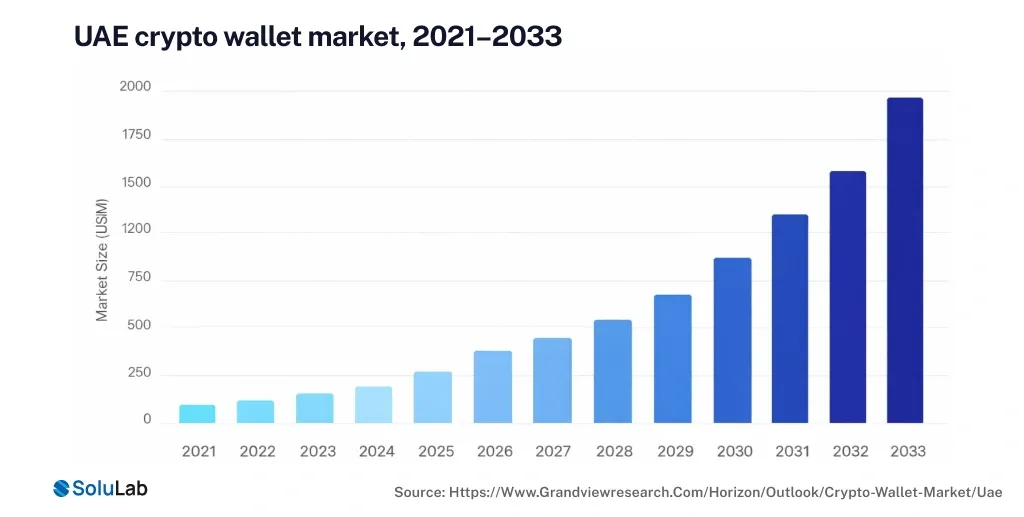
The UAE’s crypto wallet market is expected to grow to US $1,950.2 million by 2033 (CAGR ~25.8%).
Choosing the right crypto wallet development services company in the UAE is crucial for building a secure, scalable, and user-friendly wallet that meets your business goals and regulatory requirements.
Some critical factors to consider are:
1. Check Their Industry Expertise: Look for a team experienced in crypto wallet development services with deep knowledge of blockchain technology, token standards, and the UAE’s crypto compliance laws. Expertise ensures reliable performance and future scalability.
2. Verify Security Protocols: Ensure the company follows advanced security standards like multi-signature authentication, encryption, and cold storage integration to protect users’ funds and data against breaches or cyberattacks.
3. Assess Customization Capabilities: Your business might need unique features. Choose a firm that offers custom wallet design, token integration, and cross-platform support to align with your project’s specific needs.
4. Evaluate Their Portfolio and Reviews: Check client testimonials, case studies, and past projects to assess the company’s track record, reliability, and success rate in developing crypto wallets for different industries.
5. Understand Compliance and KYC Requirements: Partner with expert blockchain developers who understand Crypto wallet KYC UAE laws. Compliance ensures smooth operations, user trust, and alignment with the region’s evolving crypto regulations.
6. Compare Cost and Delivery Timelines: Ask for transparent quotes and timelines. A professional company provides clear milestones, competitive pricing, and delivers projects within deadlines without compromising quality.
7. Look for Post-Launch Support: Choose a firm offering continuous maintenance, bug fixes, and feature upgrades to ensure your wallet remains secure and updated.
Here are the best crypto wallet development companies that deliver secure, scalable, and innovative wallet solutions tailored for businesses and investors in the UAE.
A glance at the list:
| Company | Highlights | Pricing | Team Size | Founded |
| SoluLab | Crypto wallet (mobile/web/hardware), Multi-currency & NFT wallets, Blockchain consulting | $25–$49/hr | 50–249 | 2014 |
| PixelPlex | Mobile/desktop/web wallets, Multi-chain support, NFT integration | $70–$150/hr | 100+ | 2007 |
| Osiz Technologies | Multi-chain & Web3 wallets, Cross-chain swaps, Staking & biometric security | $49–$75/hr | 250–999 | 2009 |
| Quest GLT | Secure wallet design, DeFi solutions, NFT & exchange integration | $25–$49/hr | 50–249 | 2010 |
| Hashcodex | Custom wallet apps, Multi-chain & WaaS solutions, End-to-end development & support | $25–$49/hr | 10–49 | 2024 |
| Ajath Infotech | Multi-currency wallets, Blockchain & smart contracts, Biometric security | $75–$90/hr | 50–249 | 2018 |
| Digitalroar Softlabs | Crypto wallets, DeFi & smart contracts, Real-time transaction tracking | $25–$49/hr | 10–49 | 2019 |
| Codezeros | Custom wallets, DeFi & NFT solutions, Biometric & multi-currency support | $25–$49/hr | 101–250 | 2018 |
| Tokyo Techie | Crypto wallet development, Token creation & ICO/IDO support, Secure key management | N/A | 50+ | 2017 |
| SDLC Corp | Custom wallets, Biometric & cold storage, DeFi & tokenization services | $49–$75/hr | 250–999 | 2015 |
Let’s delve deeper to know each one in detail:

 $25 – $49 / hr
 200 – 249
 2014
2014
With over a decade of global experience and more than 150 successful blockchain projects, SoluLab serves businesses from startups to enterprises in the UAE and beyond. They specialise in crypto wallet development (mobile, web, hardware), multi-currency & NFT wallet solutions, and full blockchain consulting.
Their services include custom wallet architecture, token integration, MPC & cold storage support, two-factor authentication, and seamless exchange connectivity. SoluLab offers an intuitive UI, QR-code transactions, backup/recovery, and cross-chain support.

$70 – $150 / hr
100+
2007
Founded in 2007, PixelPlex brings over 17 years of experience and has completed 450+ projects for startups and enterprises. They specialize in crypto-wallet development and full-cycle blockchain servicesmobile, desktop, and web wallets, multi-chain support, NFT integration, and strong security.
Their service range covers custom wallet development, smart contracts, wallet & exchange integrations, and Web3 infrastructure tailored for business needs. With a global team and deep Web3 expertise.

$49 – $75 / hr
250 – 999
2009
Founded in 2009, Osiz Technologies brings over 16 years of hands-on experience in blockchain and crypto solutions. They have delivered hundreds of projects across mobile apps, websites, and enterprise blockchain deployments for clients globally.
Their services span crypto-wallet development (including multi-chain, MPC, Web3 wallets), smart-contract development, token creation, DeFi & Web3 platforms. With features like multi-currency support, fiat on/off ramps, cross-chain swaps, staking and biometric authentication.
$25 – $49 / hr
50 – 249
2010
Quest GLT is a leading crypto wallet development company in the UAE, founded in 2013 with over 10 years of experience. The company specializes in secure wallet design, DeFi solutions, and blockchain integration. Quest GLT’s services include multi-currency wallet development, smart contract integration, NFT support, and crypto exchange solutions.
Known for its security protocols, user-friendly interfaces, and compliance with the UAE’s crypto regulations, Quest GLT continues to help startups and enterprises build scalable and future-ready digital asset platforms.
$25 – $49 / hr
10 – 49
2024
Hashcodex is a blockchain and crypto wallet development company known for building secure, scalable, and user‑centric digital wallet solutions for businesses worldwide. It stands out for its end‑to‑end development process, combining intuitive UI/UX design, rigorous security testing, and post‑launch support.
Their services include custom crypto wallet app development, multi‑chain wallet solutions, Wallet‑as‑a‑Service (WaaS), DeFi wallet systems, and ongoing support for upgrades and security enhancements.
$75 – $90 / hr
50 – 249
2018
Ajath Infotech was founded in 2012 with over 10+ years of industry experience. Ajath Infotech specializes in crypto wallet development services, blockchain integration, and smart contract solutions. Their wallets feature multi-currency support, high-end encryption, and biometric authentication, ensuring top-notch security and performance.
With a strong focus on innovation and compliance, Ajath Infotech helps startups and enterprises build reliable, scalable, and user-friendly crypto wallet solutions tailored to the UAE’s growing digital finance ecosystem.

$25 – $49 / hr
10 – 49
2019
Digitalroar Softlabs was founded in 2017 with over 7 years of industry experience. Their services include crypto wallet development, smart contract creation, DeFi integration, and blockchain consulting.
Known for their focus on security, scalability, and user-friendly interfaces, Digitalroar Softlabs ensures compliance with the UAE’s crypto regulations while offering features like multi-currency support, two-factor authentication, and real-time transaction tracking, making them a trusted name in the region’s crypto ecosystem.
$25 – $49 / hr
101 – 250
2018
Codezeros was founded in 2018, with over 6 years of experience delivering 150+ successful blockchain projects. The company specializes in custom crypto wallet development, DeFi solutions, NFT marketplace development, and smart contract creation.
Codezeros is known for building secure, scalable, and user-friendly wallets equipped with features like multi-currency support, biometric authentication, and real-time transaction tracking. With a strong focus on innovation and compliance.

N/A
50+
2017
Tokyo Techie was founded in 2017, with over 7 years of industry experience. The company has successfully delivered 150+ blockchain projects across multiple domains, including fintech, DeFi, and Web3. Tokyo Techie offers services like crypto wallet development, token creation, ICO/IDO launch support, and blockchain consulting.
Their wallets feature multi-currency support, top-tier encryption, and secure key management, ensuring transactions and user safety. known for innovation and reliability.

$49 – $75 / hr
200 – 999
2015
SDLC Corp was founded in 2015 with over 9 years of industry experience. SDLC Corp specializes in custom crypto wallet development, smart contract creation, DeFi solutions, and tokenization services.
Their wallets come with advanced features like multi-currency support, biometric authentication, and cold storage integration. Known for its innovative approach and strict adherence to the UAE’s crypto compliance standards, SDLC Corp helps startups and enterprises build secure, scalable, and user-friendly wallets.

The UAE continues to position itself as a global leader in blockchain innovation, attracting top crypto wallet development companies that deliver security, scalability, and user-centric design.
As the crypto market grows, collaborating with an experienced developer ensures your wallet remains future-ready and fully aligned with UAE regulations. Invest wisely today to build a secure and profitable digital tomorrow.
SoluLab, a crypto wallet development company, can help you design next-gen wallet solutions tailored for your business needs.
Depending on features and complexity, costs range between $25,000 to $100,000. Custom features or compliance integrations may increase the price.
A basic wallet can take 3–4 months, while advanced wallets with multi-chain or AI features may take up to 6–8 months for professional-grade Mobile and Desktop Wallet Apps.
The UAE offers strong regulatory support, tax benefits, and advanced tech infrastructure—making it a prime hub for Crypto Exchange App Development Companies and blockchain innovators.
Yes, most top firms specialize in Multi-Chain Wallet Development, enabling seamless asset management across multiple blockchains like Ethereum, BNB, and Solana.
Absolutely! Many offer AI-powered crypto wallet solutions with predictive analytics, fraud detection, and automated transaction insights.


