Talk to an Expert

Voice AI Agent Training Guide

Voice AI Agent Training

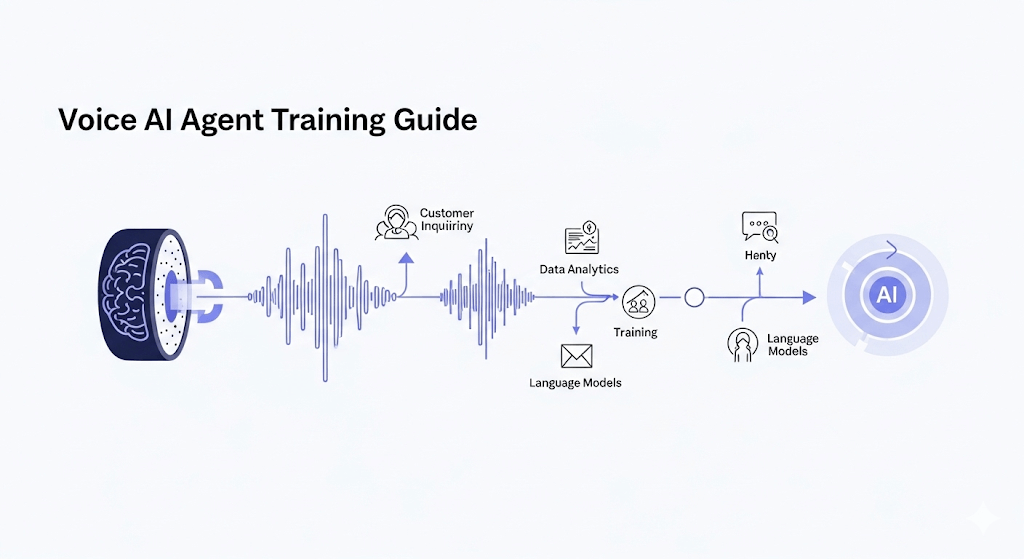
So, how do you train a voice AI agent on a voice AI platform? The idea might sound tricky, but it can be explained in a very simple way. Think of it as teaching someone a new language or showing a tourist how to get around a new city. You break it into steps, keep things clear, and make sure there’s practice along the way. This guide walks through the whole process, from planning to testing, with examples that feel easy to follow.

Knowing What a Voice AI Platform Does

A voice AI platform is software that helps create and train digital agents that can talk with people. Instead of only pressing buttons or typing messages, customers can simply speak. The agent listens, understands, and gives answers in real time. It can work in call centres, sales, or even customer service for small businesses.

The main goal is to make conversations smoother. But just like teaching someone how to read a map, the agent needs training before it can handle real customers. That’s why setup and guidance matter so much.

Starting With Clear Goals

Before you train an agent, you need to decide what you want it to do. Do you want it to answer basic questions, handle bookings, or maybe support sales calls? Having a clear goal is like knowing which city you are visiting. Without that, you could get lost.

For example, if you run a hotel, the agent might need to answer questions about check-in times or room availability. If you run a store, the agent might help with order updates or return policies. Each case will have its own plan.

Getting the Basics Ready

When you travel, you make sure you have tickets, clothes, and money. For training an AI agent, you also prepare. You need good data, examples of customer conversations, and scripts. The platform uses this information to learn.

Start with simple phrases. Customers may say “I need help with my order” or “What are your hours?” Teaching these basics first makes the agent stronger. Later, you can move on to more complex cases.

How Training Usually Works

Training a voice AI agent is like practice runs before the real trip. You speak to the agent, test responses, and correct mistakes. Over time, it becomes better.

Most platforms give you dashboards where you can enter phrases, set replies, and even test the voice output. Some also connect with CRM systems so the agent has customer details ready. That makes conversations more personal and saves time.

Choosing the Right Voice AI Platform

There are many platforms you can use. Plura AI, Retell.ai, and Vapi.ai are some common names. They all offer features like voice agents, CRM integration, and support for SMS or chat. The best choice depends on your goals and budget.

Plura AI is one of several platforms that offer a full suite of tools. It may support customer engagement and operational efficiency by bringing calling, SMS, and CRM together. Retell.ai focuses on flexible integration, while Vapi.ai has strong voice automation tools. Looking at them side by side helps you see what fits your business best.

Why Plura Stands Out

Even though there are many options, Plura often stands out because it combines calling, SMS, and CRM in one place. That means you don’t have to juggle multiple tools. It’s an AI contact center platform that also supports AI calling and SMS automation.

It’s not about being the only option. Instead, it’s about being one of the platforms that try to make operations smoother. That can be useful if your team wants everything in one setup.

Preparing Your Team

When you travel, you don’t just pack your own bag—you also remind others what to bring. The same goes here. Your staff should know how the agent works. They should understand that AI is here to help, not replace.

Hold short sessions to explain the software. Show them how it answers calls, how it pulls details from the CRM, and when they need to step in. The more comfortable they are, the smoother the rollout will be.

Running Pilot Tests

No one books a long vacation without trying short trips first. Pilot tests let you see how the AI agent performs. Start small, maybe with one department or a limited set of calls. Listen to recordings, check the reports, and look at customer feedback.

You may notice that some phrases confuse the AI. Adjust those scripts. You may also find that some customers prefer speaking to a human for certain issues. In that case, you set up quick transfers so they don’t wait long.

Watching the Results

Training doesn’t stop after the first round. You keep checking. Reports can show you call length, drop rate, or how many issues are solved without human help. If the numbers improve, you know the training is working.

If not, you make small changes. Add more training phrases, adjust responses, or improve the voice tone. Over time, the agent becomes more natural. It’s like how a tourist learns more about a city each time they visit.

Handling Common Challenges

There are always bumps along the way. Sometimes the AI misunderstands accents. Sometimes background noise makes things harder. These can be fixed with better data and tuning.

Costs can also be a challenge. Some platforms charge per user, others by minutes or calls. Planning your budget early helps avoid surprises. Training staff also takes time, but it pays off once everyone is confident.

Tips for a Smooth Rollout

Start with simple tasks. Let the agent answer common questions first. Add complex ones later. This builds confidence for both staff and customers.

Also, keep testing in different conditions. Calls in winter, calls at busy times, and calls in quieter hours can all sound different. The more varied the training, the stronger the agent becomes.

Wrapping Up the Journey

So, how do you train a voice AI agent with a voice AI platform? You start with clear goals, prepare your data, and choose a platform that fits your needs. You run small tests, train the AI, and check results often.

Platforms like Plura AI, Retell.ai, and Vapi.ai all bring useful tools. Plura stands out as one of the platforms that bundle many features together. It may support customer engagement and efficiency when connected with CRM and SMS automation.

In the end, training a voice AI agent is less about machines and more about planning, practice, and patience. Just like a trip, the journey gets easier the more you prepare.

Conversational AI – A Complete Guide for 2026

Conversational AI

Conversational AI, a groundbreaking technological paradigm, represents the synthesis of artificial intelligence and natural language processing to enable human-like interactions between computers and users. At its core, Conversational AI seeks to imbue machines with the ability to understand, interpret, and conversationally respond to human language. This transformative technology has rapidly evolved, ushering in a new era of human-computer interaction.

As we look ahead to 2026, the importance of Conversational AI is poised to reach unprecedented heights. Businesses, organizations, and industries increasingly recognize the strategic significance of deploying Conversational AI platforms. This technology enhances user experience and streamlines customer service, leading to increased efficiency and customer satisfaction. The ability of Conversational AI to handle complex queries, personalize interactions, and provide real-time assistance positions it as a cornerstone in the digital transformation landscape.

The future of Conversational AI has been marked by continuous innovation and rapid growth. From its nascent stages, where basic chatbots handled simple queries, to the present era where sophisticated conversational AI platforms employ natural language understanding and generation, the journey has been remarkable. This growth can be attributed to advancements in machine learning, increased computational power, and the vast datasets that have refined Conversational AI algorithms.

What is Conversational AI?

Conversational AI, short for Conversational Artificial Intelligence, is a cutting-edge technology designed to enhance human-machine interaction by enabling computers to understand, interpret, and respond to natural language inputs. In essence, it strives to make interactions with machines more conversational, mimicking the way humans communicate.

At its core, Conversational AI utilizes advanced natural language processing (NLP) algorithms and machine learning techniques to comprehend user inputs, such as spoken or written language, and generate contextually relevant responses. This transformative technology has gained immense traction across various industries, driven by the growing demand for seamless and efficient communication between users and machines.

A key component of Conversational AI is the conversational AI platform, which serves as the foundation for developing and deploying interactive chatbots. These platforms leverage sophisticated algorithms to understand user intent, extract meaningful information, and craft responses that mirror natural conversation. The flexibility of conversational AI platforms allows organizations to create custom chatbots tailored to their specific needs and industries.

Why Does Your Business Need Conversational AI in 2023? 

Implementing a robust conversational AI platform is not just a trend; it’s a strategic imperative. These platforms empower businesses to automate routine tasks, offer 24/7 customer support, and gather valuable insights through data analytics. The benefits of conversational AI are multifold, making it an invaluable asset for businesses in 2023.

A. Benefits of Conversational AI

  • Enhanced Customer Experience

Conversational AI chatbots offer instant and personalized responses, enhancing the overall customer experience. This leads to increased customer satisfaction and loyalty.

  • Operational Efficiency

By automating repetitive tasks, conversational AI streamlines operations, allowing businesses to allocate resources more effectively and focus on strategic initiatives.

  • 24/7 Availability

Conversational AI operates around the clock, providing continuous customer support and engagement. This ensures businesses are always accessible to their global audience.

  • Data-Driven Insights

Conversational AI platforms gather and analyze vast amounts of data from customer interactions. These insights can be utilized to understand customer behavior, preferences, and trends, enabling data-driven decision-making.

  • Cost Savings

Automating customer support and routine tasks with conversational AI reduces the need for human intervention, leading to significant cost savings in the long run.

B. Conversational AI Chatbot: Your Business Ally

A key component of conversational AI, chatbots are digital assistants that facilitate real-time conversations. These intelligent bots are capable of understanding user intent, answering queries, and even completing transactions. The versatility of conversational AI chatbots makes them invaluable across various industries, from e-commerce and healthcare to finance and beyond.

What are the Components of Conversational AI? 

Components of Conversational AI

Conversational AI, an evolving field within artificial intelligence (AI), focuses on enhancing human-computer interaction through natural and interactive conversation. Let’s explore the fundamental components of Conversational AI without delving into cutting-edge technologies.

  • Natural Language Processing (NLP)

Foundational to Conversational AI, NLP enables machines to understand, interpret, and generate human-like language. This component ensures that the system comprehends user inputs, facilitating seamless and intuitive interactions.

  • Speech Recognition

Conversational AI often incorporates speech recognition technology, allowing systems to convert spoken words into text. This feature enhances accessibility and supports communication in scenarios where typing may be impractical.

  • Intent Recognition

Understanding user intent is critical for effective communication. Conversational AI platforms utilize intent recognition algorithms to decipher the purpose behind user queries, ensuring accurate and relevant responses.

  • Dialog Management

Dialog management is crucial for maintaining context and managing the flow of a conversation. Conversational AI platforms use this component to track ongoing interactions, ensuring coherent and meaningful conversations.

  • Conversational AI Chatbot

Chatbots serve as virtual assistants within Conversational AI, engaging users in conversations. These bots leverage NLP, speech recognition, and intent recognition to understand user queries, formulate responses, and execute tasks, offering personalized and efficient user experiences.

CTA2

  • Conversational AI Platform

A central component, the Conversational AI platform serves as the infrastructure integrating various elements. These platforms facilitate the development, deployment, and management of conversational applications, simplifying the implementation and scaling of Conversational AI solutions.

What are the Challenges of conversational AI technologies? 

Conversational AI is reshaping the way we interact with machines, presenting a host of opportunities and challenges. This article explores the hurdles associated with Conversational AI, shedding light on its essence, benefits, and the pivotal role of conversational AI platforms.

It involves technologies that facilitate natural language communication between humans and machines. It encompasses applications such as conversational AI platforms and chatbots, aiming to enable machines to comprehend and respond to human language in a way that mirrors authentic conversation.

A. Challenges in Conversational AI

  • Natural Language Understanding (NLU)

The ongoing challenge lies in developing a robust NLU that allows machines to grasp context, nuances, and user intent accurately.

Context RetentionSustaining context across multiple turns in a conversation proves challenging, requiring seamless recall of previous interactions for coherent responses.

  • Handling Ambiguity

The inherent ambiguity of human language poses a hurdle, demanding the ability to decipher ambiguous queries and provide precise responses.

  • Integration Complexity

Implementing Conversational AI within existing systems is complex, requiring seamless integration with various databases, applications, and platforms.

  • Personalization Challenges

Striking the right balance between personalization and privacy is a challenge, as Conversational AI aims to tailor responses to individual user preferences.

B. The Role of Conversational AI Platforms

Conversational AI platforms serve as the backbone, providing a framework for designing, deploying, and managing conversational agents. These platforms integrate natural language processing, machine learning, and analytics to refine performance continually.

The journey of Conversational AI, while filled with potential, is not without its challenges. Overcoming these obstacles will drive the technology into new frontiers, enriching digital experiences and redefining human-machine interaction. As Conversational AI evolves, it will undoubtedly play a pivotal role in shaping the future of communication with machines.

How to Create Conversational AI?

How to Create Conversational AI

In the ever-evolving world of artificial intelligence, Conversational AI stands out as a game-changer, reshaping how businesses interact with users. This guide will take you through the process of creating Conversational AI, explaining what it is, the importance of conversational AI platforms, and the numerous benefits tied to using conversational AI chatbots.

To create Conversational AI, follow these steps:

  • Define Objectives

Clearly outline your goals for the Conversational AI system. Whether it’s for customer support, lead generation, or providing information, having a clear purpose will guide the development process.

  • Choose a Platform

Pick a conversational AI platform that suits your project needs. Popular platforms like Dialogflow, Microsoft Bot Framework, and Rasa offer a variety of tools for building, training, and deploying enterprise chatbots.

  • Data Collection and Preparation

Gather relevant data to train the conversational model. This data should cover a range of user inputs and scenarios to ensure the AI system is versatile and robust.

  • Model Development

Develop the conversational model using machine learning techniques. Train the model on your dataset, fine-tuning it to understand user intents and generate appropriate responses.

  • Integration and Deployment

Integrate the Conversational AI system into your chosen communication channels, such as websites, mobile apps, or messaging platforms. Deploy the model and keep an eye on its performance.

How does Conversational UX Design Enhance User Engagement and Personalization?

Conversational UX Design has emerged as a critical aspect of user interaction, revolutionizing the way individuals engage with technology. In the realm of Conversational AI, user experience (UX) holds paramount importance.

A. Importance of User Experience (UX)

  • Creating User-Friendly Conversational Interfaces

Conversational AI, powered by natural language processing, strives to emulate human-like interactions. The significance lies in crafting interfaces that users find intuitive and comfortable to navigate. User-friendly interfaces enhance engagement and facilitate seamless communication.

  • Design Principles for Effective Communication

Designing effective Conversational UX involves adhering to principles that govern clear, concise, and context-aware communication. Ensuring that the interface understands user intent, provides relevant responses, and maintains a coherent conversation contributes to a positive UX.

B. Personalization in Conversational UX

  • Tailoring Experiences Based on User Preferences

Personalization is a key driver of Conversational UX. By understanding user preferences, Conversational AI platforms can tailor responses and suggestions, creating a more individualized experience. This not only enhances user satisfaction but also strengthens user-brand relationships.

  • Utilizing User Data for Personalized Interactions

Leveraging user data responsibly enables Conversational AI to offer personalized interactions. By analyzing past interactions and learning from user behavior, these systems can adapt and improve, delivering more accurate and relevant responses over time.

C. Multimodal Interfaces

  • Integrating Text, Voice, and Visuals

Conversational UX design goes beyond text-based interactions, incorporating voice and visual elements for a richer experience. This integration allows users to communicate through their preferred medium, making the interaction more versatile and inclusive.

  • Providing a Seamless User Experience Across Channels

A hallmark of advanced Conversational UX is the ability to seamlessly transition between channels. Whether users prefer text, voice, or visual interfaces, the design should ensure a cohesive and consistent experience, fostering user confidence and satisfaction.

How can Developers Optimize Conversational AI Development Through Effective Conversation Flow Design and Continuous Testing?

How can Developers Optimize Conversational AI Development

In the rapidly evolving landscape of artificial intelligence, Conversational AI has emerged as a transformative technology, offering interactive and human-like interactions between machines and users. To harness the full potential of Conversational AI, developers must adhere to best practices throughout the development process. In this article, we explore two crucial aspects: designing effective conversation flows and testing for continuous improvement.

  • Designing Effective Conversation Flows

Creating a seamless and engaging user experience begins with thoughtful conversation flow design. Understanding the context and user intent is paramount. 

  • Contextual Understanding

Conversational AI platforms should be equipped to comprehend the context of a conversation. Utilize natural language processing (NLP) algorithms to interpret user input accurately. This ensures that the AI responds appropriately, maintaining a coherent and contextually relevant dialogue.

  • Personalization

Tailor conversations to individual users by leveraging user data. Incorporate user preferences, history, and behavior to provide personalized responses. This enhances the user experience and fosters a sense of connection with the AI.

  • Multi-Modal Capabilities

Extend beyond text-based interactions. Incorporate voice, images, and other modalities to create a more dynamic and versatile conversational experience. Ensure that the AI platform can seamlessly transition between different modes of communication.

  • Testing and Iterating for Continuous Improvement

The journey of Conversational AI development is an ongoing process that requires meticulous testing and continuous refinement. This phase is critical to ensuring the effectiveness and reliability of the conversational system.

  • Comprehensive Testing

Rigorous testing is essential to identify and rectify potential issues. Conduct thorough tests on various devices, platforms, and browsers to ensure compatibility. Evaluate the AI’s ability to handle different input variations and scenarios.

CTA2

  • User Feedback Integration

Actively seek user feedback to understand their experience. Integrate feedback loops into the development process to identify areas for improvement. Address common user concerns and refine the conversational flow accordingly.

  • Machine Learning Model Optimization

Continuously update and optimize machine learning models powering the Conversational AI. Regularly retrain models with new data to enhance accuracy and stay abreast of evolving language patterns.

Conclusion

In conclusion, as we embark on the journey into 2026, Conversational AI stands at the forefront of technological innovation, reshaping the way we interact with digital systems. This comprehensive guide has delved into the intricacies of Conversational AI, providing valuable insights into its applications, benefits, and potential for transformative change.

One prominent player in this arena is SoluLab, a trailblazer in AI development services. Their expertise in crafting AI-powered solutions, including cutting-edge chatbots, positions them as a key ally for businesses aspiring to stay ahead in the rapidly evolving digital landscape.

By choosing to hire AI developers linked with SoluLab, organizations can unlock a world of possibilities. The synergy between skilled developers and SoluLab’s innovative solutions ensures the seamless integration of Conversational AI, fostering enhanced user experiences and driving operational efficiency.

In the realm of Conversational AI for 2026, the collaboration between forward-thinking businesses, talented AI developers, and pioneering companies like SoluLab holds the key to unlocking new dimensions of success. As we navigate the future, the evolution of Conversational AI promises to be an exciting journey, with SoluLab leading the way in shaping the digital interactions of tomorrow.

FAQs

1. What is Conversational AI, and how does it differ from traditional AI?

Conversational AI refers to the use of artificial intelligence (AI) in creating natural and interactive conversations between computers and humans. Unlike traditional AI, Conversational AI emphasizes communication through chatbots, virtual assistants, and other language-driven interfaces.

2. How can businesses benefit from implementing Conversational AI in 2026?

Businesses can leverage Conversational AI to enhance customer engagement, streamline customer support, and automate routine tasks. The technology helps in providing personalized interactions, improving user satisfaction, and increasing operational efficiency.

3. Why should companies consider hiring AI developers for Conversational AI projects?

Hiring AI developers is crucial for creating robust and customized Conversational AI solutions. These professionals possess the expertise to design, implement, and optimize AI chatbots that align with specific business needs and industry requirements.

4. What are the key features of AI-powered chatbots?

AI-powered chatbots are equipped with natural language processing (NLP) capabilities, enabling them to understand and respond to user queries in a human-like manner. Additionally, these chatbots can learn and adapt through machine learning algorithms, improving their performance over time.

5. How can businesses ensure the security of Conversational AI systems?

Implementing secure protocols and encryption mechanisms is vital for safeguarding Conversational AI systems. Regular security audits and updates, along with data anonymization, contribute to protecting sensitive information exchanged during conversations.

6. Is it possible to integrate Conversational AI with existing business applications?

Yes, Conversational AI can be seamlessly integrated with existing business applications, CRM systems, and other software solutions. This integration enhances workflow efficiency and ensures a unified user experience across different platforms.

Future of Conversational AI: Trends and Innovations in Chatbot Development

The Future of Conversational AI: Trends and Innovations in Chatbot Development

In an age where digital interactions have become integral to our lives, the rise of conversational AI, powered by chatbots, has been nothing short of transformative. These intelligent virtual agents have transcended their initial role as simple chat interfaces and have evolved into sophisticated conversational partners. As we look ahead, the future of conversational AI promises even greater marvels, with an array of trends and innovations poised to redefine the way we interact with technology.

To comprehend the breathtaking future of conversational AI, it’s essential to grasp its present state. Chatbots, with their ability to engage users in dynamic, human-like conversations, are already omnipresent across industries. They assist in customer support, streamline e-commerce experiences, offer healthcare advice, and even provide financial guidance. But the real excitement lies in what lies ahead.

Emerging Trends in Chatbot Development

Emerging Trends in Chatbot Development

  • Advancements in Natural Language Processing (NLP)

The heartbeat of conversational AI is Natural Language Processing, and it’s beating stronger than ever. With the advent of deep learning and the surge in NLP models, chatbots are getting better at understanding the nuances of human language. This means more accurate responses, improved sentiment analysis, and the capacity to converse fluently in multiple languages.

For chatbot developers, the advancement in NLP models like GPT-3 has been a game-changer. These models can comprehend context, generate coherent responses, and even exhibit a semblance of common sense. As a result, users are now interacting with chatbots that feel more human-like, making the conversational experience smoother and more intuitive.

A key development in NLP is multilingual chatbots. These bots can seamlessly switch between languages, breaking down language barriers and facilitating global communication. Whether you’re conversing in English, Spanish, or Mandarin, chatbots can comprehend and respond in your preferred language.

In addition, the impact of chatbots is becoming proficient at sentiment analysis. They can gauge the emotional tone of a conversation, allowing them to respond more empathetically. This capability has significant implications for industries such as customer service, where understanding and responding to customer emotions is crucial.

The ongoing advancements in NLP empower chatbots to engage users on a deeper level, opening doors to more sophisticated applications across various sectors.

  • Personalization and User Experience

Imagine a chatbot that knows you better than you know yourself. The future of chatbots is all about personalization. These virtual assistants will be context-aware, able to remember past interactions, and even predict your needs.

What does this mean for you? A more user-centric experience. If you’re a regular customer of an e-commerce platform, your chatbot might remember your preferences, previous purchases, and even the items you were browsing but didn’t buy. This level of personalization allows chatbots to offer tailored recommendations and make your shopping experience smoother.

In healthcare, context-aware chatbots can take into account your medical history, current symptoms, and even your emotional state to provide more relevant advice. In finance, they can help manage your investments based on your risk tolerance and financial goals.

Read Our Blog: Top 10 AI Development Companies

User-centric design principles are at the forefront of chatbot development. These bots will adapt to your unique needs and preferences, making the digital experience feel more intuitive and human-like.

As chatbots become adept at understanding context and providing personalized assistance, they’re set to become an indispensable part of our daily lives.

  • Integration with Voice Assistants

Voice-controlled smart speakers and devices are on the rise. It’s a natural progression for chatbots to extend into the realm of voice assistants. This integration is blurring the lines between chatbots and voice-activated virtual assistants like Siri, Alexa, and Google Assistant.

Picture this: You’re in the kitchen, your hands covered in flour, and you need a recipe. You don’t have to touch your phone or computer. You simply say, “Hey [Your Favorite Voice Assistant], find me a bread recipe.” In seconds, you have the recipe spoken to you step by step. This is the future of voice-controlled chatbots.

Voice-controlled chatbots can also be part of your smart home. You can ask them to adjust your thermostat, play music, or even lock your doors—all through natural language commands.

The implications of this integration go beyond convenience. It’s shaping the future of voice commerce, enabling you to make purchases, book services, and complete tasks with a simple voice command. It’s a transformative development that promises a future where technology is seamlessly integrated into our lives.

  • Multimodal and Rich Media Integration

In the world of future chatbots, it’s not just about text-based conversations. It’s also about rich media experiences. Chatbots are expanding their repertoire to include images, videos, and interactive content.

Visual chatbots are becoming increasingly common. They can process images you send, analyze them, and provide information or assistance based on those images. For instance, you can take a picture of a plant in your garden, and a chatbot can identify the plant species and offer care instructions.

But it doesn’t stop at static images. Chatbots are venturing into videos and animations, providing engaging content that goes beyond words. Whether it’s educational content, product demonstrations, or entertainment, chatbots are becoming versatile content deliverers.

For marketers, this opens up new horizons. Interactive content, guided tours, and immersive experiences can be delivered through chatbots. Imagine exploring a virtual art gallery guided by a chatbot, or trying on virtual clothes with a chatbot helping you choose the perfect outfit.

The implications are profound in fields like e-learning, where chatbots can deliver dynamic and interactive lessons. From tutorials to simulations, chatbots are turning learning into a more engaging and personalized experience.

As chatbots evolve to incorporate rich media, their capacity to engage users will expand, making them essential in various domains like education, marketing, and customer support.

CTA1

  • AI Ethics and Responsible AI

As chatbots grow more sophisticated, ethical considerations become paramount. We must ensure that the power of AI is harnessed responsibly, protecting user privacy, mitigating bias, and upholding transparency.

One of the core ethical concerns in chatbot development is data privacy. Chatbots often handle sensitive information, from personal health data in healthcare chatbots to financial information in banking chatbots. Ensuring compliance with data protection regulations is essential. Users must have confidence that their data is secure and used responsibly.

Read Blog: How to Build an AI-Powered Chatbot For Your Business?

Bias mitigation is another significant challenge. Chatbots learn from vast datasets, and if those datasets contain biases, the chatbot may inadvertently perpetuate them. This can result in discriminatory or unfair behavior. Developers must actively work to eliminate biases and ensure that chatbots treat all users fairly.

Transparency and explainability are ethical imperatives. Users should understand that they’re interacting with a chatbot and not a human. Furthermore, chatbots should be able to explain their reasoning and decision-making processes when necessary.

As we move into the future, the responsible development of chatbots is central to their success. Responsible AI doesn’t just protect users; it also ensures that chatbots continue to gain trust and provide valuable services.

Industry-Specific Applications

Industry-Specific Applications

The potential of chatbots isn’t confined to any single domain. Their adaptability and versatility make them valuable across various industries, from healthcare to finance and beyond. Let’s explore how chatbots are making a significant impact in these sectors.

  • Healthcare

Healthcare chatbots are becoming a vital tool in providing medical information, remote consultations, and even mental health support. They offer a unique blend of accessibility, efficiency, and empathy. Here’s how they are revolutionizing healthcare:

1. Virtual Health Assistants: Chatbots in Healthcare are playing the role of virtual health assistants, helping users monitor their health, set medication reminders, and even track symptoms.

2. Telemedicine Support: Telemedicine is on the rise, and healthcare chatbots are an integral part of this trend. They can help users schedule appointments, connect with doctors, and offer pre-consultation guidance.

3. Mental Health Support: Mental health chatbots are offering users a listening ear. They provide support, coping strategies, and even early intervention for mental health issues.

  •  E-commerce

E-commerce chatbots are streamlining the online shopping experience and driving sales. They are the virtual shop assistants of the future. Here’s how they are reshaping the world of online retail:

1. Enhanced Customer Service: E-commerce chatbots offer real-time customer support, answering product-related queries, assisting with order tracking, and resolving issues swiftly.

2. Personalized Shopping Experiences: These chatbots analyze user preferences and past shopping behaviors to recommend products that align with individual tastes, boosting sales and customer satisfaction.

Read Our Blog: AI Use Cases and Applications in Key Industries

  • Customer Support

Customer support chatbots are reducing response times and enhancing customer experiences. They provide efficient, round-the-clock assistance. Their applications include:

1. Automated Issue Resolution: These chatbots can handle routine customer inquiries, such as password resets, order tracking, and billing inquiries, leaving human agents to tackle more complex issues.

2. Improved Self-Service Options: By guiding users through troubleshooting steps or providing step-by-step instructions, customer support chatbots empower users to resolve issues independently.

  • Finance

Chatbots are becoming financial advisors and fraud detectors in the finance industry. They offer a range of benefits, from investment guidance to security. Here’s how they’re transforming finance:

1. Chatbots for Financial Advice: Personal finance chatbots assist users in budgeting, saving, and making informed investment decisions based on their financial goals and risk tolerance.

2. Fraud Detection and Prevention: In the battle against financial fraud, chatbots can actively monitor accounts for suspicious activity and alert users to potential threats.

The versatility of chatbots is what makes them so powerful. They are customizable to fit the specific needs and requirements of various industries. Whether it’s healthcare, e-commerce, customer support, or finance, chatbots are becoming essential tools for enhancing services, reducing costs, and improving user experiences.

Read Blog: AI in Finance: The Future of Smart Investments and Risk Management

Innovations in Chatbot Platforms

The future of conversational AI is not solely reliant on chatbots themselves but also on the platforms that enable their development and deployment. In this section, we’ll explore some significant innovations in chatbot platforms that are propelling the technology forward.

  • Low-Code/No-Code Chatbot Development

Traditionally, chatbot development required a deep understanding of programming and AI. However, the emergence of low-code and no-code development platforms has democratized chatbot creation, making it accessible to non-technical users.

1. Accessibility for Non-Technical Users: Low-code and no-code platforms allow individuals with minimal programming knowledge to design and develop chatbots. This means that subject matter experts and business professionals can directly contribute to chatbot creation.

2. Rapid Prototyping: These platforms enable the rapid prototyping of chatbots. This results in quicker development cycles, allowing businesses to experiment and innovate at a faster pace.

  • Open-Source Solutions

Open-source chatbot platforms are fostering community-driven development and collaborative innovation. These platforms, often backed by communities of developers, offer several advantages.

1. Benefits and Limitations: Open-source solutions provide transparency, customization, and a wide range of pre-built components. However, they may require a deeper technical understanding and ongoing maintenance.

2. Community-Driven Development: The collaborative nature of open-source development means that numerous contributors work on improving and extending these platforms. This leads to a wealth of options and innovations.

Read Our Blog: 10 Benefits of Incorporating Generative AI in the Manufacturing Process

Open-source chatbot platforms are becoming pivotal in the landscape of Conversational AI, especially in contexts where unique requirements demand customization and community-driven solutions.

These innovations in chatbot platforms are pivotal in shaping the future of conversational AI. They make the development process more inclusive and empower businesses and individuals to create and deploy chatbots that address their specific needs and preferences.

As chatbot platforms continue to evolve and become more accessible, we can expect an even wider range of applications, from small business chatbots to enterprise-level virtual assistants, all tailored to meet unique requirements.

The innovations in low-code/no-code development and open-source solutions are setting the stage for a more dynamic and diverse chatbot ecosystem. These platforms are the foundation upon which future chatbots will be built, expanding their reach and relevance across various industries and applications.

Challenges and Future Directions

Challenges and Future Directions

As we explore the fascinating world of conversational AI and chatbot development, it’s imperative to recognize the challenges and chart the course for future directions. The road ahead is filled with opportunities, but it’s also beset with hurdles that demand our attention.

  • Data Privacy and Security

The rise of chatbots means that more of our personal data is being processed and stored. This intensifies the need for robust data privacy and security measures.

1. Compliance with Regulations: Developers must ensure that chatbots adhere to data protection regulations like GDPR and HIPAA, depending on the industry they serve.

2. Protecting User Data: Users must have confidence that their data is being handled responsibly. This involves secure data storage, encryption, and secure data transmission.

Read Blog: Top 7 Generative AI Integration Services For Your Business

  • Interoperability and Standards

The chatbot ecosystem is expanding, and as it does, interoperability and standards become crucial.

1. Developing Cross-Platform Standards: Chatbots should seamlessly work across various platforms, devices, and operating systems. Standards and interoperability agreements must be established to ensure chatbots can interact cohesively in this diverse landscape.

2. Ensuring Chatbot Compatibility: A user’s experience should not be fragmented when switching between different chatbots. Standardized communication protocols can make sure chatbots understand and build upon each other’s interactions.

  • The Road to AGI (Artificial General Intelligence)

The grand vision for chatbots is the development of Artificial General Intelligence, or AGI, which would endow them with human-like cognitive abilities.

1. The Long-Term Vision: AGI chatbots aim to not just understand context but also reason, learn from experience, and exhibit human-like common sense. Achieving AGI is a significant undertaking with profound implications.

2. Ethical Considerations: The pursuit of AI-powered chatbots involves addressing ethical challenges, such as ensuring the responsible use of advanced AI and mitigating any negative impacts.

As we look to the future of conversational AI and chatbot development, we must remain mindful of these challenges and tread carefully as we embark on the path to AGI. Responsible development and adherence to ethical guidelines will be paramount.

CTA2

Conclusion

The future of conversational AI and chatbot development is a journey marked by innovation, inclusion, and responsibility. We’re on the brink of an era where chatbots will be more human-like, more versatile, and more intertwined with our daily lives.

These AI-driven virtual companions will transform industries, streamline processes, and improve user experiences. They’ll enhance healthcare, revolutionize e-commerce, refine customer support, and offer invaluable financial guidance. But we must not forget the ethical considerations that come with these advancements. Privacy and security, interoperability, and responsible AI development are all non-negotiable aspects of our journey into the future of chatbots.

Looking to lead the way in the Conversational AI revolution? SoluLab is your premier AI development service and chatbot development company. With a proven track record of innovation and expertise, we specialize in crafting cutting-edge chatbot solutions that cater to your unique needs. Partner with SoluLab to harness the power of AI-driven virtual companions and stay ahead in the dynamic world of technology.

FAQs

1. What is conversational AI, and how does it differ from traditional chatbots?

Conversational AI refers to artificial intelligence systems designed for human-like interactions. While traditional chatbots are rule-based and follow predetermined scripts, conversational AI leverages advanced natural language processing (NLP) and machine learning to engage in more dynamic, context-aware conversations, making interactions feel more human-like and intuitive.

2. What industries can benefit from chatbot integration, and in what ways?

Chatbots have versatile applications across various industries. In healthcare, they assist with appointment scheduling and provide telemedicine support. E-commerce benefits from chatbots by offering personalized shopping experiences and efficient customer support. In customer service, chatbots automate issue resolution, and in finance, they offer financial advice and help detect fraud.

3. What are low-code/no-code platforms, and how do they affect chatbot development?

Low-code/no-code platforms are tools that simplify the development of applications, including chatbots, by reducing the need for extensive programming knowledge. They empower non-technical users to create chatbots, resulting in quicker development cycles and greater accessibility for a wide range of users, including business professionals and subject matter experts.

4. What ethical considerations should be addressed in chatbot development?

Ethical considerations in chatbot development include data privacy and security to protect user information, the development of standards and interoperability to ensure seamless chatbot interactions, and the responsible pursuit of Artificial General Intelligence (AGI) to mitigate potential negative impacts. Transparency, fairness, and bias mitigation are also crucial in ethical chatbot development.

5. What does the future hold for chatbots, and how will they continue to evolve?

The future of chatbots is characterized by enhanced user personalization, integration with voice assistants, the adoption of rich media, and a focus on responsible AI development. Chatbots are expected to expand their reach in various industries, offering more dynamic and diverse applications. Further innovations in natural language processing, along with ethical considerations, will shape their evolution.
