Talk to an Expert

The Impact of Chatbots on Lead Generation and Sales Conversion

The Impact of Chatbots on Lead Generation and Sales Conversion

In today’s digital age, businesses are constantly seeking innovative ways to streamline their operations and improve customer engagement. The advent of chatbots has brought a new dimension to the world of lead generation and sales conversion. These virtual assistants, powered by artificial intelligence (AI), are becoming increasingly popular tools for businesses looking to enhance their customer service, capture leads, and boost sales. In this article, we’ll explore the role of chatbots in lead generation and sales conversion, focusing on strategies, their impact, and the crucial process of lead qualification.

Chatbots for Lead Generation: A New Frontier

Chatbots have evolved from being basic conversation tools to sophisticated agents capable of interacting with customers in meaningful and personalized ways. They have found their place in various industries, from e-commerce and customer service to healthcare and finance, and they are now an essential part of lead generation strategies.

Understanding Chatbots 

Chatbots are nothing but AI-driven software programs designed to simulate human conversational behavior. They can communicate with users in a natural language, providing information, answering questions, and guiding them through specific tasks. In the context of lead generation, chatbots serve as proactive and 24/7 salespersons, ready to engage with potential customers whenever they visit a website or interact on social media platforms.

The integration of chatbots into lead generation strategies brings several advantages:

1. Real-time Engagement: Chatbots can initiate conversations with website visitors, capturing leads in real-time and offering immediate assistance.

2. Personalization: Through AI algorithms, AI-powered chatbots can tailor their responses and recommendations based on the user’s behavior and preferences, creating a more personalized user experience.

3. Scalability: Chatbots can handle multiple conversations simultaneously, ensuring that no lead is left unattended even during high-traffic periods.

4. Consistency: Chatbots provide a consistent level of service, ensuring that all visitors receive the same quality of information and assistance.

5. Data Collection: Chatbots can collect valuable data from users during conversations, helping businesses better understand their audience and fine-tune their lead generation strategies.

6. Cost-Effective: Using chatbots is often more cost-effective than hiring and training a large team of human agents for lead generation.

Implementing Chatbots for Lead Generation

The successful implementation of chatbots for lead generation depends on several key factors:

  • Clear Objectives

Before deploying chatbots, businesses must define their lead generation goals. Are they looking to increase the number of leads, improve lead quality, or both? Having clear objectives will guide the design and functionality of the chatbot.

  • Target Audience

Understanding the target audience is crucial. Businesses need to know who their potential customers are, what their pain points are, and what kind of content or assistance would be most valuable to them.

Read Blog Post: How to Build an AI-Powered Chatbot For Your Business?

  • Seamless Integration

Chatbots should seamlessly integrate with existing lead generation processes and technologies, such as CRM systems. This ensures a smooth transition of captured leads into the sales funnel.

  • Conversational Design

The chatbot’s conversational design plays a critical role in its effectiveness. It should be user-friendly, engaging, and capable of guiding users through the lead generation process.

  • Data Security

With data privacy concerns on the rise, it’s essential to implement robust security measures to protect the information collected by chatbots.
Lead Generation Strategies with Chatbots

Lead Generation Strategies with Chatbots

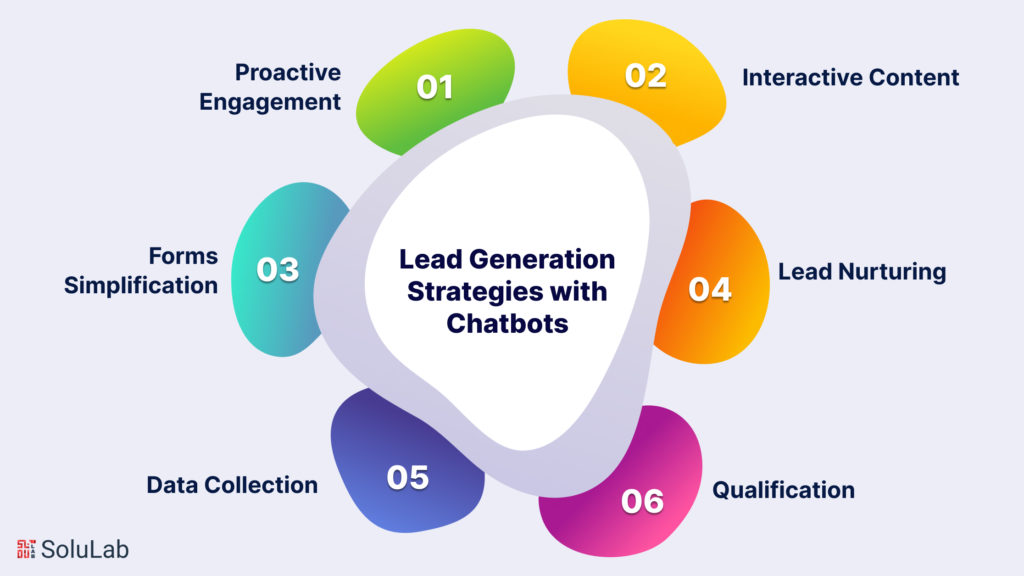
Incorporating chatbots into B2B lead generation strategies requires careful planning and execution.. Here are some effective lead generation strategies that leverage chatbots:

  • Proactive Engagement

Chatbots can initiate conversations with website visitors by asking if they need assistance or offering relevant information. This proactive approach can convert passive visitors into leads.

  •  Interactive Content

Using chatbots to guide users through interactive content, such as quizzes or assessments, can be an excellent way to collect lead information while providing value to the user.

  • Forms Simplification

Chatbots can simplify the lead capture process by filling out forms on behalf of the user, making it more convenient and increasing the likelihood of lead submission.

Read Our Blog: Top 10 AI Development Companies

  • Lead Nurturing

Chatbots are not limited to initial lead capture; they can also engage in lead nurturing by sending follow-up messages, relevant content, and personalized recommendations to keep potential leads engaged.

  • Data Collection

Through natural conversations, chatbots can collect data about users’ preferences, pain points, and purchase intentions, helping businesses refine their lead generation strategies.

  • Qualification

Chatbots can assess lead quality by asking qualifying questions. This ensures that only the most promising leads are forwarded to the sales team, saving time and resources.
CTA1

Chatbots and Sales Conversion: Bridging the Gap

While chatbots play a vital role in lead generation, their impact extends beyond the initial acquisition of leads. They can significantly contribute to the sales conversion process by assisting, nurturing, and qualifying leads.

  • Seamless Handover to Sales

Once a lead is captured by a chatbot, it can be seamlessly handed over to the sales team. Chatbots can provide sales representatives with a detailed lead profile, including the user’s preferences and interactions, enabling a more personalized and effective approach.

  • Lead Nurturing

Chatbots can continue to engage with leads, offering valuable content and assistance as they move through the sales funnel. This ongoing interaction keeps leads warm and increases the chances of conversion.

  • Sales Support

In the e-commerce industry, chatbots often assist users during the checkout process, answering product-related questions and addressing concerns. This real-time support can be the difference between an abandoned shopping cart and a successful sale.

  • Data-Driven Sales Insights

Chatbots can provide valuable data and insights to the sales team, such as the common pain points and objections raised by leads. This information can inform the sales strategy and help address potential concerns more effectively.

Lead Qualification with Chatbots: Separating the Wheat from the Chaff

One of the most critical aspects of lead generation is lead qualification. Not all leads are created equal, and businesses need to prioritize their efforts on leads with the highest potential for conversion. Chatbots are instrumental in this process.

  • Automated Lead Scoring

Chatbots can assign scores to leads based on their interactions, the information provided, and their behavior. This automated lead scoring system helps businesses identify which leads are most likely to convert.

  • Qualifying Questions

Chatbots can ask a series of qualifying questions to determine a lead’s readiness to make a purchase. These questions can be customized to suit the specific needs of the business and industry.

Read Our Blog Post: Top 10 AI Consulting Companies

  • Behavioral Analysis

By analyzing the user’s behavior and engagement patterns, chatbots can assess the level of interest and commitment a lead has toward the product or service. This information guides the sales team in their approach.

  • Customer Segmentation

Chatbots can segment leads into different categories, such as hot leads, warm leads, and cold leads. Each category can receive tailored communication and marketing efforts.

  • Lead Routing

Chatbots can automatically route hot leads to the most experienced sales representatives, ensuring that the most promising opportunities are handled by the best-equipped team members.
Measuring the Impact of Chatbots on Lead Generation and Sales Conversion

Impact of Chatbots on Lead Generation and Sales Conversion

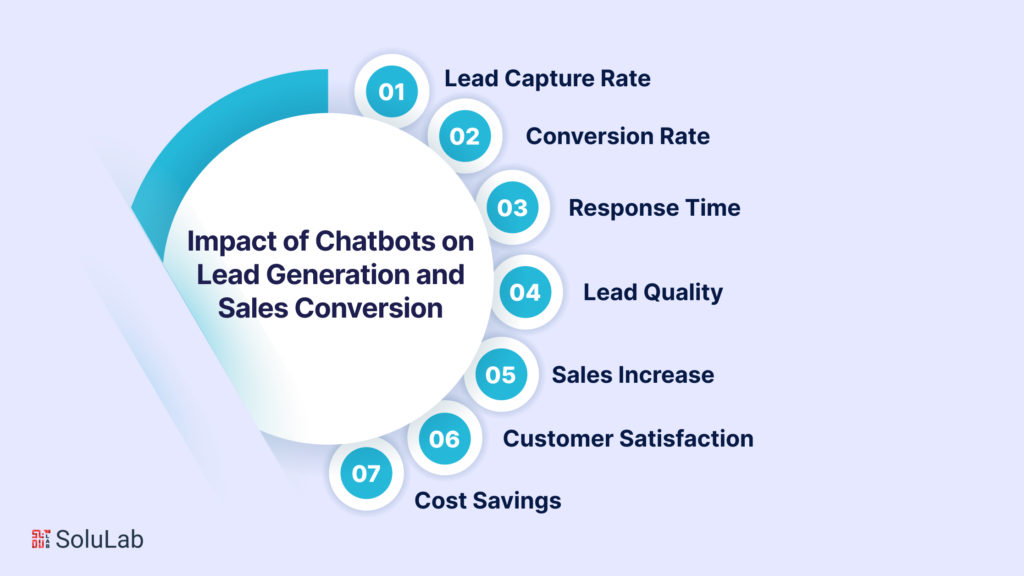
The impact of chatbots on lead generation and sales conversion can be measured through various metrics and KPIs. Here are some key performance indicators that businesses can track to evaluate the effectiveness of their chatbot strategies:

  • Lead Capture Rate

This metric measures the percentage of website visitors who engage with the chatbot and provide their contact information, thus becoming leads.

  • Conversion Rate

The conversion rate indicates the percentage of leads generated by the chatbot that eventually make a purchase or complete a desired action.

Check Out Our Blog: Top 10 Enterprise AI Development Companies

  • Response Time

A faster response time from the chatbot typically leads to better engagement and a higher likelihood of capturing leads.

  • Lead Quality

Evaluating the quality of leads generated by the chatbot is crucial. It’s not just about quantity; it’s about capturing leads with a genuine interest in the product or service.

  • Sales Increase

The ultimate goal of chatbots is to boost sales. Monitoring the increase in sales attributed to chatbot interactions is a clear indicator of their impact.

  • Customer Satisfaction

Feedback and satisfaction ratings from users who interacted with the chatbot can provide insights into its performance and effectiveness.

  • Cost Savings

Comparing the cost of implementing and maintaining a chatbot to the revenue generated can determine the ROI of chatbot-driven lead generation and sales conversion efforts.

Real-World Success Stories

To illustrate the real-world impact of chatbots on lead generation and sales conversion, let’s take a look at a few success stories from different industries.

  • E-commerce Giant: Amazon

Amazon uses chatbots on its website to assist customers in finding products, answering questions, and guiding them through the purchase process. These chatbots have significantly improved customer engagement and streamlined the buying process, resulting in higher conversion rates and increased sales.

Read Also: Top 10 AI Development Companies

  • HealthTech Startup: HealthBot

HealthBot, a health tech startup, developed a chatbot that provides users with personalized health and wellness recommendations. Users can input their health goals and receive tailored advice and product recommendations. This not only captures leads but also increases sales of related health products.

  • Software Company: Salesforce

Salesforce, a leading CRM software company, employs chatbots to qualify leads based on their website interactions. By asking a series of questions and analyzing user behavior, the chatbot identifies high-potential leads and routes them to the appropriate sales team, resulting in improved lead quality and higher conversion rates.
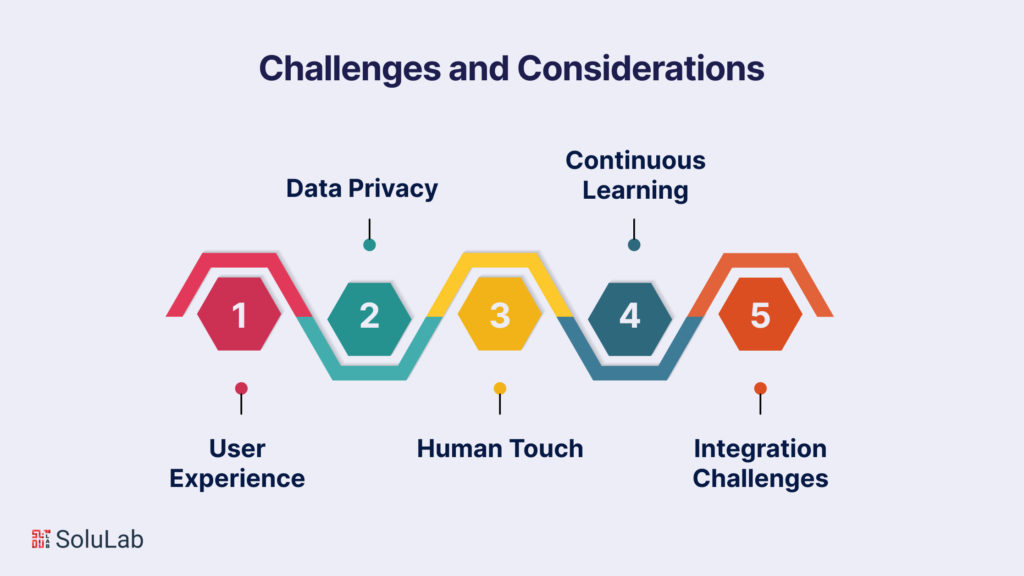
Challenges and Considerations

Challenges and Considerations

While chatbots offer numerous benefits for lead generation and sales conversion, businesses must also address certain challenges and considerations:

  • User Experience

A poorly designed chatbot can frustrate users and deter them from engaging further. It’s crucial to create a seamless and enjoyable user experience.

  •  Data Privacy

Collecting user data comes with the responsibility of safeguarding it. Businesses must ensure that their chatbots adhere to data protection regulations and maintain user privacy.

Read Also: Top Artificial Intelligence Solution Companies 

  • Human Touch

Chatbots can never fully replace the human touch in sales and customer service. They should complement, not replace, human interaction.

  •  Continuous Learning

Chatbots must continuously learn and adapt to user behavior and preferences. This requires ongoing maintenance and updates.

  • Integration Challenges

Integrating chatbots with existing systems and processes can be complex. Ensuring a smooth flow of data and communication is essential.
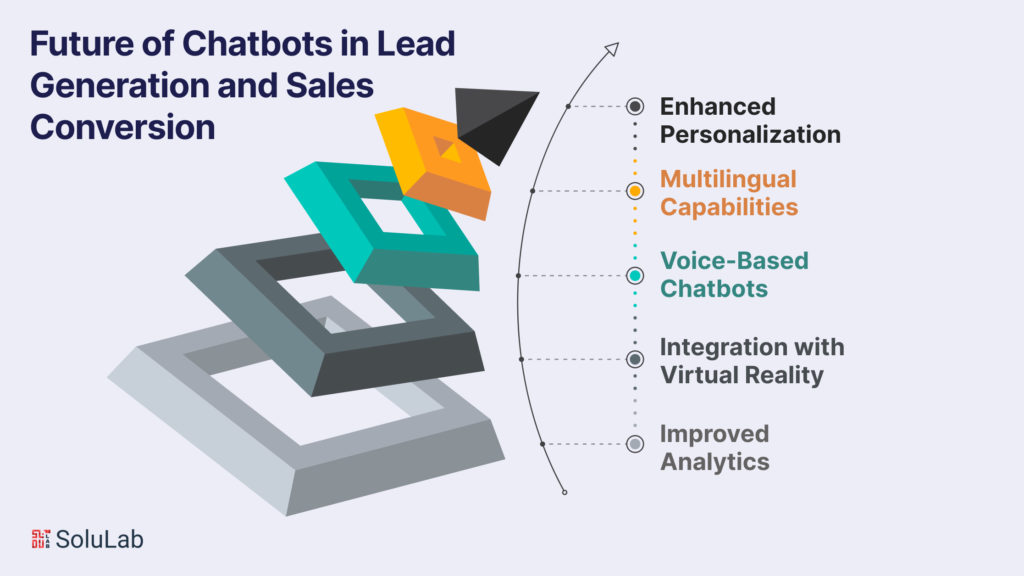
The Future of Chatbots in Lead Generation and Sales Conversion

Future of Chatbots in Lead Generation and Sales Conversion

As technology continues to advance, chatbots are poised to become even more integral to lead generation and sales conversion. Here are some trends and developments to watch for in the near future:

  • Enhanced Personalization

Chatbots will leverage more advanced AI algorithms to deliver hyper-personalized experiences, catering to each user’s unique preferences and needs.

Know More: How to Build a Multilingual Chatbot in 2025?

  •  Multilingual Capabilities

Chatbots will become more proficient in multiple languages, making them valuable tools for global businesses looking to capture leads from diverse regions.

  •  Voice-Based Chatbots

The rise of voice assistants like Siri and Alexa will lead to the development of chatbots that can engage in voice-based conversations, opening up new opportunities for lead generation and sales.

  • Integration with Virtual Reality

Virtual reality and augmented reality will create opportunities for chatbots to interact with users in immersive, 3D environments, further enhancing the lead generation experience.

  • Improved Analytics

Chatbots will provide even more sophisticated analytics and insights to businesses, allowing for data-driven decision-making and improved lead-generation strategies.
CTA2

Conclusion

Chatbots have emerged as powerful tools in lead generation and sales conversion. Their ability to engage users in real-time, streamline lead capture, nurture leads, and qualify prospects makes them indispensable in the modern business landscape. By carefully implementing chatbots and continuously improving their functionality, businesses can unlock new possibilities for growth, enhance customer satisfaction, and boost their bottom line. As technology continues to advance, the role of chatbots in lead generation and sales conversion is only expected to grow, making them an essential part of any forward-thinking business strategy.

SoluLab, a trusted company specializing in artificial intelligence development, offers pioneering AI solutions that cater to the unique requirements of diverse industries. Their proficient team of AI developers creates customized solutions, including intelligent chatbots, predictive analytics, and machine learning algorithms. Integrating chatbots into business processes and services provides a practical means to introduce automation and improve efficiency. SoluLab excels in providing chatbot development services, creating a variety of chatbots with innovative designs and robust architecture for industries such as eLearning, Healthcare, Fintech, and many more. Contact SoluLab for chatbot development.

FAQs

1. What is the role of chatbots in lead generation?

Chatbots play a pivotal role in lead generation by engaging with website visitors, capturing contact information, and initiating real-time conversations. They can proactively qualify and nurture potential leads, enhancing the overall lead-generation process.

2. How can chatbots improve sales conversion rates?

Chatbots can improve sales conversion rates by providing personalized recommendations, answering customer queries, and assisting during the purchase process. Their ability to offer round-the-clock support ensures that potential customers receive timely and relevant information, increasing the likelihood of conversion.

3. Are chatbots suitable for all industries and businesses?

Chatbots can be beneficial for a wide range of industries, including e-commerce, healthcare, finance, and more. However, their effectiveness depends on the specific business objectives and target audience. A well-designed chatbot can be customized to suit the needs of most businesses.

4. How do chatbots qualify leads, and what are the benefits of lead qualification?

Chatbots qualify leads by asking a series of predefined questions that assess the lead’s readiness to make a purchase. The benefits of lead qualification include prioritizing sales efforts, saving time and resources, and improving the chances of closing deals with high-quality leads.

5. What key metrics should businesses track to measure the impact of chatbots on lead generation and sales conversion?

Businesses should track metrics such as lead capture rate, conversion rate, response time, lead quality, sales increase, customer satisfaction, and cost savings to measure the impact of chatbots on lead generation and sales conversion. These metrics provide insights into the effectiveness and ROI of chatbot strategies.

What is an AI Powered Chatbot?

AI Powered Chatbot

Even prior to the pandemic, the chatbot industry had been experiencing consistent growth. However, as the statistics indicate, the crisis significantly accelerated the industry’s adoption. In 2020, the chatbot market was valued at $17.17 billion, and it is projected to reach a staggering $102.29 billion by 2026, representing a compound annual growth rate (CAGR) of 34.75% during the forecast period from 2021 to 2026. The pandemic has highlighted the importance of data-driven decision-making, with 74% of decision-makers reporting increased reliance on data compared to pre-COVID times. However, only 30% of them excel at making data-driven decisions. The pandemic’s efficiency in exposing gaps in business workflows has caused 78% of decision-makers to invest in new technologies as a direct response to COVID-19.

CTA

How AI Powers Chatbots?

Understanding natural language processing (NLP) and machine learning (ML), two key AI building blocks is crucial to comprehending how chatbots work.

The term “natural language processing” (NLP) describes a computer system’s capacity to comprehend and decipher human discourse. It entails dissecting linguistic components, including words and phrases, to derive meaning. Chatbots can grasp user inquiries thanks to NLP and answer in a way that seems natural and kind.

A subset of artificial intelligence (AI) called machine learning (ML) aims to make it possible for computers to learn from experience and advance without explicit programming. Chatbots can study and comprehend patterns in enormous volumes of data thanks to ML algorithms, which help them improve over time.

What is the Role of NLP in Enabling Chatbots to Understand and Respond to User Queries?

NLP plays a crucial role in enabling chatbots to understand and respond effectively to user queries. Through NLP techniques, chatbots can break down user input, identify the intent behind the message, and extract relevant information.

Chatbots equipped with NLP algorithms employ techniques such as entity recognition, part-of-speech tagging, and syntactic parsing. These techniques allow chatbots to identify important keywords, understand the grammatical structure of sentences, and extract relevant entities or entities. As a result, chatbots can comprehend user queries in a more accurate and nuanced manner.

NLP also enables chatbots to handle variations in user language, including slang, misspellings, and abbreviations. By employing techniques like stemming and lemmatization, chatbots can normalize and understand different forms of words, ensuring a higher level of accuracy in their responses.

What is the Role of ML in Improving Chatbot Performance Through Data Analysis and Pattern Recognition?

Machine Learning(ML) plays a significant role in improving chatbot performance by analyzing data and recognizing patterns. ML algorithms enable chatbots to learn from past interactions and apply that knowledge to future conversations.

Through ML, chatbots can analyze vast amounts of data, including historical chat logs and user interactions, to identify patterns and extract meaningful insights. This analysis helps chatbots understand user preferences, predict user intent, and deliver more personalized responses.

ML algorithms also enable chatbots to continuously improve their performance. By leveraging techniques like supervised learning, unsupervised learning, and reinforcement learning, chatbots can refine their responses based on feedback and optimize their conversational AI abilities. This iterative learning process helps chatbots become more accurate, efficient, and capable of providing valuable assistance to users.

Read Case Study

What are the Features and Capabilities of AI-powered Chatbots ?

AI-powered chatbots have changed the way businesses interact with their customers by offering advanced features and capabilities that go beyond traditional rule-based chatbots. Let’s explore some of the key features and capabilities that make AI-powered chatbots stand out:

  • Ability to Gather and Utilize User Data for Personalized Interactions

AI-powered chatbots can gather and analyze user data to provide personalized interactions. By integrating with customer relationship management (CRM) systems or leveraging data from previous interactions, chatbots can access user preferences, purchase history, and other relevant information. 

This allows them to tailor responses and recommendations based on individual user profiles, creating a personalized and engaging experience.

For example, a chatbot in an e-commerce store can recommend products based on a user’s browsing history and past purchases. By understanding user preferences and behavior, the chatbot can provide personalized product suggestions, increasing the likelihood of conversion.

DO YOU KNOW?
Chatbot usage statistics indicate a wonderful 67% growth between 2018 and 2020, highlighting the significant incorporation of chatbots in various industries.

  • Contextual Understanding to Maintain Conversational Flow and Continuity

Ai-powered chatbots are designed to understand and maintain context during conversations. They can comprehend the context of a user’s queries and provide relevant responses, ensuring a smooth conversational flow.

Chatbots achieve contextual understanding through techniques like session management, where they retain information from previous interactions to provide consistent and coherent responses. This allows chatbots to remember user inputs, preferences, and even specific questions asked earlier, creating a seamless user experience.

For instance, if a user asks a chatbot about flight options and later follows up with a question like “What are the prices?”, the chatbot can understand the context and provide prices related to the previous flight options discussed. This contextual understanding enhances user satisfaction and eliminates the need for users to repeat information.

AI-powered chatbots can also handle interruptions or changes in the conversation flow gracefully. They can recognize topic shifts, respond appropriately, and seamlessly transition back to the previous context if needed. This capability enhances the conversational experience and mimics human-like interactions.

Org. Use Chatbots

What are the Benefits of AI-powered Chatbots?

AI-powered chatbots have become a game-changer for businesses, offering numerous benefits and advantages that significantly enhance customer service and support. Let’s explore some of the key benefits of incorporating AI-powered chatbots into customer interactions:

  • 24/7 Availability and Instant Response Times

One of the significant advantages of AI-powered chatbots is their ability to provide round-the-clock customer support. Unlike human agents with limited working hours, chatbots are available 24/7, ensuring that customers can get assistance whenever they need it. This availability eliminates the frustration of waiting for business hours or being put on hold, leading to higher customer satisfaction.

Moreover, AI-powered chatbots can offer instant response times. They can provide immediate answers to frequently asked questions, eliminating the need for customers to wait for a human agent to become available. Quick response times contribute to a positive user experience and demonstrate a commitment to customer service.

  • Efficient Handling of Customer Inquiries and Issue Resolution

AI-powered chatbots excel in efficiently handling customer inquiries and resolving issues. They can handle a large volume of inquiries simultaneously, ensuring that customers don’t experience long wait times or delays in getting assistance.

Chatbots can provide accurate and relevant information based on their training and access to data sources. By leveraging machine learning and natural language processing, they can understand user queries, identify the intent behind them, and provide appropriate responses. This leads to faster issue resolution and reduces the need for customers to reach out to human agents for basic inquiries.

Additionally, AI-powered chatbots can guide customers through troubleshooting steps, provide step-by-step instructions, or offer solutions to common problems. By delivering self-service options, chatbots empower customers to resolve issues independently, further enhancing efficiency and reducing support costs.

What are the Applications of AI-powered Chatbots?

AI-powered chatbots have found widespread applications across various industries, changing the way businesses interact with customers and streamline their operations. Let’s explore some of the key applications of AI-powered chatbots:

1. Customer Support and Service

AI-powered chatbots are extensively used for customer support and service. They can handle a wide range of customer inquiries, provide instant responses, and assist with common issues. 

Chatbots can offer 24/7 support, ensuring customers receive assistance at any time. They can also provide personalized recommendations, track order statuses, and handle returns or refunds, enhancing the overall customer experience.

2. E-commerce and Sales

Chatbots are valuable tools for e-commerce businesses. They can engage customers in personalized conversations, recommend products based on preferences and purchase history, and provide real-time product information. 

Chatbots can also assist in completing transactions, offering payment options, and answering questions about shipping and delivery. By guiding customers through the sales process, chatbots contribute to increased conversions and revenue generation.

3. Information Retrieval and FAQs

Chatbots excel in providing quick and accurate information retrieval. They can answer frequently asked questions (FAQs) and guide users to relevant resources or web pages. By utilizing natural language processing, chatbots can understand user queries, extract key information, and provide precise responses. This application is particularly useful for businesses with extensive knowledge bases or information-heavy websites.

DO YOU KNOW?
In the forecast period between 2021 and 2026, the chatbot market, which was valued at billion, is anticipated to experience tremendous growth, reaching an astounding $102.29 billion. During this period, the compound annual growth rate (CAGR) is predicted to be an impressive 34.75%.

4. Appointment Scheduling and Reservations

AI-powered chatbots can handle appointment scheduling and reservation requests. They can access calendars, check availability, and book appointments or make reservations on behalf of customers. Chatbots can also send reminders and notifications to ensure customers don’t miss their appointments. This automation streamlines the booking process and reduces administrative tasks for businesses.

5. Virtual Assistants and Personal Productivity

Chatbots can act as virtual assistants, helping users with personal productivity tasks. They can set reminders, manage to-do lists, send notifications, and even provide recommendations for time management or productivity improvement. Chatbots can integrate with various productivity tools and platforms, becoming a central hub for users’ daily activities.

6. Lead Generation and Qualification

Chatbots play a crucial role in lead generation and qualification for businesses. They can engage website visitors, collect contact information, and qualify leads based on predefined criteria. 

By initiating conversations, chatbots can gather valuable insights about potential customers, identify their needs, and provide recommendations or offers. This application streamlines the lead generation process and enables businesses to capture valuable leads.

7. Healthcare and Telemedicine

AI-powered chatbots are making significant contributions to the healthcare industry. They can assist in patient triage, providing initial assessments based on symptoms, and directing patients to appropriate resources or healthcare professionals. 

Chatbots can also offer medication reminders, answer basic health-related questions, and provide lifestyle recommendations. In telemedicine applications, chatbots can facilitate virtual consultations, collect patient information, and assist with appointment scheduling.

Chatbot Market

What are the Considerations and Challenges in Implementing AI-powered Chatbots?

Implementing AI-powered chatbots can bring numerous benefits to businesses, but it also involves several considerations and challenges that need to be addressed for successful deployment. Let’s explore some key considerations and challenges in implementing AI-powered chatbots:

  • Data Privacy and Security

One of the primary considerations when implementing AI-powered chatbots is ensuring the privacy and security of user data. Chatbots interact with customers, collect information, and store data. 

It’s crucial to have robust data protection measures in place to safeguard sensitive information and comply with relevant data privacy regulations. Businesses need to implement secure data storage, encryption, and access controls to protect user data and build trust with customers.

  • Natural Language Understanding and Accuracy

AI-powered chatbots heavily rely on natural language processing (NLP) to understand and respond to user queries. However, achieving high accuracy in natural language understanding can be challenging. Chatbots need to accurately interpret user intent, context, and nuances in language to provide relevant responses. 

It requires extensive training, fine-tuning, and testing to improve the accuracy of chatbot interactions. Continuous monitoring and refinement are essential to enhance the chatbot’s language capabilities and deliver satisfactory user experiences.

  • Integration with Existing Systems

Integrating AI-powered chatbots with existing systems and processes is another consideration. Chatbots may need to access databases, customer relationship management (CRM) systems, or other software applications to provide accurate and up-to-date information. 

Seamless integration ensures that chatbots have access to the necessary data and can provide comprehensive and personalized responses to users. Businesses should assess their existing infrastructure and ensure compatibility and smooth integration with chatbot platforms.

  • Scalability and Performance

As chatbot usage grows, scalability becomes a critical consideration. Businesses need to ensure that their AI-powered chatbots can handle increasing user demand without compromising performance. 

Chatbots should be capable of handling a large volume of concurrent conversations, providing quick response times, and maintaining a seamless user experience. Scalability can be achieved through robust architecture, efficient resource allocation, and effective load-balancing techniques.

  • User Experience and Human Handover

Designing a user-friendly and intuitive chatbot interface is crucial for a positive user experience. Chatbots should be able to guide users effectively, understand complex queries, and provide clear and concise responses. However, there may be instances where chatbots cannot handle certain queries or when human intervention is required. 

Implementing a smooth handover process from chatbot to human agents ensures that users receive appropriate assistance when needed. Finding the right balance between automated interactions and human support is crucial for a satisfactory user experience.

  • Continuous Improvement and Maintenance

AI-powered chatbots require ongoing monitoring, maintenance, and improvement. Regular analysis of chatbot performance, user feedback, and user interactions can provide insights for enhancing the chatbot’s capabilities. 

Businesses should establish processes to gather user feedback, track key metrics, and iterate on the chatbot’s functionality and responses. Continuous improvement ensures that chatbots stay relevant, accurate, and effective in meeting user needs.

In conclusion, an AI-powered chatbot is an advanced technological solution that combines the power of artificial intelligence and natural language processing to interact with users and provide automated assistance. These chatbots have gained increasing popularity due to their ability to understand and respond to user queries in a human-like manner. By leveraging technologies such as machine learning, NLP applications, sentiment analysis, and predictive analytics, AI-powered chatbots offer a wide range of features, benefits, and applications.

They can personalize interactions, gather and utilize user data, and maintain contextual understanding to ensure a seamless conversational flow. AI-powered chatbots have changed customer service and support by offering 24/7 availability, instant response times, and efficient handling of customer inquiries and issue resolution. They find applications across various industries, including e-commerce, healthcare, customer support, lead generation, and more.

AI Chatbot solution

How SoluLab Can Improve Your Chatbot Development Journey?

In conclusion, AI-powered chatbots are transforming the way businesses interact with customers by providing real-time, personalized responses, streamlining customer service, and improving operational efficiency. As AI continues to evolve, businesses can harness its power to enhance user experiences and optimize various processes. A great example of this is InfuseNet, a recent case study we published, which demonstrates how companies can leverage AI for data-driven decision-making. InfuseNet integrates advanced AI models like GPT-4 and FLAN, allowing real-time data processing from over 80 sources. By fine-tuning AI models with proprietary data, businesses can achieve unprecedented innovation and efficiency while ensuring data security through encrypted, self-hosted solutions.

If you’re looking to develop an AI-powered chatbot designed to your business needs, SoluLab, an experienced AI chatbot Development Company, is here to help. With expertise in building intelligent AI solutions, we empower businesses to enhance customer interactions, reduce operational costs, and drive growth. Whether you’re looking to Hire AI Developers or partner with a trusted Development Company to bring your AI chatbot vision to life, SoluLab can guide you through the entire process, ensuring your business stays ahead in the competitive market.

FAQs

1. What is an AI-powered chatbot?

An AI-powered chatbot is a computer program that utilizes artificial intelligence (AI) technologies to interact with users through conversational interfaces. These chatbots are designed to understand natural language, analyze user input, and provide automated responses or assistance.

2. How does an AI-powered chatbot work?

AI-powered chatbots work by employing various technologies such as natural language processing (NLP), machine learning (ML), and deep learning algorithms. They learn from user interactions and data, allowing them to understand user intent, generate appropriate responses, and provide relevant information or services.

3. What are the key features of an AI-powered chatbot?

The key features of an AI-powered chatbot include natural language understanding, context awareness, personalization, scalability, and integration with other systems or platforms. These features enable chatbots to deliver accurate responses, maintain conversational flow, provide specific experiences, handle high user volumes, and integrate with existing software or databases.

4. How is an AI-powered chatbot different from a rule-based chatbot?

An AI-powered chatbot differs from a rule-based chatbot in terms of its capabilities and intelligence. While rule-based chatbots follow predetermined rules and responses, AI-powered chatbots can learn and adapt through machine learning algorithms. They can understand complex queries, provide more nuanced responses, and improve their performance over time.

5. What are the benefits of using an AI-powered chatbot?

There are several benefits of using an AI-powered chatbot. They include improved customer service and support, 24/7 availability, instant response times, personalized interactions, increased efficiency and productivity, reduced operational costs, and enhanced user experiences.
