Talk to an Expert

What Makes Germany a Natural Fit for Carbon Credit Tokenization?

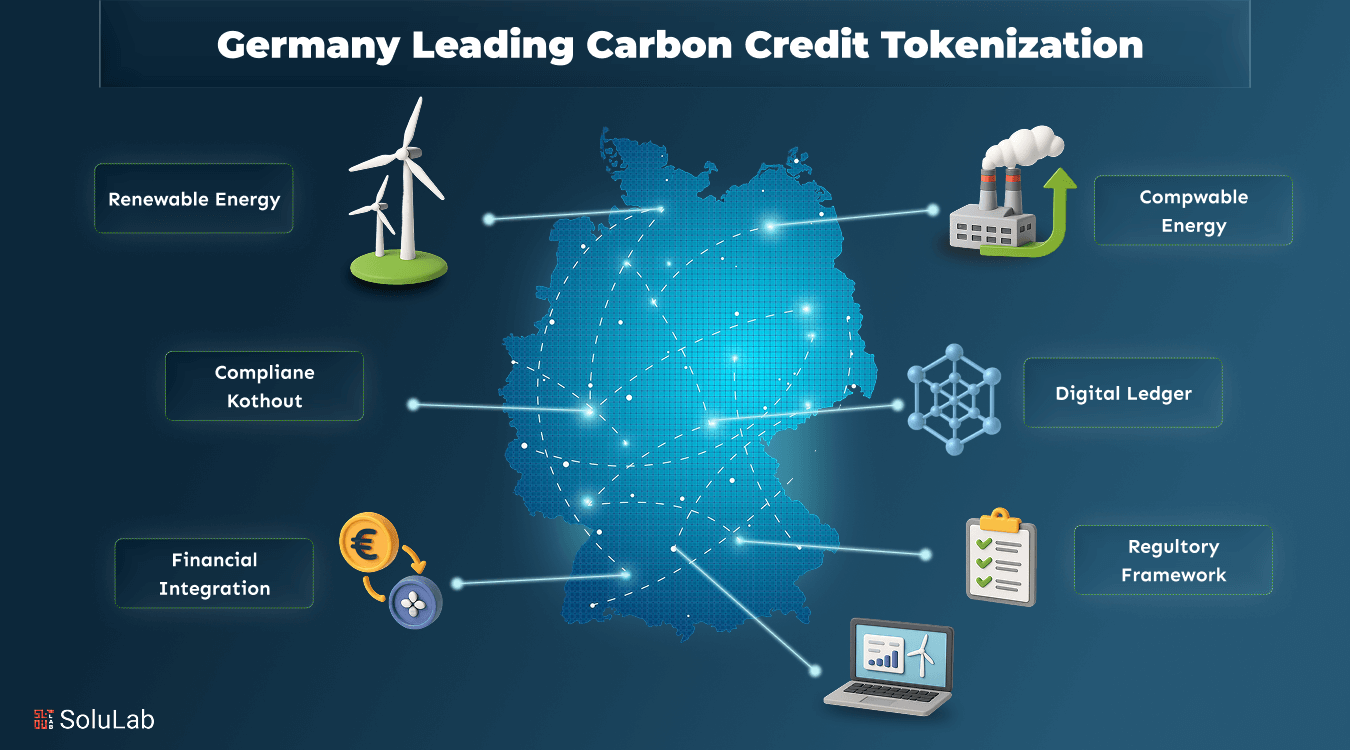
Germany Carbon Credit Tokenization

Can digital tokens make carbon credits more trustworthy and easier to trade? Germany seems to do so. As one of the world’s leading industrial economies, Germany is taking bold steps to merge technology with sustainability. A new blockchain-based carbon credit trading platform is making headlines, but that’s not all. Behind the scenes, a serious clean-up effort is underway to fix past carbon fraud and build a market that actually works.

Let’s explore how Germany is leading the Carbon credits tokenization transformation, from launch to clear regulations. It is chasing down carbon credit fraud, and why this matters for businesses, traders, and the planet.

Germany Backs Blockchain Technology for Climate Innovation

Germany has committed to achieving climate neutrality by 2045. This bold goal needs more than just policy; it demands innovation. That’s why tech firm Neutral and regulated brokerage DLT Finance teamed up to build a new kind of carbon credit tokenization trading platform. This isn’t just another crypto experiment. It’s a regulated, buttoned-up exchange designed for serious commodity traders. The goal? Bring real liquidity, trust, and compliance into a market that’s been missing all three.

Neutral provides the technology while DLT Finance offers the regulatory setup. Traders don’t need crypto wallets, blockchain knowledge, or token jargon. They just get a professional platform that lets them trade verified carbon credits smoothly.

Inside the First Regulated Tokenized Carbon Exchange

The new platform aims to solve the biggest problem in carbon markets access and trust. Traditional traders often avoid decentralized exchanges due to a lack of oversight and poor liquidity. This exchange changes that.

Key Features of the Platform

  • The platform uses blockchain infrastructure, but it stays hidden from the user to offer a smooth, easy-to-use interface.
  • Built under full regulatory compliance with German financial laws, ensuring legal clarity and trust for institutional traders and participants.
  • Specifically designed to handle large-scale trades with deep liquidity, making it more reliable than most decentralized exchanges in operation.
  • Ten major commodity trading houses are currently being onboarded, reflecting strong early adoption and institutional interest in regulated tokenized assets.

Ghandour, the CEO of Neutral, made it clear that they designed the platform to feel like any other high-end commodities exchange. The only difference? It’s backed by real-world tokenized assets, making it efficient and verifiable.
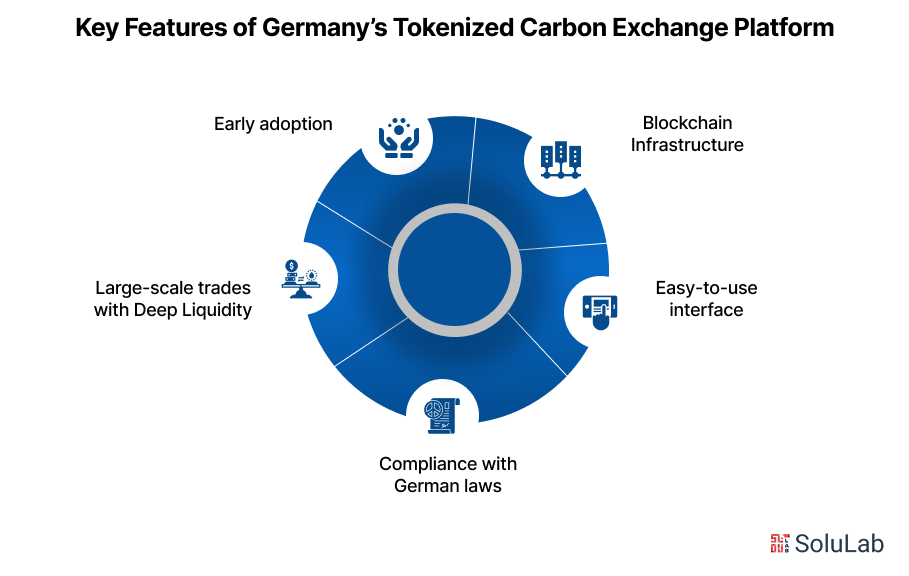
Key Features of Germany’s Tokenized Carbon Exchange Platform

Germany’s Political Push for Market Legitimacy in Tokenization of Carbon Credits

The tech is only part of the story. Germany’s upcoming coalition government is aligning regulation with innovation. A new treaty presented by party leaders pledges to support carbon credits tokenization, even foreign-based ones, as a legitimate way to meet climate targets.

Key Political Commitments

  • Germany will meet its legally set 88% carbon reduction target for 2040 without burdening industries with unrealistic expectations.
  • Companies can use up to 3% high-quality, certified foreign carbon credits to offset residual emissions under strict verification guidelines.
  • The government supports expanding EU-wide carbon pricing systems and aligning laws with broader climate neutrality goals for all members.
  • New policies will enable carbon capture, transport, and offshore storage to manage unavoidable emissions from critical industrial sectors efficiently.

This political backing shows Germany isn’t just testing new tech, it’s building policy guardrails to make tokenized carbon credits work for real.

Germany’s Investigation Revealed the Carbon Credit Fraud

While this new exchange offers hope, Germany also had to deal with a harsh truth: carbon credit fraud has been real and widespread. The Federal Environmental Agency (UBA) found several German companies using fake or inflated carbon credits. These credits were supposed to represent real CO2 reductions through environmental projects. Many didn’t exist or didn’t deliver the impact they promised.
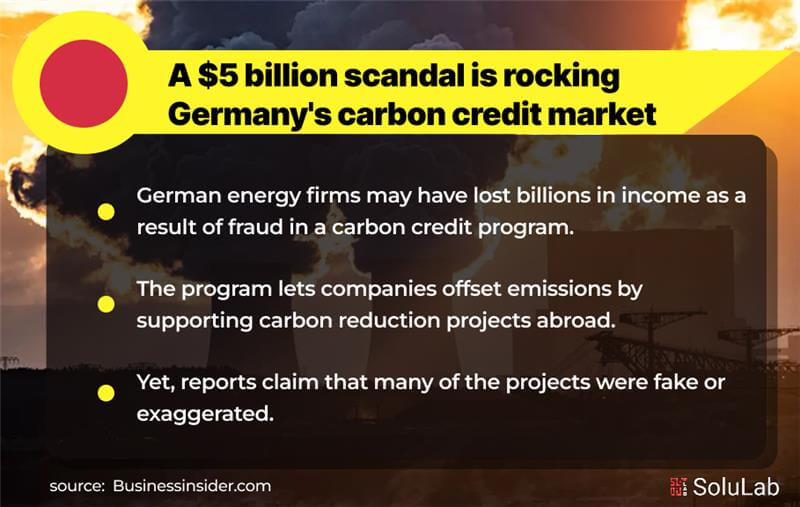
Germany Leading Carbon Credit Tokenization Market News

How the Investigation Unfolded

In multiple cases, companies claimed credits for projects that were either non-existent or misreported. The result?

  • German authorities rejected 215,000 tonnes worth of carbon credits after discovering false claims about emission reductions in certified projects.
  • Eight more projects were flagged for serious violations, including missed deadlines and failure to follow operational and reporting requirements properly.
  • Berlin prosecutors conducted raids on environmental auditing firms suspected of approving fake carbon credits and colluding with project developers.

Germany’s response was swift and aggressive. UBA suspended credits and flagged 40 out of 69 projects for further review.

The Cost of False Credits

The companies under investigation may have avoided up to €4.5 billion in penalties by padding their climate records with fake credits. That’s not just fraud, it’s a serious blow to public trust in climate action.

A closer look at how Germany assessed the carbon fraud cases and the scale of ongoing investigations.

Project Category Total Reviewed Flagged for Irregularities Estimated Avoided Fines (€)
Renewable Projects 25 12 1.2 billion
Forestry Offsets 18 10 950 million
International Projects 26 18 2.35 billion
Total 69 40 4.5 billion

Germany’s Response to Carbon Credit Fraud

Germany took real steps to prevent this from happening again. Here’s how they’re fixing the cracks and rebuilding market integrity:

  • New verification rules now require full project audits by independent international bodies, reviewed locally before approval.
  • Environmental auditing firms must meet strict compliance standards and pass annual oversight by government climate watchdogs.
  • Only certified projects with geolocation and timestamp verification will qualify for credits on regulated exchanges.

Restoring Trust Among Carbon Credit Investors

Regulators didn’t stop with corporate offenders. They also targeted the auditing firms involved in certifying these fake credits. In July, German prosecutors raided their offices, alleging collusion and negligence.

Germany rolled out urgent reforms to ensure carbon credits are valid, trackable, and impactful.

Reform Area Description
Certification Process Independent audits, project geo-verification, and timestamped tracking
Legal Action Raids and investigations into auditing firms and corporate offenders
Regulatory Oversight Annual compliance checks by the Federal Environmental Agency (UBA)
Public Transparency Open data access for all certified credits on government-backed portals

These actions show that Germany wants to build a model system, one that other countries can learn from.

Why Germany Leads the Way in Carbon Credit Reform

Germany combines strong tech and law, building a carbon credit market that balances innovation with strict regulation. Regulators act quickly, punishing fraud and reforming broken systems with clear public messaging and new enforcement rules. Germany promotes blockchain-backed projects while keeping user experience clean, simple, and familiar for traditional traders.

What This Means for the Global Market

Germany’s moves go far beyond its borders. Other countries struggling with carbon fraud now have a clear roadmap. Start with strict and transparent verification reform to ensure every carbon credit represents real, measurable, and scientifically backed emission reductions. Enforce clear climate regulations with strong legal power to hold companies and verification partners accountable for fraud or misreporting practices. Introduce blockchain-based tools that improve credit traceability and data transparency without confusing users or requiring deep technical knowledge or crypto tools.

By enforcing these steps, Germany proves that tokenizing carbon credits can be both effective and ethical.

Tokenization Development Services

The Path Ahead: Merging Tokenization and Trust

The launch of Neutral’s regulated platform shows how blockchain can support, not replace, climate systems. When backed by law, transparency, and simple access, tokenized carbon credits become far more than a niche tech solution. They become a core financial tool in the fight against climate change. And Germany, with its tech-driven approach and regulatory courage, may just lead the way.

SoluLab, a tokenization platform development company, builds end-to-end blockchain solutions for climate impact, from credit design to DeFi integration. With expertise across Ethereum and Polygon, their team ensures secure, transparent, and scalable carbon credit tokenization. SoluLab helps organizations create smart contracts and integrate with DeFi for better liquidity and trust. Unlock the full potential of blockchain for sustainability with a trusted partner. Contact SoluLab today to get started.

FAQs

1. What is carbon credit tokenization, and why is Germany focusing on it? 

Carbon credit tokenization turns emission reductions into secure digital tokens. Germany is focusing on it to improve transparency, stop fraud, and make carbon markets more efficient for both companies and climate-focused investors.

2. How is Germany making tokenized carbon credits more trustworthy? 

Germany enforces strong regulations, requires independent project audits, and uses blockchain technology to track and verify each credit. This approach builds real trust and accountability in a market that previously lacked clear oversight.

3. Why are traditional traders choosing this new platform over decentralized exchanges? 

This regulated platform feels familiar, works without crypto wallets, and offers better liquidity. It’s simple for traders to use, without needing to understand blockchain, just the benefits of verified, tradable, and secure carbon credits.

4. What steps has Germany taken against carbon credit fraud?

Germany suspended fraudulent credits, raided auditing firms, and introduced stricter verification rules. These steps ensure only genuine, impactful carbon projects get tokenized and traded, protecting the environment and restoring market confidence.

5. How does blockchain make carbon credit trading better?

Blockchain helps by tracking every credit transparently from origin to trade. It prevents double-counting, fraud, or lost data, giving both businesses and regulators a clear view of the carbon impact and ownership trail.

6. What other countries are backing carbon credit tokenization like Germany

Singapore, Switzerland, and the UAE are also exploring or supporting tokenized carbon credit projects. Like Germany, they aim to combine blockchain’s efficiency with strong oversight to build global trust in climate-focused finance.

How to Develop a Carbon Credit Education Platform?

Carbon Credit Education Platform

The global carbon market is projected to reach $2.68 trillion by 2028, yet most people, founders, startups, and even large enterprises still don’t fully understand what carbon credits are or how carbon credits work.

This lack of awareness is a massive opportunity. A carbon credit education platform can solve this gap by teaching users what carbon credits mean, how they reduce emissions, and how individuals or businesses can take real climate action. It’s more than education, it’s empowerment, transparency, and growth.

If you’re a sustainability startup, NGO, or a founder looking to build a mission-driven platform with monetization potential, now’s the time. This guide will show you how to build a carbon credit learning platform that blends blockchain, transparency, and user-friendly design, all built by a team that understands both climate impact and tech execution

How Carbon Markets Work & Why Education Is Crucial?

Before we explore how a carbon credit platform can create impact, let’s start with the basics: what are carbon credits, and how do carbon credits work?

Carbon credits give companies or individuals the legal right to emit a certain amount of carbon dioxide (usually one metric ton). These credits can be bought or sold, which creates a system where those who reduce emissions can earn and sell extra credits. It’s a market-based approach to fight climate change.

But here’s the problem: most people don’t fully understand how these credits are created, verified, or traded. That’s why education is essential.

A carbon credit education platform helps bridge this knowledge gap. It teaches users how carbon markets work, clears up misinformation, and promotes transparency. This builds trust, which is essential for any climate-related initiative.

Many people also struggle to understand what carbon assets are or how they relate to real-world offset projects like planting trees or building renewable energy sources. If they don’t understand it, they won’t get involved. And without involvement, there’s no meaningful impact.

This is exactly where a carbon credit learning platform makes a difference. It simplifies complex topics, explains key concepts, and motivates users to participate. Whether you’re building for a nonprofit, startup, or government program, these platforms are key to turning awareness into action.

How Blockchain Can Transform Carbon Credit Education?

Traditional systems used in the carbon credit space are often slow, hard to trust, and lack transparency. This leads to confusion, low participation, and even fraud. Blockchain technology helps solve these problems by making the entire process transparent, secure, and tamper-proof.

These are real blockchain use cases that directly improve how users learn and engage with carbon credits:

Blockchain in Carbon Credit Engagement

  • Verifies the authenticity of credits with immutable audit trails
  • Prevents fraud and double-counting with transparent tracking
  • Rewards learners using smart contracts and tokenized incentives
  • Monitors learning progress and offsets activity in real-time

This isn’t just hype; these are practical tools that build trust and drive real results.

Choosing the Right Blockchain Stack

Understanding the difference between Layer 1 vs. Layer 2 is important when scaling your platform:

  • Layer 1 (like Ethereum) offers strong security but can be slower and costly
  • Layer 2 (like Polygon) is faster and cheaper, ideal for education-based platforms

The right choice depends on your user base, budget, and growth plans

Want to discuss which blockchain setup is right for your project? Our team can guide you

Core Features of a Carbon Credit Education Platform

A well-designed carbon credit education platform should be simple to use, easy to scale, and built to drive real engagement. It helps people understand how carbon credits work while making learning interactive and trustworthy.

Here are the key features your platform should include:

Core Feature of a Carbon Credit Education Platform

1. Interactive Learning Modules

Quick, engaging lessons that explain the basics of what are carbon credits and why they matter.

  • Use short videos, infographics, and real-world examples
  • Teach key terms like carbon offset, carbon assets, and emissions
  • Break complex ideas into bite-sized formats

2. Gamified Quizzes and Rewards

Make learning fun and rewarding with built-in gamification.

  • Earn badges or tokens for completing modules
  • Boost retention through small, goal-based tasks
  • Link quizzes to verified learning outcomes

3. Carbon Offset Simulators

Allow users to see their personal or business emissions and how to offset them.

  • Input basic lifestyle or business data
  • Get suggestions for carbon asset purchases
  • Connect actions to real environmental impact

Read Our Blog: What Makes Germany a Natural Fit for Carbon Credit Tokenization?

4. Tokenized Certifications

Reward learners with blockchain-based certificates for each milestone.

  • Issue NFT-style proof of completion
  • Verify progress on-chain for transparency
  • Build learner credibility with trusted digital records

5. Admin & Analytics Dashboard

Give your organization full control and visibility.

  • Track user growth, engagement, and course completion
  • Monitor carbon credit tokenization activities in real-time
  • Adjust content based on performance insights

At our blockchain development company, we integrate all these features with custom branding, secure backend systems, and smart contract logic.

We also ensure that the platform supports carbon credit tokenization, allowing users to learn about and take climate action by buying or retiring carbon credits as part of their educational journey.

Cost to Build a Carbon Credit Education Platform

The cost of building a carbon credit education platform depends on a few key factors. If you’re a startup founder or enterprise looking to build a platform that educates users on what carbon credits are and how carbon credits work, here’s what you need to consider:

Key Cost Factors

Cost Factor Details
Feature Set Basic education modules, tokenization, gamification, multilingual access
Blockchain Choice Depends on using Layer 1 vs. Layer 2 blockchains (Ethereum, Polygon, etc.)
Time-to-Market Faster timelines may increase development costs
Custom vs. White-Label Solution Custom builds cost more, white-label options are quicker and cost-effective
Maintenance & Scaling Ongoing updates, new features, and security upgrades

Estimated Pricing Ranges

Project Type Estimated Cost Description
MVP (Minimum Viable Product) $20,000 – $60,000 Covers essential features: education modules, dashboards, token support
Full-Scale Enterprise Platform $60,000+ Includes automation, multilingual content, analytics, and regulatory tools
Using Blockchain-as-a-Service Flexible pricing Ideal for faster deployment and reduced in-house technical requirements

Real-World Case Studies

Here are five real examples of how companies are using blockchain to improve how carbon credits are tracked, traded, and understood. These stories show how carbon credit tokenization, education, and compliance can be made easier and more trustworthy with the right tech.

Real-World Case Studies

1. Carbify (Built on Moonbeam)

A creative project blending nature with tech.

  • Created NFTrees – tokens that represent real trees in the Amazon
    Built a dashboard to show CO₂ absorption over time
  • Used carbon credit tokenization to back learning with real-world value

Why it matters: It’s a great example of making carbon credit education platforms more engaging by connecting digital assets with physical impact. Also helps fight double-counting.

2. Toucan Protocol & KlimaDAO

Turning traditional carbon credits into tradable tokens.

  • Brought Verra-certified credits onto blockchain as BCT tokens
  • Enabled retirement and trading on-chain
  • Made climate actions traceable and public

Lesson learned: Tokenizing low-quality credits caused issues. This shows why blockchain use cases in carbon trading must prioritize quality control and verified standards.

3. AirCarbon Exchange (ACX)

A real exchange for buying and selling tokenized carbon credits.

  • Based in Singapore, aligned with Verra and Gold Standard
  • Supports real-time carbon trading with smart contracts
  • Built for serious businesses – a full carbon credit platform

Why it’s relevant: Shows how a blockchain development company can help create efficient B2B platforms with fast, transparent carbon trading tools.

4. IBM & Energy Blockchain Lab (China)

Industrial-level blockchain for government-backed systems.

  • Used Hyperledger to build a carbon trading system for China’s ETS
  • Integrated blockchain with national compliance tracking
  • Cut processing time and fraud risk with immutable records

Impact: This project proves how blockchain can go beyond education, enabling compliance for entire countries and industries.

5. Matter Labs (Thallo & zkSync)

A Web3 company leading by example.

  • Audited their own emissions with zkSync
  • Used Thallo’s Carbon-as-a-Service API to buy verified offsets
  • Shared full records on-chain for complete transparency

Takeaway: Shows how Web3 development companies and tech teams can merge carbon assets tracking with education and corporate responsibility.

How SoluLab Builds Carbon Credit Education Platforms?

As a full-stack blockchain development company, we help businesses, climate-focused startups, and NGOs bring their carbon credit education platform ideas to life. We focus on building custom, scalable, and easy-to-use platforms that solve real problems.

Here’s how we do it:

  • Design intuitive and clean UX/UI tailored for climate-tech users
  • Build smart contracts to track and verify carbon assets and user actions
  • Integrate third-party APIs for real-time carbon credit data and tokenization
  • Ensure the platform follows all regulations and is ready for audits or reporting

We also offer dedicated developer teams for faster execution and long-term support. Whether you’re an established company or a new venture, you can hire blockchain developers from our team to build and grow your platform with confidence.

Carbon Credit Tokenization Services

Conclusion

If you’re planning to build a carbon credit platform, there’s no better time than now. Education is key to creating real impact, and using blockchain technology makes that education reliable and transparent.

A well-designed, scalable, and engaging carbon credit education platform can help turn passive users into informed, climate-conscious decision-makers, driving both awareness and action.

As a trusted blockchain development company in the USA, we’re here to help you bring this vision to life. Let’s create something impactful together.

FAQs

1. What are carbon credits?

Carbon credits are tradable permits that allow an organization or individual to emit one metric ton of carbon dioxide or equivalent greenhouse gases. They create a financial incentive for reducing emissions by allowing those who reduce emissions to sell credits to others.

2. How do carbon credits work?

Carbon credits work by supporting projects that reduce or capture greenhouse gas emissions, such as reforestation or renewable energy. When a project reduces emissions, it generates credits that companies can buy to offset their own emissions, helping to meet regulatory or voluntary climate goals.

3. What makes a good carbon credit learning platform?

A great carbon credit learning platform offers interactive modules, real-time data, and easy-to-understand content that breaks down complex topics like carbon markets and offsets. It empowers users to grasp carbon assets and how they can participate in sustainable initiatives effectively.

4. What is a carbon credit platform?

A carbon credit platform is a digital marketplace or educational hub where carbon credits are issued, traded, or learned about. These platforms often use blockchain to increase transparency and prevent issues like double counting, making it easier for businesses to participate responsibly.

5. How much does it cost to build a carbon credit education platform?

The cost varies based on features and scale, but typically ranges from $20,000 to $60,000 for a minimum viable product (MVP). Factors affecting price include blockchain integration, user interface complexity, and support for carbon credit tokenization.

Guide to Tokenization of Carbon Credits in 2026

Understanding The Carbon Credit Tokenization

By 2030, tokenized assets are predicted to have a $16 trillion worldwide market capitalization. Real-world asset tokenization has the potential to transform several sectors, including carbon credits, real estate, equities, and the arts. With the invention, the potential applications of blockchain technology in several industries have advanced significantly.   

Creative ways to support environmental sustainability are emerging as the globe struggles with the pressing issues of climate change. One of the most promising of these is the tokenization of carbon credits, which uses blockchain technology to make the carbon market more open, effective, and accessible. This blog explores everything you need to know about carbon credit tokenization including how it works, its advantages, fundamentals, and use cases.

What are Carbon Credits?

Before we talk about tokenizing, let’s have a better knowledge of what are carbon credits. Permits known as carbon offsets or carbon credits allow companies to release a specific quantity of greenhouse gases, or carbon dioxide. One ton of carbon dioxide (CO2) is equal to one carbon credit. As per the report provided by Ecosystem’s marketplace annual report, the voluntary carbon credit market reached a valuation of over $2 billion by 2022.

By giving businesses financial incentives to decrease their carbon footprint, the carbon credit system seeks to lower greenhouse gas (GHG) emissions. Businesses are given a fixed quantity of credits under this system, which gradually diminishes, and they are free to sell any extra credits to third parties. The cap-and-trade concept which was effectively employed to reduce sulfur pollution in the 1990s, is the foundation of this system. The framework’s worldwide applicability was further strengthened in November 2021 when negotiations decided to create an offset trading market for global credit carbons at the Glasgow COP26 climate summit. 

What is the Role of Banks in Carbon Credit Tokenization?

Banks have a big part to play in the new market for tokenizing carbon credits, and moving quickly, they can become disruptive forces when it comes to virtual asset markets. Here are the major features of banks in carbon credit tokenization:

  • Technology and Market Leadership 

Leading this modern technology businesses set an example for others to look up to and depict a dedicated environment leading towards enhanced responsibilities 

  • Increasing Consumer Demand 

Early adoption of carbon credit tokenization by banks would enable them to meet this demand and draw in a new market of customers who are economically aware. 

  • Dedication to Addressing Climate Change

By actively participating in the creation of carbon credit tokenization methods, banks may show their dedication to addressing climate change in line with international imperatives. 

  • Tokenized Securities for New Income Source

Banks can develop new tokenized securities, such as green bonds or structured products linked to the tokenized carbon credits, and gain from improved branding and reputation, particularly if concerns about climate change gain traction.

Read Blog: What Makes Germany a Natural Fit for Carbon Credit Tokenization?

Top 5 Use Cases of Carbon Credit Tokenization

The potential of tokenized credit carbons in practical applications is being demonstrated by these top 5 real-world use cases of carbon credit tokenization:

  • Verra

Leading worldwide carbon standard organization Verra has been at the forefront of the tokenization of carbon credits. Verra is streamlining its Verified Carbon Standard (VCS) credits by collaborating with blockchain platforms. To make it simpler for companies and individuals to trade carbon credits and offer their emissions, this effort seeks to improve the carbon market’s transparency, accessibility, and liquidity. 

  • Flow Carbon 

A platform for buying and retiring carbon credits is provided by Flow Carbon to both individuals and organizations. Additionally, its platform offers tools for monitoring and validating the effects of such credits, and initiatives. Through easily accessible and traceable carbon credit exchanges, Flow Carbon is dedicated to advancing climate action. 

  • Moss

Moss works to protect Brazilian rainforests, especially the Amazon. Moss has made it possible for people and organizations to contribute to the conservation of the rainforest by tokenizing carbon credits that are produced from the maintenance of this important environment. They immediately support the preservation of the most important environmental resources in the world by using Moss tokens. 

  • Klima DAO

The decentralized autonomous organization (DAO) dedicated to climate action is Klima DAO. By minting Klima tokens and buying carbon credits, Klima DAO establishes a direct connection between the cryptocurrency community and the carbon market. This strategy combines the realms of blockchain technology and environmental sustainability by encouraging people and businesses to invest in carbon credits along with promoting climate-positive initiatives. 

  • Celo

Celo’s mobile-first blockchain infrastructure is being used to investigate the possibility of tokenizing carbon credits. Celo hopes to increase accessibility and inclusivity of climate action by including carbon credit tokenization within its platforms, particularly for people and communities in countries that are developing who might not otherwise have access to carbon trading. 

Tokenized Carbon Credits: A New Asset Class for Climate Action

Tokenized carbon credits represent verified greenhouse gas reductions on the blockchain. Each token denotes one metric ton of carbon dioxide avoided or removed from the atmosphere.

These credits are created by bridging existing credits from carbon registries into crypto tokens. Rigorous verification ensures the environmental integrity of each tokenized credit.

For organizations, tokenized credits offer a blockchain-based tool to offset residual emissions and meet sustainability goals. They also allow individuals to compensate for their personal carbon footprints.

Trading these tokens unlocks liquidity, transparency and standardization in carbon markets plagued by fragmented trading and data inconsistencies.

On blockchain platforms, tokenized credits become a fluid digital asset class enabling seamless transactions. This gives corporations, governments and individuals equal access to carbon as an investable commodity.

CTA1

Tokenizing Carbon Credit: The Process 

Carbon credit tokenization converts real-world carbon credits into digital tokens using blockchain technology. This unlocks new potential for carbon markets. The tokenization process involves:

  • Verifying the carbon reductions of projects like renewable energy or reforestation. Audits rigorously quantify the emissions avoided.
  • Recording the verified impacts on a blockchain. This immutable ledger in blockchain provides permanent transparency.
  • Issuing tokens representing carbon credits via smart contracts. These automate minting and transferring the tokens.

Once tokenized, the credits become digital assets that can be freely bought, sold, and traded. Participants across the carbon markets can purchase the tokens to offset emissions or trade them on decentralized exchanges.

In this way, tokenization provides open access to carbon markets for a wider range of stakeholders. It allows more individuals and organizations to engage in sustainable practices and contribute to reducing global greenhouse gas emissions.

The automation and transparency of blockchain technology also streamlines carbon credit transactions. This democratizes participation and enhances efficiency in mitigating climate change.

Benefits of Tokenized Carbon Credits

Benefits of Tokenized Carbon Credits

Tokenization unlocks several key benefits:

  • Increased Accessibility

Carbon markets become more accessible as tokenization removes geographical restrictions. Anyone across the world can purchase, trade, and retire tokenized carbon credits through digital platforms.

  • Fractional Ownership

Each credit can be split into smaller tokenized units, allowing individuals with limited budgets to offset their footprint.

  • Enhanced Liquidity

Tokens can be seamlessly traded on decentralized exchanges, eliminating intermediaries and reducing costs.

Read Also: Top 10 Asset Tokenization Development Companies

  • Transparency

The blockchain provides an immutable record of a credit’s origins and ownership history, preventing double-counting or other fraud.

  • Automation

Smart contracts automate credit issuance, payments, transfers, and retirement, streamlining the process.

  • Price Discovery

Tokenization provides transparent pricing data, increasing market efficiency and competition.

The Future of Tokenized Carbon Markets

By harnessing blockchain technology, tokenized carbon markets have the potential to engage a broader range of stakeholders in emissions reduction. Individuals can measure and offset their personal footprints, while companies large and small can more efficiently manage their climate impact.

Standardization and mainstream adoption of tokenized credits could significantly scale voluntary carbon markets. This would catalyze progress on global emissions goals, ultimately accelerating the worldwide transition to a low-carbon economy.

Check Our Blog Post: The Ultimate Guide To Creating a Carbon Credit Marketplace

Launching an Impactful Carbon Credit Tokenization Project

Launching an Impactful Carbon Credit Tokenization Project

Tokenizing carbon credits can drive transparency and efficiency in carbon markets. But executing an effective project requires strategic planning across many fronts. Here is a step-by-step guide:

1. Source Credible Carbon Credits

First, determine where your carbon credits will originate. If you run a company with internal offsets, tokenize those. If operating a market platform, carefully select reputable partner projects. Start small and local before expanding globally.

2. Map the Credit Lifecycle

Plan how credits will be generated, verified, listed, purchased, tokenized, and retired. Select standard-setters to ensure credibility. Outline how data flows through each stage.

3. Develop a Sustainable Business Model

Consider transaction fees, subscriptions, commissions, and consulting services. Combine approaches to generate revenues sustainably. Provide ongoing value to users.

4. Design the Tokenization Framework

Choose the optimal blockchain, token standard, minting approach, and accepted currencies. Prioritize security and energy efficiency.

Read Our Blog Post: A Guide to Asset Tokenization

5. Create an Informative Platform

Develop a user-friendly site and compelling content that educates audiences on your vision. Integrate marketing to attract early adopters.

6. Implement Robust Smart Contracts

Work with experienced developers to program airtight smart contracts. Conduct meticulous auditing to identify vulnerabilities.

7. Build a Functional Marketplace

Allow seamless credit listings, purchases, payments, and transfers. Make registering and transacting intuitive for users.

8. Launch and Continuously Improve

Deploy after rigorous testing. Get user feedback. Regularly add features and upgrades to increase value. With proper planning, carbon credit tokenization can enable transparent and democratized climate action. By following best practices, your project can empower markets to drive impact.

CTA2

Conclusion

In conclusion, the concept of carbon credit tokenization presents a promising pathway toward a more sustainable and environmentally conscious future. As we grapple with the pressing issues of climate change and the urgent need to reduce greenhouse gas emissions, this innovative approach allows us to harness the power of blockchain technology to efficiently trade and track carbon credits. By tokenizing these credits, we unlock the potential for a more transparent and accessible carbon market, making it easier for businesses and individuals to contribute to global efforts in reducing carbon footprints. It is a significant step forward in the fight against climate change, offering a scalable solution that can help us achieve our collective environmental goals.

With blockchain emerging as a game-changer for carbon markets, SoluLab brings unmatched experience in tokenizing climate solutions. Having delivered sustainability applications on major protocols like Ethereum and Polygon, SoluLab provides comprehensive services from designing high-impact programs to developing robust smart contracts for transparent credit issuance. Their full-stack developers help seamlessly integrate tokenized credits into DeFi ecosystems for enhanced liquidity. For any organization pursuing tokenized carbon markets, SoluLab is the partner of choice to architect end-to-end technical solutions that unlock the vast potential of blockchain for planetary impact. Contact SoluLab today to explore how we can help your organization leverage blockchain for sustainable success.

FAQs

1. What is carbon credit tokenization, and how does it work?

Carbon credit tokenization is a process of representing and trading carbon credits using blockchain technology. It involves converting carbon credits, which are essentially certificates representing a reduction in greenhouse gas emissions, into digital tokens. These tokens are then recorded on a blockchain, creating a transparent and immutable ledger of carbon credit transactions. This technology allows for the efficient and secure trading of carbon credits, making it easier for businesses and individuals to buy, sell, and transfer these credits.

2. What are the benefits of using carbon credit tokens?

Carbon credit tokenization offers several key benefits. It enhances transparency by providing a tamper-proof record of carbon credit transactions, making it easier to verify the legitimacy of credits. It also increases accessibility, allowing a wider range of participants to engage in carbon credit trading. Additionally, it improves efficiency by reducing administrative costs associated with traditional carbon credit markets. Ultimately, this technology encourages greater participation in the fight against climate change by simplifying the process of offsetting emissions.

3. Are carbon credit tokens a viable solution for combating climate change?

Carbon credit tokenization is a promising tool in the fight against climate change. By streamlining the carbon credit market and making it more accessible, it can encourage businesses and individuals to offset their carbon emissions more effectively. While it’s not a standalone solution, it is a valuable component of broader efforts to reduce greenhouse gas emissions and transition to a more sustainable future.

4. How can I get involved in carbon credit tokenization as an individual or a business?

Individuals and businesses interested in carbon credit tokenization can start by researching blockchain platforms and organizations that facilitate carbon credit token trading. You can also reach out to accredited carbon credit project developers to purchase or invest in carbon credits. Engaging with carbon offset initiatives and seeking out platforms that support carbon credit tokenization is a great way to get started and contribute to environmental sustainability.

5. What challenges and regulatory concerns exist in the world of carbon credit tokenization?

Carbon credit tokenization faces challenges related to the credibility of carbon credit projects, potential issues with double counting of emissions reductions, and the need for comprehensive regulatory frameworks. To address these concerns, it’s essential for governments, organizations, and the blockchain community to work collaboratively in setting industry standards and ensuring that carbon credit tokenization adheres to best practices in the field. This ongoing effort is crucial to maintain the integrity of carbon credit markets and achieve meaningful environmental impact.
