Talk to an Expert

Blockchain: The Defining Technology of Our Future

Blockchain: The Defining Technology of Our Future

In an age where technological innovation continues to shape and redefine the way we live, work, and interact, one technology has emerged as a frontrunner in transforming industries and ushering in a new era of privacy, speed, and efficiency. Blockchain technology, with its decentralized  and immutable ledger system, stands as a game-changer that is reshaping industries across the spectrum.

This article explores the evolution of blockchain technology, its current applications, the top blockchain platforms, emerging trends, and the transformative potential it holds, with a particular focus on its applications in healthcare.

Understanding Blockchain Technology

Blockchain technology is often described as a distributed ledger system that records transactions in a secure, transparent, and immutable way. At its core, blockchain consists of a chain of blocks, each containing a list of transactions. These blocks are linked together, forming a chronological and unchangeable chain. Key characteristics that define blockchain technology include:
  • Decentralization: Unlike traditional centralized systems, blockchain operates on a decentralized network of nodes, ensuring that no single entity has control over the network.
  • Immutability: Once a transaction is recorded on the blockchain, it cannot be altered or deleted, making it an incorruptible and secure system.
  • Transparency: All participants in the blockchain network have access to the same data, ensuring transparency and trust among participants.
  • Security: Cryptography and consensus algorithms make blockchain extremely secure, reducing the risk of fraud and data breaches.

What Makes Blockchain Technology the Future?

Blockchain Technology the Future

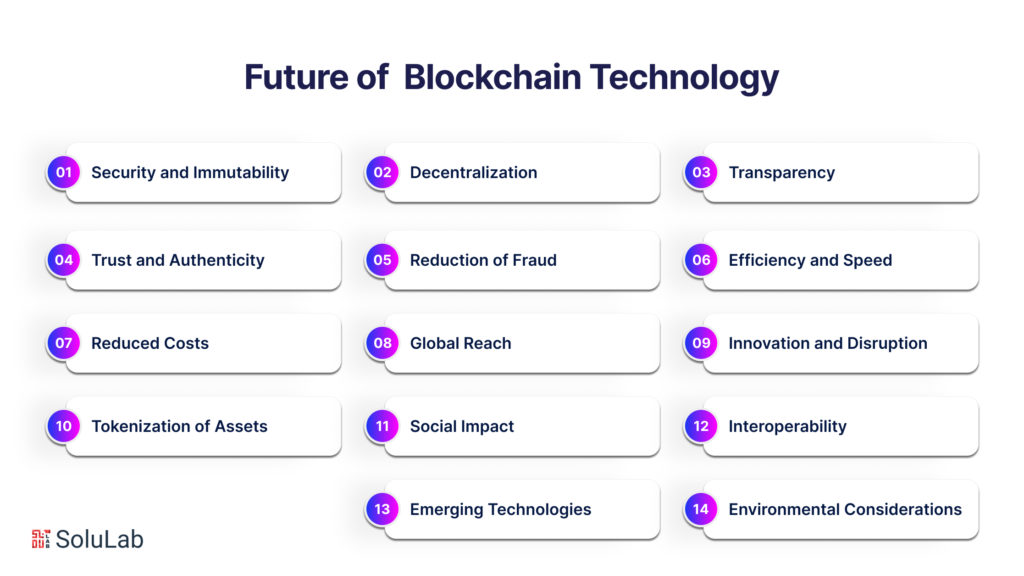
Blockchain technology is often regarded as the future for several compelling reasons. Its potential to revolutionize various industries, its intrinsic features, and its ability to address some of the fundamental challenges of the digital age make it a technology with a promising outlook:

  • Security and Immutability: The foundation of blockchain technology is its ability to create secure, immutable, and tamper-proof records of transactions. This feature is essential in a world where data breaches and cyber threats are ever-present concerns.
  • Decentralization: Blockchain operates on a decentralized network of nodes, eliminating the need for intermediaries like banks or central authorities. This reduces the risk of single points of failure and enhances trust among participants.
  • Transparency: The transparent nature of blockchain means that all participants in the network can access the same data. This promotes trust and accountability, as anyone can verify the authenticity of transactions.
  • Trust and Authenticity: The use of cryptographic techniques ensures that transactions and data are secure and authentic. This is especially valuable in industries where trust is paramount, such as supply chain management, healthcare, and finance.
  • Reduction of Fraud: Blockchain’s transparency and security measures make it exceedingly difficult for malicious actors to engage in fraudulent activities, whether in financial transactions or document verification.
  • Efficiency and Speed: Blockchain can significantly streamline processes by automating tasks through smart contracts. These self-executing contracts remove the need for intermediaries and reduce the time and costs associated with manual processes.
  • Reduced Costs: By eliminating intermediaries and streamlining processes, blockchain has the potential to reduce costs in various industries, making it an appealing technology for businesses seeking efficiency and cost savings.
  • Global Reach: Blockchain technology is accessible on a global scale. It can facilitate cross-border transactions, making it an excellent solution for industries such as international finance, trade, and remittances.
  • Innovation and Disruption: Blockchain has spurred innovation and entrepreneurship, leading to the creation of new applications, business models, and industries. It has already disrupted traditional financial systems, and its potential to disrupt other sectors, such as healthcare, real estate, and supply chain management, is substantial.
  • Tokenization of Assets: Blockchain enables the tokenization of real-world assets, from real estate to art. This allows for fractional ownership, increased liquidity, and democratized access to asset classes that were previously reserved for a select few.
  • Social Impact: Blockchain can be a powerful tool for addressing social and environmental challenges. It has been used for identity verification, improving access to financial services, and tracking the provenance of goods, which can help combat fraud and support ethical business practices.
  • Interoperability: Efforts are underway to make different blockchains interoperable, allowing for seamless data transfer and transactions between networks. This opens up new possibilities for combining the strengths of different blockchain platforms.
  • Emerging Technologies: Blockchain is often seen as a complementary technology to other emerging technologies like the Internet of Things (IoT) and artificial intelligence (AI). It can enhance the security and trustworthiness of IoT networks and AI algorithms by providing verifiable data sources and execution of smart contracts.
  • Environmental Considerations: While blockchain’s energy consumption has been a concern, ongoing research and the development of more energy-efficient consensus algorithms aim to make blockchain technology more sustainable.

In brief, the future of blockchain technology is promising due to its potential to reshape industries, enhance security, reduce fraud, and promote transparency. As it continues to evolve and find new applications, blockchain is likely to play an increasingly significant role in our digital world, making it a defining technology of the future.
Applications of Blockchain 

Applications of Blockchain

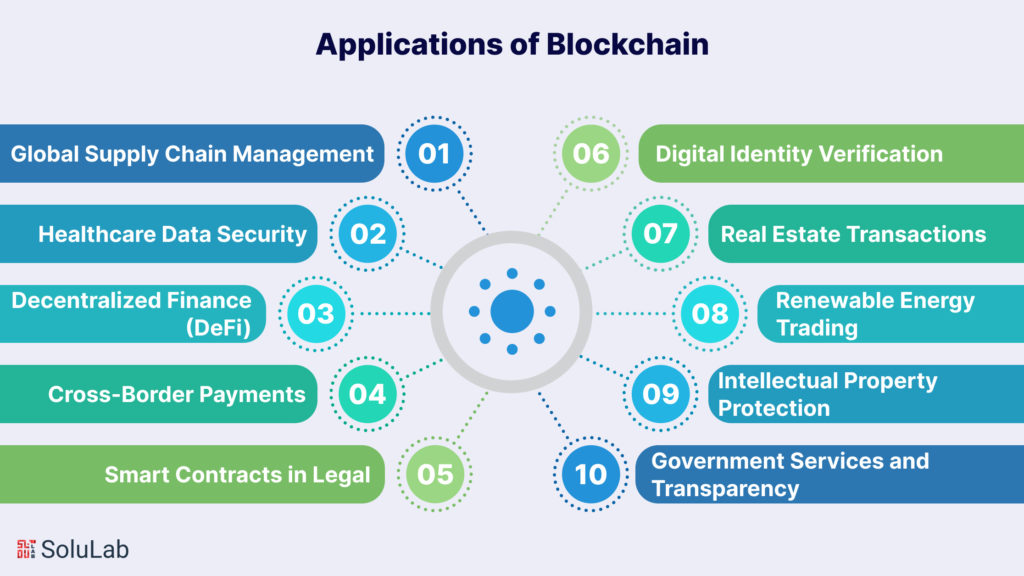
Have a look at some of the Use cases of blockchain that are changing the world of technology: 

  • Global Supply Chain Management

Blockchain will enable end-to-end transparency in supply chains, tracking products and verifying their authenticity. By 2025, the blockchain supply chain market is projected to reach $9.85 billion, growing at a CAGR of 50.6%. (Source: MarketsandMarkets)

  • Healthcare Data Security

Blockchain can secure Electronic Health Records (EHRs) and patient data, enhancing privacy and accessibility. The global blockchain in healthcare market is estimated to reach $1.6 billion by 2025, at a CAGR of 65.5%. (Source: Grand View Research)

  • Decentralized Finance (DeFi)

DeFi platforms offer decentralized lending, borrowing, and trading of cryptocurrencies, disrupting traditional finance. DeFi’s Total Value Locked (TVL) exceeded $100 billion in 2021, showcasing rapid growth in the sector. (Source: DeFi Pulse)

  • Cross-Border Payments

Blockchain technology can streamline cross-border transactions, making them faster and more cost-effective. The global blockchain remittances market is expected to reach $1.35 billion by 2026, growing at a CAGR of 24.8%. (Source: Mordor Intelligence)

  • Smart Contracts in Legal

Smart contracts automate legal processes, such as contract execution and dispute resolution. The global smart contract market is anticipated to reach $345 million by 2026, with a CAGR of 32.5%. (Source: MarketsandMarkets)

  • Digital Identity Verification

Blockchain can securely manage digital identities, reducing identity theft and ensuring user privacy. The global digital identity solutions market is projected to be worth $49.5 billion by 2025, growing at a CAGR of 17.3%. (Source: MarketsandMarkets)

  • Real Estate Transactions

Blockchain simplifies property transactions and enhances property title records. The global blockchain in real estate market is estimated to reach $1.66 billion by 2026, growing at a CAGR of 67.3%. (Source: Allied Market Research)

Read More: Blockchain Technology as a Platform for Digitization

  • Renewable Energy Trading

Blockchain facilitates peer-to-peer energy trading, promoting the adoption of renewable energy sources. Global blockchain-based renewable energy trading is estimated to reach 87.5 GW capacity by 2025, with 460 projects in development. (Source: IRENA)

  • Intellectual Property Protection

Content creators use blockchain to protect intellectual property rights. By 2026, the blockchain for intellectual property market is estimated to reach $5.5 billion, growing at a CAGR of 40.1%. (Source: ResearchAndMarkets)

  • Government Services and Transparency

Governments use blockchain to enhance transparency and efficiency in services, such as land registry and taxation. By 2025, the global blockchain in government market is estimated to reach $30.7 billion, growing at a CAGR of 69.4%. (Source: MarketsandMarkets)

Read More: Top 10 Real World Applications of Blockchain Technology

These applications represent just a fraction of the potential use cases for blockchain technology in the future. As adoption continues to grow, the impact on these industries will become more pronounced, and blockchain will play a pivotal role in reshaping various sectors of the economy.
Blockchain in HealthcareBlockchain in Healthcare

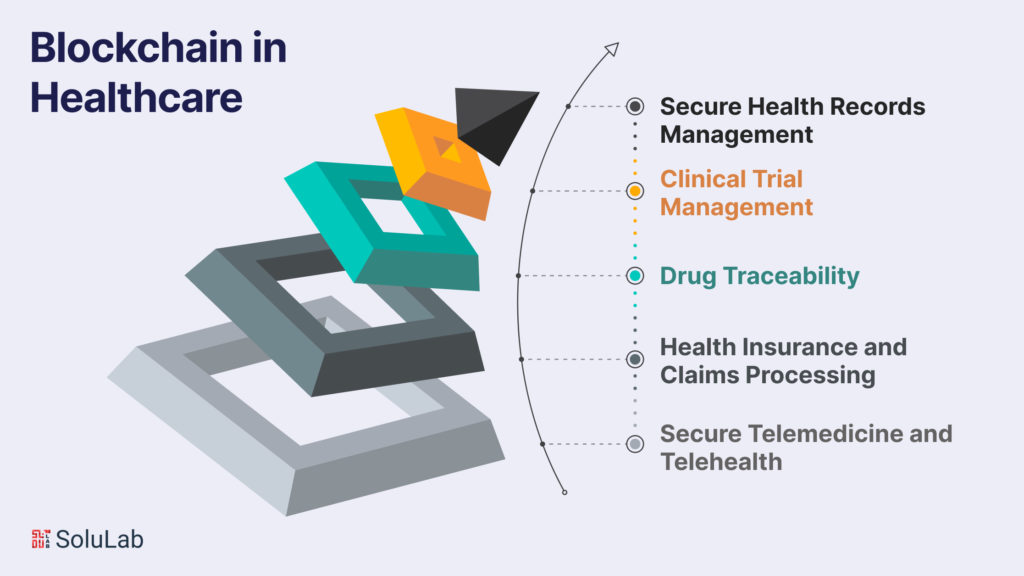
Blockchain technology has the potential to transform the healthcare industry in numerous ways by addressing issues related to data security, interoperability, and patient privacy. Here’s an in-depth look at how blockchain is being applied in healthcare:

Secure Health Records Management

Application: Blockchain can be used to securely store and manage Electronic Health Records (EHRs) and patient data.

Benefits: 

  • Improved data security: Patient data is encrypted and stored in a tamper-proof manner, reducing the risk of data breaches.
  • Data accessibility and control: Patients can grant access to their data as needed, enhancing privacy and control.

Use Case: Estonia, through its e-Health Authority, uses blockchain to secure the health records of its citizens. This has reduced data breaches and increased patient control over their health data.

Clinical Trial Management

Application: Blockchain smart contracts can automate and streamline the management of clinical trial data.

Benefits:

  • Improved transparency: Trial data is stored in an immutable and transparent way, reducing fraud.
  • Faster and more efficient trials: Smart contracts automate tasks like consent management and data sharing, reducing the time and costs associated with clinical trials.

Use Case: Mediledger is a blockchain platform that verifies the authenticity of pharmaceuticals in clinical trials, ensuring drug safety and reducing fraud.

Drug Traceability

Application: Blockchain can track the production and distribution of drugs, ensuring the authenticity and provenance of pharmaceuticals.

Benefits:

  • Reduced counterfeit drugs: Blockchain’s transparency can help verify the legitimacy of drugs, reducing health risks.
  • Enhanced drug recalls: Blockchain can quickly identify the source of contaminated or recalled drugs.

Use Case: The U.S. FDA is exploring blockchain for tracking and tracing prescription medications to combat counterfeit drugs in the pharmaceutical supply chain.

Health Insurance and Claims Processing:

Application: Blockchain can streamline health insurance claims processing by automating verification and payments through smart contracts.

Benefits:

  • Reduced fraud: The transparent and secure nature of blockchain can reduce fraudulent claims.
  • Faster and more efficient claims processing: Automation reduces administrative costs and processing times.

Use Case: Several insurance companies, such as Aetna and Humana, are exploring blockchain for claims processing and fraud prevention.

Secure Telemedicine and Telehealth:

Application: Blockchain enhances the security of telemedicine platforms, protecting sensitive patient data.

Benefits:

  • Secure data sharing: Patient information is encrypted and shared securely, ensuring confidentiality.
  • Trust in remote healthcare: Patients and healthcare providers can have confidence in the security of telehealth interactions.

Use Case: The Solve.Care platform combines blockchain and telehealth to provide secure and efficient remote healthcare services.

CTA_2

Conclusion

Blockchain technology is not just a buzzword but a transformative force that is reshaping industries and redefining the way we interact with data, value, and trust. Its applications in healthcare and various other sectors hold the promise of greater security, transparency, and efficiency. As the technology continues to evolve, it is crucial for businesses and individuals to stay informed and leverage the potential of blockchain for a better future. With its growing ecosystem, blockchain is set to remain the defining technology of our future, and its impact will only continue to expand.

SoluLab stands as a leading blockchain development company with cutting-edge blockchain development services, offering businesses the means to propel themselves into the future. Their team, comprised of top-tier blockchain developers, demonstrates exceptional proficiency in crafting and implementing tailored blockchain solutions that cater to real-world applications.

Collaborating with SoluLab affords businesses the opportunity to tap into a reservoir of seasoned Hire blockchain developers well-versed in the intricacies of blockchain ecosystems and protocols. These experts adeptly shepherd clients through the entire journey, commencing from the initial ideation stage and culminating in the seamless integration of blockchain technology into their operations. Whether one is in the process of exploring blockchain’s potential or seeking to enhance existing blockchain applications, SoluLab emerges as one of the best  blockchain development companies poised to bring these aspirations to fruition.

FAQs

1. What is Blockchain technology, and how does it work?

Blockchain is a new age technology that records transactions across a network of systems. It works by creating a chain of data blocks, where each block contains a set of transactions. Once added, these blocks are cryptographically linked, forming a secure and unchangeable record. This decentralized nature ensures that no single entity has control, enhancing security and transparency.

2. What are the key benefits of Blockchain technology?

The main advantages of Blockchain technology include enhanced security due to its tamper-proof nature, increased transparency through open access to data, decentralization, which reduces the risk of central authority manipulation, and the ability to streamline processes and reduce intermediaries, resulting in cost savings and increased efficiency.

3. Is Blockchain technology only for cryptocurrencies like Bitcoin?

No, Blockchain technology has a broader range of applications beyond cryptocurrencies. While Bitcoin is one application of blockchain, the technology can be used in various industries such as supply chain management, healthcare, finance, voting systems, and more, where secure, transparent, and tamper-proof data management is required.

4. How does Blockchain impact data security and privacy?

Blockchain improves data security by encrypting and decentralizing data of the users. Once data is recorded, it is extremely challenging to alter, ensuring its integrity. It also offers selective data sharing, where users have control over who can access their data, thus promoting privacy.

5. Are there any climatic concerns related to Blockchain technology?

Blockchain technology, particularly Proof of Work (PoW) systems like Bitcoin, has faced criticism for its energy consumption. However, newer consensus algorithms, like Proof of Stake (PoS), are more energy-efficient. Additionally, efforts are being made to mitigate environmental impacts through eco-friendly blockchain solutions.

The Core Concept of Blockchain Development

The Core Concept of Blockchain Development

In the ever-evolving landscape of technology, blockchain has emerged as a transformative force, revolutionizing the way businesses operate and ensuring secure, transparent, and decentralized data management. With its potential to enhance security, streamline operations, and foster trust among stakeholders, blockchain development has become a crucial element in reshaping various industries. This blog delves into the core concepts of blockchain development, explores its applications across diverse sectors, and highlights the key trends shaping the future of this groundbreaking technology.

Blockchain Development: A Comprehensive Overview

Delve into a comprehensive overview of blockchain development, understanding its intricacies and exploring its various applications.

Understanding Blockchain Development Concepts

Blockchain development is a multifaceted process that revolves around various crucial concepts pivotal to comprehending the underlying technology. A distributed ledger forms the foundational structure of blockchain, facilitating the transparent and secure recording of data transactions across a network of computers. The implementation of consensus mechanisms ensures the validation and agreement of data entries among network participants. Smart contracts, an integral component of blockchain development, enable self-executing and autonomous agreements, ensuring trust and transparency in various business interactions. Additionally, the application of robust cryptographic security measures guarantees the integrity and immutability of data stored within the blockchain.

CTA_1

Exploring the Blockchain Development Process

The intricate process of blockchain development involves several stages, each crucial for the successful deployment of blockchain solutions. The initial phase typically involves ideation and conceptualization, where developers collaborate with domain experts to identify the specific business requirements that blockchain technology can address. Subsequently, the design phase focuses on creating a comprehensive architecture that aligns with the identified objectives. Development follows, where developers leverage programming languages such as Solidity and languages compatible with blockchain frameworks like Ethereum. Rigorous testing is paramount to ensure the reliability and security of the developed blockchain solutions before deployment. The final stage involves the deployment of blockchain solutions into the target environment, ensuring seamless integration and operational efficiency.

Top Blockchain Trends Shaping the Industry

Top Blockchain Trends Shaping the Industry

Explore the top blockchain trends that are currently shaping the industry and driving innovation across various sectors.

  • Emergence of Decentralized Finance (DeFi) on Blockchain

The recent surge in decentralized finance (DeFi) has significantly impacted the blockchain landscape, introducing a range of financial services that operate without the need for traditional financial intermediaries. DeFi platforms provide an array of services, including decentralized lending, borrowing, and trading, all made possible through the utilization of blockchain technology. The integration of DeFi protocols has broadened the utility of blockchain beyond its initial scope of facilitating secure cryptocurrency transactions. With the advent of DeFi, users can engage in a variety of financial activities, including yield farming, liquidity provision, and decentralized exchanges, enabling greater accessibility and inclusivity within the financial ecosystem.

  • Interoperability Solutions Enhancing Blockchain Adoption

Interoperability solutions are rapidly gaining traction within the blockchain ecosystem, addressing the critical need for seamless communication and data transfer between disparate blockchain networks. In response to the challenges posed by isolated blockchain networks, numerous projects are actively pursuing cross-chain interoperability, aiming to establish a cohesive framework that enables the seamless exchange of assets and information across various blockchain protocols. These interoperability solutions seek to bridge the gap between different blockchain platforms, fostering an environment conducive to the frictionless and efficient transfer of data and assets. With interoperability becoming an increasingly essential feature, the blockchain industry is witnessing a shift toward collaborative and interconnected ecosystems that promote the free flow of value and information across diverse blockchain networks.

Read more : The Role of Blockchain in Web 3 Development

Blockchain Platforms: Revolutionizing Data Management

Uncover the ways in which blockchain platforms are revolutionizing data management, ensuring security, and enhancing transparency in digital transactions.

  • Decentralized Storage Solutions on Blockchain Platforms

Blockchain platforms have paved the way for the development of decentralized storage solutions, addressing the need for secure and efficient data management. By leveraging blockchain’s inherent features, decentralized storage solutions ensure data integrity and security, mitigating the risks associated with centralized data repositories. These platforms utilize distributed networks to store data across multiple nodes, eliminating the vulnerabilities typically associated with single-point data storage systems. The utilization of blockchain-based storage solutions also contributes to enhanced data accessibility, enabling users to securely access and manage their information without relying on intermediaries.

  • Enhancing Supply Chain Management through Blockchain

The integration of blockchain technology has brought about a transformation in the supply chain management landscape, enabling streamlined and transparent processes throughout the entire supply chain. With blockchain, stakeholders gain access to a decentralized and immutable ledger that records every transaction and movement of goods, thereby enhancing traceability and accountability. The implementation of smart contracts within supply chain management systems automates various contractual agreements, ensuring the seamless execution of predefined conditions. Additionally, blockchain’s transparent and secure nature allows for increased visibility and trust among supply chain participants, fostering efficient collaboration and reducing the risk of fraud and counterfeiting.

Blockchain Technology Companies: Driving Innovation and Adoption

Learn about the pioneering efforts of blockchain technology companies in driving innovation and fostering widespread adoption in the digital landscape.

  • Pioneering Innovations by Leading Blockchain Technology Companies

Several prominent blockchain technology companies have emerged as key contributors to the ongoing evolution of the blockchain landscape. These companies play a crucial role in driving innovation and fostering the adoption of blockchain technology across various industries. Through the development of cutting-edge solutions and platforms, these companies have significantly contributed to the advancement of blockchain applications, spanning areas such as finance, supply chain, healthcare, and more. Notable companies in the blockchain technology space have been instrumental in introducing novel use cases and addressing critical challenges, thereby establishing themselves as essential catalysts for the widespread adoption of blockchain technology globally.

  • Collaborative Initiatives and Partnerships Among Blockchain Technology Companies

The blockchain industry has witnessed an increasing number of collaborative initiatives and partnerships between various technology companies. These collaborations aim to leverage the collective expertise and resources of multiple entities to drive innovation, develop new solutions, and expand the scope of blockchain technology applications. Through strategic partnerships, blockchain technology companies seek to address industry-specific challenges, foster interoperability between different blockchain platforms, and promote the adoption of standardized protocols and frameworks. Collaborative efforts have also been instrumental in establishing unified standards for data sharing, security, and governance, paving the way for the development of a more interconnected and robust blockchain ecosystem.

Blockchain Technology Applications: Transforming Industries and Processes

Blockchain Technology Applications

Witness the transformative impact of blockchain technology applications on diverse industries and the processes they undertake.

  • Revolutionizing Supply Chain Management with Blockchain Technology

Blockchain technology has introduced a paradigm shift in supply chain management, enabling businesses to streamline processes, enhance transparency, and optimize logistics operations. By leveraging blockchain platforms, companies can effectively track and trace products throughout the supply chain, ensuring authenticity and minimizing the risk of counterfeiting and fraud. The implementation of blockchain-based solutions has facilitated real-time monitoring of inventory, improved supplier management, and enhanced visibility across the supply chain network. As a result, businesses can achieve greater efficiency, reduce operational costs, and build trust among stakeholders, ultimately leading to a more robust and resilient supply chain ecosystem.

  • Enhancing Financial Services through Blockchain Innovations

The financial services sector has embraced blockchain technology to revolutionize traditional banking and payment systems, offering secure, efficient, and decentralized solutions for various financial transactions. Blockchain platforms enable seamless peer-to-peer transactions, eliminating the need for intermediaries and reducing transaction costs. With the integration of smart contracts, financial institutions can automate complex financial processes, such as loan approvals, insurance claims, and trade settlements, leading to faster and more reliable service delivery. Furthermore, the use of blockchain technology in the financial services industry ensures data integrity, enhances customer trust, and provides greater transparency, fostering a more inclusive and accessible financial ecosystem for businesses and consumers alike.

Enterprise Blockchain Platforms: Optimizing Business Operations and Security

Discover how enterprise blockchain platforms are optimizing business operations, enhancing security, and fostering efficiency in various organizational processes.

  • Leveraging Top Enterprise Blockchain Platforms for Secure Transactions

Enterprise blockchain platforms have emerged as essential tools for businesses seeking to enhance security, efficiency, and transparency in their operations. By leveraging top enterprise blockchain platforms, organizations can facilitate secure transactions, streamline complex processes, and mitigate the risk of data breaches and fraudulent activities. These platforms offer robust security features, including encryption and decentralized storage, ensuring the integrity and confidentiality of sensitive business data. Furthermore, enterprise blockchain platforms enable seamless collaboration and data sharing among stakeholders, fostering a more interconnected and resilient business environment.

  • Exploring the Benefits of Blockchain Technology in Business Ecosystems

The integration of blockchain technology in business ecosystems offers numerous benefits, including improved data integrity, enhanced operational efficiency, and increased trust among partners and customers. By implementing blockchain-based solutions, enterprises can establish tamper-proof records, automate compliance procedures, and streamline supply chain management processes. Moreover, blockchain technology applications enable seamless cross-border transactions, eliminating barriers to international trade and fostering greater collaboration among global business networks. As a result, businesses can achieve greater resilience, agility, and competitiveness in the ever-evolving digital landscape.

Check Our Case Study: OborTech

Blockchain in Healthcare: Transforming Patient Care and Data Security

Explore the transformative role of blockchain in healthcare, ensuring enhanced patient care and bolstering data security and privacy.

  • Enhancing Data Security and Privacy in Healthcare with Blockchain

Blockchain technology has revolutionized data security and privacy in the healthcare industry, offering robust solutions for protecting sensitive patient information and maintaining the integrity of medical records. By implementing blockchain-based data storage and encryption, healthcare providers can ensure the confidentiality and accessibility of patient data, mitigating the risk of unauthorized access and data breaches. Furthermore, blockchain technology applications enable secure sharing of medical records among authorized entities, facilitating seamless collaboration and information exchange in the healthcare ecosystem. With the integration of blockchain in healthcare, patients can have greater control over their health data, leading to improved care coordination and personalized treatment plans.

  • Leveraging Blockchain Development Companies for Healthcare Innovations

The collaboration with blockchain development companies has enabled healthcare organizations to leverage cutting-edge technologies and develop innovative solutions for addressing critical challenges in patient care and data management. These development companies offer expertise in blockchain integration, smart contract development, and decentralized application deployment, empowering healthcare providers to build secure and scalable platforms for managing medical records, clinical trials, and telemedicine services. By partnering with leading blockchain development companies, healthcare organizations can drive digital transformation, accelerate innovation, and improve patient outcomes, ultimately shaping the future of healthcare delivery and data security.

Investing in Blockchain Development: Driving Innovation and Market Growth

Understand the dynamics of investing in blockchain development, its role in driving innovation, and its contribution to market growth and expansion.

  • Seizing Opportunities in Blockchain Development for Sustainable Growth

Investing in blockchain development presents lucrative opportunities for businesses and investors seeking to capitalize on the growing demand for decentralized and secure technologies. By allocating resources to blockchain research and development, companies can foster innovation, enhance operational efficiency, and create competitive advantages in the dynamic market landscape. Moreover, investing in blockchain technology applications enables businesses to explore new revenue streams, expand their market presence, and cultivate a culture of technological resilience and adaptability. As blockchain continues to disrupt traditional business models, strategic investments in blockchain development can position organizations for long-term growth and success.

  • Evaluating the Potential of Blockchain Technology Companies for Investment

Blockchain technology companies have become key players in the global market, offering diverse solutions and services that cater to the growing demand for secure and efficient digital transactions. By evaluating the potential of blockchain technology companies for investment, stakeholders can identify promising opportunities, assess market trends, and diversify their portfolios with innovative and forward-thinking ventures. These companies often specialize in blockchain integration, smart contract development, and decentralized application deployment, providing comprehensive solutions for businesses across various industries. By strategically investing in reputable and visionary blockchain technology companies, investors can contribute to the advancement of cutting-edge technologies and shape the future of digital innovation and transformation.

Blockchain in Healthcare: Transforming Patient Care and Data Security

Witness the transformative impact of blockchain in healthcare, ensuring enhanced patient care and bolstering data security and privacy.

  • Leveraging Blockchain for Enhanced Data Security and Privacy in Healthcare

Blockchain technology has revolutionized data security and privacy in the healthcare industry, offering robust solutions for protecting sensitive patient information and maintaining the integrity of medical records. By implementing blockchain-based data storage and encryption, healthcare providers can ensure the confidentiality and accessibility of patient data, mitigating the risk of unauthorized access and data breaches. Furthermore, blockchain technology applications enable secure sharing of medical records among authorized entities, facilitating seamless collaboration and information exchange in the healthcare ecosystem. With the integration of blockchain in healthcare, patients can have greater control over their health data, leading to improved care coordination and personalized treatment plans.

  • Accelerating Innovations in Patient Care and Management with Blockchain Development Companies

The collaboration with blockchain development companies has enabled healthcare organizations to leverage cutting-edge technologies and develop innovative solutions for addressing critical challenges in patient care and data management. These development companies offer expertise in blockchain integration, smart contract development, and decentralized application deployment, empowering healthcare providers to build secure and scalable platforms for managing medical records, clinical trials, and telemedicine services. By partnering with leading blockchain development companies, healthcare organizations can drive digital transformation, accelerate innovation, and improve patient outcomes, ultimately shaping the future of healthcare delivery and data security.

Enterprise Blockchain Platforms: Enhancing Security and Transparency in Business Operations

Learn how enterprise blockchain platforms are enhancing security and transparency, facilitating seamless and secure business operations.

  • Leveraging Enterprise Blockchain Platforms for Secure and Transparent Transactions

Enterprise blockchain platforms have emerged as essential tools for businesses seeking to enhance security, transparency, and efficiency in their operations. By adopting blockchain technology, enterprises can streamline their supply chain management, financial transactions, and data-sharing processes, ensuring secure and tamper-proof records of all transactions and interactions. These platforms facilitate seamless collaboration among stakeholders, enabling real-time visibility into business processes and fostering trust and accountability within the organization. With the integration of enterprise blockchain platforms, businesses can revolutionize their operations, improve data management, and drive innovation across various industry verticals.

  • Exploring the Role of Top Enterprise Blockchain Platforms in Industry Transformation

Top enterprise blockchain platforms play a pivotal role in driving industry transformation and innovation, offering comprehensive solutions for businesses to optimize their operations and enhance their competitive edge. These platforms often provide secure and scalable infrastructure for deploying decentralized applications, smart contracts, and digital asset management systems, enabling enterprises to harness the power of blockchain technology for improved data security and streamlined business processes. By leveraging top enterprise blockchain platforms, organizations can automate complex workflows, reduce operational costs, and create new business models that align with the evolving market trends and customer demands.

Top Blockchain Trends: Shaping the Future of Digital Innovation and Transformation

Explore the top blockchain trends that are shaping the future of digital innovation and transformation across industries and sectors.

  • Analyzing the Latest Blockchain Trends and Their Impact on Various Industries

Top blockchain trends have been instrumental in shaping the future of digital innovation and transformation, driving the adoption of decentralized technologies across diverse industries. From the rise of non-fungible tokens (NFTs) to the integration of blockchain in supply chain management, these trends have redefined the way businesses operate, interact, and transact in the digital landscape. Additionally, the emergence of blockchain ecosystems and protocols has paved the way for enhanced security, interoperability, and scalability in blockchain-based applications, fostering a dynamic and inclusive environment for developers and entrepreneurs to explore new opportunities and develop groundbreaking solutions.

  • Embracing Blockchain Technology Applications for Sustainable Growth and Development

Blockchain technology applications have gained significant traction in recent years, empowering businesses to innovate, collaborate, and create value-driven solutions for their customers and stakeholders. These applications span various sectors, including finance, healthcare, supply chain, and entertainment, offering a wide array of use cases that cater to the evolving needs and preferences of modern consumers. By embracing blockchain technology applications, businesses can streamline their operations, improve data management, and foster trust and transparency in their interactions, ultimately contributing to sustainable growth and development in the digital era.

Exploring the Evolving Landscape of Blockchain Development Companies

Delve into the evolving landscape of blockchain development companies, understanding their roles in driving technological advancements and breakthroughs.

  • Understanding the Role of Blockchain Development Companies in Driving Innovation and Growth

Blockchain development companies have played a crucial role in driving innovation and growth in the digital landscape, offering comprehensive solutions and services to businesses looking to harness the potential of blockchain technology. These companies specialize in developing secure and scalable blockchain-based applications, smart contracts, and decentralized protocols, catering to the diverse needs of enterprises and startups across various industries. By collaborating with blockchain development companies, businesses can leverage cutting-edge solutions, streamline their operations, and unlock new opportunities for growth and expansion in the dynamic and competitive market.

  • Investing in Blockchain Development: Navigating the Opportunities and Challenges

Investing in blockchain development has become increasingly essential for businesses seeking to stay ahead of the curve and capitalize on the transformative power of decentralized technologies. As the demand for blockchain-based solutions continues to rise, businesses and investors are exploring new avenues to allocate resources and funds to blockchain development projects and initiatives. By strategically investing in blockchain development, businesses can foster innovation, drive efficiency, and create long-term value for their customers and stakeholders, ultimately contributing to the sustainable growth and success of their ventures in the digital economy.

Blockchain in Healthcare: Revolutionizing Data Management and Patient Care

Experience the revolutionary impact of blockchain in healthcare, revolutionizing data management and enhancing patient care and treatment.

  • Harnessing the Potential of Blockchain in Healthcare for Secure and Interoperable Data Sharing

Blockchain in healthcare has revolutionized data management and patient care, offering a secure and interoperable framework for storing, managing, and sharing sensitive medical information. With blockchain technology, healthcare providers can ensure the integrity and privacy of patient data, streamline administrative processes, and facilitate seamless communication among different stakeholders in the healthcare ecosystem. By adopting blockchain solutions, the healthcare industry can address critical challenges related to data security, interoperability, and transparency, fostering a patient-centric approach to healthcare delivery and enhancing overall health outcomes for individuals and communities.

  • Embracing the Advantages of Blockchain Technology for Improved Healthcare Services and Outcomes

Embracing the advantages of blockchain technology in healthcare has paved the way for improved healthcare services and outcomes, empowering patients and providers with secure and transparent access to critical medical data and resources. From enhancing medical record management to facilitating secure telemedicine services, blockchain technology has enabled healthcare organizations to optimize their operations, reduce costs, and deliver personalized care to patients in a timely and efficient manner. By leveraging blockchain in healthcare, organizations can drive innovation, promote data interoperability, and create a patient-centric healthcare ecosystem that prioritizes quality, accessibility, and affordability.

Leveraging Enterprise Blockchain Platforms: Driving Efficiency and Scalability

Explore how businesses leverage enterprise blockchain platforms to enhance efficiency and achieve scalability in their operations.

  • Exploring the Potential of Enterprise Blockchain Platforms for Streamlined Operations and Enhanced Security

Enterprise blockchain platforms have emerged as powerful tools for driving efficiency and scalability in businesses, enabling secure and transparent data management, streamlined supply chain processes, and seamless collaboration among stakeholders. By leveraging enterprise blockchain platforms, organizations can establish robust and tamper-proof systems that facilitate real-time transaction processing, data sharing, and asset management, ultimately leading to improved operational efficiency, enhanced security, and increased trust among business partners and customers.

  • Top Enterprise Blockchain Platforms: Navigating the Leading Solutions for Business Growth and Innovation

The market for enterprise blockchain platforms has witnessed significant growth, with various companies offering cutting-edge solutions and services tailored to the specific needs of businesses across diverse industries. Leading enterprise blockchain platforms such as Hyperledger Fabric, Corda, and Quorum have gained prominence for their robust features, scalability, and adaptability, empowering organizations to build and deploy customized blockchain solutions that address critical business challenges and drive digital transformation initiatives. By evaluating the top enterprise blockchain platforms, businesses can make informed decisions and choose the most suitable solution that aligns with their strategic objectives and long-term goals.

Blockchain Technology Companies: Pioneering Innovation and Disruption in the Digital Landscape

Discover the trailblazing efforts of blockchain technology companies in driving innovation and disrupting the digital landscape.

  • Unveiling the Pioneering Role of Blockchain Technology Companies in Driving Innovation and Disruption

Blockchain technology companies have played a pivotal role in pioneering innovation and disruption in the digital landscape, introducing groundbreaking solutions and applications that have transformed the way businesses operate and interact with their customers. These companies have been instrumental in advancing the adoption of blockchain technology across various sectors, fostering new business models, and redefining traditional processes to meet the demands of the modern digital economy. By collaborating with blockchain technology companies, businesses can leverage their expertise and experience to stay ahead of the competition and unlock new opportunities for growth and development in the ever-evolving market.

  • Driving Transformation with Blockchain Technology Applications: Enhancing Security and Transparency

Blockchain technology applications have revolutionized the way businesses approach security and transparency, offering a decentralized and immutable framework for managing digital assets, verifying transactions, and protecting sensitive data from unauthorized access and manipulation. With blockchain technology applications, businesses can ensure the integrity of their operations, mitigate risks, and build trust among their customers and partners, fostering a secure and reliable environment for conducting business transactions and exchanging valuable information. By integrating blockchain technology applications, organizations can drive transformation, improve their competitive advantage, and establish a solid foundation for sustainable growth and success in the digital era.

Investing in Blockchain Development: Navigating Opportunities for Growth and Innovation

Navigate the opportunities and challenges associated with investing in blockchain development, fostering growth, and encouraging innovation.

  • Understanding the Potential of Investing in Blockchain Development for Long-Term Value Creation

Investing in blockchain development presents a unique opportunity for individuals and businesses to capitalize on the growing demand for secure and efficient digital solutions fostered by the widespread adoption of blockchain technology across various industries. By strategically allocating resources and capital towards blockchain development initiatives, investors can participate in the transformative journey of technology-driven innovation, diversify their investment portfolios, and position themselves for long-term value creation and sustainable growth in the dynamic and rapidly evolving market landscape.

  • Blockchain in Healthcare: Transforming the Future of Medical Data Management and Patient Care

Blockchain’s integration into the healthcare sector has revolutionized the way medical data is managed, stored, and shared, ensuring data security, privacy, and interoperability while enhancing patient care and facilitating seamless collaboration between healthcare providers. The adoption of blockchain technology in healthcare has facilitated secure and transparent data exchange, improved patient outcomes, and streamlined administrative processes, leading to a more efficient and patient-centric healthcare ecosystem. By embracing blockchain technology in healthcare, medical institutions and stakeholders can unlock new opportunities for innovation, improve operational efficiency, and deliver better healthcare services to their patients, ultimately contributing to the advancement of the global healthcare industry.

Blockchain Ecosystem Protocols: Building a Sustainable and Interconnected Digital Infrastructure

Explore the foundational protocols and structures that contribute to a sustainable and interconnected blockchain ecosystem.

  • Analyzing the Role of Blockchain Ecosystem Protocols in Establishing a Sustainable and Interconnected Digital Infrastructure

Blockchain ecosystem protocols play a crucial role in building a sustainable and interconnected digital infrastructure, providing the necessary framework and guidelines for the development and deployment of decentralized applications, smart contracts, and digital assets across the blockchain network. These protocols enable seamless communication and interaction between different blockchain platforms, fostering interoperability, scalability, and cross-chain functionality, which are essential for creating a robust and reliable ecosystem that supports the diverse needs and requirements of the global digital economy. By embracing blockchain ecosystem protocols, businesses can unlock new opportunities for collaboration, innovation, and growth and contribute to the advancement of the blockchain technology landscape.

  • Top Blockchain Trends: Embracing Innovation and Digital Transformation in the Modern Era

The dynamic and ever-evolving nature of the blockchain industry has given rise to various trends that are shaping the future of digital innovation and transformation. Top blockchain trends such as decentralized finance (DeFi), non-fungible tokens (NFTs), and blockchain-as-a-service (BaaS) have gained significant traction, demonstrating the potential of blockchain technology to revolutionize traditional business models and drive unprecedented levels of efficiency, security, and transparency across different sectors. By staying updated with the latest blockchain trends, businesses and investors can make informed decisions, capitalize on emerging opportunities, and stay ahead of the curve in the fast-paced and competitive digital landscape.

Blockchain Technology Companies: Driving Innovation and Transforming the Digital Landscape

Learn how blockchain technology companies are driving innovation and transforming the digital landscape with their cutting-edge solutions.

  • Exploring the Impact of Blockchain Technology Companies on Innovation and Digital Transformation

Blockchain technology companies have played a pivotal role in driving innovation and transforming the digital landscape, offering a wide array of solutions and services that leverage the power of blockchain technology to address various industry challenges and meet the evolving needs of businesses and consumers. These companies are at the forefront of developing cutting-edge blockchain solutions, including decentralized applications, digital wallets, and blockchain-based platforms, and are actively contributing to the advancement of the global digital economy by fostering transparency, security, and efficiency in data management and transaction processing. By collaborating with blockchain technology companies, businesses can harness the potential of blockchain technology, streamline their operations, and create new opportunities for growth and success in the digital era.

  • Enterprise Blockchain Platforms: Enhancing Security and Efficiency in Business Operations

Enterprise blockchain platforms have emerged as a vital tool for businesses seeking to enhance security and efficiency in their day-to-day operations, enabling secure data management, transparent transaction processing, and streamlined supply chain management. These platforms offer a robust and scalable infrastructure that supports the diverse needs and requirements of modern businesses, facilitating seamless communication and collaboration between different stakeholders and ensuring the integrity and authenticity of digital assets and transactions. By leveraging enterprise blockchain platforms, organizations can optimize their business processes, improve data security, and build trust and credibility among their customers and partners, leading to improved business performance and long-term sustainability in the competitive global market.

Read Also: Decentralized Physical Infrastructure Networks (DePIN)

Blockchain in Healthcare: Transforming the Industry through Enhanced Data Security and Interoperability

Discover how blockchain is transforming the healthcare industry by enhancing data security and enabling seamless interoperability.

  • Leveraging Blockchain in Healthcare for Improved Data Management and Patient Care

Blockchain in healthcare has emerged as a transformative force, offering innovative solutions for improved data management, enhanced security, and streamlined interoperability among different healthcare stakeholders. By leveraging blockchain technology, healthcare providers and institutions can create secure and transparent data ecosystems that enable efficient and seamless sharing of patient information, leading to improved care coordination, reduced administrative burdens, and enhanced patient outcomes. Additionally, blockchain technology can facilitate the secure management of sensitive health data, ensuring data integrity and confidentiality while allowing patients to have greater control over their health information, leading to increased trust and confidence in the healthcare system.

  • Investing in Blockchain Development: Unveiling New Opportunities for Growth and Innovation

Investing in blockchain development presents unique opportunities for businesses and organizations to unlock new potentials for growth and innovation, leveraging the power of blockchain technology to streamline their operations, enhance data security, and foster trust and transparency in their business processes. By allocating resources and efforts toward blockchain development, companies can stay ahead of the curve, embrace digital transformation, and create new value propositions for their customers and stakeholders. Investing in blockchain development allows businesses to explore new use cases, optimize their operations, and drive sustainable growth in an increasingly competitive and dynamic business environment, paving the way for long-term success and resilience in the digital age.

CTA2

Conclusion

In conclusion, the rapid evolution of blockchain technology has paved the way for transformative changes across various industries, offering unprecedented opportunities for businesses to enhance their operations, secure their data, and drive innovation. By harnessing the expertise and solutions provided by the top 10 blockchain development companies, businesses can unlock the full potential of blockchain technology, enabling secure and efficient transactions while ensuring data integrity and privacy. The role of enterprise blockchain platforms in optimizing business operations and data security is crucial in fostering trust among stakeholders and streamlining complex business processes.

Companies seeking to integrate blockchain technology into their operations can benefit significantly from the expertise of leading blockchain development companies, which offer tailored solutions, consulting services, and comprehensive development capabilities. With the increasing demand for blockchain technology in diverse sectors, including healthcare, finance, and supply chain management, investing in blockchain development has become essential for businesses looking to stay ahead in the digital era.

SoluLab, a prominent blockchain development company, has been at the forefront of driving innovation and delivering cutting-edge blockchain solutions for businesses worldwide. With a team of seasoned blockchain developers and consultants, SoluLab offers comprehensive blockchain development and consulting services, empowering businesses to embrace the future of blockchain technology and achieve sustainable growth and success in the digital landscape. Through its commitment to excellence and innovation, SoluLab continues to be a leading player in the blockchain development industry, delivering top-notch solutions and services that cater to the evolving needs of businesses in an ever-changing digital world.

FAQs

1. What are the key benefits of implementing blockchain technology in businesses?

Blockchain technology offers enhanced security, transparency, and efficiency in data management and transactions. It facilitates decentralized and secure record-keeping, reduces the risk of fraud, and ensures trust among stakeholders.

2. How can businesses choose the right blockchain development company for their specific needs?

Businesses should consider factors such as the company’s experience, expertise, portfolio, and client testimonials. Assessing the company’s ability to deliver tailored solutions and its understanding of the latest blockchain trends is also crucial.

3. What are some of the top blockchain trends to watch out for in the coming years?

Some key blockchain trends include the rise of decentralized finance (DeFi) platforms, the integration of blockchain in supply chain management, the adoption of non-fungible tokens (NFTs), and the increasing use of blockchain in healthcare for secure data management.

4. How does blockchain technology contribute to enhancing data security and privacy?

Blockchain employs cryptographic techniques and decentralized data storage, making it difficult for unauthorized parties to tamper with data. Its transparency and immutability ensure data integrity, and its distributed ledger system enhances the security and privacy of sensitive information.

5.  What are the potential challenges businesses may face when integrating blockchain technology?

Some common challenges include scalability issues, regulatory uncertainties, the complexity of implementation, interoperability concerns, and the need for skilled professionals. Addressing these challenges requires careful planning and a thorough understanding of the technology.

6. How can blockchain development revolutionize the healthcare industry?

Blockchain in healthcare can improve data interoperability, enhance patient data security, enable efficient tracking of pharmaceutical supply chains, and facilitate streamlined medical record management, leading to improved patient care and overall operational efficiency.


Blockchain in Automotive and Health Insurance

Blockchain in Automotive and Health Insurance

Blockchain technology has emerged as a revolutionary force across various industries, transforming traditional systems and unlocking new opportunities for innovation. In the automotive and health insurance sectors, blockchain’s potential to enhance transparency, security, and efficiency is garnering significant attention. Both industries face challenges related to data management, fraud prevention, and complex transactions, and blockchain solutions are poised to address these issues head-on.

Similarly, in the health insurance domain, blockchain holds immense promise in revolutionizing the way data is managed and shared. With patient information scattered across various healthcare providers and insurers, interoperability and data security become paramount concerns. Blockchain technology provides a unified and secure platform, allowing authorized stakeholders to access patients’ health records in a tamper-proof and privacy-preserving manner. 

In this era of digital transformation, blockchain’s potential in the automotive and health insurance industries is undeniable. As these sectors embrace this disruptive technology, they are set to witness a profound shift towards greater efficiency, transparency, and trust in their operations, ultimately benefiting both businesses and consumers alike.

Read Also: What are the Benefits of Using Digital Identity with Blockchain in the Future?

What are the Benefits of a Blockchain Healthcare Development Company?

What are the Benefits of a Blockchain Healthcare Development Company?

Blockchain technology has made significant strides in various industries, and the healthcare sector is no exception. As healthcare organizations seek more secure, transparent, and efficient ways to manage patient data and streamline processes, blockchain solutions offer a wide array of benefits. Engaging a specialized blockchain healthcare development company can prove to be a game-changer for healthcare providers, patients, and other stakeholders. Here are some key advantages of opting for a blockchain healthcare development company:

  • Enhanced Data Security and Privacy

One of the most significant benefits of blockchain technology in healthcare is its ability to ensure data security and privacy. Traditional healthcare systems often face security breaches and data leaks, exposing sensitive patient information. Blockchain’s decentralized and encrypted nature makes it extremely difficult for unauthorized individuals to access or tamper with data. Every transaction is recorded in a secure and immutable manner, providing healthcare providers and patients with peace of mind knowing that their data is safeguarded against cyber threats.

  • Streamlined Interoperability

Blockchain promotes interoperability by creating a single, unified platform for sharing and accessing patient data across different healthcare providers and facilities. This seamless exchange of information enhances care coordination and eliminates data silos, enabling healthcare professionals to make better-informed decisions and deliver more personalized and efficient care to patients. It also reduces administrative burden and redundant paperwork, leading to cost savings for healthcare organizations.

Read Our Blog: Top 10 Startups that are Revolutionizing Healthcare Industry Using Blockchain Technology

  • Improved Supply Chain Management

Blockchain technology can play a vital role in managing pharmaceutical supply chains. By tracking the entire journey of medications, vaccines, and medical devices through the supply chain, blockchain ensures the authenticity and integrity of these products. This level of transparency helps combat counterfeit drugs and ensures that patients receive safe and legitimate medications.

  • Efficient Claims Processing

For health insurers, blockchain streamlines claim processing and fraud detection. By automating claim verification and eliminating intermediaries, blockchain reduces the time and cost involved in settling claims. The immutability of blockchain records also facilitates fraud detection, as any suspicious activity or duplicate claims can be quickly identified and flagged.

CTA 1

  • Patient-Centric Approach

Blockchain healthcare solutions empower patients to take control of their health data. Through blockchain-based platforms, patients can grant and revoke access to their medical records, ensuring that only authorized individuals or entities can view their information. This patient-centric approach fosters trust between healthcare providers and patients, leading to improved patient engagement and satisfaction.

  • Research and Clinical Trials

Blockchain technology can also enhance medical research and clinical trials. By creating a secure and transparent platform for sharing research data, researchers can collaborate more effectively and accelerate medical discoveries. Smart contracts on blockchain networks can automate the execution of clinical trial protocols, ensuring compliance and accuracy throughout the process.

What are the Top Use Cases for Blockchain in Healthcare?

What are the Top Use Cases for Blockchain in Healthcare?

Blockchain technology has emerged as a transformative force in the healthcare industry, presenting numerous use cases that address critical challenges and revolutionize traditional processes. The immutability, security, and decentralized nature of blockchain make it an ideal fit for enhancing data management, interoperability, and patient care. Here are some of the top use cases for blockchain in healthcare:

  • Secure and Interoperable Electronic Health Records (EHRs)

Blockchain enables the creation of a secure and interoperable EHR system by providing a decentralized and tamper-proof platform for storing patient health records. Patients can grant permission to healthcare providers and institutions to access their EHRs, ensuring seamless data exchange without compromising privacy. This enhanced interoperability streamlines care coordination and allows medical professionals to access up-to-date patient information, leading to more accurate diagnoses and personalized treatment plans.

Read Our Blog Post: How Blockchain provides opportunities for healthcare?

  • Medical Supply Chain Management

Blockchain can significantly improve the management of pharmaceutical and medical supply chains. By creating an unalterable record of each step in the supply chain, from manufacturing to distribution, blockchain ensures the authenticity and quality of medications and medical devices. This transparency helps combat counterfeit drugs, reduce the risk of medical errors, and enhance patient safety.

  • Clinical Trials and Research

Blockchain simplifies the process of conducting clinical trials and medical research. Smart contracts on blockchain networks can automate consent management, data sharing, and compliance with trial protocols. This automated approach streamlines data collection, analysis, and verification, accelerating the pace of medical research and improving the efficiency of clinical trials.

  • Identity Management and Patient Verification

Blockchain offers a secure solution for managing patient identities and verifying patient information. Patients can have a unique digital identity on the blockchain, ensuring that their medical history and personal data remain protected and verified. This reduces the risk of medical identity theft and fraud, allowing healthcare providers to deliver better-targeted care.

  • Medical Credentialing and Licensing

Blockchain simplifies the process of medical credentialing and licensing for healthcare professionals. Credentials, licenses, and certifications can be securely stored on the blockchain, and verification of these qualifications becomes more efficient and accurate. This helps healthcare organizations ensure that their staff members are qualified and compliant with regulatory requirements.

  • Drug Traceability and Adverse Event Reporting

Blockchain technology can facilitate the tracking and tracing of pharmaceuticals throughout the supply chain. It enables the recording of every transaction involving a drug, from manufacturing to dispensing, providing an auditable record of the drug’s journey. Additionally, adverse event reporting can be improved by utilizing blockchain to capture and share real-time data on drug reactions, enabling faster responses and improved drug safety.

Read Also: Top Healthcare Blockchain Companies 

  • Health Insurance Claims Processing

Blockchain streamlines health insurance claims processing, reducing administrative overhead and enhancing fraud detection. Smart contracts can automate claim verification and settlement processes, making the system more efficient and reducing the time taken to process claims. The transparency and immutability of blockchain records also aid in identifying fraudulent claims and mitigating risks.

What are the Constraints of Utilizing Blockchain in Health Insurance?

While blockchain technology offers a plethora of benefits for the healthcare industry, including health insurance, certain constraints, and challenges need to be carefully considered. As with any emerging technology, there are hurdles to overcome to ensure successful implementation and integration. Here are some of the key constraints of utilizing blockchain in health insurance:

  • Regulatory and Compliance Issues

The healthcare industry is highly regulated, and the introduction of blockchain technology must navigate various legal and compliance challenges. Data privacy and security regulations, such as the Health Insurance Portability and Accountability Act (HIPAA) in the United States, impose stringent requirements on handling sensitive patient data. Integrating blockchain in health insurance must align with these regulations to protect patient privacy while enabling secure data sharing and accessibility.

  • Data Standardization and Interoperability

Blockchain’s potential in health insurance lies in creating a decentralized and interoperable system for sharing patient data across different providers and insurers. However, achieving true interoperability requires the standardization of data formats and protocols. The lack of standardized data in the healthcare sector may hinder the seamless exchange of information, making it challenging to fully leverage the benefits of blockchain technology.

Check Out Our Press Release: SoluLab Bridging the Gap Between Technology And Innovation

  • Scalability and Transaction Throughput

Blockchain networks, especially public ones, often face scalability issues and limited transaction throughput. In the context of health insurance, where numerous transactions occur daily, a blockchain’s capacity to handle a high volume of data becomes crucial. Scalability solutions, such as sharding or off-chain processing, need to be implemented to ensure that blockchain networks can accommodate the demands of the health insurance industry effectively.

  • Data Onboarding and Integration

Migrating existing data and systems to a blockchain-based infrastructure can be a complex process. Health insurers have vast amounts of historical data that need to be carefully onboarded onto the blockchain while maintaining data integrity and accuracy. Additionally, integrating blockchain with legacy systems and electronic health record (EHR) platforms can present technical challenges that require meticulous planning and execution.

  • Cost and Resource Investment

Implementing blockchain technology in health insurance requires significant investment in terms of time, resources, and expertise. Developing and maintaining a robust blockchain network necessitates specialized skills, including blockchain development, cybersecurity, and data management. The initial costs and ongoing operational expenses can be substantial, and healthcare organizations must weigh these expenditures against the potential benefits.

  • Resistance to Change

The healthcare industry is traditionally conservative when it comes to adopting new technologies. Embracing blockchain may encounter resistance from stakeholders who are skeptical of the technology’s efficacy or who are accustomed to conventional systems. Overcoming this resistance requires effective education, communication, and demonstration of the tangible advantages that blockchain can bring to health insurance operations.

What Steps can we take to Introduce Blockchain in Automotive Industry?

What Steps can we take to Introduce Blockchain in Automotive Industry?

Blockchain in the automotive industry is ripe for disruption, and blockchain technology has the potential to revolutionize various aspects, including supply chain management, vehicle history tracking, and digital identity verification. To successfully introduce blockchain in the automotive sector, several key steps must be taken. Let’s explore the critical measures that can pave the way for the seamless integration of blockchain technology:

Read Also: Top 14 Blockchain-Based Automotive Startups

  • Industry Collaboration and Education

The first step is to foster collaboration among stakeholders in the automotive industry. This includes automakers, suppliers, dealerships, and other key players. Industry-wide cooperation can help create a shared understanding of blockchain’s potential and the specific challenges it can address. Additionally, organizing workshops, conferences, and educational sessions to familiarize participants with blockchain technology and its applications will be instrumental in driving adoption.

  • Identify Use Cases and Pain Points

Understanding the pain points and inefficiencies in the automotive industry is crucial in determining the most appropriate use cases for blockchain in the automotive industry. Conducting thorough research and analysis to identify areas where blockchain can bring the most significant benefits, such as tracking vehicle parts authenticity, improving supply chain transparency, or enabling secure and efficient peer-to-peer vehicle sales, is essential.

  • Proof of Concept (PoC) Development

Developing a Proof of Concept (PoC) is an effective way to validate the feasibility of blockchain applications in the automotive sector. A PoC allows stakeholders to test the technology on a smaller scale, identify potential challenges, and assess the impact of blockchain on existing processes. It provides valuable insights before making substantial investments in full-scale implementation.

  • Choose the Right Blockchain Platform

Selecting the top blockchain platform is a critical decision. Public or private blockchain networks may be suitable depending on the specific use case and requirements. Factors to consider include scalability, security, governance, and consensus mechanisms. Collaborating with experienced blockchain development firms can aid in making the right technology choices.

  • Establish Data Standards and Interoperability

For blockchain to deliver its full potential, standardizing data formats and protocols is crucial. This promotes interoperability and ensures seamless data exchange between different participants in the automotive ecosystem. Defining data standards and adhering to industry-wide best practices will facilitate smooth integration with existing systems.

  • Regulatory Compliance and Data Privacy

Addressing regulatory compliance and data privacy concerns is paramount when introducing blockchain in the automotive industry. Given the sensitivity of personal and vehicle-related data, ensuring compliance with regional data protection laws, such as the General Data Protection Regulation (GDPR), is essential to gain customer trust and maintain legal compliance.

Read Our Blog: How Will Blockchain Transform Insurance Companies?

  • Gradual Implementation and Scalability

Rather than attempting a complete overhaul of existing systems, a gradual and phased approach to blockchain integration is recommended. Starting with pilot projects and expanding progressively allows stakeholders to learn from early successes and address any challenges that arise. As blockchain applications gain traction, scaling up to larger projects becomes more manageable.

  • User Education and Adoption

Finally, educating end-users, including customers, dealerships, and service centers, about the benefits of blockchain technology and its impact on their daily interactions with the automotive industry is crucial. By fostering awareness and demonstrating the enhanced security, transparency, and efficiency that blockchain brings, user adoption can be accelerated.

CTA 2

Conclusion

In conclusion, Blockchain technology has emerged as a game-changer in the automotive and health insurance industries, revolutionizing the way data is managed, transactions are processed, and trust is established. As a leading provider of cutting-edge blockchain solutions, SoluLab recognizes the immense potential of this transformative technology and its ability to bring transparency, efficiency, and security to these critical sectors.

In the automotive industry, blockchain’s decentralized and immutable ledger ensures that vehicle histories, maintenance records, and ownership details are securely stored and easily accessible to all relevant stakeholders. This enhances trust and transparency, reduces the risk of fraud, and streamlines processes, ultimately benefiting manufacturers, dealers, insurers, and consumers alike. SoluLab’s expertise in custom blockchain development services empowers automotive companies to harness this technology’s full potential and drive innovation within their operations.

At SoluLab, we are committed to pushing the boundaries of what blockchain can achieve in the automotive and health insurance sectors. Our team of experts works tirelessly to deliver innovative, scalable, and user-friendly solutions that empower our clients to stay ahead in an increasingly digital world. As these industries continue to evolve, we remain dedicated to staying at the forefront of blockchain innovation and providing our clients with the tools they need to succeed in this transformative era. 

FAQs

1. What is Blockchain technology, and how is it applied in the automotive industry?

Blockchain is a decentralized and immutable ledger technology that records transactions securely and transparently. In the automotive industry, Blockchain is utilized to enhance supply chain management, vehicle data sharing, and ownership verification. By creating a tamper-proof record of vehicle history, Blockchain fosters trust and efficiency, reducing fraud and ensuring the authenticity of parts and components.

2. How does Blockchain benefit the health insurance sector?

Blockchain in health insurance revolutionizes the way medical data is managed. Patients have better control over their health records, and insurers can efficiently access verified information, streamlining the claims process. This technology improves data privacy and security, reducing instances of fraud and unauthorized access to sensitive medical information.

3. Can you recommend a blockchain healthcare development company?

Sure! If you’re looking for a reputable blockchain healthcare development company, you can explore leading firms specializing in healthcare solutions like SoluLab. Companies like SoluLab offer tailored Blockchain applications to healthcare providers, insurers, and patients, ensuring seamless integration and secure data management.

4. What are some common Blockchain healthcare solutions in the market?

Blockchain healthcare solutions encompass Electronic Health Records (EHR) management, drug supply chain tracking, clinical trials management, and patient identity verification. These solutions enhance interoperability, data accuracy, and collaboration among stakeholders, leading to improved healthcare outcomes.

5. How do Blockchain development services contribute to innovation in various industries?

Blockchain development services play a pivotal role in fostering innovation across sectors. By providing expertise in building and implementing decentralized applications, smart contracts, and consensus mechanisms, Blockchain developers help businesses harness the full potential of this transformative technology.

Top Healthcare Blockchain Companies to Watch in 2026

Top Healthcare Blockchain Companies

In recent years, the integration of blockchain technology in the healthcare sector has emerged as a transformative force, revolutionizing the way data is managed, shared, and secured. This overview delves into the profound impact of blockchain in healthcare, emphasizing its importance and exploring the dynamic trends shaping its integration. Moreover, we’ll spotlight the top blockchain healthcare companies leading this innovative charge.

Blockchain, originally devised for cryptocurrency transactions, has found a natural home in healthcare due to its intrinsic attributes of transparency, security, and decentralization. In essence, blockchain is a decentralized and distributed ledger technology that ensures the immutability and integrity of data. In healthcare, this translates to a secure and transparent method of managing electronic health records (EHRs), streamlining processes, and enhancing overall data management.

Blockchain’s architecture eliminates the need for a centralized authority, reducing the risk of data breaches and unauthorized access. By creating a decentralized network of nodes, each participant in the healthcare ecosystem can securely access, share, and update patient information. This not only ensures the integrity of health records but also facilitates seamless collaboration among healthcare stakeholders.

The importance of blockchain technology in healthcare lies in its ability to address longstanding challenges within the industry. Security breaches, data fragmentation, and interoperability issues have plagued the healthcare sector for years. Blockchain offers a solution by providing a secure and standardized framework for storing and sharing sensitive medical data.

What are the Emerging Trends in the Integration of Blockchain in Healthcare?

As the healthcare industry continues to evolve, several emerging trends are shaping the integration of blockchain technology:

Interoperability Solutions

Blockchain fosters interoperability by creating a standardized and secure environment for data exchange among different healthcare systems. This trend is essential for ensuring seamless communication between diverse healthcare entities.

Smart Contracts for Healthcare Management

The utilization of smart contracts automates and executes predefined rules within the healthcare ecosystem. This includes processes such as insurance claims, ensuring transparency, and reducing the risk of fraudulent activities.

Tokenization of Healthcare Assets

The tokenization of healthcare assets, such as patient records or research data, enables efficient and secure transactions within the blockchain. This trend is gaining traction as it introduces new possibilities for data monetization and incentivizes data sharing.

What are the Benefits of Blockchain in Healthcare?

Blockchain technology is revolutionizing the healthcare industry by offering numerous benefits that enhance security, transparency, and efficiency. The integration of blockchain technology in healthcare is gaining momentum, and top blockchain healthcare companies are at the forefront of this transformative journey.

Enhanced Security

Blockchain ensures the highest level of security for healthcare data. Its decentralized and cryptographic nature prevents unauthorized access, tampering, and data breaches. Top blockchain development companies implement robust encryption protocols to safeguard sensitive patient information, establishing a secure foundation for healthcare data management.

Interoperability and Data Sharing

Blockchain facilitates seamless interoperability among different healthcare systems. It enables secure and transparent sharing of patient data across various stakeholders, such as hospitals, clinics, and insurance providers. This interoperability enhances care coordination, reduces errors, and ensures that healthcare professionals have access to comprehensive and up-to-date patient information.

Immutable Record Keeping

The blockchain’s decentralized ledger ensures an immutable record of transactions. In healthcare, this means that once data is recorded on the blockchain, it cannot be altered or deleted. This feature is particularly crucial in maintaining the integrity of patient records, treatment histories, and clinical trials, reducing the risk of fraud, and ensuring the reliability of medical data.

Streamlined Data Management

Healthcare companies using blockchain benefit from streamlined data management processes. Blockchain allows for the creation of smart contracts, automating and executing predefined rules. This reduces administrative overhead, minimizes errors, and accelerates claims processing and billing processes within the healthcare ecosystem.

Patient Empowerment and Control

Blockchain platform empowers patients by giving them greater control over their health data. With blockchain, patients can grant and revoke access to their information, ensuring that only authorized individuals or entities can view their medical records. This transparency enhances patient trust in the healthcare system and fosters a more patient-centric approach to care.

Efficient Clinical Trials

Blockchain facilitates the optimization of clinical trials by providing a transparent and tamper-proof record of trial data. This enhances the credibility of research findings, expedites the sharing of trial results, and accelerates the overall drug development process. Top blockchain healthcare companies leverage this technology to contribute to advancements in medical research and development.

The Top Healthcare Blockchain Companies to Watch in 2026.

1. SoluLab

In the ever-evolving landscape of healthcare technology, SoluLab emerges as a trailblazer among the top blockchain healthcare companies, showcasing innovation, expertise, and a commitment to revolutionizing the industry in 2025. In the dynamic landscape of healthcare technology, SoluLab has positioned itself as a frontrunner among the top blockchain healthcare companies, showcasing innovation, expertise, and a commitment to revolutionizing the industry.

Blockchain technology has proven to be a game-changer in the healthcare sector, addressing issues related to security, transparency, and interoperability. SoluLab, as one of the leading healthcare blockchain companies, has demonstrated unparalleled proficiency in harnessing the power of blockchain to enhance the efficiency and integrity of healthcare systems.


$25-$49


50-249


2014


Los Angeles, CA, USA


Digital Quest

2. BurstIQ’s

BurstIQ’s platform helps blockchain healthcare startups safely and securely manage massive patient data. Its blockchain technology enables the safekeeping, sale, sharing, or license of data while strictly complying with HIPAA rules. The company uses blockchain to improve how medical data is shared and used.

Because BurstIQ’s platform includes complete and up-to-date information about patients’ health and healthcare activity, it could help to root out abuse of opioids or other prescription drugs.


$25-$49


50-249


2008


Colorado Springs, Colorado


Olive AI, FlowMetric

3. Medicalchain

Medicalchain’s blockchain maintains the integrity of health records while establishing a single point of truth. Doctors, hospitals, and laboratories can all request patient information with a record of the origin and protect the patient’s identity from outside sources. Medicalchain’s blockchain-based platform maintains a record of the origin and protects patient identity. In May 2018, Medicalchain announced the release of MyClinic.com. A telemedicine platform, MyClinic enables patients to consult with their doctors via video and pay for those consultations with “MedTokens.”


$55-$90


10-50


2016


London, England


ctronic Health Record, Medical

4. Guardtime

Guardtime is helping blockchain healthcare startups and governments implement blockchain into their cybersecurity methods. The company was vital in helping implement blockchain in Estonia’s healthcare systems, and it recently signed a deal with a private healthcare provider in the United Arab Emirates to bring blockchain to its data privacy systems. Guardtime employs blockchain for cybersecurity applications, including healthcare.

Guardtime recently teamed with Verizon Enterprise Solutions to deploy several platform services based on Guardtime’s Keyless Signature Infrastructure (KSI) Blockchain.


$25-$50


10-250


2007


Irvine, California


Galois, Lockheed Martin

5. Avaneer Health

Avaneer is a new company backed by Aetna, Anthem, and Cleveland Clinic dedicated to using blockchain technology to improve healthcare efficiency, utilizing a public ledger to support better claims processing, secure healthcare data exchanges, and keep provider directories maintained and up-to-date.

The Avaneer network takes a forward-looking approach to keep healthcare data secure and readily available to authorized care providers.


$55-$90


10-49


2017


Illinois, United States


Sentara Healthcare, Anthem, Aetna Ventures

6. Chronicled

Chronicled builds blockchain networks that demonstrate the chain of custody. The networks help pharma companies ensure their medicines arrive efficiently and enable law enforcement to review any suspicious activity — like drug trafficking. 2017 Chronicled created the Mediledger Project, a ledger system dedicated to medical supply chains’ safety, privacy, and efficiency.

The Chronicle blockchain network ensures the safe arrival and detailed review of drug shipments.


$55-$90


10-49


2014


San Francisco, CA


Abbvie, Genentech

7. Robomed

Robomed combines AI and blockchain to offer patients a single point of care. The company deploys chatbots, wearable diagnostic tools, and telemedicine sessions to gather patient information and share it with the patient’s medical team. Robomeds Panacea platform engages patients into smart contracts that incentivize and lead them toward better health Robomed uses blockchain to securely gather patient information and share it with a patient’s healthcare providers.


$55-$99


11-50


2011


Moscow, Russia


N/A

8. Patientory

Patientory’s end-to-end encryption ensures patient data is shared safely and efficiently. The platform enables patients, healthcare providers, and clinicians to access, store, and transfer all important information via blockchain. Patientory helps the healthcare industry to move more quickly by housing all patient information under one roof. Patientory’s blockchain platform enables the secure storage and transfer of important medical information.


$25-$50


10-49


2016


Georgia, USA


N/A

9. Doc.ai

Doc.ai uses machine intelligence, like AI, to decentralize medicine on the blockchain. Users can opt into the company’s platform to share their medical and genomic data with a community of scientists that use the data for predictive modeling. doc.ai saves no patient data. Once information is uploaded, encrypted on a blockchain, and used in a trial, the data is wiped out to ensure security and privacy. The company employs machine intelligence (like AI) to decentralize medical data on the blockchain.


$25-$50


51-100


2016


California, USA


N/A

10. Encrypgen

The EncrypGen Gene-Chain is a blockchain-backed platform that facilitates searching, sharing, storing, buying, and selling genetic information. The company protects its users’ privacy by allowing only other members to purchase genetic information using safe, traceable DNA tokens. Member companies can use genetic information to build upon their genetic knowledge and advance the industry. The company’s blockchain platform makes searching for, sharing, storing, and buying genetic information easier.


$25-$50


10-50


2015


Florida, USA


N/A

Conclusion

In conclusion, as we navigate the dynamic landscape of healthcare technology, the prominence of blockchain in revolutionizing the industry cannot be overstated. The top blockchain healthcare companies are at the forefront of this transformative wave, pioneering innovative solutions that enhance security, transparency, and efficiency in healthcare systems.

Among these trailblazers, SoluLab as a blockchain development company stands out as a key player, consistently delivering cutting-edge blockchain solutions tailored to the unique demands of the healthcare sector. Their commitment to advancing the integration of blockchain in healthcare has positioned them as a trusted partner for companies seeking to optimize their operations and ensure the integrity of sensitive health data.

The evolution of blockchain in healthcare is marked by the remarkable contributions of companies dedicated to harnessing its potential. From streamlining data interoperability to ensuring the integrity of electronic health records, these healthcare blockchain companies are driving tangible improvements in patient care and overall system efficacy.

In the years ahead, the collaboration between innovative enterprises and the healthcare industry is poised to bring about unprecedented advancements, with blockchain technology serving as a cornerstone for transformative change. As stakeholders increasingly recognize the value of blockchain in healthcare, SoluLab will continue to play a pivotal role in shaping the future of this dynamic and vital sector.

Blockchain Solutions

FAQs

1. What are the key advantages of utilizing blockchain in healthcare?

Blockchain in healthcare ensures secure and transparent data sharing, enabling enhanced interoperability among various healthcare entities. It enhances data integrity by providing an immutable and decentralized ledger, reducing the risk of tampering and unauthorized access.

2. Which healthcare companies are leading the way in implementing blockchain technology?

Notable healthcare blockchain companies in 2026 include IBM Watson Health, Change Healthcare, and Guardtime. These companies are at the forefront of leveraging blockchain for data security, interoperability, and streamlined healthcare processes.

3. How does blockchain improve data security in the healthcare sector?

Blockchain employs cryptographic techniques to secure health records, ensuring that sensitive patient information is protected from unauthorized access. The decentralized nature of blockchain reduces the vulnerability of a single point of failure, making it more resilient against cyber threats.

4. Can you provide examples of healthcare companies using blockchain for supply chain management?

Companies like Hashed Health are utilizing blockchain to enhance transparency and traceability in pharmaceutical supply chains, reducing the risk of counterfeit drugs. Chronicled and IBM are also notable for their efforts in using blockchain to optimize the healthcare supply chain.

5. How does blockchain contribute to improved interoperability among healthcare systems?

Blockchain facilitates seamless data exchange among different healthcare providers, promoting interoperability and ensuring a more comprehensive view of patient health history. Healthcare blockchain companies like Chronicled and Hashed Health are actively working towards creating standardized blockchain ecosystem protocols for data sharing.

6. Are there any emerging blockchain healthcare companies making significant strides in 2026?

Yes, companies like SimplyVital Health and Factom are gaining recognition for their innovative approaches to leveraging blockchain for healthcare data management. These emerging players are introducing novel solutions to address the evolving needs of the healthcare industry.

What Could Blockchain Do for Healthcare?

Even the world’s best health systems are typically fragmented. “You have hospitals, community clinics, general practitioners, specialists, diagnostic clinics, and so on,” says Matt Jackson, who leads blockchain research at Canada’s Institute on Governance.

There are many reasons you might want to give someone access to your medical data. Maybe you just moved to a new city and want to give your new doctor access to your medical history, or perhaps you want to nominate a healthcare proxy in case of emergency or have your prescription sent to your pharmacy.

Some places, like the UK or Canada, have viable national systems for exchanging patient records, but those can be vulnerable to hackers.

In the United States, healthcare comes from a patchwork of private companies, which means the handling of patient data is even more fragmented. John Halamka, chief information officer at Beth Israel Deaconess Medical Center in Boston, Massachusetts, told MIT Technology Review last year that there are 26 different electronic medical records systems in his home city alone.

In 2016, Halamka teamed up with a group of scientists at MIT to try to find a solution to the problem using blockchain. They published their white paper on the subject in August 2016, laying out their proposal for a system that would help all those disparate databases exchange data — a project they called MedRec.

Andy Lippman, a senior research scientist at MIT, co-authored the paper with Halamka. The system they outlined was to use Ethereum software — which, unlike bitcoin, can integrate and execute smart contracts — to build a private blockchain, linking healthcare providers together and allowing them to share their data.

On this blockchain, each of these instructions by a patient creates a specific smart contract on the blockchain that only the patient can cryptographically sign.

Security is one benefit: “Distribution makes the system more secure because there isn’t a single place of attack or failure,” Lippman says.

Medical providers run a program module on their computer to access the database, as instructed by the smart contracts, which are initiated by the patient.

That module does three core things: First, it allows the healthcare provider access to the data when the blockchain is instructed to give it. Second, it executes the patient’s instructions as and when needed, sending data to a pharmacy or a specialist for a referral — assuming the patient gives their consent. Third, the module allocates computing resources to maintaining the blockchain.

Taking Back Control

The first, Web 1.0, is characterized by openness, based on a global consensus as to the mechanism for webpages. “Everyone agrees as a community that we are going to use HTML,” Lippman says, “and your browser can display pages from all kinds of different people, as opposed to one company making webpages one way, another their way.” However, as the internet matured, companies like Facebook and Google monopolized some areas of information — search data, and social data — separating them into jealously guarded silos and databases. This is known as Web 2.0.

The era to come — Web 3.0, according to enthusiasts — will use blockchain technology to allow people to take back control of their personal information, returning the internet to its individualistic roots and breaking the database monopolies.

Read Also: Top 10 Startups that are Revolutionizing Healthcare Industry Using Blockchain Technology

“The nice thing about medical records is there is no Facebook for medical records yet,” Lippman says. “So maybe we can, in a timely way, do what we’re doing, which is a universal, open, noncommercial design — almost as if we’re designing a web and HTML for medical records.”

“Web 2.0 is when a central authority essentially tracks you, uses that data to help you — and also monetizes that data for themselves by essentially renting the algorithms that result from it to advertisers,” says Diego Espinosa, CEO of Linnia, a startup that is trying to build an ambitious health and lifestyle data-sharing platform on the Ethereum blockchain.

“All of the Web 2.0 giants do that; that’s their business model. So Web 3.0 is: Now we own our data, we have agency over it, and we need permission for others to see it,” Espinosa continues.

“The reason blockchain makes that possible is we can have decent data that can also be trusted. The blockchain is an immutable database and has other attributes, like being able to have digitally signed attestations about us. Those two things have the ability for individuals to keep their data — but also have that data be trusted by others.”

How Blockchain Anonymity Is Maintained?

How is Blockchain anonymity maintained?

An assumption persists since long that cryptocurrencies such as Bitcoin were a refuge for criminals. This was because of their significant properties of being untraceable and being completely anonymous.

Meanwhile, as businesses and the general public grew more familiar with blockchain technology, it was becoming clear that the public transaction record of Bitcoin was, in reality, a gold mine of information for authorities. However, the issue of how anonymous cryptocurrency remains unanswered.

Difference between anonymity and privacy

To fully grasp the issue we’ll be discussing in this essay; we must first define those two – in reality, quite distinct – ideas. Anonymity “describes circumstances in which the actor’s name is unknown.” There is no mention of concealing the deed itself. In contrast, privacy is described as “the capacity of a person or group to seclude themselves, or information about themselves, and therefore express themselves selectively.”

Anonymity is about concealing the “who,” while privacy is about hiding the “what.” Anonymity in the context of blockchains refers to the capacity for parties to trade data without revealing any off-chain identifying information or previous transactions they have completed. Bitcoin, for example, is partly anonymous (each address is nothing more than a public key hash that seems random) but not private at all (we know all transactions done from/to that address

Blockchain Anonymity

Cryptocurrencies have sparked much interest from people, companies, and hackers, with Bitcoin once worth more than $5,000 per unit. Anonymity is one of the benefits of Bitcoin and other cryptocurrencies. However, there are worries that internet money transactions may not be as private as many would want.

There are many types of cryptocurrencies, the most popular being Bitcoin, Litecoin, and Ethereum. Altcoins are cryptocurrencies that were launched after the popularity of Bitcoin. Bitcoin, the father of all cryptocurrencies, mandates that the ledger, or record of transactions, be open to the public, making all transactions public knowledge. Many people are concerned about their anonymity and privacy as a result of this. In this post, we will look at some of the ways that cryptocurrency anonymity has been handled.

Bitcoin is regarded as pseudonymous

Fortunately, the blockchain doesn’t record everything. This means that the identities of the people involved in the transaction are not recorded. As a result, rather than being anonymous, bitcoin is pseudonymous. In many instances, though, one’s personal identity can be connected to one’s bitcoin address.

Bitcoin transactions with a person knowing that your identity exposes information that may be used for the identification of your past and future blockchain activities. Suppose, you send bitcoins to an online store, an exchange, or any business that collects client identification information. In that case, you allow them to connect that identity to your blockchain pseudonym, possibly exposing previous transactions you are involved in.

As a result, Bitcoin offers the ideal paper trail for law enforcement, tax authorities, and compliance experts. Because of this traceability, bitcoin theft becomes a much less appealing endeavor.

Of course, tools that launder bitcoin such as mixers,’ or tumblers’ have emerged. These services try to sever the paper trail by swapping one set of bitcoins for another, each with distinct addresses and transaction histories. But, these services come with limitations. They do not scale effectively for big quantities, and the laundering process is often traceable on the blockchain.

How can you purchase cryptocurrency anonymously?

  • Purchase it from a street vendor

This may seem suspicious, and it may even be counterintuitive to reveal your real identity at the time of purchase. However, if you do your homework, it is not as risky as it appears to be actually.

Bitcoin was exchanged in a particular manner in the early days. Bitcoin meetings would be held. Holders of the cryptocurrency would scream out prices. On the other hand, buyers used to come forward. After agreeing upon a particular price, cash would be exchanged for Bitcoin, sent immediately.

You may utilize services like Facebook, Localbitcoins.com, or Meetup.com to locate vendors in your area that you can get in touch with to exchange Bitcoin for cash. Additionally, you should utilize Tor, a VPN, and burner accounts to maintain more anonymity when you are searching and signing up for such events.

  • Purchase it at cryptocurrency or Bitcoin ATM

Purchasing Bitcoin at a cryptocurrency ATM isn’t always the greatest financial decision. To buy coins, Bitcoin ATMs mostly utilize APIs directly connected to cryptocurrency exchanges, and the person operating the ATM will surely charge a service fee for making the transaction.

They are, nevertheless, helpful for purchasing bitcoin secretly. However, one should choose their Bitcoin ATM wisely since some demand you to establish an account, thereby, exposing your name. You can go in, put some money in, and receive some bitcoin on a paper wallet for those who don’t. One may then transfer this Bitcoin to their preferred wallet using a mixer service. This will conceal its origin further and protect one’s identity.

Purchasing bitcoin by not disclosing your name is one thing. But, what one does with it may still expose your identity. Therefore, it’s important to be aware of how you’re utilizing your bitcoin at all times.

Techniques for preserving blockchain anonymity

1. Decentralized: Not under the control of governments

One of the most significant advantages of blockchain technology is its decentralized nature. Nobody has complete control over it. The blockchain of Bitcoin, for example, is maintained by hundreds of thousands of nodes. Hacking one percent, or even half, of the computer nodes, will not give you control over bitcoin.

To get power, you must launch a 51 percent assault on the whole blockchain. According to studies, a successful assault would cost $1.4 billion and months of effort. But, in exchange, you would have momentary control over the network and nothing to show for it monetarily since the coins would lose value immediately.

Blockchain communities rule themselves because they have such a high degree of security and no centralized authority. After all, self-rule was the original aim of bitcoin, and the policy was successfully handed down to all subsequent blockchain initiatives.

2.  VPNs and Tor

The best VPN and Tor services are both intended to protect the user and may be used to preserve anonymity. These technologies are utilized for both safety and privacy by researchers, journalists, businesses, governments, and others. Many bitcoin users with comparable worries utilize them as well. For example, many ransomware decryption tools are hosted on Tor as secret services.

VPNs are often used to conceal personal information while requesting bitcoin transactions. Both VPN and Tor can conceal a user’s personal information during a transaction by utilizing an alternative IP address or geolocation, which is occasionally customizable by the user. These technologies make it impossible for an attacker or analyst to observe traffic by correlating IP addresses and transactions. It may also be used to communicate with others, such as merchants while concealing your address from them.

VPNs are often used to conceal personal information while requesting bitcoin transactions. Both VPN and Tor can conceal a user’s personal information during a transaction by utilizing an alternative IP address or geolocation, which is occasionally customizable by the user. These technologies make it impossible for an attacker or analyst to observe traffic by correlating IP addresses and transactions. It may also be used to communicate with others, such as merchants while concealing your address from them.

3. CoinJoin

Typically, the back-end technology of decentralized mixers is the most frequently utilized technology. Gregory Maxwell proposed the CoinJoin protocol in 2013. The fundamental idea is that a group of payers combine their money and make a collective payment, obscuring the connection between payer and payee.

CoinJoin is made feasible because not every input in a transaction must originate from the same wallet or user. Because the signatures needed to verify a transaction are independent for each input, many users may agree to execute a single transaction to numerous unconnected payees. As a result, the information regarding which input paid which payee is not part of the blockchain and can be avoided.

CoinJoin is a critical tool for preserving anonymity since it serves as the foundation for numerous methods and implementations. SharedCoins, Darkwallet, CoinShuffle, PrivateSend, and JoinMarket are a few examples of implementations.

4. Ecosystems of Blockchain

Secure blockchain ecosystems can reduce many of the security risks associated with blockchain technology. However, using bitcoins to purchase items on Amazon does not provide much privacy. Amazon already has your name and address.

However, blockchain ecosystems that prioritize user privacy can remove all such risks. Blockchains may create secure chains that enable transparent, anonymous transactions ranging from product descriptions to purchasing and selling.

In the e-commerce industry, merchants post their products on the blockchain and enable customers to evaluate and verify the components used in their production. The transit of products from the shop to the delivery destination may be monitored safely without revealing any unnecessary addresses. Payments are made possible by digital currencies, and internet reviews help consumers discover the finest purchasing sites.

5. CryptoNote

A ring signature is a digital signature that enables one member in a group to sign on their behalf. This phase adds security by making it computationally difficult to identify which group members’ keys were used to generate the signature.

Conclusion

Bitcoin is a decentralized payment system that offers a method for obtaining numerous anonymous credentials, bitcoin addresses that may be used to conduct and receive payments. However, the previous study has shown that the system that utilizes such addresses may provide information about their owners. Furthermore, because all transactions conducted by the system are publicly accessible for study in the blockchain, it is possible to cluster various addresses belonging to the same user and classify certain usage.

Furthermore, if one of the cluster’s addresses can be linked to a real person, the payment history of the whole cluster may provide important information about that user. Although interesting research has been conducted in this area, the dynamism of the bitcoin ecosystem, which constantly modifies and improves bitcoin usage, implies that some of the hypotheses assumed for those blockchain analyses may not hold completely. Thus blockchain analysis still presents interesting open questions.

– Contact Us –

SoluLab being the top 3 Blockchain developers can help you build the perfect blockchain ecosystem.

Reach Out To Us Today

Can Blockchain Technology Boost The Quality of Clinical Research?

Today, we are going to shed some light on how blockchain boost clinical research quality. Researchers are facing various challenges regarding trust and transparency in clinical data. The huge amounts of data created  in clinical trials are outpacing the ability of legacy data-management platforms to administer the competing needs of data sharing, patient privacy, and data integrity

The tricky and unpredictable nature of the clinical trial process is a crucial driver of high costs for pharmaceutical drugs. Many pharmaceutical companies aim to create  2-3 new drugs per year, to rationalize the costs of drug development. However, the success rate with clinical trials decreases the chances of a successful product to nearly zero.

This huge uncertainty results in higher prices for everyone, from the investigator to the end consumer.

Can Blockchain Boost Clinical Research Quality? How?

Today, there is a great demand for enterprise blockchain development solutions and blockchain development companies. Blockchain development technology is appearing as an innovative tool across all areas of industry. Fortunately,  blockchain technology for pharmaceutical industry is bringing significant attention in the research community that can provide solutions to all of these problems.     

blockchain clinical research quality

Blockchain technology utilizes a distributed computer network platform that enables databases to store time-stamped transaction records and documents. Each server in the network processes and verifies each data entry, then archives all transactions, along with the history trail.

The best part about blockchain is that data stored in a blockchain is essentially impossible to hack, temper, or steal. This is because the ledger is not kept on a single repository, but is spread throughout multiple databases in replicate copies. These verification requirements ensure that stored data remains intact and immutable. The blockchain technology is a safe and secure platform for storing and processing all types of valuable information, from clinical trial analysis results to business workflow documents to patients’ medical data and blueprints of genetic information.      

Blockchain in Healthcare and Pharmaceuticals

Blockchain development solutions in healthcare possess the capability to solve some of the biggest challenges in the industry. It enables real-time visibility into the entire clinical trial supply chain.

“Blockchain technology has the potential to solve many challenges facing clinical trial processes, such as accurately reproducing and sharing data, privacy concerns, and patient enrollment strategies”, said Caron Dhillon health care analyst at Results Healthcare.

Perhaps most importantly, through its ability to track events in chronological order and with full transparency, blockchain allows for a high level of data authenticity throughout the whole document flow in a clinical trial, ensuring the trust of the data and its integrity,” she told us.       

How Blockchain Technology Could Help in Clinical Trials?

blockchain in clinical trials

Improving patient recruitment

Blockchain in healthcare has the capacity to dramatically enhance the patient recruitment process. With blockchain solutions, one could share patient information with pharmaceutical or contract research organizations without disclosing the patient’s identity. This could provide more information about potential participants who are likely to be motivated to join a study.

Maintaining medical privacy

Blockchain technology can develop a secure tracking system for any data generated from patient-physician interactions. Blockchain anonymity allows storing and sharing of electronic health record (EHR) data transparently, along with maintaining patient privacy. This could free huge amounts of data for clinical research.

Securing data integrity

Good quality data from clinical trials requires security and an immutable audit trail. Blockchain secures data integrity with cryptographic validation of each transaction.

Read More: How Blockchain Projects Battle for Healthcare Data Protection

Traceability of consent

In a recent concept study, “researchers from the University of Paris and Columbia University applied cryptographic validation to transactions related to patient consent and the clinical research protocol for a fake experimental study. Each patient consent was time-stamped on the blockchain, as were consent renewals for protocol revisions. The resulting master data collection traced each consent to a version of the revised protocol. The result was a cryptographic representation of the real consent and protocol document data that can be verified on the web”.

Read More: How Blockchain Can Help Fight the Problem of Fake and Counterfeit Drugs?

Closing thoughts:

Let’s make a long story short! Yes, blockchain can boost clinical research quality. Three of the biggest pharmaceutical conglomerates – Pfizer, Amgen, and Sanofi – are working together to find the best ways to employ blockchain technology, from storing safe data to speeding up clinical trials and ultimately lowering drug development costs.  What are your thoughts on how can blockchain boost clinical research quality? In case of any queries, feel free to approach us for a no-obligation FREE consultation!                  

How Blockchain Is Transforming The Nursing Profession

In their list of 100 Best Jobs for 2019, US News ranks nursing seventh. Being a nurse pays well, and provides great opportunities for gaining highly advanced knowledge while also helping people in need a long the way.

Still, it doesn’t take away the fact that the industry is in dire need of more personnel. Becker’s Hospital Review reveals that 72% of chief nursing officers recognize that their organization is understaffed. To compensate for the shortage, nurses tend to work longer shifts, which then causes a whole host of other problems. Long hours in a high-stress environment results in faster burnout. It could cause nurses to quit their jobs, which exacerbates the understaffing issue. This doesn’t even take into consideration the danger of having highly fatigued nurses on the job. They might make errors that could affect patients.

Advancements in technology strive to find new solutions to these problems. Maryville University cited a study titled ‘The Future of Nursing’, which tackles the increasingly complex healthcare system. Incorporating new technologies like blockchain is a main component of this progression. The distributed ledger technology could be an opportunity for efficiency and accountability in the healthcare industry.

Here are some ways in which blockchain could improve the nursing profession both for healthcare providers and patients:

Patient Health Records

A team of researchers led by Ann Hendrich found that nurses dedicate a large portion of their time to patient documentation and other administrative work. This means less time spent on more pressing tasks like delivering medication and assisting doctors in procedures.

Their findings are in line with issues in aggregating and managing patient data that are highlighted on Health Tech Magazine. If patient data was pooled together in blockchain ledgers, nurses will have more time to spend on administering care. The secure chain of data blocks might also help in authenticating information in order to avoid identity fraud.

On the patient side, a blockchain application can help them access and manage their own health data. This makes patients accountable for the choices they make in relation to preventive and long-term health care. Here on SoluLab we have already talked about startups which are working on this idea. The Atlanta-based Patientory, for instance, aims to provide a secure platform where health data is stored and readily available for patients as well as nurses. The application also tracks other patient information such as doctor visits, medical bills and insurance.

Payments Process

Blockchain can make payments more efficient as well. Open Access Government suggests redesigning the way people pay for healthcare from “fee-for-service payments towards value-based reimbursement models that prioritize quality outcomes of the continuity of care.” It makes more sense for patients with chronic illnesses to lump together expenses related to their condition (medication, doctor’s fee, treatment, therapy) into one payment instead of paying for them on a service basis. A more efficient payment system will also help nurses who have to prepare paperwork for the billing department day in and day out. Blockchain can support these processes through creating new payment schemes.

Open Medical Research

Medical data is often restricted within a medical institution because of confidentiality. But for the nursing body of knowledge to grow, it needs to start moving towards improving open data for scientific purposes. Blockchain presents a channel where different teams can access information securely, even simultaneously.

A newly launched UK-based application seeks to aid in this process. Medichain is a platform that connects patients looking to sell anonymized versions of their data to various researchers and companies. While it currently operates by incentivizing data sharing for commercial purposes, it’s still a step in the right direction.

More extreme advocates of the integration of blockchain in nursing envision a “decentralized autonomous organization” (DAO) for the profession. Cyrus Maaghul of healthcare platform PointNurse explains that this DAO can be used not just for sharing research findings, but also for records regarding malpractice cases.

In a previous article, we discussed different business models for healthcare blockchain. Those models, alongside the points above, prove that there are a number of cases in which blockchain can be applied to the nursing industry.

Given all these cases, it might be easier to start with one issue in the healthcare system that blockchain could solve, and grow from there. This major transformation requires small steps with lots of learning in between.

Bio:
Jam Burton is a freelance writer with a specific interest in business and technology. When she is not writing, she often goes to tech conferences. She is currently working on a startup related to improving pharmacy services.

Quick Read: What is Interoperability Blockchain – The Next Revolution In Blockchain!

Blockchain in Healthcare Industry: Benefits, Implementation And Challenges

Overview

Data is the lifeline in every medicare system and can dramatically improve the efficiency of the system. Every industry is optimistic about blockchain but when it comes to healthcare system, there is skeptcism. Blockchain in healthcare today is a big transformation and a vibrant ecosystem is being developed. Along with government policy and compilance issues, there are  headwinds fueled by those who may be reluctant to buy in. Technology is a Pandora box and once it has opened, it can’t be shut down. Thus the transformation of medical healthcare system is inevitable.

Emeregence of blockchain in the field of healthcare is an alternative to the existing slow and bloated system of various stakeholders unable to work together in real time. While implementation of blockchain between industry partners and companies can improve the interoperability and transparency, the widesread distrust among the stakeholders is a big blockade for the implementation in healthcare.

“I believe in huge potential for healthcare moving to a blockchain world,”

says Marta Pierkarska, director of ecosystem at Hyperledger.

PWC

Source: PWC

Who are the major stakeholders in the healthcare ecosystem?

  • Hospitals, Medical Clinics, Specialized Health Care Centres
  • Pharmaceutical/Chemist Shops
  • Hospital Administration and IT Infrastructure
  • Insurance Providers
  • Patients and their family members
  • Government verification/regulatory systems

Let’s understand the implementation of blockchain applications in a simple medical system.

What are the major benefits of blockchain in the medical healthcare?

Advantages of blockchain in healthcare is based on the core competencies of the blockchain platform –

  • Immutable store of informationand Super-Secure
  • Decentralization of transactions
  • Gamification-enabled system

Let’s understand these core competencies in a more detailed way –

Immutable store of information

The notorious NHS hacking incident by WannaCryhas exposed the vulnerabilities in open daylight. It has crippled more than 300,000 computers all over the world. Medical professionals and organizations can freely collaborate with the data in real-time without being threatened from pervasive hacking and dangerous ransomware.

A computer at Greater Preston

A computer at Greater Preston CCG Credit: @fendifille/Twitter

Once properly implemented, the blockchain system will enable any barrier in the free flow of information and remove any necessity to go over the same set of information from time-to-time.

Read More-: How to use blockchain and cryptos to improve dental practice?

Decentralization of transactions

Multiple stakeholders are involved across the healthcare industry using the distributed ledger infrastructure which is decentralised and more efficient than existing and securing the data. However, due to regulations like HIPPA, PIPEDA, GDPR etc. there is a necessity for a few strong intermediate diagnostic centers, research labs and medical registries to oversee the entire ecosystem. As the intermediaries are less in number, the unnecessary delays between the patients and service provider will be considerably reduced.

healthcare blockchain development

Built-in Gamification

Presently, insurance and healthcare companies provide incentives to policyholders/patients for leading a better lifestyle. Reward points are there for walking, exercising, meditation hours etc. This also incentivise healthcare stakeholders to undertake activities that ensures the well-being of the patients in the longer run. Users who actively share their health data with the medical community will be given perks.

Gamification techniques have proven to be effective for specific medical cases where positive behavior reduce friction between the components and the end users get the maximum benefit. However, it is still not used at scale.

blockchain implementation

Implementation of Blockchain: Use Cases

1-Patients with personalized prescriptions

Patients are generally used as a collective group of individuals with specific set of symptoms for a particular disease in most of the cases. However, if extensive diagnostics are carried out, then there may be other reasons to explain the condition. Such extensive diagnostic testing will take too much time and resources.

However, when patients data is collected from their day-to-day activities it become much easier for the medical community to carry out proper research before advising a proper set of medicines.

Read More-: How Blockchain Projects Battle for Healthcare Data Protection

2-Industry Proof-of-Concept and Authenticity of Drugs

In the pharmaceutical industry medicines are regularly returned by the wholesaler when it is excess supply. Now all these shipments worth almost $7-10 billion.

In order to re-sell the medicines in the open market again, the companies need to go through several compliances. All drugs need to be serialized and barcoded so that their sales and activity during transit can be tracked.

A time-stamp need to be added every time the drug package change hands until it reaches the end customer. This is a robust problem as the package need to be tracked across boundaries and need to comply with laws of various countries.

Industry Example

SAP has developed such a system for Merck Sharp &Dohme (US) that helps them to accelerate the supply chain by 10x.

3-Tracking Users’ Consent during Clinical Trials

In US, the FDA conducts pharmaceutical tests for the companies and receive funding for these kind of research tests.

Here we can see a clear conflict of interests where FDA is getting funded from those companies where it also has the responsibility to certify the new drugs after trials.

Using blockchain in healthcare, patients, healthcare workers, government and other stakeholders can keep a check on various activities. The collected data will also bring down the cost of hiring clinical trial patients and companies has the information to select a sampled set of patients with a particular set of health parameters for a drug trial.

The decentralized property of blockchain empower the patients, grant control over their data, and allow them to give consent and its revocation.

Industry example

Exochain – a startup working pharma blockchain sector is working towards creating an ecosystem on blockchain where it can be automated and patients’ health records and consent are easy to manage.

Exochain

Source: Exochain

Cybersecurity in Internet of Medical Things

Collected data automatically gets stored at various locations in blockchain technology. To maintain the accountability and auditability, private blockchain is used which authorize users to make access to the network. The private blockchain networks take user’s sign before they are enabled to make any change to the database.

Blockchain also provides integrity solutions at its core. It maintains the chain of events (you can say log to each transaction), even if anyone deletes or update the data over the network. This is very helpful to scale up a IoT Infrastucture and reduce time and cost.

Read More-: 5 healthcare startups monetizing health and wellness via blockchain

Challenges to Blockchain in Healthcare

Several challenges are there to blockchain adoption in healthcare. The number of blockchain professional are few and there is a high compliance resistance. Even if these problems are resolved then there is a huge initial cost involved that is still funded by private stakeholders where they consider every investment from the point of good profit. As the technology advances, technical challenges like the speed of processing and the massive duplication of data will be resolved. The main obstruction is the ownership of the blockchain whether it will stay in the private or government hands. As a potential solution, Estonia’s government-backed blockchain initiative, it allow companies to build dapps and the data infrastructure is secured due to government’s role. Therefore, Estonia is slowly becoming the powerhouse of blockchain startups in Europe. It is the only country where citizens can vote for the government online.

WHO WILL PAY?

Even though the US government has funded several blockchain initiatives, uncertainty persists over who will ultimately fund blockchain’s implementation costs.

Who will fund the other infrastructure?

Companies or consortium of commerce bodies and if they do how much ownership or real power they will actually hold.
