Talk to an Expert

Play-to-Earn Games: Revolutionizing the Gaming Industry with Blockchain

Blockchain P2E Games

In the gaming world, a revolutionary concept has emerged – play-to-earn games. These virtual experiences have started to reshape how we view and participate in the gaming industry, thanks to the power of blockchain technology. In this blog, we will delve into the concept of play-to-earn games and how blockchain is playing a pivotal role in this transformation.

Play-to-Earn Games: A New Paradigm

Play-to-earn games, often abbreviated as P2E, represent a paradigm shift in the gaming industry. Unlike traditional video games, where players invest time and skill solely for entertainment, play-to-earn games allow participants to accumulate in-game assets that have real-world value. These assets can be traded, sold, or even used as collateral, creating economic opportunities for players.

The defining characteristics of play-to-earn games include decentralized ownership of assets, blockchain-based scarcity, and transparent, trustless ecosystems. Players in P2E games not only enjoy the immersive experience but also have the chance to earn a living through their gaming endeavors.

Read Blog Post: Top 25 Blockchain-Based Gaming Companies

Gaming has come a long way since the days of Pong and Space Invaders. In the early years, video games were perceived as pure entertainment, with no tangible value beyond the screen. Over time, competitive gaming, or esports, emerged, offering professional players the chance to earn money through tournaments and sponsorships.

However, the transformation truly began with the rise of virtual economies within video games. Games like World of Warcraft introduced the concept of virtual currencies and in-game trading. Players began to realize the potential for making a profit within these virtual worlds.

The term “play-to-earn” may have only recently gained prominence, but its roots trace back to the early 2010s. It was in this era that blockchain technology, primarily associated with cryptocurrencies like Bitcoin, was applied to gaming. Games like CryptoKitties and Decentraland pioneered the idea of blockchain-based assets and ownership.

One of the pioneering play-to-earn games, Axie Infinity, launched in 2018 and set the stage for this revolutionary concept. Axie Infinity allowed players to own, breed, and trade digital creatures called Axies, with the potential to earn real income in the form of cryptocurrency. The success of Axie Infinity paved the way for a new era in gaming, as more developers and players recognized the economic possibilities that play-to-earn offered.

Understanding Blockchain Technology

Blockchain technology, which underpins play-to-earn games, is a distributed ledger that records transactions across a network of computers. It’s designed to be transparent, immutable, secure, and decentralized. Each record, or block, is linked to the previous one, creating a chain of blocks.

Blockchain technology is the backbone of play-to-earn games, enabling them to function as they do. It ensures that in-game assets are truly owned by the players and not controlled by centralized game developers or publishers. The transparent nature of the blockchain also guarantees that all transactions and asset scarcity are publicly verifiable, enhancing trust within the ecosystem.
Benefits of Blockchain in Gaming

Benefits of Blockchain in Gaming

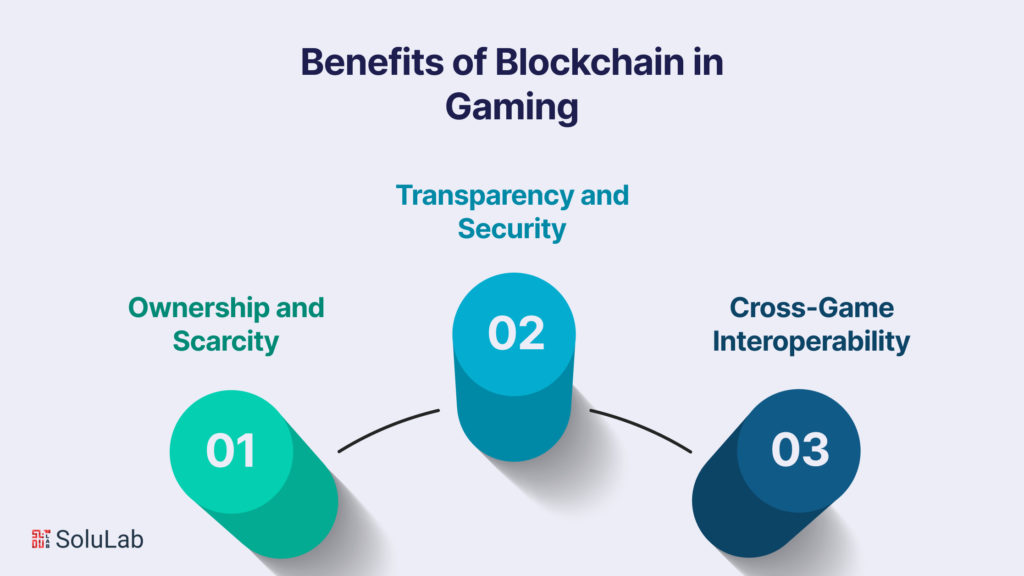
Blockchain technology offers a plethora of benefits in the context of gaming, which are driving the play-to-earn revolution:

  • Ownership and Scarcity

In traditional games, items and currency often exist solely within the game’s servers. Players may invest significant time and money into acquiring virtual assets, only to find them disappear when a game shuts down. In play-to-earn games, assets are recorded on the blockchain, granting players true ownership. This means they can buy, sell, trade, or even use these assets as collateral in decentralized finance (DeFi) applications.

Blockchain also introduces scarcity by limiting the supply of certain in-game assets, mimicking the scarcity of physical items. This scarcity enhances the value of these assets, as players understand that there is a finite number available, creating a sense of rarity and exclusivity.
CTA1

  • Transparency and Security

The blockchain ledger is transparent and secure, ensuring that all transactions are recorded and publicly accessible. This transparency minimizes fraudulent activities and cheating within games, fostering a fair and secure environment for players. Since blockchain transactions are immutable, they cannot be altered, providing a high level of security for player assets.

  • Cross-Game Interoperability

One of the most groundbreaking aspects of blockchain in gaming is cross-game interoperability. Players can use assets acquired in one blockchain-based game in another. For example, an armor set earned in one game can be used in another game developed by a different studio. This interoperability unlocks new possibilities for gamers and developers alike, as they can leverage a wide range of assets across different virtual worlds.
Notable Blockchain Gaming Projects

Notable Blockchain Gaming Projects

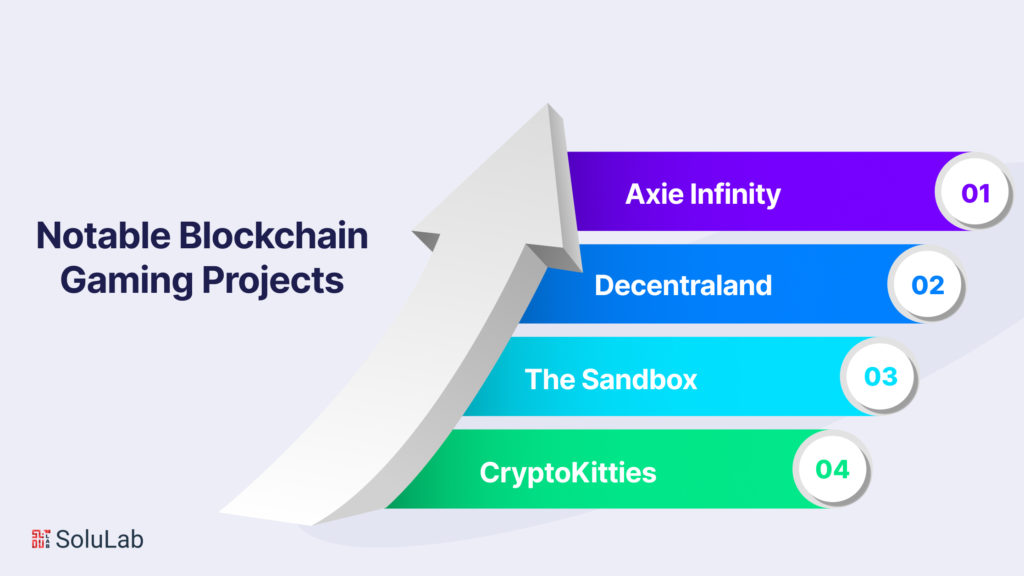
Several blockchain-based games and platforms have gained attention for their innovative use of blockchain technology. Here are a few notable examples:

  • Axie Infinity

As mentioned earlier, Axie Infinity is a blockchain-based game where players collect, breed, and battle fantasy creatures called Axies. These creatures are NFTs (non-fungible tokens) that can be bought and sold in a marketplace. Axie Infinity has seen remarkable growth, with players earning cryptocurrency for their in-game activities.

  • Decentraland

Decentraland is a virtual world built on the Ethereum blockchain, allowing players to buy, sell, and build on virtual land parcels. The ownership and transactions of these virtual properties are secured on the blockchain. Decentraland represents a metaverse, a concept that envisions interconnected virtual worlds.

  • The Sandbox

The Sandbox is a user-generated content platform that lets players create, own, and monetize their gaming experiences and assets. These user-generated assets are represented as NFTs on the blockchain, and creators can sell them in a marketplace.

  •  CryptoKitties

CryptoKitties, one of the earliest blockchain games, introduced the concept of collectible, breedable, and tradeable digital cats. Each CryptoKitty is an NFT, allowing players to own and trade these unique digital pets.

Economic and Social Impact

One of the most remarkable aspects of play-to-earn games is the economic empowerment they offer to players. Unlike traditional games, where players often invest time and money for purely entertainment purposes, play-to-earn games enable participants to monetize their gaming skills.

These games have the potential to transform the lives of players, especially in regions where traditional job opportunities may be limited. In countries with economic disparities, play-to-earn games have opened doors to financial independence. Players can earn a living wage by participating in these virtual worlds, making it possible to support themselves and their families through gaming.

For instance, in the Philippines, where the cost of living is high and job opportunities can be scarce, many players have turned to games like Axie Infinity to make a decent income. They earn cryptocurrency by breeding and battling Axies, which they can then convert into real-world money.

Check Out Our Blog: Top Blockchain Technology Companies in 2025

Redefining the Gaming Experience

Play-to-earn games offer a unique gaming experience that sets them apart from traditional titles. In these games, the player’s investment of time and skill translates into tangible rewards, creating a sense of accomplishment beyond the virtual realm.

Players not only immerse themselves in captivating gameplay but also have a vested interest in their in-game activities. Every move, every strategy, and every decision can affect their earnings. This dynamic makes the gaming experience more engaging, as players are directly linked to the outcomes of their in-game actions.

As a result, play-to-earn games often foster dedicated communities, with players supporting and learning from one another. The social aspects of gaming have never been more pronounced, as players share tips, strategies, and stories about their experiences.

Social and Cultural Implications

The rise of play-to-earn games has social and cultural implications that extend beyond gaming. These games have introduced a new way of earning income and have disrupted traditional notions of work and leisure.

Read Also: Top 10 Real World Applications of Blockchain Technology

In some cultures, the concept of making money through gaming has met with skepticism or misunderstanding. However, as these games gain traction and visibility, societal perceptions are evolving. The success stories of players who have achieved financial stability and success through play-to-earn games are changing the narrative, legitimizing gaming as a viable career.

Additionally, the communities within play-to-earn games have transcended geographical boundaries. Players from diverse backgrounds and locations come together, share experiences, and collaborate, demonstrating the unifying power of gaming. This inclusivity has the potential to foster greater understanding and global cooperation.
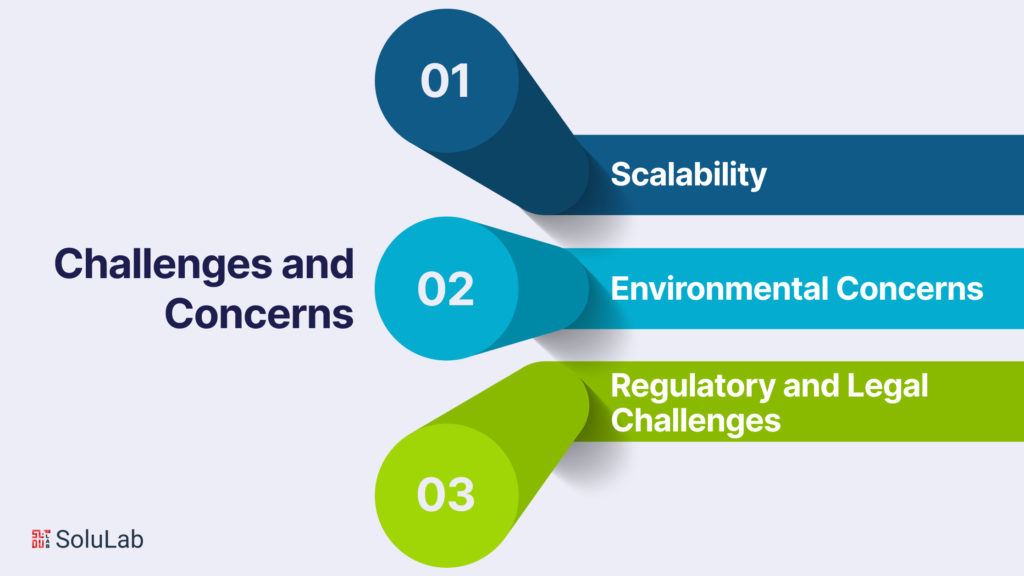
Challenges and Concerns

Challenges and Concerns

  • Scalability

The adoption of blockchain technology in gaming is not without its challenges. Scalability is one of the primary concerns. Many blockchain networks face limitations in terms of transaction speed and capacity. This can lead to slow or congested gameplay experiences in some blockchain-based games. Developers are actively working on solutions, such as layer-2 scaling solutions, to mitigate this issue and ensure seamless gameplay.

  • Environmental Concerns

Another concern is the environmental impact of blockchain networks. Most blockchain networks, including Bitcoin and Ethereum, rely on a proof-of-work (PoW) consensus mechanism that consumes a substantial amount of energy. This has led to concerns about the carbon footprint of blockchain technology. To address this, some projects are transitioning to more energy-efficient consensus mechanisms, like proof-of-stake (PoS).

  • Regulatory and Legal Challenges

The regulatory landscape for blockchain gaming is still evolving. Different countries have varying approaches to regulating cryptocurrencies and virtual assets, which can create legal uncertainties for developers and players. The industry is in the early stages of addressing these regulatory challenges, but it’s essential for the long-term success of play-to-earn games.

Play-to-Earn and the Future of Gaming

The growth of play-to-earn games has been nothing short of phenomenal. The success of games like Axie Infinity and the increasing popularity of metaverse concepts indicate a bright future for this gaming paradigm. The number of players and investors entering the space continues to rise, with NFTs from blockchain games frequently making headlines.

Market statistics reveal a steady upward trajectory, with the global blockchain gaming market estimated to reach significant values in the coming years. New players are eager to explore the potential of play-to-earn, and the competition among blockchain game developers is intensifying.

Technological Innovations

The rapid pace of technological innovation is another key driver of the play-to-earn revolution. Developers are continually pushing the boundaries of what’s possible, creating immersive virtual worlds and innovative gameplay experiences. The integration of augmented reality (AR) and virtual reality (VR) with blockchain gaming is on the horizon, promising even more immersive and engaging experiences.

Predictive algorithms and artificial intelligence are also being used to create more dynamic and responsive in-game environments, where the player’s choices have far-reaching consequences. These innovations are set to redefine how we engage with play-to-earn games.

Predictions and Speculations

While predicting the future of any industry is always challenging, several trends and possibilities are worth considering:

1. The Metaverse Revolution: The concept of the metaverse, an interconnected network of virtual worlds, could become a reality. The metaverse would offer limitless possibilities for players to explore, interact, and earn across different virtual landscapes.

2. Mainstream Adoption: As blockchain technology becomes more accessible and user-friendly, play-to-earn games may experience mainstream adoption. Traditional game developers may also integrate blockchain features into their titles.

3. Regulatory Clarity: Governments and regulatory bodies are expected to provide clearer guidelines for blockchain gaming, addressing legal concerns and ensuring a secure environment for players and investors.

4. Diverse Revenue Streams: Play-to-earn games might introduce new and diverse revenue streams, including NFT-based virtual real estate, streaming opportunities, and sponsored content within virtual worlds.

CTA2

Conclusion

In summary, play-to-earn games are transforming the gaming industry by offering players real-world value for their in-game achievements. The integration of blockchain technology ensures true ownership, scarcity, transparency, and security, unlocking opportunities for players and reshaping the gaming experience.

The play-to-earn revolution is dynamic and continually evolving. As technology advances and the community grows, we can expect even more innovation in the years to come.

SoluLab offers comprehensive blockchain game development services, enabling the creation of immersive gaming experiences using blockchain technology. Our expert blockchain developers specialize in decentralized application development across various blockchain protocols, including Ethereum, Polygon, Binance, Hyperledger, Solana, Polkadot, and more. Whether you’re looking to build blockchain-based games or decentralized applications, we provide the expertise you need. Contact SoluLab today to explore the endless possibilities of blockchain gaming.

FAQs

1. What are play-to-earn games, and how do they work?

Play-to-earn games are video games that allow players to earn real-world value through in-game activities. These games are often built on blockchain technology, which ensures true ownership of in-game assets. Players can collect, trade, or sell these assets, turning their gaming skills into financial opportunities.

2. What is the role of blockchain in play-to-earn games?

Blockchain technology underpins play-to-earn games by providing a transparent, secure, and decentralized infrastructure. It enables true ownership of in-game assets, scarcity through blockchain-based tokens, and trustless transactions. Blockchain ensures that players have full control of their virtual assets and the ability to monetize them.

3. Can you give examples of successful play-to-earn games?

Yes, there are notable play-to-earn games such as Axie Infinity, Decentraland, The Sandbox, and CryptoKitties. Axie Infinity, for instance, allows players to collect, breed, and battle fantasy creatures called Axies, which are tokenized on the blockchain. Players earn cryptocurrency by participating in these activities.

4. What challenges do play-to-earn games and blockchain technology face?

Play-to-earn games encounter challenges related to scalability, environmental concerns due to the energy consumption of blockchain networks, and regulatory and legal uncertainties. Developers are actively working on addressing these issues to ensure a sustainable and secure environment for players.

5. How can I get started with play-to-earn games and blockchain gaming?

To get started, you’ll need to set up a digital wallet compatible with the blockchain used by the game. Next, explore different play-to-earn games and choose one that interests you. Acquire the necessary in-game assets, learn the gameplay, and start earning. Keep in mind that, like any investment, it’s essential to do your research and understand the game’s mechanics before getting involved.

Best Play To Earn NFT Games In 2026

Best Play to Earn NFT Games

When did you first attempt to play a game? Did you triumph? Did your group triumph? Don’t all the fun we’ve played throughout the years bring back many memories? Many gamers believe that gaming goes beyond the screen and the device. Gamers have celebrated both victories and defeats. More specifically, there is a mysterious camaraderie among gamers. By researching and regularly playing a game, players have actively contributed to its promotion. Some people spend a lot of time playing one game. Some people enjoy playing many games at once. Few players will desire a more captivating and engaging experience. Some gamers choose titles with certain themes. Sports-specific themes, fantasy-specific themes, etc. In this blog, let’s look at some of the top 2026 play to earn NFT game.

A Change in the Gaming Industry

Despite the changing styles and modes, one aspect of gaming has not altered over the years. It is the gamers’ support and spirit. The dedicated developers must ensure they offer a healthy atmosphere for gamers, as this industry depends heavily on the community. Thus far, players have used a conventional paradigm, so the standard gaming models may seem more familiar. However, it is always preferable for players to have an open mind, be adaptable, and try out various gaming genres.

NFTs’ Debut into the Gaming Industry

We employ non-fungible tokens, often play to earn NFT, to signify ownership of particular assets. An NFT games play to earn can be created using digital artwork and audio and video samples. What harm did these NFTs cause to gaming, then?

A new type of gaming known as “play-to-earn games” has emerged due to the introduction of NFTs into the gaming industry (P2E). The in-game items, winnings, and even the game’s setting can all be turned into NFTs gaming in a play to earn NFT by tokenizing them. In a conventional gaming setting, all the items the player purchased during the game will be rendered useless as soon as it ends.

However, this flaw is entirely closed up with the introduction of NFT play to earn.

The play-to-earn games’ assets are tokenized, so each player owns their own. In addition, he or she benefits from receiving royalties each time the asset is sold again. To level up in the game, gamers can even rent out the asset to other players. Gamers can get passive revenue in this manner by playing video games.

CTA 1

Examining Some of the Top P2E Games to Buy in 2026 will be Helpful.

1. Axie Infinity

Axie Infinity has gained significant acclaim as an Ethereum-based game where individuals engage in pet battles using creatures known as Axies. Players participate in collecting and training these unique NFT pets, enabling them to enter competitive arenas and strive for higher standings. The gameplay of Axie Infinity necessitates astute strategic thinking, as diverse environments demand various approaches to achieve success.

2. Silks

Silks, an exciting new NFT game gaining significant attention within the crypto community, represents the first-ever derivative play-to-earn metaverse, closely emulating real-world thoroughbred horse racing. The game’s core objective revolves around making thoroughbred racehorse ownership accessible to the general public.

3. Gods Unchained

Gods Unchained is a collectible card game that allows players to own and trade digital cards representing powerful creatures, spells, and artifacts. Players can participate in ranked matches, tournaments, and events to earn rewards and increase the value of their card collection. Gods Unchained combines the thrill of traditional card games with the benefits of blockchain technology, creating a captivating play-to-earn experience.

4. The Sandbox

The Sandbox is a multiplayer metaverse game that blends creativity and monetization. Within this virtual realm, players have the opportunity to design and trade their unique NFTs, ranging from virtual worlds and buildings to various forms of art. The platform has garnered considerable attention through partnerships with distinguished figures in the entertainment industry, establishing itself as a promising avenue for players to capitalize on their imaginative works.

5. Tamadoge

Tamadoge, a game with promising investment opportunities, draws inspiration from the beloved 1990s sensation Tamagotchi. In this game, players take on the role of caregivers for their adorable Doge-themed pets, referred to as Doges. Through the process of nurturing, feeding, and training these virtual companions, participants have the chance to earn valuable rewards in the form of the native token TAMA. The game’s NFT pets have already garnered significant attention and popularity on the OpenSea platform.

6. Splinterlands

In Splinterlands, a player-versus-player card game utilizing the Hive blockchain, participants partake in fierce battles, pitting their monsters against each other. Victorious outcomes yield Dark Energy Crystals (DEC), the game’s native currency, enabling players to bolster their DEC holdings and seize greater opportunities for earnings within the game.

7. Decentraland

Decentraland has claimed the top position on the list as a widely favored crypto gaming platform that grants its users the ability to engage in games, possess virtual land, and acquire NFTs. Players can generate income and monetize diverse constructions like houses, parks, and art galleries by engaging in the buying and selling of land plots. Furthermore, Decentraland presents avenues for hosting events and earning profits from fellow participants.

8. Guild of Guardians

Guild of Guardians is a mobile RPG fantasy game where players have the opportunity to transform their gaming sessions into valuable NFTs. In this captivating collectible game, players are empowered to assemble their formidable team of “Guardians” and engage in thrilling guild-based challenges, all while earning desirable tradeable prizes. The most remarkable aspect of this gaming experience is its accessibility as it is completely free to play.

9. Battle Infinity

Battle Infinity, an upcoming metaverse game, presents distinctive gaming mechanics and numerous advantages to its players. Within the Battle Infinity ecosystem, individuals have the opportunity to participate in fantasy sports games seamlessly integrated with the metaverse, acquire exclusive avatars, and venture into diverse platforms and NFT games.

10. Illuvium

Illuvium, an eagerly anticipated crypto game, amalgamates RPG action with the thrill of planetary exploration. Within this gaming realm, players are tasked with capturing and nurturing formidable creatures known as Illuvials, which become their companions for engaging in PvP challenges and accomplishing various missions. The game’s interplanetary encounters promise to deliver exhilarating gameplay experiences, adding an extra dimension of excitement to the overall adventure.

Final Words

Gamers have come a long way in exploring various game models. Play-to-earn NFT games are worth trying, even though straying from the gaming norm can be daunting. The top Play-to-earn NFT games should be played straight away. In conclusion, NFT games play to earn offer a unique and innovative gaming experience where players can have fun and earn real-world value.

With the growing popularity of these games, it’s important to choose a reliable and experienced partner for NFT game development. SoluLab is a leading provider of NFT game development services, offering tailored solutions to meet the specific needs of businesses in the gaming industry. With their expertise and knowledge, SoluLab can help you create a successful marketplace for NFT games play to earn, hire skilled NFT developers, or launch your own white-label NFT platform. Embrace the exciting world of Play-to-earn NFT games with SoluLab and unlock the potential for growth and success in this emerging industry.

CTA 2

FAQs

1. What are play-to-earn NFT games?

Play-to-earn NFT games are online games where players can earn valuable in-game assets, currencies, or non-fungible tokens (NFTs) that can be traded or sold in the real world. These games provide an opportunity for players to monetize their gaming skills and time investment, creating a new paradigm where gaming becomes a source of income.

2. How do play-to-earn NFT games work?

In play-to-earn NFT games, players engage in various activities such as completing quests, battling opponents, or participating in virtual economies to earn rewards. These rewards are often in the form of NFTs or in-game currencies that can be converted into real-world value. Players can then sell or trade their earned assets on NFT marketplaces or use them within the game ecosystem.

3. What are some popular play-to-earn NFT games in 2026?

Some popular play-to-earn NFT games in 2026 include Axie Infinity, Splinterlands, The Sandbox, Decentraland, and Gods Unchained. These games offer unique gameplay mechanics, vibrant virtual worlds, and the potential to earn valuable NFTs, making them highly sought after by players and collectors alike.

4. How can I get started with play-to-earn NFT games?

To get started with play-to-earn NFT games, you’ll need a compatible device, an internet connection, and a digital wallet to store and manage your earned NFTs. You can download the game client or access the game through a web browser. It’s important to research and choose a game that aligns with your interests, gameplay preferences, and earning potential. Additionally, familiarize yourself with the game mechanics, community guidelines, and marketplace dynamics to maximize your chances of success.

What is a Blockchain Gaming Ecosystem?

What is a Blockchain Gaming Ecosystem?

Blockchain games, also known as crypto or NFT games, are those video games that contain elements based on blockchain technology. Blockchain games provide players with true ownership of in-game assets. In other words, unlike centralized games, assets (like skins, and in-game currency/points) in blockchain games can be traded for cryptocurrencies, which can further be converted into fiat money (real money that we use in our day-to-day lives). As you would have guessed, this opens up the possibility of video games becoming a second source of income for gamers. Prior to blockchain gaming, only gifted professional players or video game content creators were able to monetize their playtime. It might come as a surprise to a lot of people that blockchain technology was first conceptualized way back in 1991 by scientists, Stuart Haber and W. Scott Stornetta. However, even they would not have predicted that their technology would be reshaped by Satoshi Nakamoto to trigger a DeFi revolution, let alone monetize a leisurely activity such as gaming.

The blockchain gaming industry is expanding rapidly. According to Pitchbook data, the world saw a 280% rise in blockchain investment from 2017 to 2018. In 2019, Tron, a blockchain company, invested USD $100 million into their own blockchain gaming fund. In the same year, Ripple teamed up with Forte, a blockchain gaming company, to fund a USD $100 million project aimed at fusing blockchain and gaming. According to trends in investment data, it’s clear that quite a few big players in the blockchain game consider blockchain gaming to be the next big thing.

So… What’s the Big Deal?

Almost every centralized game features in-game assets that have to be earned by putting in a lot of hours into it. Yet, these coveted assets often do not have any real value outside of that particular game. Of course, there are underground markets for trading accounts for real currency on the internet. However, these markets are unofficial and not supported by the developers. Blockchain games, on the other hand, encourage gamers to make money off of their in-game skills. Do gamers make up? the global population. According to TechJury, the gaming industry would be worth well over $256 billion by 2025. With rapid technological developments such as VR and AR, the gaming experience is becoming almost indistinguishable from reality. The point is that gaming in itself is a lucrative activity. Adding the possibility of owning assets that are valuable in the real world only makes it more popular. That is exactly why a lot of studios are publishing blockchain games left and right. From industry giants such as Animoca Brands to Sky Mavis, a lot of players have claimed the blockchain gaming industry to be the future of video games.

Some Popular Blockchain Games

Here are some of the most popular blockchain games of 2022 that work on a play-to-earn model:

Silks

Silks is one of the best NFT P2E games of 2022. It’s a game about horse racing. A player can own a digital racehorse in Silk’s unique metaverse. This digital horse would itself be a tradeable NFT (Non-fungible token). Moreover, this game further blurs the line between the real world and its own metaverse, as the racehorses are based on real racehorses. If your twin horse wins a race in real life, you earn STT, which is the native token (cryptocurrency) of this game. You can use this cryptocurrency to buy in-game land, stables, and wager on races.

Cryptopop

One only needs three words to describe this game – Blockchain Candy Crush. Instead of gems and diamonds, however, this game uses symbols for various cryptocurrencies. If you get 10 points in a game, you earn 1 cryptopop. This P2E game is very popular due to its sheer simplicity. It’s recommended to anyone who’s new to P2E games. With Cryptopop, you can earn fairly large amounts of cryptocurrency quite easily.

Cryptokitties

This cute little NFT game allows players to own, breed, and sell virtual cats. This game is one of the most reputable open-source blockchains – Ethereum. You can use ETH tokens to make in-game purchases. So, if you’re a cat person, this is one P2E blockchain game that you must try!

Axie Infiniti

To play Axie Infiniti, you must buy three characters, also known as Axies. Your Axies, then, have to battle other players’ Axies in the Axie metaverse. Like in most blockchain games, all assets in Axie Infiniti are non-fungible tokens. Produced by the legendary studio, Sky Mavis, Axie Infiniti has taken the blockchain gaming world by storm.

Read also: 8 Best NFT Games You Should Check Out in 2022

These games are just the tip of the iceberg. There are a lot of other amazing P2E games on the market such as Gods Unchained, Splinterland, Alien Worlds, etc.

Turning Blockchain Gaming up a Notch

Now we get to the crux of the matter. We’ve established the fact that one can easily earn real money by investing time in P2E blockchain games. What, then, is a blockchain gaming ecosystem? Most crypto games are not a part of any blockchain ecosystem that is complete in itself. In other words, players who are able to make money with their skills in crypto games have to face a lot of hurdles to convert their winnings into fiat. These hurdles often result in the accumulation of high fees, as an individual has to deal with a lot of middlemen. A blockchain gaming ecosystem is a platform that features multiple games, native tokens, a marketplace to trade NFTs, a wallet, and NFT creation capability. It enhances the trading experience and integrates it with gaming. Such a comprehensive ecosystem eliminates all the middlemen. In fact, eliminating middlemen is the very basis of blockchain technology. OneTo11, the world’s first such comprehensive blockchain-based gaming ecosystem is exactly that.

Conclusive Remarks

The future of blockchain gaming is closely tied to the metaverse and multiverse. According to Jonathan Sterling, it is highly possible that the lines between various game universes may blur. The concept of Metaverse is already here. Sterling has termed it “a second life experience”, where an individual can exist through the avatar that they create. It would be a sort of the second world where a person can do whatever they want. What’s interesting is that the lines between various games can also become blurred. The implication of this is that in-game assets could be transferred from one game to another. The technical term for this phenomenon is Interoperability. Thus, if you ever get bored of one game, the assets you’ve earned in it will not go to waste.

Decentralization is the future, and the gaming industry will not remain untouched by it. In fact, research has shown that gamers tend to have a more positive outlook toward cryptocurrency than non-gamers. This could be due to their proximity to tech, and their ability to understand how cryptocurrencies actually work and what they promise.

Blog Credits: The Times of India

Building Games on Blockchain: A Starting Point

Different degrees of decentralization are used in blockchain games as part of their gameplay. They enable true ownership of digital objects via game coding and smart contracts.
Interoperability across games, player-based economies, and monetization gaming methods is also enabled by blockchain technology.


The emergence of blockchain games has flipped the gaming industry on its head by making players, rather than producers, the primary financial decision-makers.
P2E, or Play-to-earn crypto gaming, is a growing trend that should not be ignored.

Technological process and cost of blockchain game development.

Blockchain game creation will be a steep learning curve if you’ve never dealt with blockchain technology before. However, if you comprehend the technology and put it to use, you will realize how it may open up new options for your firm.


So, how does one go about creating a blockchain-based game?

Investigate blockchain technology in detail and consider what it may add to your game.

You’ll need to learn how the public blockchain works and what its benefits and drawbacks are, as well as how decentralization affects players’ experiences. Learn about blockchain consensus processes, hash functions, and cryptography as well.

Explore current blockchain systems and choose the best one for your needs.

The Ethereum blockchain serves as the foundation for the majority of crypto games. Aside from reading the instructions for this platform, it is also strongly advised that you do some research on how effectively other games are operating on this blockchain.
However, it is also worthwhile to learn about other blockchain systems such as Flow, Echo, EOS, Solana, and WAX. Perhaps one of these will be ideal for your next game.

Acquire knowledge of data structures, databases, and programming languages.

Many developers are acquainted with programming languages such as C++, Python, and JavaScript, but Solidity and Cadence—languages built particularly for blockchain —may be unfamiliar. When it comes to databases, make sure to learn more about BigchainDB, MongoDB, LevelDB, and CouchDB.

Improve your smart contract creation abilities.

Smart contracts are one of the most important components of any blockchain application, so a blockchain game developer must comprehend the idea as well as know how to design, test, and deploy them.

Creating a hack-free environment for players

Although blockchain provides greater security, no technology is completely impenetrable. As a result, blockchain game creators must work hard to build a genuinely hack-resistant environment. They should assess and remove possible hazards like theft of private keys, code exploitation, and illegal modifications to blocks.

Ensuring the security of transactions

Developers must also consider the security of transaction endpoints like wallets and payment systems. Even if the blockchain is completely safe, a compromised wallet may cause major issues for both game businesses and gamers.

Hire a professional blockchain developer.

You have another choice as a video game creator: hire a professional blockchain developer. A team like this will provide advice on all elements of blockchain technology deployment and will create a gaming platform that is entirely immune to interruptions and DDoS assaults.

Determining the cost of game development

When it comes to the cost of producing blockchain games, the figures might vary greatly. The cost is typically determined by the complexity and design of the future game, the technologies used, the number of app versions and platforms (Android, iOS, PC, and so on), and even the geographic location. Prices typically begin around $30,000.

Is it possible to make money from playing blockchain games?

The use of cryptocurrencies for in-platform payments, as well as the use of NFTs, are two features that set blockchain games apart.they enable users to possess unique assets that may be exchanged with other players inside the same game or moved across platforms, NFTs are an important step forward. And, much like in real-world economies, you may profit from markets inside blockchain games.


The most devoted gamers may receive monetary prizes for their efforts, while those with creative talents can develop and sell valuable objects. The opportunity is enormous, and game makers are just getting started.
Some people enter the gaming sector just to become investors, while others make it their full-time profession.

How do blockchain games assist players and developers?

To safeguard crypto token transactions, blockchain systems use incredibly sophisticated data encryption technologies such as the private key-public key pair. These data encryption algorithms are difficult to penetrate with today’s computer technologies.


Aside from that, hackers will be unable to damage a decentralized blockchain network since there is no one server to attack. Nodes share the maintenance of distributed databases, and each node has full access to the database.


Hackers are unable to erase or change previous transactions on the blockchain, nor can they launch a ‘Distributed Denial of Service’ (DDoS) assault against these networks. Blockchain networks employ ‘Proof of Work‘ (POW) or other consensus mechanisms to ensure network security.


When you construct your game on the blockchain, you have a safe environment as a game entrepreneur or developer.

How can blockchain games assist players?

  • Players get real-world advantages from the game’s rewards as well as by selling their virtual assets on decentralised exchanges.
  • Players are not reliant on pricing and rules imposed by developers when they trade products on a decentralised exchange.
  • The quality of the game has improved for the players.

What are the advantages of blockchain games for developers?

  • Game developers now have new options to monetize gaming.
  • Developers might entice more gamers by offering additional cash incentives.
  • Developers may bypass the intermediaries (external digital marketplaces).

Why should you try crypto games?

Players’ desire to monetise their gaming talents and the time they spend in front of a screen is nothing new.


Blockchain gaming opens up dozens of new possibilities. You will not only be able to earn money in transparent and fair virtual economies, but you will also have genuine ownership of game assets and will be effectively a stakeholder by contributing to a community-driven ecosystem (DAO) and having your opinion heard on game-related matters.


None of this was conceivable in conventional, centralised gaming, and as more crypto games arise, the greater the motivation for more people to participate in more equitable and transparent virtual experiences.

Top Blockchain Games to Look Out For

Gala

Gala Games, a blockchain gaming platform, and C2 Ventures, a crypto investment firm, have formed a $100 million fund to invest in blockchain-based P2E games, metaverse settings, and other ventures.


Gala Games claims that the fund will invest in game creators and decentralised gaming ventures.
Ciara Sun, the former head of blockchain investments at Huobi Global, founded C2 Ventures, a crypto investment firm.


Gala Games announced the appointment of Huobi Global as a partner in an advisory capacity for initiatives including marketing and Web 3.0 growth. Furthermore, the cryptocurrency exchange will work with teams to offer future tokens.


According to e-sports analytics company Newszoo, global gaming revenue is predicted to exceed $200 billion by 2024.

Sandbox

In this virtual realm, known as the metaverse, players may own land, create, play, and engage in virtual adventures. You may monetise the experiences you create inside the metaverse by owning a sandbox plot of virtual land, which might be an attractive hobby for artists or tiny devs who aren’t comfortable with other gaming engines.


It is possible to use the SAND token to purchase and sell all Sandbox features, and this helps to keep expanding this metaverse in the long run. In addition to acquiring and selling virtual property, players may trade NFTs, which can be used to customize their avatar’s appearance.


To compete with Minecraft and Roblox, Sandbox has developed a robust community of users who can participate and share ideas in order to spur more creativity on the platform.

Axie Infinity

Axie Infinity is the most popular blockchain game in the Philippines, with many younger folks abandoning their jobs to earn $2k monthly.


Players in Axie Infinity may earn $SLP by playing the game. While AXS is the governance token, it is the most analogous to holding shares in a company. These tokens let holders vote on and propose modifications to the Axie Infinity platform.

Lightnite

Lightnite, created by the same company that created the Bitcoin arcade game portal Satoshi’s Games, has been described as a Fortnite-like battle royale game. This online multiplayer game pays players in Bitcoin for shooting other players, and all microtransactions are enabled by the Lightning Network.


Players who master the game and shoot more opponents have a better chance of earning more Bitcoin. Players who are shot, on the other hand, are fined and lose Bitcoins. Lightnite’s. The Elixir Marketplace platform allows all in-game assets to be tokenized and swapped.

Decentraland (MANA)

Decentraland is an application based on Ethereum aimed at encouraging a worldwide network of users to manage a shared virtual environment.


Decentraland users may explore, interact, and play games in this virtual world. All this is possible while buying and selling digital real estate. Because of the platform’s growth, users may now utilise interactive applications, in-world payments, and peer-to-peer interaction.

ZED RUN

A horse is represented by NFTs in the blockchain game ZED RUN. Each horse has its own set of strengths. You may end up with a champion stallion, or your horse may be better suited to being a stud.

Conclusion

We have seen many advancements in gaming as a result of blockchain technology. P2E models, or play-to-earn models, NFTs, and real-world ownership of in-game objects are all examples of decentralisation.There is still a long way to go before blockchain games become mainstream. However, the technology has the potential to flourish and establish itself as a distinct category within the gaming industry.

-Contact Us-

The World is Upgrading to Blockchain. Don't get confused and take the wrong base technology for your project. Get Free Consultation Now.
