Talk to an Expert

How Do Zero-Knowledge Proofs Keep Blockchain Transactions Private?

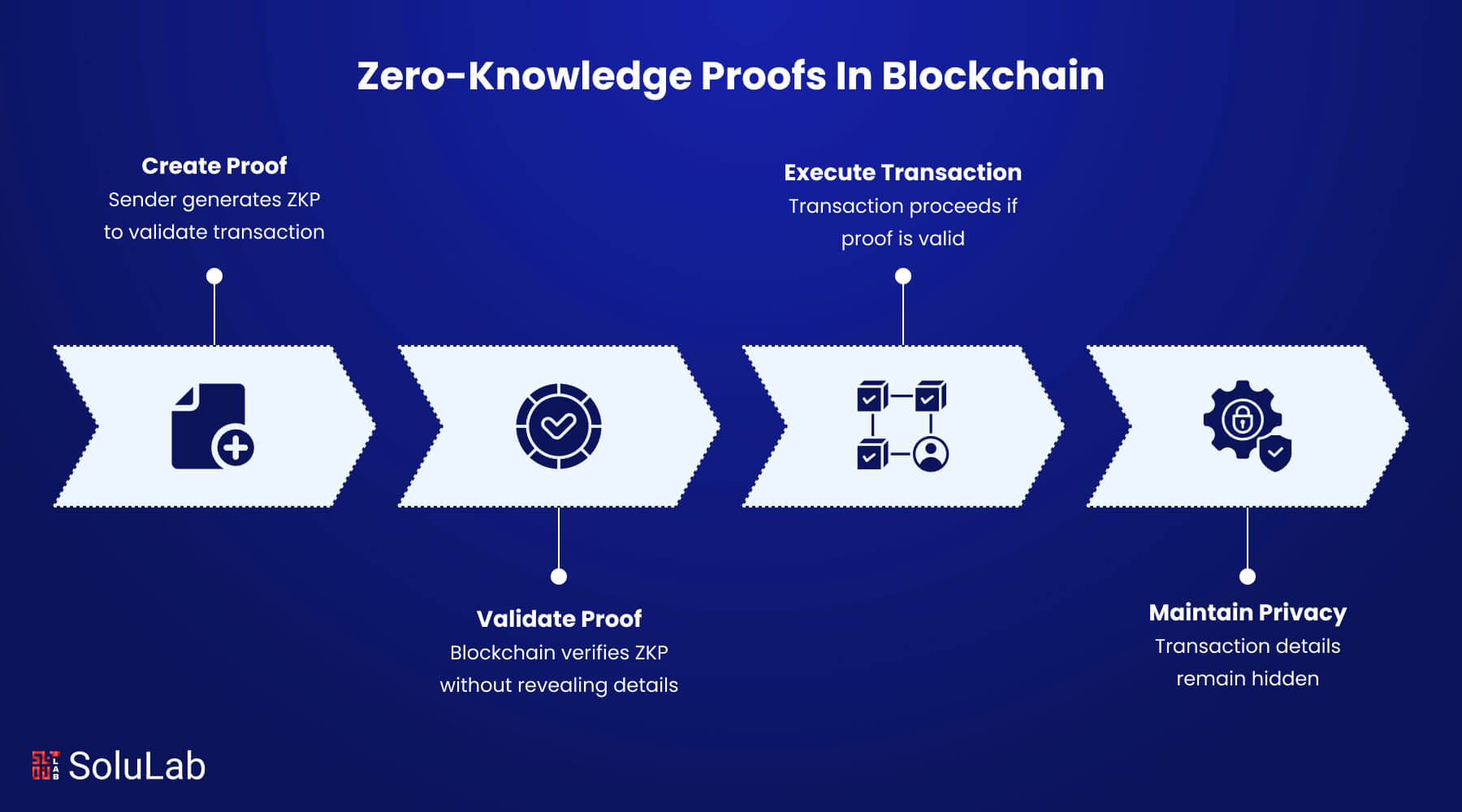
Zero-Knowledge Proofs In Blockchain

Ever wondered how blockchain can be both transparent and private at the same time? That’s where Zero-Knowledge (ZK) proofs.

Whether it’s verifying your identity, voting online, or processing financial transactions, data privacy is a serious concern. Platforms like zkSync have seen rapid growth, with over 5 million addresses created and approximately 300,000 daily active users within eight months of launch

Here’s where zero-knowledge proofs flip the script. They let one party prove to another that something is true, without revealing what that something is. Sounds like magic? It’s not. It’s cryptographic brilliance.

In this blog, we’ll break down ZK proofs, explain how they work in blockchain, and explore how this technology is transforming sectors like finance, healthcare, and identity management, without overwhelming you with jargon.

What Is a Zero-Knowledge Proof in Blockchain?

A Zero-Knowledge Proof blockchain (ZKP) is a clever cryptographic technique that lets you prove something is true, without actually revealing the details behind it. They’re especially useful in Web3 and blockchain systems for boosting privacy and security. 

The zero-knowledge proof market is expected to generate $75 million in revenue by 2024, with projections exceeding $10 billion by 2030.

For example, you can prove you have enough crypto in your wallet to make a transaction without showing your full balance. It’s like saying, “Trust me, I’ve got it,” and the system believes you, without needing to peek into your wallet.
How Do Zero-Knowledge Proofs Work?

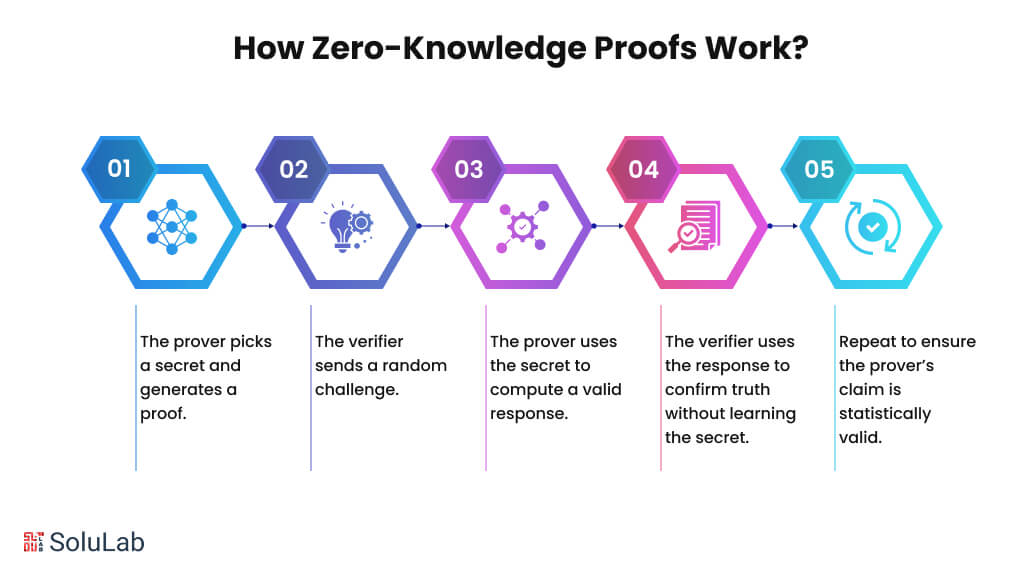
How Zero-Knowledge Proofs Work

The prover and the verifier engage in a process of interaction to make ZKPs work. The purpose of the prover is to show the truth of a claim, like “I have enough money for this transaction,” without disclosing any private information. The verifier verifies the evidence without discovering anything other than that the statement is true.

To start the process, the prover must provide evidence (the witness) to back up their claim, such as proof of account balance ownership or resource access permissions. The verifier then challenges the assertion, comparing it to predetermined standards using cryptographic algorithms:

  • Completeness: The verifier can verify the veracity of the prover’s assertion.
  • Soundness: The verifier cannot be persuaded to accept a wrong assertion.
  • Zero-knowledge: The verifier acquires no further information beyond the fact that the claim is true.

When the prover provides the proper proof in answer to the challenge, the verifier assesses the response. If all requirements are met, the verifier can verify the authenticity of the proof without ever having access to the private information that supports the claim. The finished proof is thereafter posted to the blockchain for final validation.

Types of Zero-Knowledge Proofs

Zero-knowledge proofs (ZKPs) are a cryptographic method used in many ZK blockchain solutions to validate data without revealing the data itself. Here’s a quick breakdown of the main types you’ll come across in:

1. Interactive Zero-Knowledge Proofs

This type involves a back-and-forth communication between the prover and verifier. It’s commonly used in real-time applications but can be less scalable, which is why most ZKP implementation services focus on more advanced alternatives.

2. Non-Interactive Zero-Knowledge Proofs (NIZK)

Unlike the interactive version, NIZKs require no communication after the initial proof is generated. They’re ideal for blockchains since they reduce overhead and are widely used in Zero-knowledge proof consulting for scalability-focused use cases.

3. zk-SNARKs (Succinct Non-Interactive Argument of Knowledge)

Zk-SNARKs are compact, fast, and perfect for lightweight ZK blockchain solutions. They’re widely adopted in privacy coins and dApps because they’re efficient to verify and don’t need ongoing interaction between parties.

4. zk-STARKs (Scalable Transparent Argument of Knowledge)

zk-STARKs offer better scalability and security without needing a trusted setup. Many modern Zero-knowledge blockchain platforms are shifting to zk-STARKs as they’re more transparent and easier to audit.

5. Bulletproofs

Used mostly for confidential transactions, Bulletproofs are efficient and don’t need trusted setups. Though not as fast as zk-SNARKs, they’re a solid option for auditability and trust minimization matters.

6. PLONK

PLONK is a universal SNARK that supports multiple circuits with a single trusted setup. It’s becoming popular for its flexibility and efficiency in handling complex blockchain computations.

CTA- 1

How ZKPs are Applied to Blockchain Privacy?

In blockchain, ZKPs are used to hide transaction details like the sender, receiver, and amount transacted. Here’s how it works:

1. Hiding Transaction Details: Instead of directly revealing the transaction details on the blockchain, the sender creates a ZKP that proves the transaction is valid. This proof demonstrates that:

  • The sender has enough funds to cover the transaction.
  • The transaction is authorized by the sender (e.g., using a digital signature).
  • The transaction adheres to the blockchain’s rules (e.g., the amount being sent is positive).

2. Verification on the Blockchain: The ZKP, rather than the transaction details themselves, is recorded on the blockchain.  Miners or validators can then verify the proof without needing to know the specifics of the transaction. If the proof is valid, the transaction is accepted and added to the block.

3. Privacy Preservation: Because the actual transaction details are never exposed, observers cannot determine who sent funds to whom, or how much was sent. The blockchain only records the fact that a valid transaction occurred.
Benefits of Zero-Knowledge Proofs in Blockchain

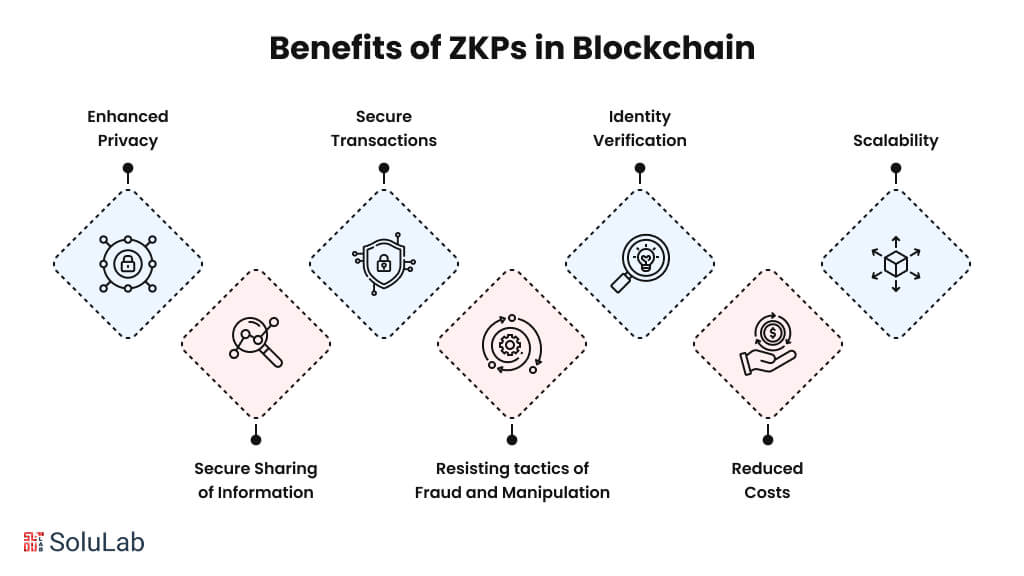
Benefits of ZKPs in Blockchain

More and more, people in Web3 are turning to Zero-Knowledge Proofs (ZKPs) to defend privacy and security. Here are some Benefits it offers to us:

1. Enhanced Privacy: You can verify a statement without giving away the details using ZKPs. This way, you can be sure your password or personal information is safe because it is not shared.

2. Secure Sharing of Information: ZKPs help to share data while hiding its real content securely. Therefore, businesses can collaborate easily without worrying about data breaches or privacy problems.

3. Secure Transactions: Consumers can verify their transactions with ZKPs without exposing the information involved. It makes sure that people’s financial transactions are kept private in industries like banking and DeFi.

4. Resisting tactics of Fraud and Manipulation: Since no sensitive data needs to be shown, ZKPs decrease the opportunities for data corruption, identity theft, or making the system seem less trustworthy.

5. Identity Verification: With ZKPs, people can confirm their identity while keeping private documents hidden. Users who want to stay private will appreciate it since you don’t need to give away your identity.

6. Reduced Costs: Because ZKPs do not require additional verifications or big audits, operating costs for businesses and platforms can be kept low.

7. Scalability: Because ZKPs are light, networks can handle more transactions and users smoothly, which increases the scalability of blockchain.

Applications of ZKP in Blockchain 

Zero-knowledge proofs (ZKPs) are increasingly used in different sectors since they check data while protecting confidential details. These are some existing illustrations of how zero-knowledge proof technology is now being put to work.
  • Healthcare Records: ZKPs let this information be shared privately, without revealing the whole medical history. Private data sharing is made possible, which makes it the best choice for blockchain identity solutions in healthcare.
  • Mortgage Loans: Banks do not have to review the entire bank account of a borrower because ZKPs permit them to verify just the required aspects. This makes it simpler for loans to be approved and diminishes the possibility of leaking confidential financial information.
  • Online Voting System: ZKPs ensure that voters hide their personal information and their vote preference, but can still verify their eligibility to vote and the results. Thanks to this, digital democracy becomes more transparent and trusted.
  • Network Security and Using Authentication: Due to ZKPs, it is possible to check a user’s credentials during login without disclosing the password or security tokens. It provides a major benefit for businesses when it comes to secure authentication.
  • Digital Signatures: It is possible to provide evidence that someone signed a document with a ZKP, without exposing the identity of the signer or the content, so enterprises can depend on ZKPs for blockchain security.

CTA- 2

Conclusion

Zero-knowledge proofs might sound complex, but at their core, they offer a smart and secure way to verify information without revealing the actual data. From protecting healthcare records to enabling private voting systems, ZK proofs are already making a big impact. 

As blockchain adoption grows, so will the use of this privacy-first tech. Whether you’re a developer, business leader, or just curious about blockchain, understanding ZK proofs gives you a glimpse into the future of secure digital interactions.

Partner with SoluLab, a leading blockchain development company in USA, to build privacy-first blockchain solutions using zero-knowledge proof technology tailored for your business.

FAQs

1. Why are ZKPs important for blockchain?

They add a layer of privacy by allowing verification without revealing sensitive information. This is key for secure transactions, identity protection, and regulatory compliance in blockchain.

2. What’s the difference between zk-SNARKs and zk-STARKs?

Both are types of ZKPs. zk-SNARKs are compact and efficient but require a trusted setup. Zk-STARKs are more transparent and scalable but may require more computational resources.

3. Are ZKPs secure?

Yes, ZKPs are designed to be mathematically secure. They prevent data leaks and unauthorized access while maintaining trust and transparency in blockchain systems.

4. How do ZKPs enhance privacy in crypto?

They allow users to prove they have funds or access rights without revealing wallet balances or identities, making crypto transactions more private and secure

5. Is zero-knowledge proof technology scalable?

It’s improving fast. Solutions like zk-rollups and zk-STARKs are making zero-knowledge proof technology more scalable and efficient, especially for high-volume blockchain networks.

 

15 Blockchain Companies Shaping the Real Estate Industry

15 Blockchain Companies Shaping the Real Estate Industry

Properties for vacation rentals. parking areas even ideal residences They will all soon be bought on a blockchain. Indeed, the use of real estate crypto tokens to connect buyers, sellers, and investors as well as learn about properties is growing in popularity. But why is the real estate industry expected to benefit so significantly from blockchain? First and foremost, it fosters trust by enhancing transparency by utilizing distributed ledger technology (DLT). Trust is crucial in real estate, whether it be in a listing, an agent, or a website. Blockchain technology for real estate also streamlines contract procedures, saves time, and lowers expenses.

Blockchain in the Real Estate Industry

Blockchain is the leading technology in real estate since it has a built-in system of trust. Global real estate firms use blockchain in real estate through its ledger and smart contract features to transparently and effectively make renting, purchasing, investing, and even financing possible.

A unified database of leases and acquisitions is more important than ever because of the enormous daily rate of real estate crypto tokens. Blockchain is able to do that. Brokers and agents would be able to access the whole transaction history of a property if the traditional Multiple Listing Service database was upgraded to a blockchain-based one.

Blockchain is being embraced by the expanding property-sharing business in addition to assisting the traditional real estate industry. The 15 blockchain real estate tokenization companies listed below leverage the booming technology to expand their clientele.

CTA1

15 Blockchain Real Estate Companies Shaping the Real Estate Industry

1. SoluLab

One of the best blockchain development businesses with over 50 million active app users and a 97% customer success rate that rivals the competition. The Fortune 500 companies and high-growth startups SoluLab has collaborated with include Walt Disney, Goldman Sachs, Mercedez Benz, the University of Cambridge, Georgia Tech, and others.

SoluLab, led by management executives from Goldman Sachs & Citrix, aims to reduce costs by over 50% for the client with a faster hiring process than other market participants. Through cutting-edge technologies like the cloud, chatbots, blockchain, the internet of things, artificial intelligence, augmented and virtual reality, machine learning, and more, SoluLab’s award-winning enterprise software solutions offer full-spectrum, 360-degree services to startups, small businesses, and large corporations.

2. SafeWire

The expanding problem of wire fraud that real estate companies, agents, clients, and other industries confront as a result of hacker activity has a solution in SafeWire, which ClosingLock recently bought. The SafeWire platform uses a blockchain network to assure security for risky transactions from the time they are sent until the moment they are received & processed, decreasing the amount of money, clients, and time lost as a result of wire fraud.

3. Vairt

With the aid of Vairt, customers can create and diversify a worldwide real estate network and generate side income. When investing in fractional real estate, the robust platform provides several tools and resources to ensure the greatest results. This includes neighborhood and property insights, market overviews, real estate analysis, and long-term assistance, all of which operate on a blockchain network for the highest level of security.

4. RealT

Through a completely compliant, token-based blockchain network, the RealT fractional real estate investing platform enables investors from all over the world to invest in the American real estate market. With permissionless Ethereum & RealTokens, the platform enables investors to purchase tokenized real estate and preserve access to cash flows as well as low maintenance ownership. It provides landlords access to weekly rent payments through the xDai, Ethereum, or US-Dollar stablecoin.

5. PropertyClub

A real estate network called PropertyClub uses blockchain to improve how people advertise, look for, purchase, sell, & invest in properties. Via cryptocurrencies like Bitcoin or the company’s own PropertyClub Coin, the organization transacts real estate digitally using smart contracts.

6. ManageGo

For landlords, ManageGo uses blockchain technology. Property managers and owners may handle payments, fully conduct credit background checks, and manage maintenance tickets with the aid of ledger-backed software.

7. RealBlocks

RealBlocks leverages blockchain real estate companies to open up new real estate investment opportunities. Instead of purchasing complete portfolios or assets, investors can purchase fractional stakes on its platform. RealBlocks assists in lowering costs, accelerating procedures, and offering liquidity choices through tokenization that is implemented utilizing blockchain technology.

8. SMARTRealty

Smart real estate contracts are used by SMARTRealty to create and uphold agreements for the purchase and renting of real estate. The business’s smart contracts assist in setting rules that, if not followed, automatically dissolve a contract, whether it be for paying rent, establishing mortgages, or buying a home.

9. Propy Inc

Smart contracts are used by the real estate marketplace Propy to carry out property deals. Using a series of smart contracts, the company’s platform enables buyers, sellers, and agents to move the real estate market forward more quickly.

10. ShelterZoom

The entire real estate offer & acceptance process is managed by Docuwalk, the document management system provided by ShelterZoom, using blockchain technology. To provide an unchangeable financial record, the safe online platform logs each step taken to close a real estate deal.

11. StreetWire

Through an encrypted ledger that is under the control of the data supplier, StreetWire develops secure and trustworthy solutions for the real estate sector. Its platform makes real estate transactions speedier and more transparent.

12. CPROP

Building blockchain data applications with an emphasis on finding new opportunities, lowering risk, and discovering problems in the real estate sector are what CryptoProperties, also known as CPROP, do. The technology developed by CPROP is used in a variety of real estate fields, such as brokerage deals, investment management, property development, finance, and insurance.

13. The Crypto Realty Group

The Crypto Realty Group is a consultancy firm that collaborates with financial consulting and crypto escrow businesses to assist clients in purchasing and reselling local, national, and worldwide residential, and commercial using local real estate crypto tokens.

14. Blocksquare

While its white-label platform may be used to establish investment platforms, Blocksquare is among the real estate tokenization companies. Their protocol can be applied to digitize the value of real estate assets. The business claims that businesses of all sizes can benefit from its blockchain infrastructure.

15. RealtyBits

RealtyBits makes it easier to invest in real-world assets like real estate using blockchain technology. A user’s account can be created for free and validated in under a minute. Following their initial investment, RealtyBits offers a dashboard that enables them to keep an eye on their assets. One of the company’s investors is Coinbase.

How is Blockchain Technology Changing the Real Estate Industry?

More blockchain use in commercial real estate could have a favorable impact on the sector. Quite a few real estate companies employ blockchain because it is a relatively young technology. But when people become aware of its potential advantages, it can gain popularity. The following are possible uses of blockchain in real estate, particularly within the commercial real estate industry.

  • Faster, More Secure Transactions: Numerous characteristics of blockchain in real estate can result in speedier, more secure transactions. You don’t need to wait for financial institutions to file paperwork because every activity is recorded on a public ledger. Additionally, the use of blockchain in commercial real estate makes it impossible for records to be altered. Consumers currently depend on financial organizations to safeguard their private information, but blockchain in real estate could provide an additional layer of protection. Financial institutions are often targets for data breaches, but with blockchain, property records and ownership data would be less vulnerable to such attacks.
  • Smart Contracts: By minimizing paperwork and the stages required to purchase property, using blockchains in commercial real estate to expedite processes instantly creates chances to cut expenses. Smart contracts built on the blockchain are utilized in the process to help automate it. If/then statements that advance real estate blockchain projects at the proper point can be used in blocks of a ledger. For instance, the smart contract might stipulate that the buyer won’t get a formal price offer until the property has been thoroughly inspected and assessed by an expert.
  • Lower Costs: Another significant benefit of blockchain in real estate is the reduction of transaction costs. By minimizing paperwork and reducing the complexity of purchasing property, blockchain can lower expenses in commercial real estate deals. You can even purchase property tokens on some platforms that use blockchain in real estate, allowing investors to buy a portion of a property with cryptocurrencies, bypassing traditional brokers and their fees.
  • Asset Tokenization: Blockchain technology has the potential to revolutionize how real estate investments are crowdfunded. Currently, ownership of properties funded by crowdfunding is distributed among the investors. A real estate company, for instance, might offer 100 shares. Once fully funded, they use the investor’s funds to buy or construct an asset that will produce income.
  • Tracking Asset Ownership: The structure would be slightly changed by asset tokenization to provide investors & developers more flexibility. You could buy a token that is recorded in a public ledger rather than a portion of the real estate. You now have a fully transparent record of when and how much you spent on the token. You have evidence that you made an investment and the tokens are yours, in case your ownership is ever questioned.
  • Selling Your Real Estate Investment Tokens: Asset tokenization will also make it simpler for you to sell your investment to a third party. Investment agreements currently allow other owners to restrict you from selling your stake without their consent. Even if you are allowed to sell your share without permission, you will still need to complete a tonne of paperwork in order to transfer your ownership to another investor.

CTA2

Final Words

The real estate blockchain, tokenization, as well as cryptocurrency businesses, are all still in their infancy, as are the majority of other blockchain and tokenization integrations into the real world. Although the future seems promising, several obstacles must yet be overcome before the technology can be widely used. As was already said, tokenized real estate, which is arguably the most significant prospective utilization of real estate blockchain projects, is plagued by an extremely unliquid market, a near-total lack of asset trading between platforms, as well as a lack of institutional adoption.

Software wallets like Exodus Wallet and Trust Wallet impress with their user-friendly interfaces and elegant designs. These wallets prioritize security without sacrificing user convenience, making them popular choices for crypto enthusiasts of all levels.

Finally, it should be emphasized that the metaverse’s real estate market is booming. It’s difficult to say whether this is a short-lived trend or a wise investment, similar to real estate crypto tokens. Real-world & metaverse real estate have not yet been connected, but in the future, it’s conceivable that things will start to converge in manners we can only begin to fathom between the “meatspace” real world and the metaverse.

SoluLab, a prominent blockchain development company, specializes in empowering businesses of all sizes, from startups to enterprises, with secure and decentralized blockchain solutions. With a comprehensive range of blockchain development services, SoluLab meticulously assesses each organization’s potential for harnessing blockchain technology to bolster trust and transparency. The company’s expertise extends to the realm of real estate tokenization, offering a gateway to novel opportunities in development and investment. Whether one is a property owner aiming to raise capital through tokenization or an investor seeking portfolio diversification, SoluLab guides the way. As a leading advocate of real estate tokenization development services, SoluLab’s adept professionals are dedicated to delivering top-tier services, enabling clients to unlock the full value of their real estate assets. For a seamless transition into fractional ownership and heightened liquidity, connect with SoluLab today.

FAQs

1. What is the role of blockchain companies in the real estate industry?

Blockchain companies in the real estate industry play a pivotal role by leveraging blockchain technology to enhance transparency, security, and efficiency in property transactions. They provide solutions that streamline processes like property title verification, smart contracts, and secure data sharing among stakeholders.

2. How do blockchain companies simplify property ownership transfers?

Blockchain companies use smart contracts to automate and facilitate property ownership transfers. These self-executing contracts automatically process transactions once predefined conditions are met, reducing the need for intermediaries and expediting the transfer process.

3. What benefits do blockchain companies bring to real estate professionals?

Blockchain companies introduce efficiency gains for real estate professionals by reducing paperwork, minimizing the risk of errors, and expediting transactions. This enables professionals like agents, brokers, and lawyers to focus more on strategic tasks rather than administrative burdens.

4. What future trends can we expect from blockchain companies in real estate?

In the future, we can anticipate further integration of blockchain technology with artificial intelligence, enabling predictive analytics for property market trends. Additionally, increased regulatory support for blockchain-based property transactions and wider adoption of tokenization could reshape the way real estate is bought and sold.

5. What is SoluLab’s expertise in the blockchain industry?

SoluLab is a leading blockchain development company with extensive experience in creating cutting-edge solutions for various industries, including real estate. Their team of experts specializes in developing custom blockchain applications, smart contracts, decentralized apps (DApps), and more, providing innovative solutions that transform the real estate landscape.

6. How does SoluLab contribute to the real estate industry’s digital transformation?

SoluLab empowers the real estate sector by leveraging blockchain technology for enhanced transparency, security, and efficiency. Through their tailored solutions, they enable seamless property transactions, secure data sharing, and automated processes that streamline operations and improve customer experiences.

7. Can SoluLab assist in tokenizing real estate assets?

Absolutely! SoluLab excels in real estate tokenization development. They can create digital tokens backed by physical real estate assets, enabling fractional ownership, liquidity, and broader investment opportunities. This innovative approach enhances accessibility to real estate investments and opens doors for a wider range of investors.

Building Trust in a Digital World: The Power of Blockchain Development

Building Trust in a Digital World: The Power of Blockchain Development

Understanding the concept of a Digital Trust Ecosystem

A digital trust ecosystem refers to a network of entities that use technology like Blockchain development to establish trust and enable secure transactions without third-party intermediaries. At its core, a digital trust ecosystem aims to remove the need for centralized authorities and middlemen by distributing trust among network participants.

In a digital trust ecosystem, trust is established through cryptographic techniques like digital signatures, hashing, and encryption. Entities can directly interact with each other without needing to go through banks, governments, or other institutions. This enables faster, cheaper, more transparent, and more secure transactions.

Digital trust ecosystems have applications in many industries. For example, a supply chain system can use Blockchain Development to track goods and payments between suppliers, manufacturers, distributors, retailers, and consumers. This establishes trust between entities that may not know or trust each other otherwise.

Read Also: What are the Benefits of Using Digital Identity with Blockchain in the Future?

Importance of Blockchain Technology in Building a Digital Trust Ecosystem

Blockchain technology is critical for constructing digital trust ecosystems. Blockchain Development provides a decentralized, distributed ledger that is immutable and transparent. This serves as the foundation for establishing trust between entities.

Key features of blockchain app development that enable trust include:

  • Decentralization – No single entity controls the network
  • Transparency – All participants can view transactions
  • Transactions are unchangeable and cannot be deleted.
  • Cryptography – Encryption and digital signatures enable trustless interactions
  • Consensus – Agreement on the network state without a central authority
  • Provenance – Goods and assets can be traced through the supply chain

By leveraging these attributes, Blockchain Development facilitates the creation of digital trust ecosystems. Participants can exchange assets and data peer-to-peer with confidence that transactions are valid and permanent.

Steps to Perform for Building a Blockchain Solution

Steps to Perform for Building a Blockchain Solution

Step 1: Identification of the Use Case

Definition and Examples

A use case refers to a specific application of blockchain technology to solve a real-world problem or provide new functionality. Clearly identifying the use case is a critical first step in constructing a digital trust ecosystem.

Some examples of blockchain use cases include:

  • Supply chain tracking – Improving transparency and efficiency in supply chains
  • Digital identity – Securely establishing identity and credentials
  • Healthcare records – Enabling patients to control access to medical data
  • Digital voting – Conducting secure and transparent elections
  • Cross-border payments – Facilitating faster and cheaper money transfers

The use case should be clearly defined in terms of the problem being solved, the entities involved, and how blockchain adds value. This guides the overall design of the digital trust ecosystem.

Read Our Blog: Top 10 Blockchain Development Companies in 2023

Assessing if Blockchain is necessary or if a Centralized Platform is more suitable.

Not every use case requires a blockchain-based solution. Centralized platforms may be more suitable if:

  • There are no multiple distrusting parties
  • Intermediaries like banks already establish trust sufficiently
  • Transaction speeds and volumes are very high
  • Privacy is more important than transparency

On the other hand, blockchain app development is advantageous when:

  • Establishing trust between strangers is important
  • Disintermediation brings significant benefits
  • Permanent and tamper-proof records are critical
  • Transparency and provenance are required

Carefully evaluating the specific use case guides the decision on whether blockchain is truly necessary or if a centralized platform is better suited.

CTA1

Step 2: Creation of a Proof of Concept

Meaning and Importance of a Proof of Concept

A proof of concept (PoC) is a small-scale implementation of the blockchain use case to validate its feasibility. Building a PoC is important for several reasons:

  • Tests technical viability of the use case
  • Identifies any flaws in the concept
  • Demonstrates value to stakeholders
  • Provides a benchmark for assessing solutions
  • Reduces risk before full-scale development

The PoC focuses only on the core functionality needed to demonstrate the use case. It serves as an invaluable tool for gathering feedback and preventing wasted effort on ideas that may not work.

Read Also: Best Companies to Hire Blockchain Developers in 2023

Steps to Creating a Proof of Concept

Key steps involved in building a blockchain PoC include:

1. Defining the scope and objectives

2. Designing system architecture and workflows

3. Selecting the Blockchain Development services and tools

4. Implementing core features and functionality

5. Developing a basic UI for interaction

6. Testing transactions and use case scenarios

7. Documenting results and gathering feedback

8. Assessing feasibility and making improvements

The PoC provides the foundation for full-scale blockchain software development implementation. Lessons learned can inform the final solution design and technology choices.

Step 3: Selection of a Blockchain Platform

Overview of different Blockchain Platforms

There are many blockchain software development platform options to choose from when building a digital trust ecosystem. Some leading platforms include:

  • Ethereum – Decentralized blockchain with support for smart contracts
  • Hyperledger Fabric – Private Blockchain Development services framework focused on enterprise use
  • Corda – Distributed ledger platform designed for regulated industries
  • EOS – Infrastructure for decentralized apps with high scalability
  • Stellar – Payment-focused Blockchain Development services that connect financial institutions

Read Also: Top 10 Blockchain Platforms of 2023

Factors like use case requirements, transaction speeds, consensus model, governance, and tooling support guide the choice of a blockchain development solutions platform.

Choosing the Right Consensus Protocol and Overall Architecture

  • Understanding Consensus Mechanism

Consensus mechanisms allow blockchains to maintain a single state of records without a central authority. Different models like proof-of-work, proof-of-stake, and delegated proof-of-stake have unique tradeoffs.

The consensus model should be chosen based on factors like scalability needs, security guarantees, and energy efficiency.

  • Selecting Data Structures

Blockchain data structures organize data into blocks and chains. Alternatives like directed acyclic graphs provide greater flexibility. The data model impacts factors like scalability and transaction speeds.

  • Defining Network Protocols

Network communication protocols like gossip protocol and RAFT enable node-to-node messaging to share transactions and blocks. The right protocols need to be chosen based on performance needs and network assumptions.

Step 4: Setting Up the Development Environment

Importance of the Development Environment in Blockchain Implementation

The development environment provides the tools and frameworks for building and testing blockchain applications. Setting up a robust environment facilitates rapid iteration and deployment. Key elements include:

  • Blockchain technology platforms and libraries
  • Consensus algorithms and cryptography
  • Programming languages and frameworks
  • Wallets and accounts
  • Development and testing tools
  • Simulators and emulators

Read Our Blog: Top Blockchain Technology Companies in 2023

Having the necessary environment reduces development effort, enables debugging, and allows comprehensive testing before launch.

Choosing the right Programming Language

Popular blockchain programming languages include:

  • Solidity – For writing Ethereum smart contracts
  • Golang – For building Hyperledger Fabric applications
  • JavaScript/TypeScript – For developing client apps and web interfaces
  • Rust – For high performance and security
  • C++/Java – General purpose languages with Blockchain technology libraries

The language choice depends on the platform, performance needs, available skills, and integration requirements.

Installing and familiarizing with necessary Development Tools

Useful blockchain development tools include:

  • Truffle – Development framework for Ethereum
  • Ganache – Ethereum emulator for testing
  • Remix – Browser-based Solidity IDE
  • Metamask – Ethereum wallet browser extension
  • Postman – API testing toolchain

Becoming familiar with these tools creates a robust environment for building and testing blockchain applications.

Read Also: Top 25 Blockchain-Based Identity Management Startups

Step 5: Implementing Core Blockchain Functionality

Components of a Blockchain Network

Core components of a Blockchain technology network include:

  • Peer-to-peer communication between nodes
  • Transaction creation, propagation, and validation
  • Cryptographic identities and signing of transactions
  • A consensus protocol for block creation and confirmation
  • Data replication across nodes through a shared ledger
  • Scripting language for implementing business logic
  • Wallets for managing keys and transacting

These underlying components need to be implemented to establish blockchain developer network functionality.

Developing Smart Contracts

Smart contracts encapsulate business logic and programmatically enforce agreements on the blockchain developer. Developing smart contracts involves:

  • Defining contract terms, rules, and workflows
  • Writing code in a language like Solidity
  • Implementing functions for executing transactions
  • Deploying contracts to the blockchain network
  • Interacting with contracts through wallets or applications

CTA2

Conclusion

In a rapidly evolving digital landscape, building trust has become a cornerstone of successful interactions. As we navigate through a world heavily reliant on digital transactions and data sharing, blockchain technology emerges as a game-changer in establishing trust and transparency. Through its immutable and decentralized nature, blockchain development addresses the challenges of data security, provenance verification, and fraud prevention.

Incorporating blockchain into various industries showcases its potential to revolutionize processes, enhance efficiency, and foster collaboration. From supply chain management to finance and beyond, the power of blockchain is undeniable. SoluLab stands at the forefront of this transformation, offering blockchain software development services that empower businesses to harness the technology’s full potential.

As organizations seek to build trust with their customers, partners, and stakeholders, hiring a dedicated blockchain development agency becomes essential. SoluLab boasts a team of the best blockchain developers who are skilled in creating customized solutions tailored to unique business needs. Through their expertise, businesses can integrate blockchain solutions that enhance security, traceability, and accountability.

Blockchain’s impact goes beyond technology; it reshapes the way industries operate by reducing intermediaries, minimizing errors, and increasing efficiency. As you venture into the world of blockchain development solutions, SoluLab’s experience and commitment to excellence can guide your journey. Their blockchain development services extend a helping hand in harnessing blockchain’s transformative power, ensuring you stay ahead in the digital age.

In conclusion, as the digital landscape expands, trust becomes a currency of paramount importance. Blockchain development emerges as a beacon of trust, offering solutions that reshape industries and redefine the way we conduct transactions. SoluLab’s expertise in blockchain software development services empowers businesses to embrace this transformative technology. As you navigate the digital world, remember that building trust begins with innovative solutions, and blockchain development paves the way for a future where transparency and security reign supreme.

FAQs

1. What is blockchain’s role in building trust in the digital world?

Blockchain technology serves as a secure and transparent ledger that records transactions in an immutable and decentralized manner. This inherent nature of blockchain ensures data integrity, eliminates the need for intermediaries, and enhances trust among parties involved in digital interactions.

2. How does blockchain development impact various industries?

Blockchain development brings transformative benefits across industries such as finance, supply chain, healthcare, and more. By providing secure, traceable, and tamper-proof records, blockchain minimizes fraud, streamlines processes, and fosters collaboration among stakeholders.

3. Why is hiring a blockchain development agency crucial for businesses?

A specialized blockchain development agency, like SoluLab, offers expertise in crafting tailored solutions that align with your business needs. These agencies hire the top blockchain developers who understand the nuances of blockchain technology, ensuring optimal implementation and maximizing its benefits.

4. Can blockchain technology enhance data security?

Absolutely. Blockchain’s decentralized and cryptographic nature ensures that data is stored securely and can only be accessed by authorized parties. This heightened security significantly reduces the risk of data breaches and unauthorized alterations.

5. What distinguishes SoluLab in the blockchain development landscape?

SoluLab stands out for its comprehensive approach to blockchain software development services. With a team of experienced developers and a track record of successful projects, SoluLab offers end-to-end solutions that empower businesses to leverage blockchain’s potential effectively.

6. How can blockchain development contribute to transparency and accountability?

Blockchain’s transparency stems from its ability to provide an unalterable record of transactions accessible to all parties involved. This shared ledger ensures accountability as every transaction is verifiable, promoting trust and collaboration in digital interactions.

7. Is blockchain development limited to financial applications?

No, blockchain applications extend far beyond finance. It finds utility in supply chain management, healthcare records, identity verification, and more. The underlying principle of trust and data integrity applies across various sectors, making blockchain a versatile solution.

How to Hire The Best Blockchain Developers in Silicon Valley?


How to Hire The Best Blockchain Developers in Silicon Valley?

Silicon Valley’s worldwide heart of technical innovation is home to a thriving community of blockchain engineers. As blockchain technology transforms numerous sectors, the demand for qualified developers is increasing. Finding and recruiting the best blockchain developers in Silicon Valley, on the other hand, might be difficult.

If you want to construct cloud storage, implement smart contracts, improve supply chain communication, and so on as an enterprise, Blockchain is your solution. This digital ledger solution will hold enterprise-level transactional records across many databases linked by a network.

Recruiting blockchain developers in Silicon Valley is challenging since there is a lot of competition from a small pool of professionals. As a result of the market’s scarcity of engineers, the recruiting procedure will be costly and time-consuming. So, what’s the answer? 

Is it possible to recruit blockchain developers in Silicon Valley in a cost-effective manner that does not require too much time and does not compromise on quality? This article includes in-depth insights and specific methods to assist you in navigating the recruiting process and assembling a top-tier blockchain development team.

Check Out Our Article: SoluLab Honored By GoodFirms as the Winner of the Trusted Choice Award 2023

What Factors Should You Consider When Choosing the Top Blockchain Developer?

Blockchain technology has transformed sectors from banking to supply chain management, and selecting the proper blockchain developer is critical to the success of any blockchain-based enterprise. With the increased demand for talented blockchain specialists, it is essential to evaluate several variables to guarantee you choose the right developer for your unique needs. Here are some important factors to consider while looking for the finest blockchain developer:

  • Technical expertise

Blockchain development necessitates a solid foundation in programming languages such as Solidity, C++, Java, or Python. Look for developers who understand blockchain ideas, smart contracts, consensus methods, and cryptography. Check their familiarity with relevant blockchain platforms like Ethereum, Hyperledger, or Corda and their capacity to design decentralized apps (dApps) and execute blockchain solutions.

  • Industry Experience

Consider hiring a developer with past expertise in your business or a related topic. Each sector has its own set of standards and regulatory concerns. A developer who knows these complexities will be better able to create and deploy blockchain solutions that successfully handle your unique difficulties. Request examples of their prior work or projects to analyze their expertise and ability.

  • Problem-Solving Skills

Blockchain technology frequently requires solving complicated challenges and resolving scalability, security, and performance issues. Look for developers with good analytical and problem-solving abilities. Examine their critical thinking skills, capacity to design novel ideas, and ability to optimize blockchain applications for efficiency and effectiveness. Consider presenting them with hypothetical scenarios to assess their problem-solving ability.

  • Collaboration and Communication

Multidisciplinary teams are frequently used in successful blockchain development initiatives. A developer must be able to collaborate with other experts, such as user experience/user interface designers, project managers, and business analysts. Look for strong communicators who can explain technical topics to non-technical stakeholders. Examine their capacity to collaborate and adapt to changing project needs.

  • Continuous Learning and Adaptability

The blockchain industry is constantly growing, with new platforms, tools, and frameworks appearing regularly. The greatest blockchain developers remain up to speed on the latest trends and breakthroughs in the technology. Inquire about their interest in learning, attending conferences or meetings, and contributing to the blockchain community. A developer who actively pursues and accepts change is more likely to provide cutting-edge solutions.

  • Reputation and References

Consider their reputation and references within the blockchain community while selecting possible applicants. Look for developers with a proven track record of successful projects and excellent client or company feedback. Request references and follow up with them to confirm their job quality, dependability, and professionalism. 

Dedication and a true enthusiasm for the technology are required for blockchain development. Seek engineers excited about blockchain’s potential and power to alter industries. Developers passionate about their work are more likely to go the extra mile, keep up with the newest trends, and actively contribute to the success of your project.

  • Security Awareness

Security is of the utmost importance in blockchain development. Look for developers who value security, know typical vulnerabilities, and secure coding best practices. Examine their capacity to install strong security measures, do extensive testing, and maintain your blockchain technology’s confidentiality, integrity, and availability.

CTA 1

How to Hire a Blockchain Developer on a Low Budget?

Hiring a qualified blockchain developer is critical to the success of blockchain enterprises. However, the cost of employing blockchain engineers might be an issue for firms on a tight budget. Here are some tips to help you choose a blockchain developer on a tight budget:

1. Identify the Scope and Needs of Your Blockchain Project

Identify your blockchain project’s scope and outline your precise needs. This will allow you to properly convey your requirements to potential developers and minimize needless expenditures associated with confusing project scopes.

2. Examine Freelance Developers

Instead of working with huge development organizations, consider employing freelance blockchain developers. Freelancers frequently have lesser overhead costs and can provide affordable pricing. Platforms such as Upwork, Freelancer, and LinkedIn can assist you in locating and connecting with skilled freelance blockchain developers.

3. Expand Your Search to Include Remote Blockchain Developers

By broadening your search to include remote blockchain developers, you may have access to a worldwide talent pool. Developers from lower-cost-of-living locations may provide their services at reduced prices while maintaining their skills and knowledge. Use sites like Toptal, GitHub, or specialist blockchain forums to discover a hidden talent.

4. Evaluate Blockchain Development Courses

Consider hiring developers who have completed blockchain development courses or boot camps. These professionals may offer reduced fees as they begin their careers or shift into blockchain development. Examine their talents and practical experience earned during their training to verify they fulfill the needs of your project.

Read Our Blog: Top Blockchain Technology Companies in 2023

5. Engage with Blockchain Development Communities

Participate in blockchain development communities and forums where developers may discuss their work and initiatives. Networking and creating relationships within these networks help you connect with developers looking for part-time or economic jobs. Platforms like GitHub, Bitcointalk, and blockchain-specific subreddits might help you make important contacts.

6. Examine Open-Source efforts

Examine potential blockchain developers’ open-source efforts. Developers regularly contributing to blockchain projects and having a strong presence in the open-source community show their competence and dedication to the area. Consider these developers because they can provide more cost-effective solutions and important insights into your project.

7. Do Thorough Technical Evaluations

Before employing a blockchain developer, do extensive technical evaluations to analyze their abilities and expertise. This can assist you in identifying developers who have the essential skills while ensuring you receive the most value for your money. Assign coding tasks or ask for a review of previous work to evaluate their technical competence.

8. Consider Part-Time or Contract-Based Engagements

If your project does not need the hire of a full-time blockchain engineer, consider employing one on a part-time or contract basis. This arrangement enables you to tap into their knowledge for certain tasks or project stages while avoiding the expenditures associated with long-term employment.

9. Prioritise Flexibility and Adaptability

Look for blockchain engineers willing to work in flexible settings, such as remote work or flexible hours. Flexible developers may be more prepared to modify their charges to fit your financial limits. When interacting with potential blockchain developers, be upfront about your financial constraints. Discuss your pricing expectations for the project openly and see whether developers can give cost-effective options within your budget.

How Much Does Hiring a Blockchain Developer Cost?

What are Blockchain Developers' Roles and Responsibilities?

Blockchain technology has gotten a lot of interest and acceptance in various businesses, which has increased the demand for competent blockchain developers. When considering hiring a blockchain developer, it is critical to understand the elements that determine the pricing of their services. 

The cost of hiring a blockchain developer might vary depending on numerous factors, including:

  • Skill and Experience Level

A blockchain developer’s skill and experience level greatly influence their pricing. Developers with a thorough grasp of blockchain technology, skills in programming languages such as Solidity, and familiarity with blockchain platforms such as Ethereum or Hyperledger attract greater pay. More experienced developers are sometimes expensive but may provide significant insights and skills.

  • Project Intricacy

The intricacy of the project significantly impacts the cost of employing a blockchain developer. Projects that necessitate the creation of sophisticated smart contracts, complicated consensus algorithms, or advanced decentralized apps (dApps) are likely to require the knowledge of highly trained developers, resulting in increased expenses. 

  • Timeframe for Development

The timeframe in which you expect the project to be finished might impact the cost. Urgent projects may necessitate allocating more resources or working longer hours to achieve the deadline, which may result in increased expenses. It is critical to discuss the project timeframe and ensure it fits with the developer’s availability and workload.

Read Also: 9 Tips To Hire Dedicated Developers For Your Project

  • Location and Market Rates

The developer’s geographical location might influence pricing. Developers in high-cost-of-living areas or where blockchain knowledge is in great demand frequently charge higher prices. For example, developers in North America or Western Europe often charge higher prices than those in other locations. However, developers from various places may bring different viewpoints and experiences.

  • Freelancer vs. Agency

The cost of employing a freelance blockchain developer vs. contracting an agency might vary. Although freelancers may provide affordable prices, they frequently operate autonomously, which means you will be responsible for project management and coordination. Conversely, Agencies offer a team-based approach with project managers and quality assurance, but their charges are often higher owing to added services and administrative costs.

  • Additional Services

Besides coding, some blockchain developers may provide consultancy, project management, or continuing maintenance. These extra services may increase the overall cost of your project but may add value to it. When assessing these supplementary services, remember your individual needs and budget limits.

What are Blockchain Developers’ Roles and Responsibilities?

What are Blockchain Developers' Roles and Responsibilities?

Blockchain technology has ushered in a new secure and decentralized digital transaction era. Blockchain developers are essential in designing, implementing, and maintaining blockchain-based systems. Their duties include various activities ensuring blockchain initiatives’ seamless operation and success. 

Here are some of the most important jobs and duties of blockchain developers:

  • Blockchain Architecture Design

Blockchain developers create the architecture of blockchain networks. Based on the project needs, they identify the best blockchain platform or architecture and the right consensus algorithms, smart contract languages, and data structures. They create the blockchain system’s framework, including network nodes, security features, and data storage techniques.

  • Smart Contract Development

Self-executing contracts with established rules and conditions are known as smart contracts. Blockchain engineers must be fluent in programming languages such as Solidity (for Ethereum) or Chaincode (for Hyperledger Fabric) to construct smart contracts. They build the code that automates contract execution, assuring transparency, immutability, and tamper resistance.

  • DApp Development

Blockchain developers create decentralized apps (dApps) that operate on blockchain platforms. They create front-end and back-end interfaces that communicate with the blockchain network. These applications may feature user authentication, transaction processing, data storage, and interaction with third-party systems. Blockchain engineers guarantee that dApps are seamlessly integrated with the underlying blockchain technology.

Read Our Blog Post: Top 10 Blockchain Platforms of 2023

  • Blockchain Integration

Blockchain integration refers to how blockchain developers integrate technologies into current systems and applications. They work with system administrators and IT teams to ensure the blockchain network integrates smoothly, including APIs, data feeds, and data synchronization. They may also create middleware or modify existing systems to interface with the blockchain network securely.

  • Security and Testing

Blockchain developers are responsible for implementing robust security measures to protect the blockchain network and its applications. They do thorough testing to find and remedy vulnerabilities, including unit testing, integration testing, and security audits. They ensure the blockchain system follows best practices for secure coding, encryption, and access management to avoid unauthorized access and data breaches.

  • Performance Optimization

The method through which blockchain developers increase the efficiency of blockchain networks and apps is known as a performance optimization. They identify bottlenecks, scalability challenges, and latency issues and implement solutions to enhance overall system performance. They can use splitting, caching, and load balancing to improve transaction throughput and reduce network congestion.

  • Blockchain Upgrading and Maintenance

Once a blockchain system is installed, developers are responsible for its upkeep and upgrades. They monitor the blockchain network, fix any performance issues or glitches, and make any required upgrades to keep it running smoothly. They remain current on the newest breakthroughs in blockchain technology and make necessary updates or protocol adjustments.

  • Collaboration and communication

Blockchain engineers work with cross-functional teams, including designers, project managers, and business analysts, to comprehend project requirements and transform them into technological solutions. They efficiently convey complicated technical ideas to non-technical stakeholders and advise on the viability and ramifications of blockchain technology in the project context.

CTA 2

Conclusion

When hiring the best blockchain developers in Silicon Valley, taking a strategic approach is crucial. Silicon Valley is well-known for its vibrant technology sector, which attracts top talent worldwide. 

Numerous blockchain-related tech events, conferences, and meetings are held throughout Silicon Valley. Attend these events to network with industry leaders, meet possible prospects, and learn about the most recent trends and advances. Engaging with the Silicon Valley blockchain community can help you connect with qualified engineers.

When hiring the best blockchain developers in Silicon Valley, properly evaluate their technical abilities and competence. Conduct technical interviews, code exams, or a study of their previous projects to assess their knowledge of relevant programming languages, blockchain platforms, and smart contract creation. Consider working with technical specialists or consultants to help with the evaluation process.

FAQs

1. How can I hire the best blockchain developers in Silicon Valley? 

Hiring the best blockchain developers in Silicon Valley can be challenging due to competition and scarcity. To overcome this, consider attending tech events, networking within the blockchain community, and conducting thorough evaluations of candidates’ technical abilities.

2. What factors should I consider when choosing a top blockchain developer? 

When selecting a top blockchain developer, consider factors such as their technical expertise in programming languages and blockchain platforms, industry experience, problem-solving skills, collaboration and communication abilities, continuous learning and adaptability, reputation and references, and security awareness.

3. How can I hire a blockchain developer on a low budget? 

Hiring a blockchain developer on a low budget can be achieved by identifying your project scope and needs, considering freelance or remote developers, exploring blockchain development courses, engaging with blockchain development communities, examining open-source efforts, conducting thorough technical evaluations, and considering part-time or contract-based engagements.

4. How much does hiring a blockchain developer cost? 

The cost of hiring a blockchain developer depends on factors such as their skill and experience level, project complexity, timeframe for development, location and market rates, freelancer vs. agency, and additional services required. Evaluating these factors will help determine the pricing of their services.
