Talk to an Expert

Blockchain Technology as a Platform for Digitization

Blockchain Technology as a Platform for Digitization

Blockchain technology has emerged as a groundbreaking innovation, reshaping the way we manage digital transactions and data. In this introduction, we’ll explore the fundamentals of blockchain technology, its inner workings, and its far-reaching applications in the modern digital landscape.

At its core, a blockchain is a decentralized and distributed digital ledger. It comprises a chain of blocks, with each block containing a record of multiple transactions. This technology is characterized by its transparency, security, and immutability. Unlike centralized databases, blockchain operates on a network of computers (nodes), enabling every participant to view and validate transactions. Once data is recorded in a block and added to the chain, it becomes exceedingly challenging to alter, ensuring the integrity of the information.

In the digital age, blockchain technology has emerged as a game-changer, offering transparency, security, and efficiency in various domains. From blockchain platforms to development services and consulting, the blockchain ecosystem continues to expand, presenting abundant opportunities for businesses and developers alike. Blockchain technology has given rise to a plethora of companies specializing in various aspects of this revolutionary tech. These companies range from blockchain platform developers to blockchain development service providers. 
How Does Blockchain Work?

How Does Blockchain Work?

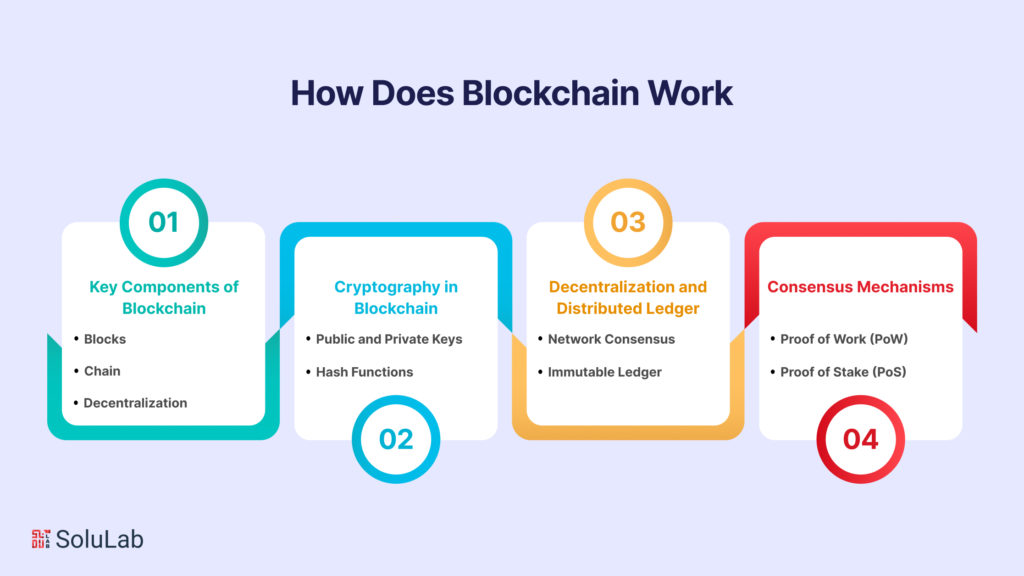
Blockchain technology has garnered significant attention for its potential to revolutionize various industries, from finance to supply chain management. Understanding how blockchain works is essential to grasp its transformative power. This article delves into the key components of blockchain, cryptography’s role, decentralization, and consensus mechanisms.

Key Components of Blockchain

At its core, a blockchain is a distributed and immutable ledger in blockchain that records transactions across a network of computers. Its key components include:

  • Blocks

These are containers that store data about transactions. Each block contains a group of transactions and has a unique identifier called a “hash.”

  • Chain

Blocks are linked together in chronological order, forming a chain. The previous block’s hash is included in each subsequent block, creating a secure connection.

  • Decentralization

Blockchain operates on a decentralized network of computers (nodes). Each node has a copy of the entire blockchain, ensuring redundancy and security.

Cryptography in Blockchain

Blockchain relies heavily on cryptographic techniques to secure data and ensure privacy. Key cryptographic aspects include:

Read Our Blog: Top Blockchain Technology Companies in 2024

  • Public and Private Keys

Users have a pair of cryptographic keys—a public key for identification and a private key for digital signatures. Transactions are signed with the private key and verified with the public key.

  • Hash Functions

Transactions and blocks are transformed into fixed-length alphanumeric strings using cryptographic hash functions. Even minor changes in data result in significantly different hash values, enhancing security.

Decentralization and Distributed Ledger

Decentralization is a fundamental principle of blockchain technology. Unlike traditional centralized systems, blockchain operates on a distributed ledger:

  • Network Consensus

Transactions are validated through a consensus mechanism, typically requiring a majority of nodes to agree on their validity.

  • Immutable Ledger

Once a block is added to the blockchain, it becomes virtually impossible to alter past transactions due to cryptographic integrity and the consensus mechanism.

Read Also: Top 10 Blockchain Development Companies in 2024

Consensus Mechanisms (e.g., Proof of Work, Proof of Stake)

Consensus mechanisms are pivotal to blockchain’s functionality. They ensure agreement among network participants regarding transaction validity. Two prominent mechanisms are:

  • Proof of Work (PoW)

PoW requires miners to solve complex mathematical puzzles to add new blocks to the chain. This process demands significant computational power and energy but is highly secure.

  • Proof of Stake (PoS)

PoS relies on validators who are chosen to create new blocks based on the number of coins they hold and are willing to “stake” as collateral. PoS is more energy-efficient than PoW.
What are the Fundamental Components and Characteristics of a Blockchain Network?

What are the Fundamental Components and Characteristics of a Blockchain Network

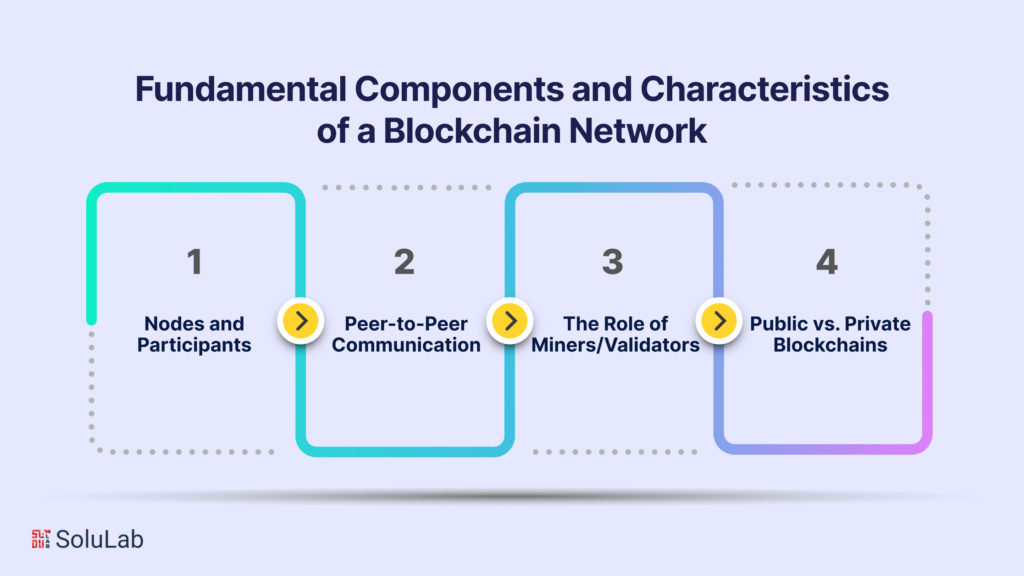
Blockchain technology is at the forefront of digital innovation, offering a secure and transparent way to record transactions and data. To comprehend blockchain fully, it’s essential to delve into the intricacies of its network. In this discussion, we will explore the various facets of a blockchain network, including nodes and participants, peer-to-peer communication, the role of miners/validators, and the distinction between public and private blockchains.

Nodes and Participants

  • At the core of a blockchain network are its nodes and participants. Nodes are individual computers or devices connected to the network. They play a crucial role in maintaining the decentralized nature of the blockchain. 
  • Participants can be individuals, organizations, or entities that engage with the blockchain by creating, validating, or storing transactions. These participants collectively form the network’s ecosystem.

Read Our Blog Post: Best Companies to Hire Blockchain Developers in 2024

Peer-to-Peer Communication

  • Blockchain operates on a peer-to-peer (P2P) network, where nodes communicate directly with each other without the need for intermediaries. This decentralized structure enhances security and eliminates single points of failure. 
  • When a participant initiates a transaction or updates the blockchain, the information is broadcast to all nodes in the network. This ensures that all nodes have a consistent and up-to-date copy of the blockchain.

The Role of Miners/Validators

  • In public blockchain networks, miners or validators play a critical role in maintaining the integrity of the blockchain. Miners validate transactions by solving complex mathematical puzzles through a process known as consensus (e.g., Proof of Work or Proof of Stake).
  • Once a transaction is verified, it is added to a new block, which is then appended to the existing blockchain. Miners are incentivized with rewards, such as cryptocurrencies, for their computational efforts.

Public vs. Private Blockchains

Blockchain networks can be categorized as either public or private, each with distinct characteristics:

  • Public Blockchains

These are open and permissionless networks accessible to anyone. They are decentralized, transparent, and often used for cryptocurrencies like Bitcoin and Ethereum. Public blockchains are maintained by a global network of miners.

Read Also: What Are The Benefits of Hiring a Blockchain Developer?

  • Private Blockchains

In contrast, private blockchains are restricted to specific participants or organizations. They are permissions, meaning that only authorized entities can validate transactions and access the blockchain. Private blockchains are commonly used for enterprise applications, supply chain management, and consortiums.

Understanding the blockchain network’s structure, participants, and communication mechanisms is crucial for grasping how blockchain technology works. It forms the foundation for various applications, including secure digital transactions, supply chain traceability, and even the creation of decentralized applications (DApps). As blockchain technology continues to evolve, it opens up new avenues for innovation, leading to exciting developments and trends in the field. 

Companies and developers are actively engaged in blockchain development, offering services and solutions to harness the full potential of this transformative technology. Blockchain consulting services can assist businesses in navigating the complexities of blockchain adoption and integration, ensuring they remain at the forefront of digital transformation.
What are the Applications of Blockchain Technology?

What are the Applications of Blockchain Technology?

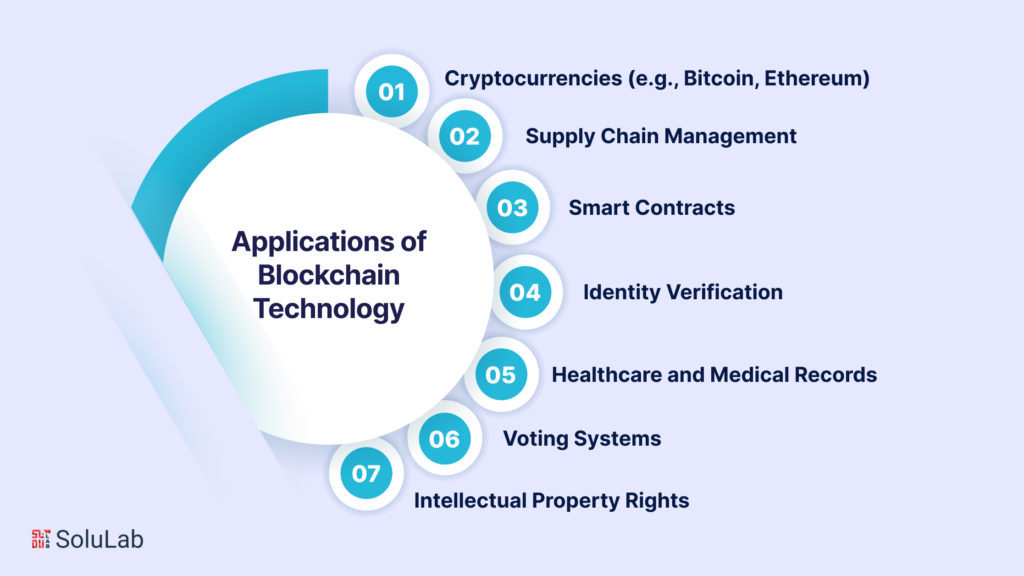
Blockchain technology, often referred to as the backbone of cryptocurrencies like Bitcoin and Ethereum, is a revolutionary innovation that has found applications far beyond the realm of digital currencies. It is a distributed ledger system that provides transparency, security, and immutability to transactions. Let’s explore various applications of blockchain technology:

  • Cryptocurrencies (e.g., Bitcoin, Ethereum)

Blockchain’s most well-known application is in the creation and management of cryptocurrencies. It serves as a decentralized ledger that records all transactions. Users can conduct peer-to-peer transactions without the need for intermediaries like banks.

  • Supply Chain Management

Blockchain technology is transforming supply chain management by providing end-to-end visibility and transparency. It allows tracking of products from their origin through every touchpoint in the supply chain. This reduces fraud, ensures the authenticity of products, and enhances efficiency.

Read Our Blog: What Are The Top 10 Companies To Hire Blockchain Developers from

  • Smart Contracts

Smart contracts are self-executing contracts with the terms of the agreement directly written into code. They automatically execute when predefined conditions are met. Blockchain’s security and trustworthiness make it an ideal platform for deploying smart contracts, which find applications in legal agreements, insurance, and more.

  • Identity Verification

Blockchain can be used for secure and tamper-proof identity verification. Individuals can have control over their data and selectively share it with trusted entities, reducing the risk of identity theft and fraud.

  • Healthcare and Medical Records

Blockchain ensures the integrity and confidentiality of medical records. It enables patients to grant access to their medical data securely, streamlining the sharing of information among healthcare providers while maintaining privacy.

  • Voting Systems

Blockchain-based voting systems offer secure and transparent elections. Each vote is recorded as a transaction, making it nearly impossible to tamper with results. This application enhances trust in the democratic process.

Read Also: Investing in Blockchain Development: A Strategic Guide for Businesses

  • Intellectual Property Rights

Blockchain can be used to prove ownership and protect intellectual property rights. Artists, writers, and creators can timestamp their work on the blockchain, providing undeniable proof of creation and ownership.

As blockchain technology continues to evolve, it opens up new possibilities across various industries. Companies and organizations are exploring innovative ways to leverage blockchain for increased efficiency, security, and transparency in their operations. The trends in blockchain point to a future where blockchain’s impact will be even more significant, ushering in a new era of digital transformation.
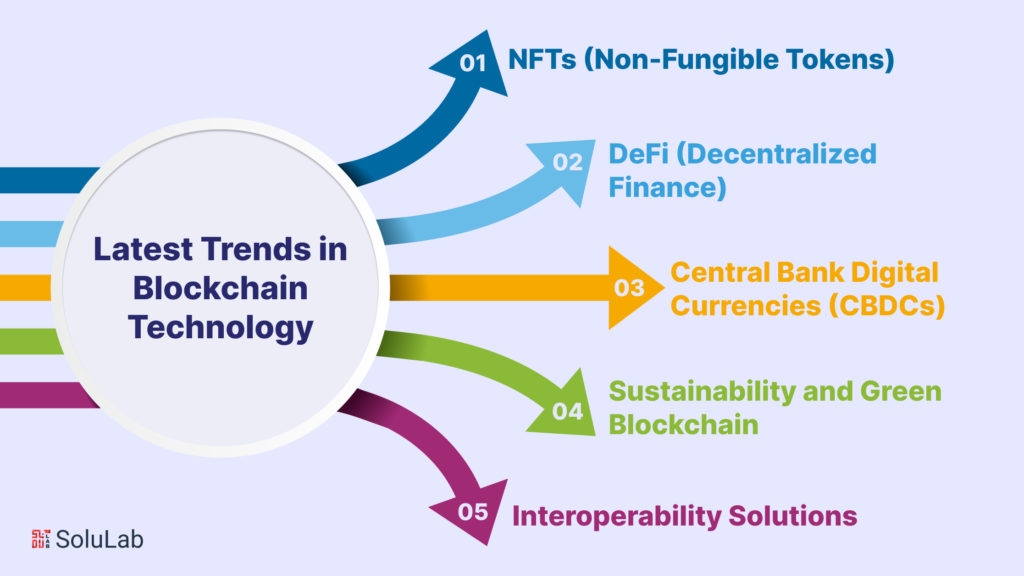
What are the Latest Trends in Blockchain Technology?

What are the Latest Trends in Blockchain Technology?

Blockchain technology, initially introduced as the underlying technology for cryptocurrencies, has evolved significantly in recent years. Today, it extends far beyond digital currencies, with various trends shaping its trajectory.

NFTs (Non-Fungible Tokens)

  • Non-Fungible Tokens, or NFTs, have taken the digital art and collectibles world by storm. NFTs are unique digital assets that represent ownership of digital or physical items. They utilize blockchain technology to establish ownership and provenance, making them highly valuable in the world of art, music, gaming, and even virtual real estate.
  • NFTs have introduced a new paradigm for ownership and authenticity verification, challenging traditional copyright and intellectual property norms. Artists, musicians, and creators are leveraging NFTs to monetize their digital works directly, eliminating intermediaries.

DeFi (Decentralized Finance)

  • Decentralized Finance, or DeFi, is revolutionizing the traditional financial sector. Built on blockchain networks, DeFi applications provide open and permissionless access to financial services like lending, borrowing, trading, and yield farming. DeFi platforms eliminate intermediaries like banks, enabling users to have more control over their assets.
  • The DeFi trend has seen exponential growth, attracting both users and developers. However, it also comes with challenges, such as security vulnerabilities and regulatory concerns, that need to be addressed for long-term sustainability.

Central Bank Digital Currencies (CBDCs)

  • Central Bank Digital Currencies are digital versions of fiat currencies issued by central banks. These CBDCs aim to combine the advantages of blockchain technology with the stability of traditional currencies. Governments and central banks worldwide are exploring the potential of CBDCs to modernize payment systems, enhance financial inclusion, and combat illicit activities.
  • CBDCs represent a significant shift in the financial landscape and could impact the adoption and use of cryptocurrencies like Bitcoin and stablecoins.

Read Our Blog Post: Top 20 Supply Chain Startups That Are Using Blockchain Technology

Sustainability and Green Blockchain

  • Sustainability is a growing concern in the blockchain space. The energy-intensive nature of some blockchain networks, particularly Proof of Work (PoW), has raised environmental concerns. As a result, there’s a growing trend towards developing and adopting more eco-friendly consensus mechanisms, such as Proof of Stake (PoS).
  • Green blockchain initiatives aim to reduce the carbon footprint of blockchain technology while maintaining its security and decentralization benefits. These efforts align with broader global sustainability goals.

Interoperability Solutions

  • Interoperability is a critical challenge in the blockchain industry. Different blockchain networks often operate in isolation, limiting the flow of assets and data between them. Interoperability solutions seek to bridge these gaps, enabling seamless communication and value transfer between disparate blockchain networks.
  • Projects and protocols dedicated to interoperability, like Polkadot and Cosmos, are gaining traction. They facilitate cross-chain communication and the creation of interconnected blockchain ecosystems.

How is SoluLab Pioneering the Digital Revolution Through its Blockchain Development Expertise?

Blockchain technology, often referred to as the backbone of cryptocurrencies like Bitcoin, has transcended its initial purpose. It is now a transformative force driving innovation across various industries. In this era of digitalization, understanding how blockchain works, its applications, and leveraging it effectively are paramount. SoluLab, a leader in blockchain development and consulting, is at the forefront of this revolution.

At its core, a blockchain is a decentralized and immutable digital ledger that records transactions across a network of computers. It operates on a peer-to-peer basis, utilizing complex cryptography to secure data. Each “block” in the chain contains a set of transactions, and they are linked in chronological order, ensuring transparency and security.

Blockchain Development with SoluLab

  • Blockchain Platforms

SoluLab leverages leading blockchain platforms like Ethereum and Hyperledger to create scalable and secure solutions. These platforms provide the foundation for building decentralized applications (DApps) and enterprise-grade blockchain networks.

  • Role of Blockchain Development Companies

SoluLab plays a pivotal role in guiding organizations through their blockchain journey. They offer consultation, development, and implementation services to ensure seamless integration into existing systems.

  • Blockchain Development Services

SoluLab offers end-to-end blockchain development services, including smart contract development, decentralized application development, blockchain consulting, and blockchain integration into existing systems.

In conclusion, blockchain technology is reshaping industries, and SoluLab is your trusted partner in harnessing its power. With their expertise in blockchain development and consulting services, they pave the way for organizations to unlock the full potential of this transformative technology.

Conclusion

In conclusion, SoluLab stands as a beacon of innovation and expertise in the realm of blockchain technology. As we’ve explored the intricacies of what blockchain is and how it works, it becomes evident that this revolutionary technology has become the cornerstone of digital transformation. SoluLab’s commitment to excellence and its status among leading blockchain companies are testament to its prowess in developing blockchain solutions.

With an in-depth understanding of blockchain technology, SoluLab not only explains the nuances of this groundbreaking technology but also empowers businesses with cutting-edge blockchain development services. In a landscape where blockchain trends continue to evolve, SoluLab remains at the forefront, ready to adapt and harness blockchain’s potential to drive digital transformation.

For those seeking to harness the power of blockchain, SoluLab is the go-to blockchain development company. The ability to hire top blockchain developers and access comprehensive blockchain consulting services sets SoluLab apart. In an era where blockchain is more than just a buzzword, SoluLab paves the way for businesses to unlock the full spectrum of opportunities presented by blockchain technology, ushering in a new era of innovation and efficiency.

FAQs

1. What is a Blockchain?

A blockchain is a distributed and decentralized digital ledger technology that securely records transactions across multiple computers. It consists of a chain of blocks, each containing a batch of transactions, and is designed to be transparent, immutable, and resistant to tampering.

2. How Does Blockchain Work?

Blockchain works through a network of nodes (computers) that validate and record transactions into blocks. Once verified, these blocks are linked in chronological order, forming a chain. Consensus algorithms ensure agreement among nodes, and cryptographic techniques secure the data.

3. What Are Some Applications for Blockchain Technology?

Blockchain technology has diverse applications, including cryptocurrency transactions (e.g., Bitcoin), supply chain management, identity verification, voting systems, healthcare record management, and smart contracts in various industries.

4. What Are the Key Trends in Blockchain Technology?

Current trends in blockchain technology include the rise of decentralized finance (DeFi) platforms, non-fungible tokens (NFTs), central bank digital currencies (CBDCs), and sustainability efforts to reduce blockchain’s energy consumption.

5. How Can I Develop Blockchain Solutions?

To develop blockchain solutions, you can either hire top blockchain developers or engage with blockchain development companies. It involves designing and implementing smart contracts, choosing the right blockchain platform, and ensuring security and scalability.

Blockchain Security: Best Practices Every Developer Should Know


Blockchain Security: Best Practices Every Developer Should Know

In the rapidly evolving landscape of technology, few innovations have captured the world’s attention and potential as profoundly as blockchain. This revolutionary technology has disrupted traditional models of trust, offering decentralized and tamper-proof solutions that span across industries. As blockchain applications become increasingly integrated into everyday processes, ensuring their security has become paramount. Developers, as the architects of these innovative solutions, bear the responsibility of safeguarding the integrity and resilience of blockchain networks.

Blockchain’s foundation in cryptographic principles and decentralized consensus mechanisms is inherently secure, but like any technology, it is not impervious to threats. The distributed and immutable nature of blockchain introduces unique challenges that require a deep understanding of its security landscape. This blog aims to provide developers, whether newcomers to the blockchain space or seasoned experts, with a comprehensive guide to the best practices that form the bedrock of blockchain security.

From the fundamental concepts of blockchain security to practical techniques for fortifying smart contracts and networks, this blog will delve into the multifaceted aspects of blockchain security. By grasping these principles and integrating them into their development workflows, developers can bolster their ability to architect blockchain solutions that not only harness the technology’s transformative potential but also stand resilient against a range of security risks.

Read Also: How Does the Blockchain Work?

In the sections that follow, we will explore key practices that encompass everything from secure development methodologies and cryptographic protocols to auditing processes and monitoring strategies. Whether you’re embarking on your first blockchain project or seeking to enhance the security of existing applications, the insights within this blog will empower you to navigate the intricate landscape of blockchain security with confidence.

Understanding the basics of Blockchain Security

Blockchain technology has brought about a paradigm shift in how we handle data, transactions, and trust in the digital realm. At its core, a blockchain is a decentralized and immutable digital ledger that records transactions in a secure and transparent manner. However, despite its inherent security features, developers must still be well-versed in the fundamental principles of blockchain security to build applications that withstand potential threats. Let’s delve into the basics of blockchain security and explore the key concepts every developer should understand.

Decentralization and Consensus Mechanisms:

One of the foundational pillars of blockchain security is decentralization. Unlike traditional centralized systems where a single entity controls the entire network, blockchain operates on a decentralized network of nodes, ensuring that no single point of failure exists. This distribution of power prevents malicious actors from easily manipulating the system.

To maintain consensus in a decentralized network, various consensus mechanisms are employed. The most common is Proof of Work (PoW), where nodes (often referred to as miners) compete to solve complex mathematical puzzles to validate transactions and add new blocks to the chain. This mechanism ensures that the majority of network participants agree on the state of the blockchain. Another mechanism, Proof of Stake (PoS), relies on validators who are chosen to create new blocks based on the amount of cryptocurrency they “stake” as collateral. Both PoW and PoS enhance the security of the blockchain by requiring significant computational resources or economic incentives to compromise the system.

Read Our Blog: Building Trust in a Digital World: The Power of Blockchain Development

Cryptographic Hash Functions:

Cryptographic hash functions are the building blocks of blockchain security. They take an input (data) and produce a fixed-size output (hash) that is unique to the input. A small change in the input will result in a completely different hash, making it virtually impossible to reverse-engineer the original data. This property ensures the immutability of the blockchain.

Hash functions are used to secure transactions and create the linkage between blocks in the chain. Each block contains a reference to the hash of the previous block, creating a cryptographic “chain” that is resistant to tampering. Any alteration to a block’s data would require changing the hash of not only that block but all subsequent blocks, which is practically unfeasible in a decentralized network.

CTA1

Public and Private Key Cryptography:

Public and private key cryptography underpins the security of blockchain transactions. Each participant in the network possesses a pair of cryptographic keys: a public key and a private key. The public key, which is derived from the private key, serves as an address that can receive funds. The private key, held only by the owner, is used to sign transactions and prove ownership.

When someone initiates a transaction, they sign it with their private key. Other participants can use the sender’s public key to verify the signature and ensure the transaction’s authenticity. This cryptographic mechanism guarantees the integrity of transactions and prevents unauthorized access.

Read Also: Blockchain Verification Process: Explained

Smart Contracts and Vulnerabilities:

Smart contracts, self-executing code deployed on the blockchain, are a powerful feature of blockchain technology. However, they also introduce their own security considerations. Vulnerabilities such as reentrancy attacks, integer overflow, and unauthorized access to functions can lead to serious security breaches.

Developers must rigorously audit and test their smart contracts to identify and mitigate vulnerabilities. Code reviews, static analysis tools, and external audits are essential steps in ensuring the security of smart contracts before deployment.

Why are blockchain security practices important?

Why are blockchain security practices important?

Blockchain technology has garnered significant attention for its potential to revolutionize industries, but its adoption also brings forth a critical responsibility: ensuring robust security practices. While blockchain offers inherent security features due to its decentralized and immutable nature, developers must implement a comprehensive set of security practices to fortify the technology against evolving threats. Let’s explore why blockchain security practices are of paramount importance in the modern digital landscape.

Read Our Blog: Why You Need To Leverage Blockchain For Your Business Today?

  • Immutable Ledger, Immutable Risks:

The immutability of blockchain, often touted as a core strength, presents a double-edged sword. Once data is recorded on the blockchain, it cannot be altered. While this is advantageous for maintaining data integrity, it also means that any vulnerabilities or breaches can have far-reaching and irreparable consequences. Proper security measures are crucial to prevent malicious actors from exploiting vulnerabilities and introducing unauthorized changes to the blockchain.

  • Decentralization ≠ Invincibility:

Decentralization is a key feature that sets blockchain apart from traditional centralized systems. However, it does not guarantee invincibility against security threats. While decentralization minimizes the risk of a single point of failure, it does not eliminate the possibility of attacks or vulnerabilities. Developing secure applications in a decentralized environment demands a different set of strategies and practices.

  • Financial Implications:

Many blockchain applications involve the management of valuable assets, whether they are cryptocurrencies, digital assets, or sensitive information. A breach in the security of a blockchain application can result in financial losses, reputation damage, and legal consequences. The potential impact of a security breach amplifies the need for developers to prioritize robust security practices.

  • The target for Attackers:

The distributed nature of blockchain networks makes them attractive targets for attackers seeking to exploit vulnerabilities. From DDoS attacks to 51% attacks (where an attacker gains control of the majority of mining power in PoW networks), malicious actors can disrupt operations, manipulate data, and even double-spend cryptocurrencies. Implementing security measures is essential to thwart these attacks and maintain the integrity of the network.

  • Smart Contract Complexity:

Smart contracts, while powerful, introduce complexity that can lead to unforeseen vulnerabilities. The infamous “DAO hack” in Ethereum, where an attacker exploited a vulnerability in a smart contract to drain funds, serves as a stark reminder of the risks associated with smart contract development. Security practices such as code audits, testing, and formal verification are crucial to prevent such incidents.

Read Our Blog Post: Top 10 Blockchain Development Companies in 2023

  • Regulatory Compliance:

As blockchain technology becomes more mainstream, regulatory requirements are becoming a significant consideration. Organizations that handle sensitive data or financial transactions on blockchain networks must adhere to relevant regulations. Proper security practices ensure compliance with data protection and financial regulations, avoiding legal and financial repercussions.

  • Maintaining Trust:

Blockchain’s promise of transparency and trust is only as strong as the security that underpins it. If security breaches become frequent, users and stakeholders may lose trust in the technology, hindering its adoption and potential. By implementing rigorous security practices, developers can help maintain the trust that is vital for the success of blockchain applications.

Best Blockchain Security Practices 

Best Blockchain Security Practices 

Before delving into best practices, it’s crucial to have a solid understanding of blockchain security fundamentals. This includes comprehending the decentralized nature of blockchain networks, consensus mechanisms (such as Proof of Work and Proof of Stake), cryptographic hashing, public and private keys, and the concept of smart contracts. A strong grasp of these concepts will lay the foundation for effective security practices.

Read Also: What are the Benefits of Using Digital Identity with Blockchain in the Future?

Choose the Right Blockchain Platform

Selecting the appropriate platform for blockchain security for your project is the first step toward ensuring security. Different blockchain platforms offer varying levels of security, consensus mechanisms, and smart contract capabilities. Ethereum, for instance, is a popular choice for decentralized applications, but there are other options like Binance Smart Chain, Cardano, and more. Choose a platform that aligns with your project’s requirements and security considerations.

Use Secure Development Practices

Secure coding practices are the cornerstone of blockchain security. Just like in traditional software development, following coding standards, avoiding vulnerabilities, and adhering to best practices like the OWASP Top Ten for web application security is essential. Blockchain-specific vulnerabilities, such as reentrancy attacks and timestamp dependence, should also be thoroughly understood and guarded against.

Conduct Regular Code Audits

Regular code audits by experienced blockchain security professionals are essential to identify and mitigate potential vulnerabilities. These audits involve a comprehensive review of the smart contracts and other code components to uncover vulnerabilities, backdoors, and logic errors that could compromise security.

Implement Multi-Signature Wallets

Multi-signature wallets require multiple private keys to authorize transactions, adding an extra layer of security. This prevents a single point of failure and unauthorized access to funds. Implement multi-signature wallets for important transactions or fund storage.

Use Strong Cryptography

Cryptography is the bedrock of blockchain security. Utilize strong cryptographic algorithms for key generation, encryption, and hashing. Regularly update your cryptographic libraries and algorithms to protect against emerging threats.

Regularly Update Dependencies

Blockchain applications often rely on third-party libraries and dependencies. These libraries can have vulnerabilities that hackers may exploit. Keep all dependencies up to date and monitor security announcements to address vulnerabilities promptly.

Read Our Blog Post: What Are The Benefits of Hiring a Blockchain Developer?

Implement Access Control

Access control mechanisms are crucial for restricting unauthorized access to your blockchain application. Utilize role-based access control (RBAC) and permissions to ensure that only authorized parties can interact with sensitive functions.

Test Exhaustively

Thoroughly test your smart contracts and blockchain applications before deployment. Utilize techniques like unit testing, integration testing, and end-to-end testing to uncover bugs and vulnerabilities. Implement continuous integration and continuous deployment (CI/CD) pipelines to automate testing processes.

Monitor Network Activity

Implement robust monitoring tools to track network activity and transactions. This will help detect unusual patterns, potential attacks, and unauthorized activities. Implement alerts to notify the development team of suspicious behavior.

Implement Fail-Safes

Incorporate fail-safe mechanisms to mitigate the impact of potential breaches. These mechanisms could include emergency pause features, circuit breakers, or upgradeability mechanisms that allow you to fix vulnerabilities without compromising the entire system.

Stay Updated on Security Trends

Blockchain security is a constantly evolving field. Stay informed about the latest security trends, vulnerabilities, and best practices. Participate in forums, attend conferences, and follow industry experts to ensure you’re up to date with the latest security developments.

CTA2

Conclusion

Blockchain technology holds immense promise for reshaping industries and enhancing security, but its potential can only be fully realized if security is prioritized throughout the development lifecycle. By adhering to these best practices, blockchain developers can create robust and secure applications that stand up to the evolving threat landscape. As the blockchain ecosystem continues to grow, a proactive approach to security is not just a choice – it’s an imperative.

From understanding the foundational concepts of decentralized networks and cryptographic principles to mastering the intricacies of smart contract vulnerabilities and monitoring strategies, these best practices serve as a comprehensive guide for developers at all stages of their blockchain journey. By adopting these practices, developers can rise to the challenge of not only crafting innovative solutions but also upholding the core tenets of security and trust that underpin the blockchain’s promise.

Read Also: Beginners’ Guide 101 to Outsourcing Blockchain Development

As technology continues to push the boundaries of what’s possible, the responsibility to protect and advance its potential falls squarely on the shoulders of developers. Secure coding practices, continuous audits, stringent testing, and staying attuned to emerging blockchain security solutions trends form a shield against threats that could undermine the very foundations of blockchain’s effectiveness. Furthermore, the importance of collaboration and knowledge-sharing among developers cannot be overstated, as a united effort is necessary to stay one step ahead of adversaries.

SoluLab is a leading blockchain development company that places the highest priority on blockchain security solutions. With a team of experts specializing in blockchain development services, they ensure the creation of cutting-edge applications that meet your unique needs.

From concept to deployment, their blockchain development solutions prioritize security at every step, safeguarding your data and transactions. Whether you require secure smart contracts or robust decentralized applications, their blockchain development services empower your business with the utmost security and efficiency. So, contact SoluLab now if you want to hire the best blockchain developers.

FAQs

1. Why is blockchain security so important for developers?

Blockchain security is of paramount importance because it ensures the integrity, trustworthiness, and functionality of blockchain applications. While blockchain offers inherent security features, it is not impervious to threats. Developers must implement best practices to safeguard against vulnerabilities, unauthorized access, and potential attacks that could compromise the entire system. Prioritizing security from the outset helps maintain user trust, prevents financial losses, and upholds the transformative potential of blockchain technology.

2. What are some common security vulnerabilities in blockchain applications?

Blockchain applications can be susceptible to various vulnerabilities, including smart contract flaws (reentrancy attacks, overflow vulnerabilities), insecure key management, insufficient validation of inputs, and susceptibility to distributed denial-of-service (DDoS) attacks. Addressing these vulnerabilities requires understanding blockchain-specific risks and implementing secure coding practices, regular audits, and continuous monitoring to mitigate potential threats.

3. How can developers ensure the security of smart contracts?

Developers can ensure the security of smart contracts by following a multi-faceted approach. First, conduct thorough code reviews and testing to identify vulnerabilities before deployment. Second, utilize static analysis tools to identify potential issues early in the development process. Third, consider external audits by security experts who specialize in blockchain to uncover hidden vulnerabilities. Finally, implement best practices such as limiting the use of external calls, using fail-safes like circuit breakers, and continuously updating smart contracts to address emerging threats.

4. What role does cryptography play in blockchain security?

Cryptography is a foundational element of blockchain security. It is used to secure transactions, create cryptographic hashes for data integrity, and manage public and private keys. Public key cryptography ensures that only authorized parties can sign transactions and access encrypted data. By leveraging strong cryptographic algorithms and keeping libraries up to date, developers can reinforce the confidentiality, authenticity, and non-repudiation aspects of blockchain transactions, contributing to a more secure ecosystem.

Building Trust in a Digital World: The Power of Blockchain Development

Building Trust in a Digital World: The Power of Blockchain Development

Understanding the concept of a Digital Trust Ecosystem

A digital trust ecosystem refers to a network of entities that use technology like Blockchain development to establish trust and enable secure transactions without third-party intermediaries. At its core, a digital trust ecosystem aims to remove the need for centralized authorities and middlemen by distributing trust among network participants.

In a digital trust ecosystem, trust is established through cryptographic techniques like digital signatures, hashing, and encryption. Entities can directly interact with each other without needing to go through banks, governments, or other institutions. This enables faster, cheaper, more transparent, and more secure transactions.

Digital trust ecosystems have applications in many industries. For example, a supply chain system can use Blockchain Development to track goods and payments between suppliers, manufacturers, distributors, retailers, and consumers. This establishes trust between entities that may not know or trust each other otherwise.

Read Also: What are the Benefits of Using Digital Identity with Blockchain in the Future?

Importance of Blockchain Technology in Building a Digital Trust Ecosystem

Blockchain technology is critical for constructing digital trust ecosystems. Blockchain Development provides a decentralized, distributed ledger that is immutable and transparent. This serves as the foundation for establishing trust between entities.

Key features of blockchain app development that enable trust include:

  • Decentralization – No single entity controls the network
  • Transparency – All participants can view transactions
  • Transactions are unchangeable and cannot be deleted.
  • Cryptography – Encryption and digital signatures enable trustless interactions
  • Consensus – Agreement on the network state without a central authority
  • Provenance – Goods and assets can be traced through the supply chain

By leveraging these attributes, Blockchain Development facilitates the creation of digital trust ecosystems. Participants can exchange assets and data peer-to-peer with confidence that transactions are valid and permanent.

Steps to Perform for Building a Blockchain Solution

Steps to Perform for Building a Blockchain Solution

Step 1: Identification of the Use Case

Definition and Examples

A use case refers to a specific application of blockchain technology to solve a real-world problem or provide new functionality. Clearly identifying the use case is a critical first step in constructing a digital trust ecosystem.

Some examples of blockchain use cases include:

  • Supply chain tracking – Improving transparency and efficiency in supply chains
  • Digital identity – Securely establishing identity and credentials
  • Healthcare records – Enabling patients to control access to medical data
  • Digital voting – Conducting secure and transparent elections
  • Cross-border payments – Facilitating faster and cheaper money transfers

The use case should be clearly defined in terms of the problem being solved, the entities involved, and how blockchain adds value. This guides the overall design of the digital trust ecosystem.

Read Our Blog: Top 10 Blockchain Development Companies in 2023

Assessing if Blockchain is necessary or if a Centralized Platform is more suitable.

Not every use case requires a blockchain-based solution. Centralized platforms may be more suitable if:

  • There are no multiple distrusting parties
  • Intermediaries like banks already establish trust sufficiently
  • Transaction speeds and volumes are very high
  • Privacy is more important than transparency

On the other hand, blockchain app development is advantageous when:

  • Establishing trust between strangers is important
  • Disintermediation brings significant benefits
  • Permanent and tamper-proof records are critical
  • Transparency and provenance are required

Carefully evaluating the specific use case guides the decision on whether blockchain is truly necessary or if a centralized platform is better suited.

CTA1

Step 2: Creation of a Proof of Concept

Meaning and Importance of a Proof of Concept

A proof of concept (PoC) is a small-scale implementation of the blockchain use case to validate its feasibility. Building a PoC is important for several reasons:

  • Tests technical viability of the use case
  • Identifies any flaws in the concept
  • Demonstrates value to stakeholders
  • Provides a benchmark for assessing solutions
  • Reduces risk before full-scale development

The PoC focuses only on the core functionality needed to demonstrate the use case. It serves as an invaluable tool for gathering feedback and preventing wasted effort on ideas that may not work.

Read Also: Best Companies to Hire Blockchain Developers in 2023

Steps to Creating a Proof of Concept

Key steps involved in building a blockchain PoC include:

1. Defining the scope and objectives

2. Designing system architecture and workflows

3. Selecting the Blockchain Development services and tools

4. Implementing core features and functionality

5. Developing a basic UI for interaction

6. Testing transactions and use case scenarios

7. Documenting results and gathering feedback

8. Assessing feasibility and making improvements

The PoC provides the foundation for full-scale blockchain software development implementation. Lessons learned can inform the final solution design and technology choices.

Step 3: Selection of a Blockchain Platform

Overview of different Blockchain Platforms

There are many blockchain software development platform options to choose from when building a digital trust ecosystem. Some leading platforms include:

  • Ethereum – Decentralized blockchain with support for smart contracts
  • Hyperledger Fabric – Private Blockchain Development services framework focused on enterprise use
  • Corda – Distributed ledger platform designed for regulated industries
  • EOS – Infrastructure for decentralized apps with high scalability
  • Stellar – Payment-focused Blockchain Development services that connect financial institutions

Read Also: Top 10 Blockchain Platforms of 2023

Factors like use case requirements, transaction speeds, consensus model, governance, and tooling support guide the choice of a blockchain development solutions platform.

Choosing the Right Consensus Protocol and Overall Architecture

  • Understanding Consensus Mechanism

Consensus mechanisms allow blockchains to maintain a single state of records without a central authority. Different models like proof-of-work, proof-of-stake, and delegated proof-of-stake have unique tradeoffs.

The consensus model should be chosen based on factors like scalability needs, security guarantees, and energy efficiency.

  • Selecting Data Structures

Blockchain data structures organize data into blocks and chains. Alternatives like directed acyclic graphs provide greater flexibility. The data model impacts factors like scalability and transaction speeds.

  • Defining Network Protocols

Network communication protocols like gossip protocol and RAFT enable node-to-node messaging to share transactions and blocks. The right protocols need to be chosen based on performance needs and network assumptions.

Step 4: Setting Up the Development Environment

Importance of the Development Environment in Blockchain Implementation

The development environment provides the tools and frameworks for building and testing blockchain applications. Setting up a robust environment facilitates rapid iteration and deployment. Key elements include:

  • Blockchain technology platforms and libraries
  • Consensus algorithms and cryptography
  • Programming languages and frameworks
  • Wallets and accounts
  • Development and testing tools
  • Simulators and emulators

Read Our Blog: Top Blockchain Technology Companies in 2023

Having the necessary environment reduces development effort, enables debugging, and allows comprehensive testing before launch.

Choosing the right Programming Language

Popular blockchain programming languages include:

  • Solidity – For writing Ethereum smart contracts
  • Golang – For building Hyperledger Fabric applications
  • JavaScript/TypeScript – For developing client apps and web interfaces
  • Rust – For high performance and security
  • C++/Java – General purpose languages with Blockchain technology libraries

The language choice depends on the platform, performance needs, available skills, and integration requirements.

Installing and familiarizing with necessary Development Tools

Useful blockchain development tools include:

  • Truffle – Development framework for Ethereum
  • Ganache – Ethereum emulator for testing
  • Remix – Browser-based Solidity IDE
  • Metamask – Ethereum wallet browser extension
  • Postman – API testing toolchain

Becoming familiar with these tools creates a robust environment for building and testing blockchain applications.

Read Also: Top 25 Blockchain-Based Identity Management Startups

Step 5: Implementing Core Blockchain Functionality

Components of a Blockchain Network

Core components of a Blockchain technology network include:

  • Peer-to-peer communication between nodes
  • Transaction creation, propagation, and validation
  • Cryptographic identities and signing of transactions
  • A consensus protocol for block creation and confirmation
  • Data replication across nodes through a shared ledger
  • Scripting language for implementing business logic
  • Wallets for managing keys and transacting

These underlying components need to be implemented to establish blockchain developer network functionality.

Developing Smart Contracts

Smart contracts encapsulate business logic and programmatically enforce agreements on the blockchain developer. Developing smart contracts involves:

  • Defining contract terms, rules, and workflows
  • Writing code in a language like Solidity
  • Implementing functions for executing transactions
  • Deploying contracts to the blockchain network
  • Interacting with contracts through wallets or applications

CTA2

Conclusion

In a rapidly evolving digital landscape, building trust has become a cornerstone of successful interactions. As we navigate through a world heavily reliant on digital transactions and data sharing, blockchain technology emerges as a game-changer in establishing trust and transparency. Through its immutable and decentralized nature, blockchain development addresses the challenges of data security, provenance verification, and fraud prevention.

Incorporating blockchain into various industries showcases its potential to revolutionize processes, enhance efficiency, and foster collaboration. From supply chain management to finance and beyond, the power of blockchain is undeniable. SoluLab stands at the forefront of this transformation, offering blockchain software development services that empower businesses to harness the technology’s full potential.

As organizations seek to build trust with their customers, partners, and stakeholders, hiring a dedicated blockchain development agency becomes essential. SoluLab boasts a team of the best blockchain developers who are skilled in creating customized solutions tailored to unique business needs. Through their expertise, businesses can integrate blockchain solutions that enhance security, traceability, and accountability.

Blockchain’s impact goes beyond technology; it reshapes the way industries operate by reducing intermediaries, minimizing errors, and increasing efficiency. As you venture into the world of blockchain development solutions, SoluLab’s experience and commitment to excellence can guide your journey. Their blockchain development services extend a helping hand in harnessing blockchain’s transformative power, ensuring you stay ahead in the digital age.

In conclusion, as the digital landscape expands, trust becomes a currency of paramount importance. Blockchain development emerges as a beacon of trust, offering solutions that reshape industries and redefine the way we conduct transactions. SoluLab’s expertise in blockchain software development services empowers businesses to embrace this transformative technology. As you navigate the digital world, remember that building trust begins with innovative solutions, and blockchain development paves the way for a future where transparency and security reign supreme.

FAQs

1. What is blockchain’s role in building trust in the digital world?

Blockchain technology serves as a secure and transparent ledger that records transactions in an immutable and decentralized manner. This inherent nature of blockchain ensures data integrity, eliminates the need for intermediaries, and enhances trust among parties involved in digital interactions.

2. How does blockchain development impact various industries?

Blockchain development brings transformative benefits across industries such as finance, supply chain, healthcare, and more. By providing secure, traceable, and tamper-proof records, blockchain minimizes fraud, streamlines processes, and fosters collaboration among stakeholders.

3. Why is hiring a blockchain development agency crucial for businesses?

A specialized blockchain development agency, like SoluLab, offers expertise in crafting tailored solutions that align with your business needs. These agencies hire the top blockchain developers who understand the nuances of blockchain technology, ensuring optimal implementation and maximizing its benefits.

4. Can blockchain technology enhance data security?

Absolutely. Blockchain’s decentralized and cryptographic nature ensures that data is stored securely and can only be accessed by authorized parties. This heightened security significantly reduces the risk of data breaches and unauthorized alterations.

5. What distinguishes SoluLab in the blockchain development landscape?

SoluLab stands out for its comprehensive approach to blockchain software development services. With a team of experienced developers and a track record of successful projects, SoluLab offers end-to-end solutions that empower businesses to leverage blockchain’s potential effectively.

6. How can blockchain development contribute to transparency and accountability?

Blockchain’s transparency stems from its ability to provide an unalterable record of transactions accessible to all parties involved. This shared ledger ensures accountability as every transaction is verifiable, promoting trust and collaboration in digital interactions.

7. Is blockchain development limited to financial applications?

No, blockchain applications extend far beyond finance. It finds utility in supply chain management, healthcare records, identity verification, and more. The underlying principle of trust and data integrity applies across various sectors, making blockchain a versatile solution.

What Are The Top 10 Companies To Hire Blockchain Developers from

Since its genesis in 2008-09, blockchain technology has experienced significant developments. It began as a simple Bitcoin picture and quickly moved to more unexpected areas. Despite having the word “Block” built right in, “blockchain” has recently travelled further than any other technical phrase. It is resonating throughout nearly all of the current IT infrastructures, posing a possible threat to the very survival of the existing companies.

High-level innovations are now occurring in Ethereum. The areas where the Ethereum blockchain is heavily utilised are DApps, ICOs, and Tokens. The Hyperledger project is attempting to provide a complete blockchain protocol appropriate for enterprise-level applications alongside it, and so far, they have had positive outcomes.

The blockchain is developing more quickly than many other technologies already in use. New protocol suites, IDEs for development, environments for deployment, blockchain management tools, and related ecosystems are routinely released. This article briefly describes the top 10 companies in 2024 for hiring best blockchain developers.

Read Our Latest Blog: What Are The Benefits of Hiring a Blockchain Developer

What is Blockchain Technology?

Blockchain technology is software and a system that enables safe online transfers of certain instances of value (such as money, property, contracts, and identification credentials) without needing a middleman like a bank or the government. It is a specific kind of database accessible over a computer network. A collection of data is contained in each block of the chain, and each block is connected to the one before it via a cryptographic hash. As a result, adding, editing, or removing data from the blockchain is highly challenging since any changes would be immediately visible to all network users.

Essential Skills for Top Blockchain Developers

Any blockchain project’s success depends on selecting qualified blockchain developers. Due to its intricate nature, blockchain technology necessitates a thorough grasp of distributed systems, smart contracts, and cryptography. Projects may be prone to mistakes and security flaws without the correct skills. Before making a hiring choice, it’s critical to thoroughly assess prospective employees’ or employers’ qualifications and expertise.

  • Programming skills: Proficiency in programming languages like Java, Python, and C++ is essential for top blockchain developers.
  • Cryptography skills: Blockchain developers should have a strong understanding of cryptography and its use in blockchain technology.
  • Distributed systems skills: Blockchain developers need to possess knowledge and experience in distributed systems and their functioning.
  • Problem-solving skills: As a blockchain developer, it is important to have the ability to recognize and address any issues that may arise concerning blockchain technology.
  • Communication skills: To be successful, blockchain developers must preoccupy the proficiency to articulate distinctly and effectively with other developers, business stakeholders, and the public.

Read Our Blog: Top Blockchain Technology Companies in 2023

Factors to Consider When Hiring Blockchain Developers:

  • Determine the company’s level of experience in creating blockchain technology;
  • Consider the skills and qualifications of the developers;
  • Seek out developers who have a firm grasp of the blockchain’s underlying principles;
  • Evaluate the company’s approach to security and data protection;
  • Look for a company that values openness, cooperation, and innovation.

CTA 1

Top 10 Companies for Hiring Blockchain Developers

One must partner with a reputable top blockchain development company to ensure reliable hands and top talent for your project. Here are the top 10 companies to consider:

1. SoluLab

SoluLab is a prominent blockchain development company that focuses on the development of the technology for both decentralised and digital markets. With nearly nine years of experience in the industry, they have expanded their services to include a range of software products such as mobile and online apps.

Solulab has a team of highly skilled developers with comprehensive knowledge of all aspects of blockchain technology. In addition, they offer blockchain-based solutions for a variety of industries, such as supply chain management, healthcare, and finance. If you’re looking to hire top blockchain developers for your project, look no further than SoluLab. Their developers are proficient in blockchain technology and experts in related technologies, such as smart contracts and decentralised applications (DApps).


$25-49


50-249


2014


Los Angeles, CA, USA


NovaPay Nexus, Morpheus

2. Leewayhertz

Leewayhertz is widely recognized as a top choice for businesses seeking to hire blockchain developers. Their team boasts years of experience and a proven track record in the industry, demonstrating their expertise and ability to elevate any project.

The developers at Leewayhertz possess a high level of proficiency in blockchain technology, with a commitment to surviving topical with the latest refinements in the field. They take pride in delivering bespoke solutions tailored to meet each client’s unique needs.


$50+


100+


2009


San Francisco, CA


Hershey’s,McKinsey, P&G

3. IBM

IBM has been a leader in technology for a century and is well known for its groundbreaking efforts in AI research and development. They provide a range of AI services, including strategy, consulting, and implementation, and have over 10,000 AI professionals spread across more than 100 nations.

IBM has also created IBM Watson, a cloud-based platform that aids businesses in developing and implementing AI solutions. According to most blockchain developers, IBM is a top business that provides blockchain consultation, implementation, and development services. They provide their customers with specialised blockchain solutions that align with their organisational objectives and particular business needs.


$99+


345,000


1911


Armonk, New York


ABN AMRO, Walmart, Maersk, Indian State Bank

4. ConsenSys

Blockchain software provider ConsenSys offers services to businesses and authorities. They have distinguished themselves as a top supplier of creative solutions thanks to their inventiveness and domain knowledge .ConsenSys is always looking for experienced blockchain developers to join their team.

Their group of highly competent engineers is dedicated to creating cutting-edge solutions and is motivated by their love of blockchain. ConsenSys offers the expertise and experience to produce top-notch outcomes whether you need help with smart contracts, decentralised apps, or other blockchain-related initiatives. Therefore, ConsenSys is your best option if you’re looking for a trustworthy and knowledgeable partner in the blockchain industry.


$50-99


250-999


2014


Brooklyn, NY


JPMorgan Chase, ING, Microsoft, EY

5. Chain

Chain is a well-known brand in the blockchain development industry. They are renowned for their cutting-edge technology and creative ideas that have benefited companies all over the world.

When hiring developers from Chain, you can trust that you’ll receive excellent expertise in blockchain development. Chain’s knowledgeable and talented team will ensure the project is completed on schedule and to the highest quality standards.


$40


500


2012


NY, New York


Walmart, State Street, Amazon Web Services

6. R3

R3 is a blockchain development firm specializing in creating financial service solutions. Enterprise blockchain software is created by this blockchain collaboration.

Experienced blockchain developers from R3 can assist companies in expanding and deploying blockchain applications. R3 has been at the forefront of blockchain development for years and continues to offer its clients top-notch services thanks to a team of very brilliant professionals.


$60


1,000


2013


Boston, MA


Bank of America, Santander, CIBC, Natixis

7. Bitfury

A blockchain technology startup called Bitfury provides a variety of services for organisations, institutions, and people. Global technology business Bitfury focuses on creating and implementing blockchain solutions. Bitfury provides a selection of infrastructure, development, and consulting services for blockchain developers.

Their consulting service aids companies in comprehending the advantages of blockchain technology and formulating a strategy for its adoption. While its infrastructure service offers resources to implement blockchain applications, Bitfury’s bespoke development service develops customised blockchain solutions for enterprises.


$50


100


2014


Tel Aviv, Israel


Samsung, Fidelity Digital Assets, Northern Trust

8. Deloitte

A leading provider of audit, tax, consulting, and financial advice services, Deloitte operates on a global scale. The business is headquartered in London, England, and was established in 1845. Over 280,000 people work at Deloitte, which operates in over 150 nations.

Deloitte’s excellent workforce of over 2,000 blockchain specialists further demonstrates its commitment to the technology. These developers have experience working with a wide range of clients on various blockchain projects, demonstrating their dedication to advancing technology. With such a large skill pool, it is no surprise that Deloitte has stayed at the top of the blockchain market.


$120+


345,000


1845


London, England, UK


PwC, Credit Suisse, State Street, Nasdaq

9. KPMG

KPMG is an influential international provider of professional services, including audit, tax, consulting, and advice.KPMG is heavily invested in blockchain technology and has been working on its advancement since the beginning. The more than 1,000 blockchain services professionals at KPMG are well-known for their knowledge and experience in the industry.

They have a track record of working effectively with customers on blockchain initiatives and offering insightful advice. KPMG is a great option for firms wishing to investigate the advantages of blockchain because of its reputation for dependability and dedication to assisting businesses in adopting this technology.


$60


227,000


1895


London, UK


EY, PwC, Deloitte, Grant Thornton

10. BitGo

BitGo is a business that provides safe storage for virtual coins like Ethereum, Bitcoin, and others. BitGo is one of the most reputable digital asset custody firms in the world, with over $10 billion in assets under its care. The business has a group of skilled blockchain developers that have built and maintained scalable and secure blockchain infrastructure.


$100


400


2013


Palo Alto, CA


Galaxy Digital, Bitfinex, Kraken

Concluding remarks

From a larger viewpoint, the blockchain may advance humanity to the next stage of development by fundamentally altering socioeconomic and political structures. Others counter that because the technology is still in its infancy, it is too early to have such optimistic expectations.

In conclusion, every business trying to keep ahead of the curve in the always-changing world of technology must hire blockchain engineers. A team of talented developers might make all the difference in the success of your initiatives, given the rising demand for blockchain solutions. You can make sure that you hire the best blockchain developers to serve your business needs and assist you in reaching your objectives by using the advice in this article.

CTA 2

FAQs

1. What are the different kinds of blockchain developers?

Three basic categories of blockchain developers that exist are:

  • Core developers: The consensus algorithm and the networking protocol are two examples of the essential infrastructure that these engineers are in charge of creating for a blockchain network.
  • Developers of applications: These professionals create software that runs on a blockchain network.
  • Testers: These programmers look for faults and security flaws in blockchain networks and apps.

2. What skills are required for working as a blockchain developer?

Depending on the sort of development you want to conduct, different talents are needed to become a blockchain developer. But some frequent abilities are as follows:

  • Programming abilities: Solidity, Python, and Java are just a few of the programming languages that blockchain engineers need to know. Blockchain engineers must be familiar with distributed networks and how they operate.
  • Security: When creating blockchain applications, developers must be mindful of the security concerns involved.
  • Mathematics: Cryptography, in particular, requires blockchain engineers to have a solid grasp of mathematics.

3. How to become a blockchain developer?

Several paths can be taken to become a blockchain developer. One can: Take lessons or classes online. Go to blockchain gatherings and conferences. Work for a business that is developing blockchain technology. Launch your own blockchain initiative.

4. How much do blockchain developers earn each year in the USA?

Blockchain engineers earn different incomes based on their degree of expertise, where they work, and which firm they work for. Blockchain developers, however, can get very large wages. In the United States, a Blockchain Developer makes an average yearly pay of $91,753. To view salaries near you for Blockchain developers, use the location filter.

How to Hire The Best Blockchain Developers in Silicon Valley?


How to Hire The Best Blockchain Developers in Silicon Valley?

Silicon Valley’s worldwide heart of technical innovation is home to a thriving community of blockchain engineers. As blockchain technology transforms numerous sectors, the demand for qualified developers is increasing. Finding and recruiting the best blockchain developers in Silicon Valley, on the other hand, might be difficult.

If you want to construct cloud storage, implement smart contracts, improve supply chain communication, and so on as an enterprise, Blockchain is your solution. This digital ledger solution will hold enterprise-level transactional records across many databases linked by a network.

Recruiting blockchain developers in Silicon Valley is challenging since there is a lot of competition from a small pool of professionals. As a result of the market’s scarcity of engineers, the recruiting procedure will be costly and time-consuming. So, what’s the answer? 

Is it possible to recruit blockchain developers in Silicon Valley in a cost-effective manner that does not require too much time and does not compromise on quality? This article includes in-depth insights and specific methods to assist you in navigating the recruiting process and assembling a top-tier blockchain development team.

Check Out Our Article: SoluLab Honored By GoodFirms as the Winner of the Trusted Choice Award 2023

What Factors Should You Consider When Choosing the Top Blockchain Developer?

Blockchain technology has transformed sectors from banking to supply chain management, and selecting the proper blockchain developer is critical to the success of any blockchain-based enterprise. With the increased demand for talented blockchain specialists, it is essential to evaluate several variables to guarantee you choose the right developer for your unique needs. Here are some important factors to consider while looking for the finest blockchain developer:

  • Technical expertise

Blockchain development necessitates a solid foundation in programming languages such as Solidity, C++, Java, or Python. Look for developers who understand blockchain ideas, smart contracts, consensus methods, and cryptography. Check their familiarity with relevant blockchain platforms like Ethereum, Hyperledger, or Corda and their capacity to design decentralized apps (dApps) and execute blockchain solutions.

  • Industry Experience

Consider hiring a developer with past expertise in your business or a related topic. Each sector has its own set of standards and regulatory concerns. A developer who knows these complexities will be better able to create and deploy blockchain solutions that successfully handle your unique difficulties. Request examples of their prior work or projects to analyze their expertise and ability.

  • Problem-Solving Skills

Blockchain technology frequently requires solving complicated challenges and resolving scalability, security, and performance issues. Look for developers with good analytical and problem-solving abilities. Examine their critical thinking skills, capacity to design novel ideas, and ability to optimize blockchain applications for efficiency and effectiveness. Consider presenting them with hypothetical scenarios to assess their problem-solving ability.

  • Collaboration and Communication

Multidisciplinary teams are frequently used in successful blockchain development initiatives. A developer must be able to collaborate with other experts, such as user experience/user interface designers, project managers, and business analysts. Look for strong communicators who can explain technical topics to non-technical stakeholders. Examine their capacity to collaborate and adapt to changing project needs.

  • Continuous Learning and Adaptability

The blockchain industry is constantly growing, with new platforms, tools, and frameworks appearing regularly. The greatest blockchain developers remain up to speed on the latest trends and breakthroughs in the technology. Inquire about their interest in learning, attending conferences or meetings, and contributing to the blockchain community. A developer who actively pursues and accepts change is more likely to provide cutting-edge solutions.

  • Reputation and References

Consider their reputation and references within the blockchain community while selecting possible applicants. Look for developers with a proven track record of successful projects and excellent client or company feedback. Request references and follow up with them to confirm their job quality, dependability, and professionalism. 

Dedication and a true enthusiasm for the technology are required for blockchain development. Seek engineers excited about blockchain’s potential and power to alter industries. Developers passionate about their work are more likely to go the extra mile, keep up with the newest trends, and actively contribute to the success of your project.

  • Security Awareness

Security is of the utmost importance in blockchain development. Look for developers who value security, know typical vulnerabilities, and secure coding best practices. Examine their capacity to install strong security measures, do extensive testing, and maintain your blockchain technology’s confidentiality, integrity, and availability.

CTA 1

How to Hire a Blockchain Developer on a Low Budget?

Hiring a qualified blockchain developer is critical to the success of blockchain enterprises. However, the cost of employing blockchain engineers might be an issue for firms on a tight budget. Here are some tips to help you choose a blockchain developer on a tight budget:

1. Identify the Scope and Needs of Your Blockchain Project

Identify your blockchain project’s scope and outline your precise needs. This will allow you to properly convey your requirements to potential developers and minimize needless expenditures associated with confusing project scopes.

2. Examine Freelance Developers

Instead of working with huge development organizations, consider employing freelance blockchain developers. Freelancers frequently have lesser overhead costs and can provide affordable pricing. Platforms such as Upwork, Freelancer, and LinkedIn can assist you in locating and connecting with skilled freelance blockchain developers.

3. Expand Your Search to Include Remote Blockchain Developers

By broadening your search to include remote blockchain developers, you may have access to a worldwide talent pool. Developers from lower-cost-of-living locations may provide their services at reduced prices while maintaining their skills and knowledge. Use sites like Toptal, GitHub, or specialist blockchain forums to discover a hidden talent.

4. Evaluate Blockchain Development Courses

Consider hiring developers who have completed blockchain development courses or boot camps. These professionals may offer reduced fees as they begin their careers or shift into blockchain development. Examine their talents and practical experience earned during their training to verify they fulfill the needs of your project.

Read Our Blog: Top Blockchain Technology Companies in 2023

5. Engage with Blockchain Development Communities

Participate in blockchain development communities and forums where developers may discuss their work and initiatives. Networking and creating relationships within these networks help you connect with developers looking for part-time or economic jobs. Platforms like GitHub, Bitcointalk, and blockchain-specific subreddits might help you make important contacts.

6. Examine Open-Source efforts

Examine potential blockchain developers’ open-source efforts. Developers regularly contributing to blockchain projects and having a strong presence in the open-source community show their competence and dedication to the area. Consider these developers because they can provide more cost-effective solutions and important insights into your project.

7. Do Thorough Technical Evaluations

Before employing a blockchain developer, do extensive technical evaluations to analyze their abilities and expertise. This can assist you in identifying developers who have the essential skills while ensuring you receive the most value for your money. Assign coding tasks or ask for a review of previous work to evaluate their technical competence.

8. Consider Part-Time or Contract-Based Engagements

If your project does not need the hire of a full-time blockchain engineer, consider employing one on a part-time or contract basis. This arrangement enables you to tap into their knowledge for certain tasks or project stages while avoiding the expenditures associated with long-term employment.

9. Prioritise Flexibility and Adaptability

Look for blockchain engineers willing to work in flexible settings, such as remote work or flexible hours. Flexible developers may be more prepared to modify their charges to fit your financial limits. When interacting with potential blockchain developers, be upfront about your financial constraints. Discuss your pricing expectations for the project openly and see whether developers can give cost-effective options within your budget.

How Much Does Hiring a Blockchain Developer Cost?

What are Blockchain Developers' Roles and Responsibilities?

Blockchain technology has gotten a lot of interest and acceptance in various businesses, which has increased the demand for competent blockchain developers. When considering hiring a blockchain developer, it is critical to understand the elements that determine the pricing of their services. 

The cost of hiring a blockchain developer might vary depending on numerous factors, including:

  • Skill and Experience Level

A blockchain developer’s skill and experience level greatly influence their pricing. Developers with a thorough grasp of blockchain technology, skills in programming languages such as Solidity, and familiarity with blockchain platforms such as Ethereum or Hyperledger attract greater pay. More experienced developers are sometimes expensive but may provide significant insights and skills.

  • Project Intricacy

The intricacy of the project significantly impacts the cost of employing a blockchain developer. Projects that necessitate the creation of sophisticated smart contracts, complicated consensus algorithms, or advanced decentralized apps (dApps) are likely to require the knowledge of highly trained developers, resulting in increased expenses. 

  • Timeframe for Development

The timeframe in which you expect the project to be finished might impact the cost. Urgent projects may necessitate allocating more resources or working longer hours to achieve the deadline, which may result in increased expenses. It is critical to discuss the project timeframe and ensure it fits with the developer’s availability and workload.

Read Also: 9 Tips To Hire Dedicated Developers For Your Project

  • Location and Market Rates

The developer’s geographical location might influence pricing. Developers in high-cost-of-living areas or where blockchain knowledge is in great demand frequently charge higher prices. For example, developers in North America or Western Europe often charge higher prices than those in other locations. However, developers from various places may bring different viewpoints and experiences.

  • Freelancer vs. Agency

The cost of employing a freelance blockchain developer vs. contracting an agency might vary. Although freelancers may provide affordable prices, they frequently operate autonomously, which means you will be responsible for project management and coordination. Conversely, Agencies offer a team-based approach with project managers and quality assurance, but their charges are often higher owing to added services and administrative costs.

  • Additional Services

Besides coding, some blockchain developers may provide consultancy, project management, or continuing maintenance. These extra services may increase the overall cost of your project but may add value to it. When assessing these supplementary services, remember your individual needs and budget limits.

What are Blockchain Developers’ Roles and Responsibilities?

What are Blockchain Developers' Roles and Responsibilities?

Blockchain technology has ushered in a new secure and decentralized digital transaction era. Blockchain developers are essential in designing, implementing, and maintaining blockchain-based systems. Their duties include various activities ensuring blockchain initiatives’ seamless operation and success. 

Here are some of the most important jobs and duties of blockchain developers:

  • Blockchain Architecture Design

Blockchain developers create the architecture of blockchain networks. Based on the project needs, they identify the best blockchain platform or architecture and the right consensus algorithms, smart contract languages, and data structures. They create the blockchain system’s framework, including network nodes, security features, and data storage techniques.

  • Smart Contract Development

Self-executing contracts with established rules and conditions are known as smart contracts. Blockchain engineers must be fluent in programming languages such as Solidity (for Ethereum) or Chaincode (for Hyperledger Fabric) to construct smart contracts. They build the code that automates contract execution, assuring transparency, immutability, and tamper resistance.

  • DApp Development

Blockchain developers create decentralized apps (dApps) that operate on blockchain platforms. They create front-end and back-end interfaces that communicate with the blockchain network. These applications may feature user authentication, transaction processing, data storage, and interaction with third-party systems. Blockchain engineers guarantee that dApps are seamlessly integrated with the underlying blockchain technology.

Read Our Blog Post: Top 10 Blockchain Platforms of 2023

  • Blockchain Integration

Blockchain integration refers to how blockchain developers integrate technologies into current systems and applications. They work with system administrators and IT teams to ensure the blockchain network integrates smoothly, including APIs, data feeds, and data synchronization. They may also create middleware or modify existing systems to interface with the blockchain network securely.

  • Security and Testing

Blockchain developers are responsible for implementing robust security measures to protect the blockchain network and its applications. They do thorough testing to find and remedy vulnerabilities, including unit testing, integration testing, and security audits. They ensure the blockchain system follows best practices for secure coding, encryption, and access management to avoid unauthorized access and data breaches.

  • Performance Optimization

The method through which blockchain developers increase the efficiency of blockchain networks and apps is known as a performance optimization. They identify bottlenecks, scalability challenges, and latency issues and implement solutions to enhance overall system performance. They can use splitting, caching, and load balancing to improve transaction throughput and reduce network congestion.

  • Blockchain Upgrading and Maintenance

Once a blockchain system is installed, developers are responsible for its upkeep and upgrades. They monitor the blockchain network, fix any performance issues or glitches, and make any required upgrades to keep it running smoothly. They remain current on the newest breakthroughs in blockchain technology and make necessary updates or protocol adjustments.

  • Collaboration and communication

Blockchain engineers work with cross-functional teams, including designers, project managers, and business analysts, to comprehend project requirements and transform them into technological solutions. They efficiently convey complicated technical ideas to non-technical stakeholders and advise on the viability and ramifications of blockchain technology in the project context.

CTA 2

Conclusion

When hiring the best blockchain developers in Silicon Valley, taking a strategic approach is crucial. Silicon Valley is well-known for its vibrant technology sector, which attracts top talent worldwide. 

Numerous blockchain-related tech events, conferences, and meetings are held throughout Silicon Valley. Attend these events to network with industry leaders, meet possible prospects, and learn about the most recent trends and advances. Engaging with the Silicon Valley blockchain community can help you connect with qualified engineers.

When hiring the best blockchain developers in Silicon Valley, properly evaluate their technical abilities and competence. Conduct technical interviews, code exams, or a study of their previous projects to assess their knowledge of relevant programming languages, blockchain platforms, and smart contract creation. Consider working with technical specialists or consultants to help with the evaluation process.

FAQs

1. How can I hire the best blockchain developers in Silicon Valley? 

Hiring the best blockchain developers in Silicon Valley can be challenging due to competition and scarcity. To overcome this, consider attending tech events, networking within the blockchain community, and conducting thorough evaluations of candidates’ technical abilities.

2. What factors should I consider when choosing a top blockchain developer? 

When selecting a top blockchain developer, consider factors such as their technical expertise in programming languages and blockchain platforms, industry experience, problem-solving skills, collaboration and communication abilities, continuous learning and adaptability, reputation and references, and security awareness.

3. How can I hire a blockchain developer on a low budget? 

Hiring a blockchain developer on a low budget can be achieved by identifying your project scope and needs, considering freelance or remote developers, exploring blockchain development courses, engaging with blockchain development communities, examining open-source efforts, conducting thorough technical evaluations, and considering part-time or contract-based engagements.

4. How much does hiring a blockchain developer cost? 

The cost of hiring a blockchain developer depends on factors such as their skill and experience level, project complexity, timeframe for development, location and market rates, freelancer vs. agency, and additional services required. Evaluating these factors will help determine the pricing of their services.

Blockchain Agri And Food Supply Chain Sector: A Blend of the Conventional and Modernity

Blockchain Agri and Food Supply Chain

Now, you can know where your food comes from by the use of Blockchain; a technology that has shaken the Agricultural industry of the 21st Century. Blockchain is an emerging technology that not only conforms to cryptocurrency. But it has made swooping changes in the agricultural sector. Here’s the answer to all your questions.

What is Blockchain?

Blockchain is a ledger of accounts and transactions stored by all participants in a network. Blockchain is built on Distributed Ledger Technology (DLT), allowing any kind of information to be recorded and shared among the participants in a network. Any alterations made on the blockchain must be approved by all the users in the Peer-to-Peer Network. 

Blockchain technology eliminates the need for middlemen in transactions resulting in transparency; data is accessible by all users. It also allows users to create their own digital identity, which can ease their trouble in providing financial services, social benefits, healthcare, political and legal rights and many more. 

Because of Blockchain’s unique characteristics and the perks it provides, many companies of different sectors now increasingly demand Blockchain technology to be implemented in their services. 

Blending Blockchain in Agriculture Sector

One such sector is the Agricultural industry. It is said that 6.7% of the economical production of the world is represented by agriculture, and nearly 40% of the world’s population is engaged in the agricultural economy. 

However, in developing countries, the agricultural sector is still lacking and confines conventional methods of agriculture from producing crops until the shelving of products in stores. 

Some of the promising benefits over the years that have been observed by implementing Blockchain are:

  •  Agricultural Insurance: The process of validating claims by insurance providers are complicated and painstakingly long. Moreover, the risk of corruption and alteration of insurance policies are some limitations that farmers are apprehensive about. The introduction of smart contracts development from Blockchain eliminates these risks making it simpler, faster and transparent.
  • Land legitimacy: Blockchain technology is famous in the real estate business. In the same way, implementation of Blockchain for land records linked to ID can be proved without having to take trips to government offices, especially after incidents of natural disasters or wars.
  • Agricultural supply chains: Blockchain can assist in providing an immutable record from the initial stages of crop growth and processing to the retail store of a product. This can elevate the consumer’s trust in the products that they buy.
  • Traceability: Blockchain enables companies to track their products and see where they have been disbursed. In the process of tracking unsafe products, the data stored through the use of Blockchain makes it easier to locate their products. It has been claimed that, with the help of the Blockchain system, we can now trace the path of food from farm to the stores in just a few seconds. 
  • Goods Management: Almost all the companies face the issues of data management, delay in payments etc. However, with the use of Blockchain Technology, they are able to keep track of organized data which is incorruptible.
  • E-Marketplace Creation: Producers may not know the market and trending prices or which areas have the most larger number of customers. Thus, it creates a digital market for producers to connect them directly to their buyers. 

The knowledge of financial transactions, farm inputs, demands of crops in the market, market-rate supply chain land holding etc. can be procured and analysed from Blockchain-based platforms. 

  • Access to Capital: Small scale farmers, shareholders, might find it difficult to procure loans for start-up businesses because of limitations like credit history, land ownership and so on. 

However, Blockchain provides investment tokens and funds for their business to pay for raw materials and machinery. 

  • Food safety: As consumers take precautionary measures, producers can provide a number of information through data that is stored. It gives out the info of quality and what goes into their food, ensuring quality. It also monitors storage conditions. 
  • Environmental sustainability: All industries related to producing commodities are concerned with the number of toxic substances that their industries release.

Policies are also tailored, keeping in mind the environmental sustainability. The crucial problem here is the degradation of land, soil and water where food is being produced.

In this context, the sustainable development, proper management and rational use of agricultural fields, water resources and soils are of utmost importance. Tracing this information via the supply chain, making it visible to the public, is essential for putting public pressure to producers and policy-makers on the aspect of how the food is produced in a sustainable manner.

FUN FACT: ‘Plastic Bank’ based in Canada has been successfully set up for developing countries producing wastes. With every batch of plastic brought to recycle, they are awarded Blockchain digital tokens.

  • Subsidiary Disbursement: Agricultural-driven countries can have access to all information regarding financial help distributed under Government schemes. It ensures transparency on the correct and uncorrupted distribution of capital. 

In addition, the application of Blockchain results in:

  • Simplified stages of the supply chain from farmland to store shelf
  • Informed consumers who are aware and satisfied
  • Decreased dependency on intermediaries or agencies
  • Elimination of fraud and promoting an inclusive trade
  • Improved quality of products
  • Lesser risks of food-borne diseases

If you’re still perplexed of how Blockchain takes place in the agricultural sector, or driven by curiosity, explained below are the stages of the mechanism of Blockchain in Agriculture:

1. Data storing: Smart farming has enabled farmers to use Internet of things (IoT) sensors and devices to track the temperature, water level, soil quality and other factors that affect the growth of crops. This information gathered is then structured to make it comprehensive. 

2. Value Data: before updating the collected information into Blockchains, more value and quality is added to the information in two ways: adding timestamps and demographics. Secondly, the product information is made sure that it follows strict security measures.

3. Insightful Information: To add more value, with the help of algorithms, the quality of the crop, identification and demand predictions in the market are made. In this way, farmers and stakeholders can make decisions to improve their irrigation system. All of this information is transparent for growers, producers, service producers and retailers. 

 4. Interplanetary File System(IPFS): the data is then stored in a distributed platform called IPFS and is stored in a blockchain. It then produces a smart contract which includes rules to facilitate storage of data, and it’s accessibility to the participants in the system.

Blockchain in Food Supply Chain

1. Data storage: Above, we have learned the process of how food is grown and under what conditions.

2. Distribution: the food processing companies now on the bidding platform. After this is validated, the food is transported to refineries in IoT enabled vehicles where the required storage temperature is maintained. Every process that takes place in the refineries is recorded, ensuring retailers to give out the proper information on the quality of products.

3. Supplying: Supply of processed food is then again, transported in IoT enabled vehicles.

4. Consumers can now procure information by scanning the QR code like the batch number, data on food processing, expiry date, price, etc. 

Platforms applying Blockchain Technology for Agriculture and supply chain. 

  • AgUnity provides solutions to digital identity and financial inclusivity to empower poor farmers. The AgUnity App helps small farmers plan, trade and track everyday transactions. By using Blockchain, AgUnity ensures that all transactions users and clients are securely recorded on an incorruptible Blockchain ledger. The AgUnity app provides people living in remote areas accessible tools to connect with each other and establish effective lines of communication trade.
  • FARMS ( Financial and Agricultural Risk Management for Small Holders) is based on the concept of Blockchain virtual currency platform, ensuring transparent transactions. One speciality is that farmers can buy digital currency and add it into their virtual wallets. They can redeem or withdraw these vouchers and coins. 
  • AgriDigital is digitizing and growing grain supply chains connecting farmers, buyers, investors through a single platform, allowing them to contract, deliver and make payments securely and in real-time.
  • BanQu is another Blockchain platform for agriculture that allows farmers to use their smartphones to record their personal information and transaction history. Furthermore, these digital identities can be used to apply for credit while they search for financial aid in the future.  
  • Hello Tractor connects tractor owners to smallholder farmers in need of tractor services. 
  • TE-FOOD provides backtracking of product serialization to the information of custom protocols carried out to the consumers building trust between the producers and the consumers.

Despite its initial development, Blockchain has a growing impact on different sectors replacing many financial institutions, banks, education, health care system, educational system and above all, as discussed, it has significantly brought changes in the dimension of agriculture. It has brought Transparency, security, providing streamlined operations, a greater degree of analytics and a more efficient consumer engagement. 

Consumer safety is ensured as Blockchain technology unfolds unique transformations in ensuring quality-controlled food, providing storage conditions and also empowered many farmers to be insured. One of the most important features it brings is environmental sustainability which is the need of the hour. 

The use of data is the crux to improve productivity and sustainability as people can track the progress of crop growth according to the environmental conditions and needs. Blockchain has also reduced the need for agents who deducts 5-10℅ of brokerage fee and also has reduced the trouble to trace the delivery of their products to stores. 

Blockchain has empowered many small-scale farmers to elevate themselves as there’s no hassle to find brokers and allows them to effectively connect to their consumers and retailers. 

Also, farmers can have access to data related to seed and soil quality, pH level, payments, demands, and efficiently supply their products with fair pricing, which was once controlled by big MNCs. 

Although it may seem like a cake and ale task to do, Blockchain technology has a long way to go parallel to the developing countries. Because not all, farmers are smartphone-literate in the third world. The apprehension, because of the cost of implementing Blockchain, has created doubt among farmers. But all it takes is a bit of education, a zeal to innovate and a bigger scope in life. Nevertheless, Blockchain has provided promising results and innovatively changed different sectors.

How Can Blockchain Uplift Trucking Industry?

Blockchain has so many sides attached to it that with every other news the sector it could help, increases! Who knew that blockchain can also help in the upliftment of the trucking industry?Crazy! Right. Did anybody even foresee that?  Well, enterprise blockchain development has again changed the way connecting network works! It is a fact that trucking involves connection of too many parties to accomplish process of transactions. Hence, it needs blockchain to run in a free and easy way. 

Blockchain In Trucking Industry

Trucking is an industry which involves a lot of assets, transactions, and recording of data. It has been noticed that there is this problem by the manufacturer for finding the trucks at the right place and right time. This hurdle ruins and complicates the free flow of the supply chain. The reason is not that the trucks are lesser in numbers. It’s just that they do not reach due to the lack of coordination among the workers and the manufacturers.

Blockchain in Trucking Industry

Till now, blockchain is not much prevalent in the society. Hence, there is a need for some situations to be thought about to let the trucking industry get into the system of blockchain. Any blockchain development company can help uplift trucking industry. Why and how? The reasons are listed below!

All the parties involved should have faith over the systems of blockchain!

Blockchain in itself is a huge combination of chains linked together as a ledger to arrange the data in a proper manner. For blockchain to take over the security and systems for the trucking industry it is the parties like manufacturers, suppliers and retailers that are needed to trust blindly. 

Each and every person can see the entire transaction data on blockchain. This gives a way for the transparency. And, as a result, builds a trustworthy relationship among the customers and retailers.   

Nobody should be kept away from it, not even the small carriers and shippers!

Most of the small companies that exist fail to be a part of a huge technological change due to the lack of knowledge and reach to the software and hardware. For businesses aiming to adopt new technologies, creating a clear trucking business plan can guide how blockchain and other innovations fit into long-term growth.

It is considered to be one of the hardest tasks for blockchain to get into the business because of the drivers not being much educated. Of course, blockchain in trucking will take some time. But, it be able to flourish the system with flying colors.  

Everybody should come under one roof for data standardization!

Data standardization is where all the parties will be able to get rid of frauds due to all the data that would be stored by the recent parties. Each party would record the data decided by all the parties altogether will bring a sense of trust, for instance, the invoice of every purchase.  Electronic data interchange is the standard for the trucking and logistics industry.

In practice, blockchain requires a lot of effort and time to enter into the security industry fully. Hence, it can be even more time-taking in case of the trucking industry, major obstacle being all the people involved should be on-board!

But, thinking about the change that would be brought in this industry with the help of the blockchain will notice a huge efficiency in getting the most out of the assets and trucks we have.

Trucking and shipment industry

Let’s see how it will change the current situations!

  • Connecting the truck drivers with the manufacturers for shipping their materials through blockchain.
  • No need for contacting third party freight companies for the shipping.
  • Blockchain would automatically record the duration for which the truck and the driver would be busy along with the weight of the shipping material.
  • All the exact information about the shipping would make it easy for getting the right amount of payment according to the services attained.
  • Smart contacts would help in recording all the costs adhered by the truck and the whole service.
  • All the involved parties can track all the events related to the shipment. 
  • After the delivery, blockchain system marks the proof and initiates the payment with the proof of delivery.

Takeway: Blockchain has a future in trucking industry

Blockchain has always helped all the industries in experiencing the utmost transparency during the whole process. Blockchain in trucking industry would enjoy this feature the most. Because, all the parties would be able to know the exact update of the shipment. 

Blockchain in trucking industry is popular for its most trustable system of security. It helps in the easy and  free flow of goods. Also, blockchain keeps the entire information protected.  As no third-party can alter any information, it makes the blockchain the most suitable system for the trucking industry.

Let us know if you think blockchain in trucking industry has more dimensions to be looked upon!

P.S. SoluLab has been recognised as the best outsourcing company in India for its top-notch Blockchain, AI and IoT solutions.

Hire the Best Remote Blockchain Developers for Your Startup

Websites to Hire Remote Blockchain Developers

The number of jobs in the blockchain industry has increased significantly in recent years. Are you curious about the questions and data surrounding hiring remote blockchain developers? Well, then you are at the right place! Finding and hiring a qualified and experienced Blockchain development company is highly challenging because there are still relatively few blockchain developers worldwide. Additionally, there are a lot of phony remote blockchain developers and experts in blockchain technology. 

Did you know that around 300 million people around the world are constantly using blockchain and over 850 million people are using blockchain wallets? 

Businesses seeking for hiring freelance blockchain developers now need more support due to increased demand for professionals and limited supply. These obstacles include competition for top talent and higher remote blockchain developer prices. 

Hiring Freelance Blockchain Developers  

Hiring remote developers not only helps you save on your expenses but also gives you the opportunity to tap into a larger skill pool at lower costs. To simplify the process further, many businesses now opt for Entity-free hiring for global teams, which enables seamless onboarding of remote blockchain developers worldwide without establishing a foreign legal entity. However, you can hire the best remote blockchain developers from SoluLab for blockchain and developers. Here are some of the other websites: 

  • Codementor.io

Codementor.io is not a freelance marketplace, it is a community for developers. It has a money-back guarantee because of the dedicated and professional hiring consultants it has and the fast hiring process. This is not true because the platform charges for this type of work are reflected in the fees freelancers offer to employers. The website currently only showcases a list of around 50 blockchain professionals out of more than 250000 engineers.

  • Xbtfreelancer

At present, the scope of the freelance marketplace of Xbtfreelancer.com is solely based on the blockchain. They accept the Bitcoin payment method and they boast of extensive screening of their talent. However, it has an extremely large reserve of 61,818 independent contractors, it’s not only developers. There are no charges to list a project on the website. However, to maintain the Bitcoin network the site uses a 60¢ charge for every transaction that takes place.

  • Crypto Jobs

This is a simple website where the users have several types of hiring freelance blockchain developers opportunities such as contract, part-time, internship, remote, and on-site among others. Also, you might add some equity to your offers list, as equity is also among the options for benefits. You have the option to post your job for free or promote your job for $199. Furthermore, customers of the portal receive a weekly newsletter that features the most attractive job vacancies.

  • Cryptojobslist

The website displays jobs that are technology and blockchain-based, with openings in engineering, marketing, trading, sales, and design among others. Real job offers go straight to potential candidates thanks to the resource’s helpful Telegram bot In the chosen package, the job posting cost is $99 or $199.

  • BeinCrypto

One of the examples of a blockchain job aggregator is BeinCrypto. It only has paid options, with the option for posting job listings at $149, which is different from the mentioned above boards. It is always fresh though, with 20 new jobs advertised every day on average.

  • Coinality

Originally launched for the blockchain industry, Coinality is now listing full-time, part-time, and freelance positions. To ensure all the jobs posted on Coinality meet the test of being genuine jobs, all the submitted jobs are screened by reasonably judicious individuals.

CTA1

Hiring with Staff Augmentation

When tech firms need to move fast to meet the demand for goods and reduce technical debt, or when their projects have short planning horizons, they use staff augmentation techniques. Many blockchain consulting company oversees contractors and has direct communication with them, just like when they hire distant in-house engineers. 

However, a quicker and more adaptable method of filling talent gaps is hiring contract blockchain developers. Unlike with in-house staff, organizations can focus on integrating engineers into the team and have nothing to worry about savings for the retirement of benefits packages. Companies can use SoluLab blockchain use cases to find remote contracts with blockchain technology experience. 

Major Roles Played By Blockchain Developers

Major Roles Played By Blockchain Developers

Smart contracts, stablecoins, blockchain wallet apps, and industry-specific dApps are just a few of the many blockchain applications that these blockchain developers and engineers are skilled at creating. Here are the major services offered by these Top blockchain development companies developers:

1. Blockchain POC and Consulting

Employ blockchain developers to handle anything from smart contract auditing to blockchain MVP development and integration with corporate operations. Before executing the proof of concept of your business use case, you can increase your productivity and operational effectiveness. 

2. Enterprise Blockchain Development

Developing enterprise blockchain development involves designing decentralized business applications, these developers are well-versed in the underlying, protocols, and features of a wide range of cryptocurrencies. With proper experience, they have the ability to create scalable, safe solutions for improving performance.  

3. Development of Cryptocurrencies

Blockchain developers are well-versed in the language and workings of cryptocurrencies, which allows them to design customized solutions for a wide range of virtual currencies that improve user experiences and satisfy certain business objectives. 

4. Blockchain Wallet Development

With hardware and non-custodial wallet solutions that put security, user accessibility, and smooth integration with multiple blockchain networks for peak performance first, by providing flexible and secure wallet development that guarantees the safe management of your cryptocurrency portfolio. 

5. Development of Stablecoins

Hiring blockchain developers to build stablecoins with the use of decentralized governance that is usually backed by assets, commodities, money, and cryptocurrency. They can also help you construct the best business plan. 

6. Decentralized Exchange Apps 

These blockchain developers can build reliable and impenetrable web-based or Android/iOS platforms to facilitate the safe and effective exchange in real-time of digital assets and currencies. 

How Much Does Hiring a Developer Cost?

The cost and price required to hire the best remote blockchain developers also depend on other factors, including; the level of difficulty, experience, and geographical location of the developer. Terms and conditions of what to expect when budgeting for this kind of service are outlined here.

Cost-Influencing Factors

  • Experience Level: Of course, more experienced coders expect to be paid more for their services.
  • Project Complexity: However, the creation of this kind of added value and function requires more effort and experience.
  • Location: Regionality greatly influences salary expectations and Service Provider hourly rates.
  • Hiring Model: Certainly, freelancers can offer their services at a cheaper price, but they can hardly be as reliable as members of staff or dedicated teams in development companies.
Cost Category  Description 
Hourly Rates – United States  $20-$80/hr (senior developers may cost high)
Europe $100-$150/hr
India $40-$50/hr may differ according to budget references as well
Project Costs 
Basic Blockchain Applications Starting from $5,000 additional charges may be applicable as per your needs and preferences. 
Difficult Projects  Ranger between $30,000-$1,30,000 also depends on the designs and specifications. 

Benefits of Hiring a Blockchain Developer

Benefits of Hiring a Blockchain Developer

Companies that plan on embracing this innovation require the services of a blockchain developer. Here are a few main advantages of hiring freelance blockchain developers:

1. Expertise 

Blockchain Technology has become very important and one is very lucky to have this expertise of owning it. Blockchain developers are professionals who deal with blockchain systems and technology that include several programming languages and platforms. Due to that, they can design reliable blockchain solutions for private blockchain environments, smart contracts, or dApps taking into consideration your business needs.

2. Tailored Solutions

Having our blockchain developer means that we can come up with very specific solutions for particular issues, as each company is unique. Such developers can help you achieve the right technology by integrating and developing blockchain systems that are in line with your business model and functional objectives.

3. Strengthened Security

The benefits of general security that blockchain provides including transparency and immutability are not a secret. You can install modern-day security measures and encryptions that ensure personal details cannot be fraudulently accessed or stolen by hiring a blockchain developer. The risks associated with data management should therefore significantly reduced with this upped security.

4. Simplified Procedures

Implementation of blockchain can enhance a range of corporate operations through the elimination of middlemen and by automating transactions. A blockchain developer will identify areas that would benefit from blockchain integration leading to increased productivity and reduced operating costs.

5. Availability of Creative Uses

The application of blockchain is diverse and it cuts across different industries like supply chain, health, financial, and more. It is not just for cryptocurrencies: By hiring a blockchain developer, you have someone familiar with the newest trends in technology, and their applications and can transform the way you interact with customers while enhancing the processes within your company.

6. Building the Future of a Business Organization

The blockchain industry is most transforming in the present transitional shift of the digital world. You can make your company relevant and timely to the market or respond to new trends or technological advances, with the help of a qualified blockchain developer.

8. Financial Savings

Outsourcing blockchain development is likely cheaper than having an internal team do it for you. This one enables you to build resources based on the project needs and eliminates the need for recruiting others and then training them. This flexibility helps put into practice effective budget control, without compromising on quality or efficiency.

CTA2

The Final Word

One thing is sure as we close our inquiry into the practice of blockchain development, any initial reservations about cost or complexity are more than amply outweighed by the potential benefits of working with a qualified blockchain developer. No amount of overstatement could do justice to the revolutionary potential of blockchain technology, which can automate transactional flows and increase security through immutable ledgers.

Additionally, access to expert knowledge and expertise in this very innovative industry ensures that your company is agile and progressive. Being prepared with the latest innovations such as smart contracts and dApps keeps one running and stays competitive in markets that continue to shift.

Ultimately, blockchain development adoption is a strategic step in fortifying the long-term robustness of your organizational structure as well as its short-term efficiencies. While hiring the best talent may mean some upfront investments, those are negligible compared to the significant impacts that can now be achieved through enhanced cybersecurity, process automation, and unmatched scalability options.

FAQs

1. What is the price for hiring a blockchain developer?

There is no cost for creating blockchain applications, nevertheless, depending on the area and project, hiring a developer often costs between $5,000-$30,000. The location determines the hourly pricing for employing region developers. 

2. How to pick a blockchain development firm?

Examine the development company’s familiarity with blockchain platforms that are relevant to your project. Smartchain, Ethereum, binance, etc are the most commonly known platforms for blockchain development. 

3. Can blockchain developers be replaced by AI?

While blockchain can use artificial intelligence, blockchain and AI are not the same thing. In general, blockchain offers security, whereas artificial intelligence gives any tool, service, or method AI. 

4. Will blockchain continue to be relevant?

Progress has been anticipated in 2024 in the adoption of new laws, regulations, and policies about virtual assets of all kinds, which will drive an even broader use of blockchain in the future as well. 

5. How can you locate developers in blockchain?

Firstly, think about using well-known freelancing platforms such as Fiverr, Upwork, and Freelancer. These platforms make it easier for freelancers to get employment with terms that match their profile, knowledge, and abilities.
