Talk to an Expert

NFT Gaming Marketplaces: Creating Opportunities for Game Developers

NFT Gaming Marketplaces: Creating Opportunities for Game Developers

In the rapidly evolving landscape of digital entertainment, the emergence of Non-Fungible Tokens (NFTs) has sparked a revolutionary shift in the way we perceive and engage with virtual assets. Within the realm of gaming, NFTs have opened up a world of unprecedented opportunities for game developers, players, and digital asset enthusiasts. NFT Gaming Marketplaces have emerged as dynamic hubs that facilitate the creation, trade, and exploration of NFT-based gaming assets. These marketplaces not only empower developers to monetize their creations but also offer players the chance to own and trade digital collectibles with real value. This blog delves into the intricate dynamics of NFT Gaming Marketplaces, exploring the myriad features, benefits, and challenges that define this burgeoning sector within the gaming industry.

What is NFT Gaming?

NFT Gaming has emerged as a groundbreaking phenomenon within the gaming industry, offering unique opportunities for both game developers and players alike. By leveraging the blockchain’s decentralized and secure infrastructure, NFT Gaming introduces a new way to own and trade in-game assets, fostering a sense of ownership and value among gamers. This section delves into the fundamental aspects of NFT Gaming and its significance in revolutionizing the traditional gaming landscape

Understanding NFT Gaming

NFT gaming refers to the integration of non-fungible tokens (NFTs) within the gaming industry, enabling the creation of unique, verifiable, and scarce digital assets. These assets, represented by NFTs, can be utilized within various gaming ecosystems, providing players with true ownership of in-game items and assets. By leveraging blockchain technology, NFT gaming introduces a paradigm shift in the way game developers and players interact, allowing for the creation, exchange, and utilization of digital assets with inherent value and authenticity

Read Our Blog : NFTs in Gaming: Unlocking the Future of Virtual Collectibles

Exploring the Role of NFTs in Gaming

The role of NFTs in gaming is multifaceted, encompassing aspects such as asset ownership, digital scarcity, and enhanced gameplay experiences. NFTs enable game developers to create and deploy unique in-game assets that can be bought, sold, and traded by players. These assets can range from virtual goods, such as weapons and skins, to digital collectibles and game items, providing players with a sense of ownership and exclusivity. Additionally, NFTs facilitate the creation of robust gaming economies, allowing for the seamless exchange of digital assets between players, fostering a vibrant and interconnected gaming community.
CTA1

Significance of NFT Gaming Marketplaces

NFT gaming marketplaces play a pivotal role in the evolution of the gaming industry, serving as platforms for the exchange and distribution of NFT-based assets. These marketplaces enable game developers to showcase and monetize their creations while providing players with access to a diverse array of digital collectibles and in-game items. With the rise of NFT gaming marketplaces, developers can tap into new revenue streams and establish direct relationships with their player base. Moreover, these marketplaces foster a thriving ecosystem where players can discover, purchase, and trade NFTs, fostering a sense of engagement and immersion within the gaming community.

 Read Also : How is Gaming Contributing to the NFT Industry?

NFT Gaming Market Overview

With the continuous growth of NFTs in the gaming sector, it becomes crucial to understand the overarching impact these digital assets have had on the industry. This section explores the evolution of NFTs within the gaming industry, highlighting the transformative role they play in enhancing gaming experiences. By offering insights into the advantages NFTs provide to game developers, this segment aims to underscore the importance of integrating NFTs into modern gaming platforms.

  • Evolution of NFTs in the Gaming Industry

The adoption of NFTs within the gaming industry has witnessed a significant evolution, marking a transition from traditional in-game assets to digital assets with inherent value and scarcity. With the introduction of NFTs, game developers have been able to create and tokenize unique virtual assets, offering players verifiable ownership and control over their in-game items. This shift has propelled the gaming industry into a new era, where players can collect, trade, and utilize NFTs across various gaming platforms, fostering a dynamic and interconnected gaming landscape.

  • Impact of NFTs on the Gaming Ecosystem

The integration of NFTs has had a transformative impact on the gaming ecosystem, revolutionizing the way players interact with digital assets and virtual economies. NFTs have enabled game developers to introduce innovative gameplay mechanics, allowing players to truly own and manage their in-game items. Additionally, the implementation of NFTs has led to the emergence of vibrant gaming communities where players can participate in the creation and exchange of digital assets, fostering a sense of inclusivity and engagement. The integration of NFTs has not only enhanced the overall gaming experience but has also introduced new avenues for creativity, collaboration, and monetization within the gaming industry.

Read Also : The Future of NFT Marketplaces: Trends and Innovations

  • Advantages of NFTs for Game Developers

NFTs offer numerous advantages for game developers, providing them with a platform to create and distribute unique digital assets within their gaming ecosystems. One of the key advantages of NFTs is their ability to enable true ownership and scarcity of in-game assets, allowing developers to offer players exclusive and valuable digital collectibles. Moreover, NFTs facilitate direct player engagement, enabling developers to establish direct relationships with their player base and foster a sense of community and loyalty. Additionally, the integration of NFTs allows for the seamless integration of digital assets across different gaming platforms, providing developers with the opportunity to expand their reach and explore new avenues for growth and monetization.
Exploring Top Defi NFT Games

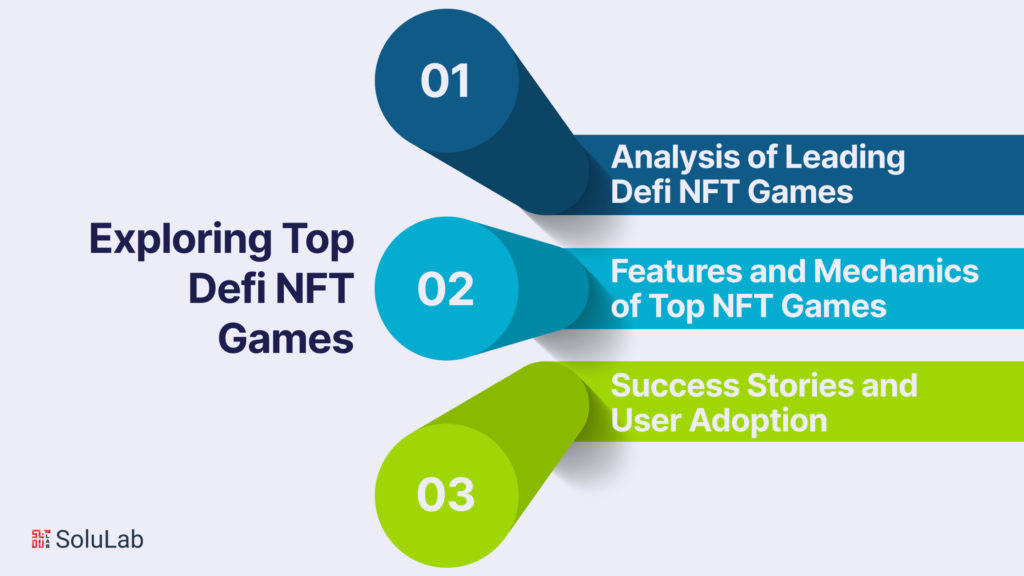
The rise of decentralized finance (DeFi) NFT Game has captured the attention of the gaming community worldwide. This section aims to delve into some of the leading top DeFi NFT Games that have garnered significant attention and user adoption. By analyzing the features, mechanics, and success stories of the top DeFi NFT Games, this segment aims to offer a comprehensive understanding of the innovative gameplay experiences they provide.

  • Analysis of Leading Defi NFT Games

The landscape of top DeFi NFT Games is characterized by a diverse array of titles and platforms, each offering unique gameplay experiences and opportunities for players and developers alike. These games leverage the principles of decentralized finance (DeFi) to integrate NFTs, enabling players to participate in various gaming activities while engaging with digital assets of tangible value. Through the analysis of leading top DeFi NFT Games, developers can gain insights into successful game mechanics, engagement strategies, and monetization models, facilitating the creation of immersive and rewarding gaming experiences.

  • Features and Mechanics of Top NFT Games

Best NFT Games encompass a range of features and mechanics designed to offer players engaging and interactive gameplay experiences. These games often incorporate elements such as play-to-earn models, asset trading, and digital ownership, providing players with avenues for skill development, asset accumulation, and social interaction within the gaming community. Moreover, Best NFT Games integrate blockchain technology to ensure transparent and secure asset management, fostering a sense of trust and reliability among players. By exploring the features and mechanics of Best NFT Games, developers can identify successful gameplay elements and leverage them to create compelling gaming experiences for their audiences.

 Read Also: How is Gaming Contributing to the NFT Industry?

  • Success Stories and User Adoption

Success stories within the realm of top DeFi NFT Games highlight the potential for innovation and growth within the gaming industry. These stories often showcase the journey of developers and players who have successfully leveraged NFTs to create valuable and immersive gaming experiences. Through successful user adoption, these games have been able to cultivate vibrant gaming communities, establish robust in-game economies, and provide players with opportunities for skill development and asset accumulation. By examining success stories and user adoption rates, developers can gain valuable insights into the strategies and tactics that have contributed to the success of top DeFi NFT Games, enabling them to implement similar practices within their own game development endeavors.
Building NFT Games in the Metaverse

Building NFT Games in the Metaverse

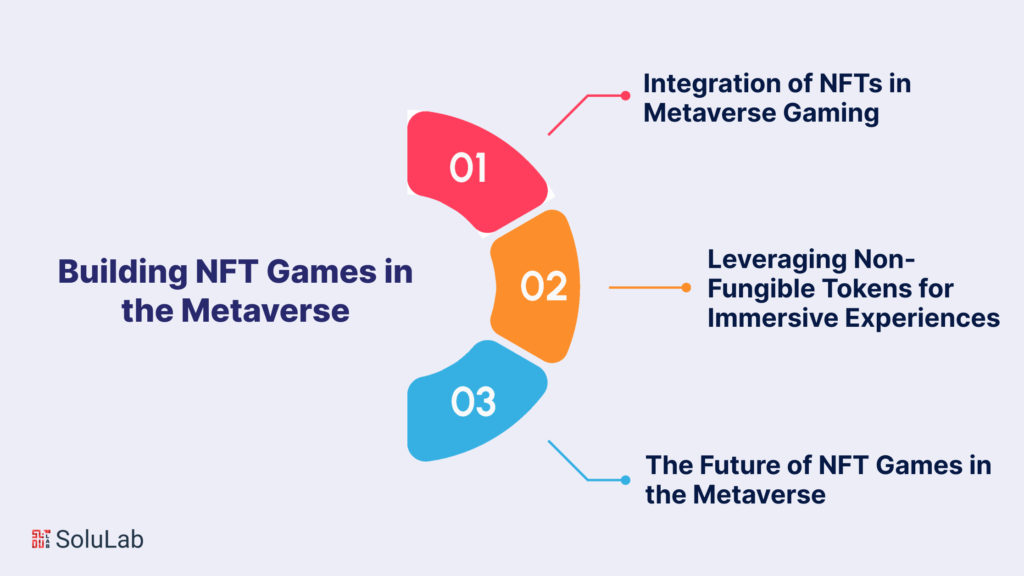
The concept of the metaverse has gained traction in recent years, creating new avenues for NFT integration within virtual environments. This section focuses on the integration of NFTs within the metaverse gaming experience and the unparalleled immersive opportunities they present. By exploring the potential of non-fungible tokens in the metaverse, this segment provides valuable insights into the future of gaming and digital asset ownership.

  • Integration of NFTs in Metaverse Gaming

The integration of NFTs within the metaverse has opened up new possibilities for immersive and interactive gaming experiences. By leveraging NFTs, developers can create and distribute unique in-game assets that players can utilize and trade within virtual environments. This integration allows for the seamless transfer of digital assets between different metaverse platforms, enabling players to engage with a diverse array of NFTs and virtual goods. Moreover, the integration of NFTs in the metaverse fosters a sense of digital ownership and exclusivity, allowing players to personalize and enhance their virtual identities and experiences.

  • Leveraging Non-Fungible Tokens for Immersive Experiences

The use of non-fungible tokens (NFTs) in metaverse gaming is instrumental in creating immersive and authentic gameplay experiences for players. NFTs enable developers to introduce unique and scarce virtual assets within the metaverse, providing players with a diverse array of digital collectibles, virtual land, and in-game items. Through the integration of NFTs, players can engage in activities such as virtual asset trading, customization of avatars, and participation in virtual events, fostering a sense of creativity and social interaction within the metaverse. Additionally, the integration of NFTs allows for the creation of personalized and exclusive virtual experiences, enabling players to express their individuality and identity within virtual worlds.

      Read Also : Top NFT Trends That Will Build Revenue Streams to the Business

  • The Future of NFT Games in the Metaverse

The future of NFT Games in the metaverse is characterized by a continuous evolution of immersive and interactive gaming experiences, enabled by the integration of blockchain technology and NFTs. As the metaverse continues to expand and evolve, NFT Games are expected to play a pivotal role in shaping the landscape of virtual economies, social interactions, and digital experiences. The future of NFT Game in the metaverse holds promises of enhanced gameplay mechanics, decentralized governance models, and collaborative storytelling, allowing players to participate in dynamic and engaging virtual environments. Moreover, the future of NFT Games in the metaverse is anticipated to witness the emergence of innovative gameplay elements, interactive narratives, and collaborative gameplay experiences, fostering a sense of community and engagement among players and developers alike.

NFT Gaming Platforms and Marketplaces

The emergence of various NFT gaming platforms and marketplaces has laid the foundation for a thriving ecosystem of digital asset trading and ownership. This section highlights the key features and characteristics of NFT gaming platforms, offering a detailed comparison of the best NFT marketplaces available for game developers. By examining the use cases of NFT marketplace integration in the gaming sector, this segment provides valuable insights into the potential of these platforms for the gaming industry.

  • Features and Characteristics of NFT Gaming Platforms

NFT gaming platforms are essential components of the NFT gaming ecosystem, serving as hubs where developers, players, and NFT collectors converge to explore and engage with digital assets. These platforms offer various features and characteristics that facilitate the creation, trade, and management of NFTs within the gaming context. Notable features may include NFT creation tools, marketplace functionalities, asset verification mechanisms, and user-friendly interfaces. Additionally, they often integrate blockchain technology to ensure asset ownership, scarcity, and authenticity, granting players and collectors the confidence to participate in NFT-based gaming activities.

  • Comparison of the Best NFT Marketplaces for Game Developers

Game developers seeking to explore NFT opportunities must carefully evaluate and select the best NFT marketplaces that align with their objectives. Each NFT marketplace presents its unique set of offerings, including marketplace fees, target audiences, and supporting blockchain networks. By comparing the best NFT marketplaces, developers can make informed decisions regarding the platforms most suitable for their game-related NFTs. The choice of marketplace often depends on factors such as transaction costs, marketplace popularity, target audience, and blockchain interoperability, among others. Understanding these marketplace distinctions aids developers in optimizing the reach and impact of their NFT gaming assets.

      Check Our Blog :How is Gaming Contributing to the NFT Industry?

  • Use Cases of NFT Marketplace Integration for Gaming

The integration of the best NFT marketplaces within gaming ecosystems extends beyond the mere trading of virtual assets. best NFT marketplaces present developers with a spectrum of use cases that can be harnessed to enhance in-game experiences and economic ecosystems. Game developers can utilize the best NFT marketplaces to mint, sell, and distribute in-game assets and NFT collectibles. Furthermore, they can implement interoperable NFTs to facilitate asset cross-utilization across various gaming titles or even metaverse environments. In addition, developers can leverage the best NFT marketplaces to establish dynamic player-driven economies, fostering active participation and virtual asset ownership. The diverse use cases of NFT marketplace integration serve as essential building blocks for the development of NFT-driven gaming ecosystems.

NFT Development Companies and Solutions

Amid the growing interest in NFT gaming, several development companies have stepped up to provide comprehensive solutions for game developers. This section provides an overview of leading NFT development companies and their services tailored to meet the specific needs of game developers. By shedding light on the solutions and offerings available for NFT gaming, this segment aims to guide developers in leveraging the expertise of industry-leading professionals for their gaming projects.

  • Overview of Leading NFT Development Companies

In the rapidly evolving NFT landscape, a multitude of NFT development companies offer solutions and services to game developers. These companies vary in terms of expertise, blockchain specialization, and service portfolios. By exploring an overview of leading NFT development companies, developers can identify strategic partnerships and service providers who can assist them in navigating the complexities of NFT integration. Such partnerships can range from minting NFTs to building custom best NFT marketplaces, integrating blockchain technology, or providing consultation services for optimizing NFT adoption within gaming projects.

  • Services and Offerings for Game Developers

NFT development companies cater to the diverse needs of game developers by offering an array of services and solutions. These services may encompass NFT creation, blockchain integration, smart contract development, marketplace development, and customized solutions tailored to specific gaming projects. Service providers understand the critical role they play in aiding developers to conceptualize, create, and launch NFT gaming assets that resonate with the gaming community. The NFT development industry also emphasizes the importance of security, authenticity, and transparency to instill confidence in both developers and players, ensuring that NFT assets uphold the expected standards of quality and value.

  • Building NFT Gaming Solutions with Industry Experts

Collaborating with NFT development companies and industry experts presents game developers with the opportunity to harness in-depth knowledge and insights. These collaborations often result in the creation of innovative NFT gaming solutions that are well-received by the gaming community. Industry experts can guide developers through the entire process of NFT integration, from ideation to execution, ensuring that NFT assets seamlessly align with the game’s objectives. By leveraging the expertise of NFT development companies and industry leaders, developers can refine their NFT strategy, enhance in-game experiences, and drive the success of their NFT gaming endeavors.
Creating NFT Games: Opportunities and Challenges

Creating NFT Games: Opportunities and Challenges

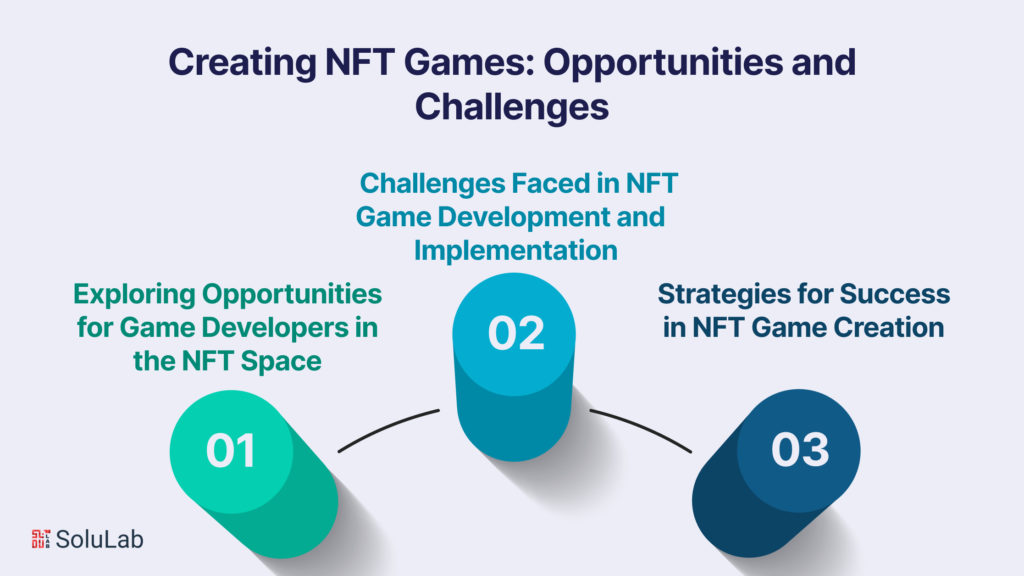
While NFT gaming presents numerous opportunities for game developers, it also brings forth a set of unique challenges that developers must navigate. This section explores the various opportunities within the NFT gaming space, emphasizing the strategies developers can employ to make the most of these opportunities. Simultaneously, it delves into the challenges faced in NFT game development and implementation, providing insights into the best practices for overcoming these obstacles.

  • Exploring Opportunities for Game Developers in the NFT Space

The NFT space presents game developers with an array of opportunities, providing a unique set of benefits that can elevate their projects. NFTs enable developers to monetize digital assets, attract a broader audience, enhance player engagement, and even create play-to-earn mechanics. Moreover, NFTs are instrumental in fostering a sense of ownership among players, transforming in-game assets into tangible digital collectibles. By exploring these opportunities, developers can make informed decisions about the role of NFTs within their games and their potential for growth and sustainability.

      Read  Our Blog  : Best Play To Earn NFT Games In 2023

  • Challenges Faced in NFT Game Development and Implementation

Despite the vast potential of NFTs in the gaming industry, developers must also navigate challenges unique to the NFT landscape. These challenges may include scalability issues, concerns regarding blockchain network congestion, and the need to ensure robust security measures to safeguard digital assets. Additionally, developers may encounter player skepticism and regulatory challenges related to digital asset ownership. It is essential for game developers to recognize and address these challenges, working towards practical solutions to ensure the successful integration of NFTs within their gaming projects.

  • Strategies for Success in NFT Game Creation

NFT Game creation necessitates a strategic approach to navigate the complexities of blockchain technology and digital asset integration. Developers must devise strategies to optimize in-game experiences, engage players, and establish successful economies within their NFT-driven gaming environments. Strategies for success encompass factors such as designing appealing NFT assets, implementing clear and user-friendly NFT mechanics, and fostering an active player community. Furthermore, developers should consider the importance of collaborating with industry experts, leveraging NFT marketplaces, and exploring interoperable NFTs to extend the reach and utility of in-game assets. By embracing these strategies, developers can embark on their NFT game creation journey with confidence and a well-defined plan for success.
The Future of NFT Gaming

The Future of NFT Gaming

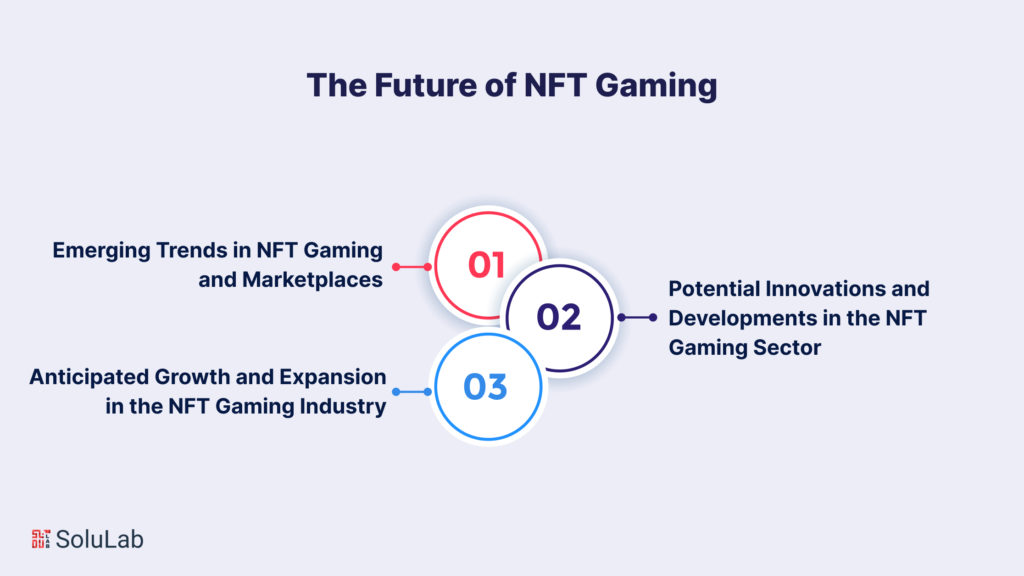
As the NFT in gaming sector continues to evolve, it is essential to keep an eye on the emerging trends and innovations shaping the industry’s future. This section offers a comprehensive analysis of the latest trends and advancements in NFT gaming and marketplaces. By predicting the future growth and expansion of the NFT gaming industry, this segment aims to provide readers with a holistic understanding of the sector’s potential.

  • Emerging Trends in NFT Gaming and Marketplaces

The NFT gaming industry is marked by continuous innovation and evolving trends that shape the future of gaming ecosystems. Emerging trends within the NFT gaming landscape often include the integration of blockchain interoperability, the use of cross-chain NFTs, and the development of decentralized in-game marketplaces. Developers must stay attuned to these trends to remain competitive and provide players with engaging and relevant gaming experiences.

Check this Blog : Top NFT Trends That Will Build Revenue Streams to the Business

  • Potential Innovations and Developments in the NFT Gaming Sector

Innovations and developments within the NFT gaming sector hold the potential to transform the industry, introducing novel gameplay mechanics, advanced asset customization, and enhanced social interactions within gaming communities. Developers are exploring the possibilities of leveraging augmented reality (AR) and virtual reality (VR) technologies to offer immersive and interactive gaming experiences that blur the lines between physical and digital worlds. Additionally, the integration of artificial intelligence (AI) and machine learning (ML) within NFT gaming platforms is anticipated to introduce personalized and dynamic gameplay elements, fostering a sense of adaptability and player engagement.

  • Anticipated Growth and Expansion in the NFT Gaming Industry

The NFT gaming industry is poised for substantial growth and expansion, driven by the increasing adoption of blockchain technology, the rising interest in digital collectibles, and the growing community of NFT enthusiasts. As players and developers recognize the value and potential of NFTs in the gaming space, the industry is expected to witness the launch of innovative NFT projects, the establishment of robust gaming economies, and the proliferation of cross-platform gaming experiences. The anticipated growth and expansion in the NFT gaming industry highlight the significance of sustainable and future-forward strategies that foster innovation, inclusivity, and meaningful player interactions.

CTA2

Conclusion

In the ever-evolving landscape of NFT Gaming Marketplaces, the possibilities seem boundless, promising a future where digital experiences blend seamlessly with tangible value and ownership. As the bridge connecting the vision of developers with the reality of users, SoluLab has been instrumental in shaping the very foundations of this transformative industry. Our extensive expertise in NFT marketplace development, coupled with our commitment to innovation, has positioned us as a key player in the realm of NFT gaming. Through our comprehensive white-label NFT marketplace solutions, we empower game developers to unleash their creativity, drive engagement, and unlock new revenue streams in the world of gaming. Our dedicated team of NFT developers continues to pave the way for groundbreaking solutions that redefine the gaming industry, enabling the creation of immersive, secure, and value-driven gaming experiences.

By harnessing the power of NFTs, we enable seamless integration and collaboration between gamers, developers, and investors, fostering an ecosystem that thrives on trust, transparency, and innovation. Our white-label NFT game marketplace development services offer a gateway for game developers to showcase their creations and connect with a global community of players and enthusiasts. With a focus on user-centric design and cutting-edge technology, our solutions are tailored to meet the diverse needs of the modern gaming landscape, fostering an environment that nurtures creativity and growth.

As the world of NFT gaming continues to evolve, we remain committed to pushing the boundaries of what’s possible, striving to deliver best-in-class solutions that redefine the gaming industry’s future. SoluLab is not just a provider of services but a partner in the journey toward creating immersive gaming experiences that captivate audiences, drive engagement and unlock new dimensions of value and interaction. With our NFT Gaming marketplace development services, we aim to revolutionize the way gaming experiences are created, shared, and valued, ushering in an era of limitless opportunities for game developers, players, and enthusiasts alike.

FAQs

1. What is the significance of NFTs in the gaming industry?

NFTs, or Non-Fungible Tokens, have revolutionized the gaming industry by enabling the creation of unique in-game assets that players can own, trade, and use across various gaming platforms. They provide a means for gamers to truly own their digital assets, fostering a new era of digital ownership and value exchange within the gaming ecosystem.

 2. How can game developers leverage NFTs to enhance player engagement?

Game developers can leverage NFTs to create rare and unique in-game items, characters, and digital collectibles that players can buy, sell, and trade on NFT gaming marketplaces. By incorporating NFTs, developers can offer players a sense of ownership and value, driving increased engagement and fostering a vibrant gaming community.

3. What are the key features to consider when building NFT gaming platforms?

Key features to consider when building NFT gaming platforms include seamless integration with blockchain technology, secure and transparent transaction processing, user-friendly interfaces for buying and selling NFTs, robust asset management systems, and efficient trading functionalities to facilitate smooth and secure transactions.

4. How do NFT gaming marketplaces contribute to the growth of the gaming industry?

NFT gaming marketplaces contribute to the growth of the gaming industry by providing a platform for gamers and developers to create, trade, and collect unique digital assets. They foster a decentralized ecosystem that empowers players and content creators, leading to increased engagement, innovative gaming experiences, and new monetization opportunities within the gaming industry.

5. What are the benefits of using white-label NFT marketplace solutions for game development?

White-label NFT marketplace solutions offer game developers a customizable and cost-effective way to launch their own best NFT marketplaces without the need for extensive development resources. These solutions provide a ready-made platform that can be tailored to specific branding and functionality requirements, enabling developers to enter the NFT gaming market quickly and efficiently.

6. How can NFT development companies assist in the creation of innovative gaming experiences?

NFT development companies specialize in creating tailored solutions for integrating NFTs into gaming platforms. They offer expertise in blockchain technology, smart contract development, and NFT integration, enabling game developers to incorporate unique and valuable digital assets into their games, thereby enhancing player engagement and creating novel gaming experiences.

7. What are the best practices for integrating NFTs into the gaming ecosystem for maximum impact?

Best practices for integrating NFTs into the gaming ecosystem include ensuring a seamless user experience, implementing robust security measures to protect digital assets and transactions, offering engaging and valuable in-game NFTs, fostering a vibrant and supportive gaming community, and continuously innovating to stay ahead of evolving industry trends and player preferences.

NFT Games in the Metaverse

NFT Games in Metaverse

The metaverse market, currently valued at over $38.5 billion, is projected to grow significantly. Analysts predict an annual expansion rate of 13.1%, driven by the willingness of individuals to invest in advanced VR equipment and the increasing popularity of metaverse real estate, with investors purchasing over $500 million worth so far.

The Metaverse, a revolutionary concept, merges the best of virtual and physical reality, allowing users to interact in real time. It offers vast potential in various sectors, including virtual education, immersive shopping experiences, and transformative entertainment. Beyond its immersive experience, the Metaverse represents the evolutionary leap of the internet, transcending traditional screens and keyboards. However, privacy concerns, ethical considerations, and its impact on mental health require careful attention. The Metaverse has the power to reshape society, redefining work, education, entertainment, and communication, but its development must be guided by ethical, social, and technological considerations to ensure a positive and sustainable impact on humanity.

What is Metaverse Gaming?

Metaverse gaming, empowered by Blockchain technology, has revolutionized the gaming industry by offering immersive experiences beyond mere entertainment. Players can earn in-game rewards, trade assets, and interact with each other in a virtual world. The unique blend of gaming, social interaction, and education makes Metaverse gaming a multifaceted platform. Its potential to generate revenue streams through NFTs and virtual land ownership further enhances its appeal. As technology advances, Metaverse gaming is poised to become a multi-billion dollar industry, reshaping the way we play, interact, and explore virtual worlds.

Elements of Metaverse gaming 

In Metaverse gaming, where immersive experiences and technological advancements converge, a multitude of components come together to shape this revolutionary gaming domain. While our list may not encompass all, it delves into the fundamental elements that define Metaverse games:

  • 3D Virtual Worlds:

Accessible and expansive 3D environments are the foundation of Metaverse gaming, allowing players to interact, explore, and immerse themselves in the game’s universe.

  • Virtual Characters and In-Game Interactions:

Players assume the role of virtual characters, facilitating communication and collaboration with others. These interactions extend beyond the game environment, fostering socialization and teamwork among players.

  • In-Game Items and Assets:

Ownership of in-game items is crucial, often utilizing blockchain technology for secure and transparent transactions, including asset trading and sales.

  • Gameplay Principles and Goals:

Metaverse games feature underlying principles and objectives that guide the player experience, albeit in a more immersive setting compared to traditional games.

  • VR and AR Technologies:

Virtual Reality (VR) and Augmented Reality (AR) technologies are pivotal to Metaverse gaming, blending digital and physical realities for an immersive experience.

  • Blockchain and Cryptocurrency:

Blockchain provides a secure framework for in-game economies, enabling real-world value transactions and digital asset ownership through cryptocurrencies and Non-Fungible Tokens (NFTs).

CTA1

  • Internet of Things (IoT):

IoT technology integrates real-world objects into the Metaverse, enhancing the gaming experience by incorporating real-time data and physical world interactions.

  • 3D Reconstruction and Mixed Reality:

3D models of real environments and mixed reality experiences enhance immersion, allowing seamless navigation between various virtual experiences.

  • Brain-Computer Interfaces:

Emerging technologies such as brain-computer interfaces are being explored to enable players to control their avatars through their thoughts, creating a more intuitive gaming experience.

These elements collectively drive the Metaverse gaming industry toward a more immersive, socially interactive, and economically vibrant ecosystem, shaping the future of gaming and entertainment.

Metaverse Coins

Metaverse games are gaining popularity and offer immersive virtual worlds for players to explore. A list of top Metaverse games has been compiled based on specific criteria. Player engagement is a key factor, achieved through engaging gameplay mechanics, immersive storytelling, and meaningful player choices. Graphics and gameplay are crucial, with high-quality visuals, smooth mechanics, and a sense of progression. Community is important for enhancing the overall experience and ensuring the game’s longevity. Ultimately, a top Metaverse game provides a rich and rewarding experience that keeps players engaged and coming back for more.

DO YOU KNOW?”

Notably, 53% of companies investing in the metaverse also invest in cryptocurrencies. With over 400 million active monthly users and the potential to contribute an additional five trillion US dollars to the world economy by 2030, the metaverse holds immense promise.

Top Metaverse Games and Company

Top Metaverse Games

1. Decentraland

Decentraland, a virtual metaverse platform, was introduced to the public in the early 2020s. It enables players to use MANA to create avatars, purchase items, and acquire virtual land parcels, which can be rented out or used to host events and sell virtual artwork. The platform’s unique feature is LAND, non-fungible tokens representing virtual land parcels. Players can use LAND and MANA to develop immersive experiences and games that can be shared with others. Decentraland’s popularity stems from its immersive gameplay, user-generated content, and partnerships with brands and organizations. In 2021, the launch of the In-World Builder further enhanced user-generated content and experiences within the platform.

2. Axie Infinity

Axie Infinity is a Vietnamese company founded in 2018 that allows players to breed, raise, collect, and trade fictional creatures called Axies in a Pokemon-inspired computer game. Axies have interchangeable body parts that determine their appearance and abilities, and players can acquire land and houses for them to live in. Simulated creatures and other in-game items are represented as non-fungible tokens (NFTs) controlled by blockchain technology. Players can earn Small Love Potion (SLP) tokens by winning battles, which can be exchanged for Ethereum or other cryptocurrencies. Axie Infinity’s popularity is attributed to its innovative gameplay and the ability for players to earn real money while playing. User-generated content has played a significant role in the game’s success, and players have been able to create their mini-games within the Axie Infinity universe. Axie Infinity has had a positive impact on communities in developing countries, where players have been able to earn a living wage by playing the game.

3. The Sandbox

The Sandbox is a user-generated infrastructure where individuals can create and share content using Metaverse Blockchain technologies and smart contracts. It encompasses three main elements: VoxEdit for designing avatars and objects, a marketplace for trading creations, and Game Maker for building 3D games without coding. Unique to Sandbox is its use of NFTs to represent virtual assets, enabling players to monetize their creations and trade them on the game’s marketplace. SAND is the native token used for purchasing virtual properties on the Sandbox map, which can also be sold on the Open Sea NFT marketplace. The Sandbox’s thriving community of creators and players is a major factor in its success. Players can create games, virtual real estate, and in-game items, contributing to a vibrant user-generated content ecosystem. The Creator Fund provides financial support to creators making innovative and engaging content on the platform.

4. Alien Worlds

Alien Worlds is a play-to-earn game where players mine Trilium, the in-game currency, on six different planets. Players can own and trade in-game assets represented by non-fungible tokens (NFTs) and create and participate in organizations called Decentralized Autonomous Organizations (DAOs). The game’s popularity stems from its engaging gameplay, unique features, and the potential to earn cryptocurrency. The game’s thriving community contributes to its success by creating user-generated content, such as planets, quests, and mini-games, enhancing the gaming experience and attracting new players.

5. Illuvium

Illuvium, a recently launched video game, has gained significant popularity by offering a unique blend of gameplay features and blockchain technology. The game allows players to explore a strange world, capture and cure mythical creatures called Illuvials, and use them in battles. Illuvial NFTs are tradable, and their value increases with their strength and rarity. Players can earn Illuvium cryptocurrency (ILV) by completing challenges and assignments, which can be traded on the IlluviDEX. Illuvium’s appeal to both gamers and NFT collectors, its community-driven approach, and user-generated content have contributed to its success. The game’s recognition by the Blockchain and gaming industries further solidifies its status as a game-changer in the Blockchain gaming landscape.

6. Roblox

Roblox, a Metaverse gaming platform, has gained immense popularity among young gamers since its inception in 2006. With millions of active players daily, Roblox offers a vast array of user-generated games and experiences. Its accessibility, social aspect, and endless possibilities for creativity and customization have made it a favorite among children and young adults. The supportive and creative community fosters a sense of loyalty and engagement among players. The platform’s focus on user-generated content ensures constant new offerings, while its social and interactive features allow players to connect and play with friends globally. Roblox’s public offering highlights its potential for developers and investors, attracting big-name brands and generating significant revenue.

7. My Neighbor Alice

My Neighbor Alice is a popular Metaverse game built on the Ethereum Blockchain. It allows players to explore a virtual world, create and customize their islands, and interact with other players. The game’s popularity is attributed to its immersive gameplay, earning potential through cryptocurrency, and unique experiences created by user-generated content. Players can design their islands, participate in community events, and buy, sell, and trade virtual assets. The game’s focus on user-generated content has led to a thriving economy, with some players earning significant money from trading NFTs. My Neighbor Alice offers a strong social aspect, allowing players to interact with each other and collaborate on projects within the game world.

Related: Blockchain-Based Gaming Companies in 2024

8. Minecraft

Minecraft, developed by Mojang Studios, is a popular Metaverse game known for its endless possibilities for creativity, exploration, and adventure. Its open-world gameplay, procedurally generated 3D world, and simple mechanics make it accessible to players of all ages and skill levels. Minecraft’s appeal extends beyond gameplay, with educational value and inclusivity features. Its emphasis on player creativity and imagination, along with user-generated content, mods, and multiplayer mode, contribute to its popularity and longevity. Minecraft continues to captivate players by providing a platform for building, designing, and collaborating, fostering a vibrant community that shares creations and experiences.

9. Voxels

Voxels, previously known as Cryptovoxels, is a Metaverse platform built on the Ethereum Blockchain. It allows users to buy, sell, and build on land parcels using voxels, small cubes used to create three-dimensional structures. The game’s simplicity and accessibility, combined with its use of Blockchain technology, have made it popular in the NFT space. Voxels emphasizes community and collaboration, fostering a sense of engagement and creativity among players. The game’s appeal extends beyond the Blockchain community, attracting gamers, artists, and even educational institutions.

10. Battle Infinity

Battle Infinity is a Metaverse-focused gaming platform that offers an immersive gaming experience in a virtual world. It uses Blockchain technology to create a decentralized ecosystem where players have complete ownership of their in-game assets. The platform allows players to create their own games and share them with others, making it a platform for gamers, by gamers. Battle Infinity has gained immense popularity due to its unique features such as PVE and PVP battles and sports games. It has attracted over 20,000 players and generated over $200,000 in its presale. The platform’s success is attributed to its focus on user-generated content, allowing players to create and monetize their games. The use of NFTs further enhances the platform’s appeal by providing complete ownership of in-game assets. Battle Infinity has fostered a strong community, with players sharing tips and experiences, making it one of the most successful Metaverse-focused gaming platforms.

Current Market Status of Metaverse Gaming

The Metaverse gaming market is rapidly growing, reaching $13.84 billion in 2023 and predicted to hit $710.21 billion by 2027. This growth is driven by advancements in VR and AR, which enhance gaming experiences. The Metaverse is also being used for education and training, with game-based learning expected to reach $52.3 billion by 2030. Sandbox games are popular and growing fastest, offering players limitless environments. North America leads, but Asia Pacific is expected to experience the highest growth. Challenges include high equipment costs and privacy concerns. Companies are focusing on alliances and partnerships to stay competitive.

DO YOU KNOW?”

Roblox stands as the largest virtual world within the metaverse, catering to a predominantly young audience, with 51% of users under the age of 13. In the United States, 74% of adults have considered or joined the metaverse, and by 2026, it is estimated that 25% of Americans will spend at least an hour a day immersed in this virtual reality. 

Challenges in Metaverse Gaming

The Metaverse gaming industry’s rapid growth and evolution present various challenges that must be addressed for its long-term success. Here are key challenges in Metaverse gaming:

1. Technical Infrastructure Limitations:

  • Developing Metaverse games requires advanced technological infrastructure, including high-speed internet and powerful computing resources.
  • This can pose a significant barrier, especially in regions with limited infrastructure.

2. Expensive Equipment Costs:

  • Accessing the full Metaverse experience often requires costly equipment such as VR headsets and gaming consoles.
  • This high-cost limits accessibility for many potential users, reducing the market reach of these games.

3. Privacy and Data Security Concerns:

  • The increasing amount of personal data shared in the Metaverse raises concerns about privacy and data security.
  • Protecting user data against cyber threats is a significant challenge for game developers and platform providers.

4. User Experience and Inclusivity:

  • Creating an immersive and engaging user experience accessible to a broad audience is crucial.
  • This includes designing intuitive interfaces and ensuring the Metaverse is inclusive for users with different abilities and preferences.

5. Content Moderation and Ethical Considerations:

  • The Metaverse opens up new realms for content creation, leading to concerns about content moderation.
  • Ensuring appropriate content and preventing harmful behavior in virtual worlds is a critical challenge.

6. Integration of Blockchain and NFT Technologies:

  • While blockchain and NFTs offer new possibilities for in-game economies and asset ownership, integrating these technologies securely and user-friendly is complex and challenging.

7. Interplatform Interoperability:

  • Seamless interoperability between different Metaverse platforms and games is essential for a unified user experience.
  • Achieving this interoperability is technologically challenging and requires coordination among various stakeholders.

8. Regulatory and Legal Frameworks:

  • The Metaverse gaming industry operates in a relatively new and rapidly evolving space, often lacking clear regulatory and legal frameworks.
  • Navigating these uncharted waters and ensuring compliance with different jurisdictions is a major challenge.

9. Sustainable Business Models:

  • Developing sustainable business models that balance profitability with user experience is crucial.
  • This includes finding the right balance between monetization strategies and providing value to users.

10 Adoption and User Base Growth:

  • Despite its potential, the Metaverse gaming sector faces challenges in attracting and retaining a large and active user base.
  • Overcoming skepticism and building a community of engaged users is essential for the success of Metaverse gaming platforms.

Addressing these challenges requires collaboration among developers, investors, regulatory bodies, and the gaming community. A collaborative approach is necessary to ensure the Metaverse gaming industry reaches its full potential and positively impacts the digital entertainment landscape.

CTA2

Future of Metaverse gaming

The metaverse revolutionizes the NFT in gaming industry by offering immersive experiences through advanced technologies like VR and AR. It introduces economic ecosystems where players can create and trade virtual assets, fostering a vibrant in-game economy. The metaverse serves as a social platform where players can connect, interact, and build communities, facilitated by features like voice chat and multiplayer experiences. Unlike traditional games, the metaverse offers persistent worlds that continuously evolve even when players are offline. AI integration enhances gameplay experiences and creates dynamic virtual environments. Beyond entertainment, the metaverse has potential applications in education, training, collaboration, and social gatherings. It redefines how we interact with virtual environments and opens up new possibilities for the future.

Conclusion

In conclusion, NFT Games in the Metaverse represent an exciting intersection of digital innovation and interactive entertainment. Understanding What is NFT game and exploring the best NFT games in the metaverse can provide unparalleled experiences and opportunities. As Metaverse games evolve, the integration of NFTs in the Metaverse will shape the future of NFTs and the broader Metaverse future. Metaverse NFT games are not only redefining gameplay but also creating new economic models through NFT token economies. Companies like SoluLab are at the forefront of this transformation, offering expertise in Metaverse game development. Embrace the future of the metaverse and gaming NFT tokens with SoluLab’s innovative solutions to stay ahead in this dynamic landscape.

FAQs

1. What is an NFT game?

An NFT game integrates non-fungible tokens (NFTs) into its gameplay, allowing players to own, trade, and earn unique digital assets within the game.

2. What are NFTs in the Metaverse?

NFTs in the Metaverse are digital assets that represent ownership of virtual items, such as avatars, properties, and collectibles, within a metaverse environment.

3. What are the best NFT games in the Metaverse?

The best NFT games in the Metaverse offer immersive experiences, unique NFTs, and robust in-game economies. These games leverage blockchain technology to enhance player ownership and interactivity.

4. How do Metaverse NFT Games work?

Metaverse NFT games work by integrating blockchain technology to create and manage NFTs, which players can use, trade, or sell within the metaverse. These games often feature decentralized economies and player-driven marketplaces.

5. What is the future of NFTs in the Metaverse?

The future of NFTs in the Metaverse looks promising, with increasing adoption, technological advancements, and innovative use cases driving growth and creating new opportunities for players and developers.

6. Why is SoluLab important for the future of the Metaverse and NFT games?

SoluLab is a leading developer in the NFT and Metaverse space, providing cutting-edge solutions for NFT Metaverse game development. Their expertise ensures high-quality, innovative games that leverage the full potential of NFTs and blockchain technology for the future of the metaverse.

Best NFT Games – Top Play-to-Earn Blockchain Games 2025

Best NFT Games

Play to earn NFT games is Changing the gaming industry, redefining the relationship between gamers and developers. Fueled by the increasing popularity of non-fungible tokens (NFTs) and blockchain technology, P2E games are changing the way games are designed, played, and monetized.

With a market size projected to reach over $8800 million by 2028, P2E games are showing no signs of slowing down. The surging popularity of digital assets like cryptocurrencies and NFTs is driving the growth of this sector, offering gamers new opportunities to earn while they play.

Are you interested in getting started with P2E games? Look no further! Check out our carefully curated list of the best play-to-earn crypto games in 2025. Dive into the world of P2E and explore the exciting potential of blockchain-based gaming.

How Do Play-to-Earn Games Work?

Play-to-earn (P2E) games have revolutionized the gaming landscape by introducing a novel economic model. Unlike traditional games that solely focus on immersive gameplay, P2E games allow players to earn cryptocurrencies as they embark on their in-game journeys. This innovative concept empowers players to create tangible real-world value from their gaming experiences. In this article, we will explore the mechanics of how P2E games operate and the profound impact they have had on the gaming industry.

1. Tokenized Assets and In-Game Items:
Play-to-earn games leverage blockchain technology to transform in-game assets and items into non-fungible tokens (NFTs) or fungible tokens. These assets are securely stored on the blockchain, providing players with indisputable ownership and a sense of rarity.

2. Economic Ecosystem:
Within the game’s universe, players can buy, sell, and trade their tokenized assets, creating a self-sustaining economic ecosystem. This ecosystem is often facilitated by a native cryptocurrency, enabling seamless transactions.

3. Gameplay and Earning:
Players engage in various in-game activities, unlocking opportunities to acquire valuable items, tokens, or cryptocurrencies. These rewards can enhance gameplay experiences or be exchanged for tangible real-world worth beyond the best NFT games 2025.

4. Blockchain Verification:
The blockchain ensures the integrity and security of in-game transactions, preventing manipulation or fraudulent activities. Every exchange, acquisition, and sale is meticulously recorded on the blockchain, creating an impervious barrier against dishonesty.

5. Marketplaces and Exchanges:
Many play-to-earn games have integrated marketplaces where players can list and sell their tokenized assets. These assets can be purchased using the game’s native cryptocurrency or other compatible tokens. Certain assets gain value due to their rarity or utility, leading to a thriving secondary market.

6. Decentralization:
Play-to-earn games often operate on decentralized platforms, reducing the influence of central authorities. This decentralization gives players more control over their in-game assets and earnings.

7. Economic Opportunities:
Play-to-earn games have opened up new economic opportunities, allowing players to earn a living by dedicating time and skill to the virtual world. Some players have even turned gaming into a full-time career, earning substantial amounts of cryptocurrency.

8. Community and Governance:
Many P2E games involve their communities in decision-making processes through governance mechanisms. Token holders may have the power to influence the game’s development, updates, and other aspects, promoting a sense of ownership and involvement.

Types of Play-to-Earn Crypto Games

In play-to-earn (P2E) crypto games, players can immerse themselves in various gaming genres while earning cryptocurrency rewards. These games combine the excitement of gaming with the power of blockchain technology, offering unique opportunities for players to engage, explore, and profit. Let’s dive into the diverse categories of P2E best NFT games 2025:

1. Role-Playing Games (RPGs): Embark on epic adventures across virtual worlds in P2E RPGs. Conquer quests, battle monsters, and master crafting skills to acquire valuable in-best NFT Games assets that hold real-world value as cryptocurrencies.

2. Strategy Games: In strategy-based P2E games, players make tactical decisions to build, manage, and expand virtual assets. From constructing kingdoms to governing civilizations, optimizing strategies leads to rewarding outcomes.

3. Collectible Card Games (CCGs): P2E CCGs merge traditional card game mechanics with blockchain technology. Collect, trade, and battle with digital cards, each possessing unique attributes and potential value in the crypto market.

4. Virtual Real Estate Games: P2E virtual real estate games enable players to buy, sell, and develop virtual properties using blockchain. These properties can generate passive income or appreciate in value over time.

5. Play-to-Earn NFT Games: Non-Fungible Tokens (NFTs) play a vital role in many P2E games. Players can earn, buy, and sell NFTs representing in-game items, characters, or assets, enabling them to monetize their gaming achievements.

6. Battle Royale and PvP Games: P2E battle royale and player-versus-player games offer competitive environments where players compete for rewards based on their performance. These games encourage skill development and engagement.

7. Idle and DeFi Games: Idle games require minimal active participation, generating rewards over time based on in-game actions. DeFi games integrate blockchain’s financial features, allowing players to earn interest or rewards by participating in DeFi protocols within the game.

8. Sports and Racing Games: P2E sports and racing games bring the excitement of virtual tournaments and adrenaline-fueled races. Players’ skills directly influence the rewards they earn, making each victory even more satisfying.

9. Adventure and Exploration Games: P2E adventure and exploration games offer captivating journeys. Players uncover hidden treasures, solve puzzles, and immerse themselves in enchanting narratives, earning enticing rewards and recognition along the way.

10. Social and Virtual World Games: In P2E social games and virtual worlds, players can forge meaningful connections, acquire virtual property, and benefit from their social interactions. Dynamic events and creative expression are rewarded in these vibrant communities.

List of the 10 Best Play-to-Earn Games

We’ve rounded up some of the best NFT games 2025 that you can enjoy while earning virtual assets and other in-game rewards.

1. Axie Infinity

Axie Infinity, an immensely popular play-to-earn game, offers a Pokémon-style experience where players can earn cryptocurrency. The game revolves around breeding and raising Axies, adorable creatures that can be used for battles. Aside from purchasing Axies in the in-game marketplace, players can also acquire virtual real estate represented as non-fungible tokens (NFTs). Transactions occur on Ronin, a sidechain specifically designed for Axie Infinity by Sky Mavis.

As a play-to-earn game, Axie Infinity allows players to monetize their in-game assets, primarily by selling Axies in the marketplace. Players can also earn by collecting unique crypto tokens. The game features two distinct crypto tokens:

  • Axie Infinity Shards (AXS): This primary token serves as a governance token and can be purchased through cryptocurrency exchanges. Additionally, players have the option to trade major currencies like Bitcoin or Dogecoin to participate in the game. It’s worth noting that AXS has a limited supply of approximately 270 million tokens.
  • Small Love Potion (SLP): The SLP is a unique token rewarded to players for completing quests and emerging victorious in competitions.

To initiate gameplay in Axie Infinity, ensure you possess a crypto wallet compatible with the Ethereum blockchain platform. Additionally, you will require ETH and a Ronin wallet to establish a connection to the game. Upon completion of these steps, you can commence playing Axie Infinity on various devices, including PCs, Macs, Android devices, or iOS devices.

About Axie Infinity:

Sky Mavis, a Vietnamese studio established in 2018, developed Axie Infinity, a play-to-earn (P2E) game. Initially launched in March 2018, it gained significant popularity in 2021 and 2022, becoming one of the most prominent crypto apps on the Ethereum blockchain in 2021.

While Axie Infinity reached its peak in 2022 with an impressive monthly player base of nearly 3 million, its current active player count has dwindled to approximately 390,000 within the last 30 days, as indicated by ActivePlayer’s Live Player Count.

2. Polywin

Polywin, built on the Polygon blockchain, seamlessly merges crypto trading and gaming, revolutionizing online entertainment. It provides adrenaline-packed 45-second rounds, where strategic bets yield substantial rewards. The user experience is streamlined, eliminating lengthy registrations and deposits, allowing users to place bets in just 30 seconds. The outcome is revealed in a thrilling 15-second period, with immediate wins and direct deposits into users’ crypto wallets.

Polywin stands out due to its transparency, with no house edge and purely player-vs-player dynamics, where users’ predictive skills determine their success. The combination of real-time crypto trading and gamified elements offers an exhilarating experience that captivates players.

CTA1

Furthermore, Polywin prioritizes trust and transparency. The platform leverages the security and immutability of blockchain technology, ensuring that every action is verifiable and fair for all participants. Additionally, the rigorous audit by CertiK places Polywin among the top 10% of blockchain projects, solidifying its commitment to security and reliability.

About Polywin:

Polywin, a prominent play-to-earn platform built on the Polygon network, has achieved remarkable success. Certified by CertiK for security, Polywin revolutionizes online entertainment by harmoniously combining cryptocurrency trading and gaming on the Polygon blockchain. With transparent gameplay and instant rewards, Polywin offers captivating 45-second rounds, placing participants in a strategic betting environment where they have the opportunity for substantial earnings.

3. Decentraland

Decentraland is a virtual universe where players can investigate LANDS, make unique artworks or scenes, and trade their computerized resources, like LAND and symbol wearables, through the Decentraland Marketplace on the Ethereum blockchain.

This Decentralized Autonomous Organization (DAO) controlled world allows players to choose and manage how Decentraland works. This blockchain-based game offers two administering digital currency tokens:

  • LAND: A Non-Fungible Token (NFT) that addresses a player’s virtual land.
  • MANA: A cryptographic money utilized inside Decentraland to purchase in-game resources like LAND and virtual items.

As proprietors of this virtual world, Decentraland clients are answerable for its advancement and administration. Players investigate the Decentraland metaverse through their symbol, and clients continually foster this virtual domain. Here, you can buy computerized craftsmanship, exchange resources with different players, and even join the Decentraland University, available with advanced tokens.

Decentraland offers different ways to procure. One can obtain MANA or LAND tokens, plan attire for symbols to sell in the commercial center, or request awards from the Decentraland DAO.

About Decentraland:

  • Decentraland, a real estate metaverse game created by the Decentraland Foundation, launched in January 2020.
  • Currently, the game is accessible exclusively through desktop devices.

Related: Top NFT Development Companies 

4. The Sandbox

The Sandbox, built on the Ethereum blockchain, is more than just a game; it’s a virtual universe where players can explore, acquire, and design their virtual lands. Recognized as one of the leading play-to-earn Top NFT games, it has gained popularity as a preferred platform for virtual events. The Sandbox metaverse has also attracted notable celebrities like Snoop Dogg and Paris Hilton, as well as global brands like Ubisoft, Adidas, and Gucci, who are actively constructing within it.

As a blockchain-based game, The Sandbox offers three distinct products: VoxEdit, The Sandbox Marketplace, and The Sandbox Game Maker. VoxEdit empowers users to create and animate their own 3D objects for the game. The Marketplace serves as a platform for players to publish and sell their digital assets. Lastly, the Game Maker allows users to craft their own 3D games.

To obtain digital real estate known as ASSETS and LANDS, players must use SAND tokens, the native currency of The Sandbox. These tokens can also be utilized to purchase more SAND within the game.

About The Sandbox:

  • The Sandbox, a collaborative project between Arthur Madrid and Sébastien Borget, was initially conceived by Pixowl in 2012.
  • In 2018, the project was revamped, transforming it into a blockchain-based version.

5. Ember Sword

Ember Sword is a fantasy MMORPG that allows you to immerse yourself in epic adventures, possess in-game assets, engage in battles with monsters and other players, and share your experiences with a vibrant community. Operating on a player-centric PvP and PVE model, it grants true ownership of digital assets to its players. This empowers players to influence the game’s ecosystem and have complete control over their actions.

Ember Sword offers an unparalleled level of freedom, allowing you to choose your adventure, explore vast landscapes, interact with the environment, and even make modifications to the digital landscape. Its innovative classless combat system enables you to fuse various abilities and refine your combat skills. Additionally, the AI-Game Master orchestrates unique and dynamic events, providing players with endless challenges and opportunities.

To maximize the play-to-earn potential, Ember Sword has joined forces with OpenSea, enabling players to seamlessly sell their official game NFTs on the OpenSea marketplace. This partnership ensures a secure and transparent platform for players to trade their in-game assets and generate real-world income. By combining captivating gameplay with true ownership and a lucrative Play to earn NFT games, Ember Sword redefines the MMORPG experience and establishes itself as a trailblazer in the gaming industry.

About Ember Sword:

Ember Sword, developed by Bright Star Studios, is yet to be released as the developers work on enhancing the game and establishing true ownership for it. To stay informed about the latest developments, players can engage with the game’s communities on various platforms, including Telegram, Instagram, LinkedIn, Facebook, Medium, Twitch, Discord, Twitter, YouTube, and Reddit. The game is scheduled for initial release on PC (Windows and Mac), accessible either through a browser or as a standalone client. Additionally, the developers are in the process of making the game available on mobile devices, expanding its reach to a broader audience.

6. Forest Knight

Forest Knight, a turn-based strategy game developed for mobile devices, seamlessly merges mobile gaming and blockchain technology to provide players with epic adventures while allowing them to earn NFTs. These NFTs can be transferred to crypto wallets and traded on marketplaces, setting Forest Knight apart from other best nft play to earn games. Uniquely, players can rent out their characters and NFTs to others, and they can mint and withdraw NFTs free of charge at the time of writing.

Furthermore, Forest Knight features a staking mechanism where players can earn interest on their $KNIGHT holdings. These tokens serve as the game’s utility tokens, granting players access to in-game benefits and voting rights to shape the game’s future developments.

The game operates on both PVE and PvP models, enabling players to create team combinations to defeat enemies, collect loot, complete missions, and engage in competitive battles with other players in the Arena.

About Forest Knight:

Forest Knight, an NFT-based game, was created by Chrono Games. While the mobile version is currently limited to Android devices, players can still enjoy the game on their desktops or laptops, providing cross-platform accessibility.

7. Galaxy Fight Club

Galaxy Fight Club stands out as a cross-platform player-versus-player game, enabling players to compete for rewards such as Ethereum (ETH) and non-fungible tokens (NFTs). Notably, this play-to-earn game allows players to utilize various NFT collections to begin playing and earning. This means you can participate in the game with your existing NFTs or play without owning any.

To partake in Galaxy Fight Club, you must possess at least one Galaxy Fighter. This grants you the ability to engage in battles as the character or utilize your own NFT to confront challengers.

The NFT in Gaming employs its in-game utility currency, $GCOIN. Players can use $GCOIN to access loot boxes, train their fighters, and acquire new weapons. Galaxy Fight Club offers multiple avenues for players to earn rewards.

Owners of Galaxy Fighters can earn approximately 5-15 $GCOIN. Additionally, players can win key fragments in deathmatches, triumph in weekly tournaments and claim ETH or its equivalent in $GCOIN, craft weapons and sell them on the marketplace, or rent out their Galaxy Fighters to collect $GCOIN.

About Galaxy Fight Club:

Galaxy Fight Club, a cross-platform game built on the Polygon blockchain and developed with Unity, is available for download on Google Play, the App Store, and PC. This accessibility allows players to engage in the game regardless of their preferred platform.

8. Gods Unchained

Gods Unchained, a free-to-play P2E trading card game, offers players complete ownership of their in-game assets, making it one of the most popular P2E Top NFT games in 2023. Players can collect cards, build their own deck, and trade or sell them to others.

To play and earn in Gods Unchained, players need to have the Gods Unchained Coin ($GODS), which acts as a governance and utility token. $GODS can be used to pitch governance proposals, purchase in-game assets, or acquire expansion packs. There is a limited supply of $GODS, with only 500 million tokens in circulation. Players can earn $GODS, which have real-world value, and transfer and convert them into fiat currency.

Another way to earn in Gods Unchained, aside from staking rewards, is by selling cards. Players can play Gods Unchained with or without a crypto wallet and even without a background in blockchain systems or the Ethereum network. However, a crypto wallet is required to connect to a gaming account to make the most of cards (NFTs) and earn $GODS tokens as rewards.

About Gods Unchained:

Gods Unchained, a game built on the Ethereum platform, was first announced in 2018 by its founders, James and Robbie Ferguson.

Currently, the NFT Games can be played on computers running Windows or Mac, with development underway for Android devices. According to the game’s developers, the plan is to make Gods Unchained available exclusively for Android rather than iOS devices like the iPhone.

There are two reasons behind this decision: firstly, the Android platform allows for sideloading of APK builds, and secondly, while an early iOS build exists, it is not yet part of the Early Alpha access program.

9. Illuvium

Illuvium, a top-tier interoperable blockchain game (IBG) based on the Ethereum network, offers players an immersive open-world experience, an autobattler, and a city builder. Notably, Illuvium provides a free-to-play option for new players, allowing them to explore the game without owning ILV tokens. However, unlocking the full range of features requires joining the paid experience, enabling players to collect NFTs and delve into more regions.

Within the game, players can discover and navigate seven distinct landscapes, including the Illuvium Overworld, Arena, and City. Each universe presents unique in-game experiences, such as capturing over 150 Illuvials, crafting custom teams, and constructing digital industrial complexes.

Similar to other blockchain best nft play to earn games, Illuvium empowers players with true ownership of their in-game assets, allowing them to collect, trade, and sell items within the marketplace. Additionally, players can stake tokens to earn rewards and purchase ILV tokens, which hold utility in governance, liquidity mining, and vault distributions. ILV tokens can be acquired on platforms like Sushi or supported centralized exchanges, such as Binance and KuCoin.

About Illuvium:

Illuvium, co-founded by Kieran and Aaron Warwick in 2020, is currently undergoing a Closed Beta testing phase. While not yet accessible on mobile devices, the developers are actively working on a tailored mobile version. Additionally, a console version is in the works, designed for gaming consoles such as Xbox and PlayStation.

10. Sliks

Silks stands out among the top play-to-earn games due to its innovative gaming experience. This fantasy horse racing game, modeled after real-world horseracing, enables players to breed, purchase, and trade thoroughbreds using the game’s native token, STT.

Silks offers a complex ecosystem comprising diverse in-game assets, including avatars, racehorses, land, stables, and land parcels in the Sky Falls region. The game’s unique feature is that when players purchase a racehorse, they essentially acquire a digital clone of a real-world racehorse. Each NFT Silks racehorse mirrors its real-world counterpart’s bloodline, training progress, and racing results. This means that if the real-world counterpart wins a competition, the same information will be reflected in the digital twin, rewarding players in the game for real-world events.

Silks’ play-to-earn aspect allows players to sell fractional interests in their horses. By doing so, they can earn a percentage of the rewards each time the Silks racehorse’s real-world counterpart wins real-world competitions.

About Silks:

Troy Levy, the CEO of Tropical Racing, a horseracing enterprise, and owner of Circle 8, a racing and breeding company, developed the unique concept of Silks.

CTA2

Conclusion

In conclusion, the realm of NFT games is rapidly evolving, with 2025 promising to bring some of the best NFT games to date. Our curated NFT Games list highlights top titles and showcases the growing trend of play-to-earn NFT games. As NFT game development continues to advance, companies like SoluLab are at the forefront, NFT game development Company driving innovation in this exciting space. The integration of non-fungible tokens in games has revolutionized how players engage and earn, making the best play-to-earn crypto games a significant part of the gaming industry. Whether you’re new to the world of NFT games or a seasoned player, the opportunities to explore, play, and earn are more abundant than ever. Dive into the best NFT play-to-earn games and discover how the future of gaming is being reshaped by NFT game development.

FAQs

1. What are the Best NFT Games?

The best NFT games are those that offer immersive gameplay, valuable rewards, and a strong community. These games often incorporate non-fungible tokens (NFTs) to enhance the gaming experience and provide unique digital assets that players can own, trade, and earn from.

2. Which are the best NFT games in 2025?

The best NFT games of 2025 are expected to include a variety of genres and innovative mechanics. These games will leverage advanced NFT game development to offer new ways for players to engage and earn through play-to-earn crypto games.

3. What is the significance of NFTs in games?

NFTs in games allow for the creation of unique, tradable digital assets that players can own. This adds a new layer of value and engagement, as players can earn real-world value through their in-game activities. The integration of NFTs is a key trend in the development of top NFT games.

4. Can you provide an NFT Games list?

Yes, our NFT Games list includes some of the top NFT games available today, ranging from RPGs to strategy games. These games are known for their innovative use of NFTs and play-to-earn mechanics, making them some of the best NFT play-to-earn games on the market.

5. How do play-to-earn NFT games work?

Play-to-earn NFT games reward players with NFTs or cryptocurrency for their in-game activities. This model allows players to earn real-world value while playing, making these games a popular choice for those looking to monetize their gaming time. Some of the best play-to-earn crypto games offer substantial rewards and engaging gameplay.

6. What should I look for in an NFT game development company?

When choosing an NFT game development company, look for one with a strong track record in creating successful NFT games. Companies like SoluLab are known for their expertise in NFT game development, providing innovative solutions that enhance the gaming experience.
