Talk to an Expert

How retail industries are being transformed by Data Science Technology

Nowadays data proves to be a powerful pushing force of the industry. Big companies representing diverse trade spheres seek to make use of the beneficial value of the data.

Thus, data has become of great importance for those willing to take profitable decisions concerning business. Moreover, a thorough analysis of a vast amount of data allows influencing or rather manipulating the customers’ decisions. Numerous flows of information, along with channels of communication, are used for this purpose.

The sphere of the retail develops rapidly. The retailers manage to analyze data and develop a peculiar psychological portrait of a customer to learn his or her sore points. Thereby, a customer tends to be easily influenced by the tricks developed by the retailers.

Recommendation engines

Recommendation engines proved to be of great use for the retailers as the tools for customers’ behavior prediction. The retailers tend to use recommendation engines as one of the main leverages on the customers’ opinion. Providing recommendations enables the retailers to increase sales and to dictate trends.

Recommendation engines manage to adjust depending on the choices made by the customers. Recommendation engines make a great deal of data filtering to get the insights. Usually, recommendation engines use either collaborative or content-based filtering. In this regard, the customer’s past behavior or the series of the product characteristics are under consideration. Besides, various types of data such as demographic data, usefulness, preferences, needs, previous shopping experience, etc. go via the past data learning algorithm.

Then the collaborative and content filtering association links are built. The recommendation engines compute a similarity index in the customers’ preferences and offer the goods or services accordingly. The up-sell and cross-sell recommendations depend on the detailed analysis of an online customer’s profile.

Market basket analysis

Market basket analysis may be regarded as a traditional tool of data analysis in the retail. The retailers have been making a profit out of it for years.

This process mainly depends on the organization of a considerable amount of data collected via customers’ transactions. Future decisions and choices may be predicted on a large scale by this tool. Knowledge of the present items in the basket along with all likes, dislikes, and previews is beneficial for a retailer in the spheres of layout organization, prices making and content placement. The analysis is usually conducted via rule mining algorithm. Beforehand the data undertakes transformation from data frame format to simple transactions. A specially tailored function accepts the data, splits it according to some differentiating factors and deletes useless. This data is input. On its basis, the association links between the products are built. It becomes possible due to the association rule application.

The insight information largely contributes to the improvement of the development strategies and marketing techniques of the retailers. Also, the efficiency of the selling efforts reaches its peak.

Warranty analytics

Warranty analytics entered the sphere of the retail as a tool of warranty claims monitoring, detection of fraudulent activity, reducing costs and increasing quality. This process involves data and text mining for further identification of claims patterns and problem areas. The data is transformed into actionable real-time plans, insight, and recommendations via segmentation analysis.

The methods of detecting are quite complicated, as far as they deal with vague and intensive data flows. They concentrate on the detecting anomalies in the warranty claims.  Powerful internet data platforms speed up the analysis process of a significant amount of warranty claims. This is an excellent chance for the retailers to turn warranty challenges into actionable intelligence.

Price optimization

Having a right price both for the customer and the retailer is a significant advantage brought by the optimization mechanisms. The price formation process depends not only on the costs to produce an item but on the wallet of a typical customer and the competitors’ offers. The tools for data analysis bring this issue to a new level of its approaching.

Price optimization tools include numerous online tricks as well as secret customers approach. The data gained from the multichannel sources define the flexibility of prices, taking into consideration the location, an individual buying attitude of a customer, seasoning and the competitors’ pricing. The computation of the extremes in values along with frequency tables are the appropriate instruments to make the variable evaluation and perfect distributions for the predictors and the profit response.

The algorithm presupposes customers segmentation to define the response to changes in prices. Thus, the costs that meet corporates goals may be determined. Using the model of a real-time optimization the retailers have an opportunity to attract the customers, to retain the attention and to realize personal pricing schemes.

Inventory management

Inventory, as it is, concerns stocking goods for their future use. Inventory management, in its turn, refers to stocking goods in order to use them in time of crisis. The retailers aim to provide a proper product at a right time, in a proper condition, at a proper place. In this regard, the stock and the supply chains are deeply analyzed.

Powerful machine learning algorithms and data analysis platforms detect patterns, correlations among the elements and supply chains. Via constantly adjusting and developing parameters and values the algorithm defines the optimal stock and inventory strategies. The analysts spot the patterns of high demand and develop strategies for emerging sales trends, optimize delivery and manage the stock implementing the data received.

Location of new stores

Data science proves to be extremely efficient about the issue of the new store’s location. Usually, to make such a decision a great deal of data analysis is to be done.

The algorithm is simple, though very efficient. The analysts explore the online customers’ data, paying great attention to the demographic factor. The coincidences in ZIP code and location give a basis for understanding the potential of the market. Also, special settings concerning the location of other shops are taken into account. As well as that, the retailer’s network analysis is performed. The algorithms find the solution by connection all these points. The retailer easily adds this data to its platform to enrich the analysis opportunities for another sphere of its activity.

Customer sentiment analysis

Customer sentiment analysis is not a brand-new tool in this industry. However, since the active implementation of data science, it has become less expensive and time-consuming. Nowadays, the use of focus groups and customers polls is no longer needed. Machine learning algorithms provide the basis for sentiment analysis.

The analysts can perform the brand-customer sentiment analysis by data received from social networks and online services feedbacks. Social media sources are readily available. That is why it is much easier to implement analytics on social platforms. Sentiment analytics uses language processing to track words bearing a positive or negative attitude of a customer. These feedbacks become a background for services improvement.

The analysts perform sentiment analysis on the basis of natural language processing, text analysis to extract defining positive, neutral or negative sentiments. The algorithms go through all the meaningful layers of speech. All the spotted sentiments belong to certain categories or buckets and degrees. The output is the sentiment rating in one of the categories mentioned above and the overall sentiment of the text.

Merchandising

Merchandising has become an essential part of the retail business. This notion covers a vast majority of activities and strategies aimed at increase of sales and promotion of the product.

The implementation of the merchandising tricks helps to influence the customer’s decision-making process via visual channels. Rotating merchandise helps to keep the assortment always fresh and renewed. Attractive packaging and branding retain customers’ attention and enhance visual appeal. A great deal of data science analysis remains behind the scenes in this case.

The merchandising mechanisms go through the data picking up the insights and forming the priority sets for the customers, taking into account seasonality, relevancy and trends.

Lifetime value prediction

In retail, customer lifetime value (CLV) is a total value of the customer’s profit to the company over the entire customer-business relationship. Particular attention is paid to the revenues, as far as they are not so predictable as costs. By the direct purchases two significant customer methodologies of lifetime predictions are made: historical and predictive.

All the forecasts are made on the past data leading up to the most recent transactions. Thus the algorithms of a customer’s lifespan within one brand are defined and analyzed. Usually, the CLV models collect, classify and clean the data concerning customers’ preferences, expenses, recent purchases and behavior to structure them into the input. After processing this data we receive a linear presentation of the possible value of the existing and possible customers. The algorithm also spots the interdependencies between the customer’s characteristics and their choices.

The application of the statistical methodology helps to identify the customer’s buying pattern up until he or she stops making purchases. Data science and machine learning assure the retailer’s understanding of his customer, the improvement in services and definition of priorities.

Fraud detection

The detection of fraud and fraud rings is a challenging activity of a reliable retailer. The main reason for fraud detection is a great financial loss caused. And this is only a tip of an iceberg. The conducted profound National Retail Security Survey goes deeply into details. The customer might suffer from fraud in returns and delivery, the abuse of rights, the credit risk and many other fraud cases that do nothing but ruin the retailer’s reputation. Once being a victim of such situations may destroy a precious trust of the customer forever.

The only efficient way to protect your company’s reputation is to be one step ahead of the fraudsters. Big data platforms provide continuous monitoring of the activity and ensure the detection of the fraudulent activity.

The algorithm developed for fraud detection should not only recognize fraud and flag it to be banned but to predict future fraudulent activities. That is why deep neural networks prove to be so efficient. The platforms apply the common dimensionality reduction techniques to identify hidden patterns, to label activities and to cluster fraudulent transactions.

Using the data analysis mechanisms within fraud detection schemes brings benefits and somewhat improves the retailer’s ability to protect the customer and the company as it is.

Conclusions

Data science seeks its implementation in various sphere of human life. The companies implement different models of data analysis to enhance the customers’ shopping experiences. In this regard, all the transactions, e-mails, and search inquiries, previous purchases, etc. are analyzed and processed to optimize the marketing moves and merchandising processes.

We attempted to highlight the top 10 data science use cases in the retail. These data science use cases prove the statement that data science and analysis have entered the sphere of the retail rapidly and still preserve its leading positions.

Obstacles of Online Grocery Delivery Apps And Their Solutions

Undoubtedly, the most challenging sector of the retail market in the coming time is the grocery segment, focusing mainly on e-commerce grocers. Since a decade, different companies are trying to enter the online grocery market. But, many have failed, while few are able to seek the attention of potential customers. Online grocery delivery is a never ending process where the basic needs of the customers are first served. In other words, on-demand grocery delivery app is like any other grocery shop where customers can fulfill their basic demand.

According to survey, women dominates online shopping. And, at least 84% of women are the sole preparer of meals in the household. So of course, they have better knowledge of grocery products they need to buy  when there is a shortage. But, do you think online grocery delivery apps is really their cup of tea?  Well, I mean do they each time, when they need any grocery product they go to the different website make the comparison with others? And, then look for a discount and then wait for delivery? Of course, it sounds a bit of a hassle and  impractical to seek a great future of online grocery delivery apps. Here we have covered some major challenges faced by online grocery delivery apps development and popularity along with their solutions:

Obstacles of Online Grocery Delivery Apps And Their Solutions

online grocery shopping

1. Purchaser Habit 

Notwithstanding the number of online supermarkets opening up, and the accommodation of shopping on the web, individuals still lean toward purchasing staple things from a physical store. The chart beneath obviously mirrors that shopper conduct.

Shopping Behavior

The details are from the US, yet only one look at it and you will understand this inclination of picking their very own nourishment is more typical than everything else on the planet. What’s more,  this is a result of the human instinct, we simply need to take a whiff of that melon, we need to grab a potato before being certain, and then mash it in the crate.

Arrangements:  Merging your online and disconnected shopping for food encounter is a smart thought in such a manner. Here are some ways on how you can enhance client encounter while keeping your costs low with your on-demand grocery app development

  • The client gets the chance to check things accessibility online & then visit the store, affirms the quality and gets them.
  • Client submits the request through the online entryway and gets the things  arranged at the store 

The over two models spare the conveyance cost. Presently, how about we talk around two interchanges that diminish operational expense while enhancing client encounter?

2. Capacity and Delivery Cost 

Transitory things require greater venture on capacity and conveyance framework (refrigeration). Exceptional warehouses, delivery holders and particular conveyance vans must be there to guarantee perishables are conveyed new. This requires heaps of capital. 

Arrangement:  Just-in-time supply framework coordinated with cutting-edge stock administration API can limit stock expenses. Aside from that, collaborating with a proficient conveyance specialist organization that has the correct vehicles to guarantee consumer loyalty is a smart thought from financial and operational points of view. 

3. Low-Profit Margins 

Clients are hesitant to pay for accommodation charges and need to get quicker conveyance and quality affirmation. Taking into account this specific need can really turn out as a budgetary bad dream for online food merchants. 

Arrangement: Implement resource light plan of action. Rather than securing your own armada of vehicles and staff to complete the conveyances for you, enlist a coordination organization. That will cost you not exactly the expense of vehicles and compensations consolidated. While consenting to the agreement arrangement with the conveyance specialist co-op, ensure you notice that between your office entryway and client’s doorstep, the merchandise to be conveyed is the specialist co-ops’ obligation. 

4. Wasteful Delivery 

It’s difficult to break the limit called hyper-nearby fragments with one conveyance framework, particularly when the clients anticipate same-hour conveyance. Item quality, time, and conveyance cost all these basic components force a tremendous test for an effective conveyance framework. Likewise, if there should arise an occurrence of unacceptable basic need items like expiry products, unlocked bundles or miss of any item or some other mishappening will dependably support hyper-nearby sections. 

Arrangement: Logical choice has collaborated with solid hyper nearby conveyance specialist organizations. And after that, there’s a cutting-edge arrangement conveyance through automatons. It might appear a feasible arrangement just in not so distant future, yet it would soon turn into a basic one.

Read More: How To Boost Your Grocery Business Through On Demand Mobile App

Conclusion:

Leaving on the hope that the true potential of online grocery delivery apps will soon be recognized and in upcoming time this sector will also take place. Of course, there will be ups and downs that will make the online grocery delivery all the more challenging. However, this will definitely get fixed by silver lining showed by new technologies and a user-oriented on-demand grocery app development. And, with a happy note, the business will seek the advantage of being an early bird, as the technologies will help online grocery to become mainstream. In the coming time, it will become a most reliable source for each one of us. Because, on-demand grocery delivery apps not only save our time and money but also you can seek quality fresh products at the best price.

Know How blockchain in retail Industry is beyond inventory management

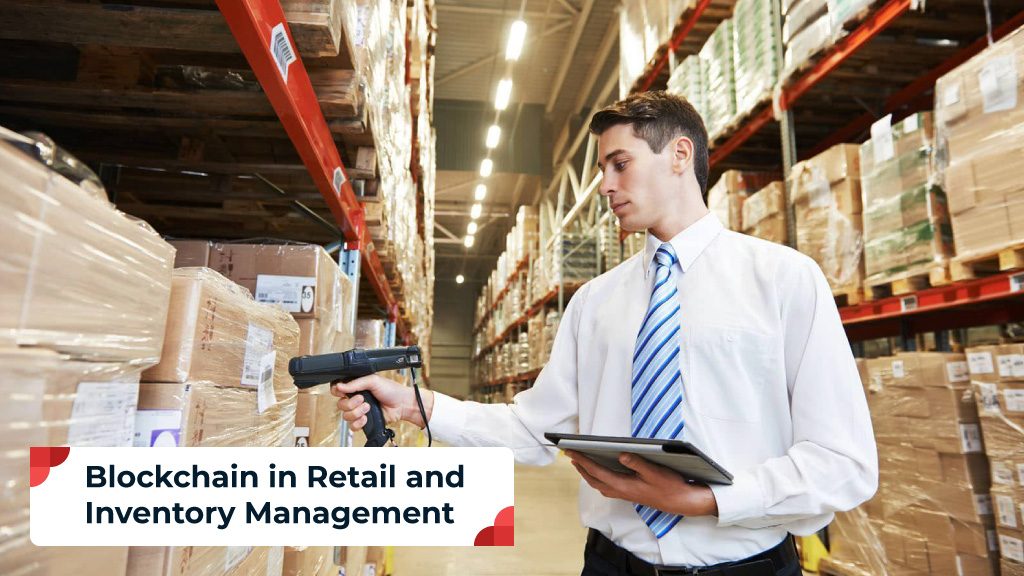
Prior to introduction of enterprise blockchain developmentdid you have any idea it is coming into the retail industry too? People are working on making the retail industry to reach to the highest pace! Like every industry, retail is also facing some of the major issues. Well, blockchain in retail and inventory management can alter these situations, read how? 

Blockchain In Retail And Inventory Management

For starters, let’s get to know the general functions which blockchain provides us with!

  1. The recording of data without the alteration of third party keeping it away from all the threats of being fake ones.
  2. Blockchain records the data in a sequence. This makes it even harder  for any person or professional hackers to hack.

Now let’s think how the blockchain technology can bless the retail industry. The retail industry is one of those which requires and consist of the supply chain. Further, it has numerous parties involved within the procedure like manufacturers, suppliers, retailers and the end consumer. 

blockchain in retail market

Situations where the retail industry needs blockchain for the better and free flow of goods!

  • There are many products for which we cannot make out if they are the real or the fake ones. This is an era where  many frauds and fraudulent activities take place. Here, we need to find a solution to fight these bugs that are the main obstacles in the way. Blockchain helps in making the product get through some of the measures to ensure that the product passes all the details in order to be referred to as the real ones.
  • Blockchain eliminates the gap between the supply chain and the parties involved in it! When the products reach from the supplier or manufacturer to the retailer, there is always an involvement of the third party. Third-party involvement in a way may pay some tricks to modify the goods and take advantage of it. Blockchain helps in the verification of the good to safely reach the retailer and then to the consumer. 

Other than these, there are many major aspects of the retail industry about which the blockchain workers are taking care of and would help in the revolutionizing of the industry.

Managing the inventory

It is quite difficult to know where the product is coming from or stored in. It could be in the store or online or in the warehouse. However, it is important to know the status in order to make your business away from fraudulent activities. Blockchain helps in the inventory management. It tracks the location of the goods in order to keep the receiver aware of the updates of the product. Blockchain makes it quite easier for the supply chain to know the status of the goods.

Tracking the goods with the blockchain is more reliable which will make the consumers have trust over the retailers for the goods as all the information will be transparent for them too. 

Securing the product

As we already know that the products came from the particular supplier. And, the blockchain ledger records the entire journey of the product. This transparency helps the consumer to take steps and know whom to contact in case of some problems with the product. 

There are many cases in which the consumer finds themselves clueless about the safety of the product and get to know that product that reached them has some wrong with it. In these cases, blockchain come to the rescue. It helps the consumer to contact the one who is actually responsible for the loss. 

This feature of blockchain again helps the consumer and retailer to build a trustworthy and reliable relationship among them for a long run. Hence, building the retailers reputation in the market with other consumers at the end.

Protecting the odds

Products like luxury goods, cosmetics and, high-end products come with a measure to be gone through in order to be certified as the real ones. Many of the online websites sell duplicate ones and divert the consumer of purchasing the real ones. Blockchain help in these products of passing these measures and get to the market with certain certification.

Transparency 

This feature adds up to one of the most reliable ones helping the consumer with their right to information for everything they buy. Information, with the help of the ledgers, is notified to all the users of the chain and in turn, provides a glass through which consumer can see everything about the product.

Storing data

There is a lot of information about the consumers that are needed to be recorded. The tasks are made easy with the help of blockchain as the record one added into it will never be modified or deleted by any third party.

Over to you – Blockchain in retail is beyond inventory management

Providing a decentralized system to the retail industry would be benefiting for all of us as you could make out from the article! How do you think the blockchain has something to gift us within the retail industry? Do let us know about it.


How Blockchain Can Benefit Consumer Goods And Retail Industries

Blockchain is the one stop solution in the processes that requires gaining trust or building a reputation that depends upon safety for all its concerns. Looking forward to industries like retail ones, the maximum need is to grab the trust of the consumers for a long run. Blockchain can benefit consumer goods and retail industries to the large extent. After all, what is blockchain for consumer goods and retail industries? And, how does it impact?

Blockchain for consumer goods

Blockchain for Consumer Goods And Retail Industries

We are already aware about the functions of Blockchain and its role. It provides an unbreakable security system for all the situations. The very first and foremost feature of blockchain is that it helps in recording all the transactions without any interruption. There is no need of modification by the third party. Hence, keeping the records safe and reliable is possible with blockchain.

Blockchain can provide all the game-changing features to the retail industry. Blockchain would facilitate a free-flow of supply chain management, sales activities and also maintaining the after-sales activities. Also, blockchain would help ensure the easy flow of goods. This, in turn, will build a trustworthy relationship with the consumers and improve their experience.

Some areas should be priority; these parameters are:

  • Payments without hassle,
  • Providing authenticity with every purchase,
  • Improving the experience, reliability, and transparency with consumers regarding supply chain management,
  • Maintaining identity, being loyal, and
  • Building a trustworthy relationship with the clients or consumers.

As we just got to know the main dimensions that retail industry demands; here, are a few features that would bind retailers and consumers through blockchain!

Clarity and Liquidity

Marking the exact origin and providing the actual journey of the product is the customer’s main concern and a right too. Blockchain plays a role in which the transparent ledger provides all the information about the history of the goods. It also makes the information visible to all the parties involved in the transaction like supplier, manufacturer, retailer, and the consumer.

Implications of fake and real

Blockchain comes with an unremarkable feature of certified goods under a certain measure. Hence, it helps in figuring out that if the product that has reached the manufacturer or the retailer is a fake or the real ones. Items like medicines and too expensive items need to go through a set of standards which defines them to be different from others. According to these standard, these products are marked as real or fake ones.

Providing opportunities

Dealing in transactions that include a huge amount of money involved in it makes it harder for the normal bank processes to make it done and also, is a very risky take. Blockchain has the ledger which records each and every transaction to its exact point making it safe from modification and errors. In this way, blockchain paves a way for a more reliable system of making transactions. 

Staying safe and relied on retailers

There are many already existing companies that use this feature to transfer the warranty without any hassle. Blockchain helps in maintaining warranty wallets from transferring it from cloud to blockchain ledgers which in turn helps the manufacturers and the retailers to stay free from the unnecessary tasks they would have to perform in order to maintain the administrative work. Also, eliminating this hassle makes a way for building a trustworthy relationship among the retailer and the end consumer. 

Increasing the reach

Blockchain development technology has headed towards the international markets to help in the easy flow of supply chain globally. The decentralized system of blockchain helps in the direct communication of the parties involved in the transactions. If blockchain would come into charge the need for the certification of the middlemen to validate the transaction would not be needed. All the supply processes will be done directly within the parties, hence, solving the shipping problems.

Signing off:

It has been a long time since we started getting to know the functions and enhancing the possibilities which blockchain will be able to provide for us. It has now reached the industry which includes the most trust, labor work, transactions and supply, and shipping chains. Increasingly people are adopting it in the retail industry and are surprised to know the outcomes of blockchain for consumer goods. 

There are many loyalty programs that blockchain leads the retail industry to enhance its performance by each day passing.  

How To Generate More Users/Revenue for E-commerce Business Using Sweepstakes

Sweepstakes are an efficient marketing channel that helps develop your business, generate more leads, promote your brand, and increase sales.

Sweepstakes have several benefits compared to other marketing methods. In addition, it’s easy and inexpensive to run. Just one single promotion can result in getting new customers, increasing sales, increasing followers on social media like Twitter, Facebook, Pinterest, etc, and better brand exposure and awareness.

According to Hubspot, “approximately 33% of contest entrants agree to receive information from brands allowing you to remarket to those customers to land the sale”.

Below is the list of objectives that the implications of sweepstakes can achieve

Boost visitors on the website:

Sweepstakes can go viral easily. Therefore, you can design it to attract new potential customers to your store.

Generate referrals:

You can provide unique referral links to each participant to track who referred whom and reward them accordingly. And,  these friends will refer to other friends and in this way, the website will attract more visitors and will help increase awareness of the website.

Grow your email list:

Now you might be wondering, “How exactly does that help my business?” Often, e-commerce websites that run sweepstakes will ask entrants to share their details with the website.

For example: “Enter with your email address” or “Follow us on Instagram to win.” 

Increase awareness of your store:

If you have a new website, you can use sweepstakes to help make more potential customers aware of your website.

Providing Incentives:

Sweepstakes are viral. Customers talk about them all the time and share them with their friends and colleagues. However, you can encourage them to share it even more by providing incentives. Just by providing small incentives, you can increase a lot of potential customers  

Further, offer them additional entries by liking, tweeting, or inviting friends to sweepstakes. You could even offer them a guaranteed gift (a discount for instance) for inviting several friends,  to join in or post about the sweepstakes on social media.

Overview of case study

Case study 1: Unique Hotels Facebook campaign   

Unique Hotels is a small group lifestyle hotel located mainly in Tallinn, Estonia and Manor House just outside the city. Each is located in historical buildings and surroundings that have been updated to include modern conveniences. And, each has a different character and level of service.

Objectives:

  • By using social media campaign, create brand awareness and encouraging content to share between users.
  • Generate leads and bookings by attracting visitors to the Unique Hotels’ websites with special offers.
  • Increase the Unique Hotel’s probable customers with offers, campaigns, and engaging content.
  • Develop a new community channel for customer interaction, give updates, and generate news.

Solution:

  • Run month-long sweepstakes campaigns on Facebook.
  • The viral aspect of the campaign is more sharing,  the extra points, and greater the chances of winning in both the weekly and main prize (luxury all-inclusive weekend in Vihula Manor) draws.
  • To encourage sharing even further they incorporated three ways to collect additional points and increase one’s chances of winning – the initial ‘Like’, sharing badges with friends and subscribing to the Unique Hotels newsletter.

Results:

  • After the successful completion of  the campaign, the Unique Hotel fan base went from 414 to 12,349
  • User engagement (any clicks on any stories) went from 2,108 to 30,944
  • Traffic to all of the Unique Hotels websites for November and December was 115% of the previous two month’s figures (September and October).
  • The Unique Hotels mailing list skyrocketed from 600 subscribers, predominantly Estonian-speaking, at the beginning of the campaign, to approximately 3,000 Estonian, English, and Russian subscribers

Case Study 2: Noritz

Noritz manufactures tankless water heaters for both home and commercial use. They’re sold through various distribution channels that primarily include installers and dealers. They expressed a desire to establish a way to increase brand exposure and gain the ability to directly communicate with end users to help increase the probability of a dealer/installer sale.

To satisfy that need a 12-month (with monthly prizes) sweepstakes campaign was initiated to attract new prospects, increase brand awareness, grow the subscriber list, and drive traffic to the dealer locator tool. To drive traffic to the sweepstakes mini-site Google AdWords was used with geo-targeted pay-per-click ads.

Results:

  • 45% registration rate
  • 28% referral rate
  • Substantial increase in the subscriber list
  • High use of dealer locator tool

The result was pretty impressive considering only Google Adwords was used.


How Grocery Multi-Vendor Marketplace Promotes Drop Shipping And Boost Business Profits

On-demand Grocery App

grocery multivendor

Even an umbrella gets wet during the rain but online grocery marketplaces deliver your groceries dry and fresh even during heavy-rain. This kind of comfortability has increased people to order groceries from their doorstep and receive their order within a matter of minutes without any delay in an instant. Building an online grocery marketplace has high chances of being successful. Ensure that your ondemand grocery mobile app is more than it meets the eye.

Users should be able to browse through your grocery multi-vendor marketplace for wide range of grocery products and select what they require and order in no-time just like booking an Uber cab on an instant basis. The key success factor lies in what are the unique values you provide, how efficient you manage your key partners, key resources and maintain a good customer relationship to generate a profiting revenue. With increase in technology, the number of competitors providing services in online groceries has increased too. The extent to which the wholesaler or vendor is directly able to connect with the customer determines the success and profit potential of your online grocery service.

Do you want to know how to promote dropshipping and boost profits for your grocery multi-vendor marketplace? This is the article for you. Keep reading!  

doorshiping profit

Reaping profits from your Online Grocery Business

Promoting drop shipping

With online grocery platform, customers do not have to worry about connecting with any middlemen or multiple sellers. Traditionally, in drop shipping approach, the vendor connected directed the customer orders to wholesaler or vendors who then deliver the order to customers. This increases the time taken to process operations and also increases the logistical time to deliver groceries which made it difficult to deliver at the right time and right place.

With grocery multi-vendor marketplace, this approach is eliminated. Now, wholesalers and vendors can connect with each quickly without any interference from third-party services. This reduces the processing time and delivering groceries at the right time and right place have become easier. This paves a path towards profit reaping success.

Tips and key features to develop to enhance your online grocery shopping service and generate profits

online grocery shopping

Fix your business model

There are different kinds of business models. You have to choose the right fit according to the purpose you want to serve and the service you want to provide. These business models are hybrid model, inventory model and marketplace model.

No external tie-up: Inventory model

In this model, your online grocery business sells groceries from your own inventory and does not share the profits with anyone else.

Multiple tie-up: Marketplace model

In this model, you will tie-up all possible wholesalers and vendors to make operations easier and provide solutions that fixes issues as quick as possible. Here the profits are shared and revenue is mostly based on commission basis.

Combined package: Hybrid model

In this model, you combine the services and features of your inventory and marketplace together. You combine functionalities of all your suppliers and partners to provide the maximum possible satisfaction to stakeholders and customers at the same time.

Features to include in in while building your grocery multi-vendor marketplace

grocery multi-vendor marketplace

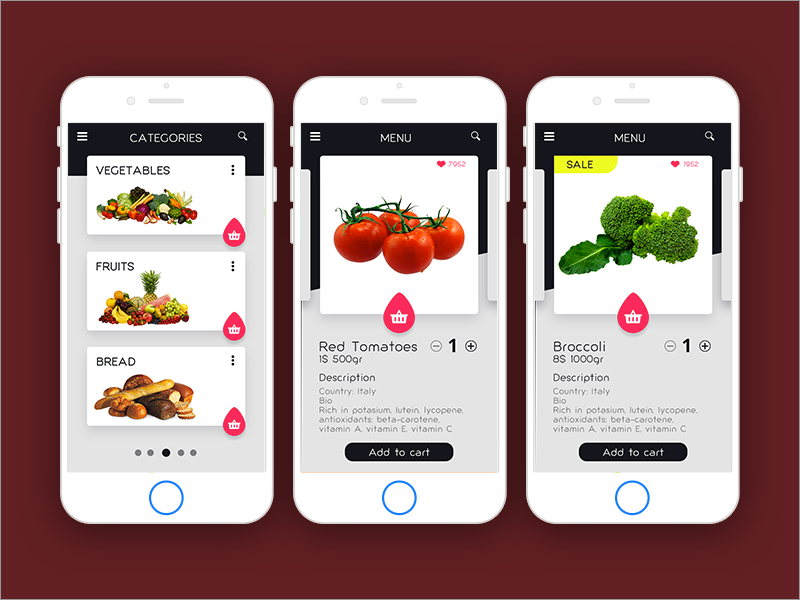
Orders coming-up: Cart

Build and develop a cart feature that allows customers to add more than one product to their cart so, that they can buy multiple product at once as a one-stop shopping.

Choosing is always fun: Product category

Provide multiple products categories that customers can choose from to buy groceries. For example, your categories should include, fresh vegetables, snacks, home accessories, fresh meat, etc. Ensure that customers can easily navigate between different product category and add products to the cart.

What to buy and what-not to buy: Calculate price of items in cart

As customers keep adding items to their cart, make sure to calculate the price of each grocery item and provide visibility to each item with respect to its quantity. Finally, also provide the total cost of all items in the cart. This helps customers to make smart decisions.

Keep customers informed: Push notifications and in-app notifications

In-app notifications include pop-ups and alerts that appear on the screen while placing an order, successful payment, adding items to cart, etc.

Push notifications include successful sign-in and sign-out, billing and invoice of orders delivered, delivery status, etc.

Keep customers engaged: Provide discounts and offers

Provide promotional codes to customers that they can use to avail discounts in the groceries to be ordered. This increases customer loyalty by satisfying them as discounts add value to the service you provide.

Make no delay in payment: Payment methods

Offer multiple choice of payments that customers can choose from to pay for their orders. These payment options should include debit cards, credit cards, digital cards, wallet cash and vouchers.

Ways to generate revenue for reaping profits

Identify the different ways of streaming revenue first in order to understand and productively generate revenue. Revenue stream for your online grocery business include:

  • sales of groceries,
  • subscription fee to your news feed,
  • fee that customers have to pay for availing your service.

The most commonly used revenue generation approach is the commission-based technique For, each order customer places, you charge a commission for it. But this method is widely used only if your online grocery business follows the marketplace model.

Conclusion: Make online grocery shopping enjoyable

Traditionally all processes and operations were managed manually but with online platform, all operations are monitored and managed digitally. With online platform, not all stakeholders might meet face to face and you might never know the other end of the party but still achieve success and that is the beauty of it. Modern day customers require everything to be delivered at their doorstep with any hassle. All the above tips, considerations and features will help you achieve success through profits. Good Luck.

How To Boost Your Grocery Business Through On Demand Mobile App

Gone are the days when books used to be our best friends! In an era of highly advanced technology, smartphones have reached on the top of our priority list. There are apps for all our needs, be it food or clothing or grocery, we can make it reach our doorstep through the on-demand mobile apps for the specific tasks.

on demand app development

Snapdeal, Amazon, Swiggy, and Zomato are one of the most famous examples of mobile apps that we use in our daily life. The same way our most important need i.e. Grocery needs to be accomplished too. There are many on demand mobile apps for grocery shopping like BigBasket and Grofers. These are the most successful grocery apps used by more than half of the global population.

With people engaged so much into buying stuff online, it would be great to build an on-demand app for your business. Grocery being the most important part of our life can be one of the most successful business ideas with an on-demand app.

There are not many grocery stores that provide their services through on-demand apps. There are many places and cities where there are no grocery shops or stores are located nearby which makes the need of the online grocery stores necessary. The idea of providing apps for the grocery shopping would uplift the grocery business.

There are many features that makes a grocery business to touch heights in the on demand app markets. Not only those features helps the consumers to grab the best deals but also helps the store owners to attract crowd to the store and get traffic towards the app.

To Build An on-demand App For The Grocery Business, One Should Keep In Mind Certain Features That Are Must:

Discount and Offers

This is where the story starts from! Discounts that are offered at the beginning of the app and business attract a large number of people. People start discovering the app and its content when they are provided with attractive discount coupons.

Fast Delivery

Grocery items are usually ordered when people need them urgently. There should be an option offering fast delivery, i.e. within 2-3 hours. Many apps like Big Basket provide this kind of offers and is used by Indians at a higher rate. Fast delivery opens a wider range of people to be attracted to your app.

Customer Service

Every business needs proper help to be provided to the customers for best and improved service. Therefore, customer service should be provided to keep the customers doubts clear to avoid any future discrepancies.

24 Hour Service

We should always try to keep an option for 24-hour service as this is one of those features which enable a huge opportunity to get into the top priority list of people for the grocery business. As there are many latecomers and people who forget to buy stuff and need them on an urgent basis, this service is the most useful one for them.

Payment Flexibility

A customer should be offered with each type of payment mode to make the checkout after shopping hassle-free. Cash on delivery(COD), debit card, credit card, wallets (paytm, mobikwik etc) are the most preferred payment modes used by users nowadays.

Loyalty Discount

We come across a type of discount that says 50% off on next 3 purchases. These kinds of offers urge the customers to buy products and avail the discount. These are known as loyalty discounts. Discounts that pay off a customer’s loyalty for the products they bought attracts them for further or future shopping from the same place.

Attractive Graphics      

Every picture which explains the type of product should be selected and clicked very carefully and properly in order to attract customers. This doesn’t mean that images should be sugar-coated. Also, the text and graphics used in the app is the most important aspect in attracting the customers, therefore, the on-demand app Development Company should be taken into consideration to make the app an attractive one.

Over to you

All the above-mentioned features would give the app an attractive and astounding face when given into the hands of on-demand app development professional. There are various companies that specialize in developing these features for the app which enables the owner to excel in their business.

In the industry, there are many already developed on demand apps that would act as the ultimate competition in the online grocery business.

A brief description of existing apps to know better about the industry:

on demand app

GROFERS

  • They work on the mantra “SuperMrs Ka Supermarket” in which they aim to make a woman’s life easy by delivering all the grocery items at their doorstep and eliminating the need of going to the market.
  • Also, Grofers believe in providing customers with all kind of grocery items including fruits and vegetables, beauty and wellness products, baby and pet care, and seafood quality products at low prices.
  • Grofer’s service is widespread in 18 cities and more than 3 million people use the app for their daily grocery needs.

BIG BASKET

  • Offers 18000 products and 1000 brands to match all the needs of the customers right at their doorstep.
  • Also deals in packages products, beverages, and personal care products and never compromises with quality.
  • Provides service in more than 20 cities according to different time slots.
  • Services can be availed by paying through different methods like credit and debit cards, cash on delivery etc.

These were some of the successful online grocery business apps that are used by most of the people in India nowadays. Though it costs a higher amount to be invested in launching an on-demand app but it is absolutely worth it! 

Being blessed with every service online, why are we still working within the walls of our shops? It’s time that we realize that our normal business like a grocery one needs to reach at every end of the city. More suggestions for features that can boost grocery business through on-demand apps are more than welcome!