



CCPA
CCPA
California Consumer Privacy Act

LLM development services cover the design, fine-tuning, and integration of large language models so they work on your data and inside your systems. SoluLab, a large language model development company, builds with GPT, Claude, and Llama, taking enterprises from prototype to production with retrieval, evaluation, and monitoring built in.








A retrieval pipeline tuned on a clean test set often returns noisier, less relevant context once your actual document volume and query variety hit it.
Long conversations or multi-document queries silently drop or truncate the context that mattered most, and the model answers confidently on incomplete information.
The model works fine in isolation; it's the handoff to your CRM, ticketing system, or internal APIs that wasn't designed for how users actually interact with it.
Model behavior shifts as usage patterns, data, or the underlying model version changes, and without monitoring, that drift goes unnoticed until a customer catches it.
High-stakes actions—anything touching money, legal exposure, or customer commitments—need a human checkpoint designed in from the start, not added after the first bad output.
Businesses investing in LLM development services achieve the greatest returns by prioritizing solutions that automate workflows, improve decision-making, reduce operational costs, and deliver personalized user experiences while scaling efficiently.

Our LLM consulting services help you decide what actually needs an LLM. Large language model consulting with SoluLab covers architecture selection, model evaluation, and a realistic implementation roadmap before a single line of code gets written, whether you are putting an LLM in development for the first time or rescuing a pilot that stalled.

Custom LLM development means building a system trained and structured around your specific workflows and data, not a generic wrapper around a public API. See how teams build a custom LLM for enterprise use, from data preparation to deployment.

We offer LLM integration services that connect models to your CRMs, ERPs, databases, and internal tools through secure API integration, including authentication, rate-limit handling, and fallbacks when a model call fails. Our generative AI integration services extend the same approach to broader GenAI features.

Enterprise LLM development adds what a smaller build doesn't need: governance, audit trails, role-based access, and integration with systems that can't afford downtime.

Our LLM fine-tuning services adapt models to your domain so responses reflect your business, not a generic internet-trained baseline. We use LoRA, QLoRA, and instruction tuning on open-weight models such as Llama and Mistral, and each provider's own fine-tuning tools where GPT or Claude models support it.

As an LLM application development company, we build internal tools and customer-facing products that automate real workflows, not just answer questions.

Generic models miss context that matters in regulated or technical fields. Domain-specific LLM development means training on your industry's actual language, not a general-purpose dataset.
For businesses that can't send data to a third-party API, private LLM development keeps the model, the data, and the inference process inside your own infrastructure.

Our LLM chatbot development goes beyond scripted flows, using real language understanding to handle open-ended questions and hand off to a human only when it should.

Develop custom LLMs, AI agents, and RAG-powered applications designed for accuracy, security, and long-term business growth.
Speak with Our LLM ExpertsBuilding a custom language model (LLM) rarely means training one from zero. Most projects start with the lightest approach that meets the accuracy target and add complexity only when measurements justify it. This table compares the four approaches on the factors that decide cost and risk.
Fast pilots and well-defined tasks
A handful of examples
Answers grounded in your changing documents, with citations
Your documents and knowledge base
Consistent tone, format, or domain language
Hundreds to thousands of labeled examples
Novel domains or strict data-sovereignty needs
Massive curated datasets plus large compute
Many enterprise projects combine RAG with light fine-tuning: retrieval keeps answers current, and tuning fixes the tone and format. We recommend the approach after a short assessment, not before. For RAG-first builds, see our RAG development services.
Strong security is part of the architecture, not an add-on: private or VPC deployment, role-based access, encryption in transit and at rest, PII redaction, audit logging, and testing for prompt injection and data leakage. We design to the frameworks below and can show you which ones apply to your industry.
California Consumer Privacy Act

Organisation for Economic Co-operation and Development

Health Insurance Portability and Accountability Act (Healthcare Data Protection)

Institute of Electrical and Electronics Engineers 7000 Series
System and Organization Controls 2

European Union Artificial Intelligence Act

General Data Protection Regulation
Artificial Intelligence Risk Management Standard
ISO/IEC 42001:2023 Information technology — Artificial intelligence — Management system.

Information Security Management System Standard
National Institute of Standards and Technology Artificial Intelligence Risk Management Framework
See how our LLM development solutions have helped startups and enterprises leverage AI innovation, optimize workflows, and build future-ready applications with secure, scalable language model capabilities.
UpdateIA is an enterprise-grade Generative AI ecosystem built by SoluLab to unify and automate business operations through 14+ specialized AI agents. Powered by a central “Jarvis” brain, it enhances HR, CRM, finance, and support functions. Results achieved are:

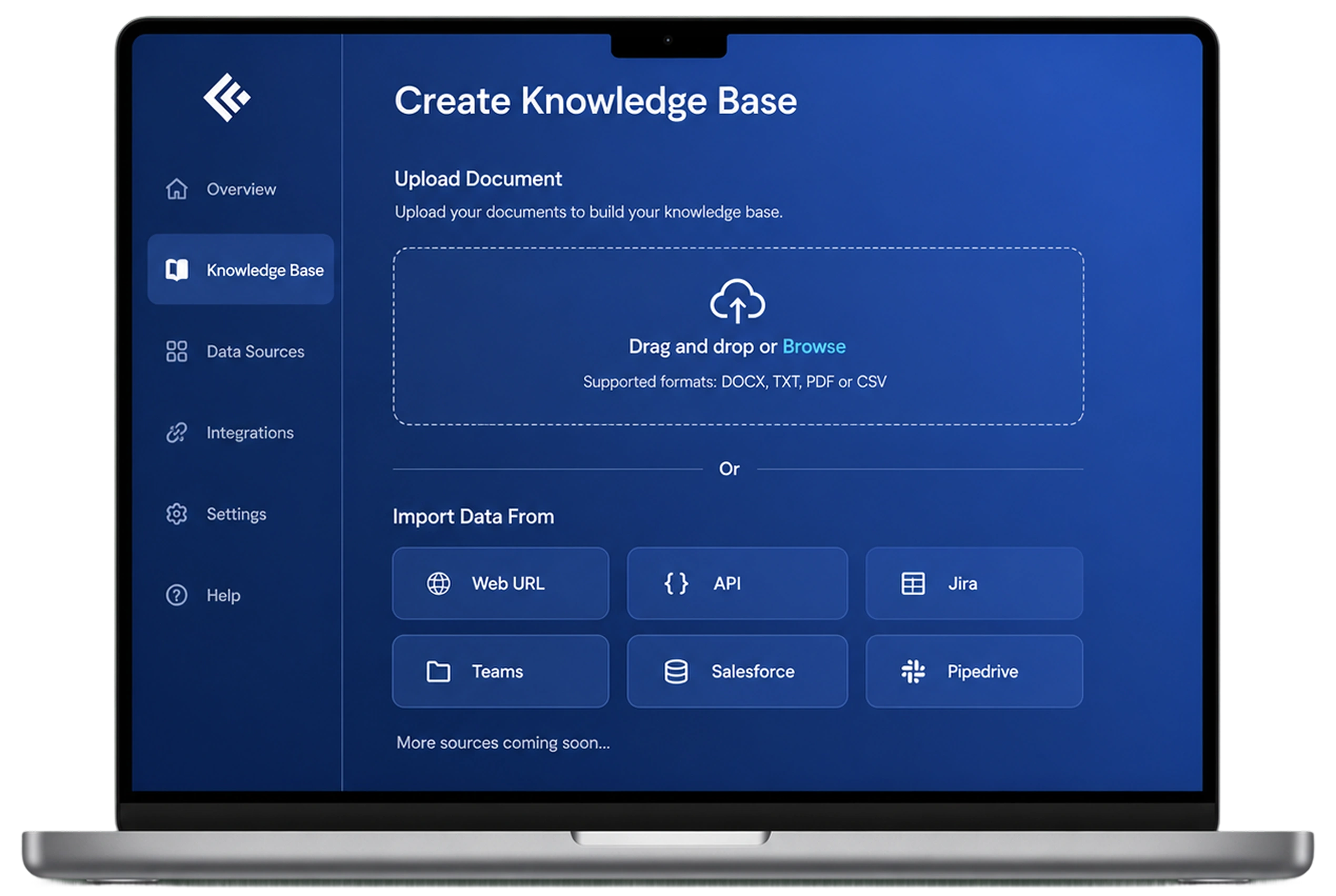
Discover data empowerment with the InfuseNet AI platform. Seamlessly import from texts, images, documents, and APIs, infusing operations with advanced models like GPT-4, FLAN, and GPT-NeoX. Illuminate decision-making, unearth insights, and amplify productivity while ensuring data security.
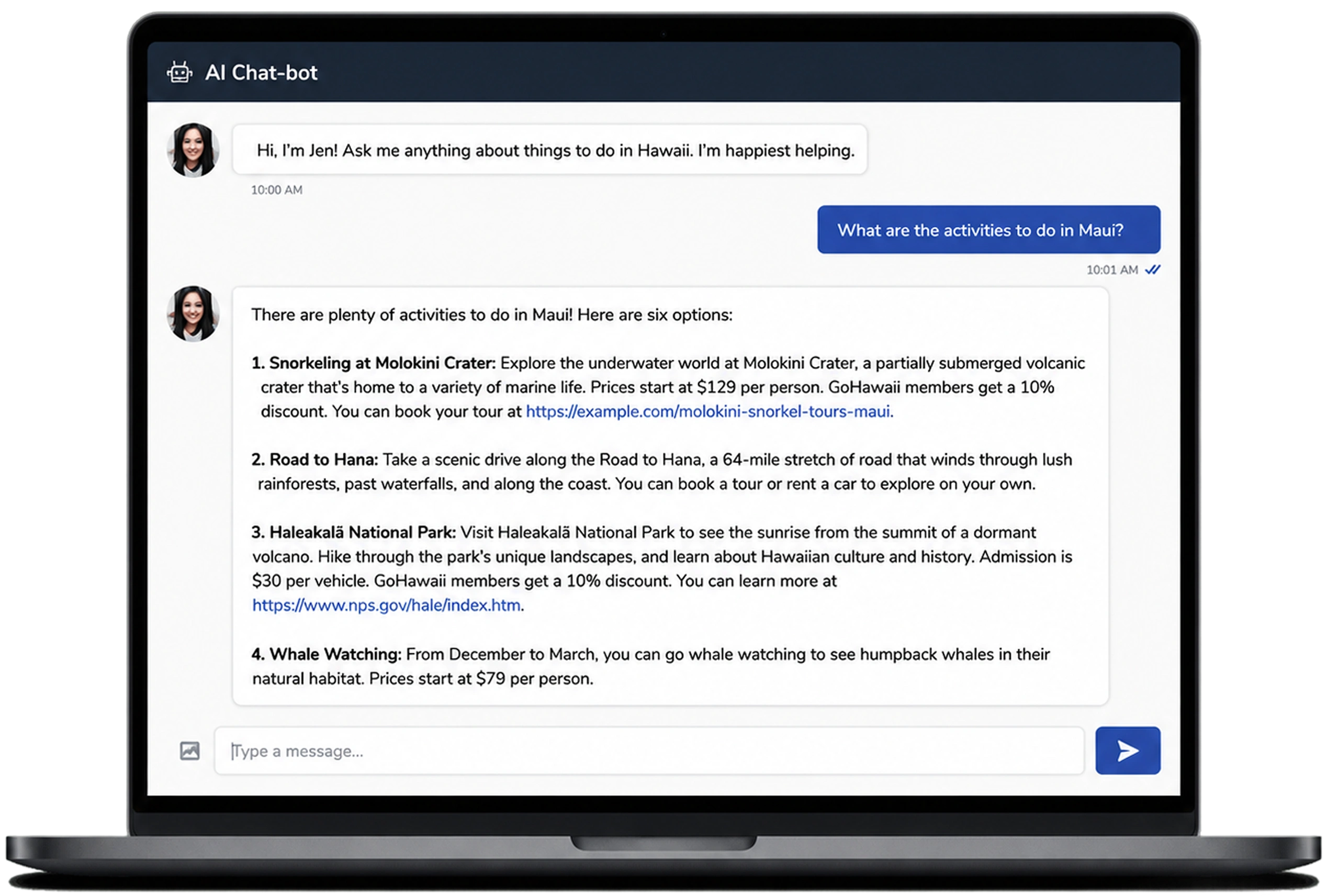
Digital Quest is a travel business that partnered with SoluLab, an innovative software development company, to create an AI-powered ChatGPT that provides users with communication and enhanced engagement for travel recommendations.
Build intelligent, scalable AI solutions with modern frameworks, models, and infrastructure that help build a custom LLM for enterprise applications with security, performance, and long-term scalability.
 GPT
 LLaMA 3
 PaLM-2
 DALL-E 2
 Whisper
 Google Gemini
 Claude
 Stable Diffusion
 Phi-2
 Vicuna
 bloom-560m
 Mistral
Leverage modern AI frameworks, foundation models, vector databases, and cloud infrastructure to build scalable LLM applications, accelerate innovation, and enable LLM-powered virtual assistant development for seamless enterprise automation and growth.








Adapting a model already trained on general language to your specific domain, instead of training from zero.
Teaching a model a new task using a handful of examples instead of a full retraining cycle.
Giving a model the context it needs directly in the prompt, useful when fine-tuning isn't practical or fast enough.
Reading tone and intent in customer messages, reviews, or support tickets at a level rule-based systems can't match.
The broader natural language processing work, such as entity extraction and summarization, that often sits alongside a core LLM build.
Turning unstructured text such as tickets, reviews, and call notes into structured signals that feed forecasting models for churn, demand, and risk. The LLM extracts the signal; a purpose-built model makes the prediction.
From healthcare and finance to retail, manufacturing, logistics, and education, SoluLab delivers industry-specific LLM solutions with secure LLM integration services that automate workflows and improve decision-making.

Enhance fraud detection, automate financial analysis, and improve forecasting accuracy using intelligent AI integration for business operations.

Optimize patient management, diagnostics, and clinical workflows through AI-powered automation, improving healthcare operational efficiency and accuracy.

Improve inventory forecasting, personalized recommendations, and trend analysis with intelligent AI systems.

Improve production planning, predictive maintenance, and supply chain monitoring using AI-driven industrial automation.

Deliver personalized learning experiences, automate administration, and engagement through educational AI platforms.

Improve property valuation, lead management, and customer engagement with AI-powered real estate automation and predictive insights.

Enhance booking experiences, route optimization, and customer personalization using AI-powered travel management systems.

Analyze player performance, automate fan engagement, and improve strategic decision-making using advanced sports intelligence platforms.

Personalize content recommendations, automate audience analysis, and improve engagement through entertainment AI solutions.

Automate claim processing, fraud detection, and risk assessment using AI-powered insurance analytics and automation systems.
A custom LLM built around your data and workflows pays off in ways an off-the-shelf chatbot can't match.
A model tuned on your own documents and terminology answers the way your best people do, and competitors can't copy your data.
Support triage, document review, and internal search drop from hours to minutes when the model works inside your existing tools.
You decide what the system can do, from structured outputs to approval steps, instead of adapting your process to a generic product.
Private deployment, role-based access, and audit trails keep sensitive data under your control.
Text from tickets, contracts, and reviews becomes structured data for forecasting and risk models.
Secure API integration puts the model inside your CRM, ERP, and support stack instead of a separate tool nobody opens.

SoluLab's LLM engineers can join as a dedicated team, an extension of your existing engineering group, or a fixed-scope build, depending on what your project actually needs.
Partnering with experienced LLM developers helps you build secure, production-ready AI applications faster while reducing development risks, improving model performance, and ensuring seamless integration with your existing business systems.
Select a flexible engagement model designed around your project scope, technical requirements, timelines, and business objectives. Whether you need additional expertise, a dedicated delivery team, or a complete engineering setup, we provide scalable options that fit your goals.
Add experienced developers and AI specialists to strengthen your existing team without changing your internal workflows or management structure.
Choose the required expertise, onboard selected developers, and scale your team size based on project demands with flexible engagement terms.
Work with a dedicated team of engineers, AI specialists, and QA professionals committed to delivering consistent results and meeting your product milestones.
We manage sprint execution, track delivery progress, and provide regular demos to keep your product development aligned.
Establish a long-term AI development center supported by our infrastructure, talent, processes, and compliance expertise while maintaining control over your product vision.
We manage team setup, operations, and delivery while helping you build a sustainable engineering capability through long-term partnerships.
Our structured process for large language model development Services ensures scalable automation through strategic planning, enterprise-ready execution, and fully custom LLM aligned with business goals.
We map the use case, the users, and the success metric, and check whether an LLM is the right tool at all.
We compare candidate models on accuracy, cost, latency, and data-privacy needs, using your own sample tasks rather than public benchmarks alone.

We audit, clean, and structure your data, remove sensitive fields, and build the evaluation set that will judge the system.

We adapt the model with prompting, LoRA or QLoRA where they apply, or provider tooling, choosing the lightest method that hits the target.

We connect the model to your knowledge sources with a tuned retrieval pipeline, so answers are grounded and traceable.
We test accuracy, hallucination rate, latency, and security against the evaluation set before any user sees the system.

We release in stages into your cloud or private environment, with rollback plans and access controls in place.
We watch for drift, retrieval quality, and cost, then retrain or retune as usage changes.
SoluLab combines deep AI expertise, proven custom LLM development capabilities, secure deployment practices, and scalable architectures to build enterprise-ready LLM solutions that deliver measurable business value, reliability, and long-term growth.

$40M+ in AI software projects delivered across 250+ in-house developers, with real production LLM deployments — not just pilots that never left the sandbox.

Direct access to the engineers building your model, with regular check-ins through discovery, fine-tuning, and deployment — no black-box status updates.

Our LLM solutions are built to plug into your existing CRM, ticketing, and data systems from day one, so the model works inside your actual workflows instead of sitting in a separate tool.

Post-launch, we monitor for model drift, retrieval accuracy, and performance degradation continuously — the failure modes that don't show up until real users are on the system.

Fine-tuning and integrating an existing foundation model, when that fits your use case, costs significantly less than training a model from scratch — we help you choose the right approach rather than defaulting to the most expensive one.

Reusable evaluation frameworks and pre-built integration patterns mean less time spent on infrastructure that's already been solved, so your model reaches production faster.

"Taher leads solutioning and technical strategy for SoluLab's AI and LLM engagements — the person who scopes whether your use case needs fine-tuning, RAG, or a fully custom model, before any development starts. "
We had a working LLM prototype, but it struggled with our internal data and gave inconsistent answers when we moved beyond the demo environment. SoluLab redesigned the architecture around RAG, improved our retrieval pipeline, and added the evaluation layer we were missing. The biggest difference was that we could finally measure response quality instead of relying on subjective testing. We moved from an impressive prototype to something our teams could actually use every day.

VP of Product, Nexora Software
We initially assumed our biggest challenge would be model selection. It turned out to be our data. SoluLab helped us clean and structure our knowledge sources, build a reliable retrieval pipeline, and connect the LLM with the systems our teams already used. That approach made the application much more useful than the standalone chatbot we had originally planned.

Head of Engineering, HelixWorks
The first version of our AI assistant looked great in a controlled demo but became unreliable when multiple users started interacting with it. SoluLab worked on the underlying architecture, inference workflow, monitoring, and scalability rather than simply changing the prompt. We now have a production-ready LLM application that can handle real usage while giving our team visibility into performance and model behavior.

Product Director, CloudAxis Technologies
We wanted to introduce generative AI into our existing platform without rebuilding the entire product around it. SoluLab integrated the LLM with our existing APIs, business logic, and knowledge base while keeping our existing workflows intact. That allowed us to launch AI-powered capabilities incrementally instead of taking on a risky, all-at-once transformation.

Co-Founder & CTO, WorkGrid Labs
An LLM development company builds, customizes, integrates, and deploys large language models for business applications, including AI assistants, chatbots, knowledge agents, automation tools, and enterprise AI solutions.
Businesses partner with an experienced large language model development company to build secure, scalable AI applications, reduce development complexity, improve model accuracy, and accelerate AI adoption with expert guidance.
Yes, businesses can build a custom LLM for enterprise use cases by training and customizing models on proprietary data, workflows, and industry requirements to improve accuracy, security, and performance.
The timeline depends on project complexity, data requirements, model customization, and integrations. A basic LLM application may take 8–12 weeks, while advanced enterprise solutions with fine-tuning, RAG, and integrations can take several months.
LLM development costs vary based on model complexity, data preparation, customization needs, infrastructure, integrations, and ongoing maintenance. A basic LLM application may cost less, while enterprise-grade solutions requiring custom LLM development, fine-tuning, and security features require a larger investment. See the cost table above for typical ranges by project type.
Yes, private LLM development enables organizations to deploy AI solutions within controlled environments while maintaining data privacy, security, compliance, and ownership of business information.
We provide LLM model integration services to connect AI models with CRMs, ERPs, databases, knowledge platforms, APIs, and internal workflows for seamless enterprise adoption.
We improve LLM performance through prompt optimization, retrieval-augmented generation, evaluation frameworks, model monitoring, LLMOps practices, and continuous optimization after deployment.
Yes, our LLM fine-tuning services help businesses adapt foundation models to specific requirements. We can fine-tune GPT, Llama, and Claude models using domain data, transfer learning techniques, and optimization strategies.
LLM development is the process of building, customizing, and deploying large language models for business use. It covers choosing a base model, preparing data, fine-tuning or adding retrieval (RAG), integrating the model with your systems, and monitoring quality after launch. The goal is an AI application that works reliably on your data, not a demo.
LLM consulting helps you decide whether a language model is the right tool, which approach fits (prompting, RAG, fine-tuning, or a custom model), and what it will cost before development starts. You need it when the use case is unclear, your data is untested, or an earlier pilot stalled. It ends with an architecture and roadmap.
Fine-tuning adjusts an existing model's behavior, tone, or format using your examples. RAG leaves the model unchanged and retrieves answers from your documents at query time, which suits changing information. Building from scratch means training a new model on massive data and compute, which few businesses need. Many enterprise projects combine RAG with light fine-tuning.
We start by auditing and cleaning your data, then choose the lightest method that meets your accuracy target: prompting, retrieval, or fine-tuning with techniques like LoRA and QLoRA. Each custom model is evaluated against a test set built from your real queries before release, so you can measure quality instead of guessing.
Security starts with the architecture: private or VPC deployment, role-based access, encryption in transit and at rest, PII redaction, and audit logs. We also test for prompt injection and data leakage before launch, and monitor after it. For sensitive data, a private LLM keeps the model and inference inside your own infrastructure.
Look for production deployments, not demos: ask for case studies with measured results, how the team evaluates accuracy, and how they handle drift and security. Check that they work across GPT, Claude, and Llama rather than pushing one model. Our comparison of top LLM development companies lists the criteria and how providers differ.
Learn about AI in logistics, including its potential benefits, real-world applications, and future opportunities for businesses.
See how artificial intelligence is reshaping drug development with faster discovery, better target identification, clinical trial optimization, and more.
What AI-assisted software development is, how completion, chat and agent tools differ, what the evidence says about productivity, and the failure modes