

Casino game development is getting more competitive by the year, and for good reason. According to the annual growth rate of the market data , the global online gaming market is expected to hit USD 158.20 billion by 2028, growing at a CAGR of 11.7% from 2023. That kind of growth pulls in a lot of new entrants. But here’s what most of those entrants underestimate: the costs. Game complexity, platform choices, and feature sets all push the final number in very different directions, and going in without a clear picture is how projects stall mid-build.
What is a Casino Game?
A casino app lets users bet money on games that run on chance. That’s the core of it. As the internet spread and smartphones became ubiquitous, these games moved off the casino floor and into people’s pockets. Today, hundreds of thousands of players worldwide are running sessions on desktop and mobile, often without ever stepping into a physical venue.
Types of Casino Games on the Market
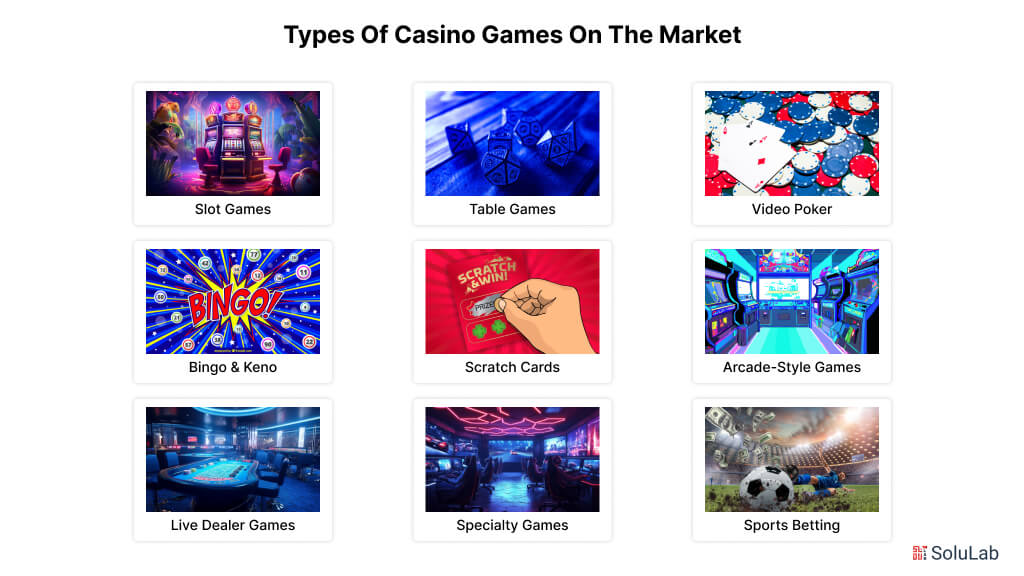
Casino games cover a wide range of mechanics and skill levels. Here’s what the main categories actually look like:
- Slot Machines
Animated reels spin, and players win when matching symbols land on pay lines. Slots come in a few flavors: classic three-reel versions, video slots with layered bonus rounds, and progressive jackpot slots where the prize pool builds across multiple players.
- Table Games
Blackjack, roulette, poker, baccarat, craps. Each has its own rules and strategy depth. The demand for table games spans regions too. Platforms serving markets like Canada have seen consistent growth in players specifically seeking this category.
- Video Poker
A solo take on poker. You get dealt a hand, decide which cards to keep, discard the rest, and see if what’s left wins. Simple mechanic, but a lot of players prefer the pace.
- Bingo & Keno
Both are number-based. In bingo, players mark off numbers on a card, racing to complete a row, column, or diagonal. Keno works differently. The casino draws numbers randomly, and players win based on how many of their chosen numbers get called.
- Scratch Cards
Physical or digital cards with hidden panels. Scratch to reveal whether you’ve won. Prize sizes vary. Some scratch card games include progressive jackpots that grow over time.
- Arcade-style Games
Think virtual horse racing, shooting games, wheel spins. Casinos add these to diversify the offering. They tend to lean heavily on visual effects and audio to keep engagement high.
- Live Dealer Games
This is where online and physical casino experiences start to blur. Players join live-streamed tables staffed by real dealers, place bets in real time, and interact via chat. For players who miss the human element of a physical casino, this category holds strong appeal.
- Specialty Games
Games that don’t fit neatly elsewhere. Sic Bo, Pai Gow Poker, wheel-based formats. These attract players looking for something outside the mainstream categories.
- Sports Betting
Not a casino game in the traditional sense, but many platforms include sportsbooks. Players wager on sporting events, and the addition pulls in a different type of bettor who might not otherwise engage with slots or table games.
The Casino Gaming Market Statistics
People have always sought out entertainment, and gambling taps into something specific. The thrill of a bet, the randomness of the outcome. Physical casinos can’t serve everyone, and mobile apps have filled that gap effectively.
The appetite for casino gambling apps is real, even amid heavy regulatory attention in most markets. That demand is what’s driving serious investment from firms building casino gaming products.
A few numbers worth knowing before you build:
- By 2024, the online casino market is projected to produce $580.36 billion in gross sales.
- The market is projected to be $744.76 billion value by 2033, with revenue growing at a 6.4% compound annual rate (CAGR 2024-2033).
Factors Influencing the Casino Game App Development Cost
Casino game development is not a straight line. It runs through a series of phases, and each one demands time, specialist skills, and money. Here are the main drivers that shape the final casino game development cost.
Development Process
The process itself is a major cost input. Research, planning, competitor analysis, design, coding, testing, deployment, and post-launch maintenance each require dedicated people and time. Skimping on any stage tends to create problems that cost more to fix later.
Estimated Casino App Development Costs in 2025: $10,000 to $150,000.
| Development Stage | Estimated Cost |
| Research & Planning | $3,000 – $5,000 |
| UI/UX Design | $5,000 – $10,000 |
| Coding Execution | $5,000 – $10,000 |
| Integration | $5,000 – $8,000 |
| Launch & Maintenance | $3,000 – $6,000 |
Design
Design is how you win players before they’ve placed a single bet. A clean, attractive interface draws users in. Confusing navigation loses them fast. High-quality graphics, animations, and sound effects all take time to produce, and that time shows up in your budget. The more polished the product you’re aiming for, the higher this line item climbs.
| Design | Estimated Cost |
| Basic Design | $7,000 – $10,000 |
| Medium Design | $10,000- $15,000 |
| Advanced Design | $15,000 and above |
Technological Stack
Your tech stack is the foundation everything else sits on. Get it wrong and you’ll pay again later to fix performance, security gaps, or scalability problems. The right combination of frameworks, languages, and cloud infrastructure matters.
- Programming Languages: iOS, Objective-C, Swift
- Android: Kotlin, Java
- Frameworks and Libraries: React Native, Flutter, Ionic, Dagger 2, Retrofit, Glide
- Databases: MySQL, MongoDB
- Software Tools: Adobe XD, Unity, Unreal Engine
- Cloud Services: AWS, Azure
Integrated Features
More features mean higher costs. That’s not a surprise. What matters is being deliberate about which features actually move the needle for your players.
- Customizable Themes: Active layouts with high-quality visuals and animations with smooth navigation.
- Rewards: Welcome bonuses, loyalty programs, and periodic offers.
- Payment Modes: Support for credit/debit cards, e-wallets, and other payment options.
- Multiplayer Mode: Enables real-time gaming with multiple players.
- Security Features: Includes data encryption, two-factor authentication, and compliance audits.
- Live Chat: Ensures 24/7 support through chat or email.
- Social Features: Allows users to share achievements with their community.
- Leaderboards: Displays top performers and user rankings.
- Analytics and Reporting: Provides insights into user activities and game performance.
Types of Casino Games
What you build determines how much you spend. A single slot game and a multi-table poker platform are completely different scopes. Popular categories teams typically plan for include:
- Slot Games (Classic, 3D, Branded)
- Roulette
- Live Dealer Games
- Card Games (Blackjack, Baccarat, Poker)
- Bingo
- Craps
Each game type brings its own technical requirements, which translates directly to budget differences.
Geographical Location
Where your development team is based shifts your hourly rate considerably. This is often where budget-conscious teams find room to work.
| Region | Hourly Rate |
| USA | $70 – $80 per hour |
| India | $15 – $25 per hour |
| UK | $50 – $60 per hour |
| Europe | $55 – $70 per hour |
| UAE | $50 – $60 per hour |
Technologies Applied to the Creation of Casino Games
Building a casino game that holds up requires a specific set of technologies working together. Fair outcomes, fast transactions, player security, and the ability to scale when traffic spikes. Here’s what goes into it:
1. Languages Used in Programming
The choice of language shapes what you can build and how fast you can build it.
- C++ and C#: Widely used for game logic and mechanics, C++ and C# pair naturally with engines like Unity or Unreal Engine.
- Java: A solid choice for Android casino apps.
- iOS app development: iOS app development is done using Swift and Objective-C.
- JavaScript and TypeScript: Web games need JavaScript. TypeScript adds the type safety that larger teams usually want.
2. Game Engines
Game engines give developers a production environment with the rendering, physics, and tooling already built in.
- Unity: Cross-platform, works for both 2D and 3D. Popular for exactly that flexibility.
- Unreal Engine: Goes to a different level on visual fidelity. The choice when you need photorealistic rendering.
- GameMaker Studio: Frequently used for 2D games, slot machines in particular.
3. Graphics & Animation Tools
Players notice visuals before they notice anything else. The tools here are mostly industry standards.
- Adobe Photoshop and Illustrator: For UI components and high-resolution assets.
- Maya and Blender: 3D modeling and animation. Used when realism or depth is a design priority.
- DragonBones and Spine: Purpose-built 2D animation tools.
4. Blockchain Technology
Blockchain is changing how casino games handle trust. Transparency and security are built into the mechanics rather than asserted in terms of service.
- Smart Contracts: Automate rewards and verify fair play without requiring a human in the loop.
- Cryptocurrency Integration: Handles transactions in Ethereum, Bitcoin, and other cryptocurrencies. Fast and auditable.
- Verifiably Fair Gaming: Lets players check game outcomes themselves. A meaningful trust signal for skeptical players.
- Tokenization: In-game tokens for purchases and prizes. Boosts engagement when implemented well.
- Decentralized Ledgers: Immutable records mean data can’t be altered after the fact.
5. Backend Technologies
The backend is invisible to players but handles everything that matters: user sessions, game logic, data storage, and transaction processing.
- Django, Ruby on Rails, and Node.js: Frameworks for building backend systems that can handle load.
- MySQL and Mongo DB: Databases for user data, game logs, and transactions.
- Redis: Caching layer that speeds up repeated data lookups under traffic.
6. RNGs (Random Number Generators)
RNG technology produces unpredictable outcomes for slots, roulette, card games. This is the piece that makes results genuinely random rather than just appearing random. Most implementations follow industry certification standards to demonstrate fairness.
7. Cloud Computing
- Scalability and Dependability: Cloud infrastructure lets online gaming platforms absorb traffic spikes without going down.
- Google Cloud, Microsoft Azure, and AWS: Storage, hosting, and real-time data processing. All three are used in production casino platforms.
- Content delivery networks (CDNs): Reduce load times and latency for players in different geographies.
8. Artificial Intelligence
AI in gaming improves operational accuracy, platform efficiency, and player engagement across several dimensions.
- Chatbots: Handle player support queries in real time.
- Personalized Experiences: AI analyzes player behavior to recommend games or adjust difficulty levels.
- Fraud Detection: Identifies suspicious activity and blocks bad actors before damage is done.
Important Features for Successful Casino Game Marketing.
The casino gaming space is crowded. Features are what pull players in and give them a reason to return. They also directly affect the casino game development cost, so knowing what you’re building and why matters before you start writing checks.
- User Interface (UI) and Experience Immersion (UX)
Players make snap judgments about whether an app is worth their time. An interface that’s both good-looking and easy to move through keeps them around.
- Customizable Themes: Giving players control over how the interface looks gives them ownership of the experience.
- Variety of Animations: Dynamic animations improve the feel. Clear navigation to games, settings, and payments keeps frustration low.
Cost Effect: Depending on the complexity, high-quality UI/UX typically falls between $10,000 and $50,000.
- Cross-Platform Interoperability
Players switch between devices constantly. Your app needs to work across all of them.
- Cross-Platform Support: iOS, Android, and web browser coverage.
- Responsive Design: Layouts that adapt to different screen sizes without breaking the experience.
Cost Effect: Cross-platform development typically adds $20,000 to $30,000 depending on scope.
- Fair Gaming
Players who don’t trust the platform don’t stay. Fairness has to be demonstrable, not just stated.
- Transparent Algorithms: Provably fair systems, often built on blockchain, let players verify outcomes themselves.
- Random Number Generators: RNGs produce objective results for slots, roulette, and similar games. Implementing certified RNGs or provably fair algorithms adds $3,000 to $8,000 to the build.
Cost Effect: Integrating provably fair systems or RNGs can add $3,000 to $8,000 to the total mobile casino app development cost.
- Interesting Gameplay Elements
Retention is about giving players something to come back for. Novelty wears off. Progression mechanics don’t.
- Leaderboards: Surface top player rankings. Taps directly into competitive instinct.
- Achievements and Badges: Players earn rewards by hitting milestones or completing challenges.
- Multiplayer Options: Real-time competition or cooperative play between users.
Cost Effect: More complex gameplay features can increase the basic casino game development cost by up to $15,000, depending on what you’re building.
- Combined Payment Methods
If deposits and withdrawals are slow or complicated, players leave. Payment handling has to be both fast and secure.
- Multi-Currency Support: Fiat currencies alongside crypto options like Ethereum or Bitcoin.
- Quick Transactions: Minimize wait times on deposits and withdrawals.
- Secure Gateways: Encryption and fraud protection on every transaction.
Cost Effect: Payment gateway integration typically adds up to $8,000 to the project budget.

Conclusion
The market is there. The demand is real. But building a casino game that actually competes takes more than picking a template and adding payment processing. The features, tech stack, design quality, and team location all feed into a final number that ranges from $30,000 on the low end to well past $150,000 for anything with real depth.
Blockchain integration, provably fair mechanics, NFT assets, live dealer infrastructure. These aren’t add-ons you bolt on later. They’re architectural decisions made early, and getting them right from the start is what separates platforms that grow from ones that get rebuilt after launch.
As a top casino game development company, SoluLab delivers end-to-end solutions for casino game development. Our developers build custom gaming platforms from the ground up, with intuitive UI/UX, blockchain integration for provably fair play, and NFT support for player engagement. We’ve worked with blockchain gaming companies to ship systems that are scalable, secure, and built for retention. SoluLab partnered with Casino Trustbet to bring their blockchain-powered vision to life, creating a secure and transparent gambling environment that set a new bar in the space.
Ready to build? Work with SoluLab to create a gaming platform that stands out. Contact us today to see how we can help you build the kind of system that keeps casino game development companies coming back, using technology that includes NFT in gaming built in from day one.
FAQs
Shipra Garg is a tech-focused content strategist and copywriter specializing in Web3, blockchain, and artificial intelligence. She has worked with startups and enterprise teams to craft high-conversion content that bridges deep tech with business impact. Her work translates complex innovations into clear, credible, and engaging narratives that drive growth and build trust in emerging tech markets.